Days 1-6 | Beijing, Shanghai, Wuhan
This journey began with an overnight flight to Beijing, followed by a disorienting day of sleep, jet lag, and quiet anticipation. There was a hint of nervousness too — about meeting the people who would be our travelling companions for the next fifteen days, and about what awaited us at our first welcome dinner, where Chinese food would quickly become part of everyday life.
Our time in Beijing was going to be brief at first. We had just one full day before boarding an evening flight south to Shanghai, knowing we would return to the capital later in the journey. That initial day offered a gentle introduction, beginning with a visit to the Summer Palace - our first encounter with China beyond the airport doors.
The Summer Palace lies in the northwest of Beijing and was conceived as a place of retreat, somewhere emperors could step away from the formality of court life and into a carefully composed landscape. Developed mainly during the Qing Dynasty, the complex covers almost 290 hectares, most of it given over to water and open space. Kunming Lake forms its calm centre, with Longevity Hill rising gently behind it, the two bound together by pavilions, bridges, temples, and long covered corridors.
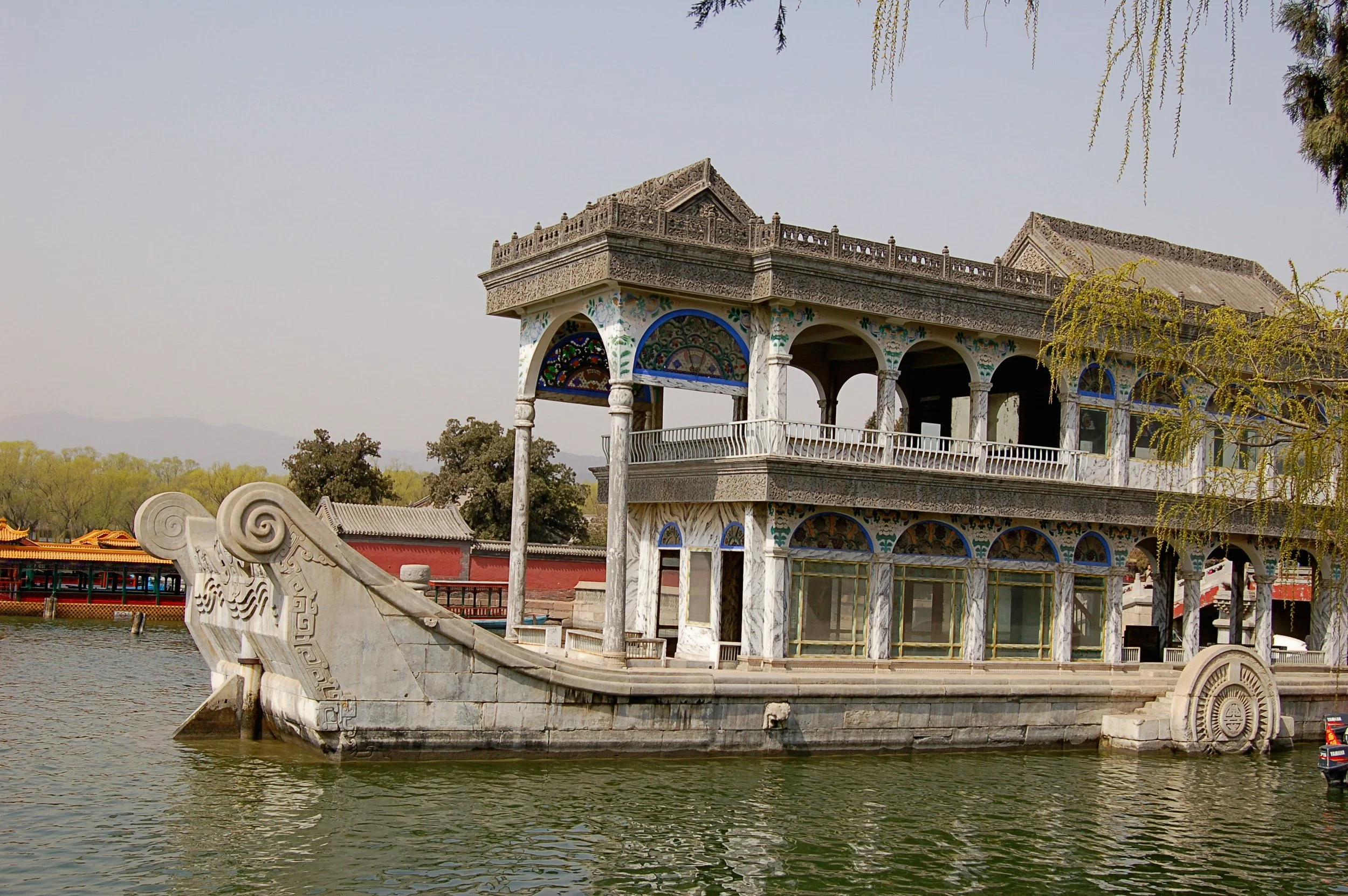
The Marble Boat resting on Kunming Lake
What survives today is largely the result of late-19th-century rebuilding, following earlier destruction, particularly during the period of Empress Dowager Cixi. The design draws heavily on classical Chinese ideas of balance and harmony, blending architecture into the land rather than imposing it upon it. More than a palace in the conventional sense, it is a sequence of views and pauses — places to walk, to look out, and to let the surroundings set the pace. For us, it offered a measured, quietly impressive introduction to China; expansive without being overwhelming, and ceremonial without feeling distant.
The first steps were slightly unreal, the kind that come after an overnight flight when the body is present but the mind is still catching up. Courtyards opened out one after another, framed by deep reds and muted greens, busy yet oddly measured, as if the place absorbed the noise rather than amplified it.
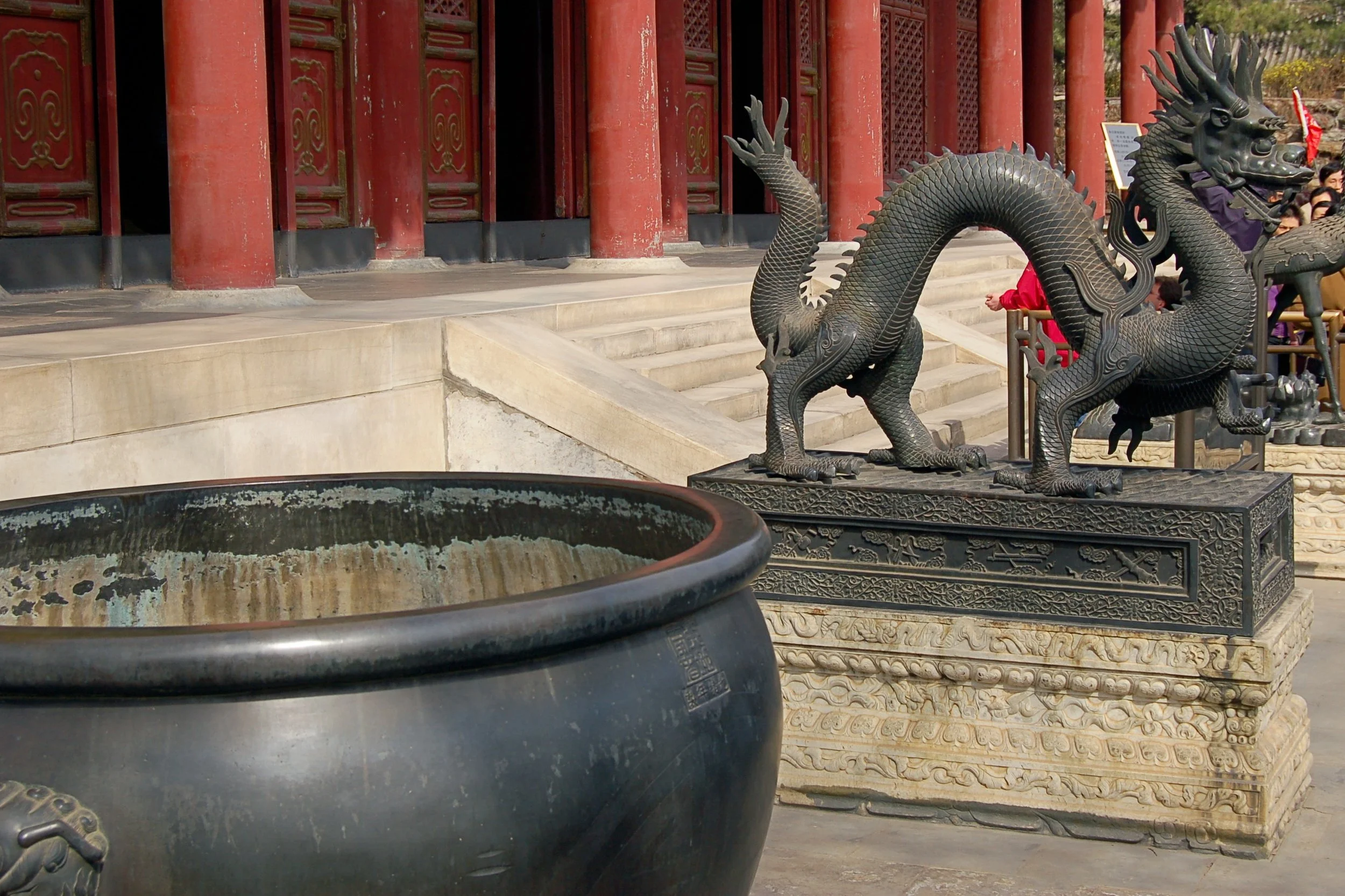
Bronze incense burner and decorative metalwork in a courtyard at the Summer Palace
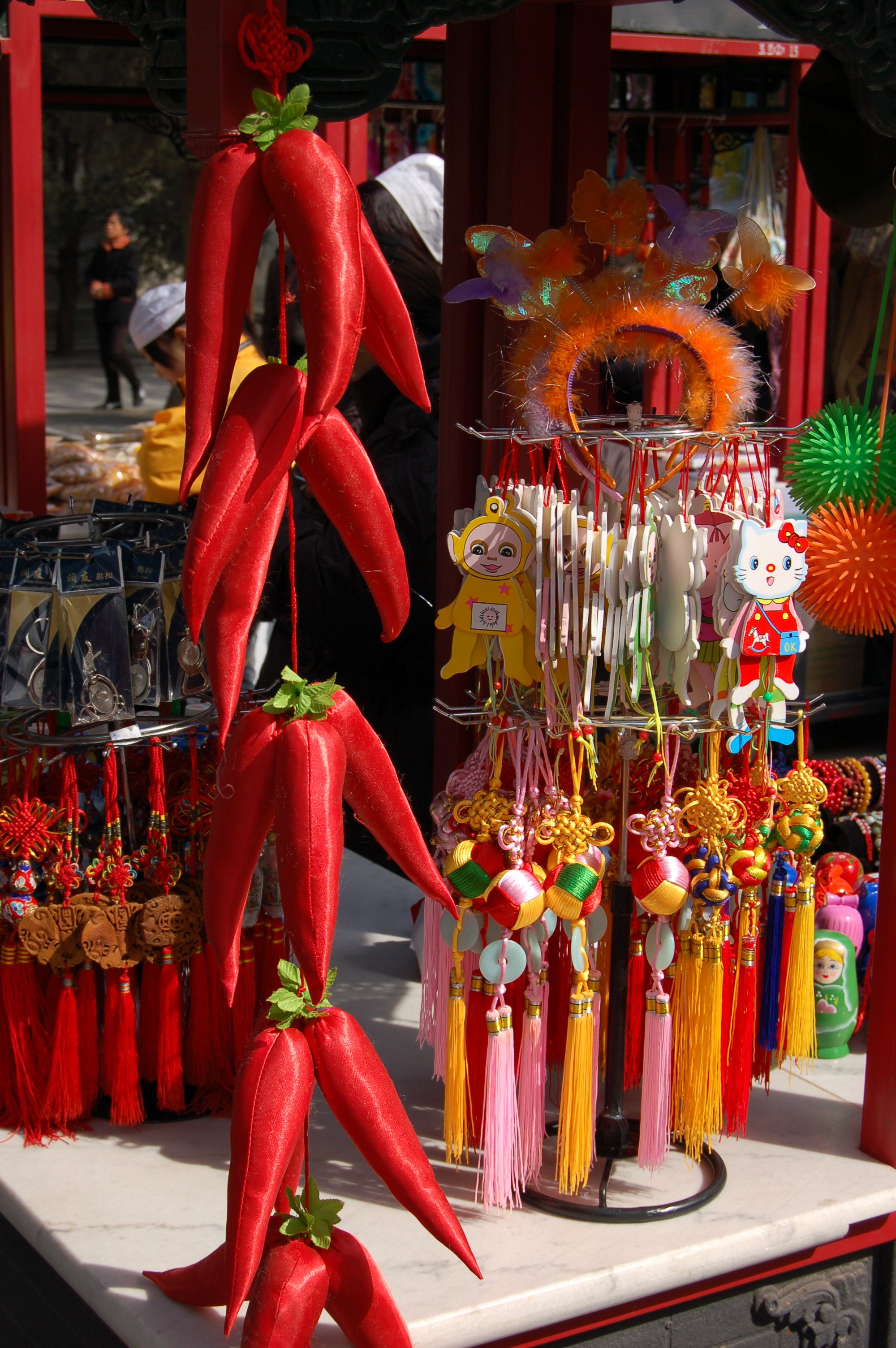
Souvenir stalls inside the Summer Palace grounds, with strings of red dried peppers and small decorative items hanging in sunlight.
People flowed past in all directions, families, tour groups, quiet observers, while we stood still long enough for the scale to settle in. Stone lions, carved dragons, incense burners worn smooth by time and touch. Everything felt deliberate, layered, ceremonial, even when surrounded by crowds.
Away from the main paths, colour appeared in details: strings of bright red peppers, stalls of small keepsakes, flashes of gold and lacquer. These were the moments that lingered — not the grand statements, but the small interruptions of everyday life threading through an imperial setting.
Painted gateways led us onward, each one more intricate than the last, their patterns dense and precise, designed to be passed beneath rather than paused over. Above us, branches framed roofs and beams that seemed to hover, light despite their weight.
By the water, the Marble Boat sat quietly on Kunming Lake, ornamental and slightly surreal, more symbolic than practical. It was here, looking out across the water, that China first began to feel real..