From the Gateway to Elephanta
When I last visited the Gateway to India almost thirty years ago, the whole area felt chaotic. The monument stood open to the surrounding crowds, with hawkers, beggars and tourists all pressing in together. At one point the attention became so intense that we escaped into the bar of the nearby Taj Hotel just to find a moment of calm.
This time the scene felt noticeably different. The Gateway itself is now enclosed behind a security fence and visitors pass through a checkpoint before entering the plaza. Perhaps because it was still early in the morning, the atmosphere was far quieter than I remembered. The wide stone square around the monument felt surprisingly open, with only scattered groups of people moving across the space and the Arabian Sea stretching away behind it. Across the plaza the red domes and ornate façade of the Taj Mahal Palace Hotel caught the morning sun, looking every bit as grand as the stories attached to it.
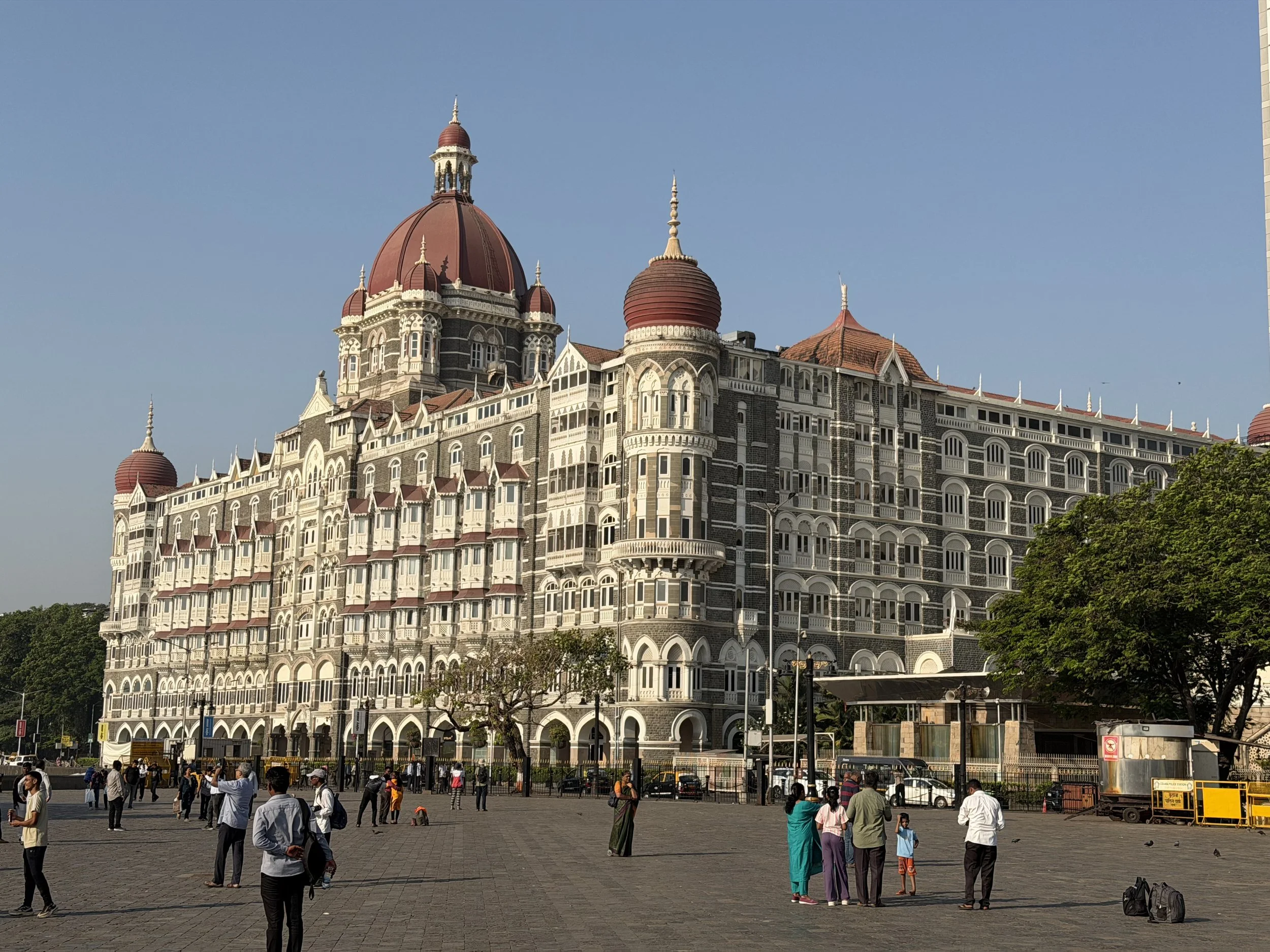
The Taj Mahal Palace Hotel
We were able to wander easily up to the monument and take a few photographs before making our way down to the jetty where the boats to Elephanta Island depart.
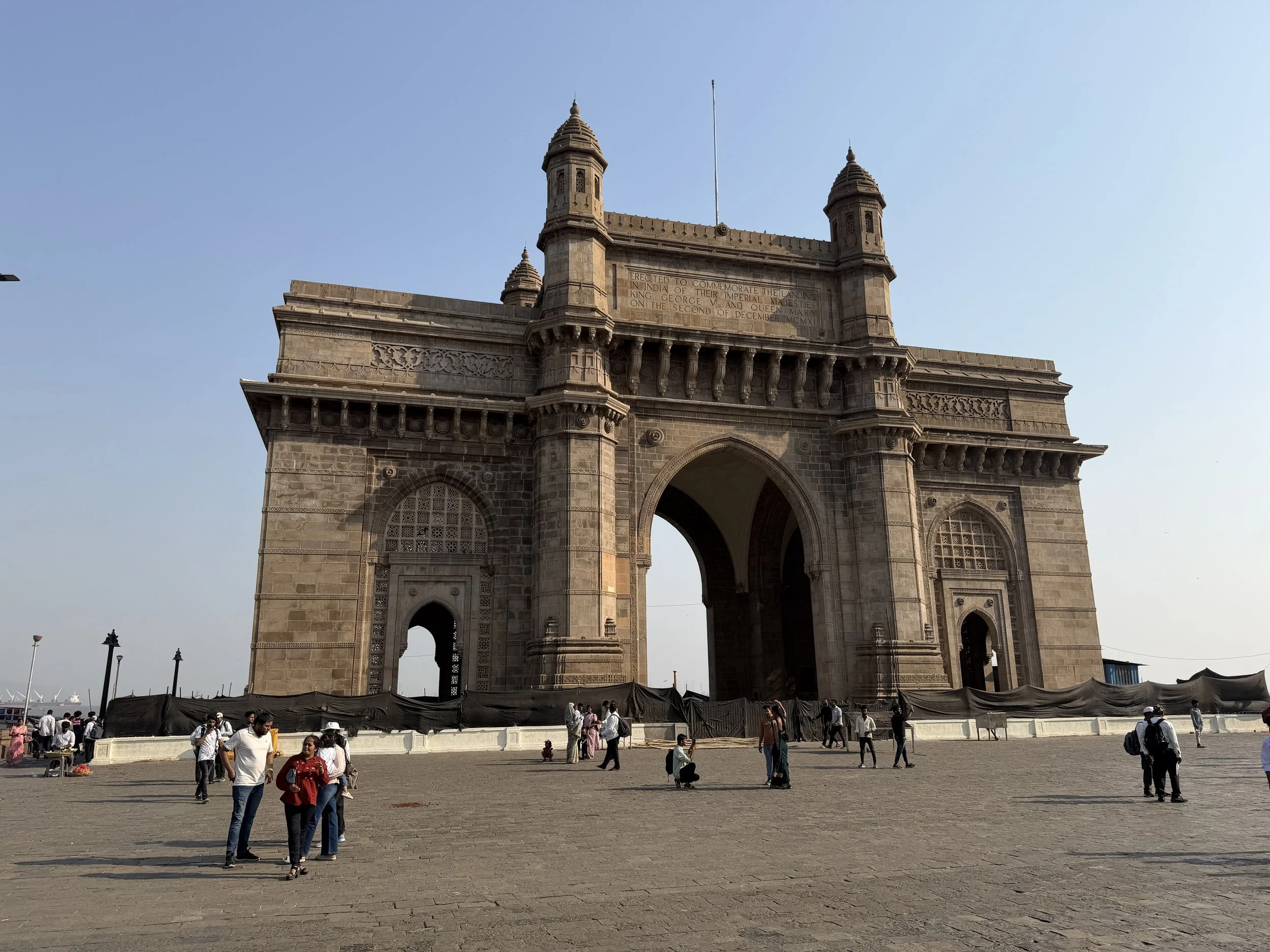
The Gateway of India
Our charter boat was waiting for us. It was a surprisingly large vessel, capable of seating around eighty passengers, though only the lower deck was being used that morning. Stepping aboard felt slightly improvised, moving from the wooden steps down onto the painted deck while crew members helped steady the boat against the pier. Inside, rows of bright red plastic seats ran along the sides while a crew member casually swept the deck in preparation for departure. With plenty of space to spread out, we settled in for the crossing.
Soon we pulled away from the harbour wall and joined the slow procession of ferries heading out into Mumbai Harbour. Dozens of small passenger boats moved back and forth across the water, weaving between larger working vessels. The harbour itself felt busy but not frantic, more like a slow-moving choreography of boats.
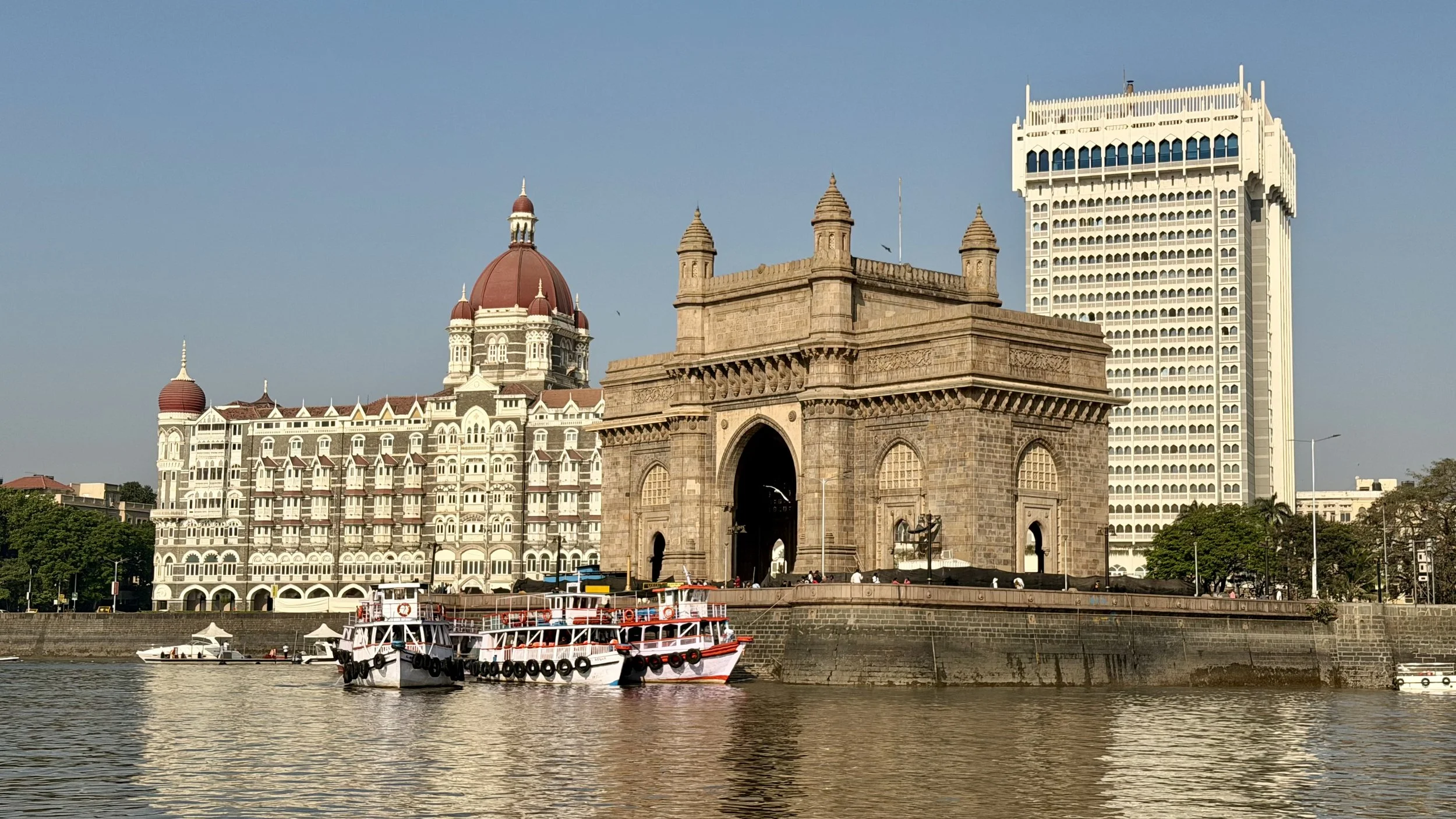
The Gateway from the Water
The journey across to Elephanta Island takes you through the working port rather than completely open sea. Tankers, service vessels and cargo ships lay anchored across the bay, some brightly painted and rust streaked from years of work. In the hazy distance the tall container cranes of Mumbai Port rose through the smog like skeletal towers, half hidden in the morning light.
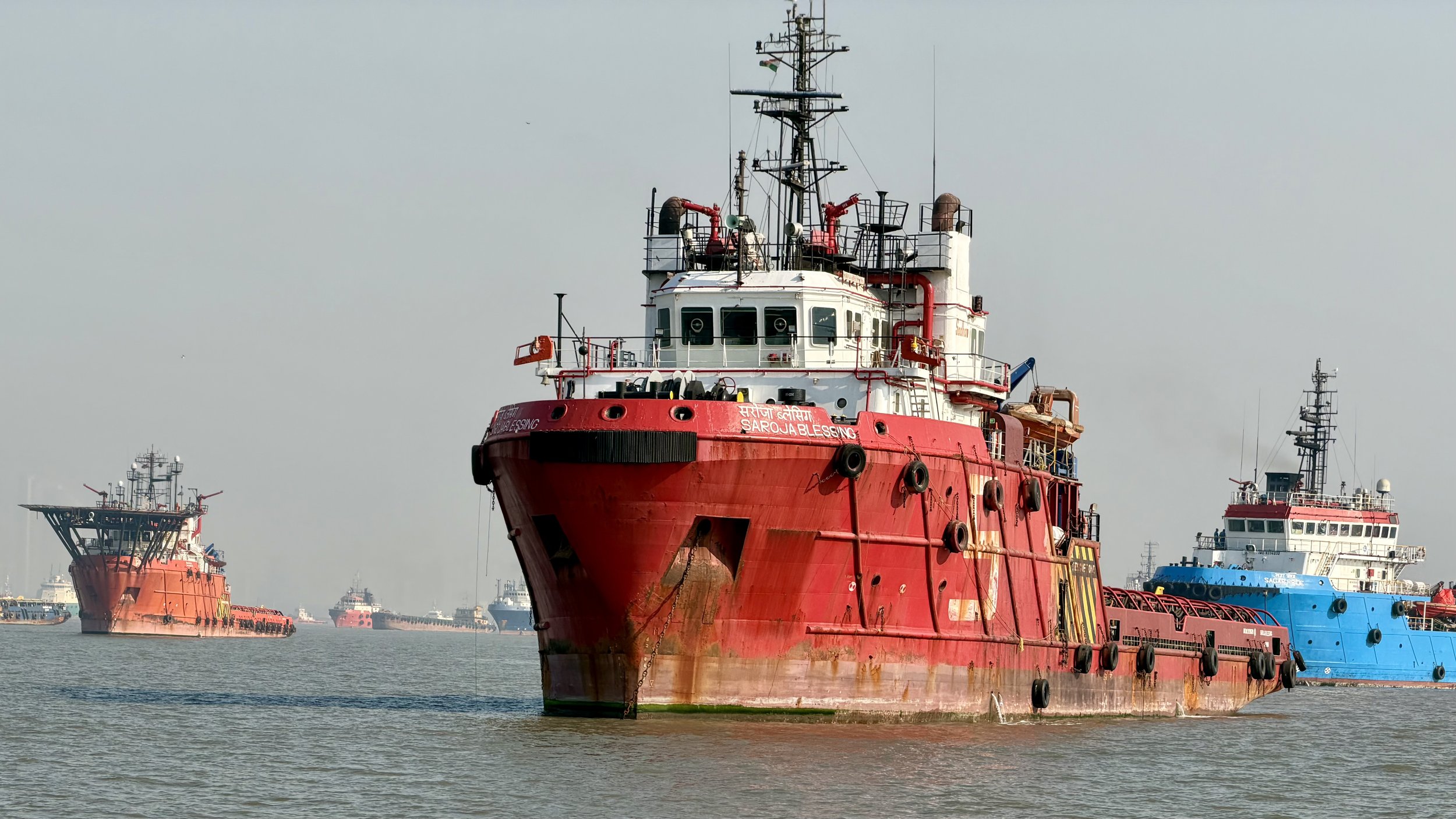
Mumbai Port
The water itself told another story. Even from the boat you could see debris drifting across the surface, reminders that this is not just a historic harbour but one of the busiest commercial ports in the country. It wasn’t the most picturesque stretch of water, but it had a certain honesty about it: this is where the city works as much as where it welcomes visitors.
The working harbour slowly gave way to a green, wooded island rising from the sea, its low hills covered in dense trees. Along the shoreline the tide had fallen back, revealing muddy flats where a few old boats rested awkwardly on the exposed ground, their hulls streaked with rust and age. It felt a world away from the busy port we had just crossed.
A long jetty stretched out from the island to meet the arriving boats. After stepping ashore we were surprised to see a small toy train waiting beside the walkway. We climbed aboard and it trundled slowly along the length of the jetty, perhaps half a mile or so, carrying arriving visitors towards the island itself. I found the whole thing slightly surreal, a curious little railway bridging the gap between the boats and the forested hillside ahead.
Soon we were off the train and walking along the path before beginning the climb towards the caves. On either side of the route a long line of stalls had appeared, selling drinks, souvenirs and the usual assortment of tourist trinkets.
Another presence quickly became apparent too: monkeys.
They lounged along railings, watched from the trees and rooftops with impressive confidence, and occasionally darted across the path as if they owned the place. Our guide warned us firmly to keep hold of sunglasses, hats and especially any food. She also advised us to stay beneath the shelter of the stall roofs whenever possible. Apparently the monkeys have an unfortunate habit of relieving themselves from the trees above… advice that seemed worth following.
The climb itself is not especially difficult, but it is long enough to make us take our time, particularly in the growing heat of the morning. The guide kindly escorted me up the steps, which felt slightly unnecessary but was clearly meant well. As we ascended, the trees closed in around the path, bringing patches of welcome shade while the chatter of vendors and visitors faded gradually behind us.
Eventually the steps levelled out and a sign appeared ahead announcing Elephanta Caves, World Heritage Monument, a reminder that this small island holds something far older and more significant than the busy approach might suggest.
The Elephanta Caves, carved directly into the basalt rock between the 5th and 8th centuries, open into a vast pillared hall cut deep into the hillside. Massive stone columns rise from the floor in long rows, their carved capitals supporting the weight of the rock above and giving the entire space a sense of quiet balance and symmetry. The light from the entrance fades quickly as you move deeper inside, leaving parts of the cave in soft shadow and adding to the almost temple-like stillness of the place.
Around the walls are enormous sculpted panels depicting different aspects of Shiva, each carved directly from the living rock. The scale is astonishing. Figures several metres high emerge from the stone with flowing hair, elaborate headdresses and powerful physical presence. Some of the sculptures remain remarkably detailed, while others show the scars of time and damage, with broken arms or weathered faces where centuries have taken their toll.
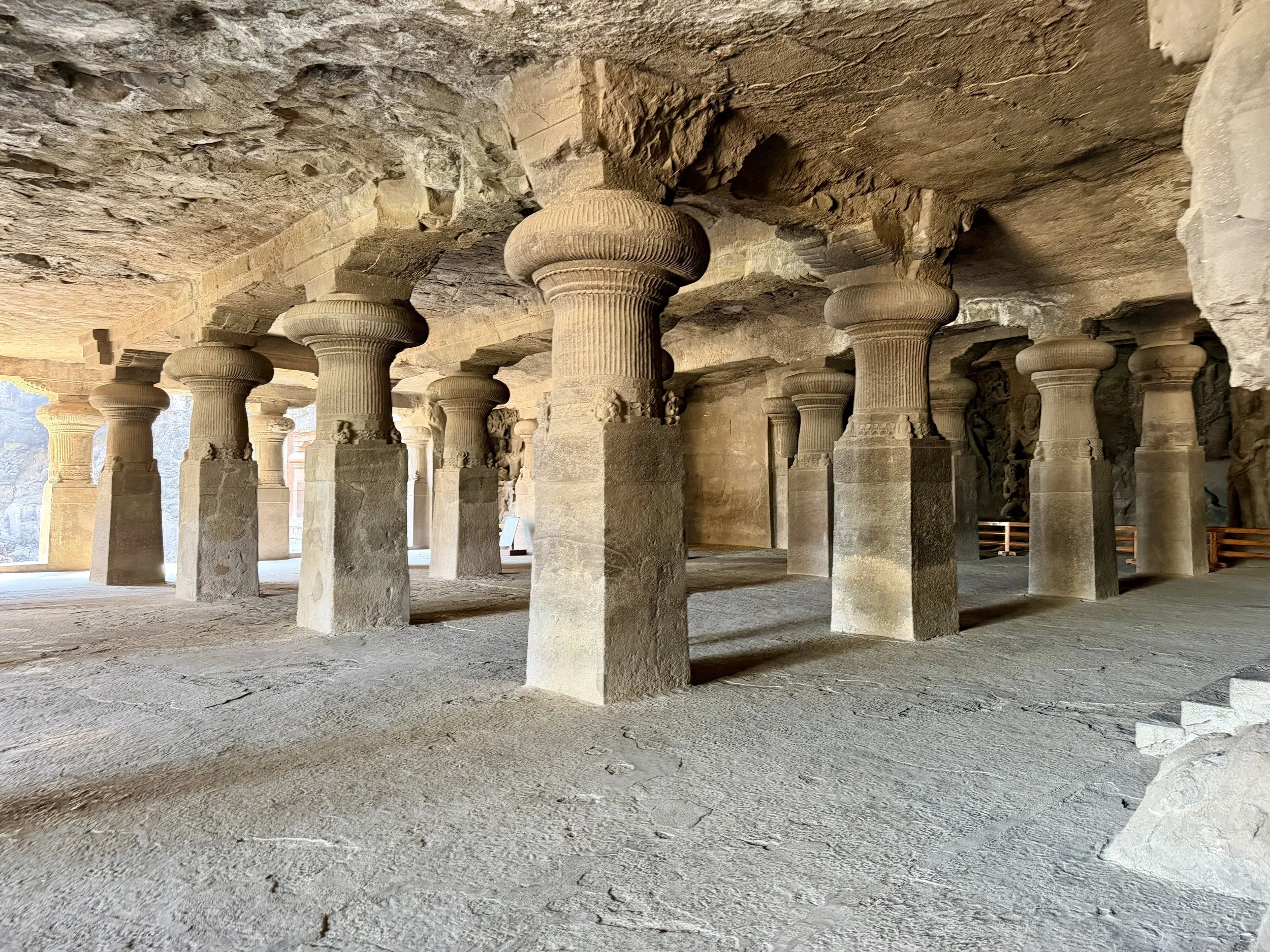
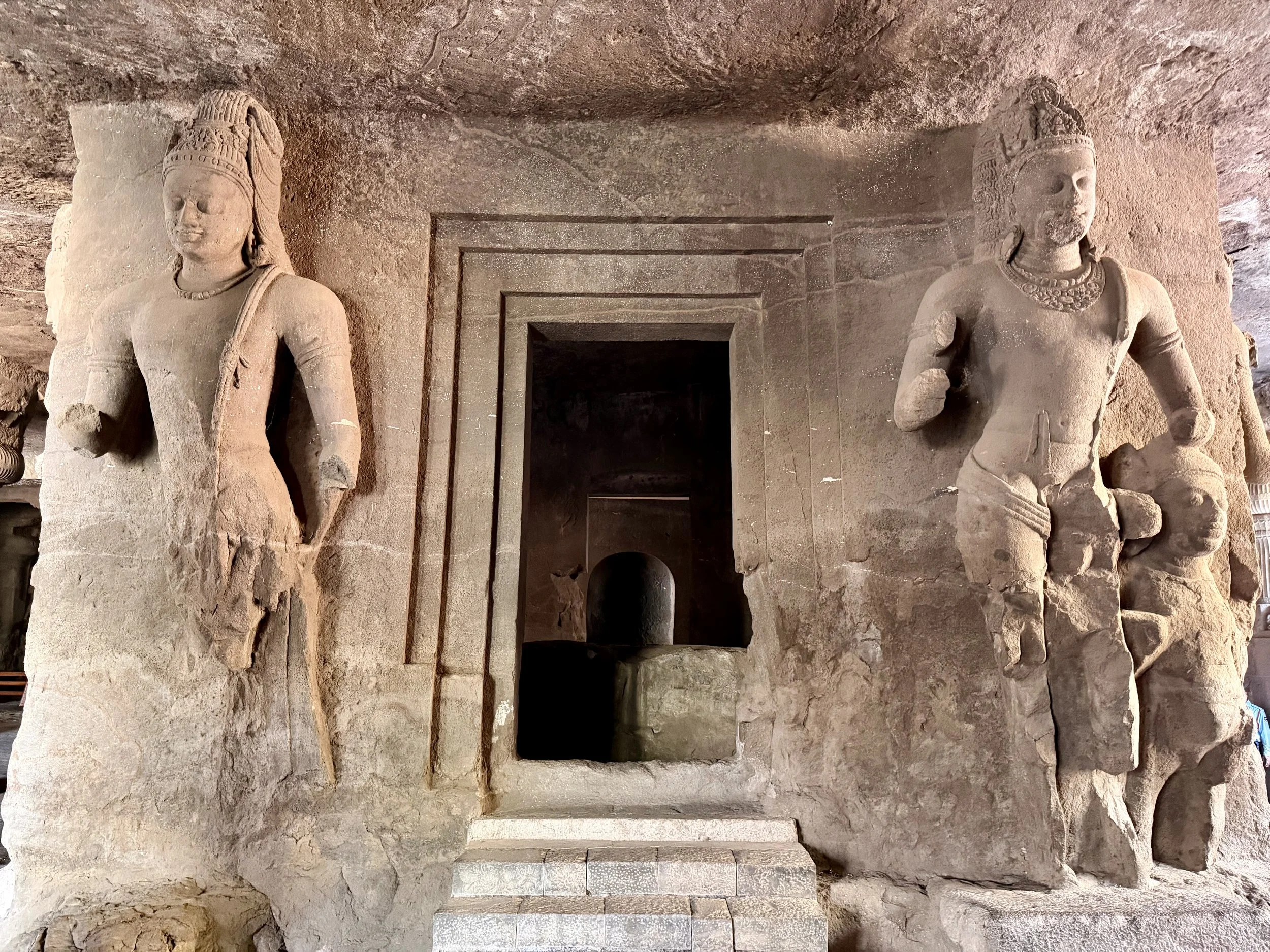
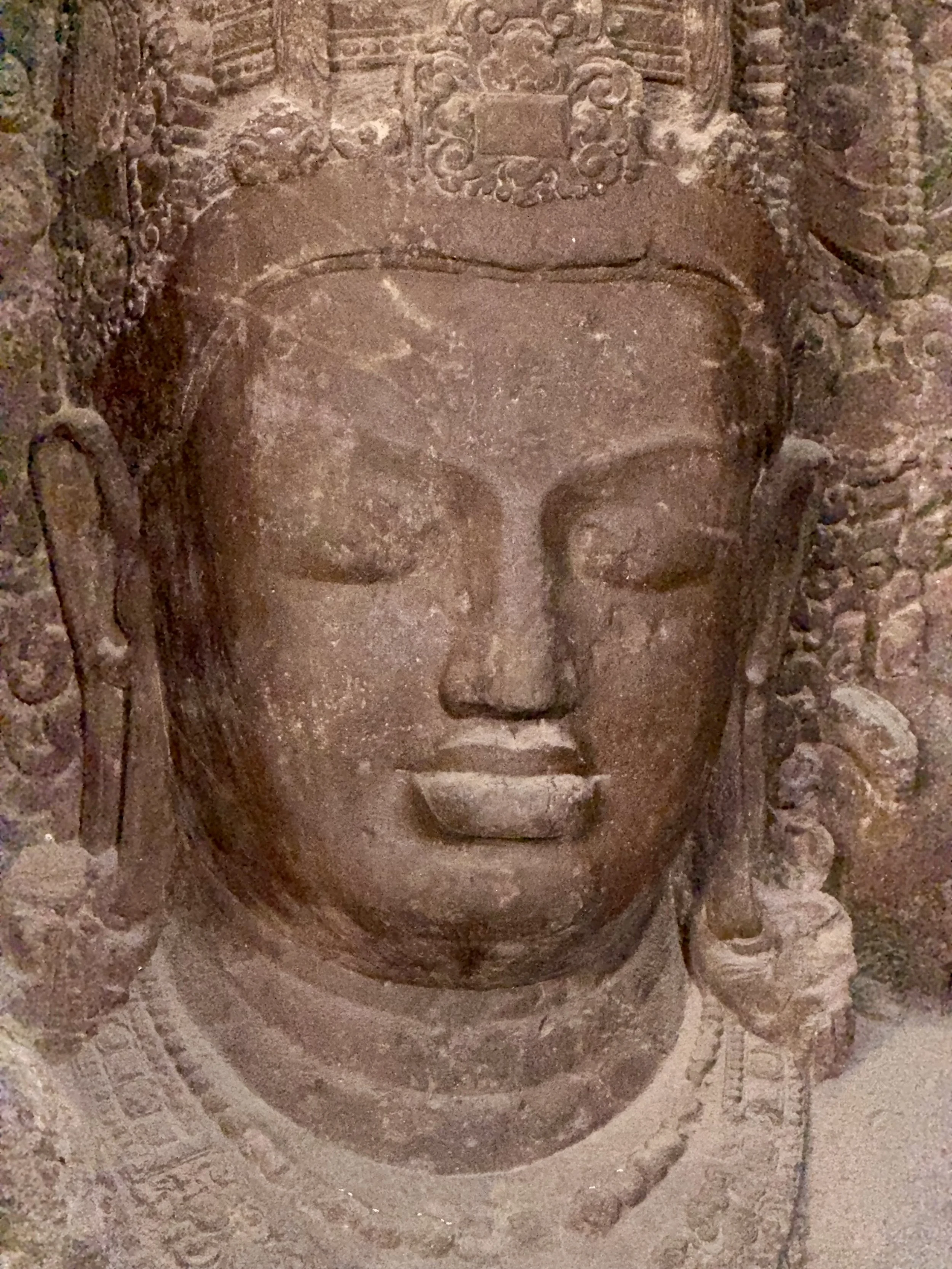
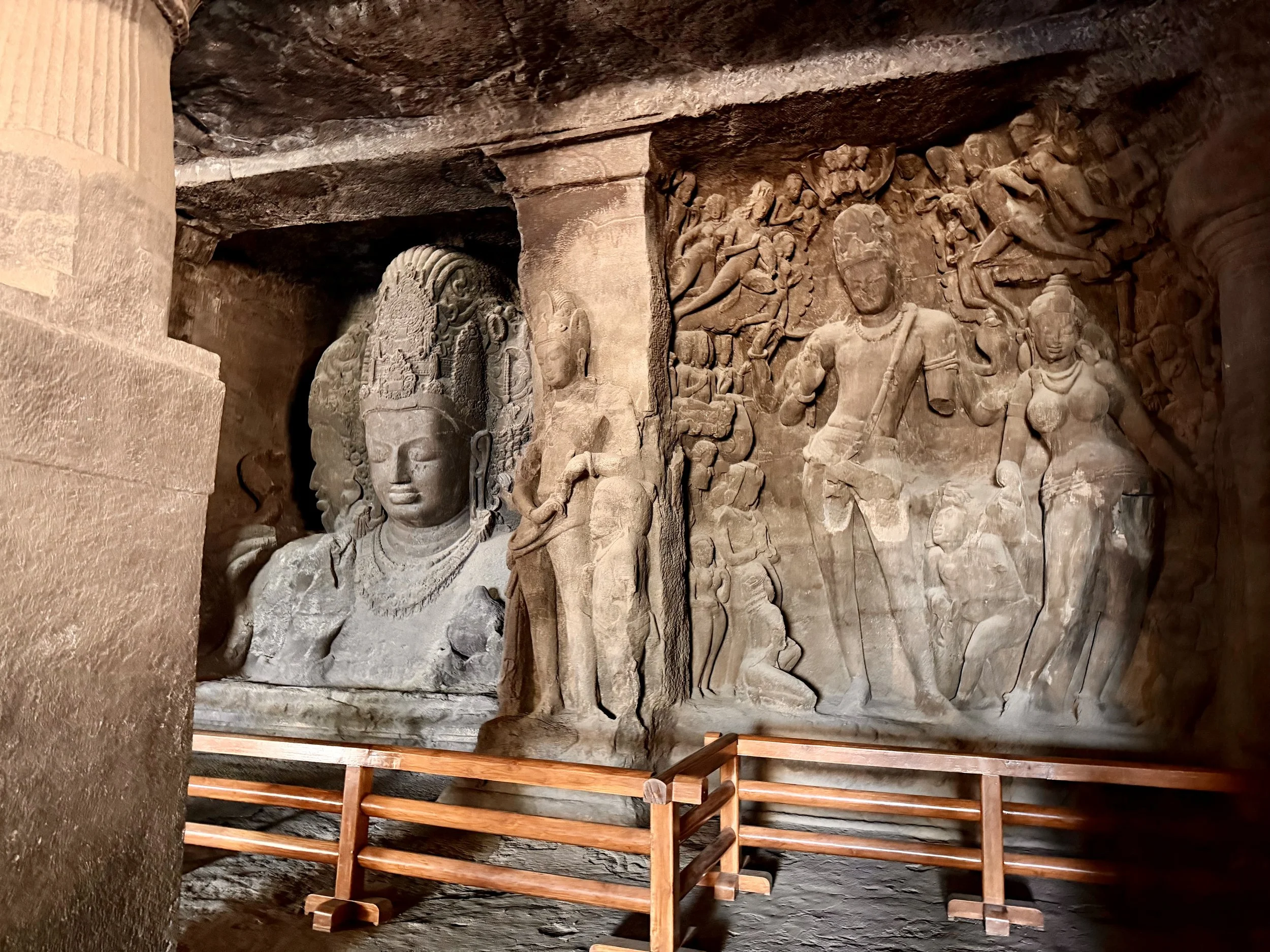
Because we had arrived early in the morning, we were fortunate to be among the first visitors inside the caves. That quietness made a real difference. Instead of crowds, there was space to pause and absorb the carvings properly, the only sounds the occasional footsteps and the soft echo of voices under the stone ceiling.
Our guide for this part of the visit held a master’s degree in archaeology and spoke with obvious passion about the site. She explained the scenes carved into the walls and the layers of Hindu mythology behind them, bringing the figures to life as stories rather than simply sculptures.
The most striking of them all stands at the far end of the cave: the great three-headed figure often called the Trimurti. Nearly six metres high, the sculpture represents three aspects of Shiva. The central face appears calm and meditative, while the faces to either side represent other aspects of the deity’s nature. Emerging from the rock with extraordinary scale and balance, the figure has a presence that feels both serene and powerful at the same time.
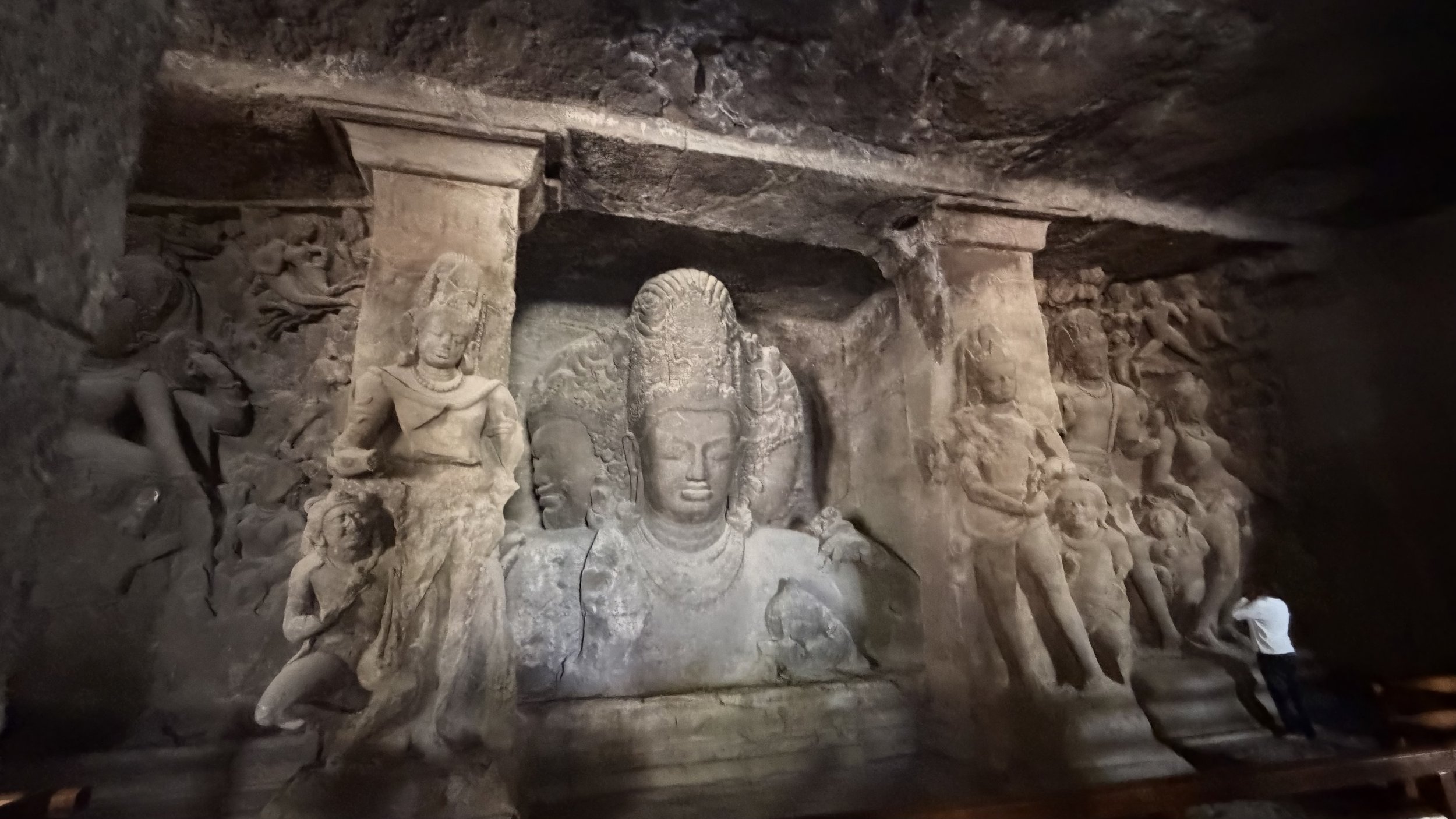
The Trimurti
After the explanations we were given fifteen minutes or so to wander around the cave on our own. It was just enough time to walk slowly between the pillars, look more closely at the carvings, and take in the remarkable scale of what had been created here so many centuries ago before beginning the descent back down the hill.
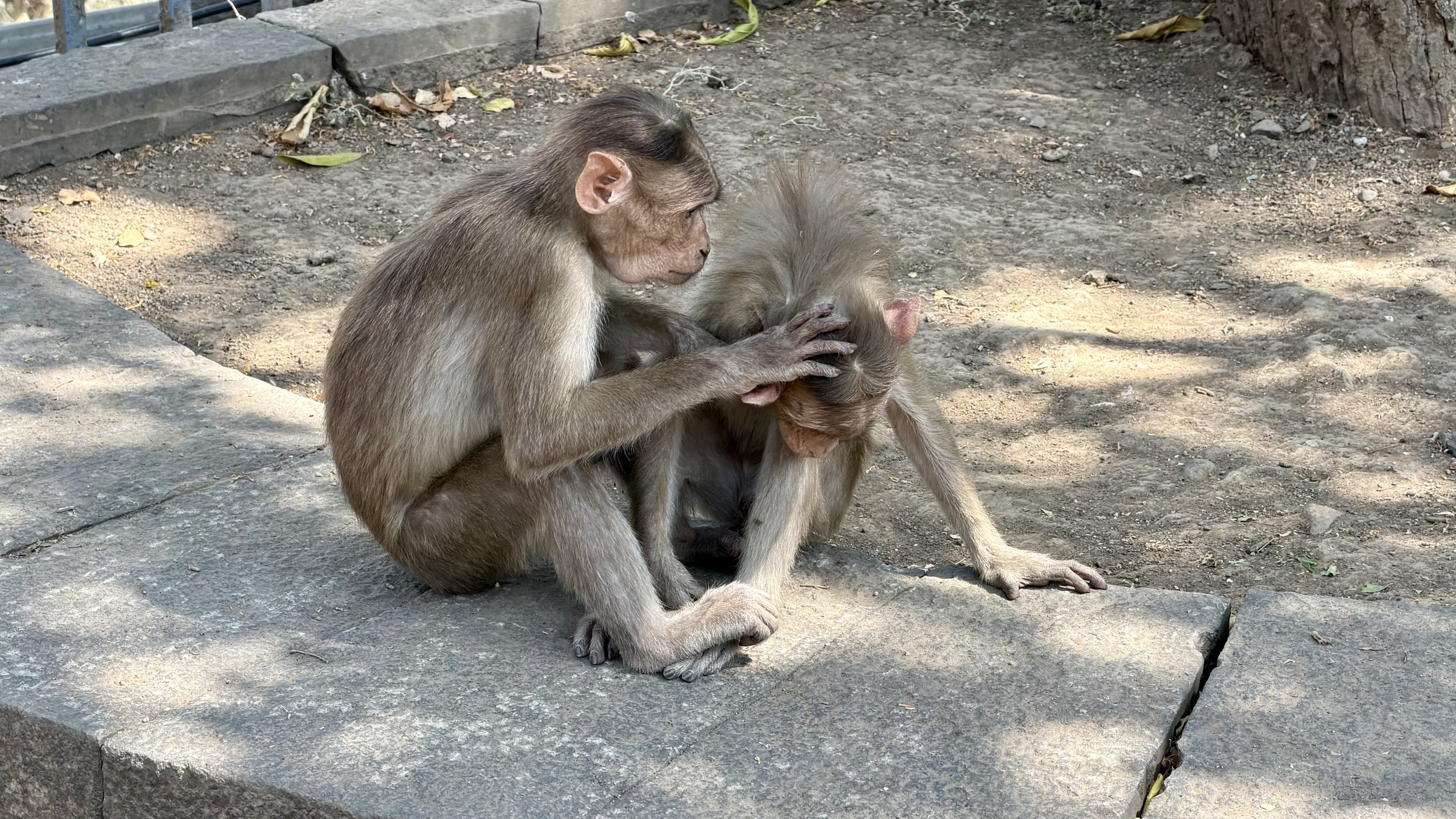
Monkeys at Elephanta Island
Outside again, the monkeys were now engrossed in grooming, or playing in the trees as if bored already by the human visitors.
Stepping back out into the sunlight after the cool darkness of the caves felt slightly disorientating. Inside, everything had been stillness, shadow and ancient stone. Outside, the sounds of voices, vendors and the occasional chatter of monkeys quickly returned.
What stayed with me most was the sense of time. These caves were carved here more than fifteen hundred years ago, patiently cut from the rock long before the city of Mumbai existed in anything like its modern form. Yet just across the harbour lies one of the busiest and most energetic cities on earth. It is a striking contrast: the restless movement of ships, traffic and millions of people on one side of the water, and here, hidden in the hillside, a quiet monument to belief, craftsmanship and patience from another age.
Before long it was time to begin the walk back down the hill, past the stalls and the watchful monkeys, towards the little train and the jetty where the boats waited to carry us back across the harbour to the modern world again.