Behind the Walls of Agra Fort
Arrival at the Fort
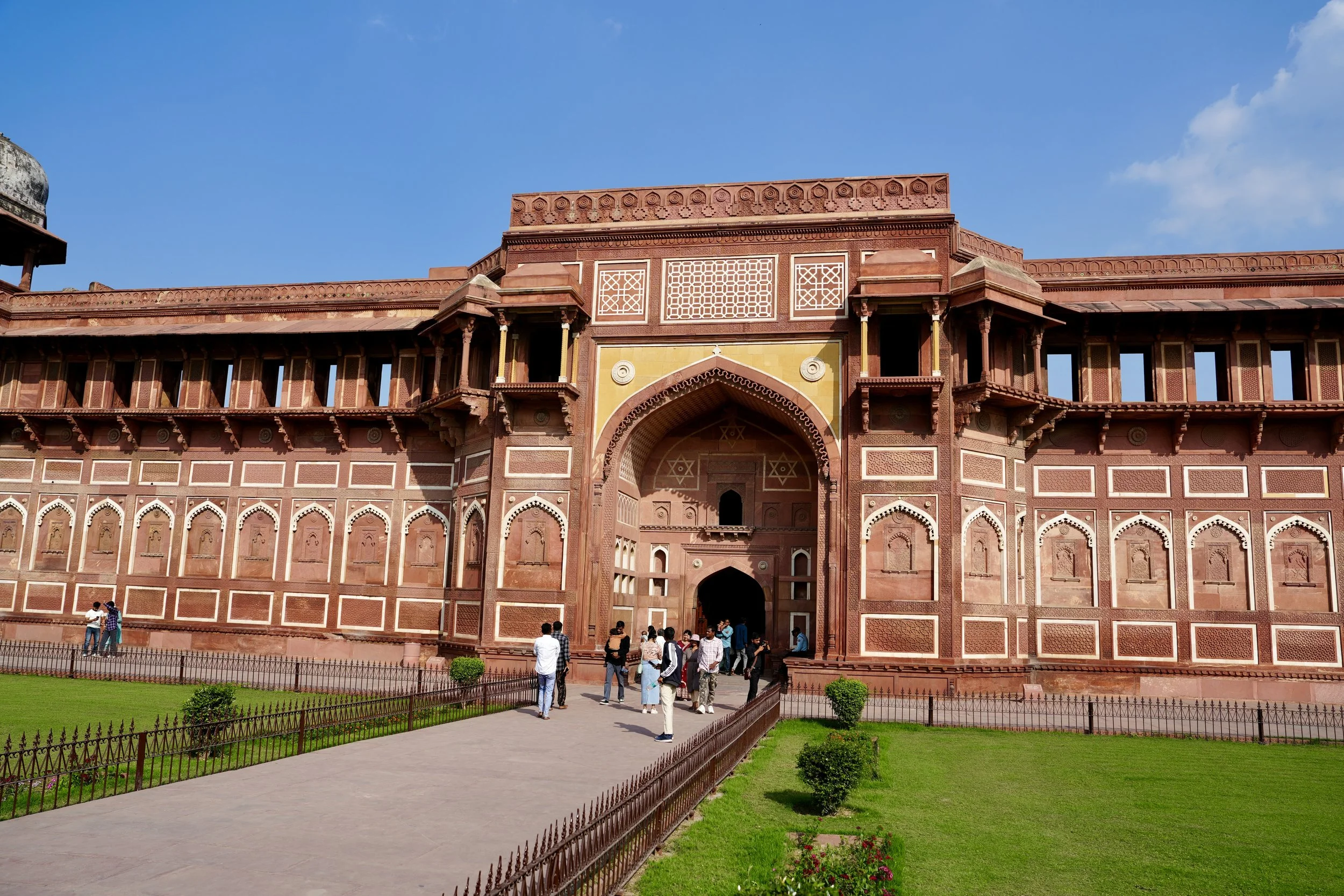
After the Taj Mahal, the afternoon took us to Agra Fort. It had been nearly thirty years since I was last here, and I realised, slightly embarrassingly, that I remembered almost nothing about it beyond the entrance. This time the scale of the place hit me immediately. The red sandstone walls rose out of the heat, solid and imposing, the kind of architecture designed not just to defend, but to remind you who was in charge.
A wall of street sellers greeted us as we stepped off the coach, each hopeful for a glance, a nod, a sale. We edged our way through and towards the gate. The fort itself felt much larger and more imposing than I remembered, the red sandstone glowing in the heat, the scale unmistakably imperial.
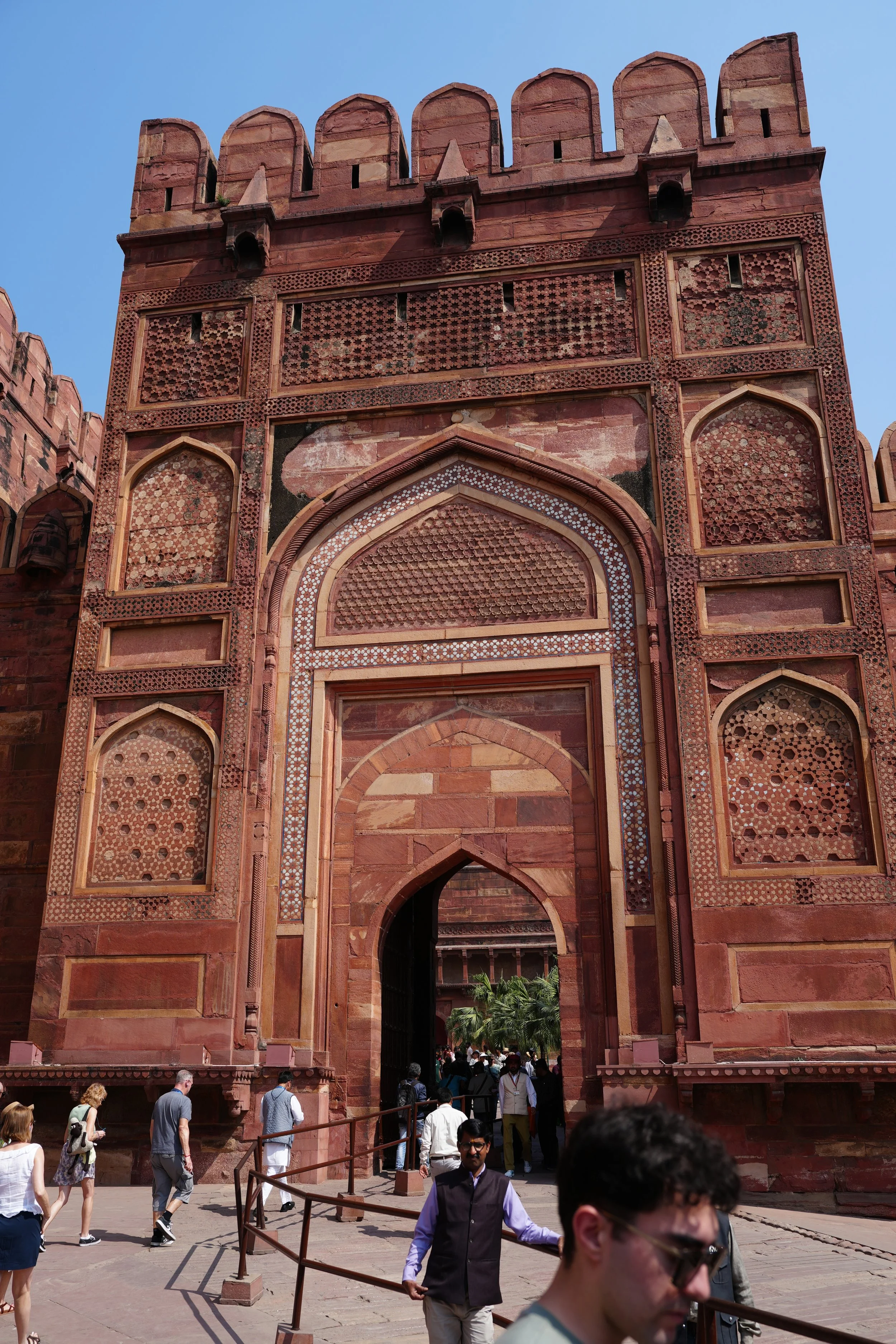
Passing through the successive gateways, each angled and heavily defended, it was easy to imagine how difficult this place would have been to attack. The design forces you to slow, to turn, to lose your sense of direction, all while the walls rise higher on either side. Even now, walking through as visitors, the sense of controlled power is unmistakable.
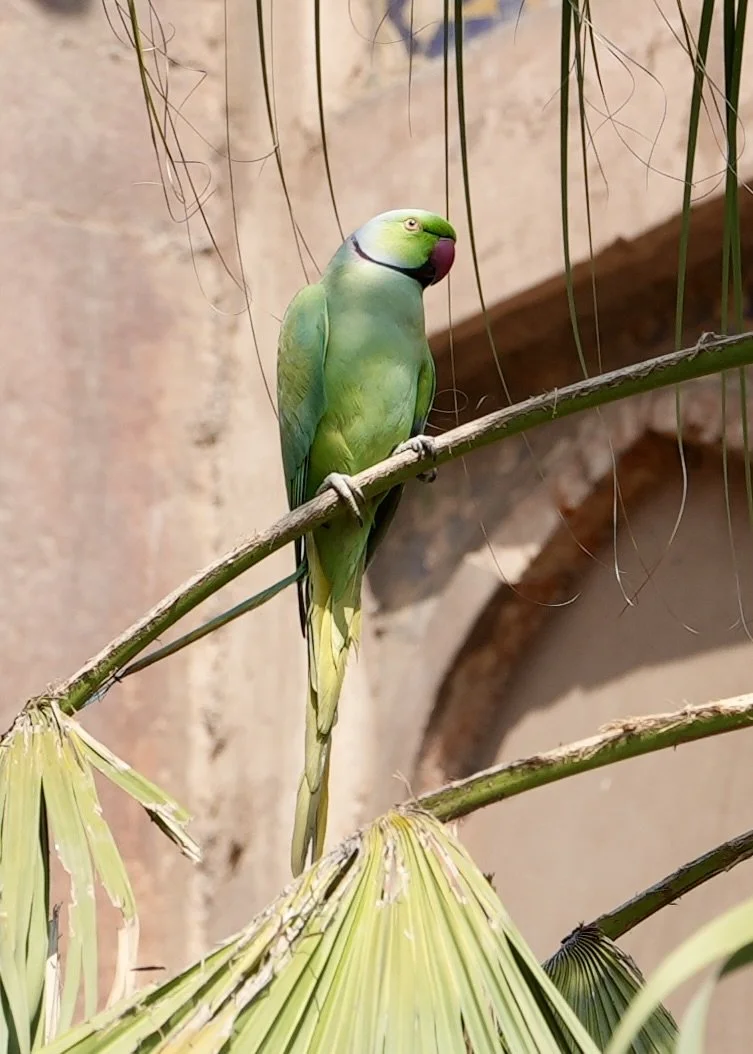
Inside, the space opened out into courtyards, audience halls and private apartments. We paused for a moment to photograph a surprisingly relaxed parakeet perched on a stone ledge, completely at ease among the grand surroundings, as if the fort belonged to it rather than the emperors who once ruled here.
Inside the Imperial Palaces
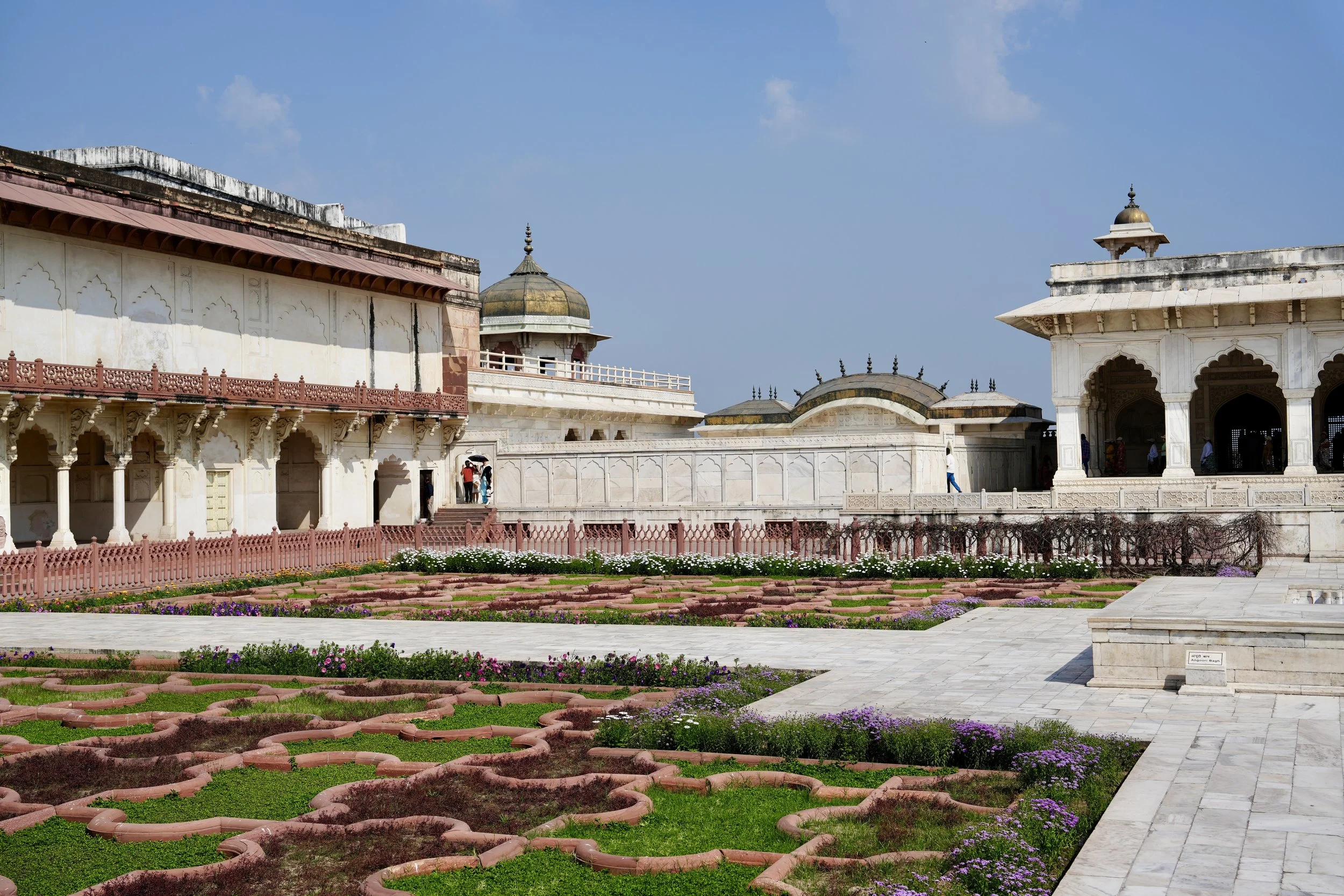
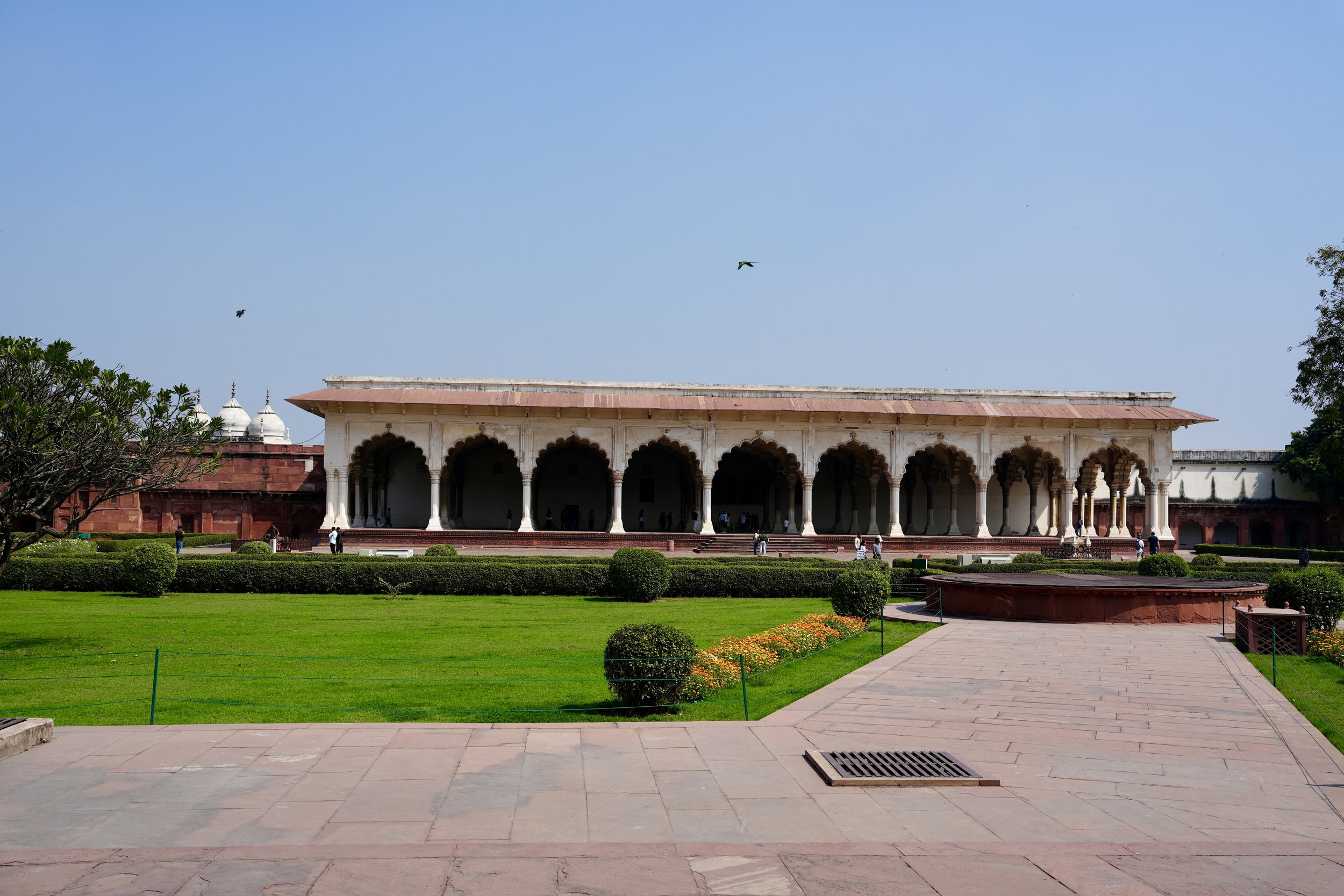
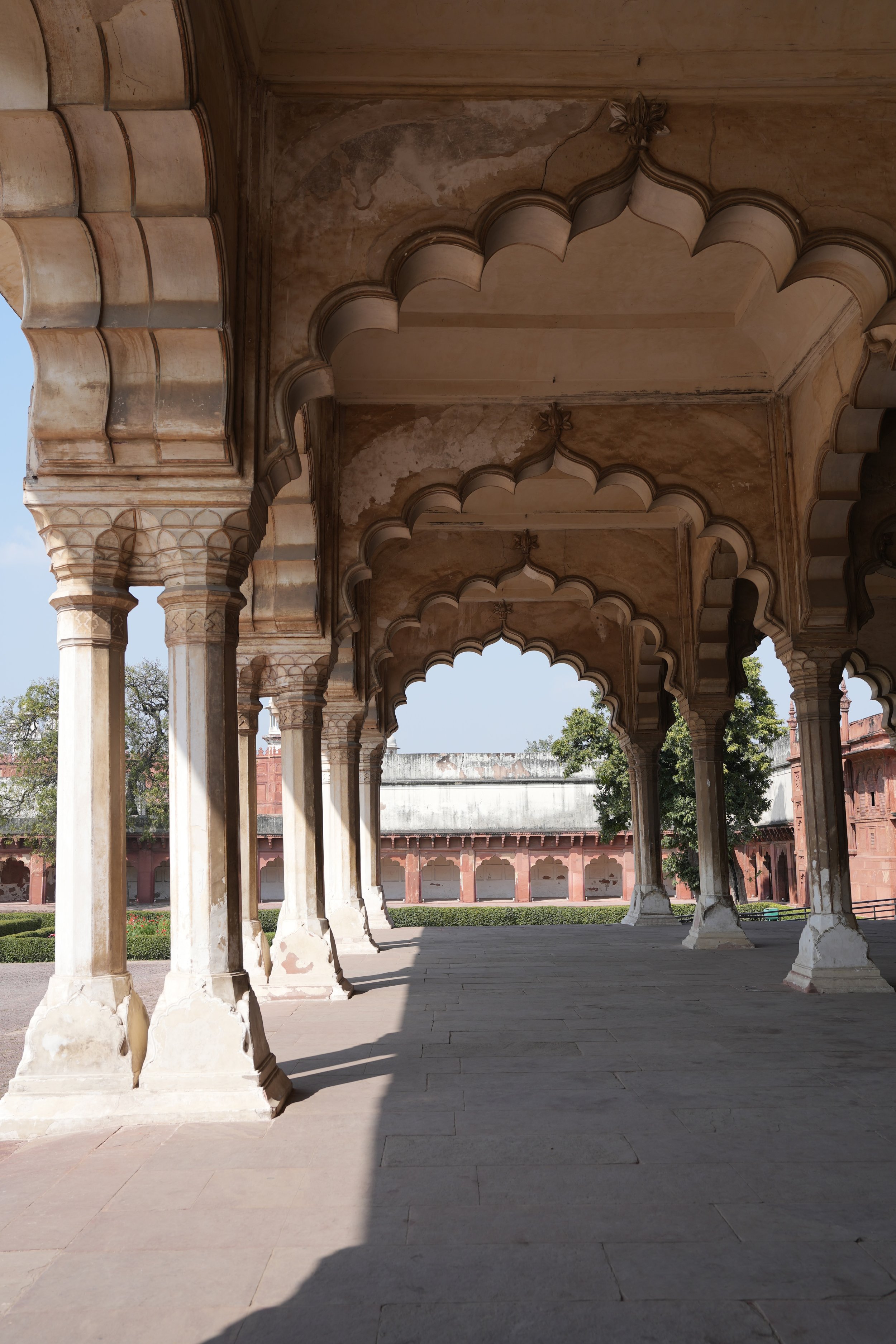
We reached the Diwan-i-Am, often described as the emperor’s public audience hall, where petitions from ordinary people would be heard. From there we moved deeper into the complex of palaces. Like the Forbidden City in Beijing, much of the interior was given over to royal living space, courtyards within courtyards, rooms opening into shaded walkways, and balconies looking out over the river.
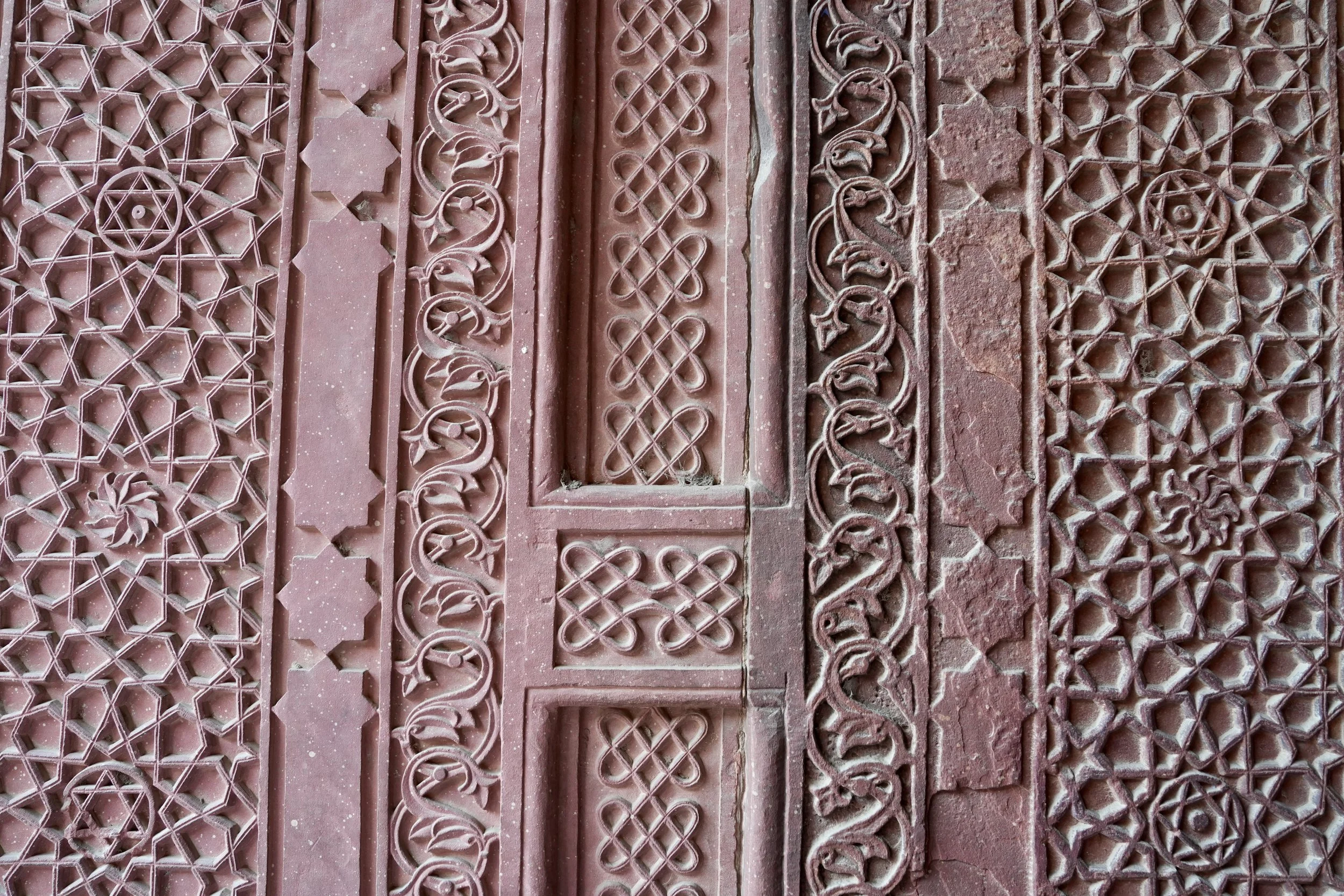
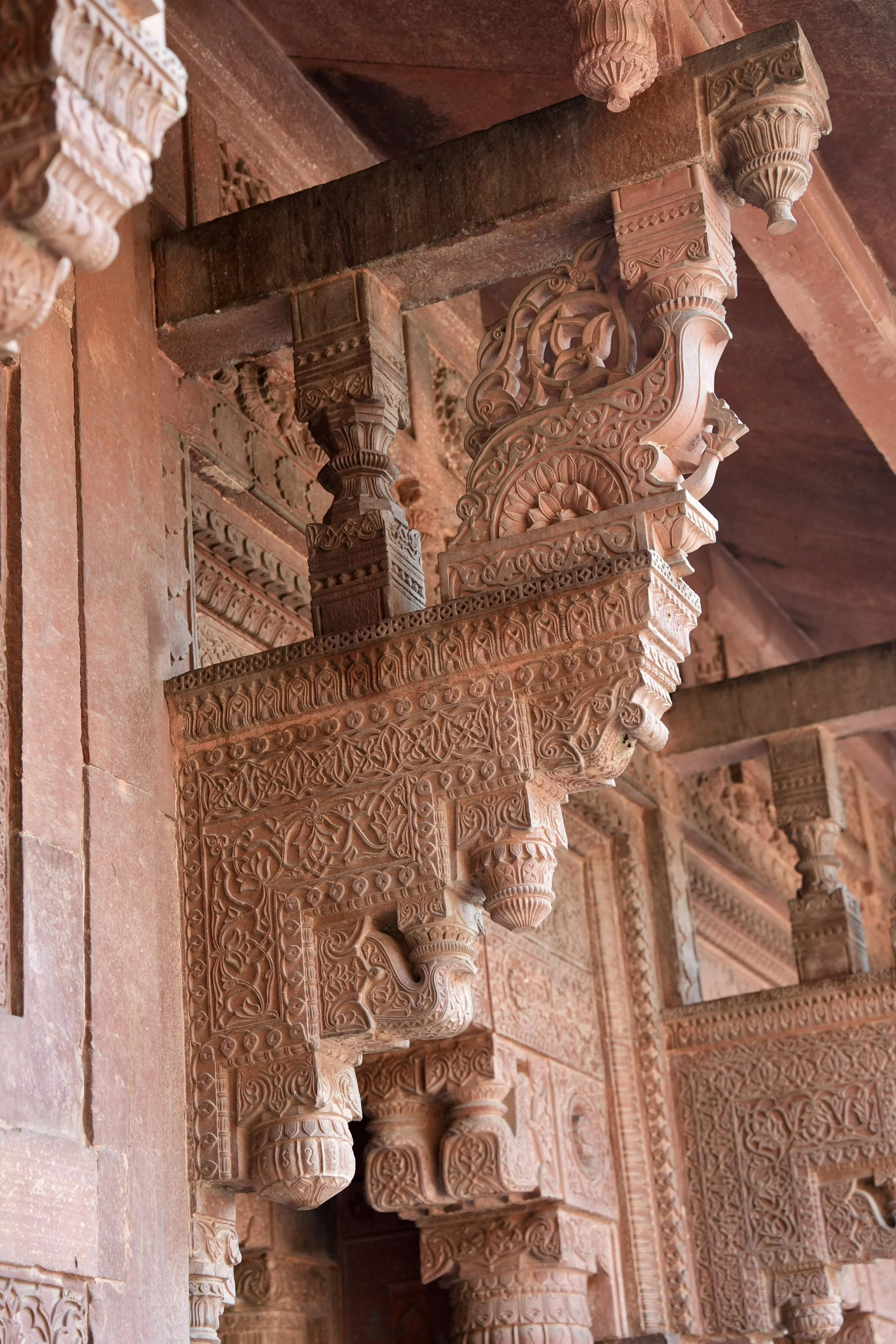
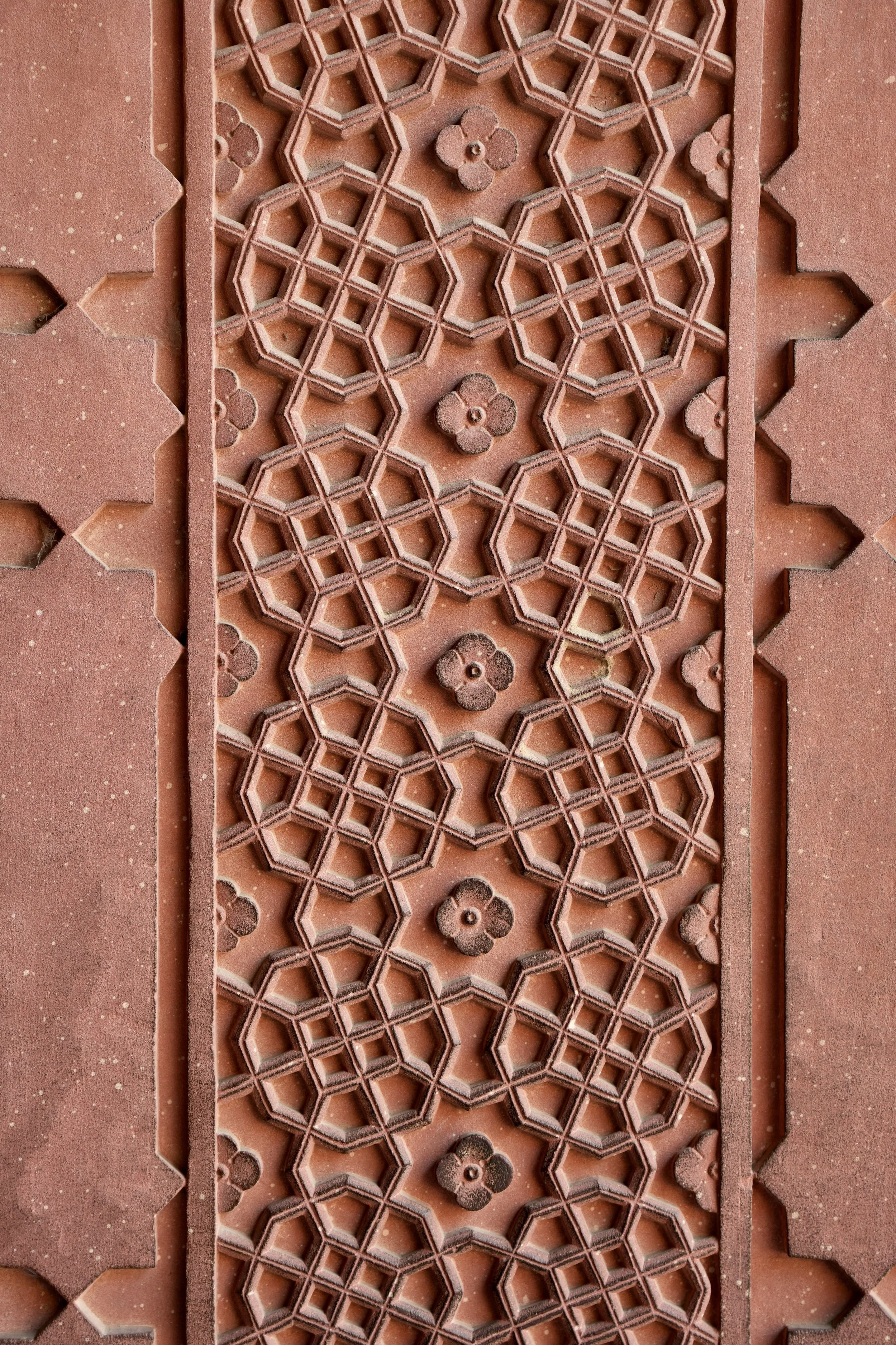
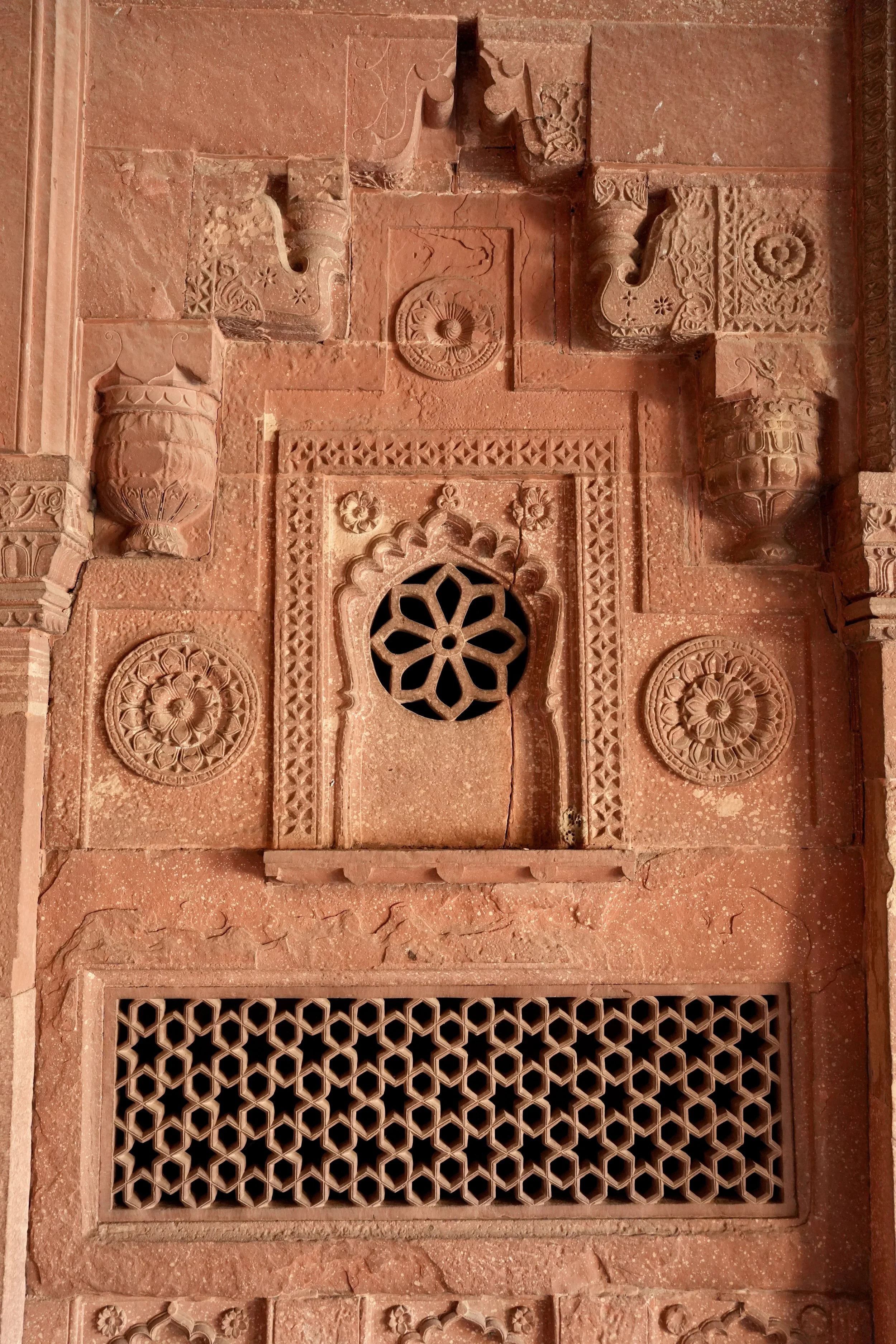
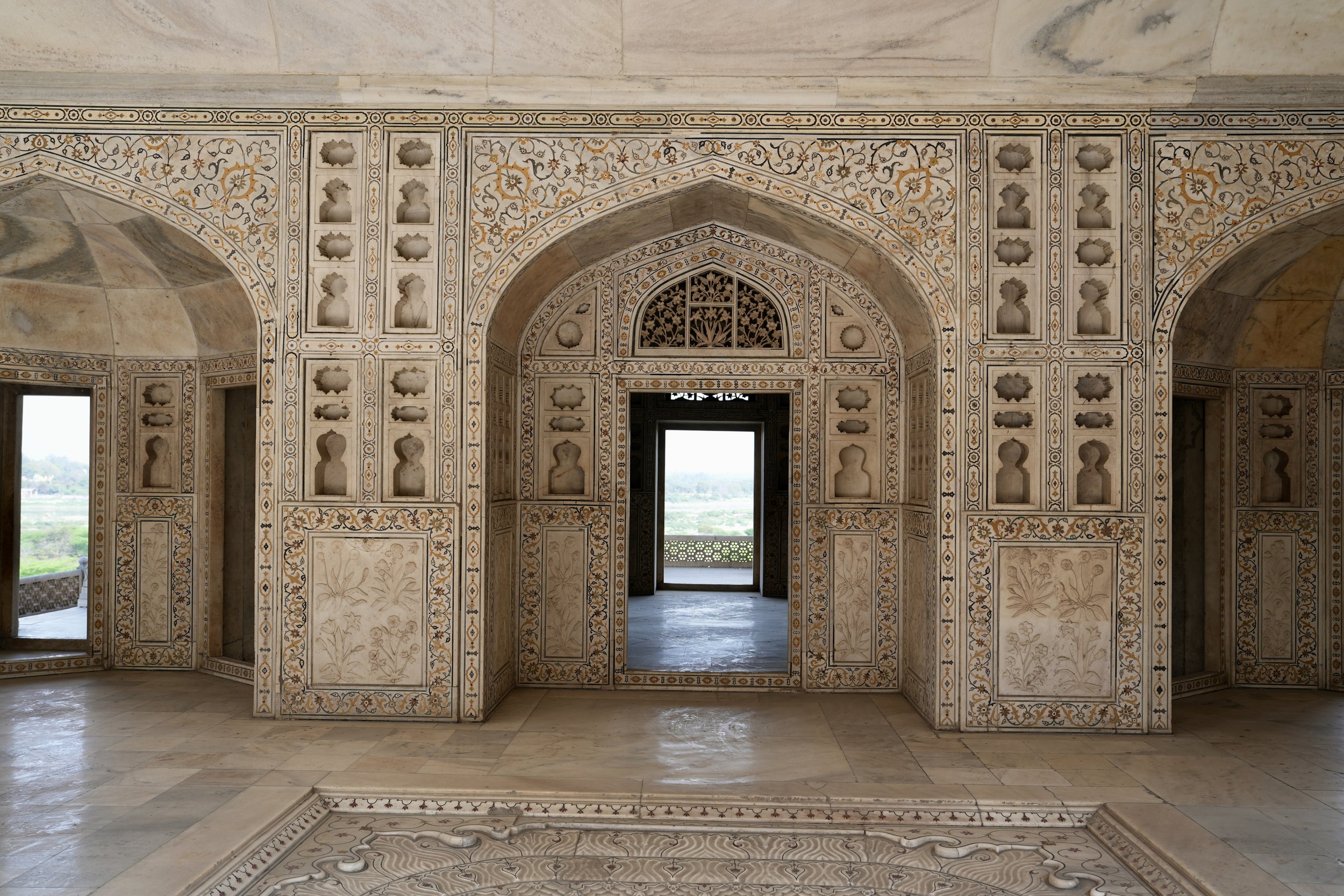
The scale speaks of authority, but the details speak of luxury. Marble inlay, carved screens, traces of gold decoration, and the remains of what would once have been silk carpets underfoot. Many of the private rooms were open to the air, designed to catch whatever breeze might pass through in the heat of the day. We were told that some of the coloured glass had been imported from Belgium, a reminder that even centuries ago these empires were connected to trade routes stretching far beyond India.
From one of the windows, the view opened across the river, and there it was again, the Taj Mahal, pale and distant in the haze. Beautiful, but from here the view carried a different feeling, knowing that Shah Jahan spent his final years imprisoned in this very fort, looking out towards the tomb of the wife for whom it had been built.
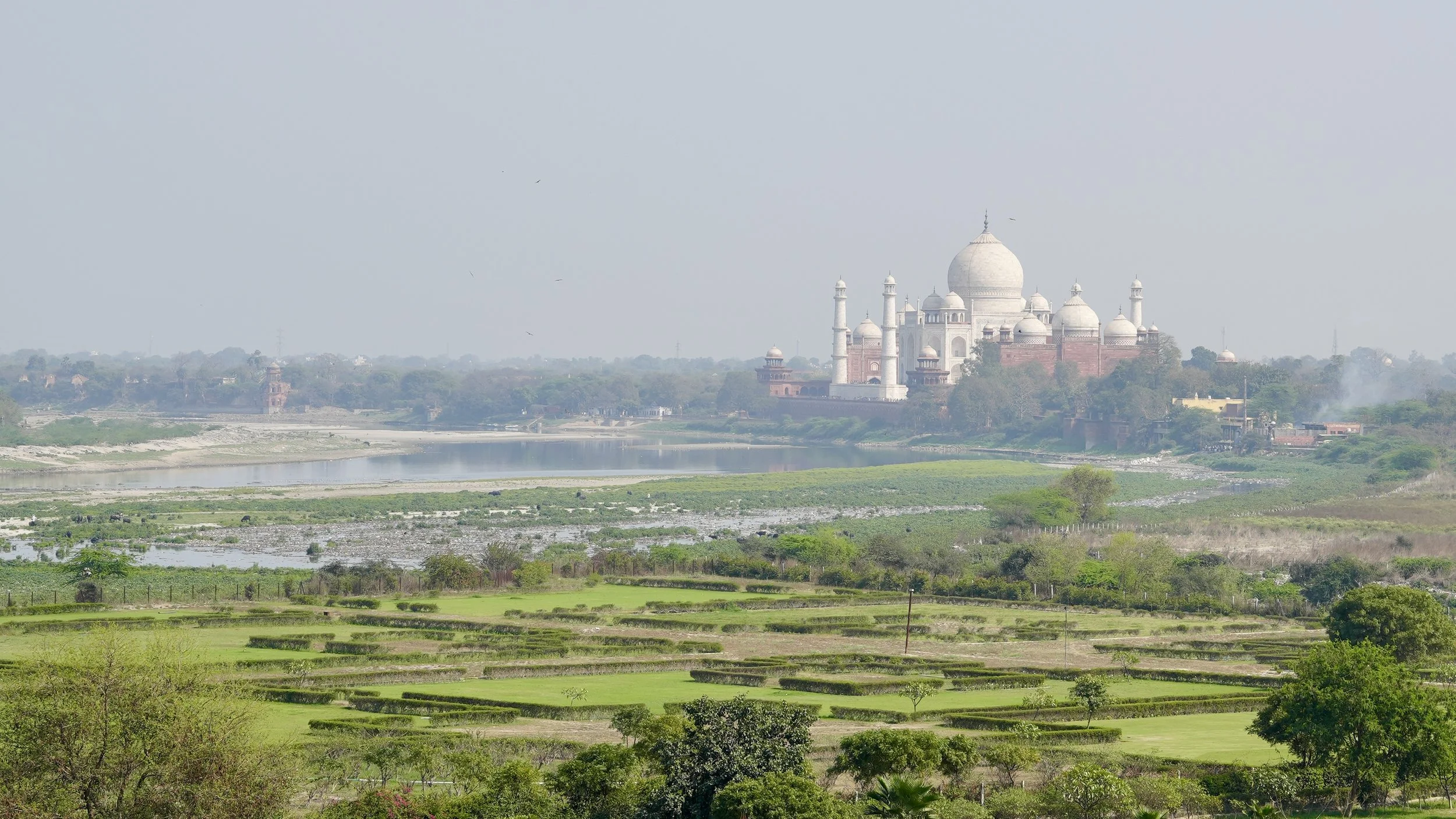
Taj Mahal seen in the distance from Agra Fort across the Yamuna River
Heat and a Needed Pause
The heat was intense. As a group we were beginning to flag, and I was feeling it more than most. Noticing that I was struggling, our Tour Manager quietly drew me aside from the main party and found a shaded corner where we could pause. It was a small gesture, but one I genuinely appreciated. Travel can sometimes push you harder than you expect.
Back at the hotel we finally had our first proper break of the trip, a couple of unstructured hours with nothing scheduled. Some of the group, including my wife, headed for the pool to catch the late afternoon sun. I chose a different kind of recovery and surrendered gratefully to the cool of the room and a short sleep.
Later, while much of the group went out for drinks, we decided on something simpler. Dinner, just the two of us.
It was the first time in over a week that we had sat down on our own. After days of shared coaches, shared guides and shared timetables, it felt unexpectedly luxurious to sit opposite each other and talk at our own pace.
Nothing dramatic, nothing grand… just a little space, which turned out to be exactly what we needed at that moment.
Additional photos