The Long Road to Ranthambore
Agra to Ranthambore
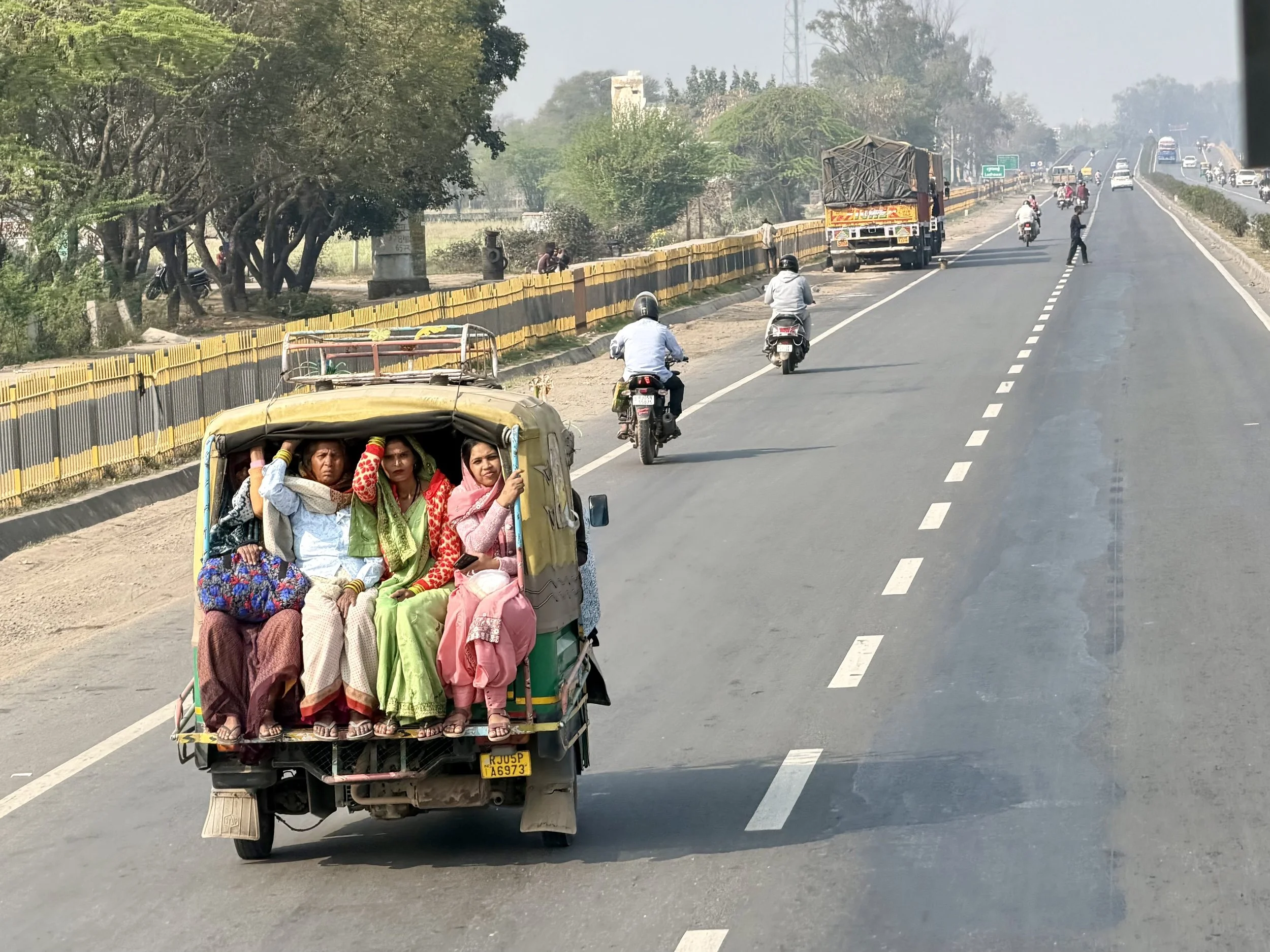
We left Agra in the thick of the morning rush, joining the Gwalior Road as it pulled us out of town. It’s a long, straight stretch lined with shops and small businesses, many of them connected to weddings - garland suppliers, decorators, cars fitted with towering speakers ready for procession season. Tuk tuks crammed with five, six, even eight passengers buzzed in the opposite direction, along with a constant stream of motorbikes heading into the city.
Then, almost abruptly, we were released onto the Delhi–Mumbai Expressway. Wide, smooth and improbably modern after the intensity of Agra, it stretched ahead in ruler-straight lines, a ribbon of tarmac dissolving into the heat haze. From the front seat of the coach, framed by the windscreen, it felt as though we were finally heading into open country.
The expressway carried us south-west mile after mile. Bougainvillea flared pink along the central reservation. The sky was pale and expansive. Occasionally the land opened out into flat fields reaching to the horizon, broken by low villages and the chimneys of brick kilns. It was a journey defined by distance rather than drama, the steady hum of tyres becoming almost hypnotic.
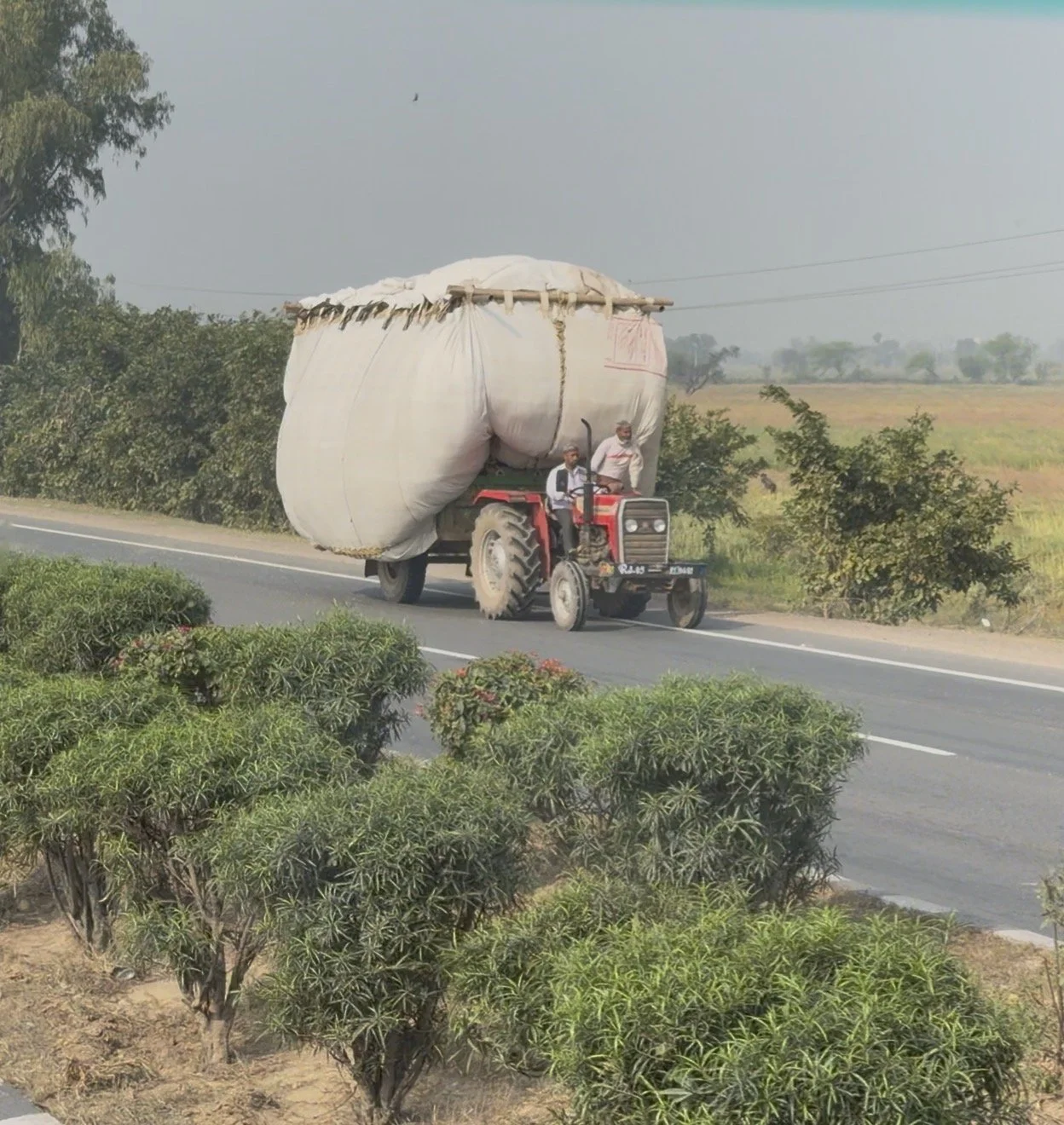
On the older parallel roads, life moved at a different pace. Tractors and open trucks travelled in loose formation. One truck, painted in bright greens and yellows, had wooden benches fixed along its sides; a group of women in orange headscarves laughed and waved as they headed towards the fields. Another vehicle was stacked improbably high with millet bound for market. Agriculture was everywhere, millet already cut in places, men and women working methodically beneath the strengthening sun.
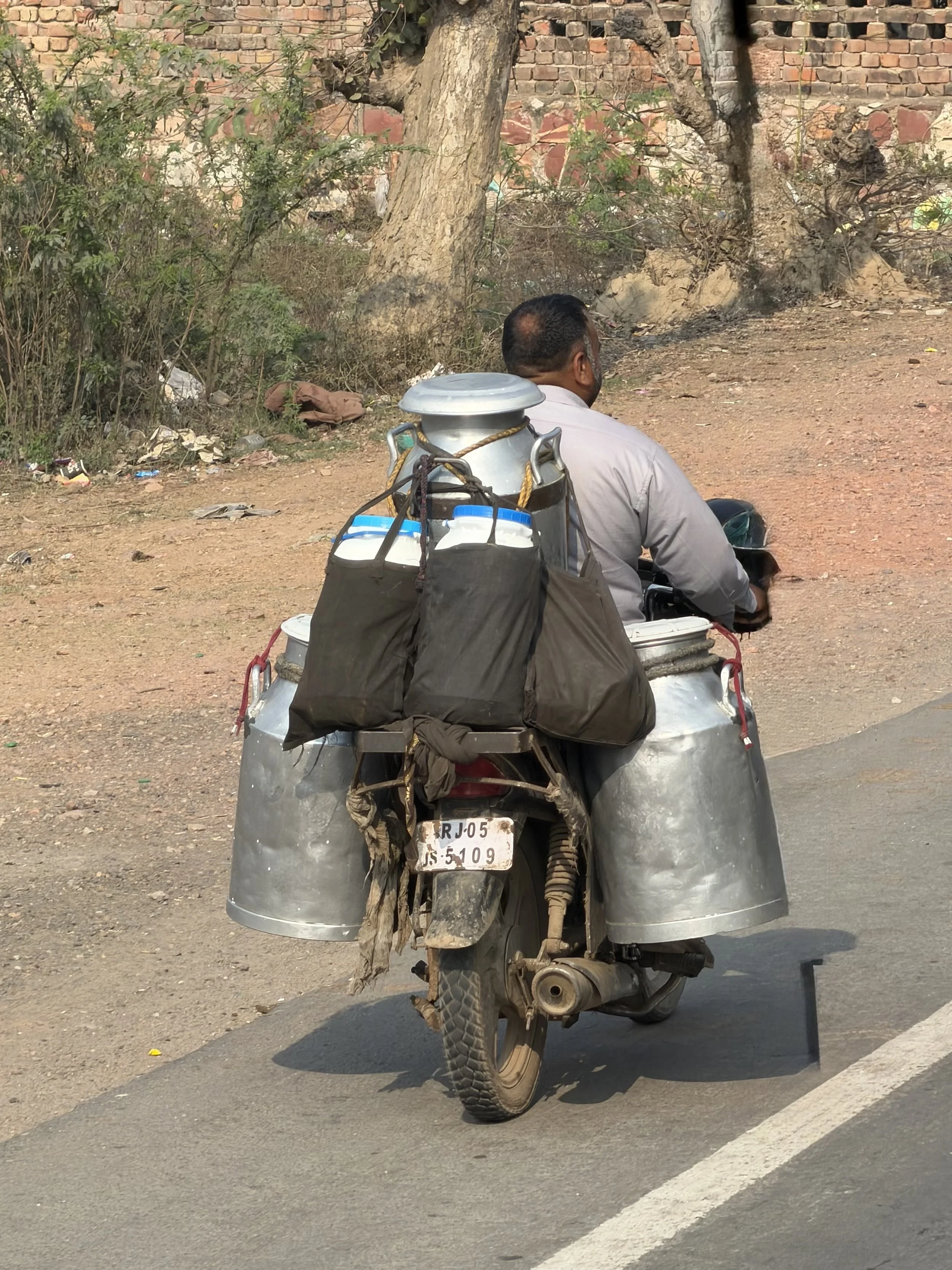
Closer to villages, the highway fed into smaller roads and the traffic thickened again. A milkman rode past on a motorbike burdened with large aluminium churns strapped to either side and behind him, the containers catching the morning light. It seemed impossible that the bike could balance, yet it did, wobbling slightly as he edged past a bullock cart.
Chand Bawri
On the long drive south towards Ranthambore, we stopped at Chand Bawri in the small village of Abhaneri, a place that feels almost hidden until you stand at its edge. Built over a thousand years ago, most likely in the 8th or 9th century, the stepwell drops suddenly away from ground level in a precise geometric cascade of stone. From above, the symmetry is almost hypnotic: tier upon tier of narrow steps forming a repeating zigzag pattern down three sides, converging on the dark square of water far below.
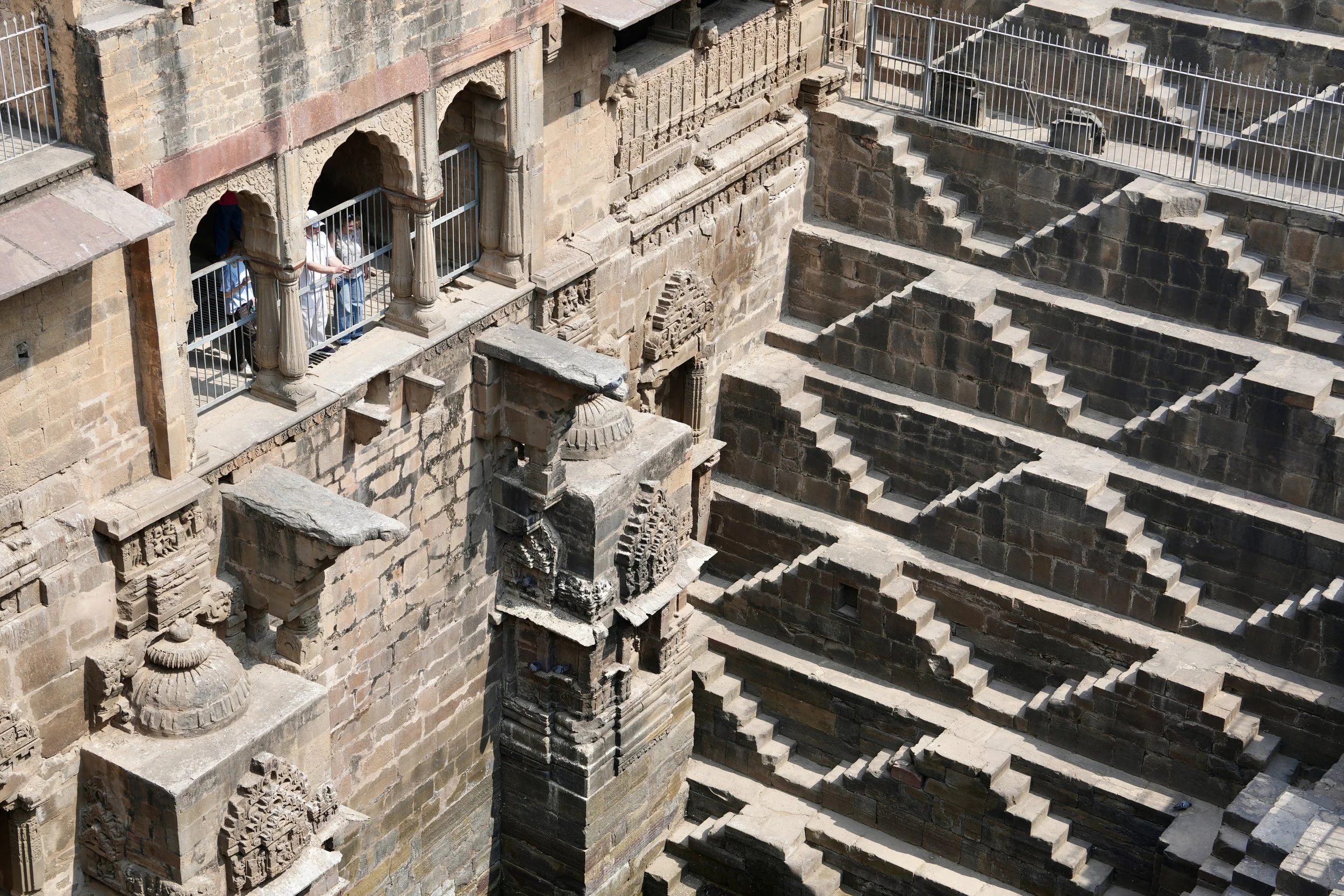
The steps at Chand Bawri
What strikes you first is the scale. It is much deeper than you expect — around thirteen storeys — and the sheer number of steps, said to be over 3,000, creates a rhythm that pulls the eye downwards. The stone has weathered to soft greys and browns, each block marked by time. Pigeons perch quietly on the ledges, and the whole space carries an unexpected stillness despite its grandeur.
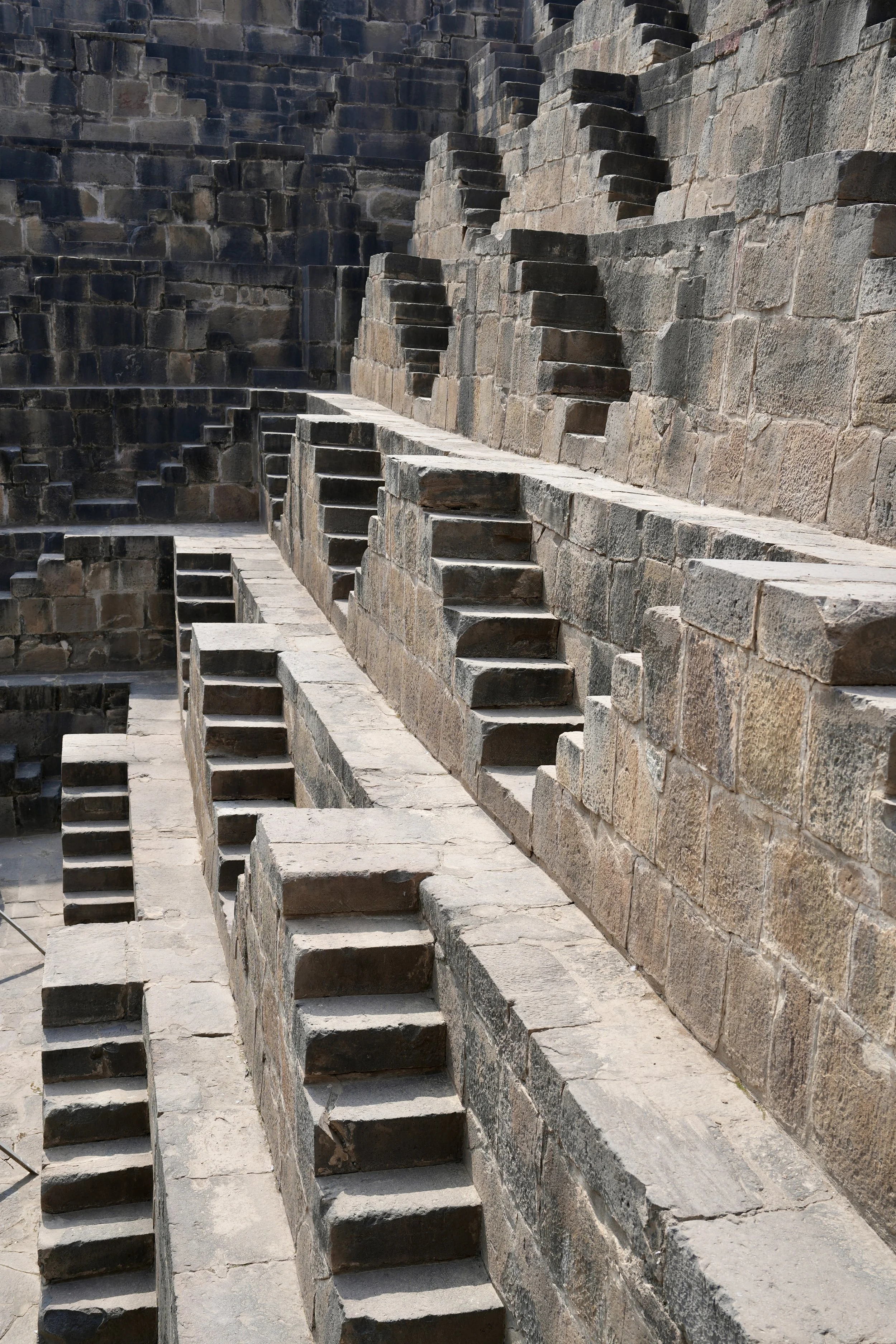
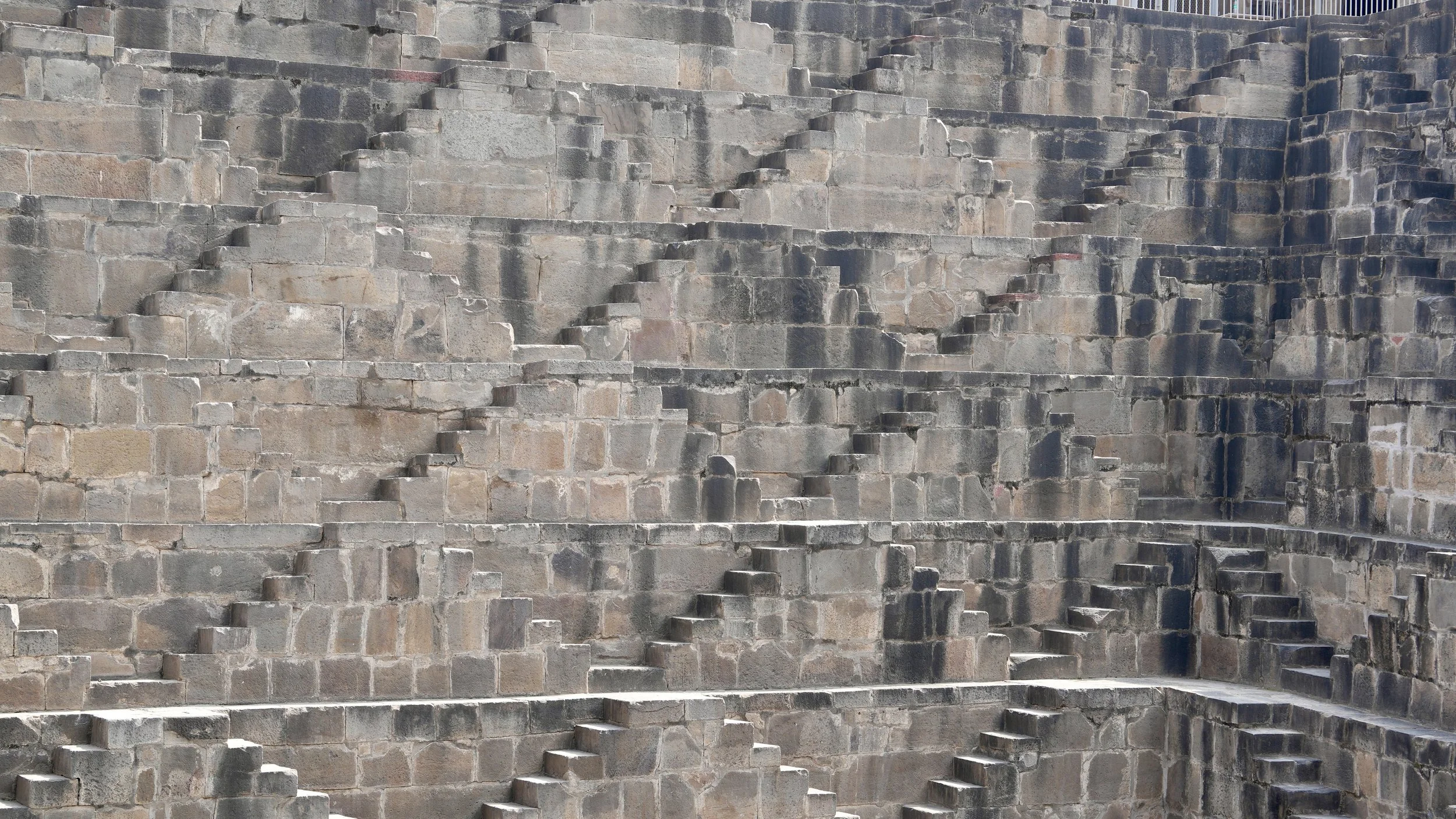
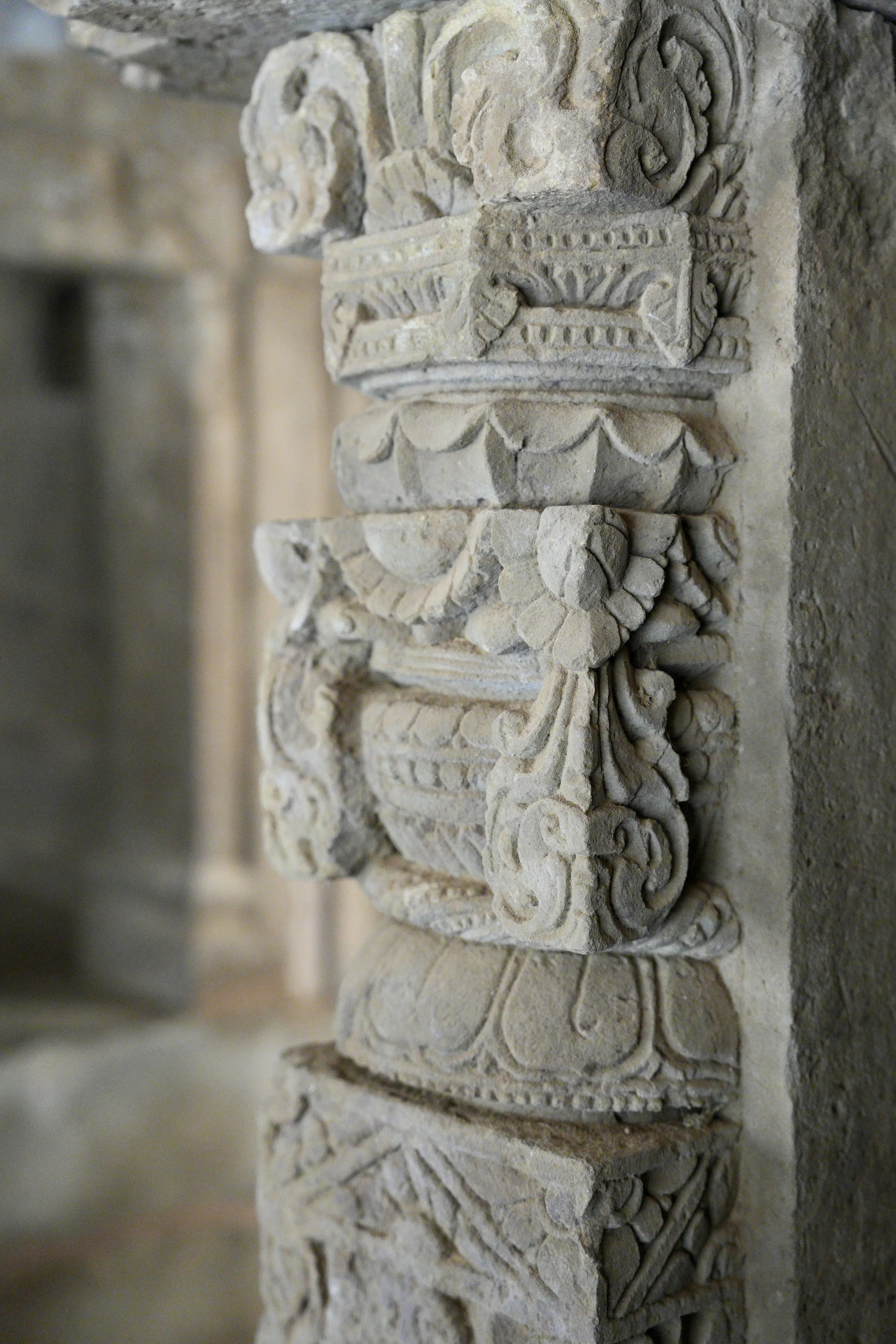
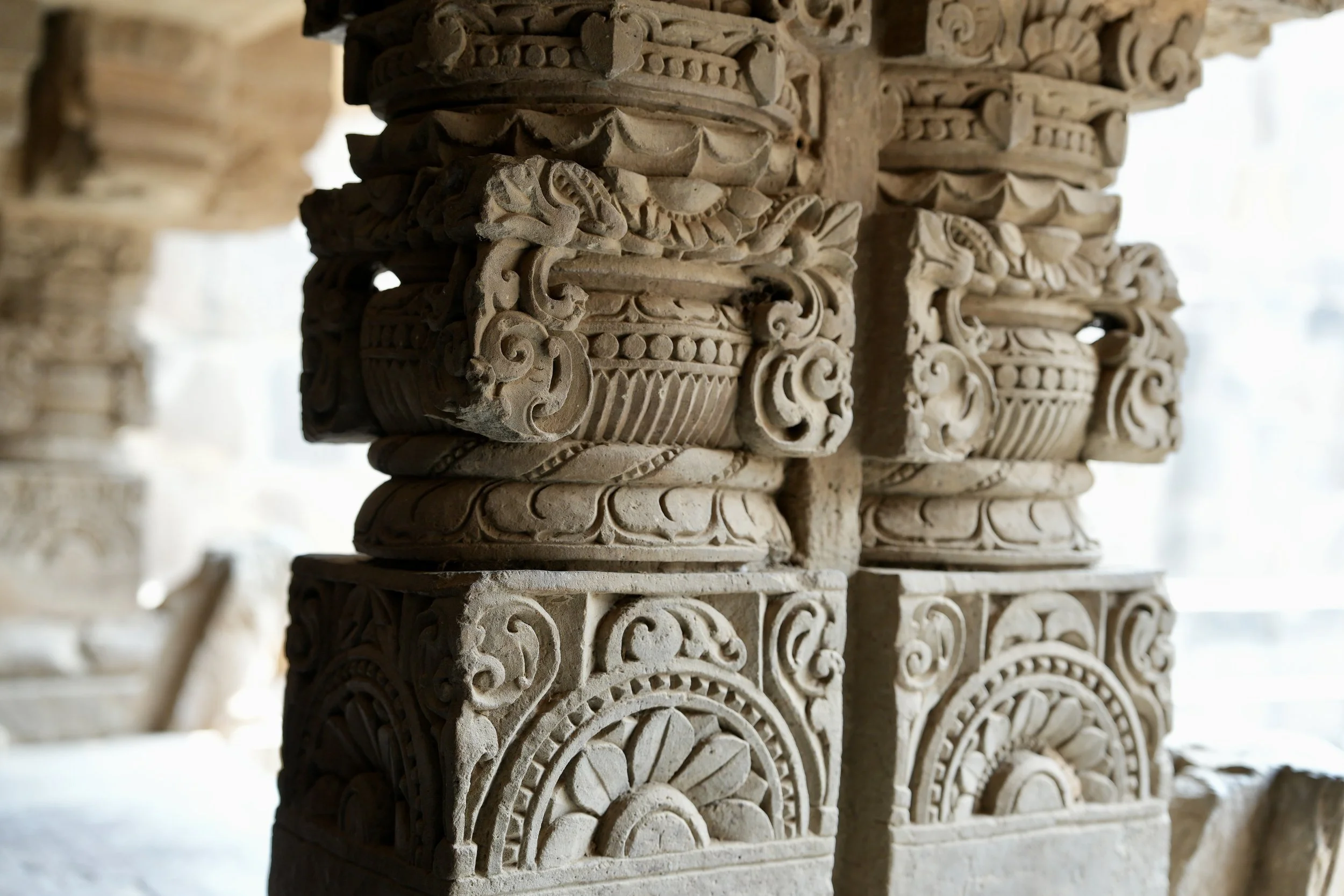
On one side, carved pavilions and pillars offer shade, their brackets and capitals intricately detailed in contrast to the stark geometry of the well itself. From the cool interior, looking out through scalloped arches at the patterned walls beyond, you sense how practical necessity and artistry were once completely intertwined. In a region where water has always been precious, Chand Bawri was both engineering and architecture, a communal lifeline carved into the earth.
Harshat Mata Temple
Right beside Chand Baori stands the Harshat Mata Temple, which dates back to around the 8th or 9th century and was dedicated to Harshat Mata, the goddess of joy and happiness. What you see today is largely a ruin, but a very dignified one. The original shikhara (tower) has long since collapsed, and much of the structure was damaged during later invasions, yet the raised platform and carved fragments remain.
We walked around taking photos of the stonework whilst a few members of the group removed their shoes and walked to the top of the temple. Scattered around the courtyard are intricately carved blocks, floral motifs, dancing figures, geometric patterns, many of them clearly once part of a much taller, more elaborate structure. The carvings have that early medieval north Indian style: strong lines, rhythmic repetition, and a sense of movement in the figures.
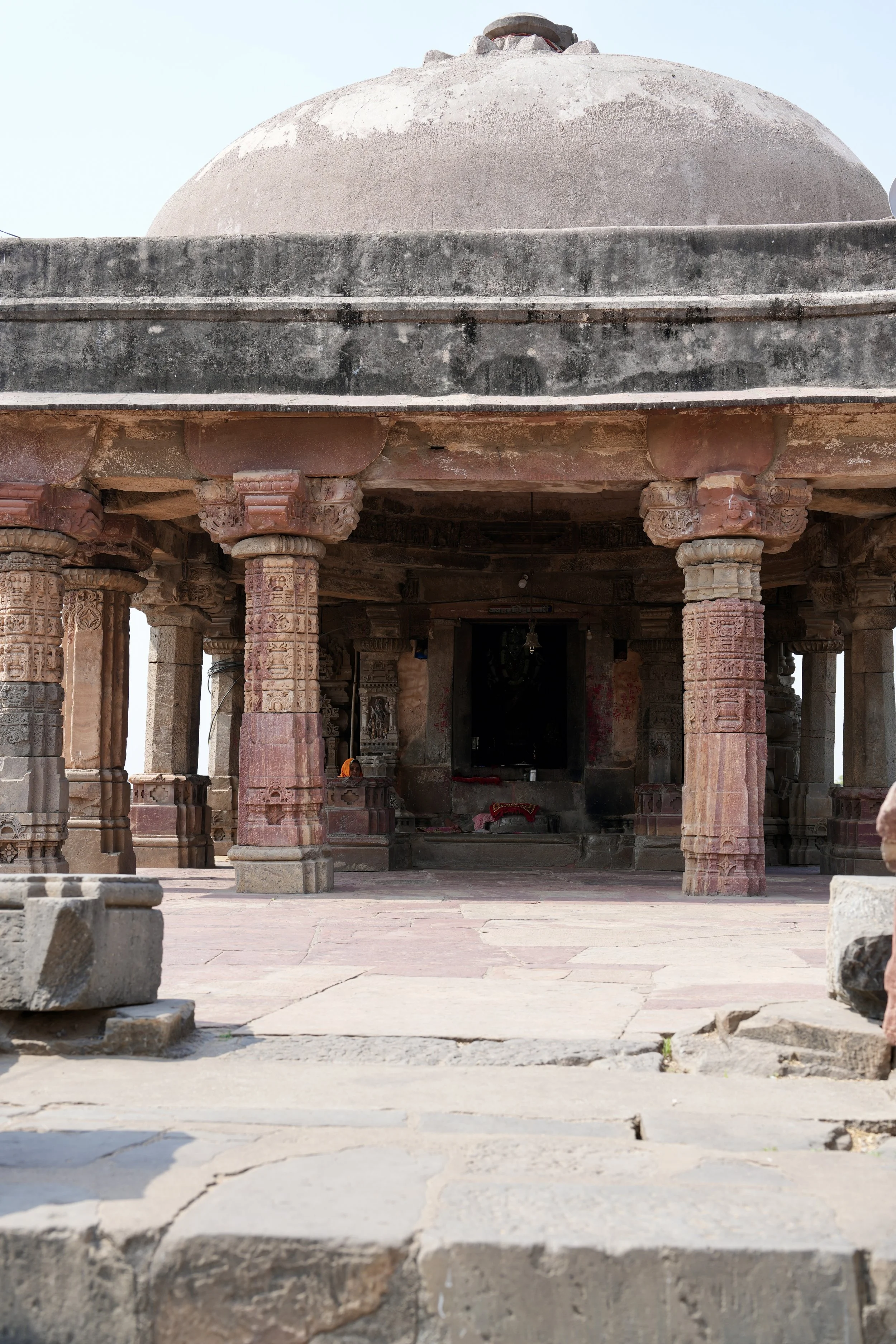
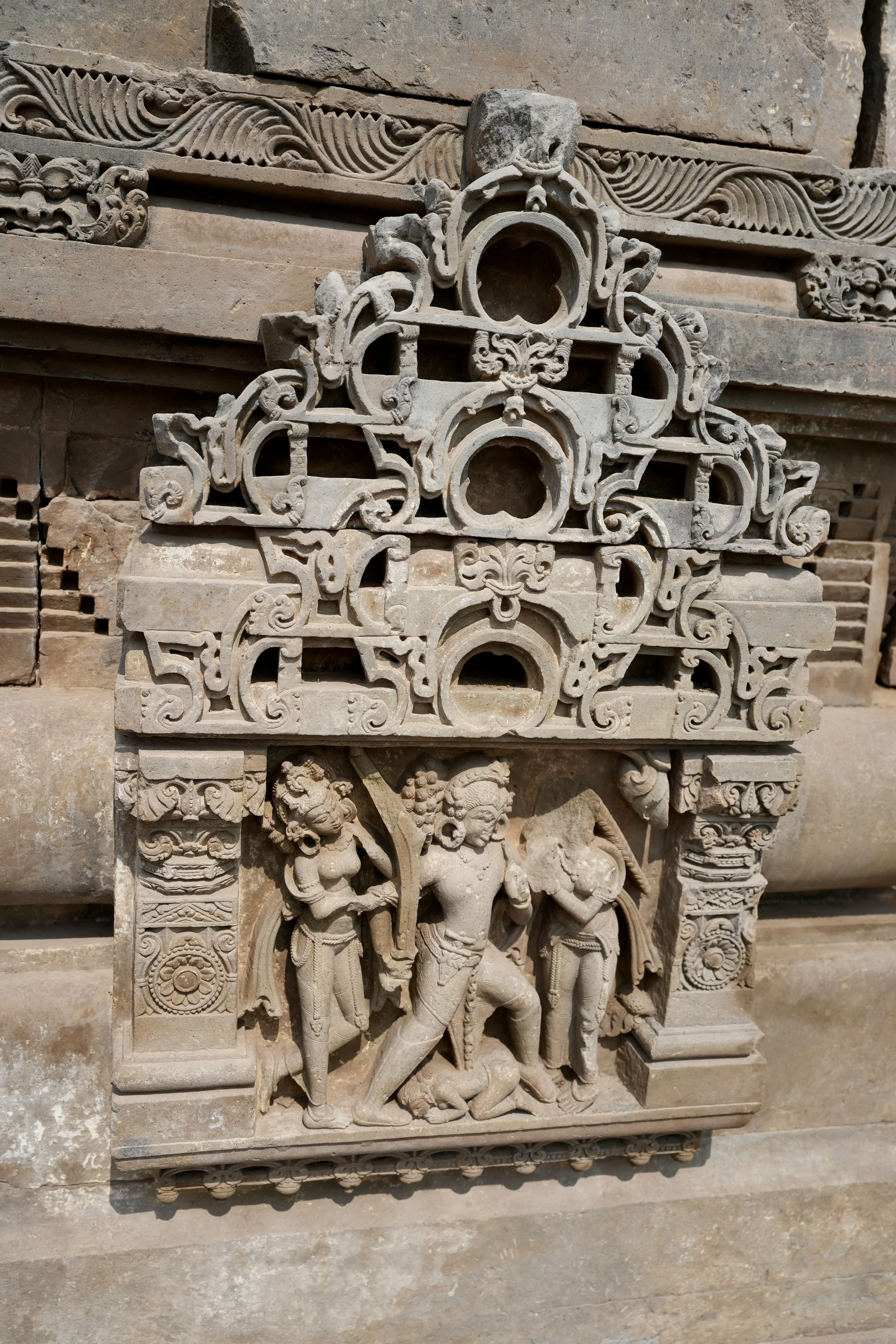
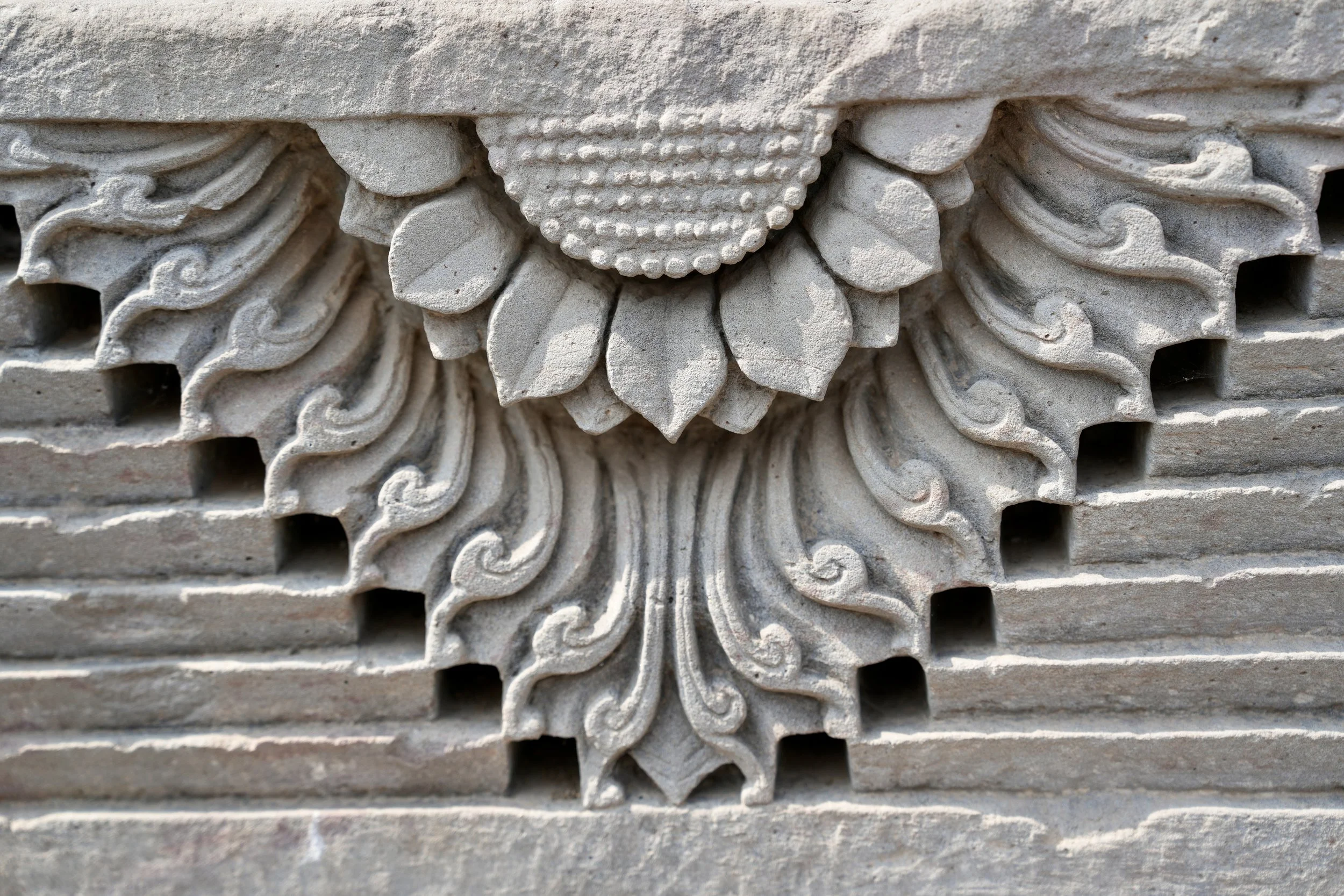
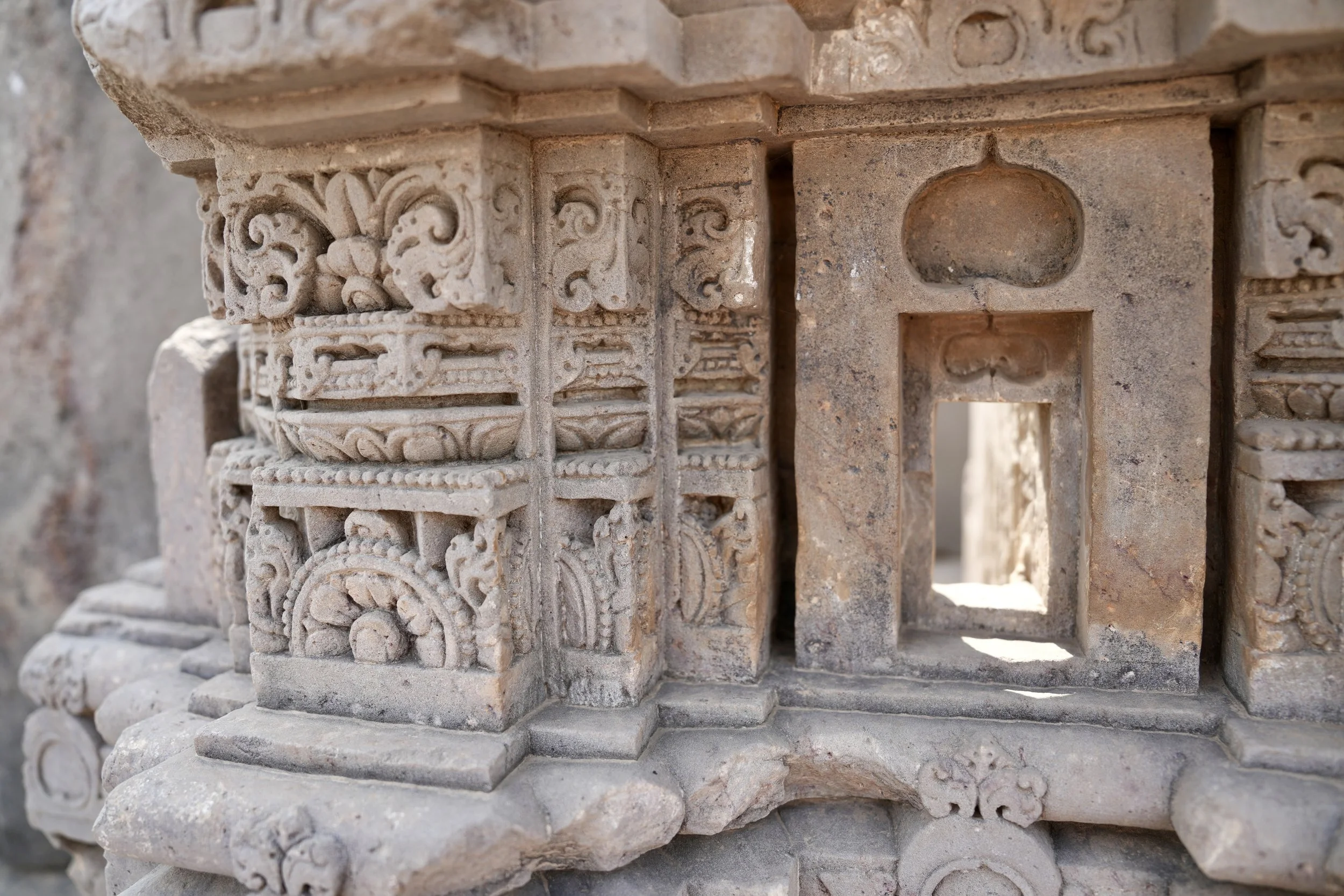
Compared with the dramatic geometry of the stepwell, the temple feels quieter, more intimate. Fewer people linger there. It’s open to the sky, the sandstone warmed by the Rajasthan sun, with the village close by, cows wandering, children playing, farmers passing by on the road just beyond the historic stones.
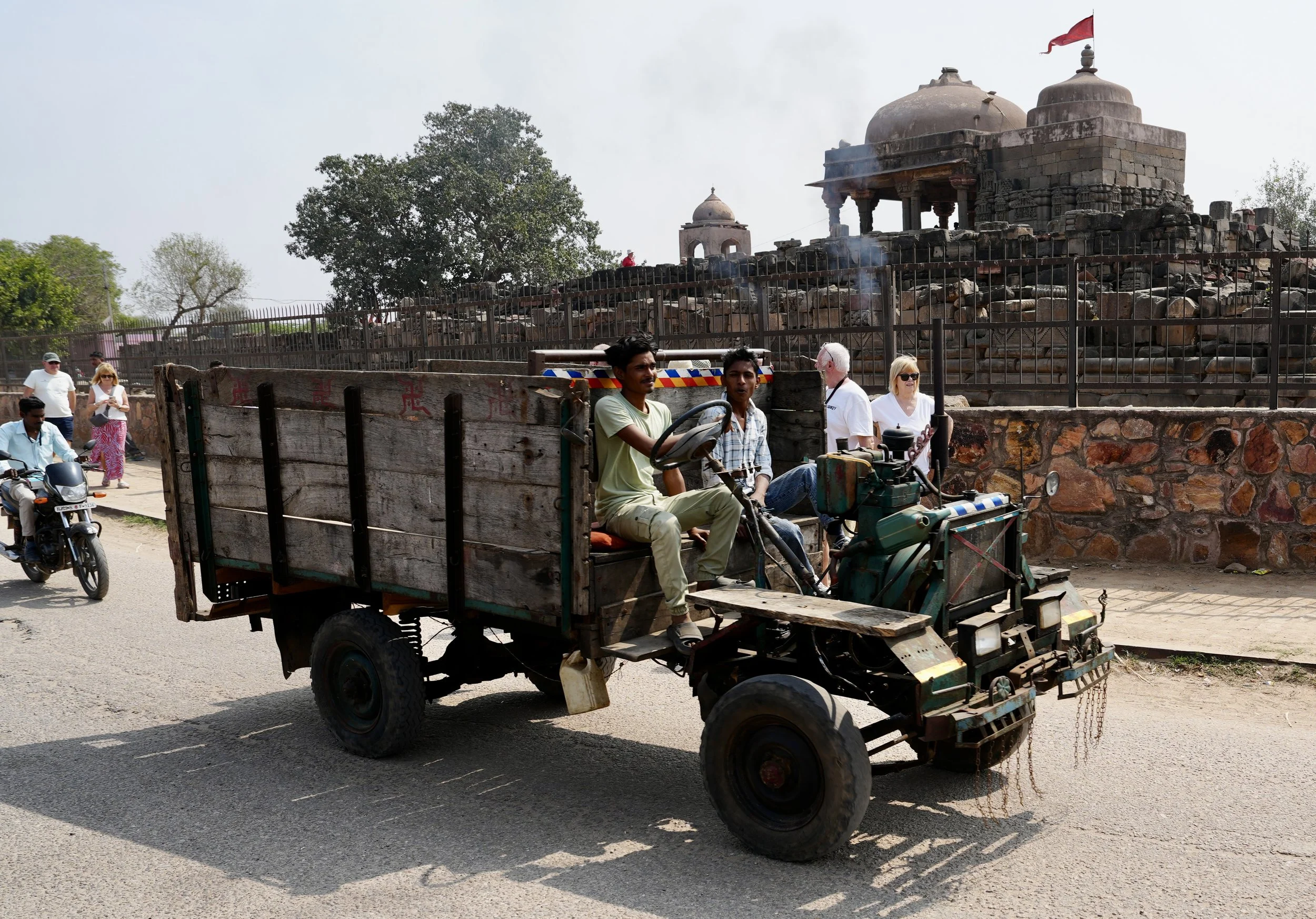
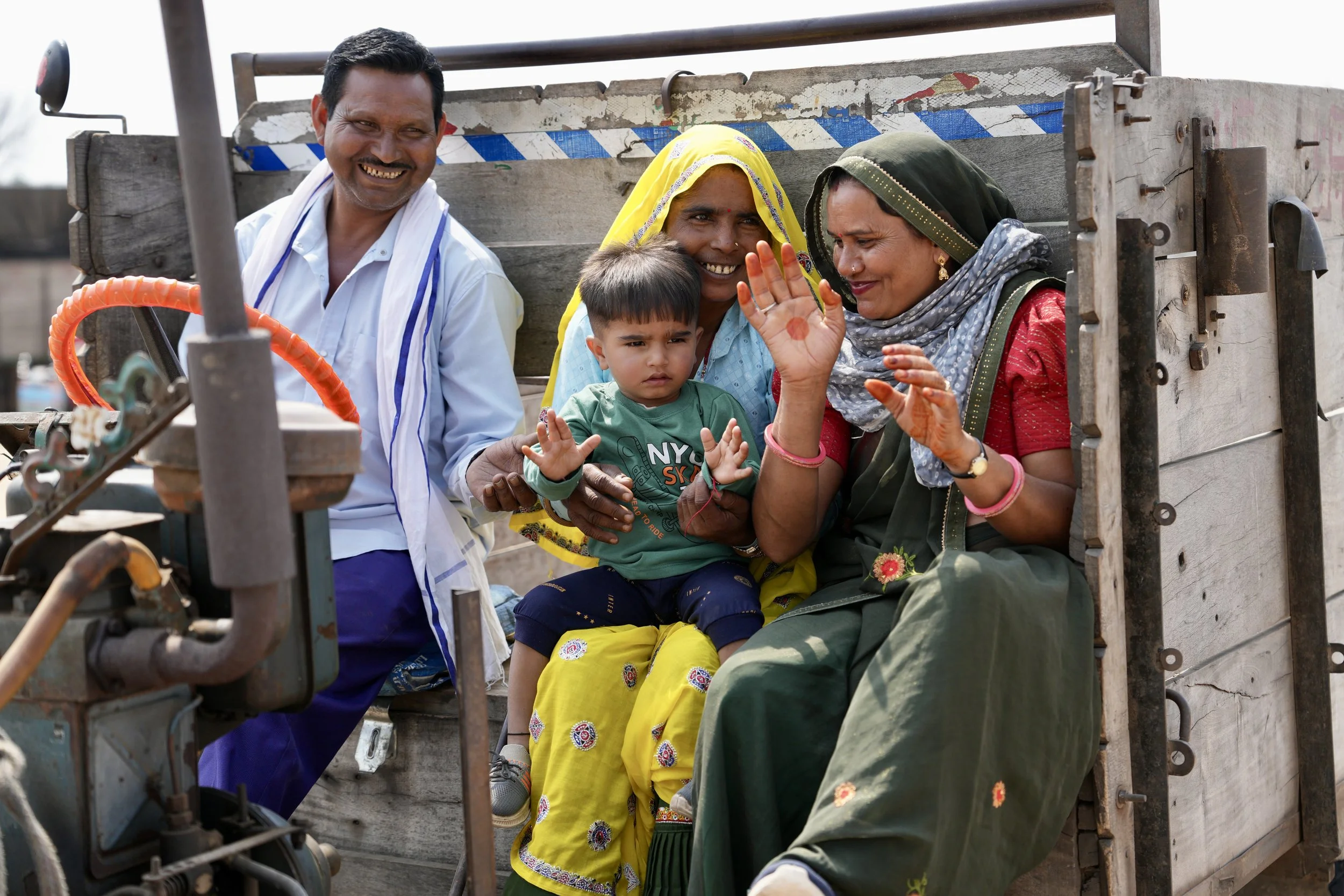
There’s something fitting about their proximity. One structure devoted to water — survival, storage, engineering precision. The other to devotion and ritual. Practical necessity and spiritual life side by side, sharing the same courtyard space.
As a pause on the journey to Ranthambore, it felt like stepping briefly into another era — a reminder that long before highways, survival here depended on ingenuity, patience and respect for the land.
As the landscape began to dry and thin, our guide shouted from the front of the coach. In the scrubby fields stood a small group of nilgai, the so-called blue bull, their grey-blue coats almost purple in the glare. They watched us with mild indifference before turning back towards the thorn trees. It felt like the first hint that Ranthambore’s wildlife was not far away.
Gradually the vegetation changed. Low acacias gave way to taller trees. Then, unexpectedly, palms appeared, their silhouettes sharp against the sky. The air seemed drier, the soil redder. The long, engineered lines of the expressway gave way to narrower roads edged with dust and stone.
The Tigress
By the time we approached Sawai Madhopur, the gateway to Ranthambore, after eight hours on the road, we were more than ready to stop. The drive had been long and dusty, and thoughts had shifted from landscapes to showers and dinner.
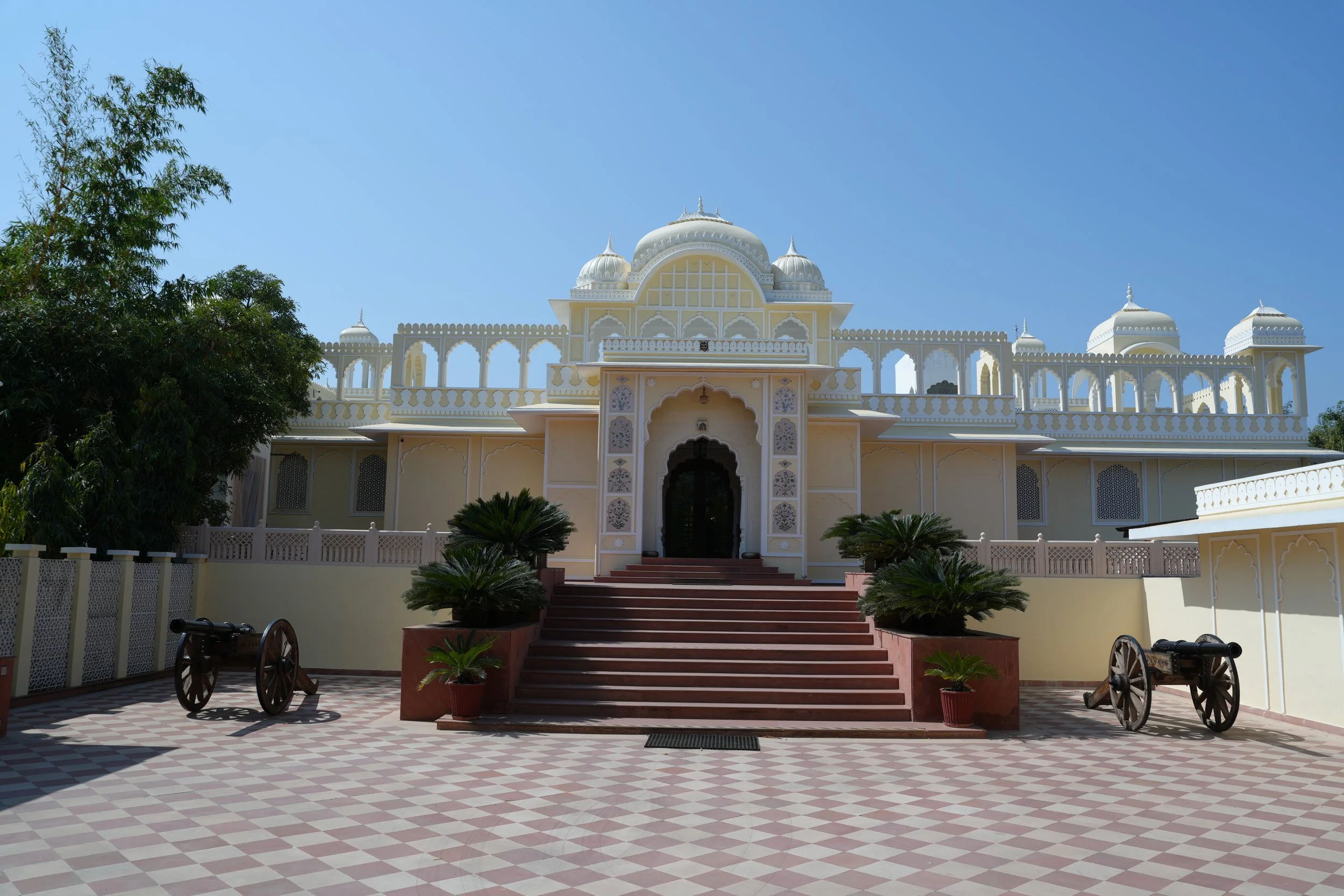
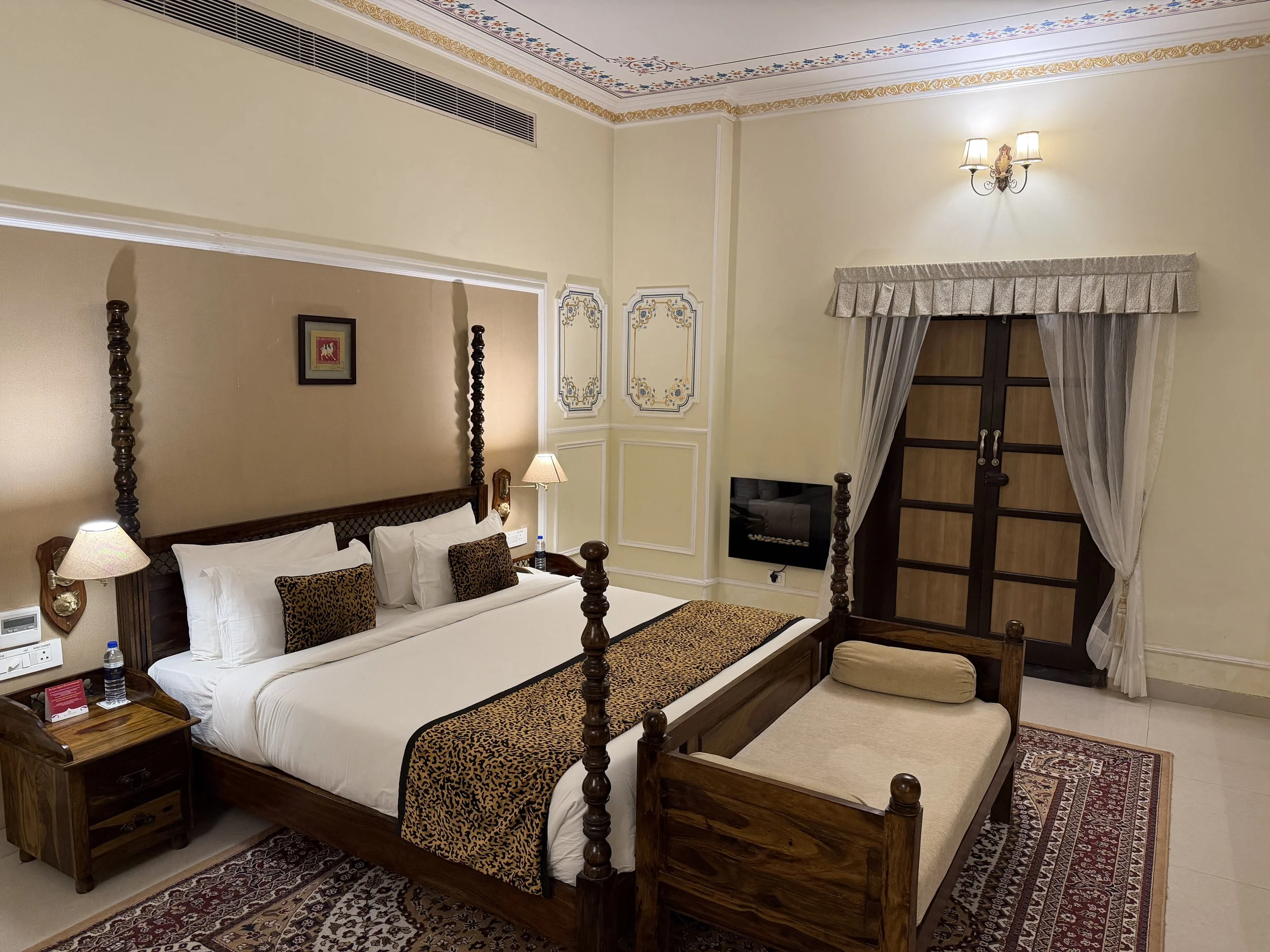
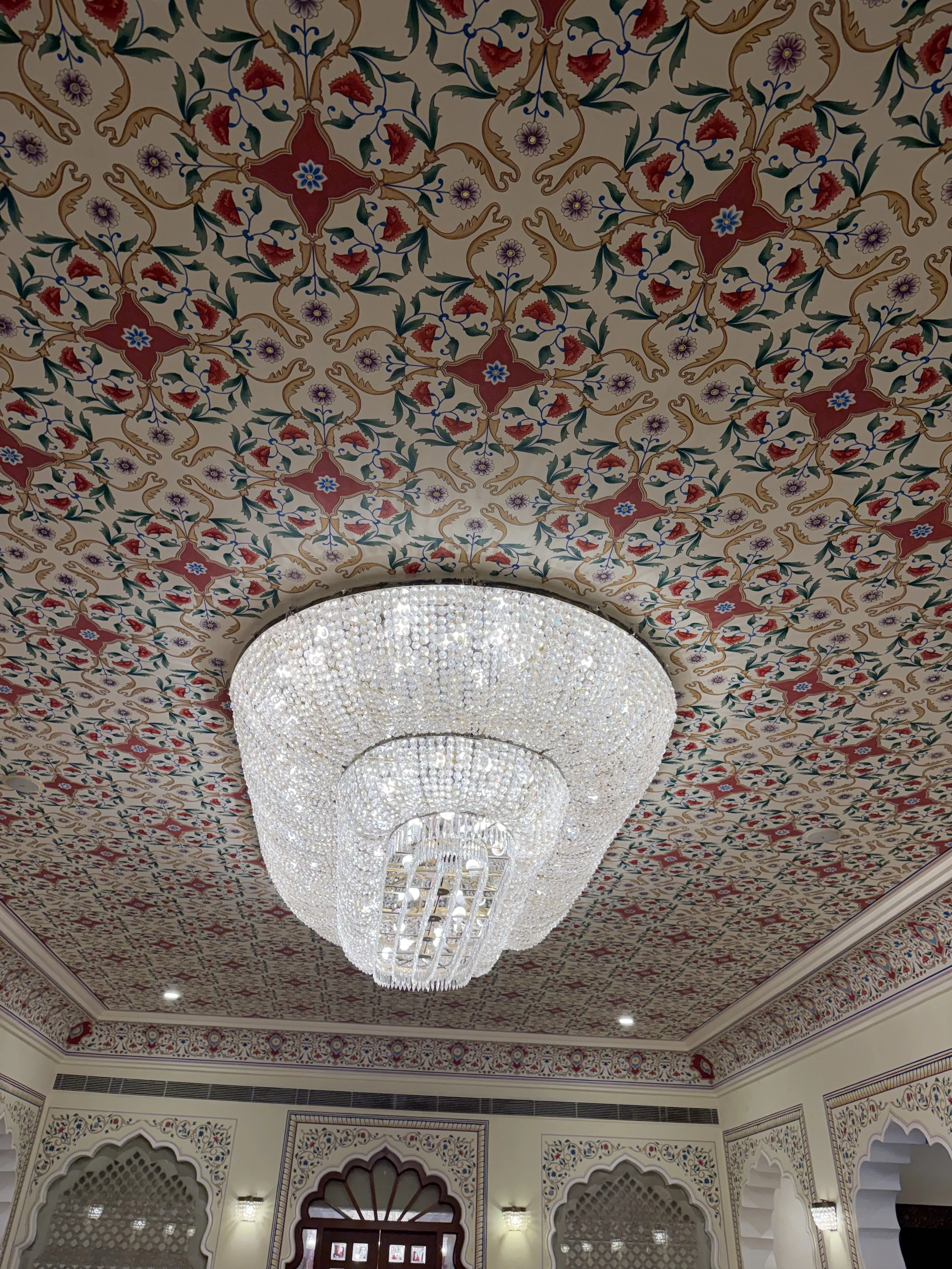
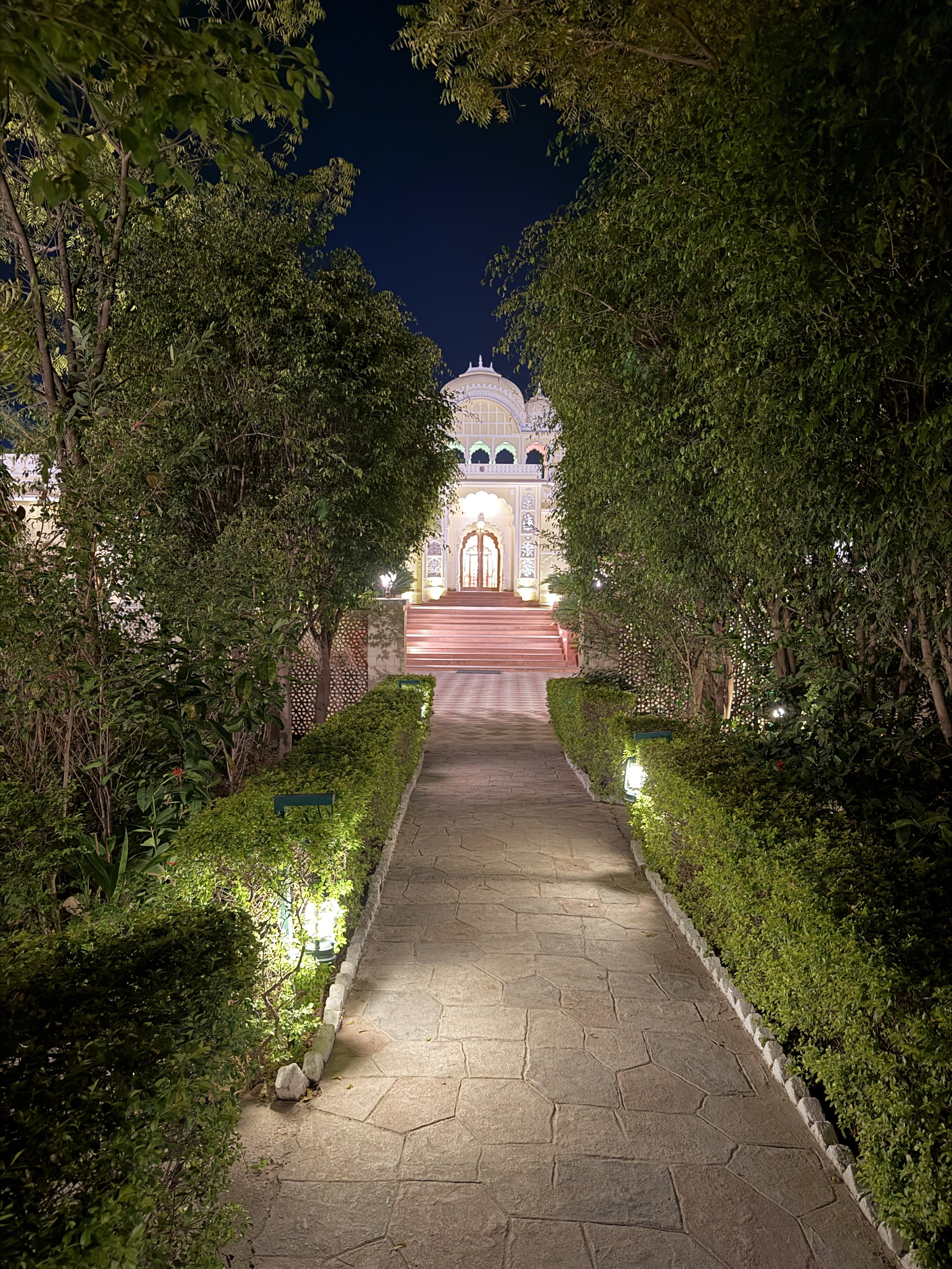
I haven’t said much about the hotels so far, but The Tigress deserves a mention. It has been the best of the trip to date: spacious bedrooms, genuinely large bathrooms, and each room with its own small courtyard or terrace. After a day on the coach, it felt like somewhere you could properly exhale.
It’s worth showing a few photos.