Rickshaws, Rain, and Red Sandstone: A Day in Delhi
The silence of Jama Masjid
The day began at Jama Masjid, India’s largest mosque and one of its most imposing. Shoes were left behind at the entrance, and women were asked to add a modest outer covering, provided on arrival. I opted for the full barefoot experience, which I hoped would add to the experience.
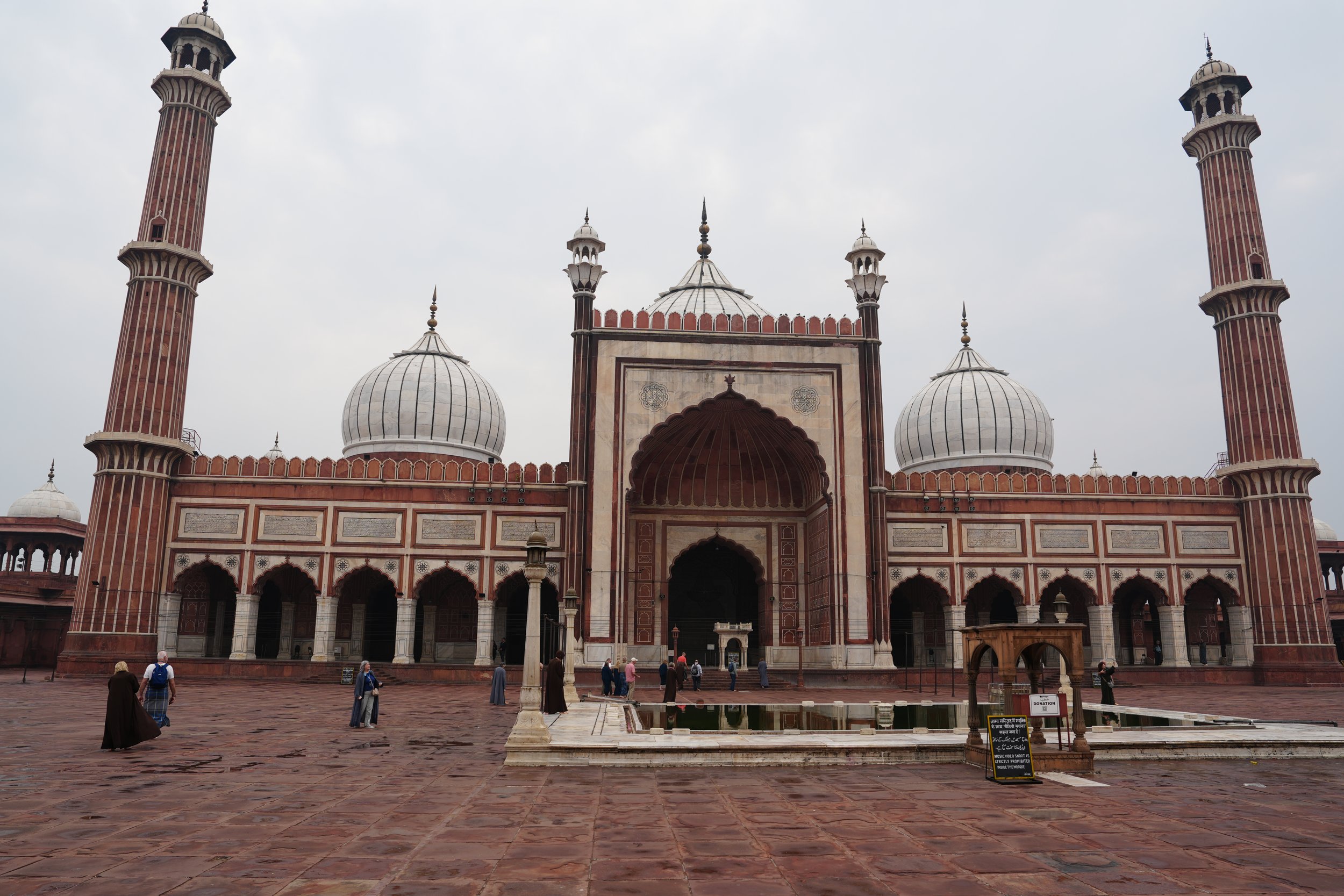
Jama Masjid, Old Delhi
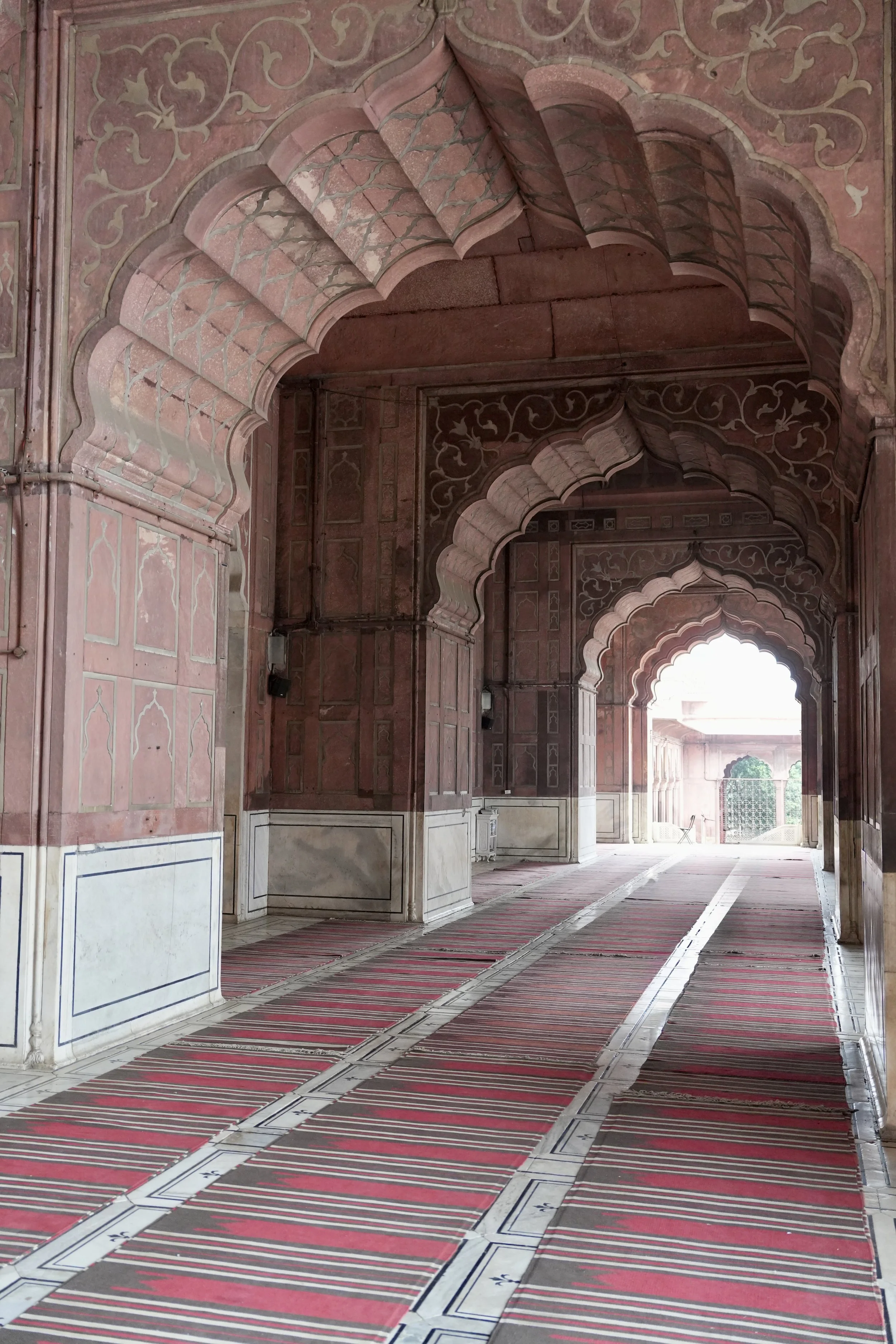
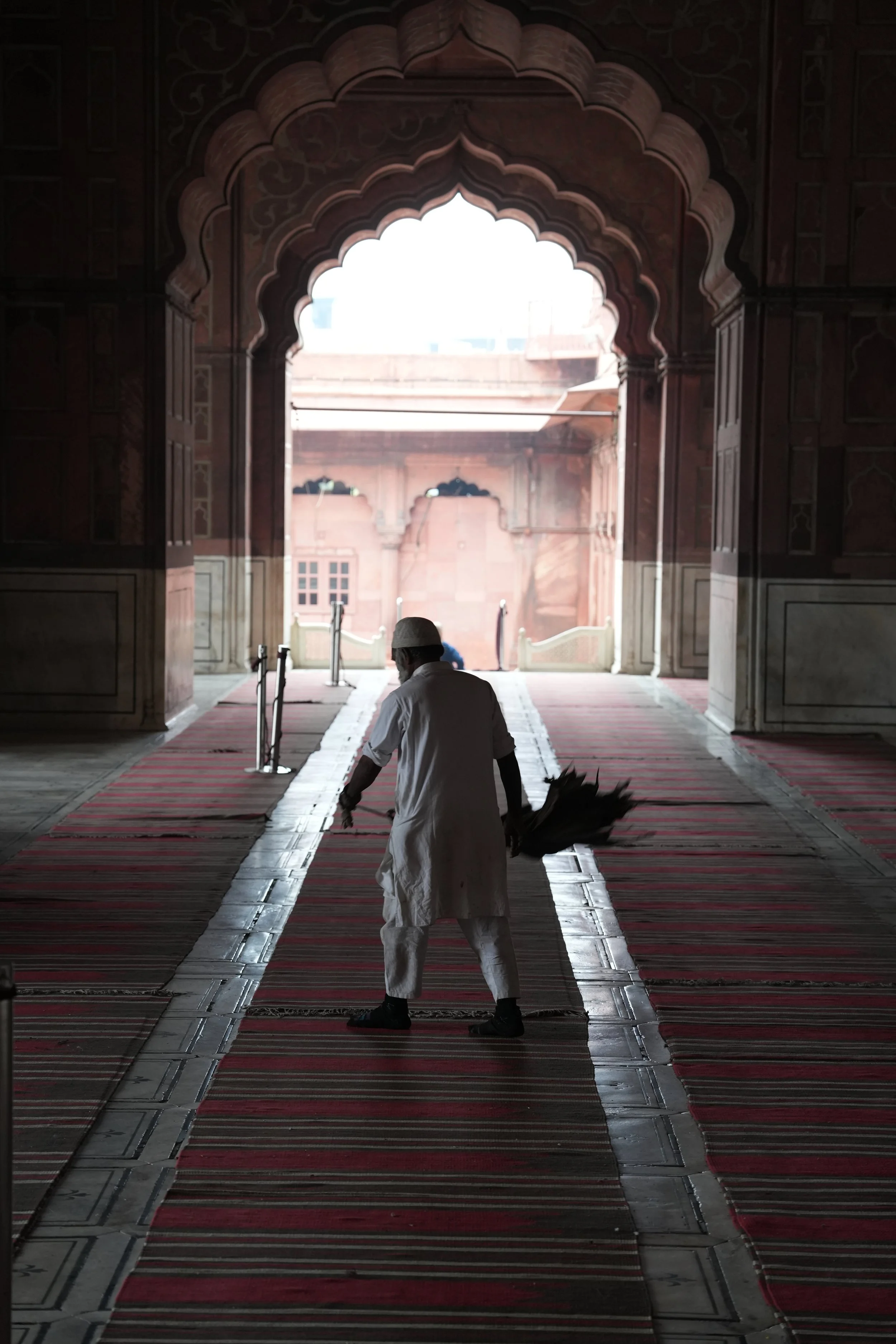
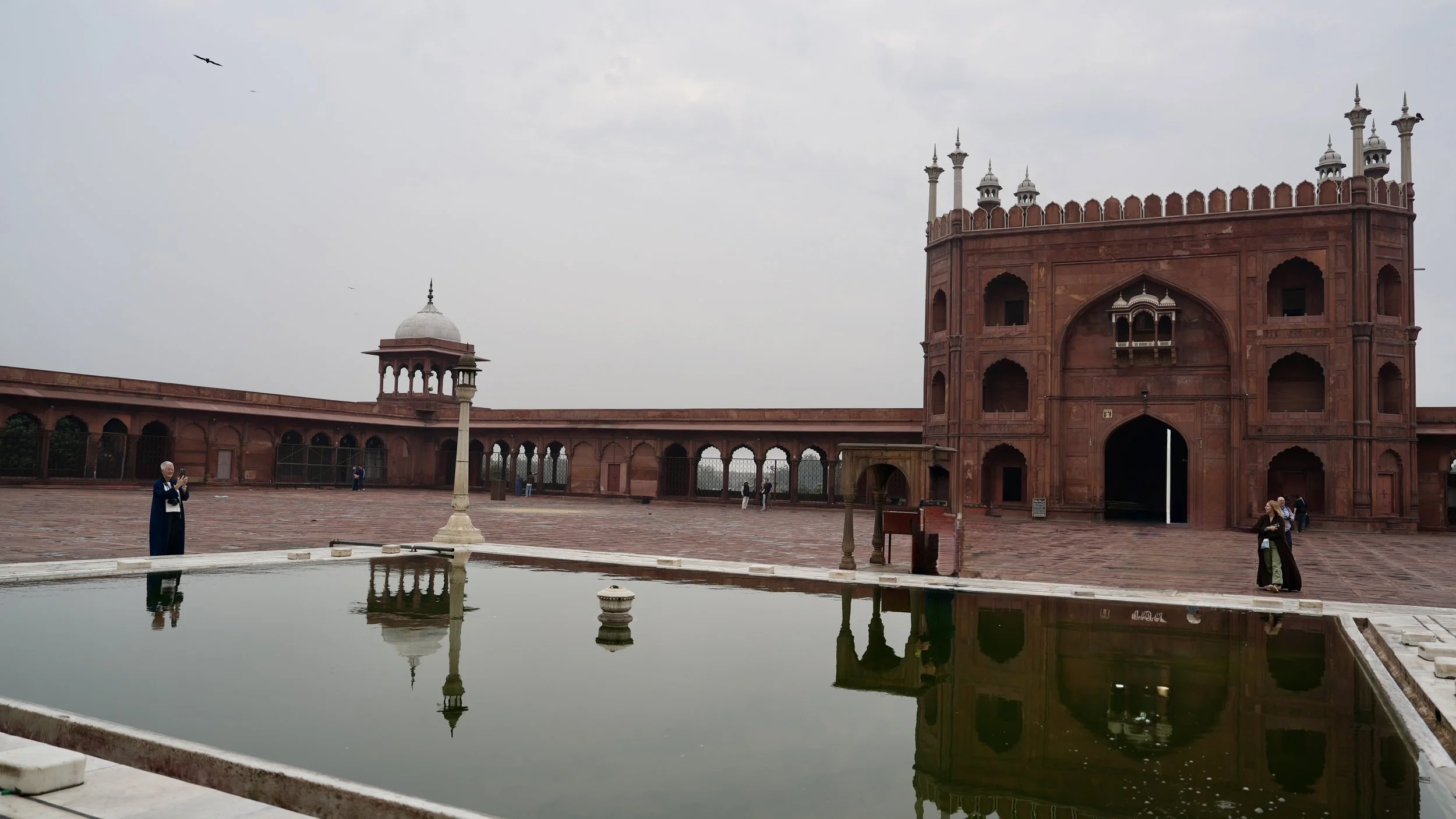
Inside, the mosque felt unexpectedly calm. It was quiet enough to notice details, the rhythm of arches, the repetition of individual prayer spaces laid out across the marble, even as the sound of horns drifted in from the surrounding streets, a reminder of the city pressing close on all sides. At that early hour we were almost alone, which made the scale of the place feel even more pronounced, though it didn’t take long for the space to begin filling. Walking through the halls, we watched a man methodically brushing one of the carpets, a small, everyday act set against architecture built to hold tens of thousands.
The Rickshaw through Chandi Chowk
Leaving the mosque, we were gently but firmly ushered towards a line of bicycle rickshaws waiting to take us into Chandni Chowk, the dense, colourful heart of Old Delhi. I felt a twinge of sympathy for our driver, I’m a tall passenger at the best of times, but he loaded us up without comment and pedalled off with quiet determination.
What followed was less a journey and more an immersion straight into Old Delhi. The streets were already alive, packed with people deep into the routines of the day. Shopkeepers lifted shutters and laid out wares, others prepared late breakfasts at the roadside, and cows stood patiently in the flow of traffic, completely unbothered by the disruption they caused. We threaded through a maze of narrow corridors and alleyways, the rickshaw squeezing through gaps that felt barely wider than the handlebars.
Eventually, the lanes spilled out onto the main thoroughfare, suddenly brighter and louder. Shops selling bridal gowns and jewellery lined the road, ornate and theatrical. Its also one of the few places in the world where you can see a Gurdwaras, a Christian church, a Hindu temple, and a Mosque all within a few hundred meters of each other.
Reflection at Raj Ghat
Our next stop was Raj Ghat, where Mahatma Gandhi was cremated on 31 January 1948, on the banks of the Yamuna. After the compression and momentum of Old Delhi, it felt as though a pause button had been pressed. After the momentum of the market, the memorial’s simplicity was striking,, surrounded by lawns and trees that soften both the sound of the city and the pace of the day.
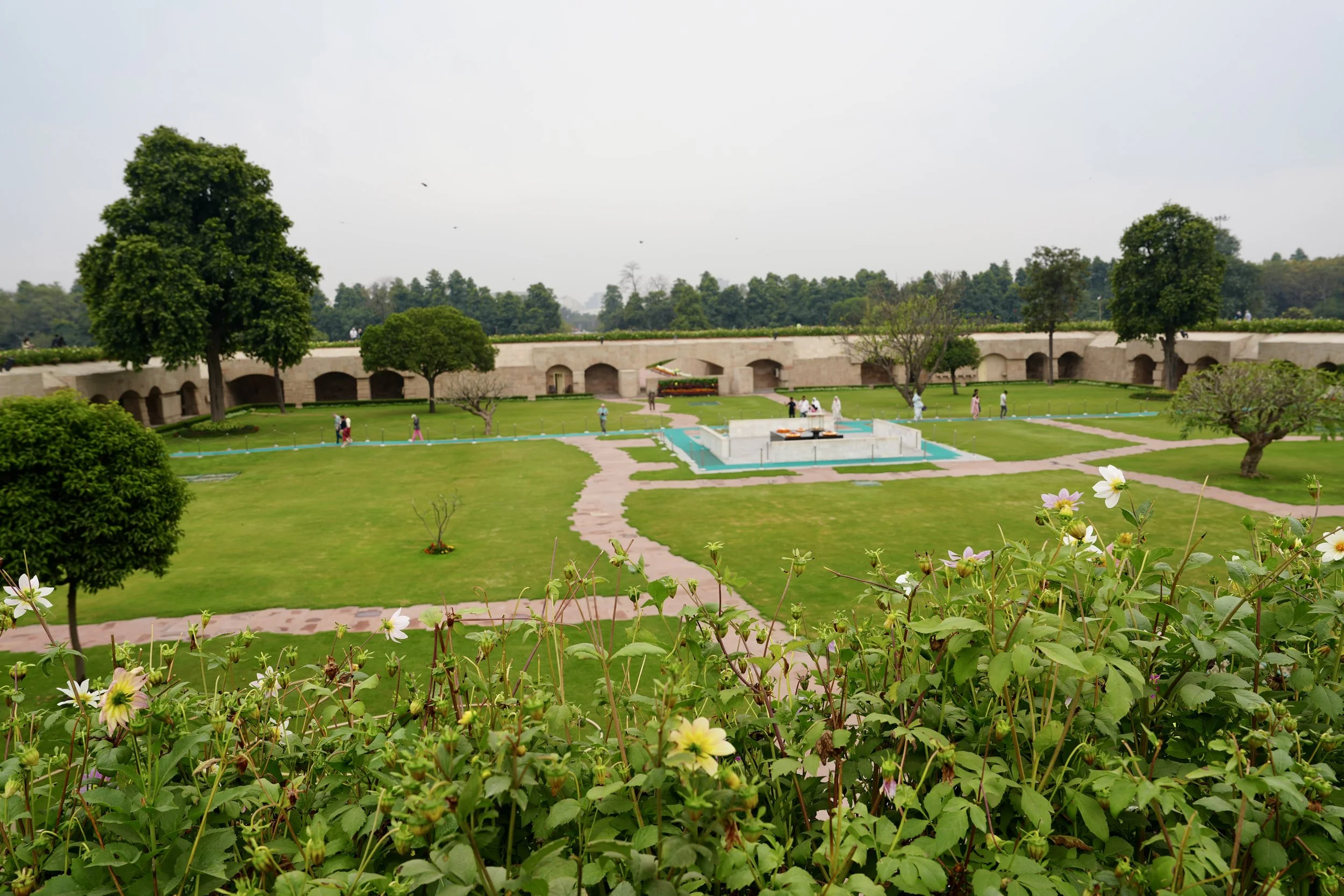
Raj Ghat
It was remarkably calm. In the background, Rose-ringed parakeets provided a constant chatter, while a brown-headed barbet hammered away at a nearby tree.
It was a brief visit, but a well-timed one, a moment of stillness after the sensory overload of the old city, and a quiet reminder of the history carried by this place and the enduring significance of the man it commemorates.
South to Qutub Minar
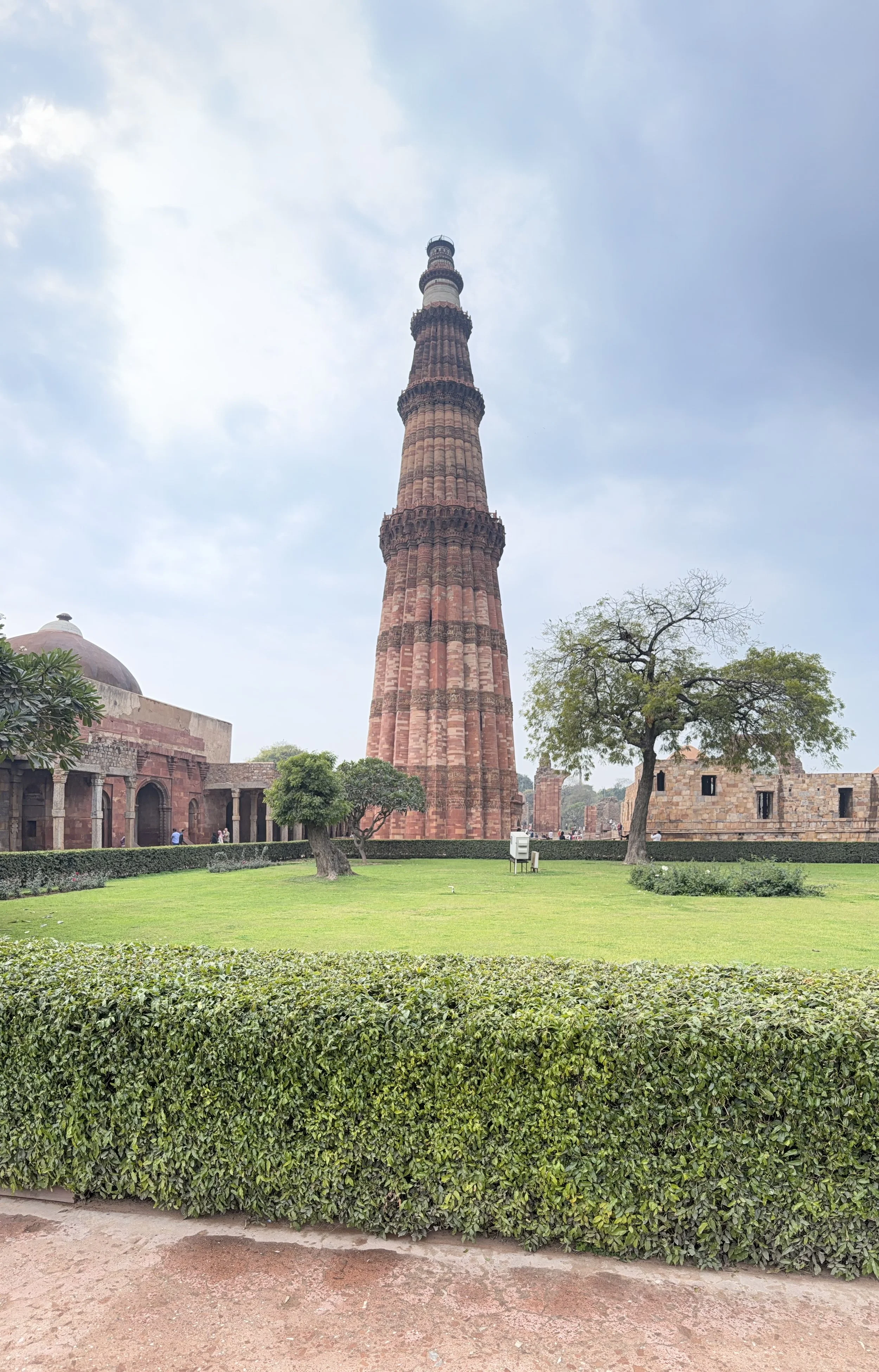
Before a late lunch, we crossed the city again, heading south to Qutub Minar, the UNESCO World Heritage Site begun in 1199. The tower was commissioned by Qutb-ud-Din Aibak, the first ruler of the Delhi Sultanate, and completed in stages by his successor Iltutmish, with later restoration by Firoz Shah Tughlaq after lightning damage. It stands at just over 72 metres high, making it the tallest brick minaret in the world.
The rain had returned by the time we arrived, light, steady, and enough to keep the temperature down without disrupting the visit. The damp air seemed to deepen the colour of the red sandstone, giving the lower storeys a richer tone.
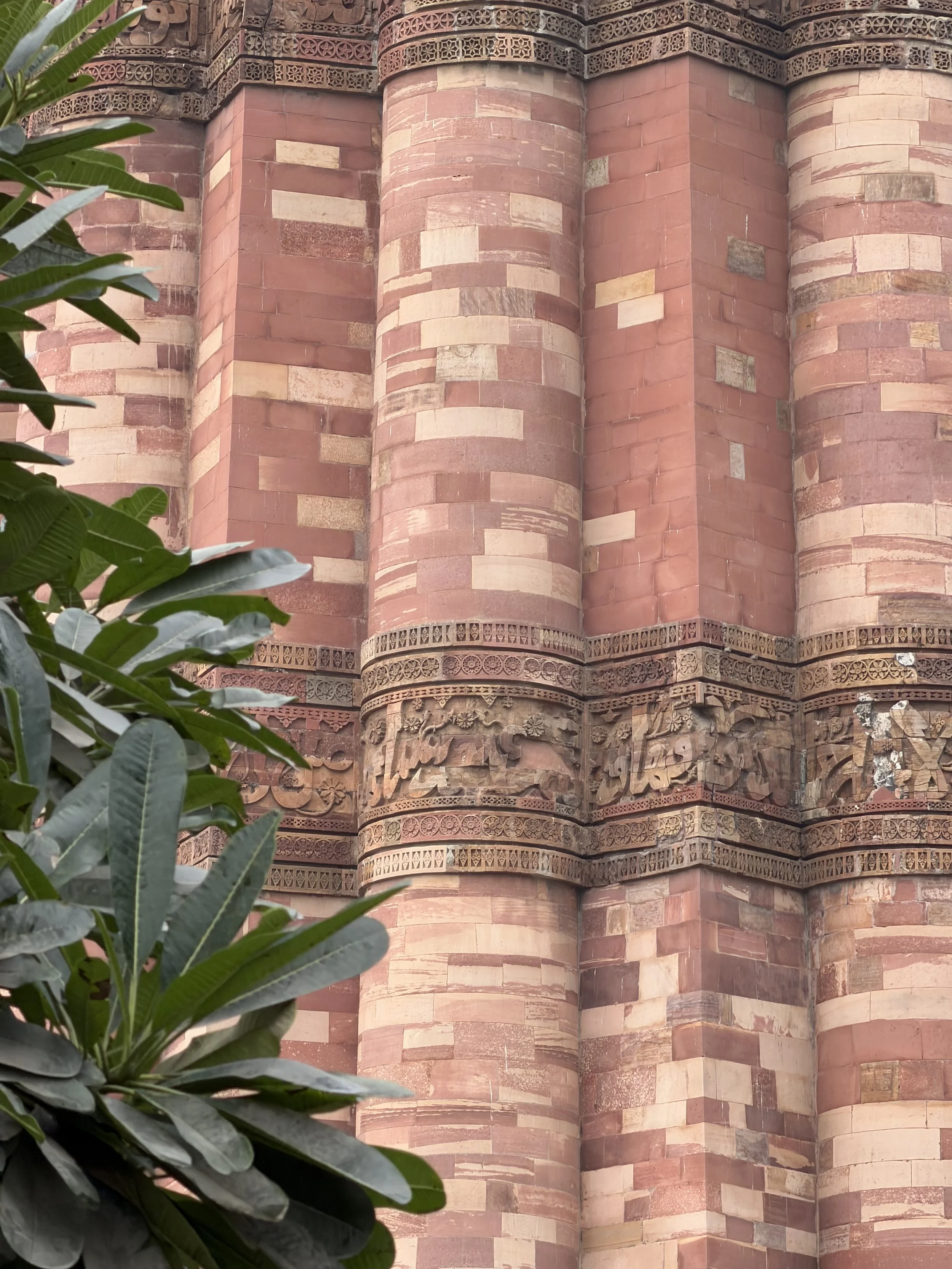
The minaret dominates the complex. Built in five tapering storeys, each marked by projecting balconies supported on intricately carved stone brackets, it narrows visibly as it rises. The fluted shafts alternate between circular and angular sections, adding both strength and visual rhythm. Bands of Arabic calligraphy wrap around the tower, recording Quranic verses and dedicatory inscriptions. The pale marble of the upper levels contrasts clearly with the deeper red stone below, reflecting the different phases of construction.
Looking up from the base, the scale is striking. The detailing remains precise even at height, suggesting both confidence and technical control. It was not only a call to prayer but a statement of authority — a visible marker of a new political and religious presence in northern India at the end of the 12th century.
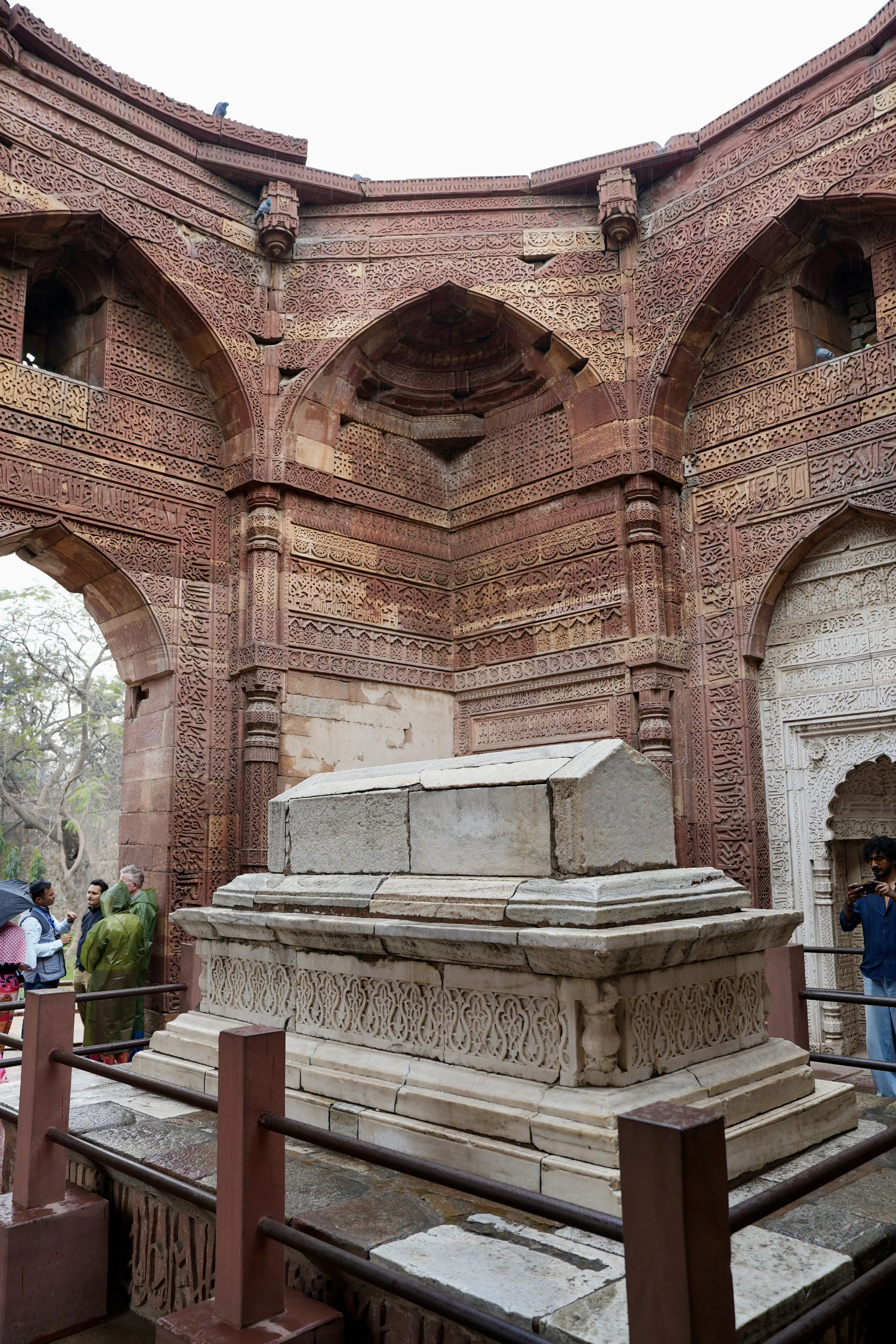
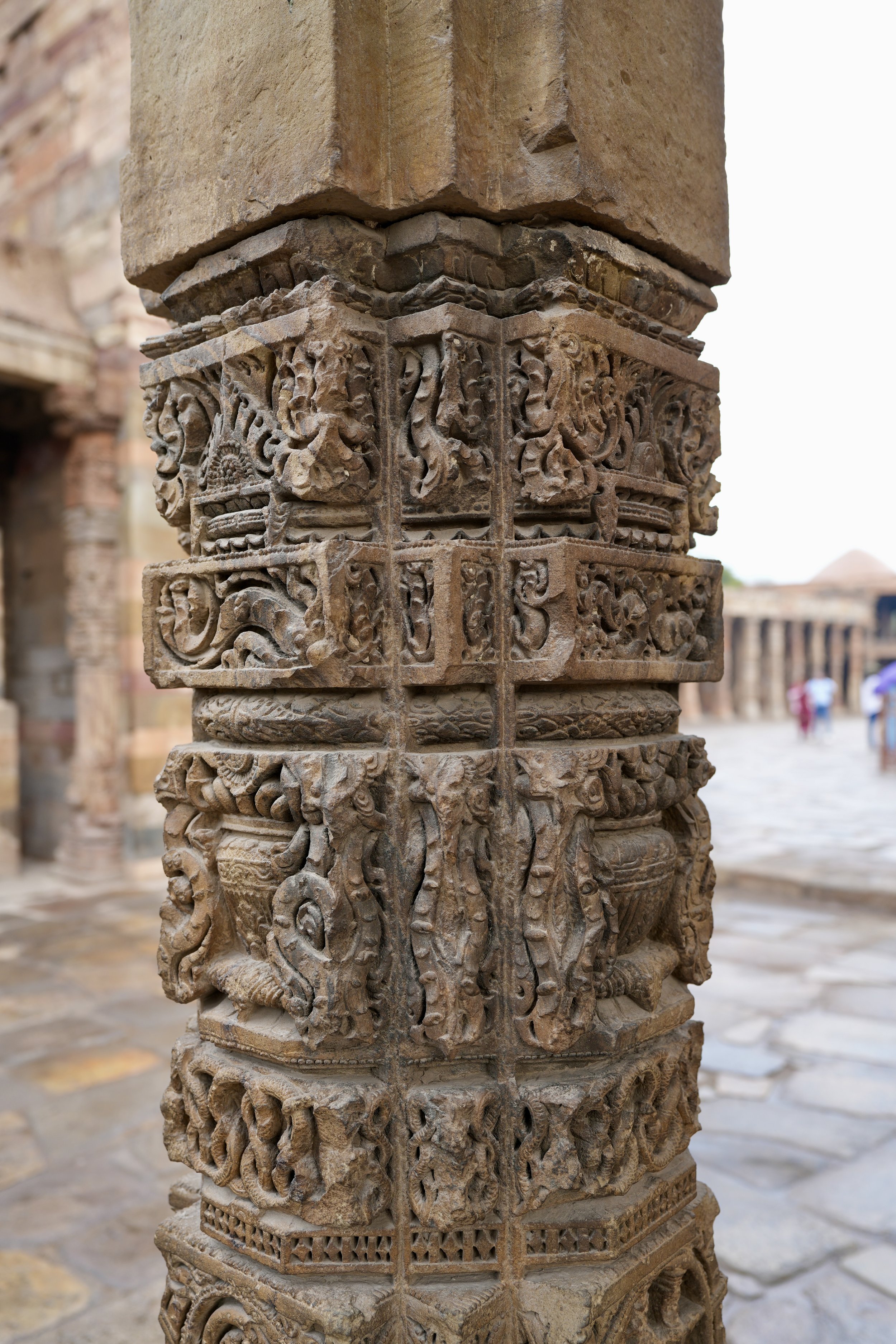
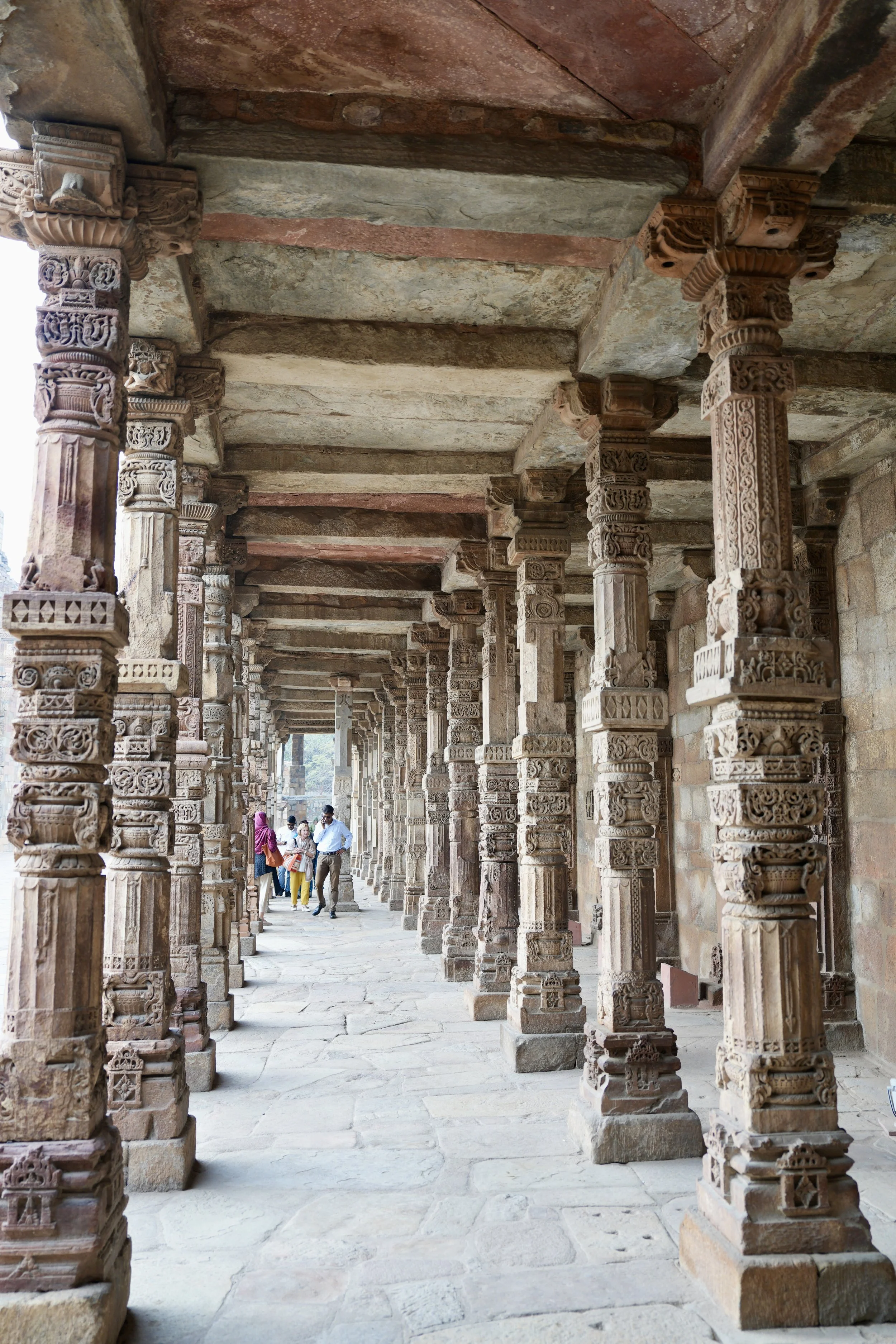
Around the minaret, the wider Qutb complex spreads across landscaped grounds. The remains of the Quwwat-ul-Islam Mosque, built using materials from earlier Hindu and Jain temples, stand in rows of reused pillars carved with floral and figurative motifs. Nearby stands the famous Iron Pillar, dating from the 4th century Gupta period, notable for its resistance to corrosion. The layers of history are visible in close proximity — Hindu, Jain and Islamic architectural elements sharing the same space.
Up close, the stonework is worth taking your time over, with details that only really reveal themselves when you stop and look carefully. Carvings range from sharply defined inscriptions to softened decorative panels worn by eight centuries of weather. The drizzle left a sheen on the surfaces, highlighting textures and small imperfections.
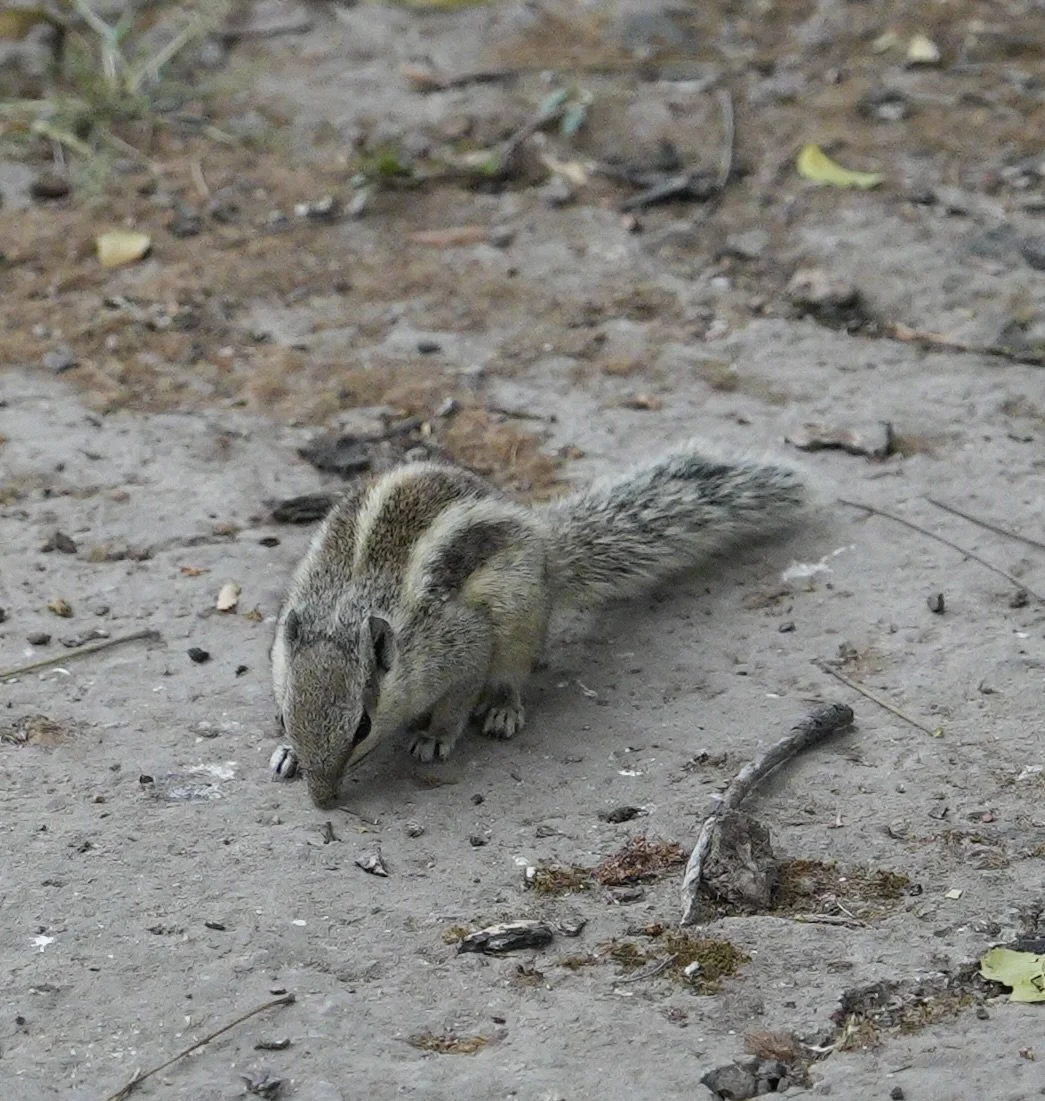
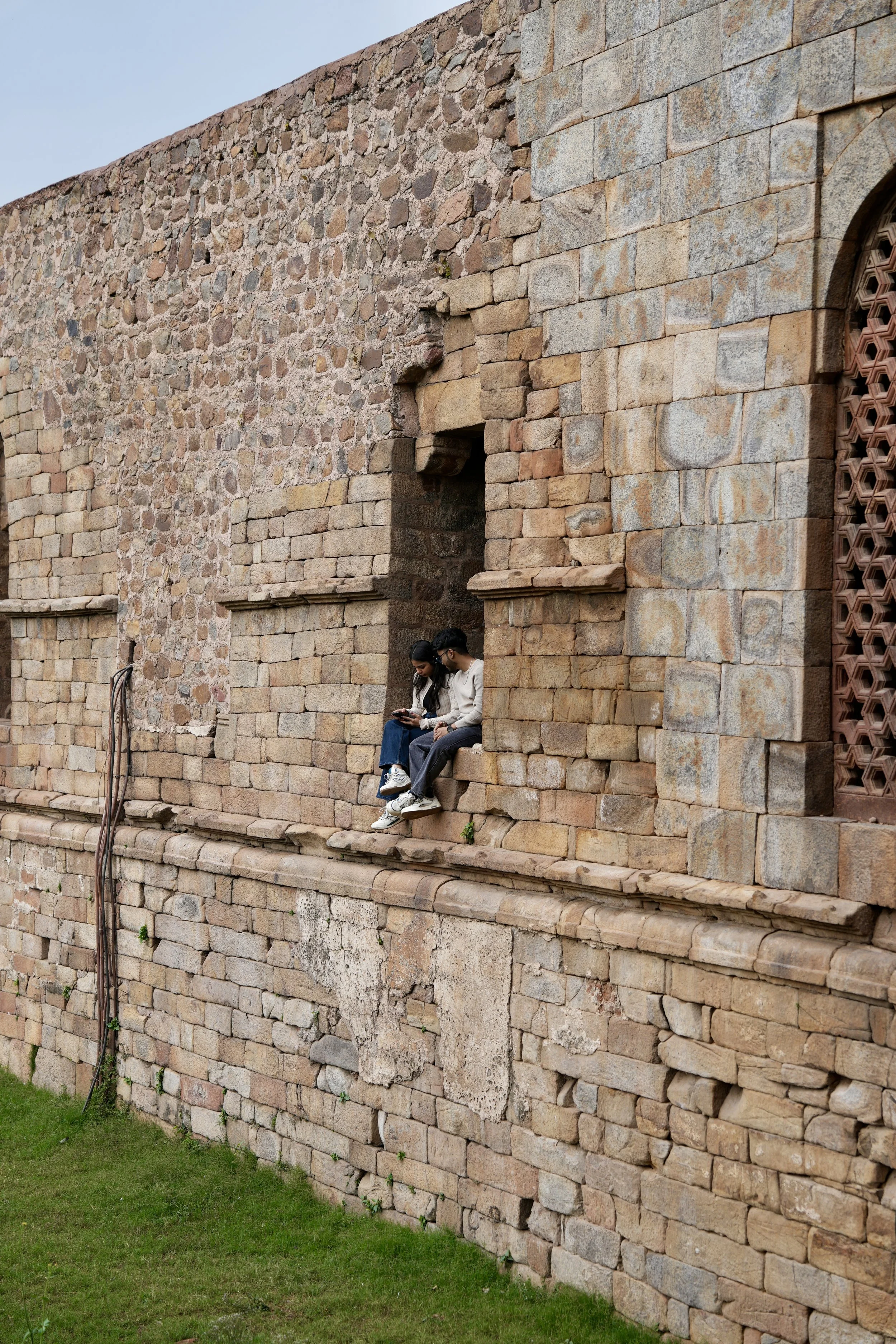
Despite being one of Delhi’s major heritage sites, the atmosphere felt unhurried in the rain. A squirrel darted across the pathway, pausing momentarily before vanishing into the grass. As the shower eased, a couple sat in a deep stone recess in one of the walls, feet swinging idly as they checked their phones, the 13th century and the 21st briefly coexisting without fuss.
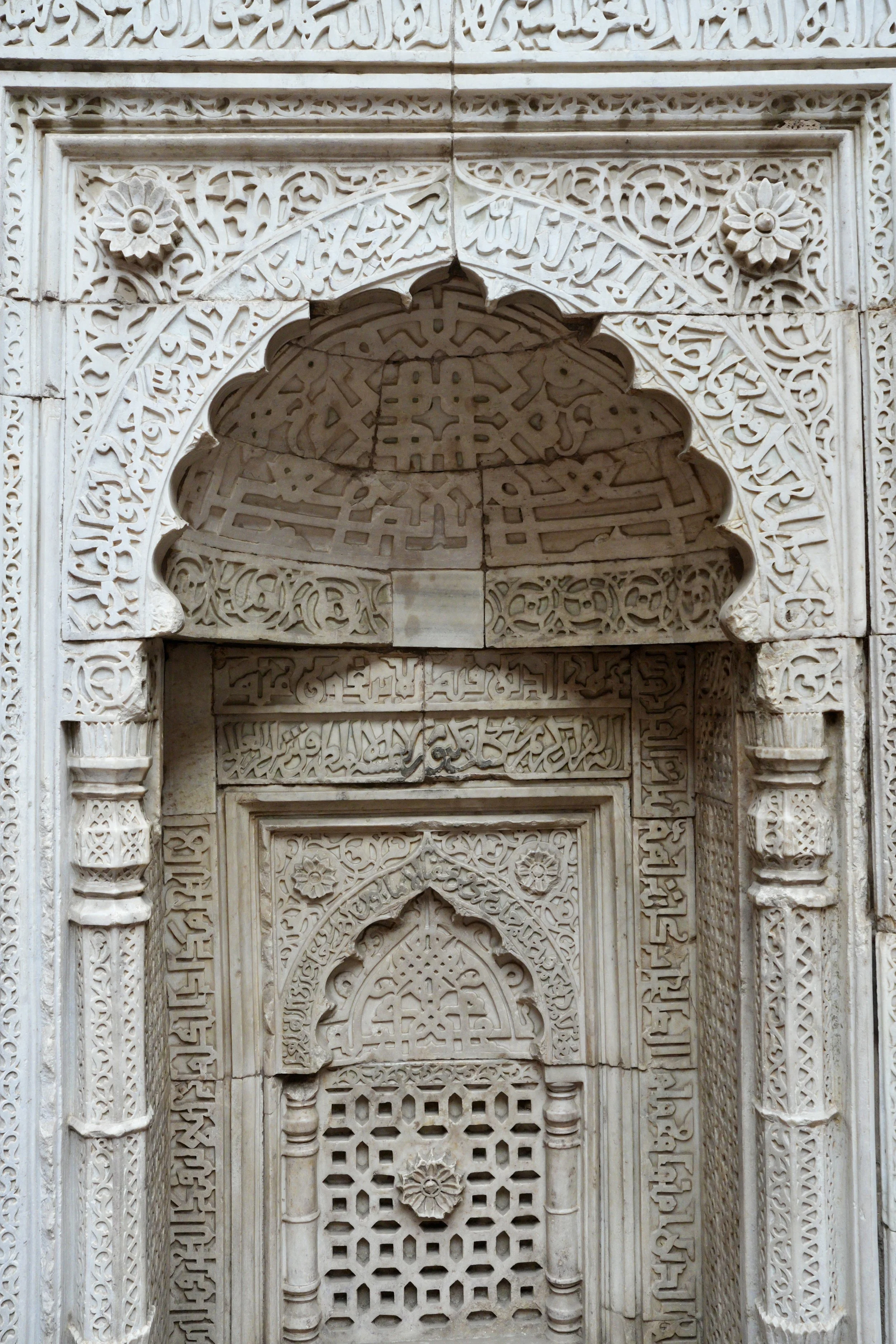
A few steps short of India Gate
Our final stop was meant to be India Gate, but by then New Delhi had slipped into a different kind of chaos. Roads were closed, traffic diverted, and progress slowed to a standstill as convoys of VIP vehicles swept through. At one point, an AI self-driving car passed us going the other way, complete with a police escort and a trail of officials, oddly appropriate, given how little we were moving ourselves.
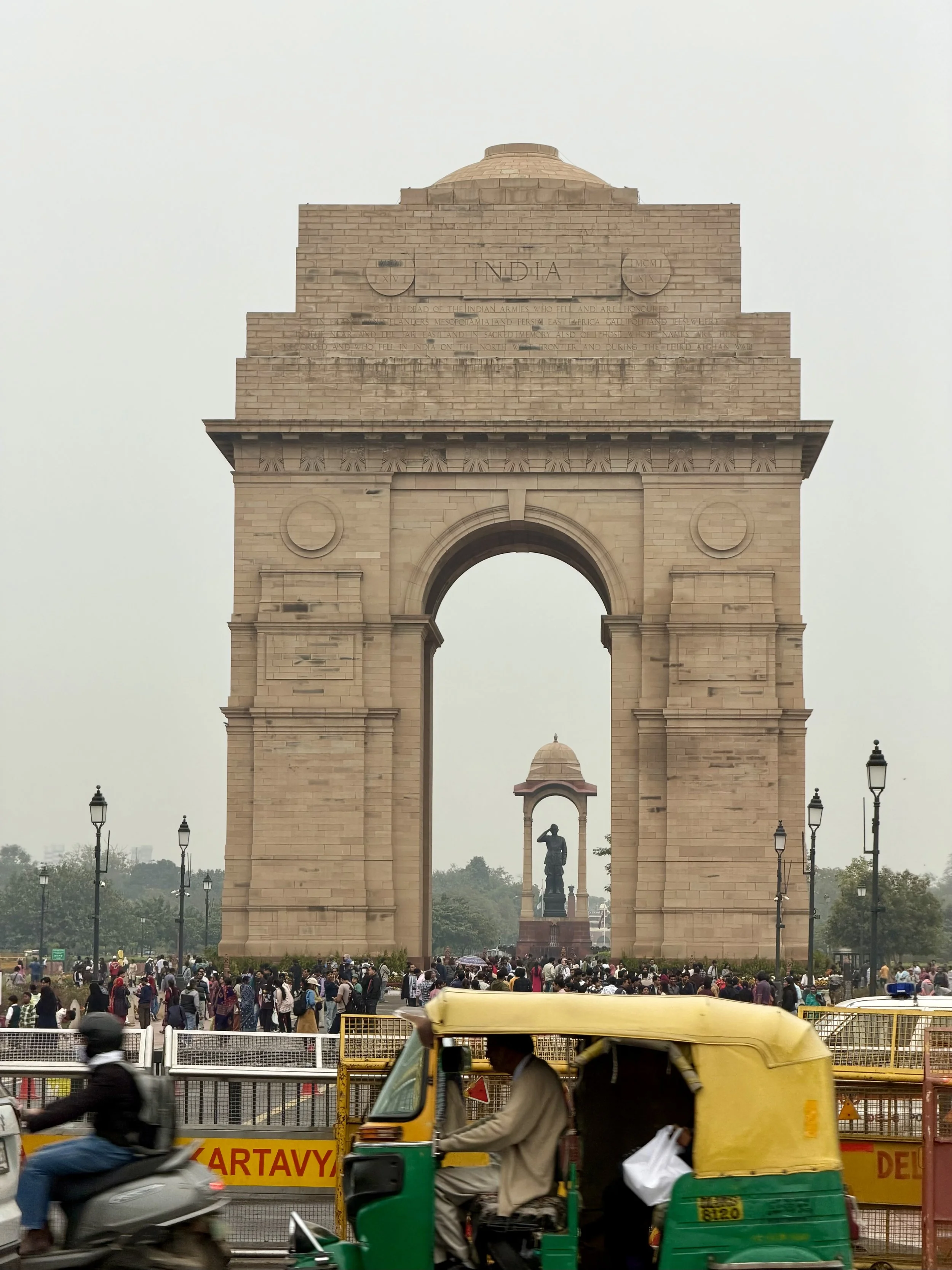
A Tuk Tuk drives passed India Gate
After a long wait, and with India Gate still only half a mile away, we decided to walk. The bus doors opened and we all spilled out, glad to be moving again under our own steam. Due to security fencing, we didn’t quite reach the monument itself, but we were close enough for photographs. It felt like a reasonable point to stop. The day had been full, compressed and occasionally disorientating, but standing there, just short of the final landmark, it felt as though we’d seen enough. Our circuit of Delhi, was complete for the day.