Auschwitz-Berkenau / Wieliczka Salt Mine
Today was always going to be a long and emotionally demanding day, and that was before the 6am pickup.
We left Kraków early and headed west towards Auschwitz-Birkenau, the city gradually giving way to quieter roads and a flat winter landscape. The light was low and grey, and the further we travelled the more subdued the atmosphere in the minibus became. There wasn’t much conversation. Most of us were quietly wondering what we would see, how we would feel, and how we might react.
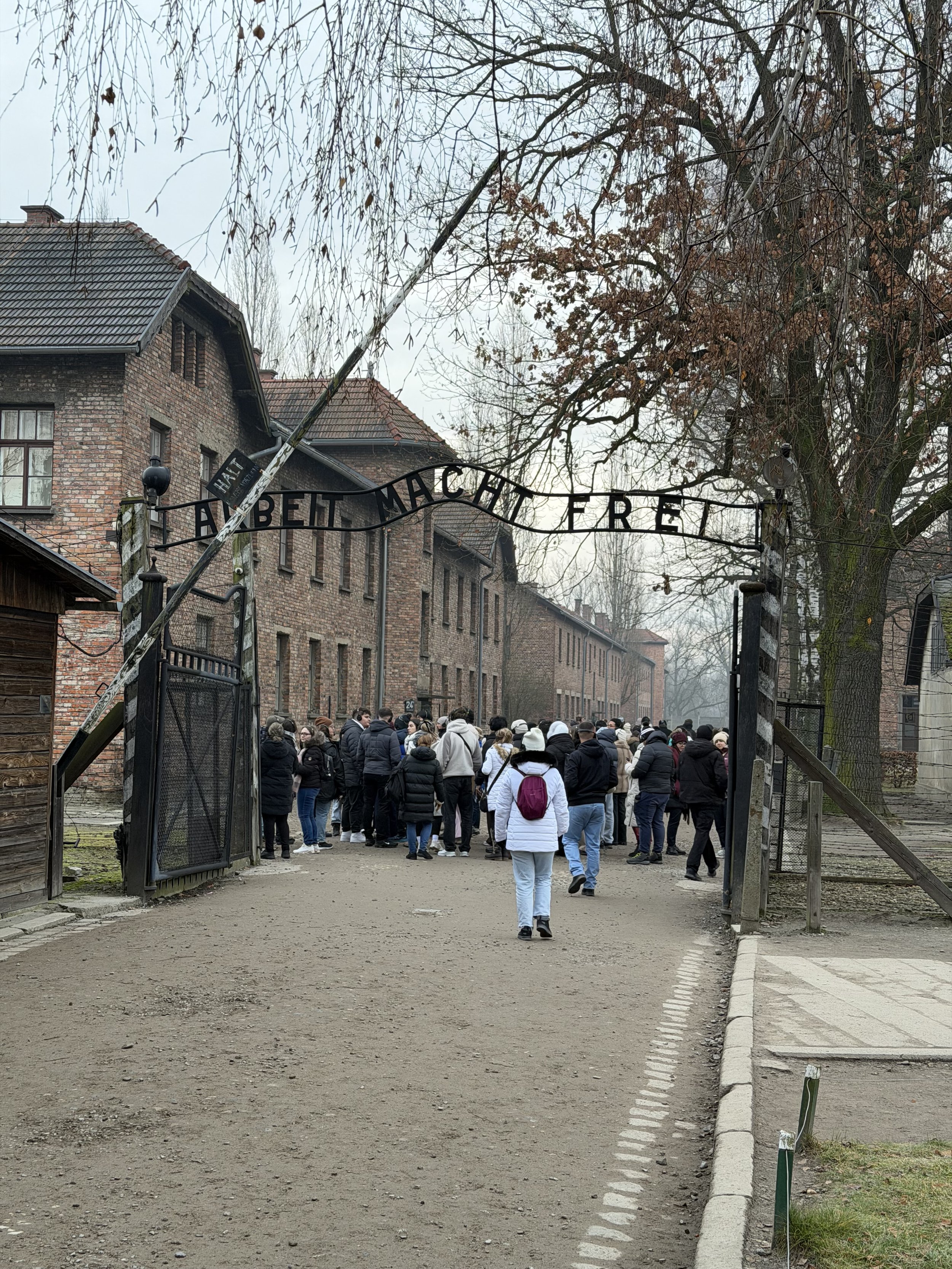
The main gate at Auschwitz
Walking through Auschwitz I, the brick buildings felt orderly and almost administrative, which somehow made the history harder to process. The site feels structured and controlled, and that sense of order sits uncomfortably alongside what you know took place there. Moving from block to block, the exhibits shifted from explanation to stark evidence, and the atmosphere grew heavier with each room. It wasn’t shocking in a dramatic sense, more a slow, accumulating sadness that stayed with you.
Everyone seems to have something that brings home the horror of the place. For my wife it was the room filled with hair, confronting in its sheer scale and intimacy. For me, it was the standing cells in the basement. They struck a nerve, perhaps because, in a strange way, they felt more relatable — confined spaces where suffering was imagined more easily than in the vast numbers often quoted.
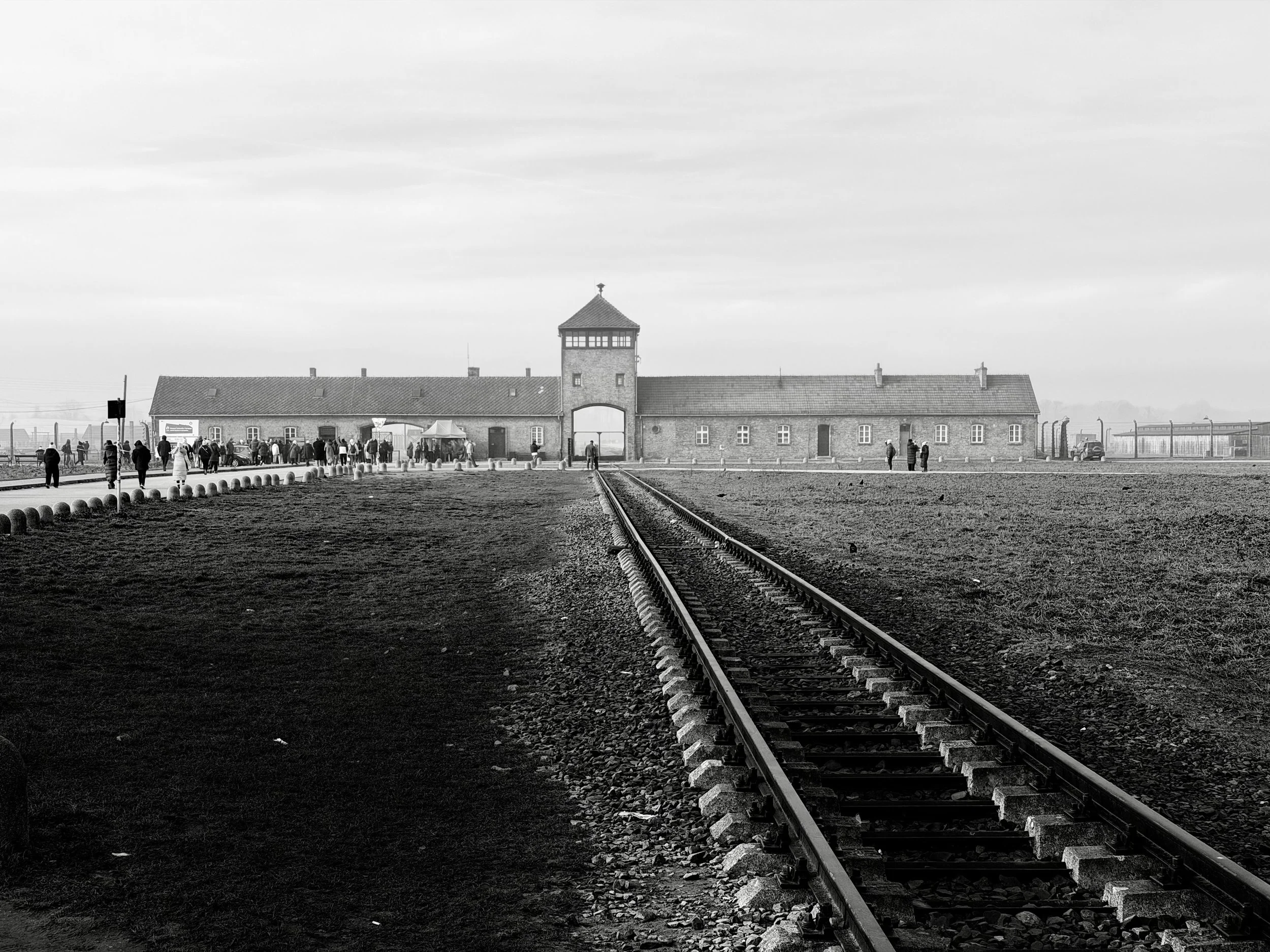
The entrance to Birkenau
Birkenau was different again. Vast, open and bleak, with the railway tracks stretching into the distance and the remains of barracks scattered across the site. Standing on the spot where arrivals were sorted, exposed to the cold and the wind, the scale of it all became overwhelming. The openness of the place made it harder to take in, not easier. We didn’t say much. Some places don’t invite words, just stillness and respect.
Before travelling on to our next stop, the salt mines, we had the provided packed lunch. Simple cheese sandwiches, salad and water felt entirely appropriate for the day. It was eaten quietly, without much conversation, as if anything more elaborate would have felt out of place.
In the afternoon we travelled out to Wieliczka Salt Mine, descending underground and away from daylight. Almost immediately the mood shifted. The air was cooler, the sounds more muted, and the world above felt distant. Step by step, we moved deeper, leaving the morning behind us without forgetting it.
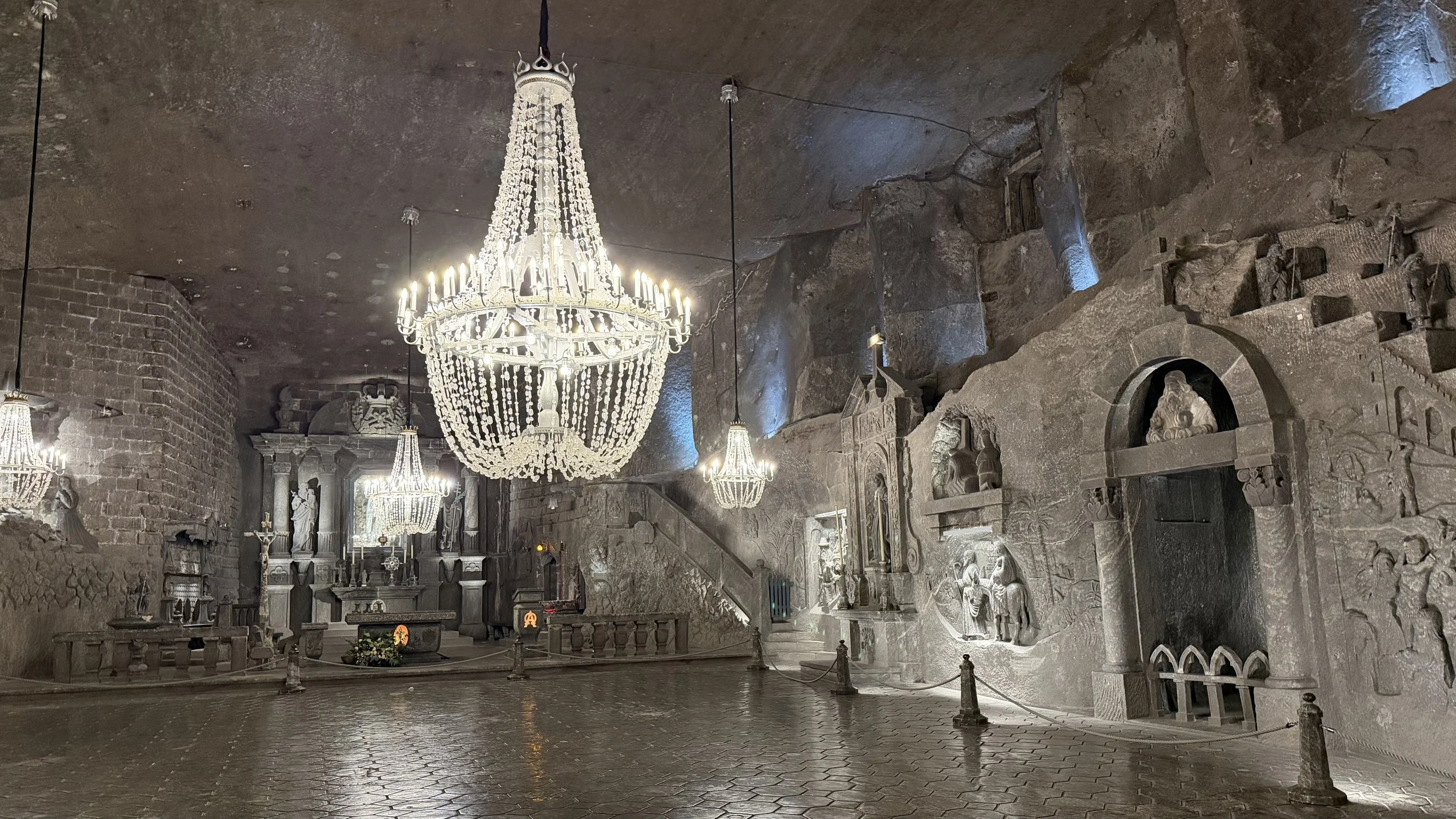
St. Kinga's Chapel (Kaplica Świętej Kingi) in the Wieliczka Salt Mine
The mine itself was remarkable. Long tunnels stretching into darkness, vast chambers opening unexpectedly, and chapels carved entirely from salt. The detail and scale of the work was impressive, but what stood out most was the patience involved. This was craftsmanship built up slowly over centuries, shaped by repetition rather than spectacle.
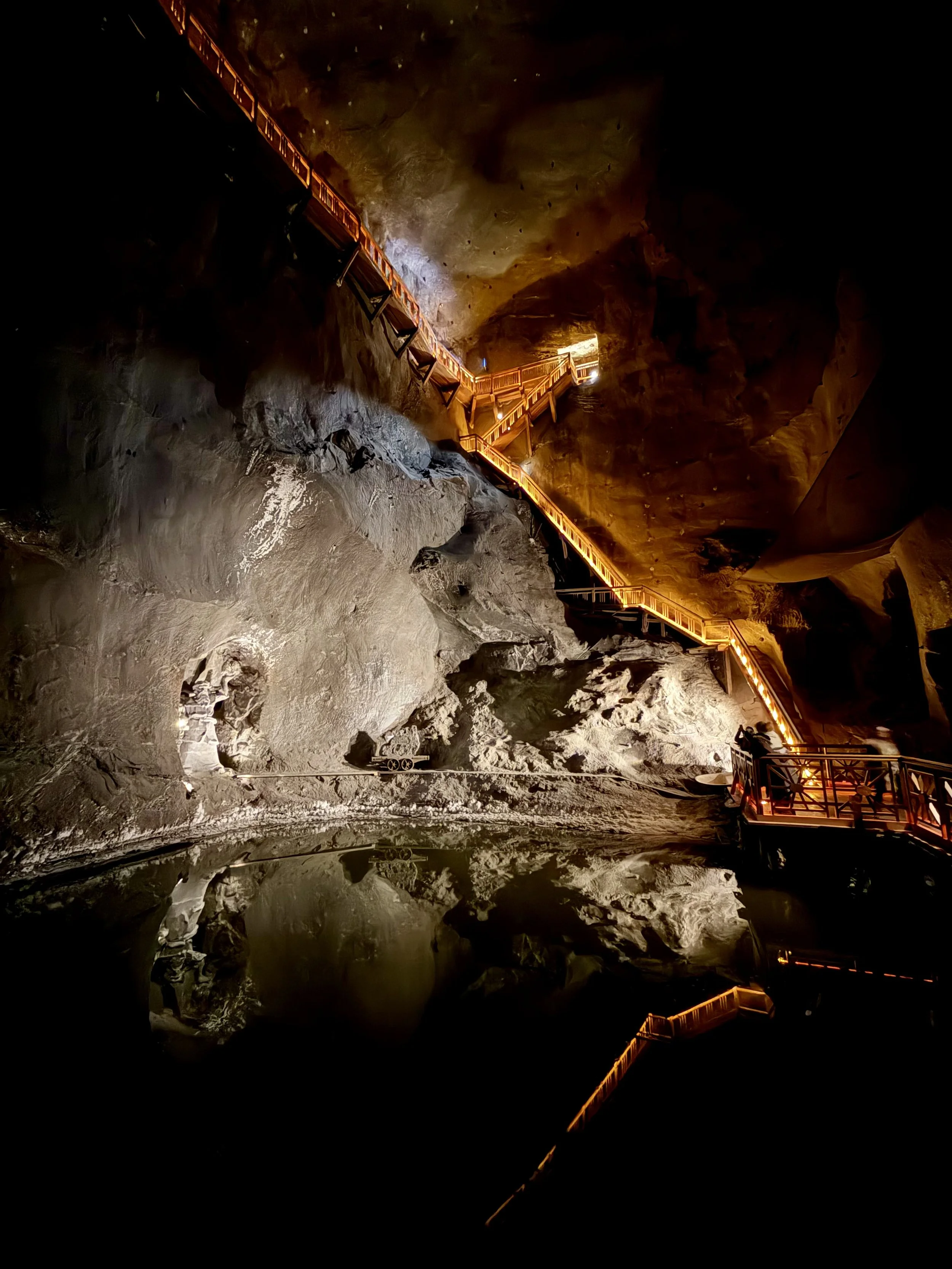
Pool in Wieliczka Salt Mine
What struck me most was how immersive it felt. This wasn’t history behind glass, but something you walked through, breathed in, and experienced physically. The contrast with the morning was stark but not jarring, more a reminder that human creativity and resilience exist alongside humanity’s darkest moments.
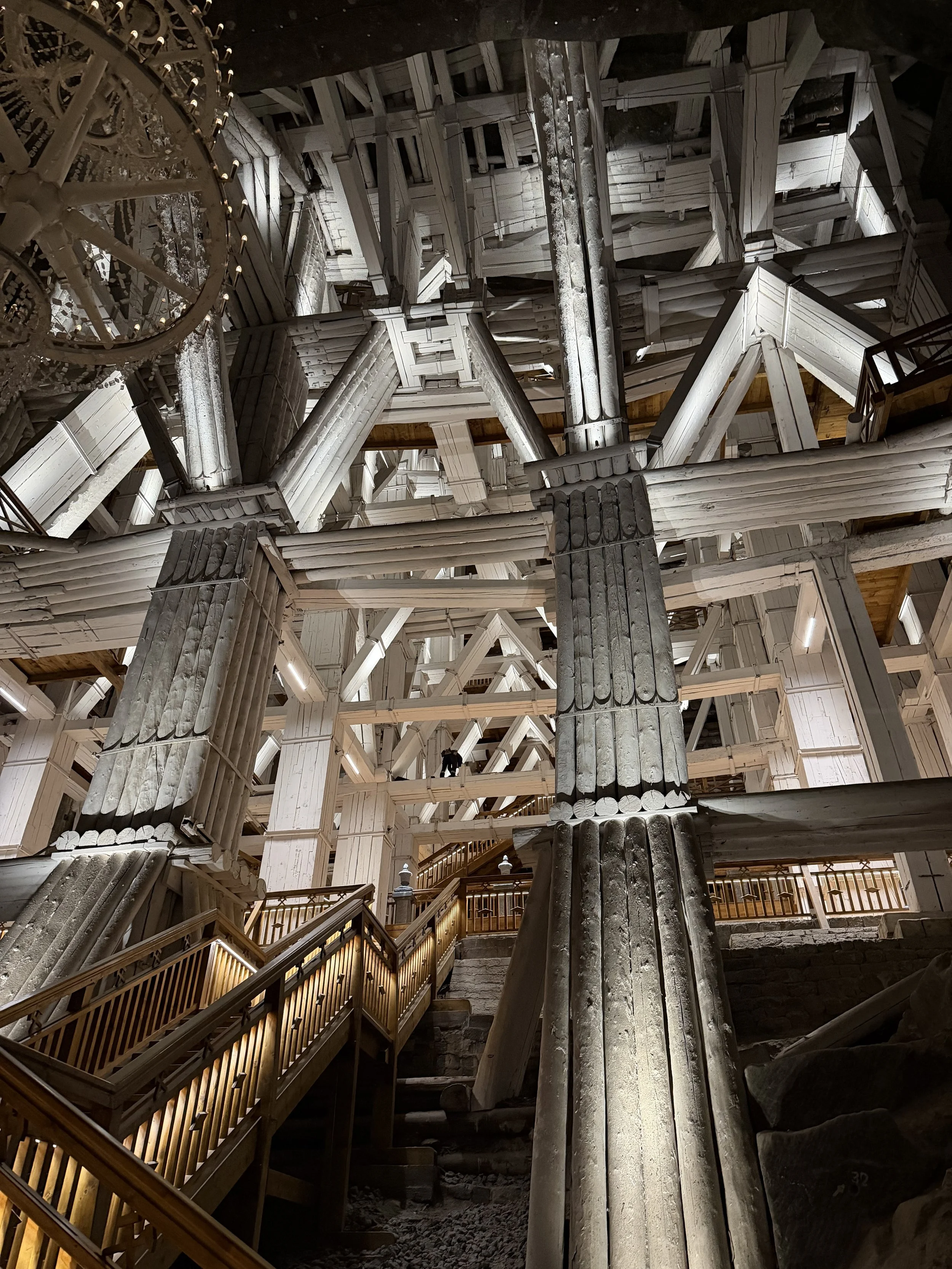
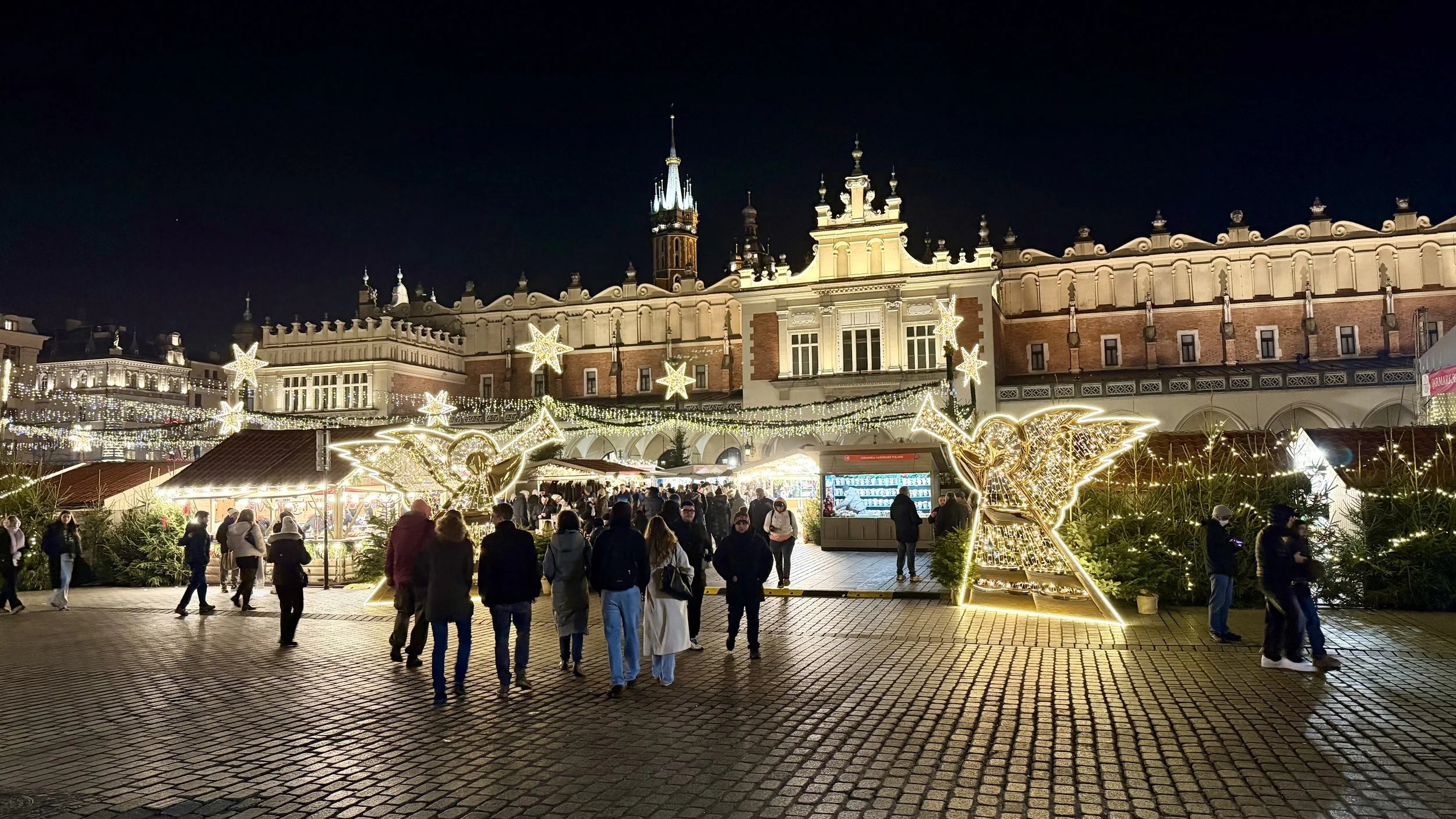
Climbing back up to the surface felt refreshing, both physically and mentally. By the time we returned to Kraków, the city felt familiar and comforting again. We kept the evening simple, wandering around the Christmas Market, mulled beer and hot chocolate keeping us warm.
Reflection
Today was about contrast, between silence and scale, darkness and craftsmanship, loss and endurance. Visiting Auschwitz-Birkenau was confronting in a quiet, cumulative way. There were no moments of shock, just a steady realisation of what happened there, reinforced by ordinary objects and ordinary spaces that once held extraordinary suffering. It stayed with us not as an image, but as a feeling that was hard to shake.
The afternoon offered a different kind of perspective. The salt mine was not an escape from the morning, but it was a reminder of what human hands can create when time, skill and patience are applied over generations. Walking through those underground chambers highlighted the breadth of human capability, for cruelty, but also for resilience, creativity and belief.
Experiencing both in the same day felt emotionally demanding but strangely appropriate. History is rarely neat or compartmentalised. Darkness and beauty often sit side by side, and understanding one doesn’t diminish the other. It felt right to end it back among lights, warmth and people, carrying the memory of the past while being reminded of the value of the present.
If you’d like to follow future journeys, reflections, and moments noticed along the way, you can join the mailing list here.