Tulum: Ruins, Reptiles and a Supersized Mini Golf Course
Tulum is one of those places that looks almost too perfectly arranged to be real.
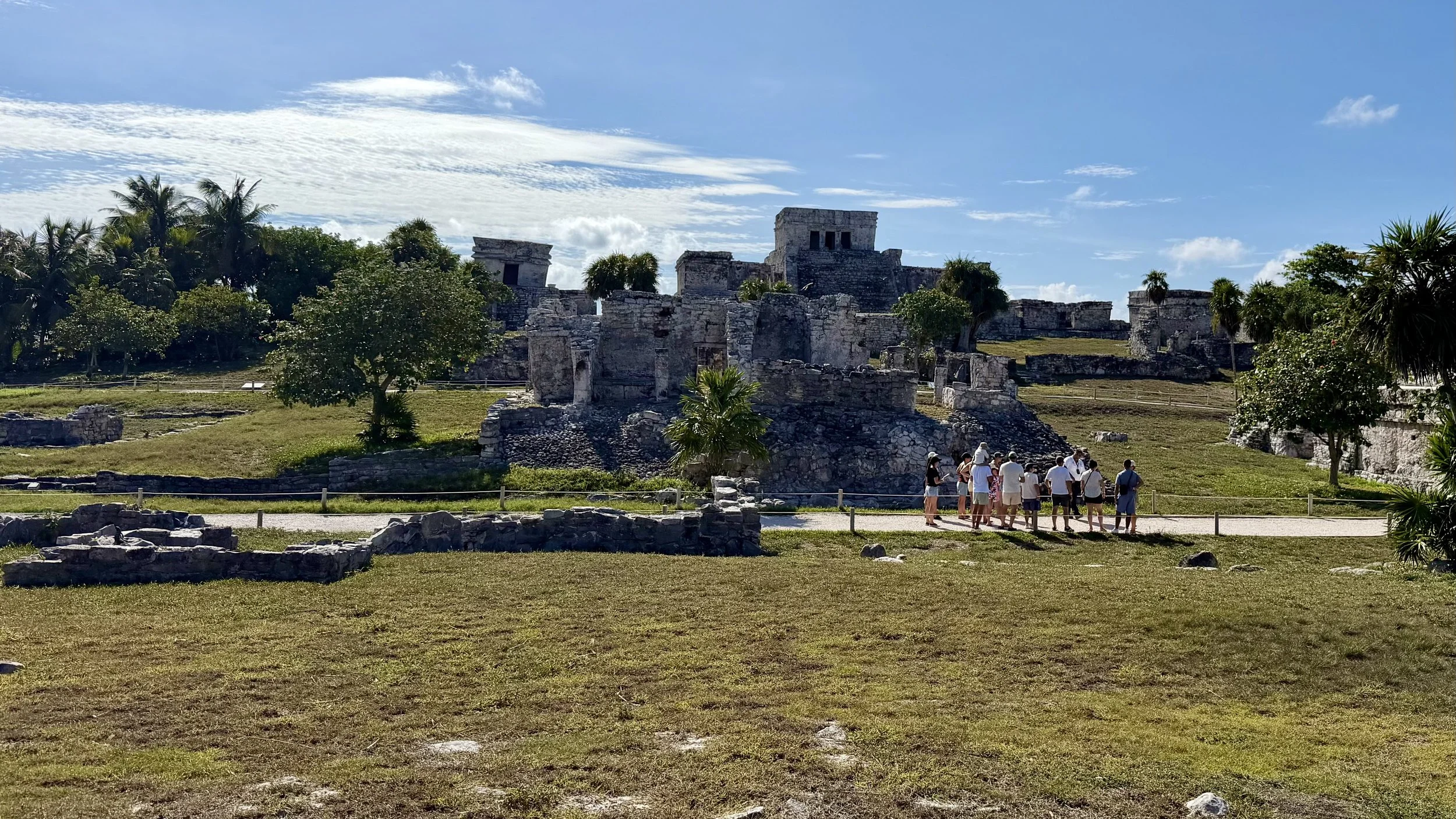
Ancient Maya ruins on a cliff above the Caribbean, pale stone against a huge blue sky, palm trees moving in the breeze and the sea glittering below. From a distance, some of it almost looked like a supersized mini golf course, only with considerably more history attached.
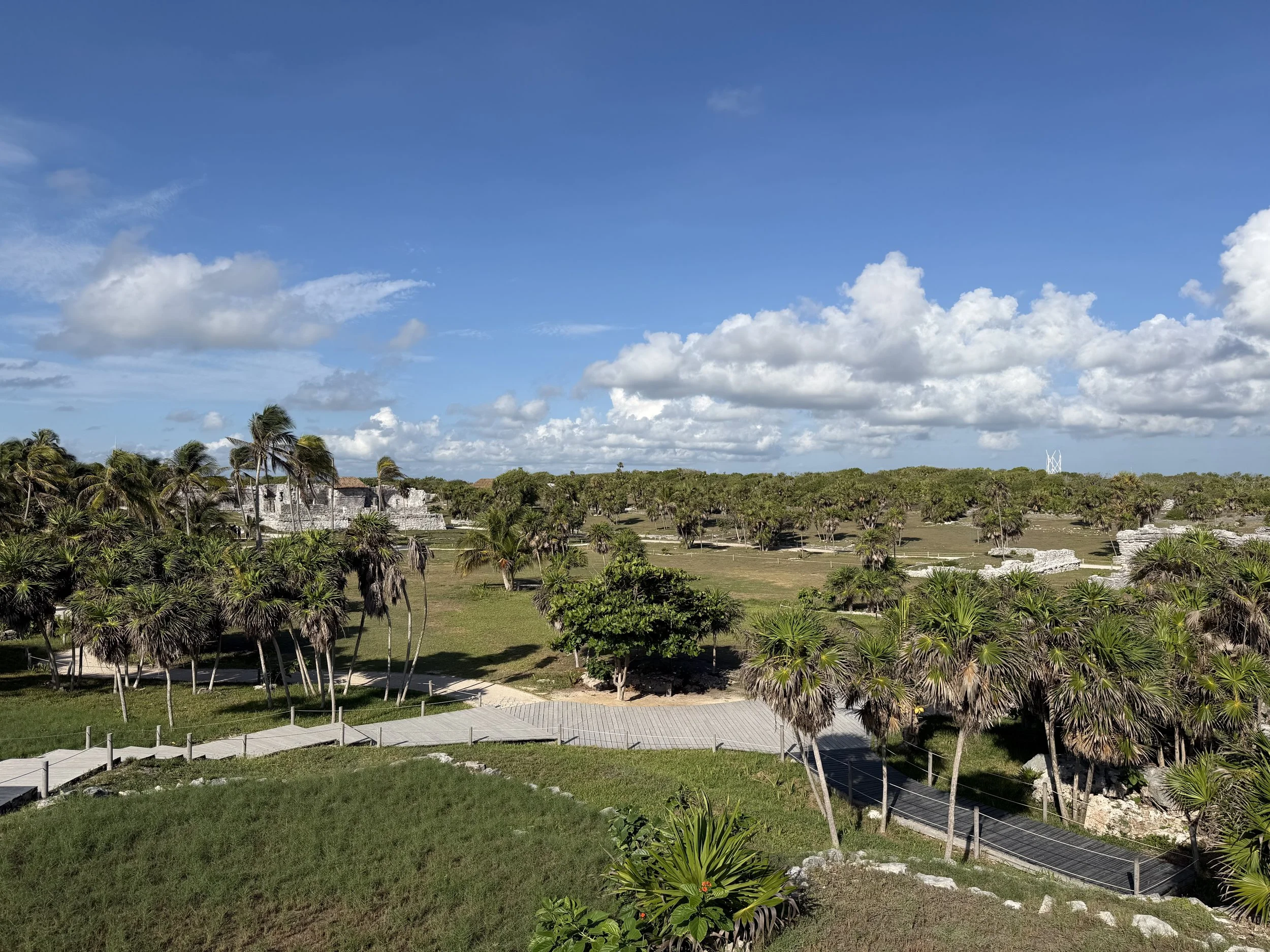
Not a golf course!
It was not our first time in Mexico, although it had been a long time since we had visited the Riviera Maya properly. On previous family holidays we had seen some of the big names: Chichén Itzá, Coba, cenotes and all the rest. Tulum had somehow remained one of those places that existed in photographs and holiday brochures rather than in our own travel memories..
We had decided to get to Tulum early, partly because it seemed sensible in the heat and partly because I have become increasingly convinced that nearly every famous place is better before 9am. There is something very satisfying about arriving before the coaches appear and before everyone else has decided that they too should be there.
We parked near the entrance, although it was not entirely clear what was official parking and what was simply somewhere people had decided to leave their cars. There were enough people collecting money and pointing vaguely that it seemed legitimate enough, so we found a space, locked the car and headed towards the entrance.
We were only the second group of people there, just behind five Americans who were following a guide. For a short while, at least, it felt as though we had the place almost to ourselves. The paths were quiet, the light was still soft enough to make the limestone glow rather than glare, and there was that lovely feeling of arriving before a place had properly woken up.
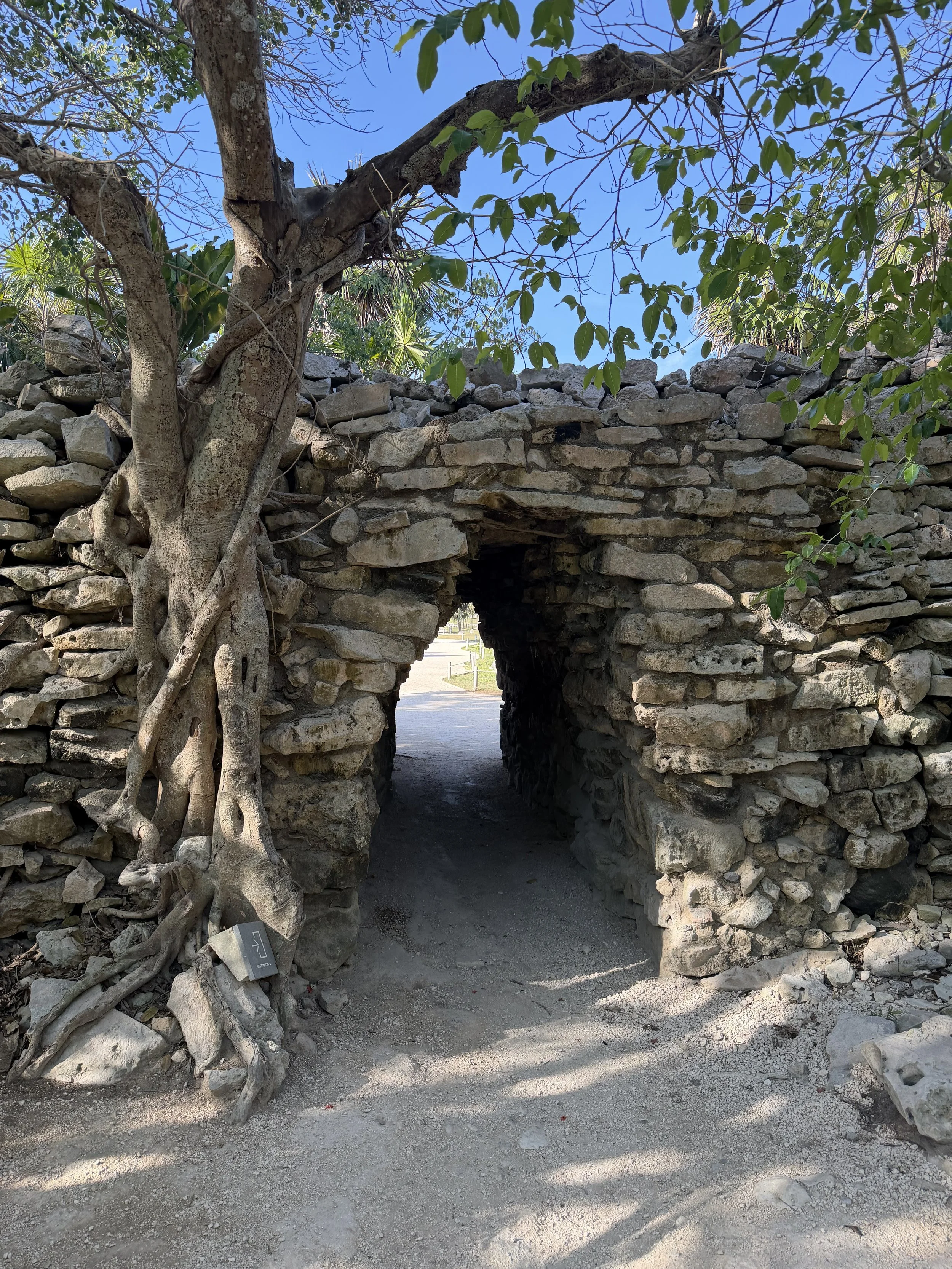
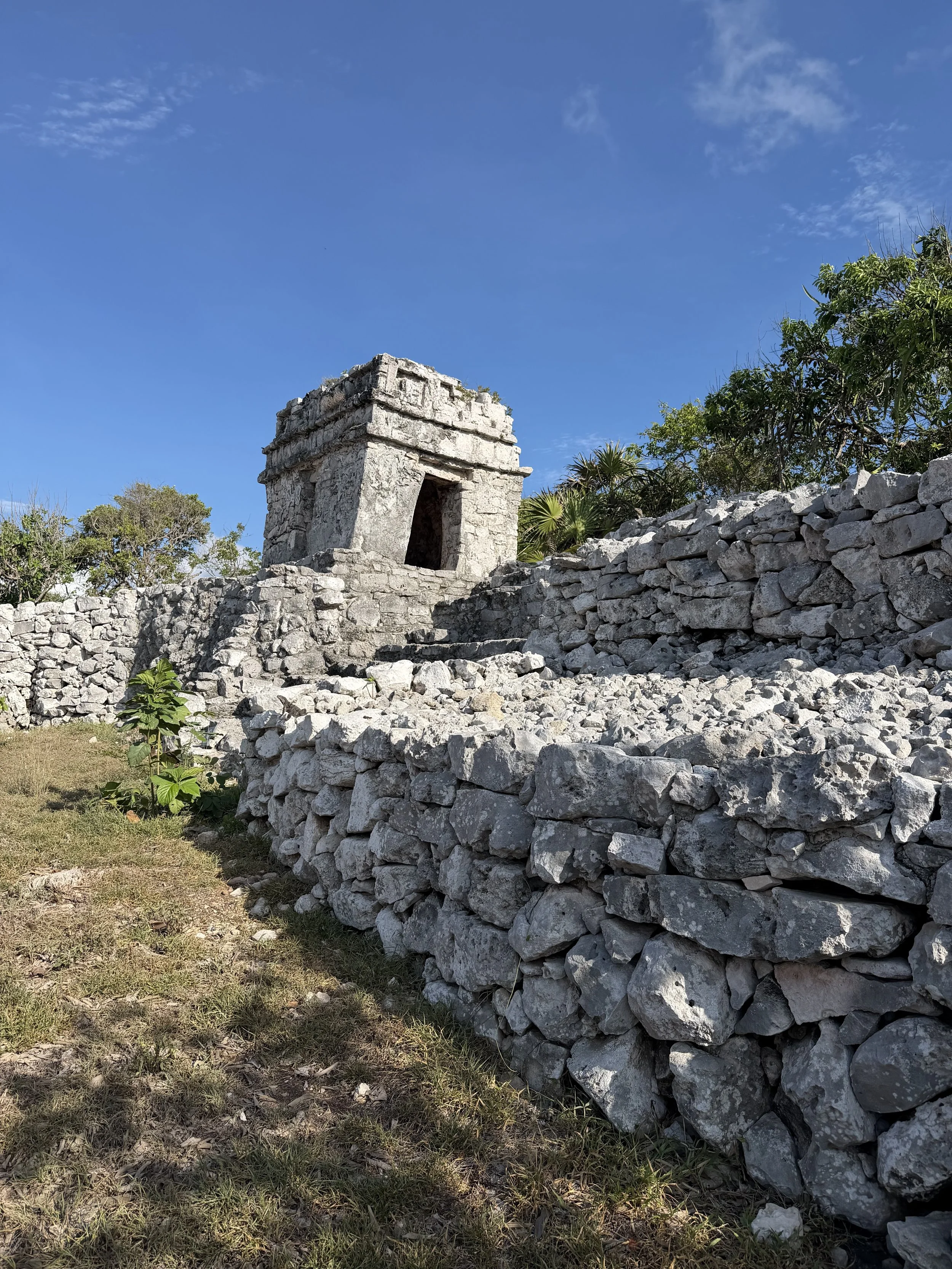
Tulum is not one of those vast Maya sites where you spend hours walking between enormous pyramids. It is much more compact than Chichén Itzá or Coba, with low stone buildings, temples and walls spread across a relatively small area. At first it can feel almost modest, particularly if you have arrived expecting a huge archaeological theme park.
But then you look up and see the sea.
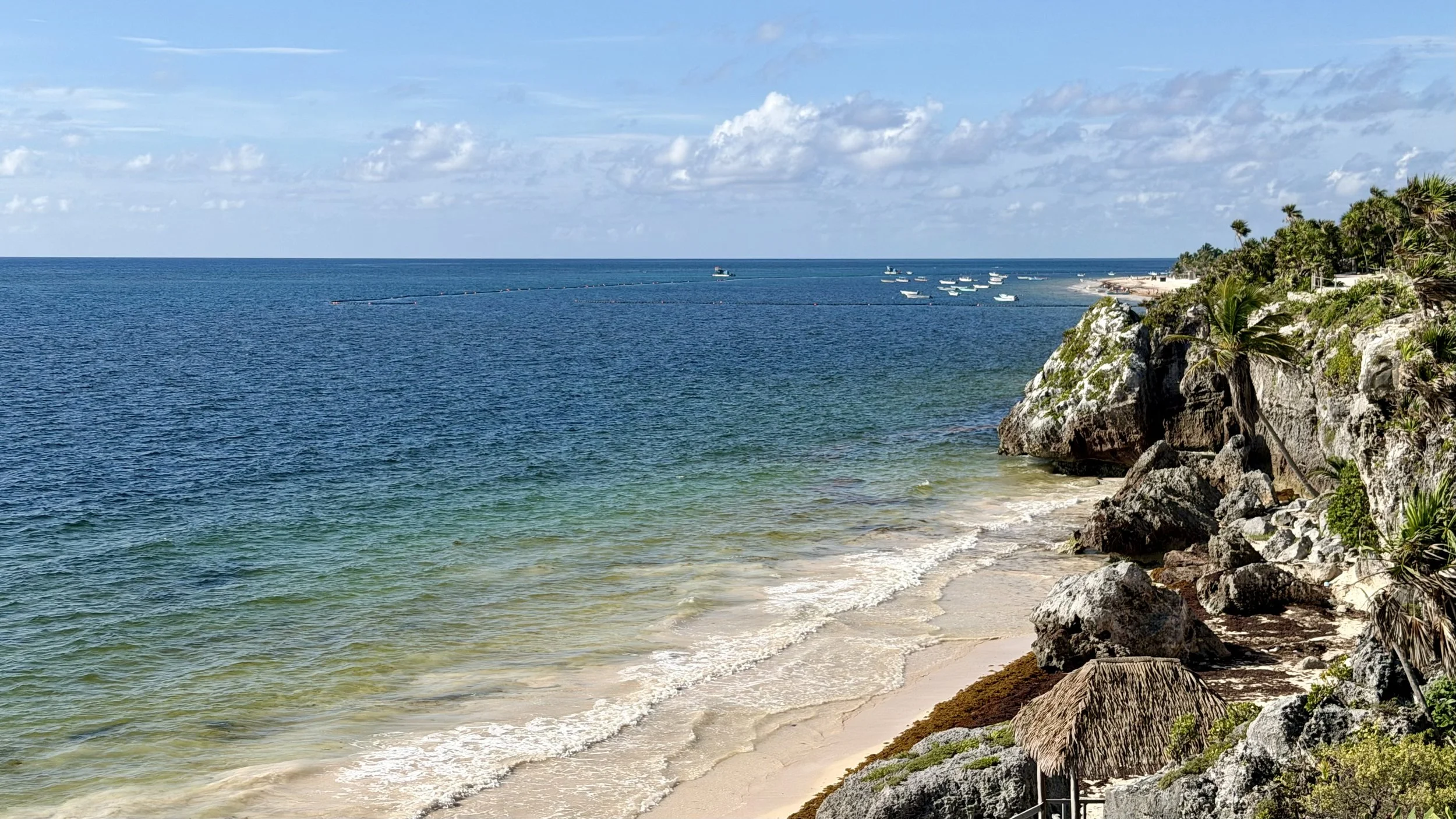
That is the thing with Tulum. The ruins are interesting in their own right, but their setting is what makes them unforgettable. Every few minutes another view opens up across the Caribbean, with the pale limestone cliffs dropping down towards narrow strips of bright sand and impossibly turquoise water. The sea seems to go on forever, changing from clear green close to shore to a deep, proper blue further out.
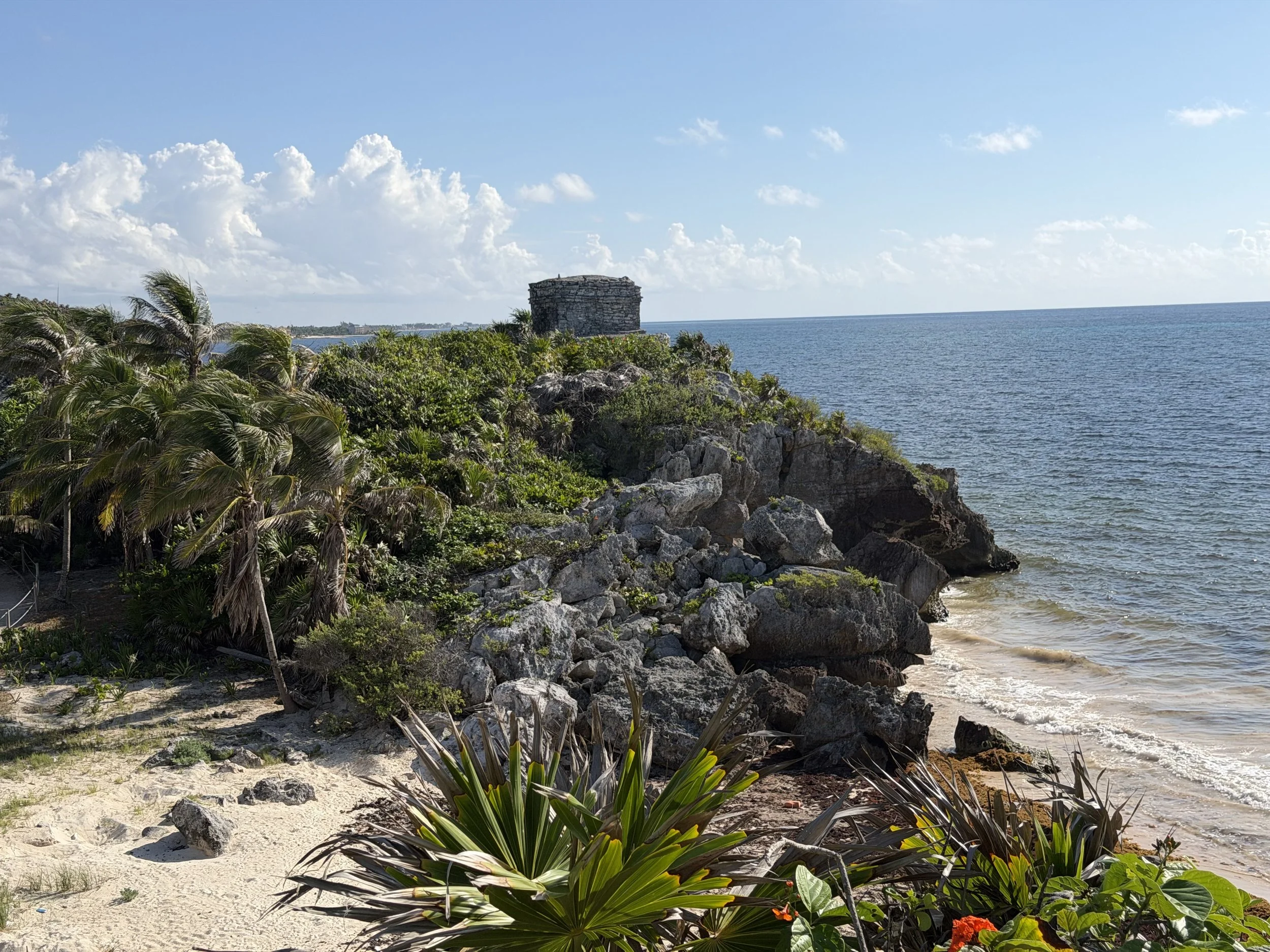
It is difficult to imagine a more spectacular place to have built a settlement, even allowing for the fact that the Maya probably had rather more practical concerns than whether it would look good on Instagram several centuries later.
Tulum was one of the last great Maya cities, flourishing mainly between the 1200s and 1500s, long after the great inland centres were beginning to decline. It was a walled coastal town and an important trading port, linked by canoe routes to settlements along the Caribbean coast. Salt, cotton, honey, obsidian and other goods moved through this part of the Yucatán, and Tulum’s position gave it a clear advantage.
Standing there now, it is easy to think only of temples and views, but it would once have been a busy, lived-in place. People would have come and gone through the walls, traders would have arrived from the sea, food would have been prepared, children would have played, and the same views we were photographing would simply have been part of everyday life.
The most prominent building is El Castillo, standing on the cliff edge above the water. It is not enormous by Maya standards, but it has a presence that comes almost entirely from where it sits. It dominates the site without having to do very much at all.
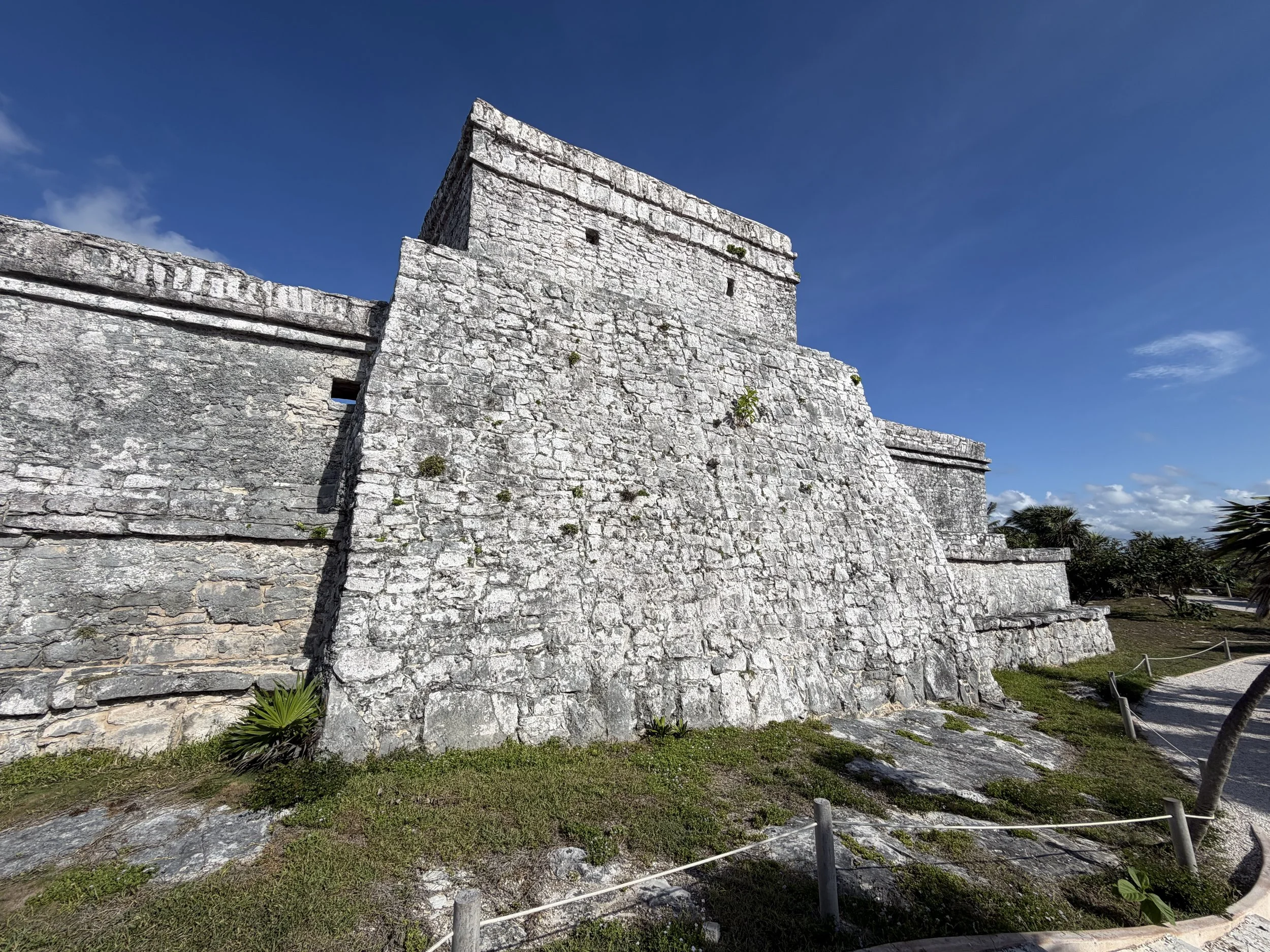
It is thought to have served as a landmark for boats approaching the coast. A gap in the reef created a safe channel through the waves, and the building could help guide canoes towards it. That makes it feel rather less mysterious and rather more clever. A temple, perhaps, but also a very visible piece of coastal navigation.
We followed the paths slowly, stopping frequently, partly because there was a lot to see and partly because stopping every few minutes to take photographs was clearly going to be unavoidable. The combination of stone, sea and sky is so perfect that you find yourself taking the same picture again and again, convinced that this time the angle is fractionally different.
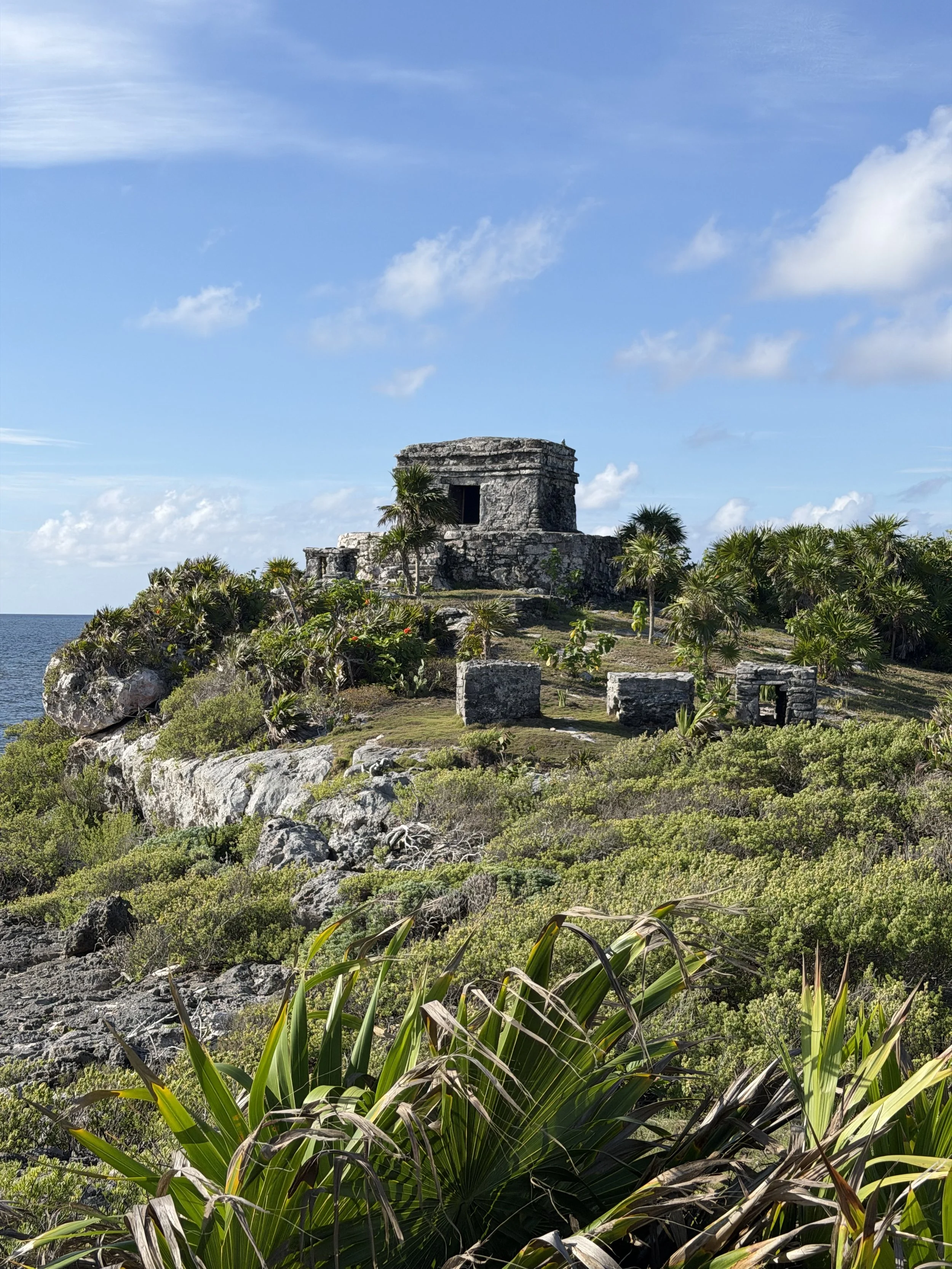
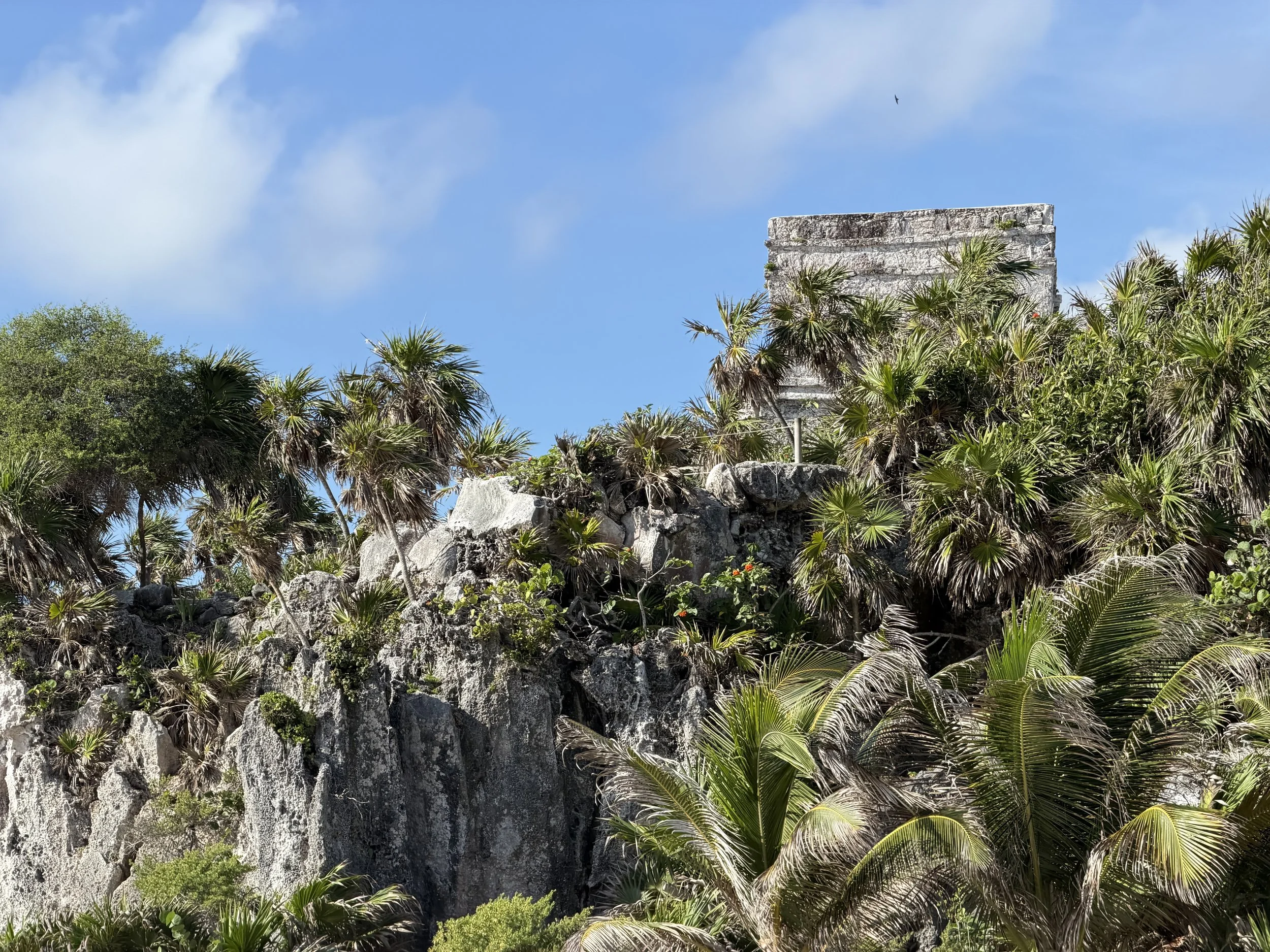
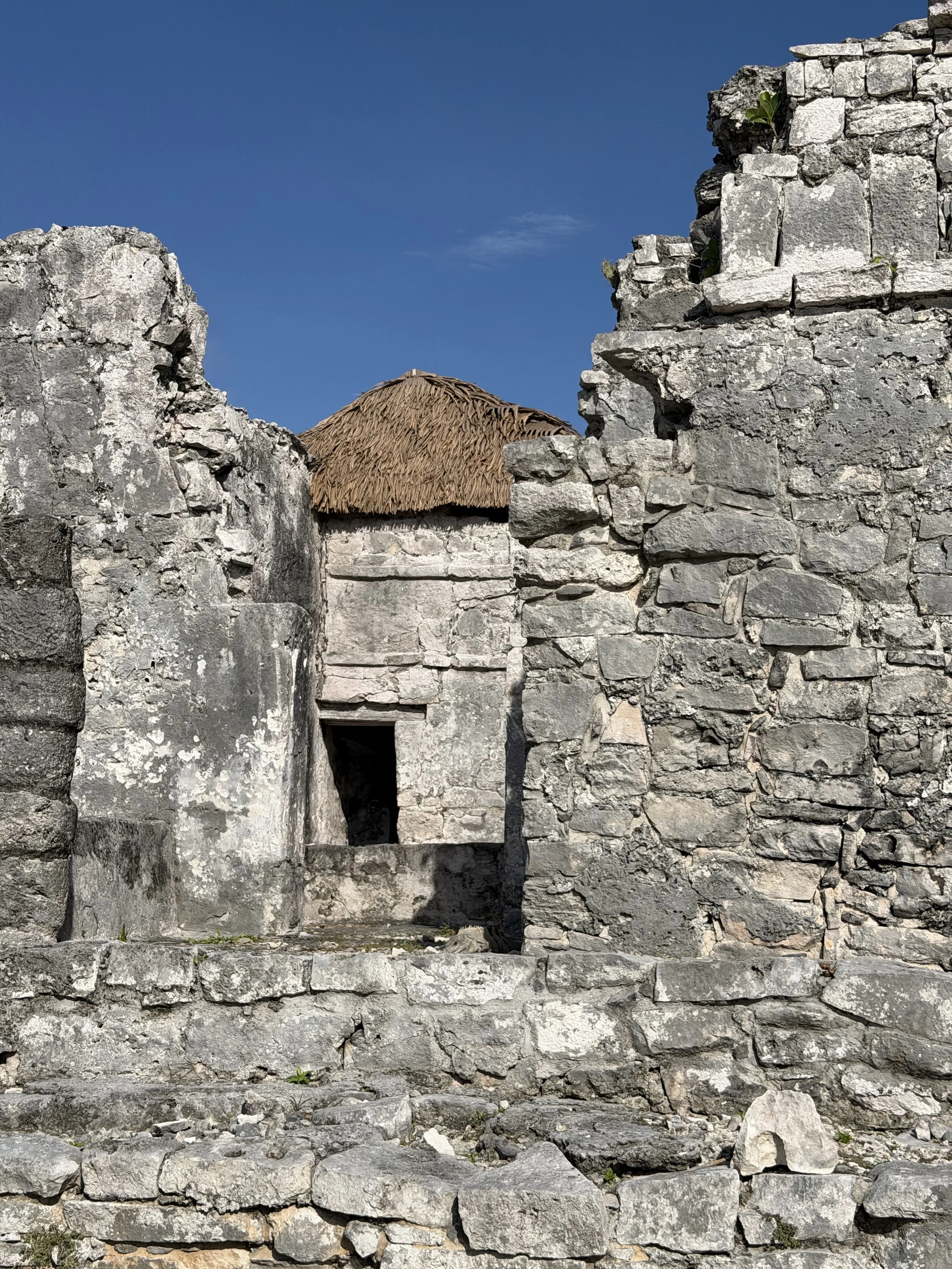
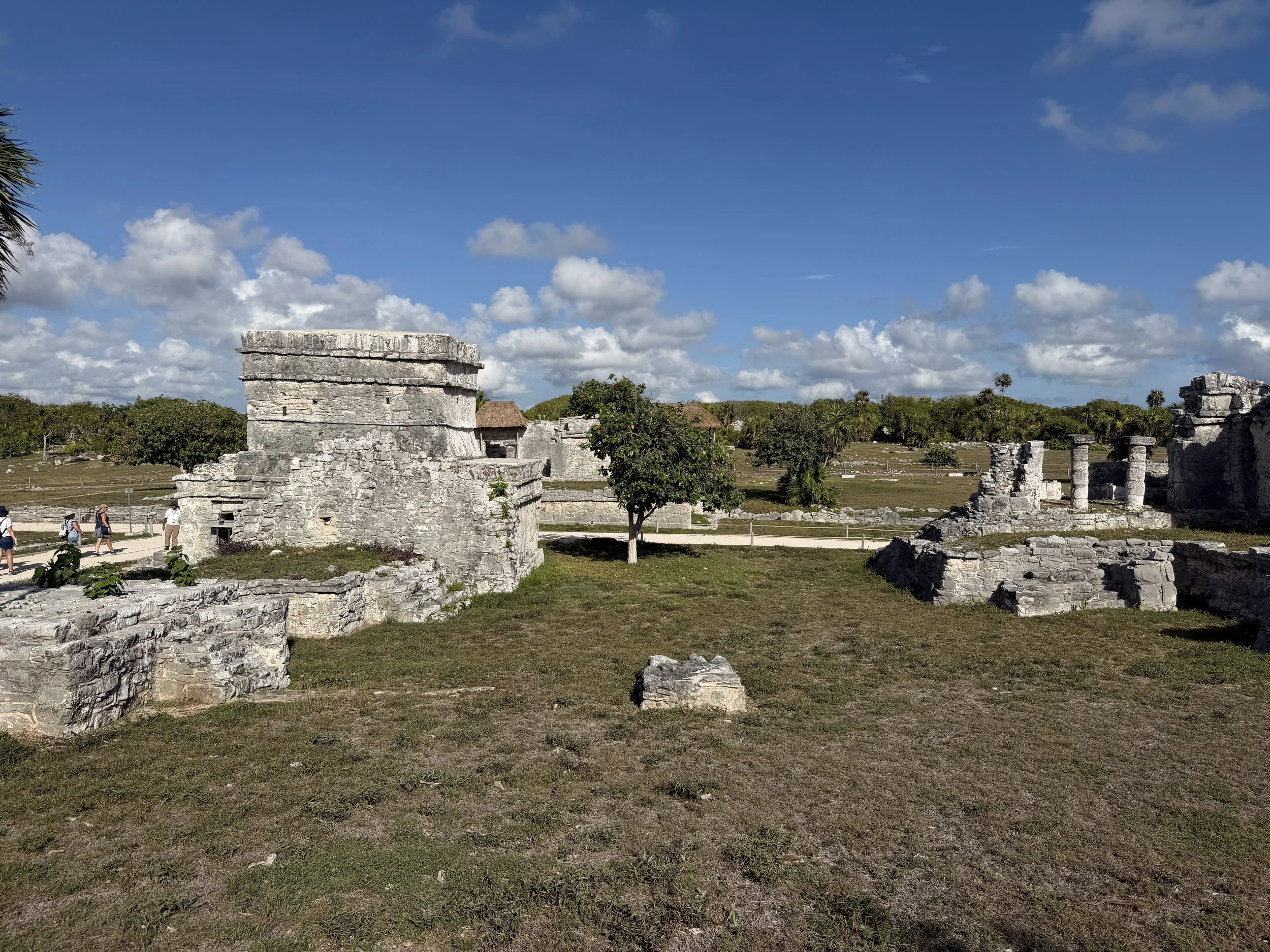
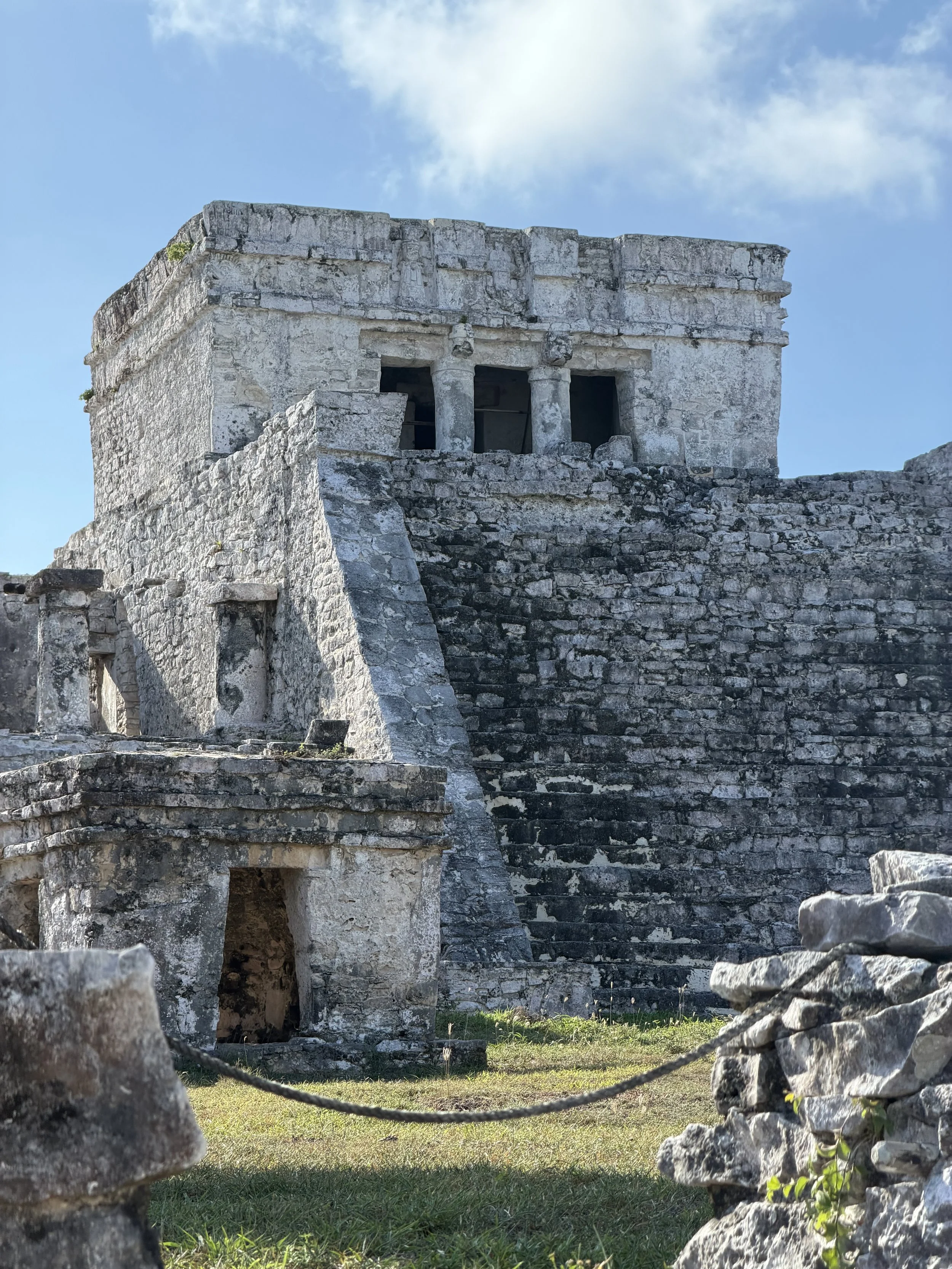
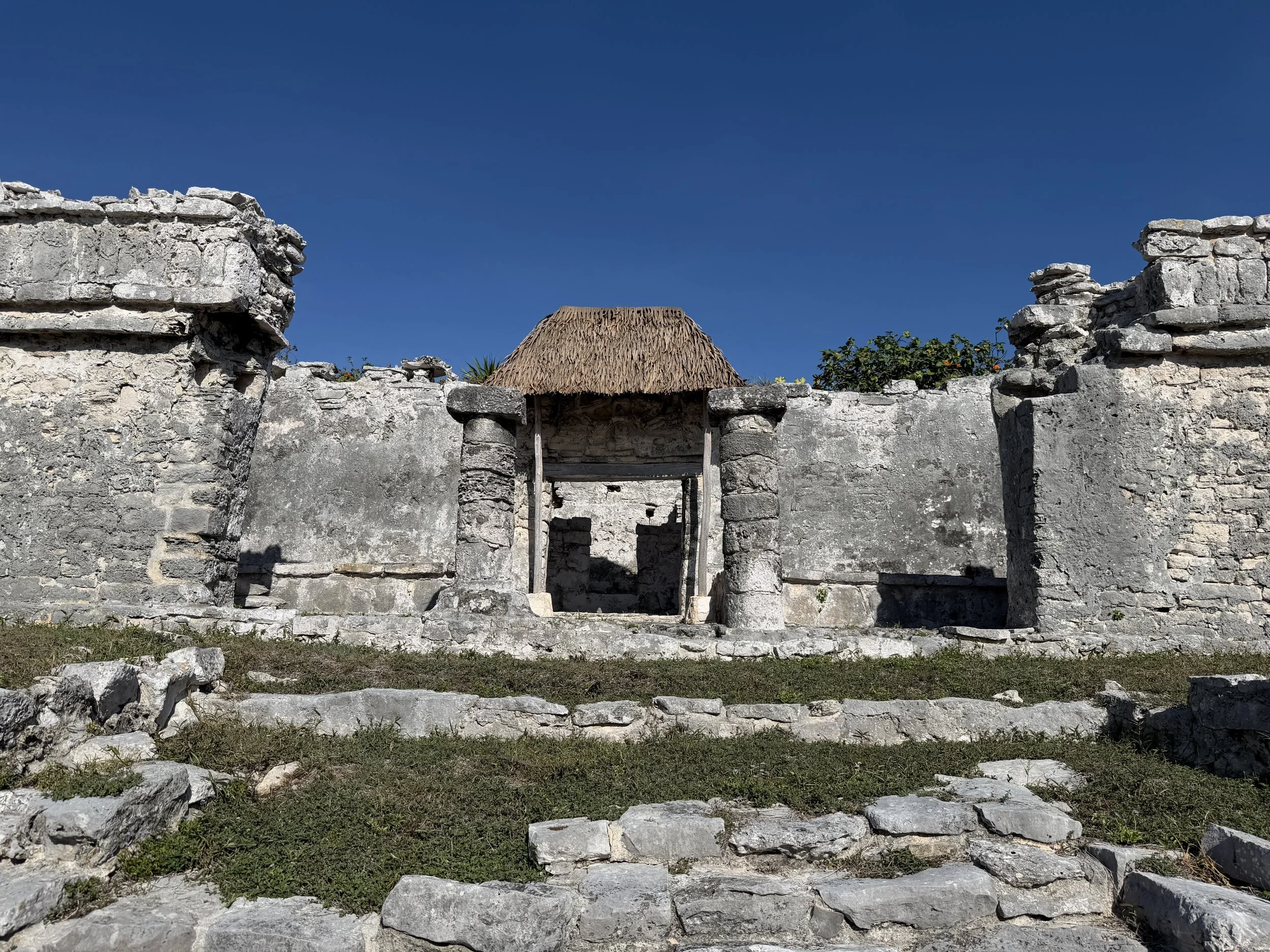
The weather was ideal for it. The sky had that deep blue Caribbean clarity which makes everything else look more vivid, and the bright sunlight turned the pale ruins almost white in places. Palm trees moved gently in the breeze and, beyond them, the sea glittered in a way that made it all feel slightly unreal.
You are not allowed onto the stones, which is entirely understandable. These are fragile buildings that have survived for centuries, and the alternative would clearly be hundreds of people clambering over them every day. Still, it does mean that you are very much looking rather than exploring. There is a small part of you that wants to step closer, touch the limestone and get a better sense of the spaces between the buildings.
The same was true of the beach below the cliffs. It looked inviting in the heat, with pale sand and clear water, but access was not allowed. We could see it, admire it and take photographs of it, but not actually go down onto it.
Wildlife was everywhere too.
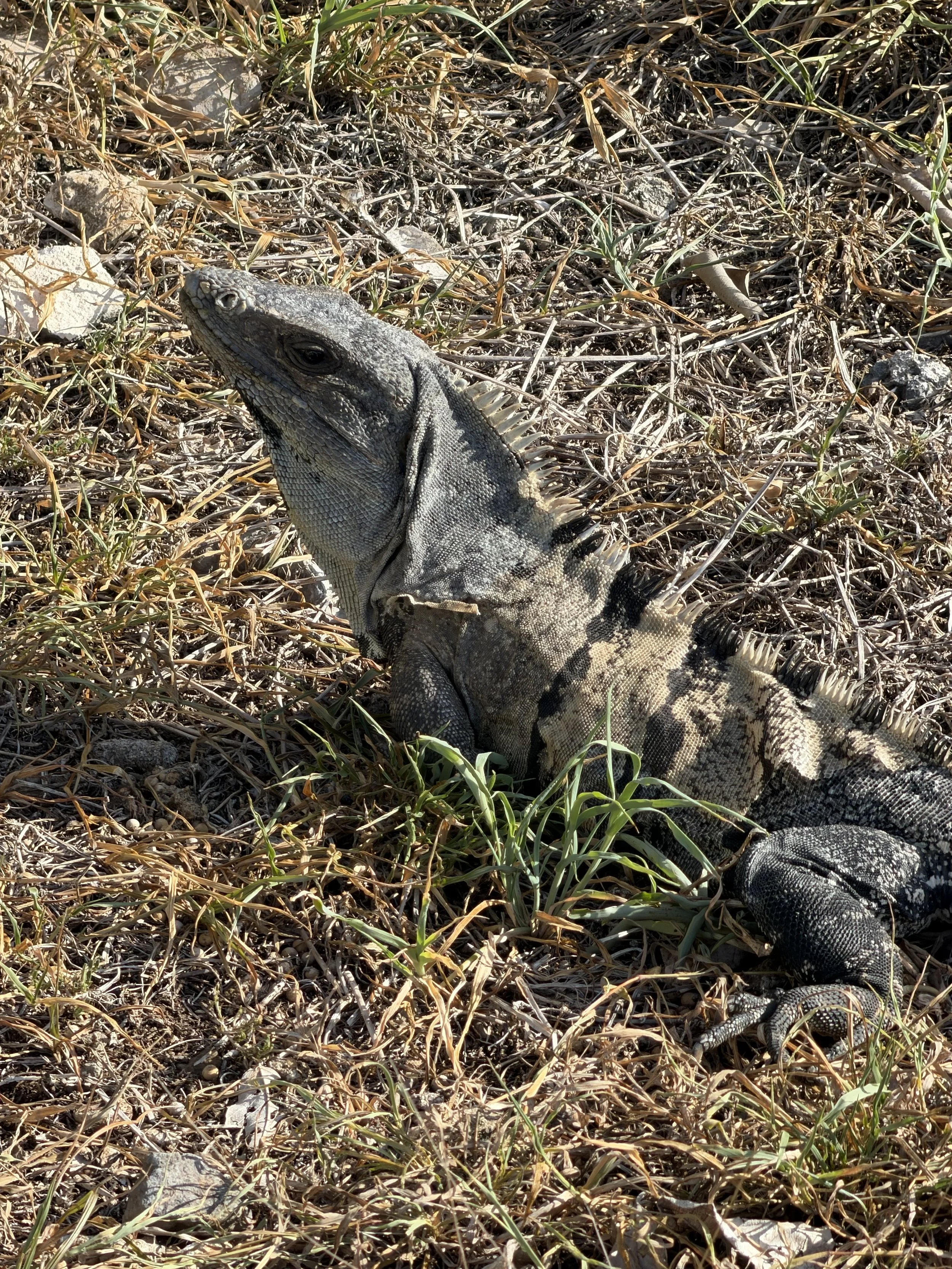
The iguanas were impossible to miss. Some sat proudly on the walls as though they owned the place, while others appeared from the undergrowth and watched visitors pass with complete indifference. We had already seen plenty of iguanas since arriving in Mexico, but they looked particularly at home here.
A large one had positioned itself on a stretch of stone in the sun, completely unmoved by the fact that people were stopping to photograph it. It had the confidence of something that knows it belongs there, and that we were merely passing through.
Then came the best wildlife sighting of the morning.
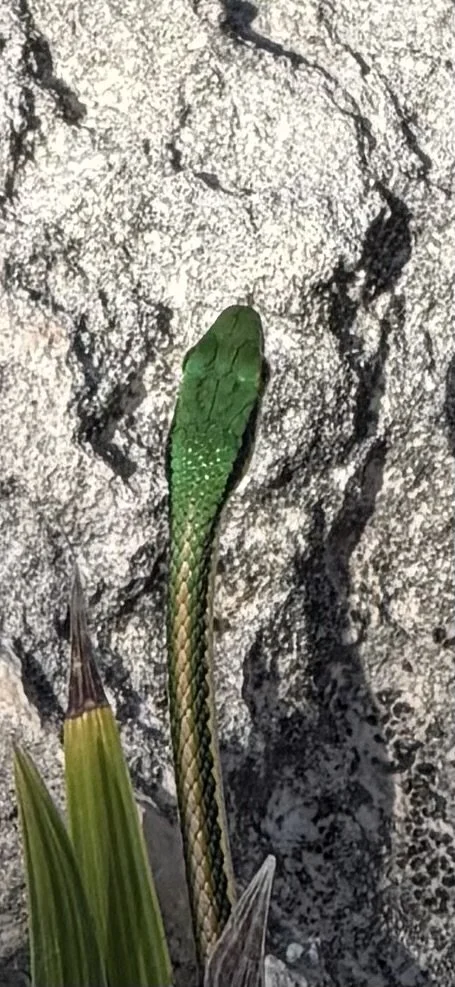
Near one of the paths, we spotted a long, incredibly slender snake moving through the vegetation. At first it was difficult to work out quite what we were looking at. It seemed almost too thin to be real, a line of colour weaving through the low plants.
Its head was a vivid green, fading into bronze and gold along the length of its body. Once we had found it and watched it for a moment, it moved with surprising elegance, almost disappearing and reappearing between the leaves.
It turned out to be a Mexican parrot snake.
Thankfully, it is not dangerous to people, but it was certainly striking enough to stop us in our tracks. It was one of those moments that ends up being more memorable than something you had specifically gone to see. You arrive expecting ancient temples and Caribbean views, then find yourself standing quietly in the heat, watching a bright green snake disappear into the undergrowth.
There is something about encounters like that which makes a place feel more real. Tulum can seem almost too polished as an image: ruins, cliffs, sea, blue sky. Then an iguana lumbers across the path or a snake appears in the vegetation, and it becomes less like a postcard and more like a living place.
We carried on around the site, lingering at the viewpoints and taking far too many photographs of essentially the same combination of stone, sea and sky. At one point I wondered whether I needed another photograph of El Castillo against the Caribbean. The answer, apparently, was yes.
By the time we were making our way back towards the entrance, the temperature was climbing and more people were arriving. The calm of the first hour had started to fade, with the paths becoming busier and the sound of groups and guides carrying across the open ground.
Our early start had worked perfectly.
We left just as Tulum was beginning to feel like one of the Riviera Maya’s most obvious must-see stops rather than a quiet cliff-top settlement. I am sure it would still have been beautiful later in the day, but there was something special about seeing it first, before the crowds and before the heat became something to endure rather than simply part of the atmosphere.
Afterwards, we drove to the Botanical Garden Café for coffee and something cold. It was one of those simple, slightly unplanned stops that ends up being exactly what you need after a morning in the sun.
The avocado and spinach smoothie was excellent, one of those things that sounds slightly too healthy to be enjoyable but absolutely was. We sat for a while, cooled down and looked back through the photographs, although by then it was already obvious that no phone photo was quite going to capture the scale of the view from the cliffs.
Tulum may not be the biggest or most architecturally impressive Maya site in Mexico. It does not have the huge pyramids of Chichén Itzá or the sense of jungle adventure that comes with Coba.
But I am not sure any other site has quite this backdrop.