Xel-Há: Mangroves, Macaws and Tube Soup
Today was one of those days that reminded us why we are not particularly good at quiet holidays.
We had come to the Riviera Maya with every intention of slowing down. There was a perfectly good beach at the hotel, a pool, plenty of food and absolutely no need to do very much at all. Yet by the third full day we were up early, applying sunscreen, packing swimming things and heading out for Xel-Há.
To be fair, it sounded like exactly the sort of outing we would enjoy. A natural inlet where freshwater meets the Caribbean, surrounded by mangroves, limestone, jungle paths and turquoise water. It also seemed a suitably gentle adventure. No alarmingly early coach departure, no hard sell from a guide and no requirement to climb anything particularly high.
We had breakfast at the hotel and left just after eight, arriving at Xel-Há at about 8:15. It was already bright and hot, but the park still had that wonderfully calm, almost unfinished feeling that places sometimes have before the crowds arrive. The water was almost completely undisturbed and only a handful of people were wandering around.
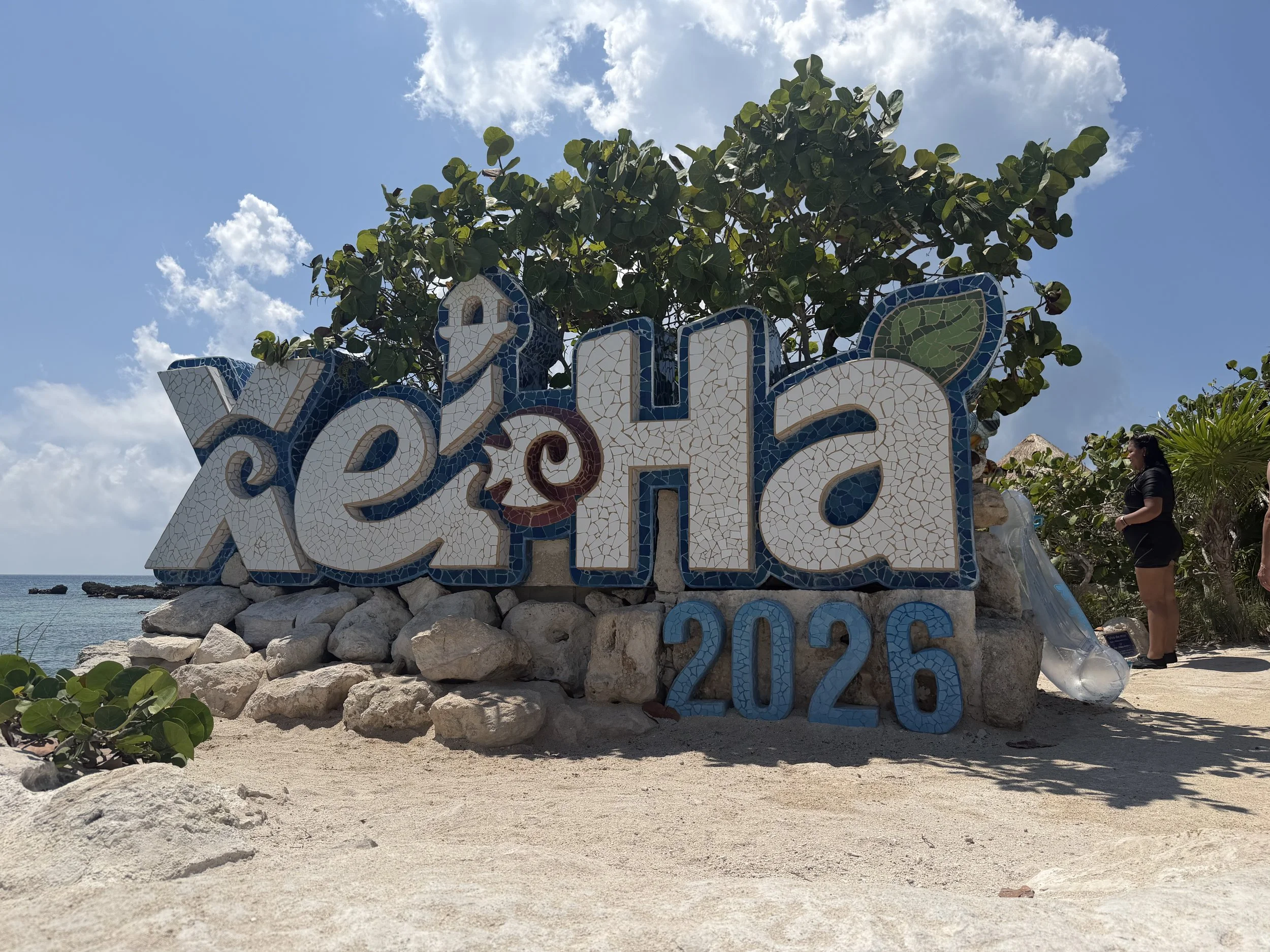
Xel-Há has been important for a very long time. Its name is generally translated from Maya as “where the water is born”, which feels rather appropriate for a place built around the meeting point of freshwater and sea. Long before it became a very polished all-inclusive day out, it was a Maya coastal settlement and port, used by people travelling along this part of the Yucatán coast.
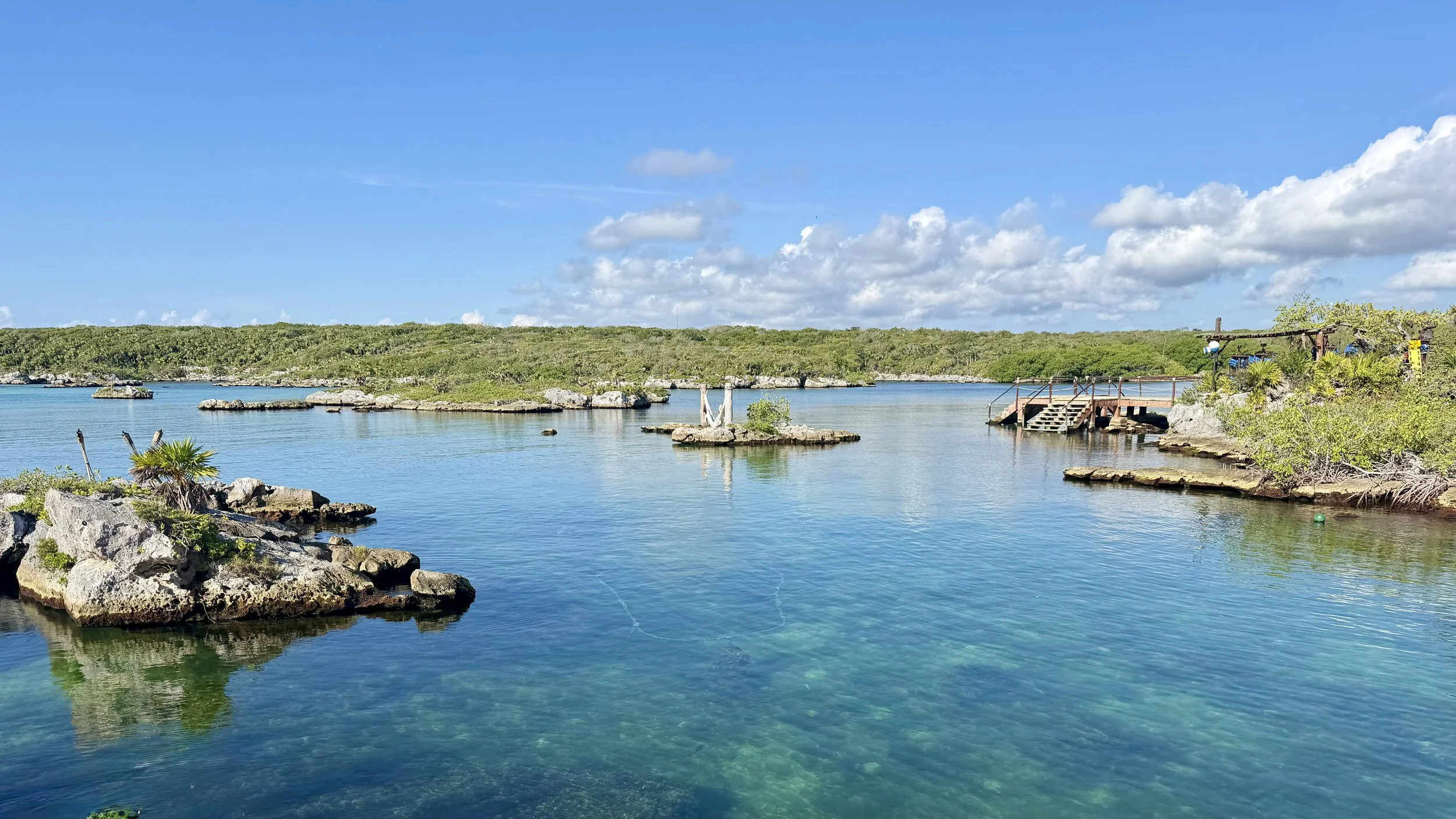
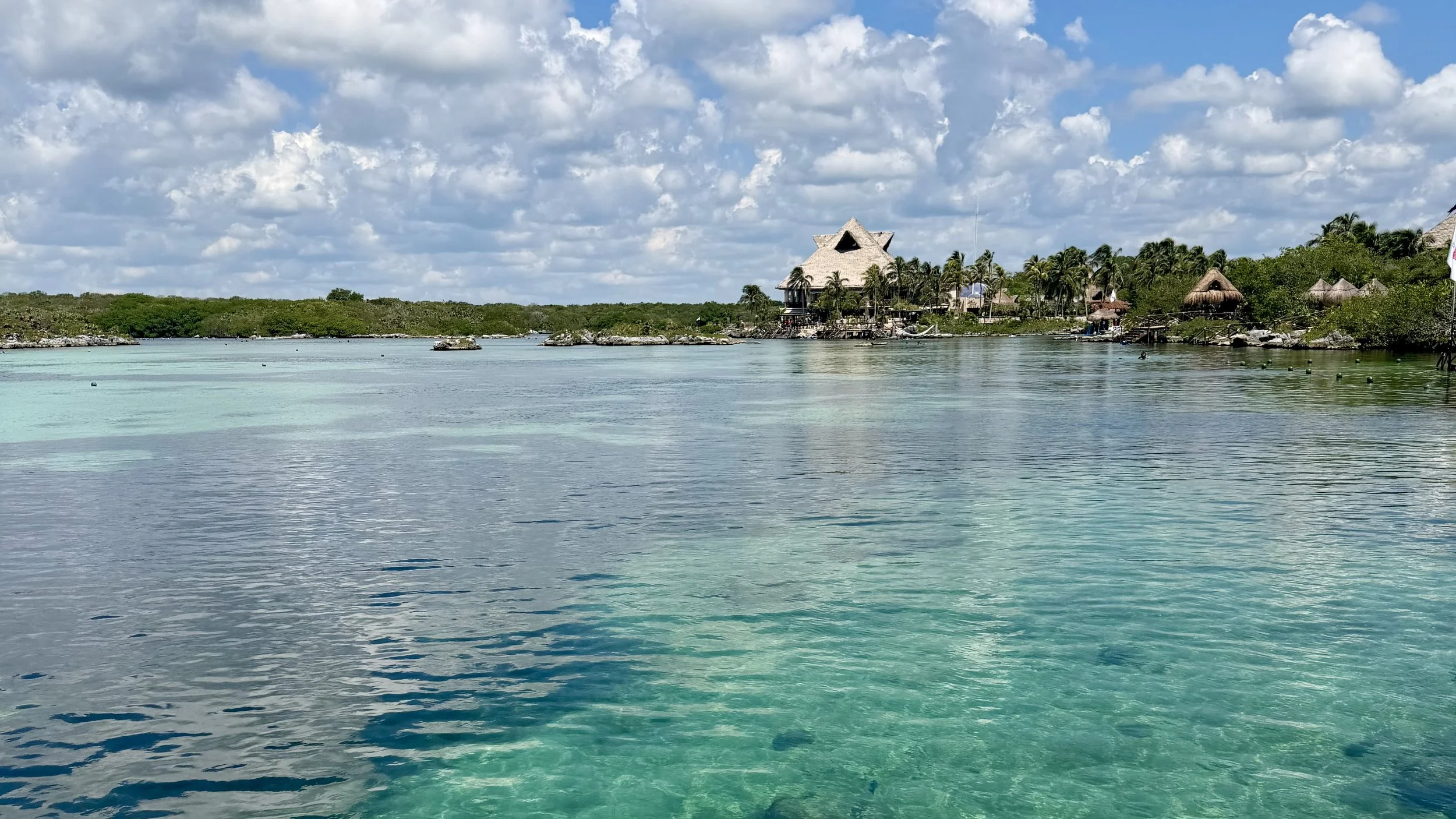
Xel-Há inlet
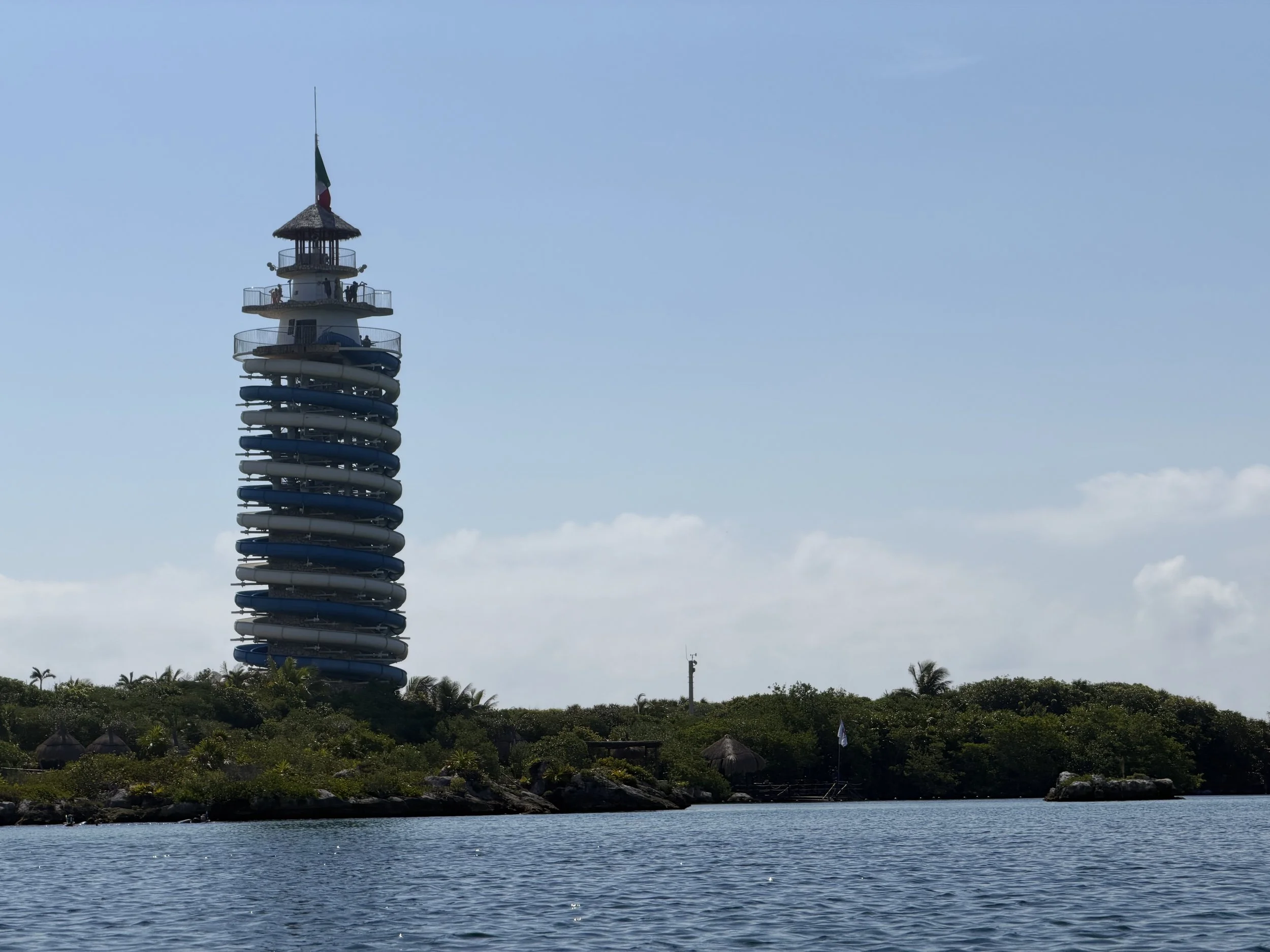
Now, it is very much a park, complete with lockers, restaurants, colourful signs, birds that know they are being photographed and an enormous lighthouse with water slides wrapped around it. But the landscape beneath all of that is still remarkable.
We headed straight for the lockers, changed, and then took one of the bikes through the trees to the start of the river. This turned out to be our best decision of the day.
We were the first people there.
There is something deeply satisfying about being first at an attraction, particularly when you have not planned it with military precision. We collected our enormous transparent inner tubes, got ourselves settled and simply let the current take us.
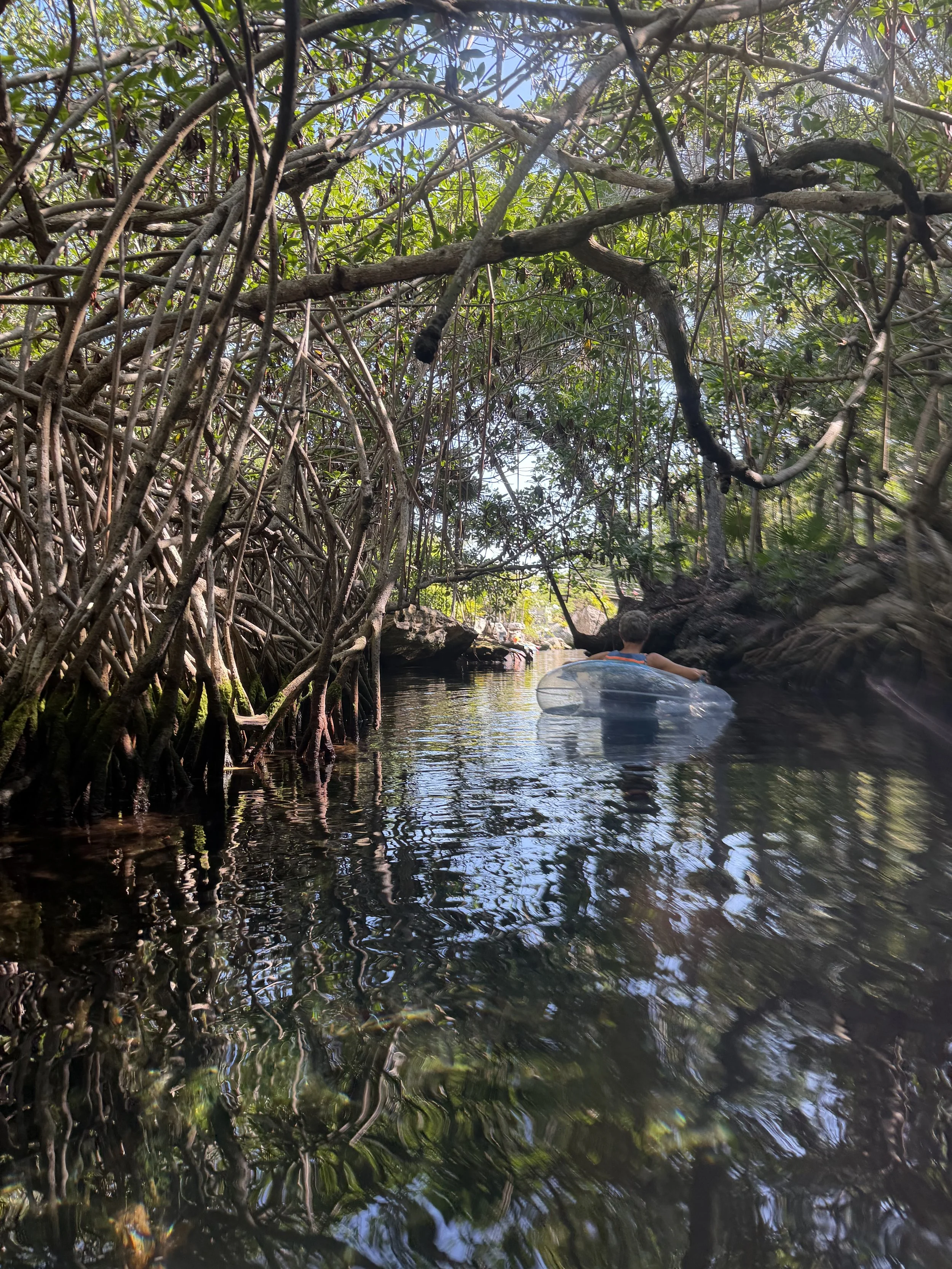
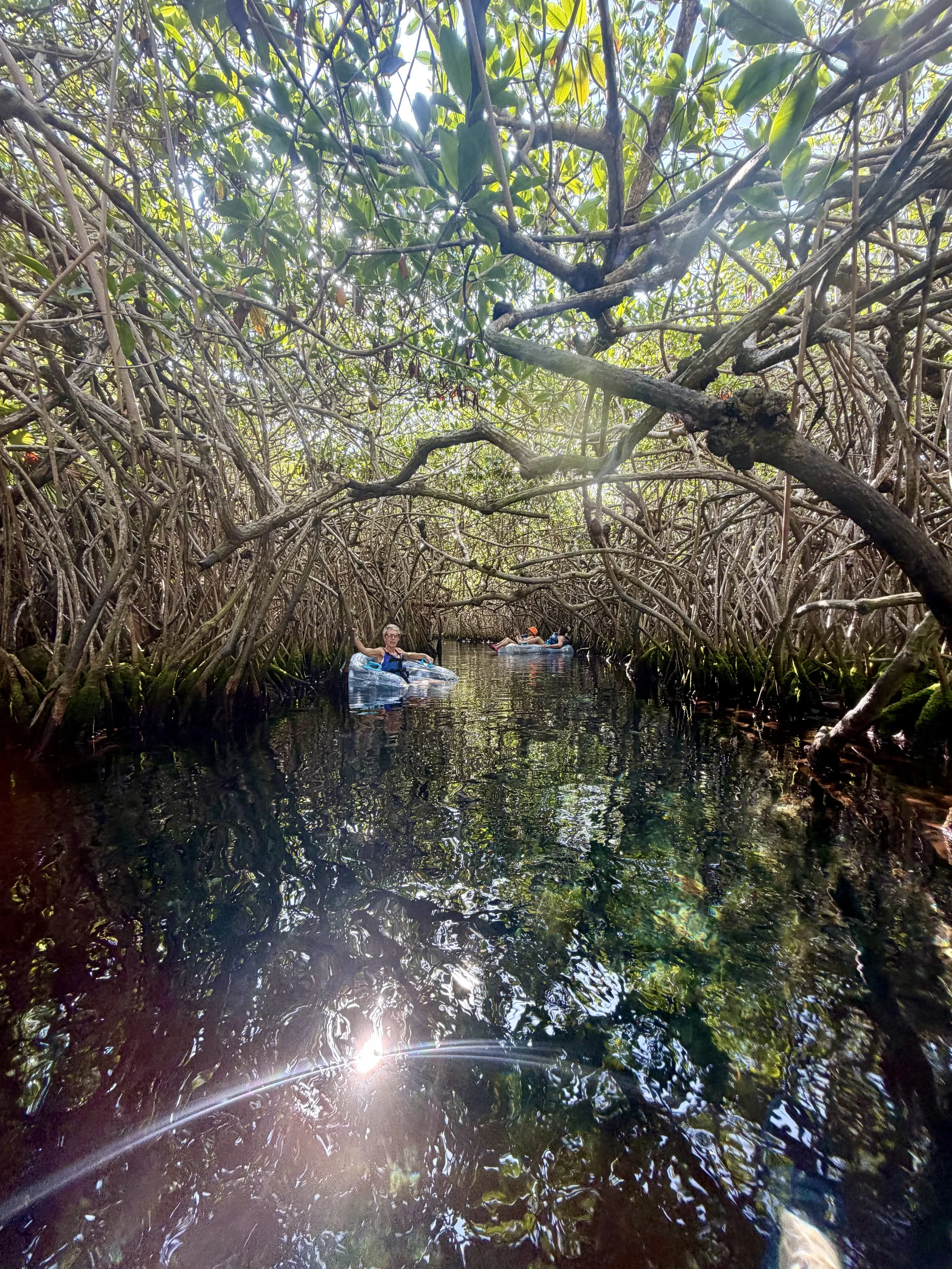
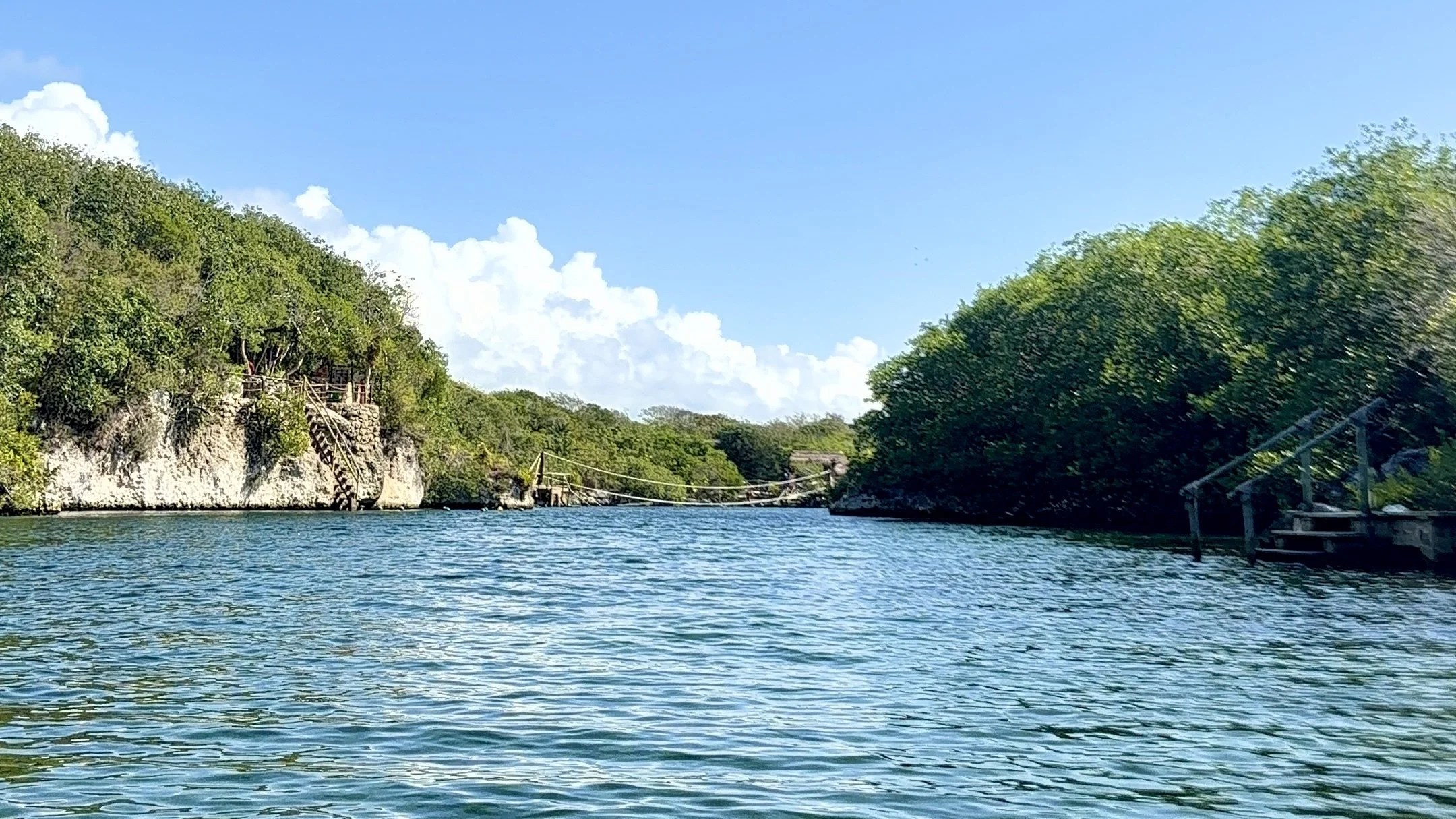
For a little while, Xel-Há felt almost private.
The river winds slowly through mangroves, sometimes opening out into brilliant sunshine and sometimes disappearing beneath a dense canopy of tangled branches and roots. In places it felt surprisingly wild, especially when the water narrowed and the mangroves closed in overhead. The water was clear enough to see beneath us, with little fish moving through the shadows and flashes of sunlight on the sandy bottom.
There was no rush, no queue and, most importantly, nobody repeatedly crashing into the back of our tubes.
We floated along at the sort of pace that makes you stop thinking about what is next. It was not dramatic or adrenaline-filled, which was exactly the point. Just the gentle sound of water, birds in the trees, the occasional glimpse of bright blue sky and the sense that, for once, we had got the timing exactly right.
We would discover later just how fortunate our timing had been.
By lunchtime we happened to pass the river again. The serene little waterway we had floated along earlier had been transformed into what can only really be described as tube soup.
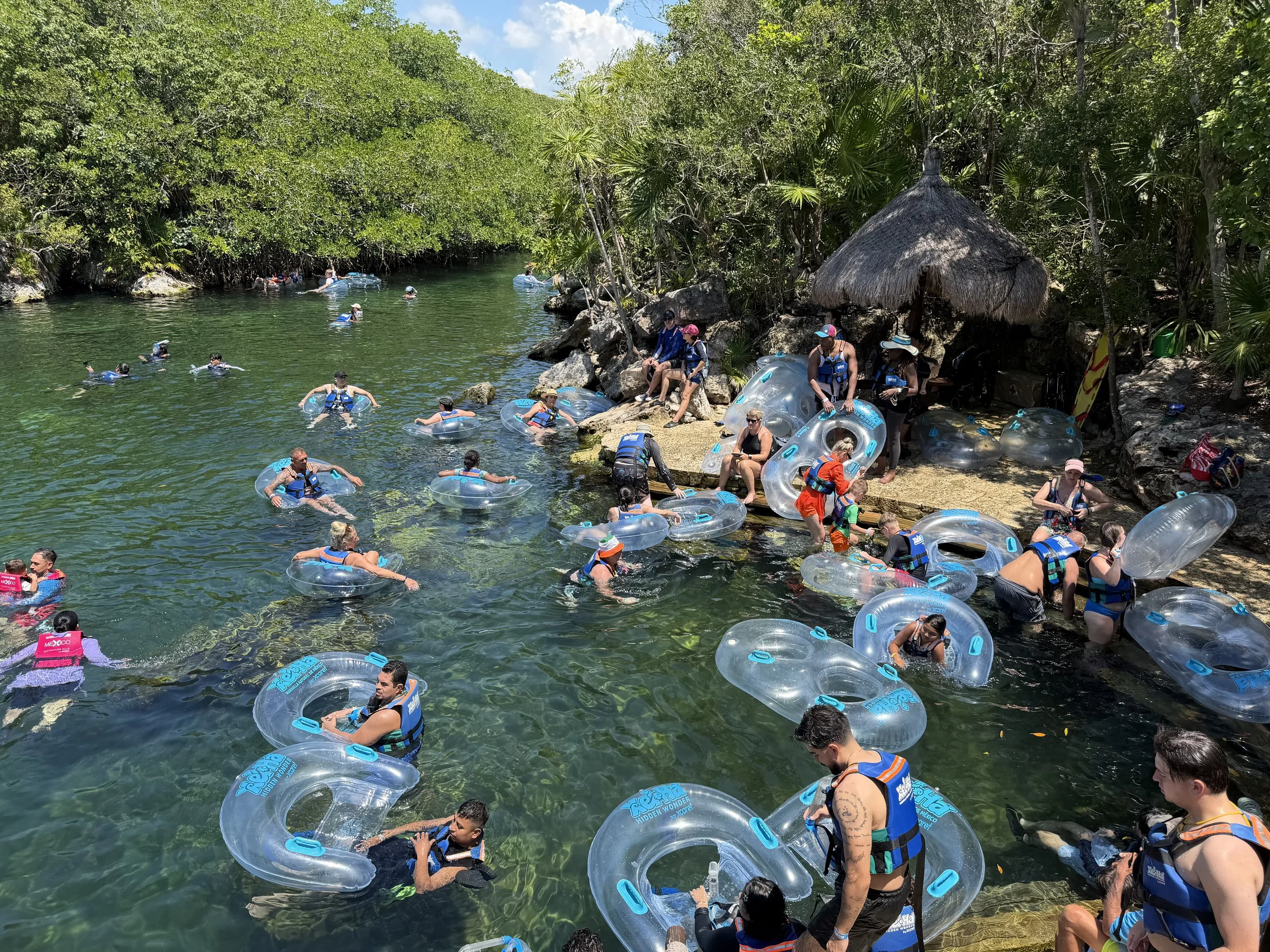
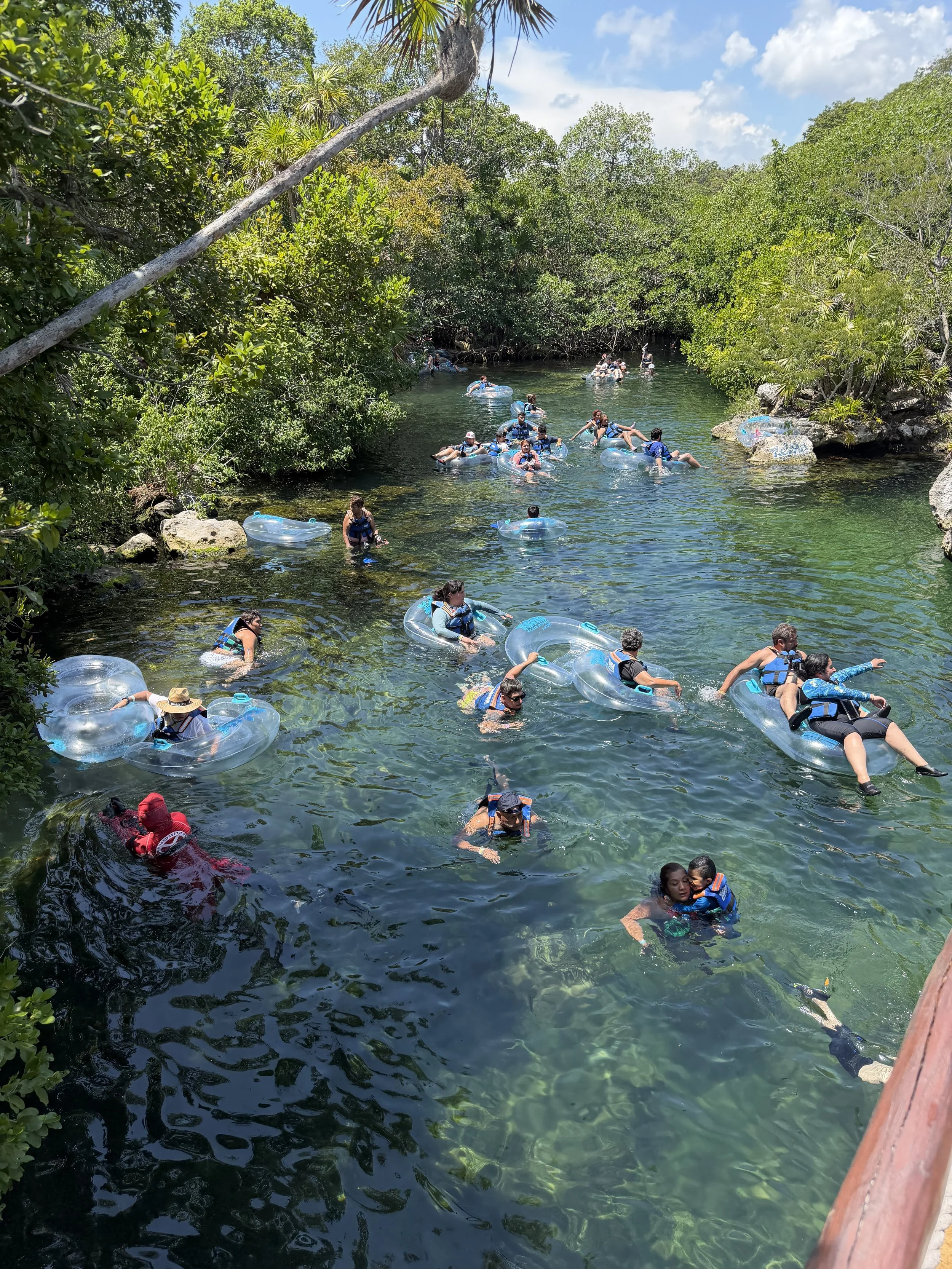
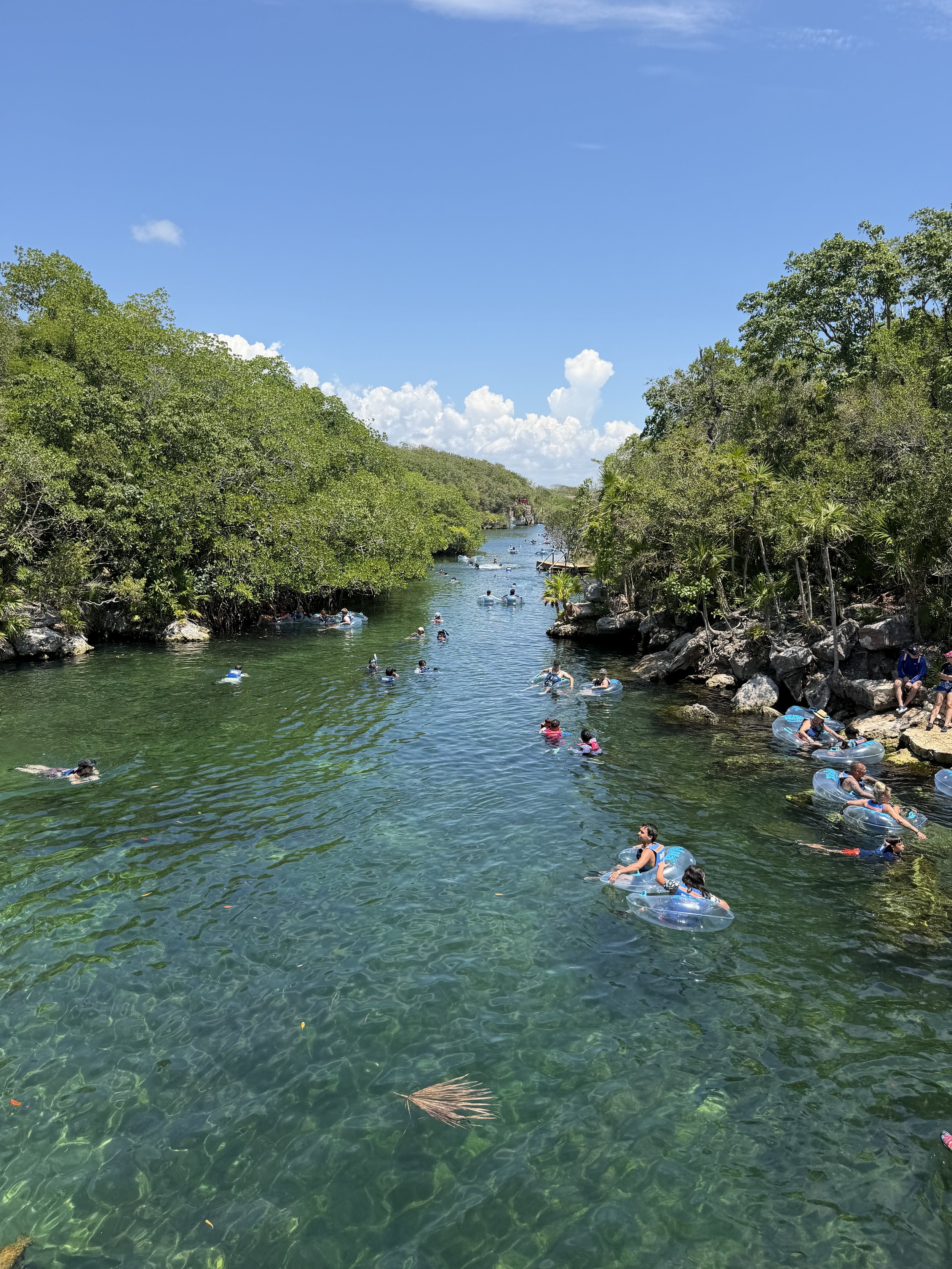
Dozens of blue lifejackets, transparent rings, arms and legs were all slowly negotiating the same stretch of water. People were trying to steer, trying not to collide and, in some cases, probably wondering why the supposedly peaceful river experience involved quite so much accidental contact with strangers.
It looked considerably less tranquil.
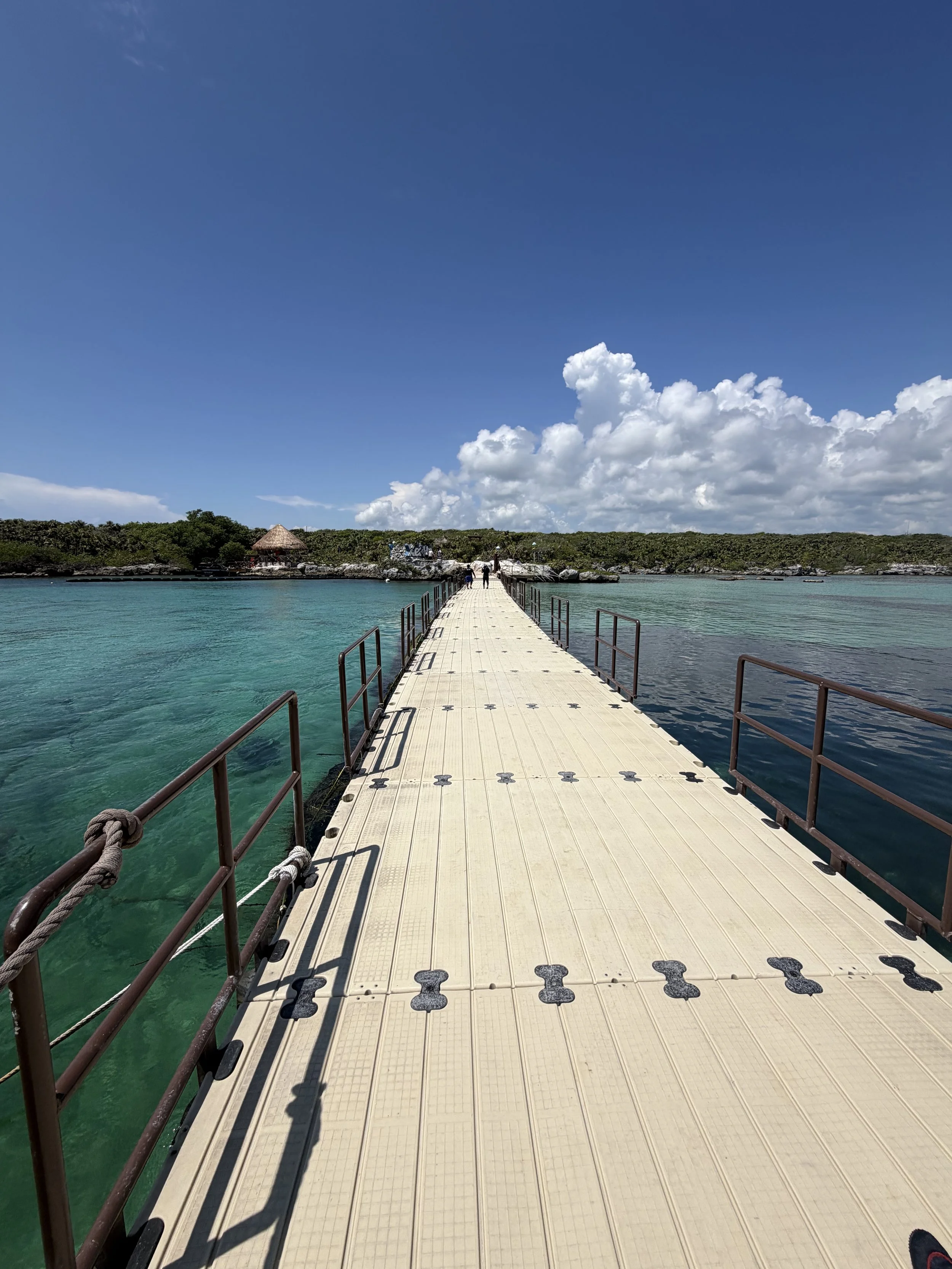
After the river, we stopped for coffee and a sandwich before setting off to explore the rest of the park on foot. Xel-Há is much bigger than it first appears. From the entrance it seems fairly contained, but paths keep leading off through the trees, over wooden bridges and past different pools, coves and little limestone openings.
The main inlet is huge, a bright expanse of water shifting from deep blue to almost luminous green depending on the depth and the sunlight. It is not a lagoon in the neat, picture-postcard sense. It is more complicated than that, with freshwater flowing underground from the limestone landscape and mixing with the Caribbean. That mixture creates the clear, gentle water that makes it so good for swimming and snorkelling.
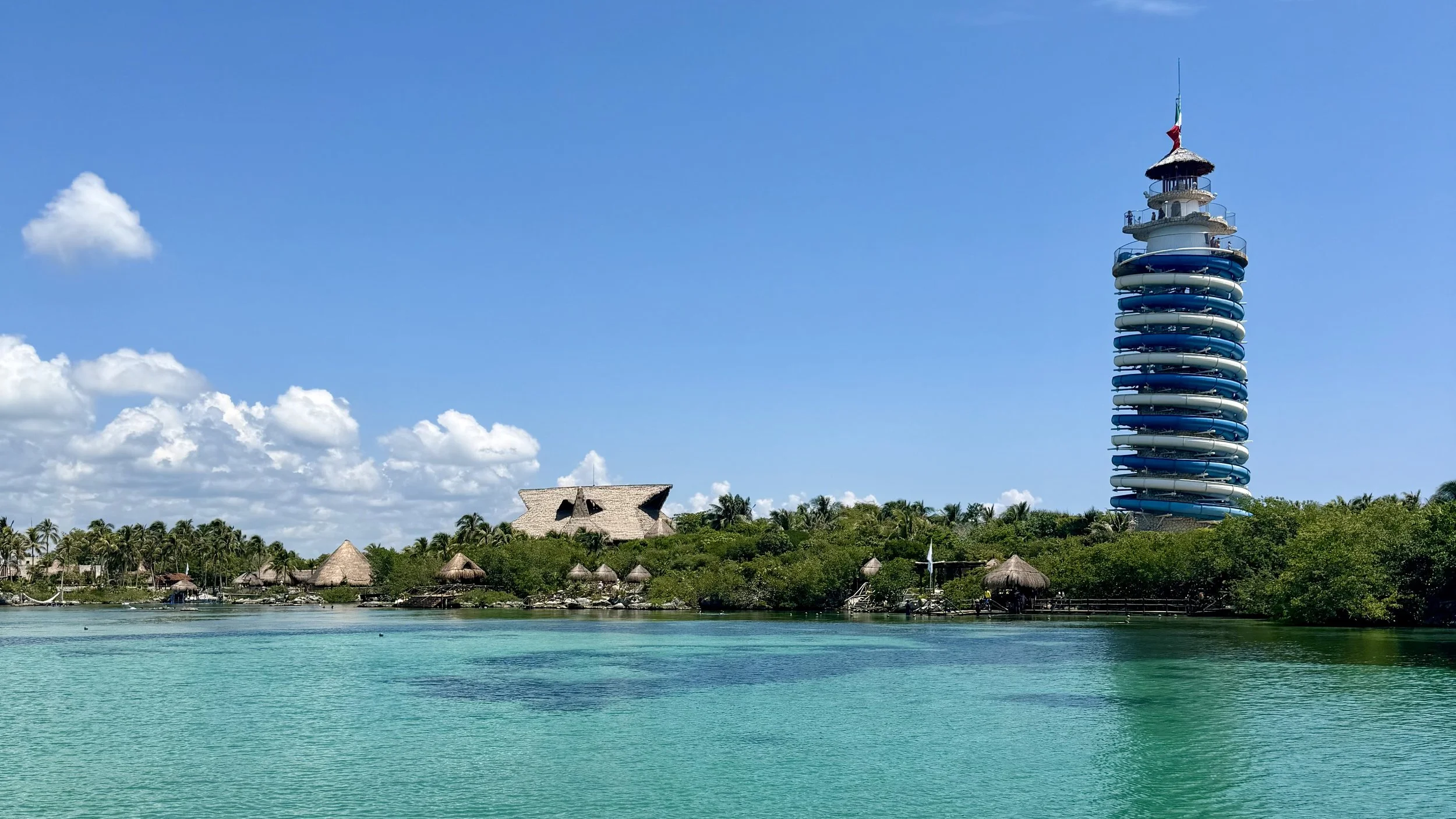
Every now and then the trees opened and there would be another view of the water, usually involving someone floating peacefully in an inner tube while a scarlet macaw appeared overhead looking extremely pleased with itself.
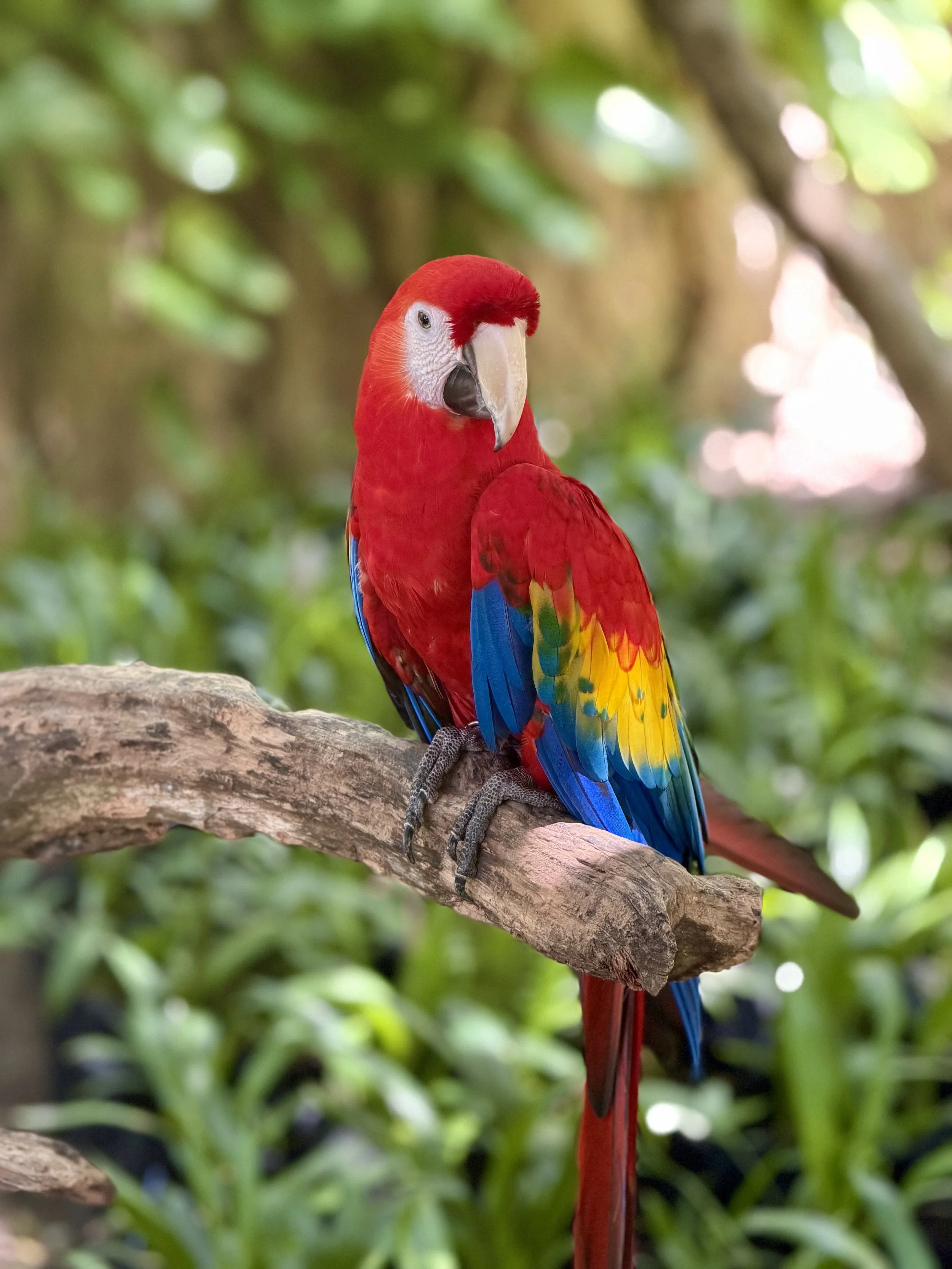
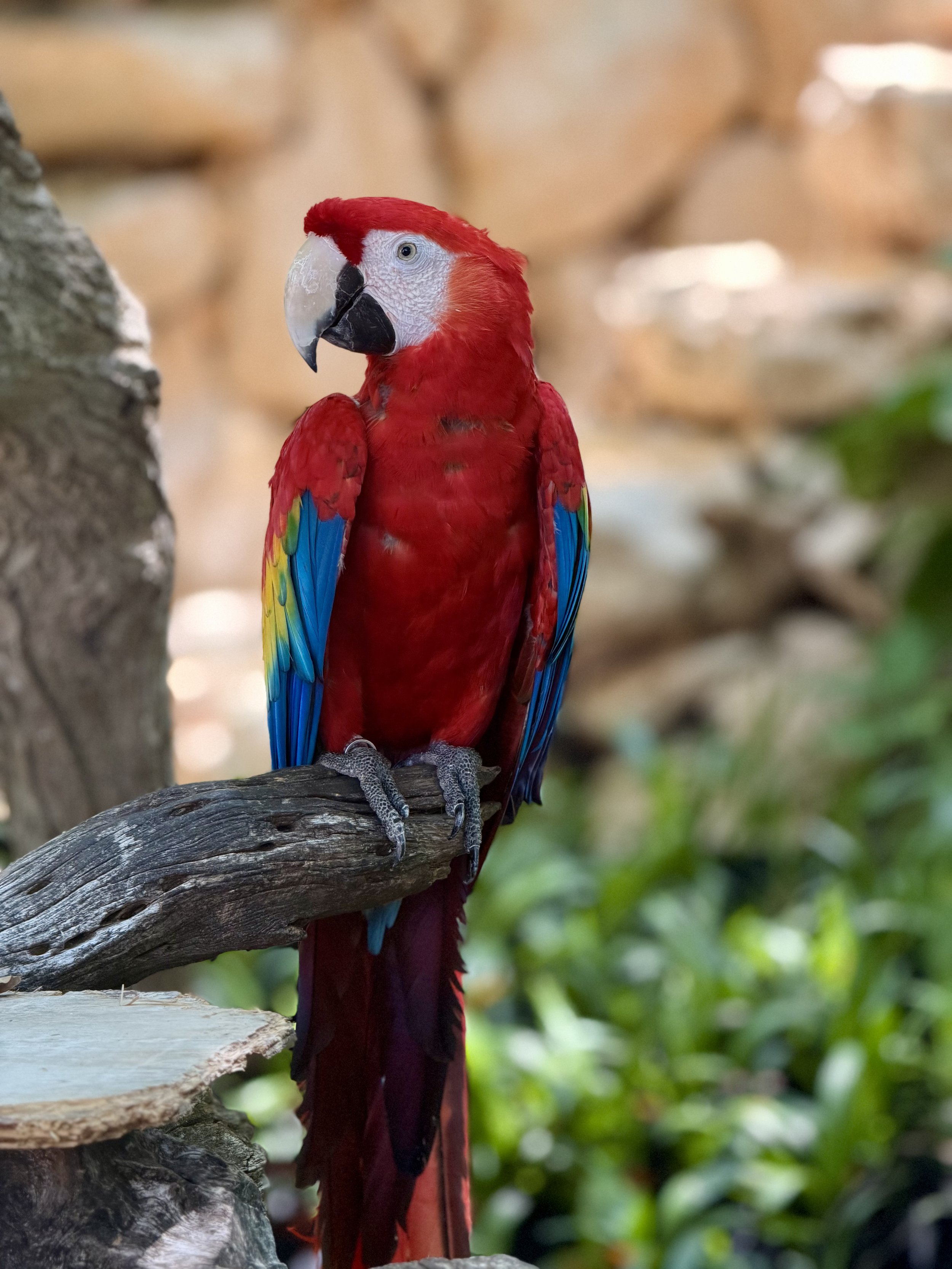
The macaws were difficult to walk past without stopping for a photograph, no matter how many photographs of brightly coloured birds you may already possess. Their red, yellow and blue feathers looked almost unreal against the green of the trees. They also seemed completely unfazed by the number of people pointing phones and cameras at them.
There were quieter corners too. Away from the main paths and the obvious photo stops, it was still possible to find a bench or a stretch of water where the noise faded away. The heat was building by then, so those shaded areas became increasingly appealing.
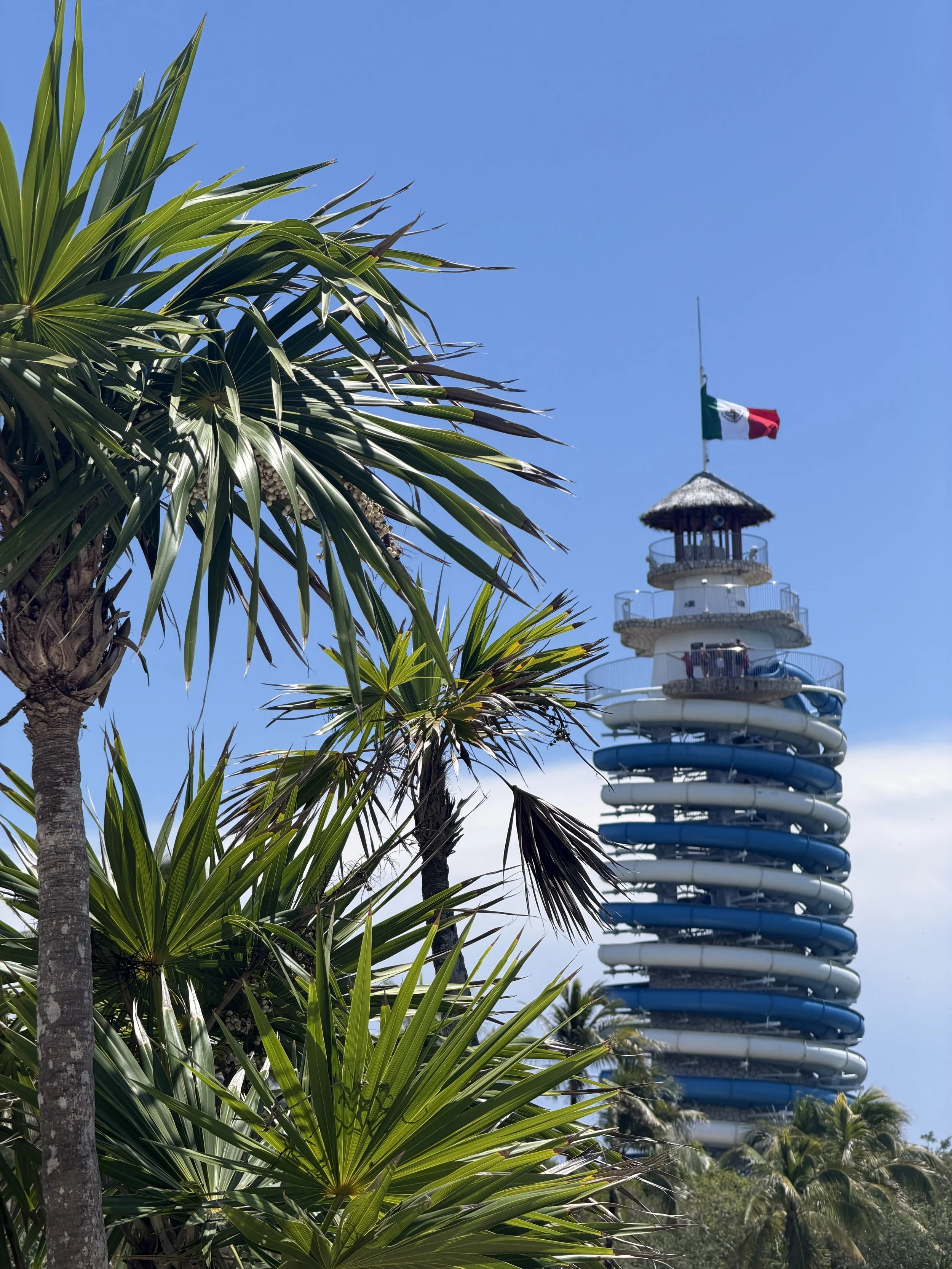
The ‘Lighthouse’
The most obvious landmark in the park is the Scenic Lighthouse, which rises above everything else and is wrapped from top to bottom in twisting water slides. From a distance it looks faintly ridiculous, like somebody had decided that a traditional viewing tower was not nearly enough fun and had kept adding things.
We had intended to go up for the view, right up until discovering that cameras and phones had to be left in a locker.
A viewing tower where you cannot take a camera.
This was not a decision I could entirely get behind.
I understand the practical reasons. People coming down water slides with cameras in their hands is probably not ideal for either the cameras or the people waiting at the bottom. But the thought of reaching the highest point in the park, with those views over the mangroves and Caribbean, and being unable to take a photograph felt oddly pointless.
We decided that the view from the bottom would be perfectly adequate.
Instead, we spent more time in the water. Swimming and snorkelling in Xel-Há is less about going somewhere specific and more about drifting between patches of sunlight, shadows and different shades of blue-green water. There were plenty of fish, especially once we put our faces below the surface, and the visibility was excellent.
We also swam into one of the limestone caves, which provided a welcome change from the increasingly fierce midday sun. The water became cooler and the light softened, with pale limestone overhead and echoes replacing the sound of the park outside. It was not a huge cave system, but it gave us that brief sense of stepping into another version of the place, one shaped by water over thousands of years rather than by paths, restaurants and lockers.
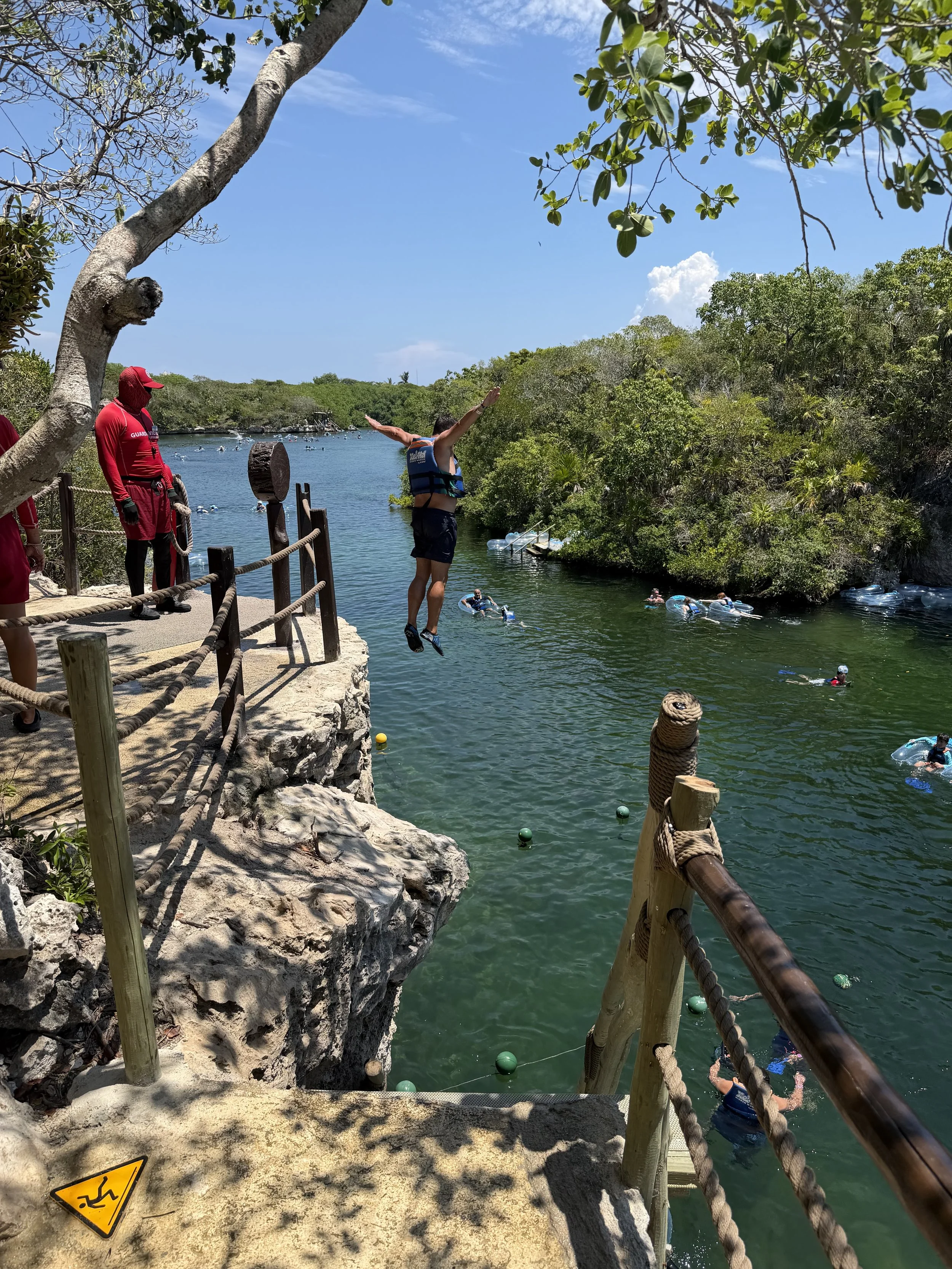
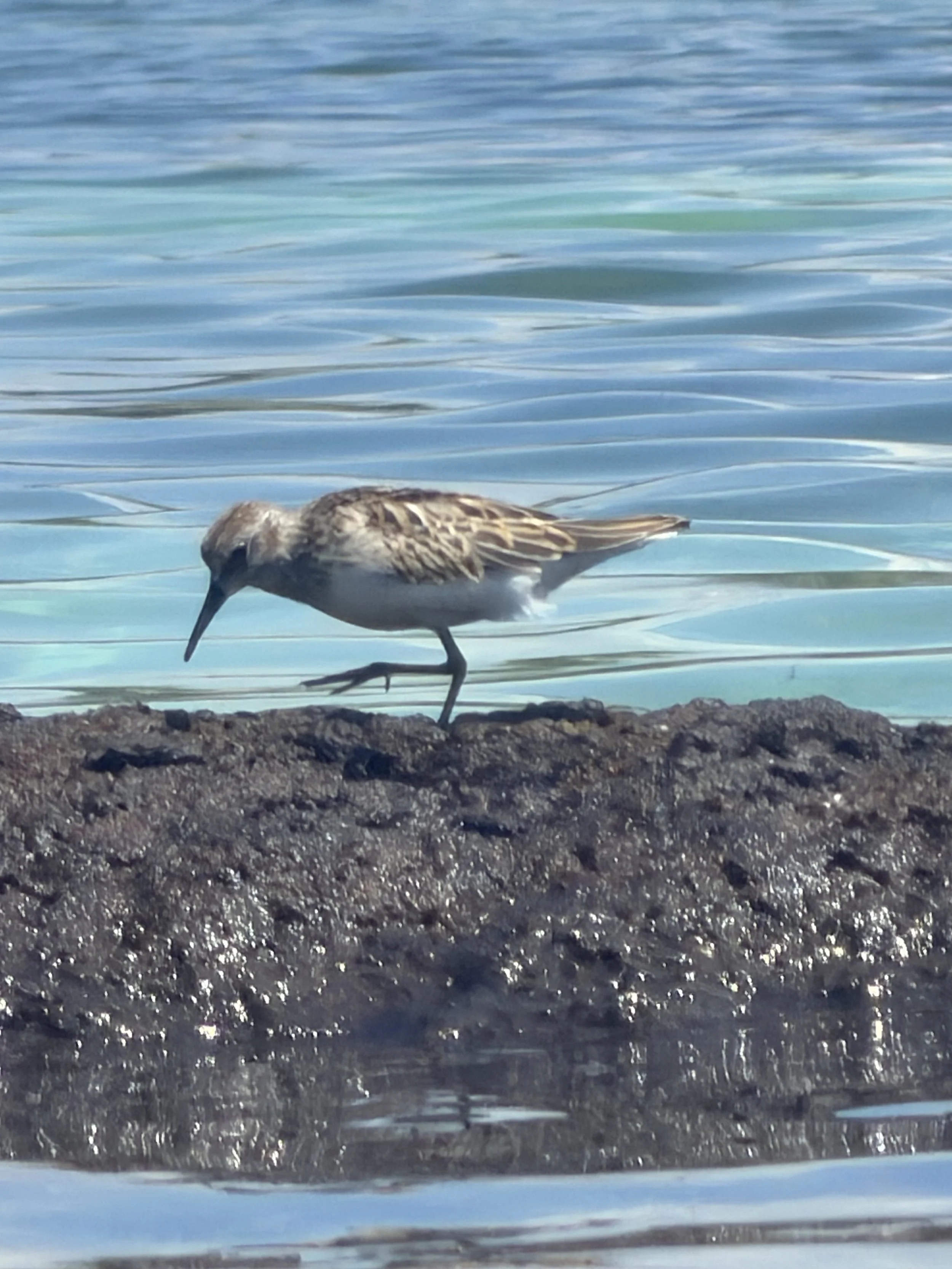
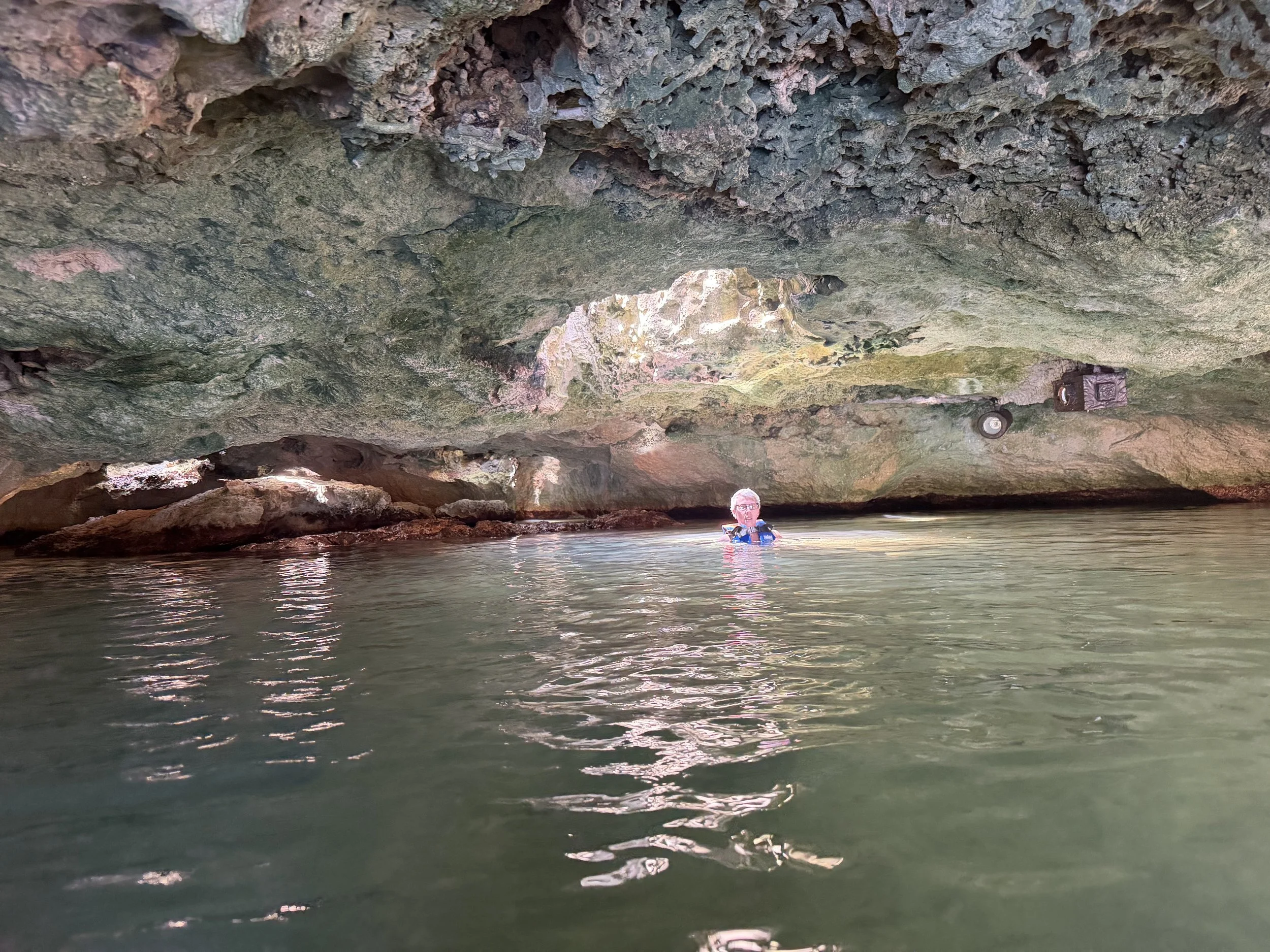
By then, we had managed a surprising amount of activity for people on a supposedly restful holiday.
Lunch was at the Mexican restaurant and turned out to be very good. One of the advantages of Xel-Há is that food, drinks and most of the practical things are included, which means there is no need to spend the day making small financial decisions every time you want a coffee, an ice cream or another bottle of water.
The restaurant was busier than the river had been that morning, but it was still an enjoyable pause in the day. We sat in the shade, had a proper meal and watched the park gradually move into its full lunchtime rhythm. By then the calm early-morning version of Xel-Há had gone, replaced by families, groups and a great many people in lifejackets.
It was still pleasant, just different.
That was probably the thing we liked most about the day. Xel-Há can be busy and it is undeniably designed as a slick visitor attraction, but it is built around a genuinely beautiful bit of landscape. Arrive early enough and you get a glimpse of the place before it turns into a day out for everyone else as well.
By about three o’clock, we felt we had done everything we particularly wanted to do. We could easily have stayed until closing, floated a little more, eaten again and found another pool to swim in. But there seemed little point staying simply because we could.
So we collected our things, headed back to the car and returned to the hotel.
After several hours floating down rivers, swimming through caves, snorkelling and walking around Xel-Há, there was really only one sensible way to finish the afternoon.
We went to the beach.