A Change of Course
Plans Rewritten
Today we were supposed to be visiting Haugesund, but unfortunately that was not possible due to strong winds. Instead, the ship altered course and headed into Hardangerfjord to visit Furebergsfossen waterfall.
Another unexpected day “at sea” was, naturally, a disappointment. We had been looking forward to wandering around Haugesund, perhaps walking up to Haraldshaugen and finding the Kvalsvik sculpture area, one of those places where you enjoy simply seeing where your feet take you.
The Queen of the Fjords
Instead, we found ourselves sailing into what is often called the “Queen of the Fjords.”
It was bitterly cold outside, but also gorgeously sunny. Days like this reveal something interesting about cruise travel. As we entered the fjord, hardy souls gathered on the outer decks, cameras ready, me included. Thick coats, hats and gloves had appeared again. People lined the railings at the front of the ship, standing patiently against the wind waiting for photographs and views.
Others chose a very different experience. T-shirts and shorts still somehow made appearances, although their owners sensibly enjoyed the scenery from warm seats inside places like the Crow’s Nest, looking out through enormous windows with coffee and other assorted drinks in hand.
Some seemed entirely unbothered by the scenery passing outside. Competitive deck games continued, quizzes carried on, books were read and cards were played. I was genuinely surprised by how many people appeared almost indifferent to the landscapes sliding past the windows.
And then there were those perfectly content to settle into bars and work steadily through their all-inclusive drinks package. Sit, drink, chat and repeat.
There’s no right and wrong here, but it shows people’s differing motivations for travel and the cruise itself.
Not that we avoided the bars and coffee shops, ourselves, we certainly didn’t, but it was never really the main reason for being here.
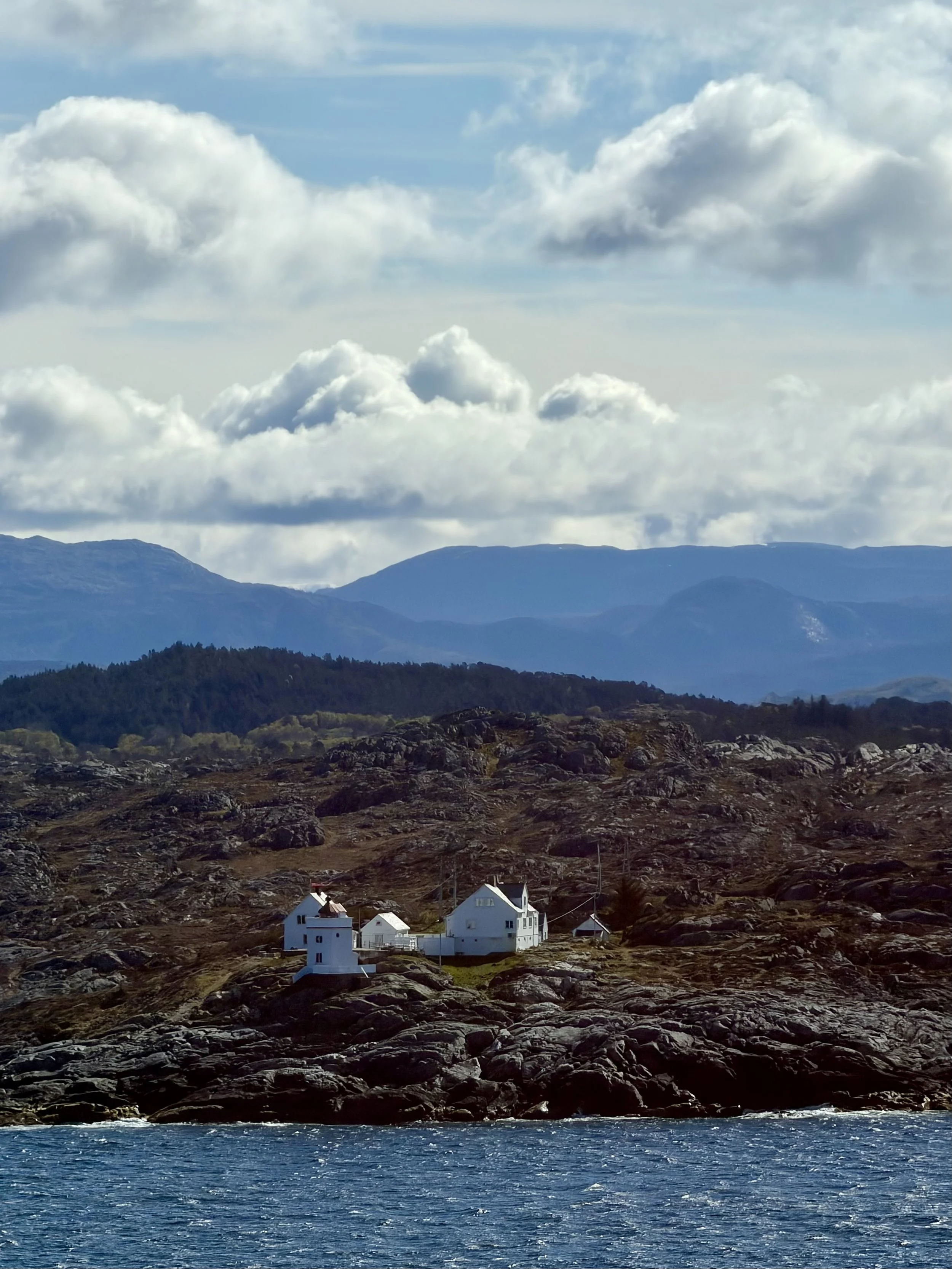
Initially the scenery was lower and more exposed than I had expected. Rocky islands appeared scattered across the water, some little more than smooth grey outcrops with a handful of windswept trees. Here and there isolated white houses stood alone against the rock, looking as though they had simply found the only patch of level ground available and decided that would do.
Further on we passed long suspension bridges stretched improbably between islands and watched ferries quietly crossing between communities. Norway often feels as though road, sea and landscape are engaged in a constant negotiation, each finding ways around geography rather than conquering it.
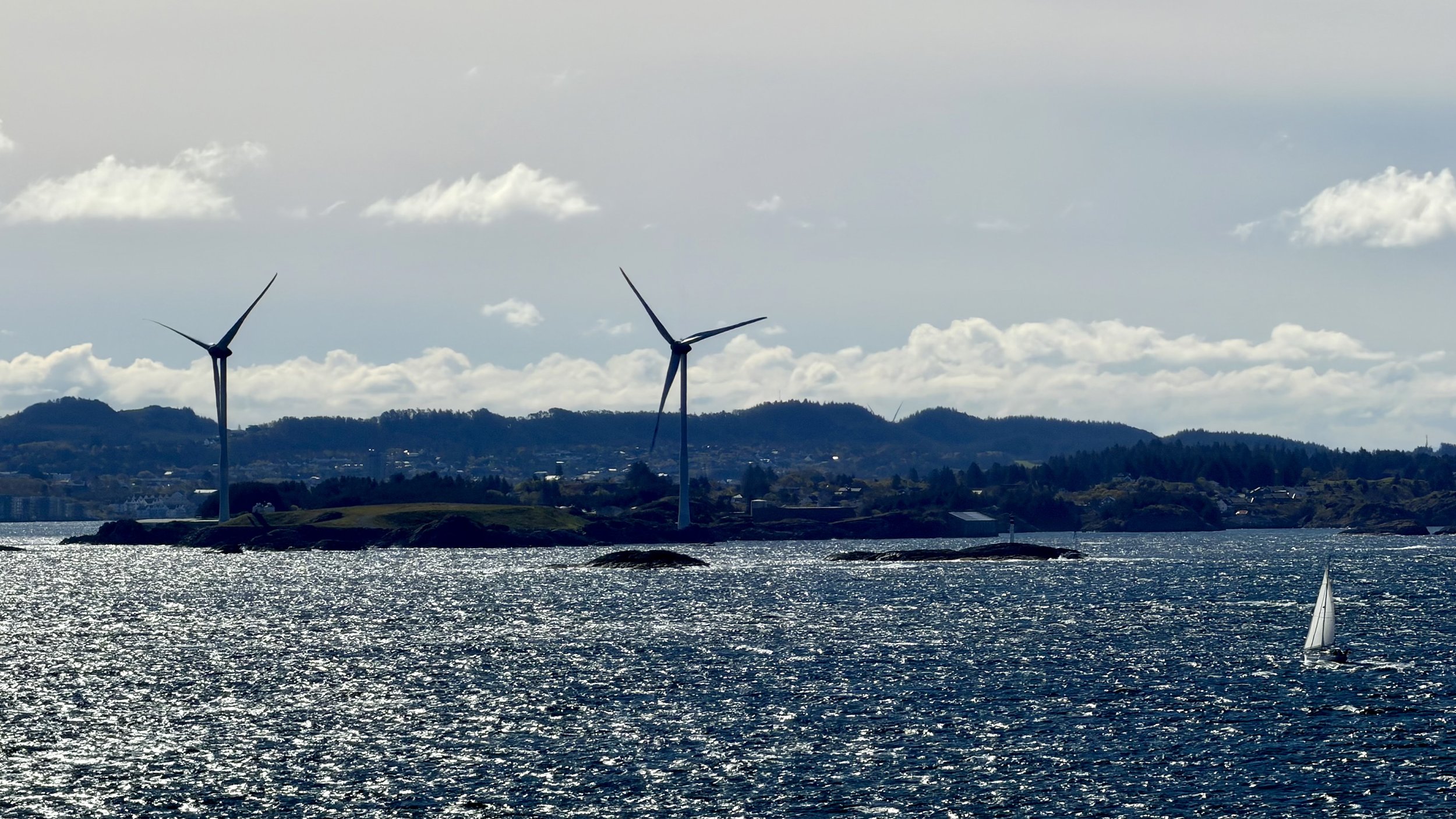
We passed modern wind turbines turning steadily on tiny islands, their blades catching the bright sunlight. Nearby a lone sailing boat looked tiny against the scale of the sea and sky, one of those scenes where it is impossible not to stop and take a photograph.
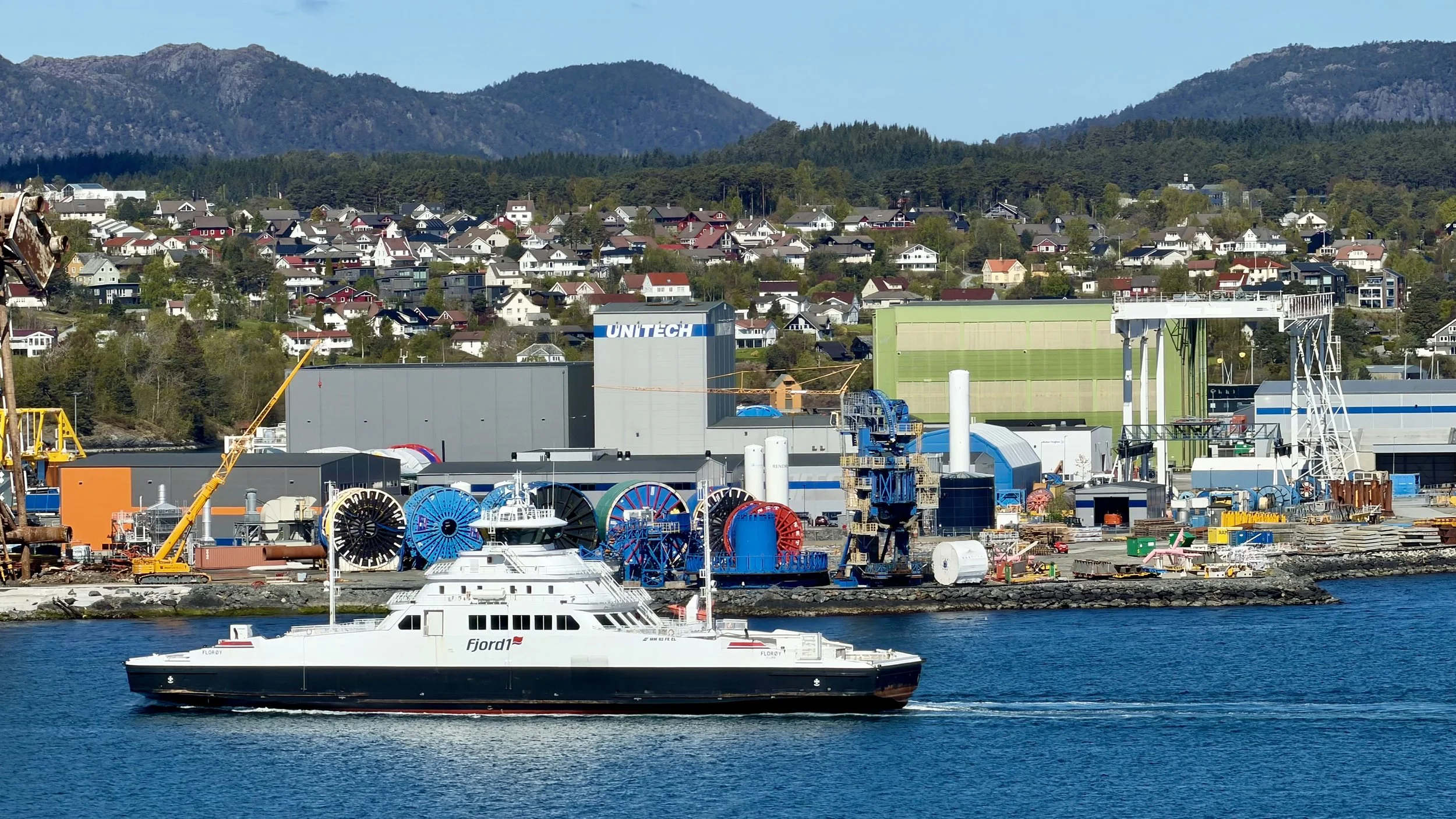
At one point we passed industrial dock areas and shipyards, reminders that these waters are working places as much as postcard scenery. Then, gradually, the landscape began changing.
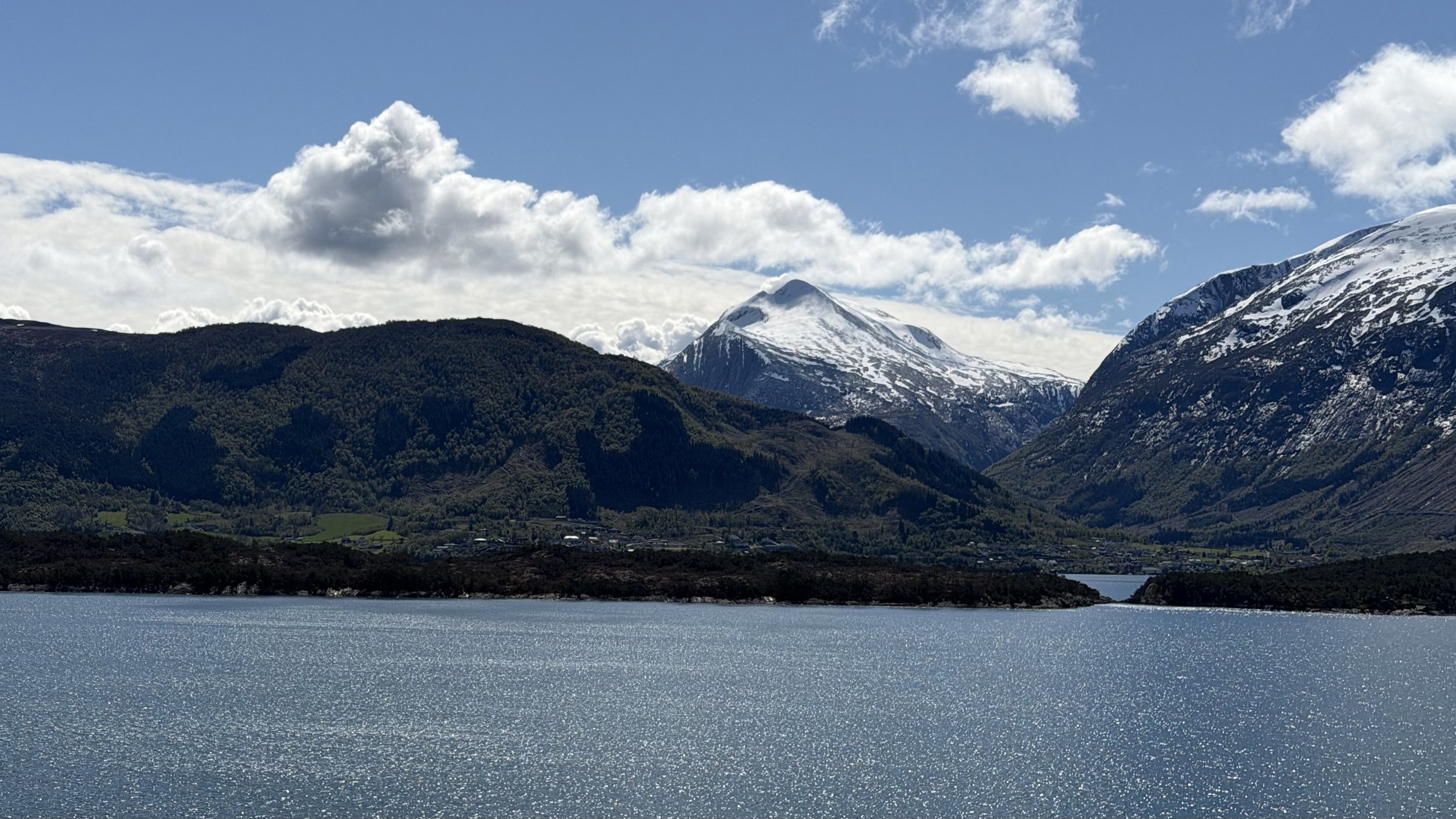
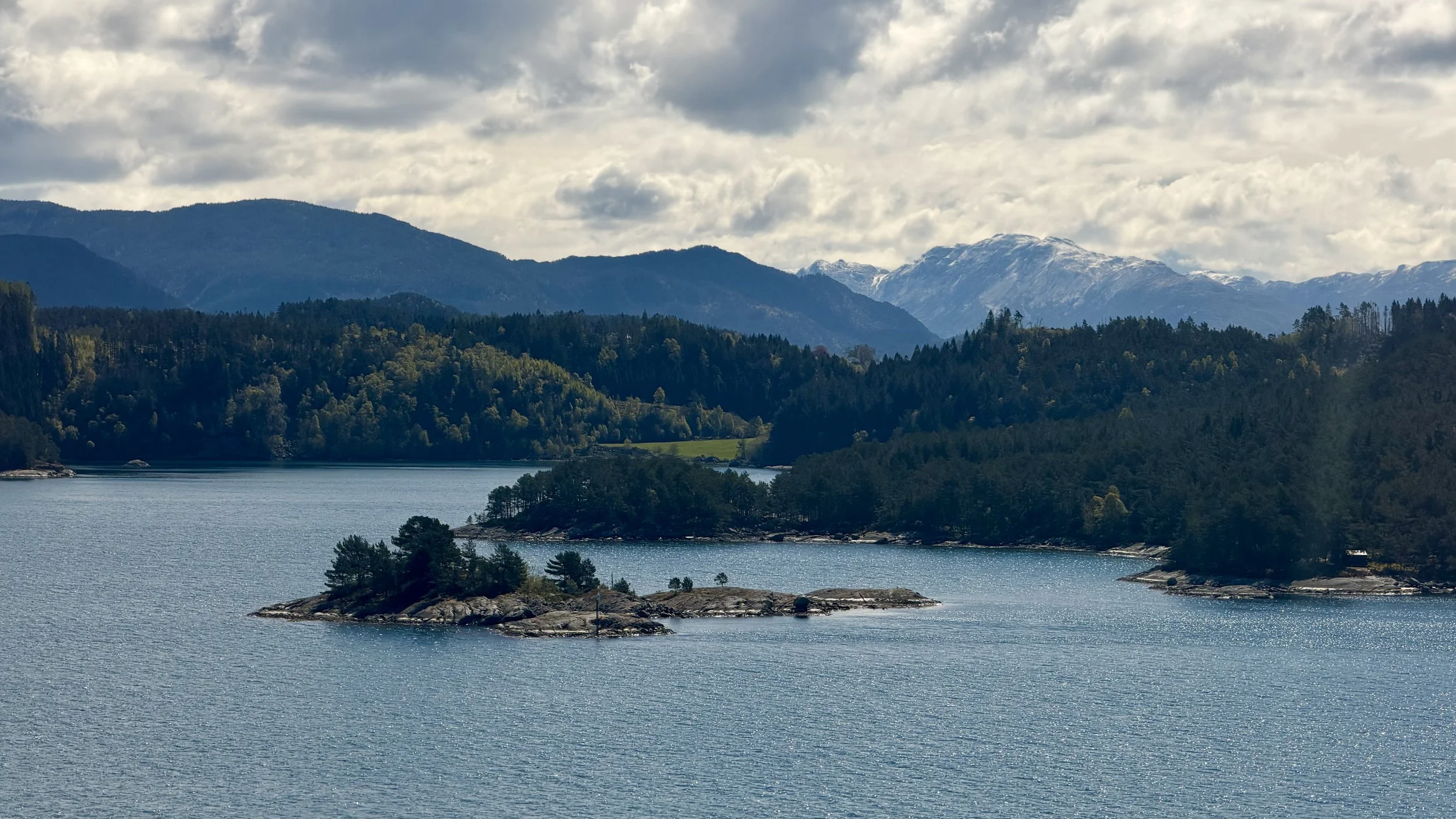
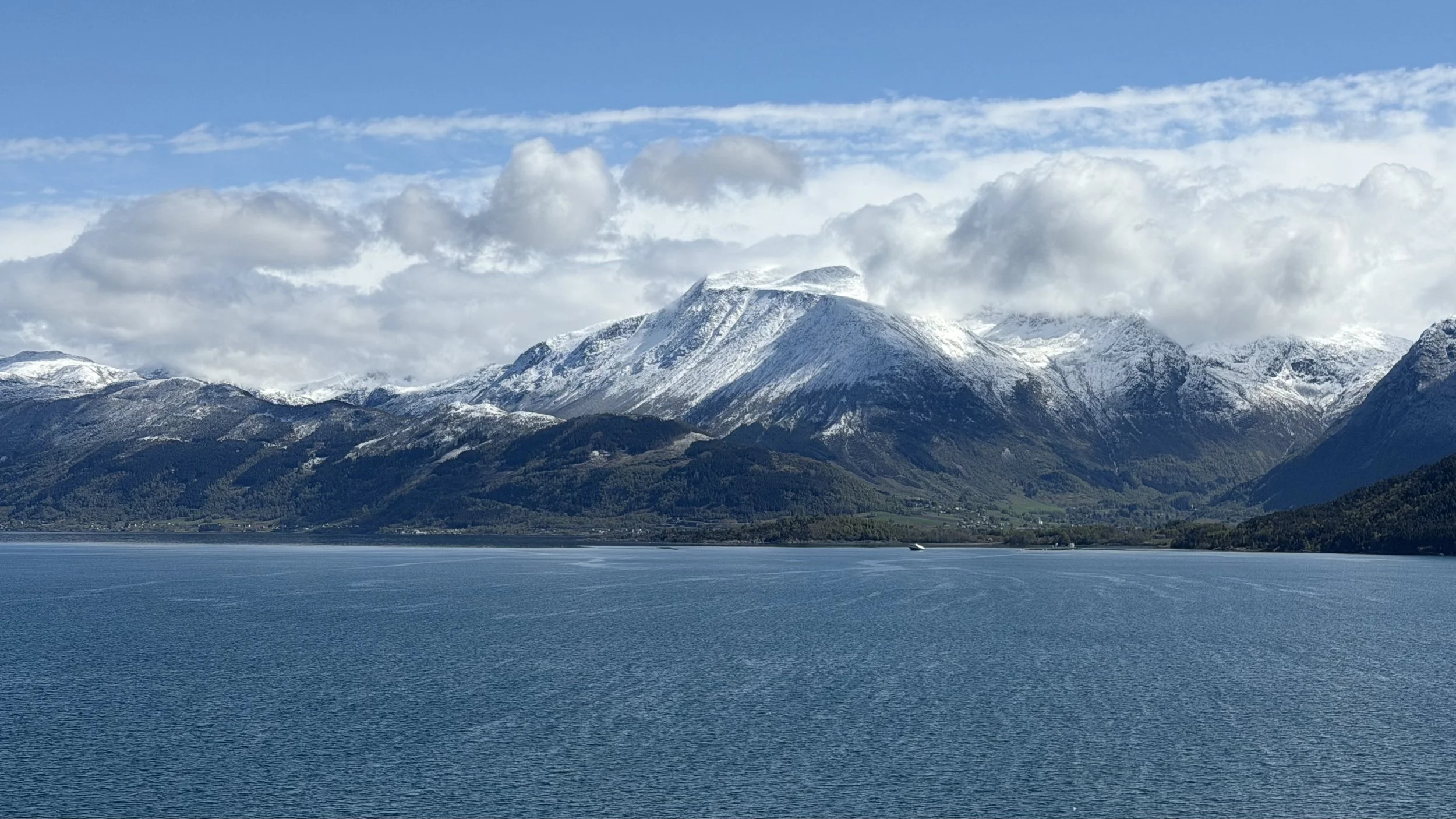
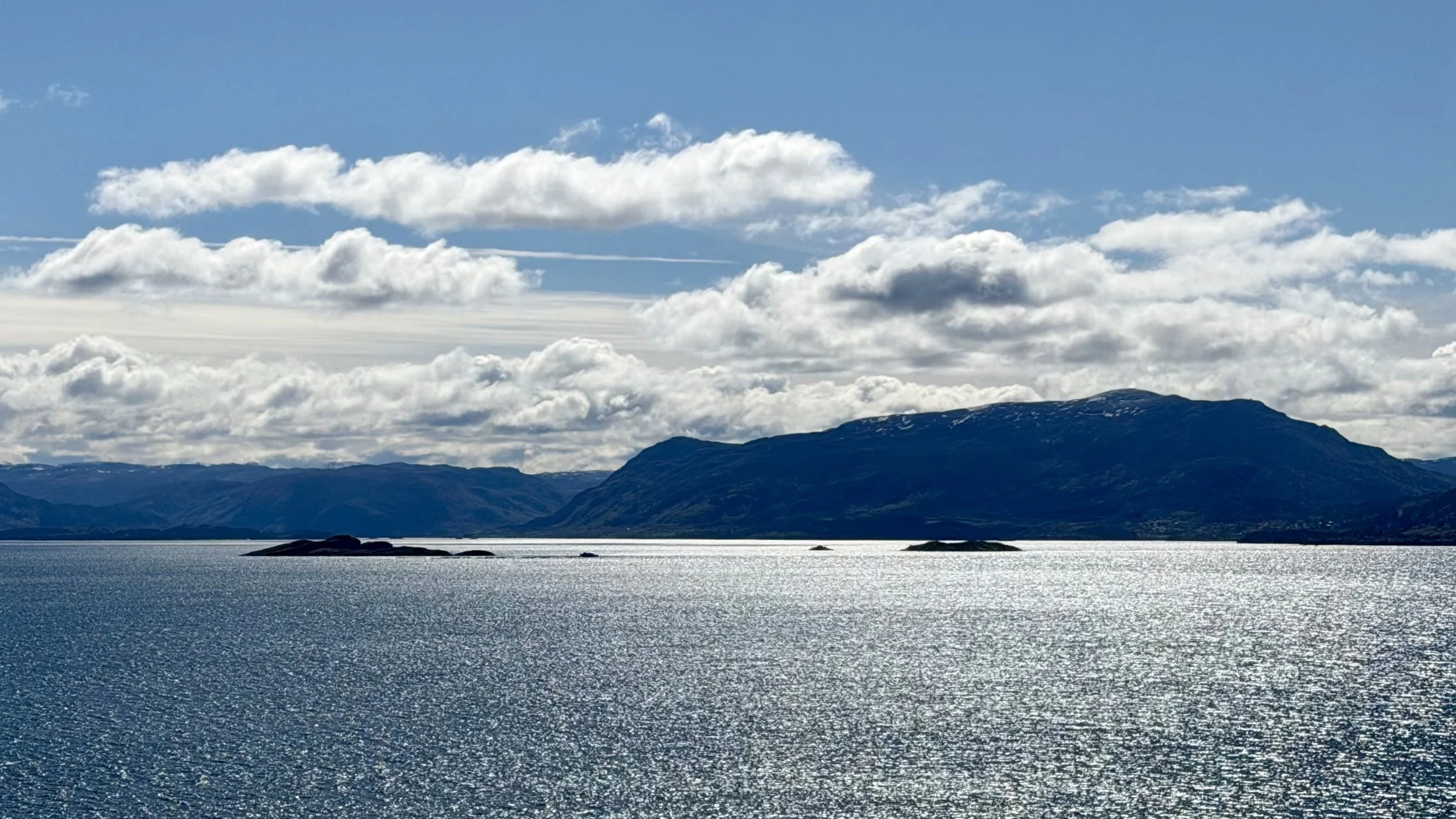
The mountains slowly grew larger and more dramatic. Snow appeared first as small patches on distant ridges, then entire mountain tops emerged white against the deep blue sky. Dark forests covered lower slopes while cloud shadows moved lazily across the hillsides.
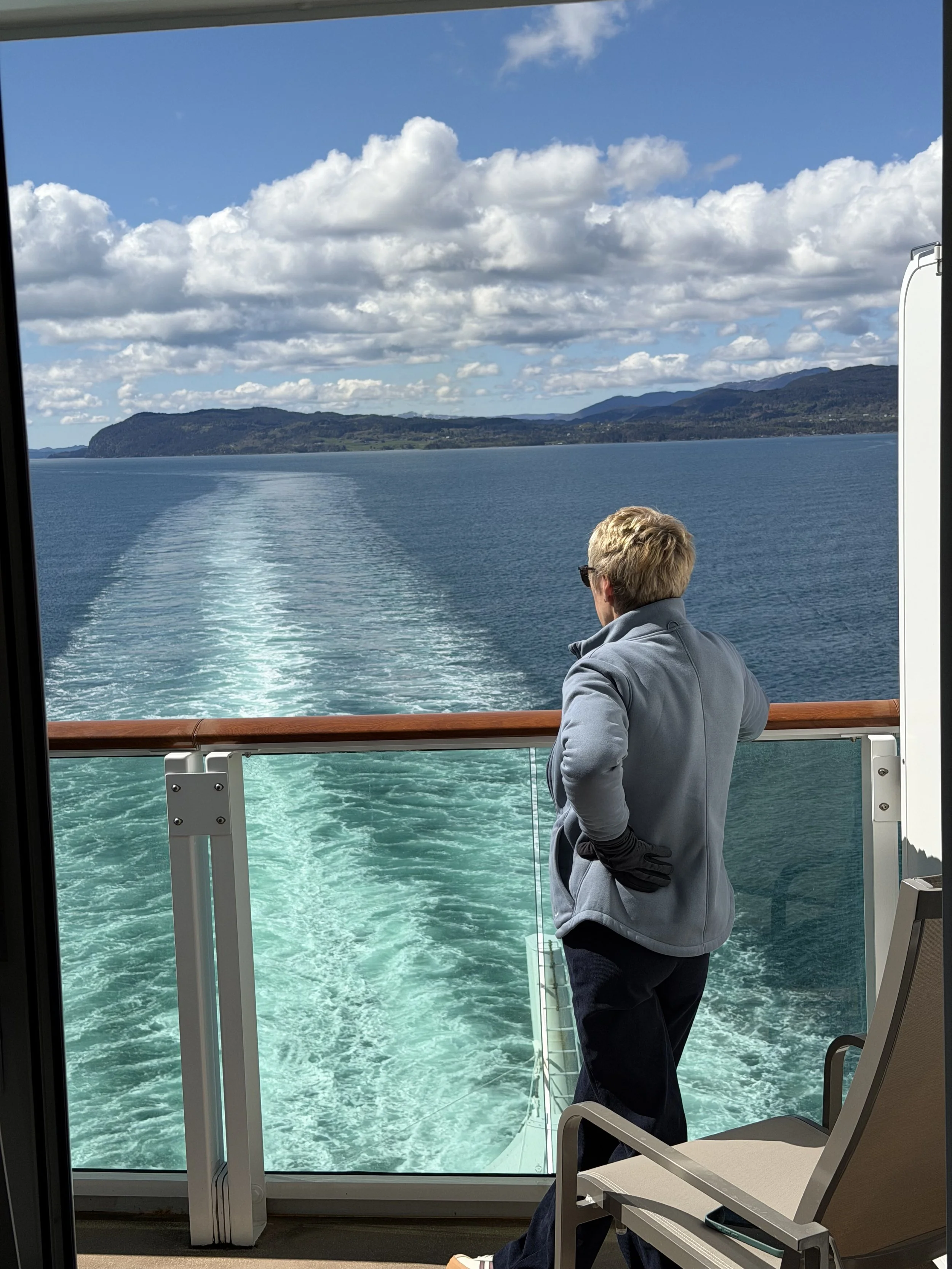
Back in our cabin, we stood out on the balcony watching the long pale wake stretching away behind the ship, disappearing towards distant mountains beneath huge skies filled with towering white clouds. There was something wonderfully unhurried about it all. No destination visible ahead, no timetable to think about… just the slow movement through landscape.
By then many people had settled into their chosen way of experiencing the day. Some had returned inside for warmth. Others remained outside wrapped in hats and coats guarding deck space and camera positions.
As we travelled further into Hardangerfjord, the mountains seemed to close in around us and the scenery became increasingly dramatic.
By early afternoon we finally reached Steinsdalsfossen.
Approaching Furebergsfossen
As we rounded the bend into Maurangsfjorden the scenery suddenly tightened around us. The water had changed colour too, turning an extraordinary green-blue, almost glacial in appearance, with steep wooded slopes rising sharply from the shoreline. Snow still lingered on the higher peaks while sunlight and cloud shadows moved slowly across the mountainsides.
Then the Captain announced that we had reached the falls.
At the time we were still sitting on our balcony, enjoying the view from the comfort of our cabin. The Captain explained that the ship would pause for photographs before turning around so passengers on the opposite side could have their chance too.
At the back of the ship there was immediate curiosity among the balcony cabin owners. Which way was he going to turn?
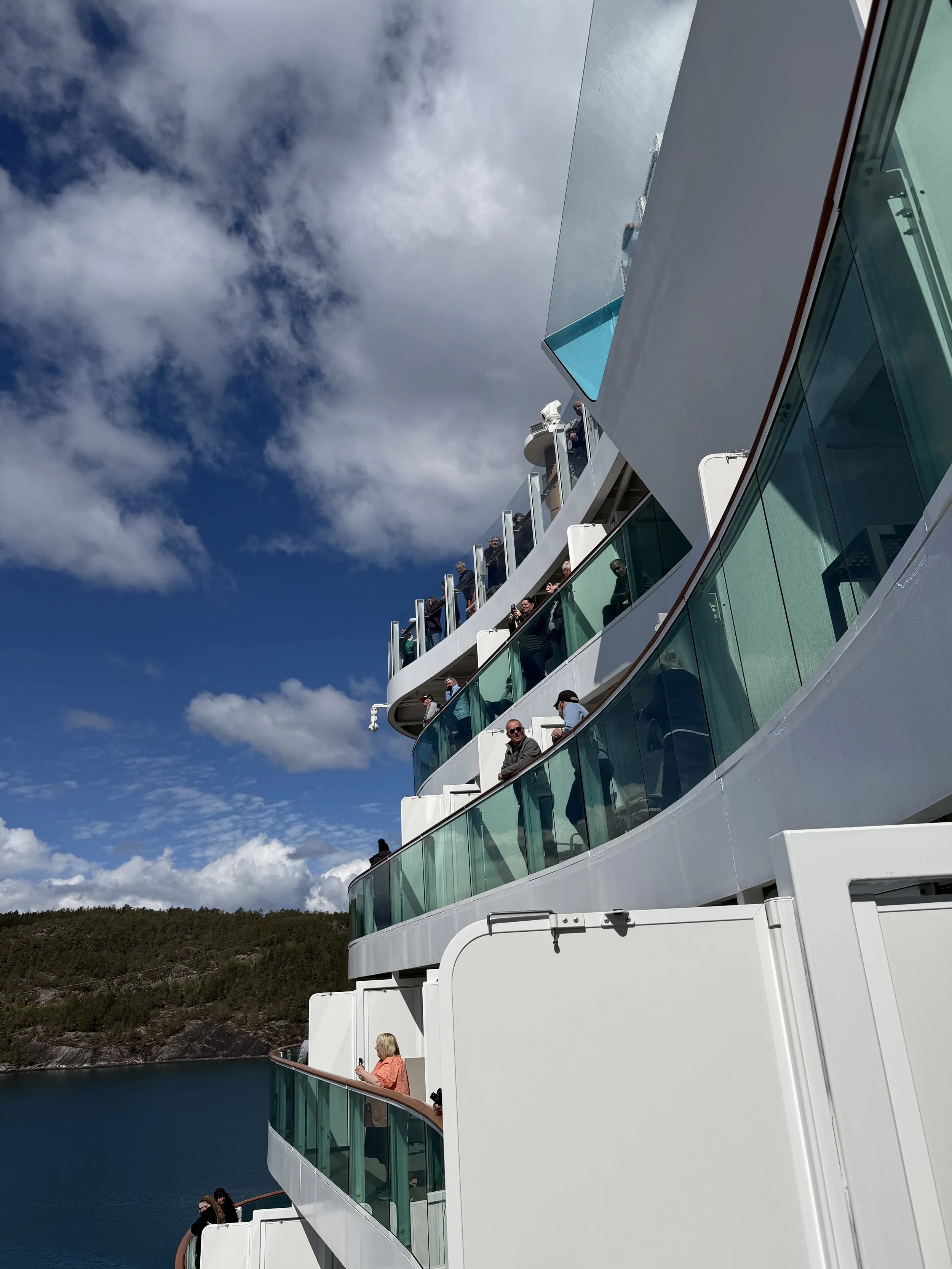
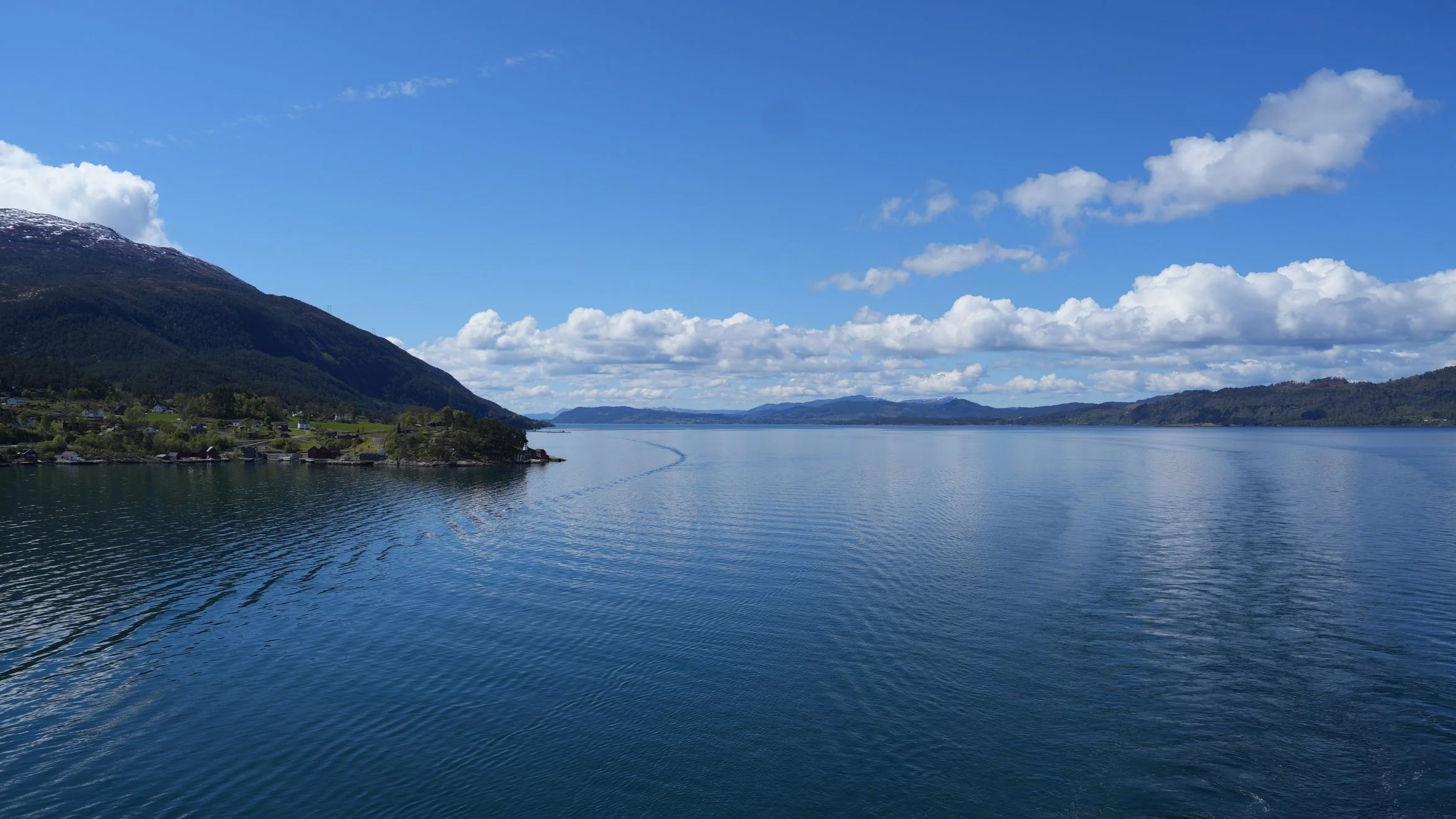
For a few moments everyone seemed to become an amateur ship navigator. Quiet calculations appeared to be taking place all along the balconies as people tried to work out whether they had chosen the correct side of the ship after all.
In the end the Captain swung the bow around first.
Suddenly the advantage disappeared.
There followed a fairly swift and unplanned migration of passengers heading upstairs to open decks in search of a better view and photographs. We joined them.
At the Waterfall
Furebergsfossen is not Norway’s tallest waterfall, but it is one of those that seems perfectly placed for travellers passing through the fjords. Fed by snowmelt from the mountains above, it drops in a series of powerful cascades down a steep mountainside before disappearing into the landscape below.
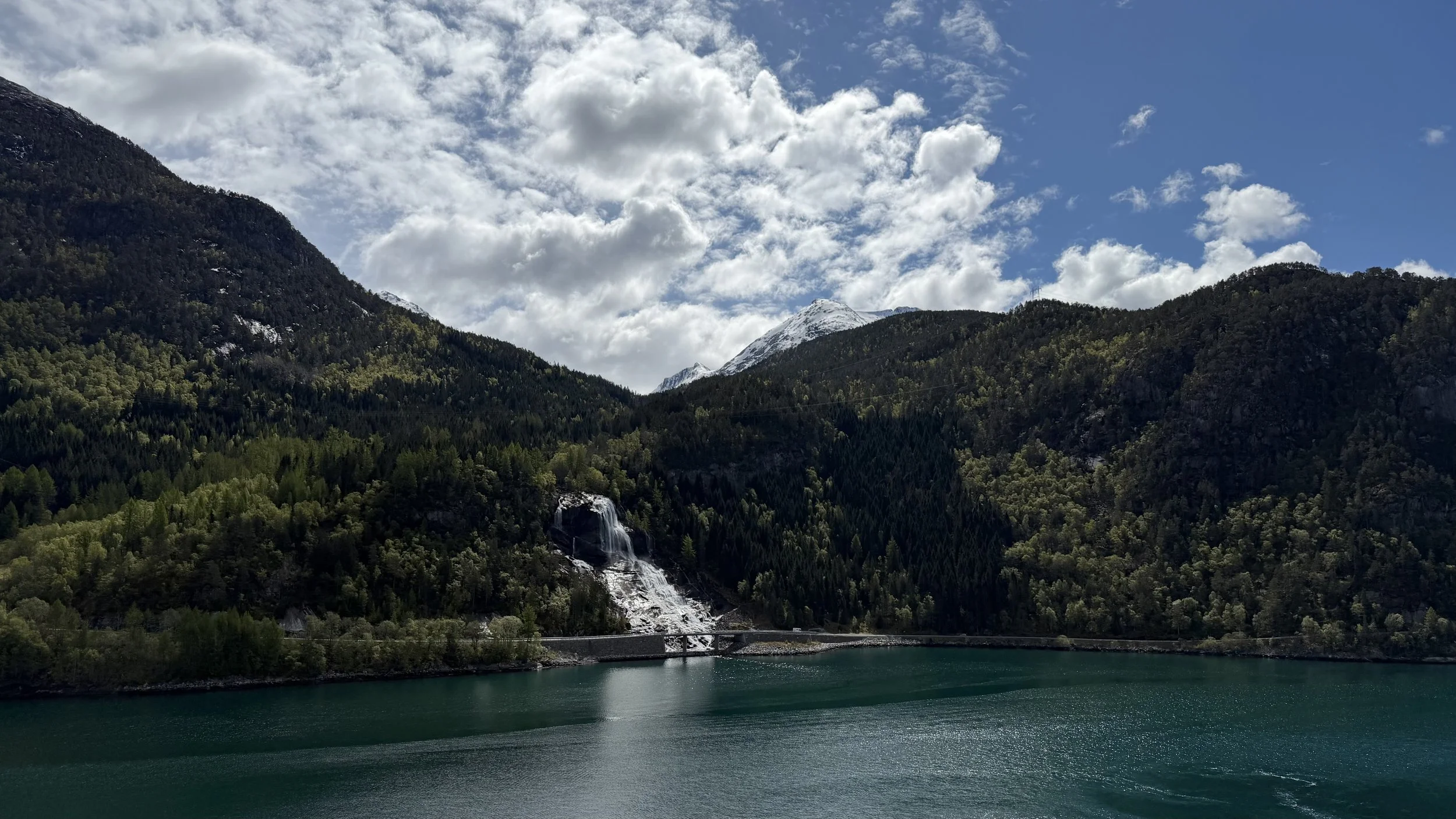
Furebergsfossen Waterfall
From the ship we had a very different perspective. We sat quietly in still water while the falls tumbled down dark rock faces, the white ribbons of water standing out against forest and mountainside. Seen from the fjord, it felt less like a single waterfall and more like part of the landscape itself — one element in a much bigger scene.
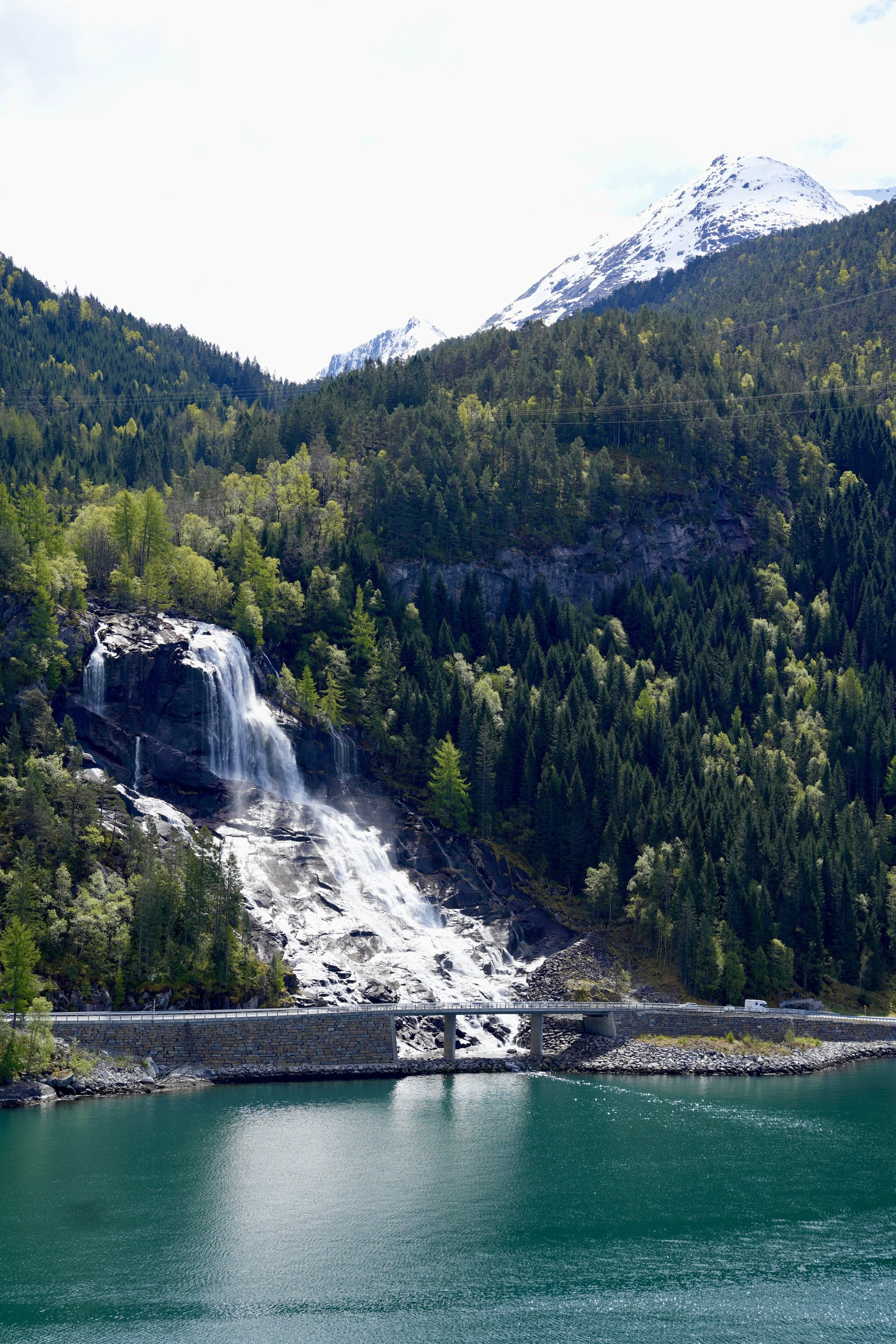
The cars give some idea of scale
What struck me most was not just the waterfall but the surroundings. Dense pine forest climbed the slopes behind while fresh spring greens had started appearing among the trees. Snow still lingered higher up the mountainsides and sunlight drifted across the valley in patches. The whole scene felt peaceful rather than dramatic.
The ship lingered for quite some time, giving everyone plenty of opportunities for photographs, and even those who had spent much of the day indoors seemed to emerge onto balconies and open decks.
Eventually the ship began making its way back down the fjord.
Lunch, Crowds and Calm
At that point several thousand passengers, ourselves included, apparently had exactly the same idea: lunch.
The buffet was complete mayhem. Plates, trays and people seemed to be moving in every direction at once. But credit where it’s due, despite the crowds, the ship coped remarkably well. Food was replenished almost as quickly as it disappeared and somehow we managed to find seats.
Lunch became a leisurely affair, helped enormously by the scenery drifting past the windows beside us. Even sitting inside, the landscape remained part of the experience.
The afternoon itself was quiet. Later we had a drink in Anderson’s Bar followed by an informal dinner in The Quays where, once again, the fish and chips were outstanding. Clearly becoming a habit.
Our final stop of the evening was the 710 Club, where the resident band performed a set of singer-songwriter classics. In my view, easily the best performance of the trip so far, and by quite some distance. A view not shared necessarily by my wife.
The Fjord in Evening Light
The return journey down the fjord now felt very different from the outward trip. Earlier the landscape had been all bright skies, sharp light and endless photography opportunities. Now the sun had begun dropping lower and the colours had softened.
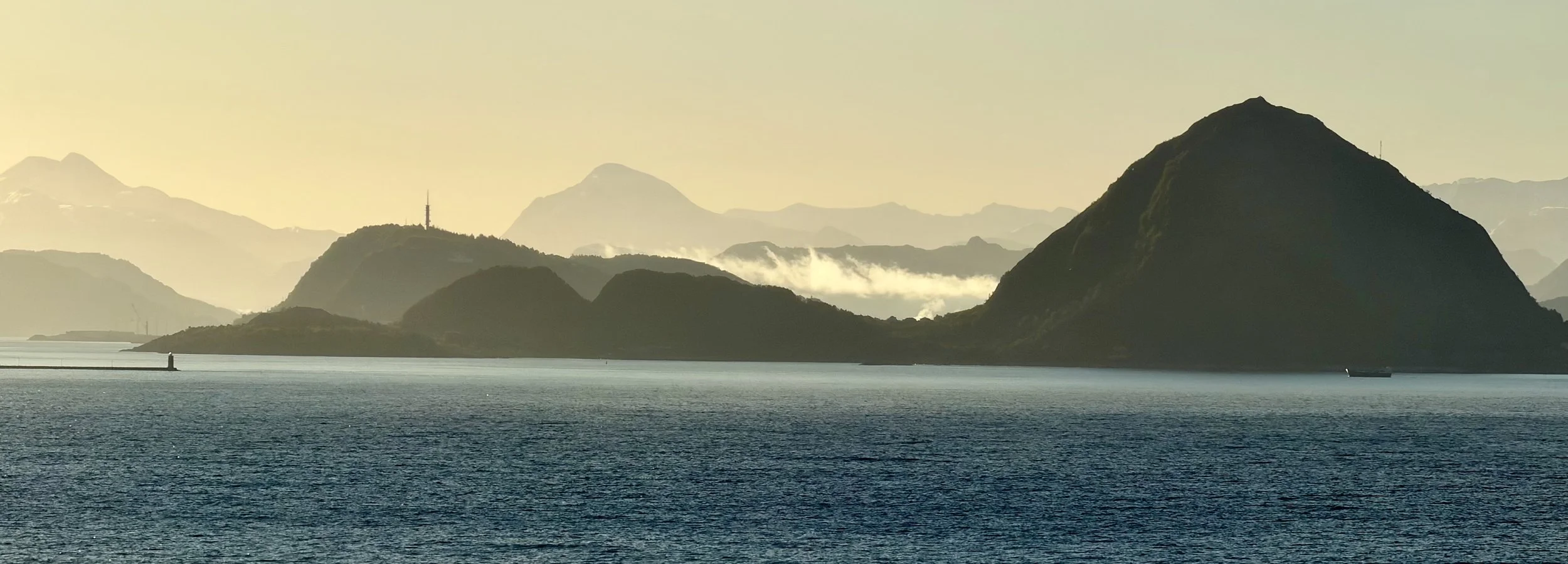
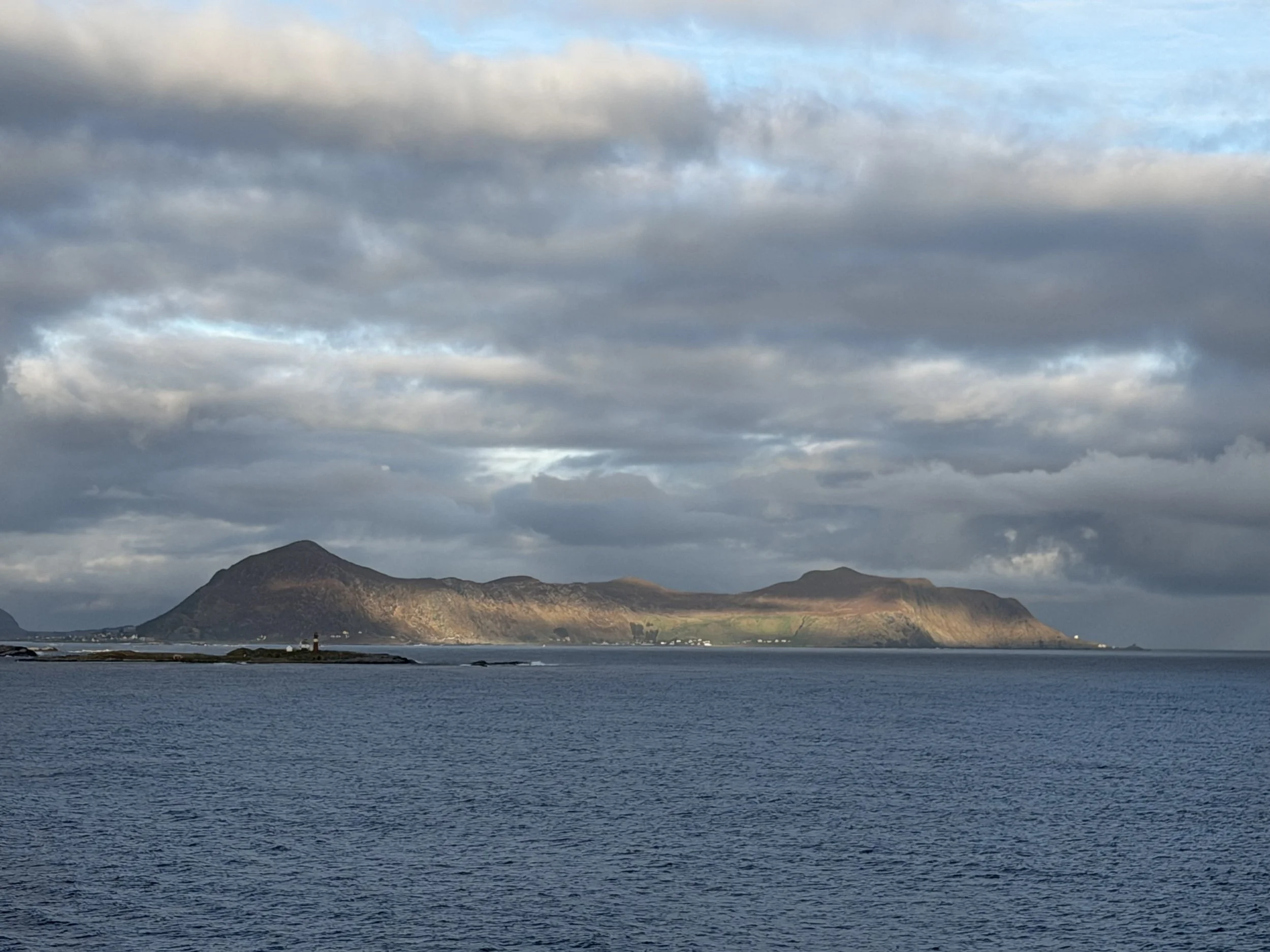
Low cloud hung over the mountains while occasional shafts of sunlight broke through and illuminated parts of the landscape almost like stage lighting. Entire hillsides remained in shadow while isolated patches of land suddenly glowed gold for a few moments before disappearing back into darkness.
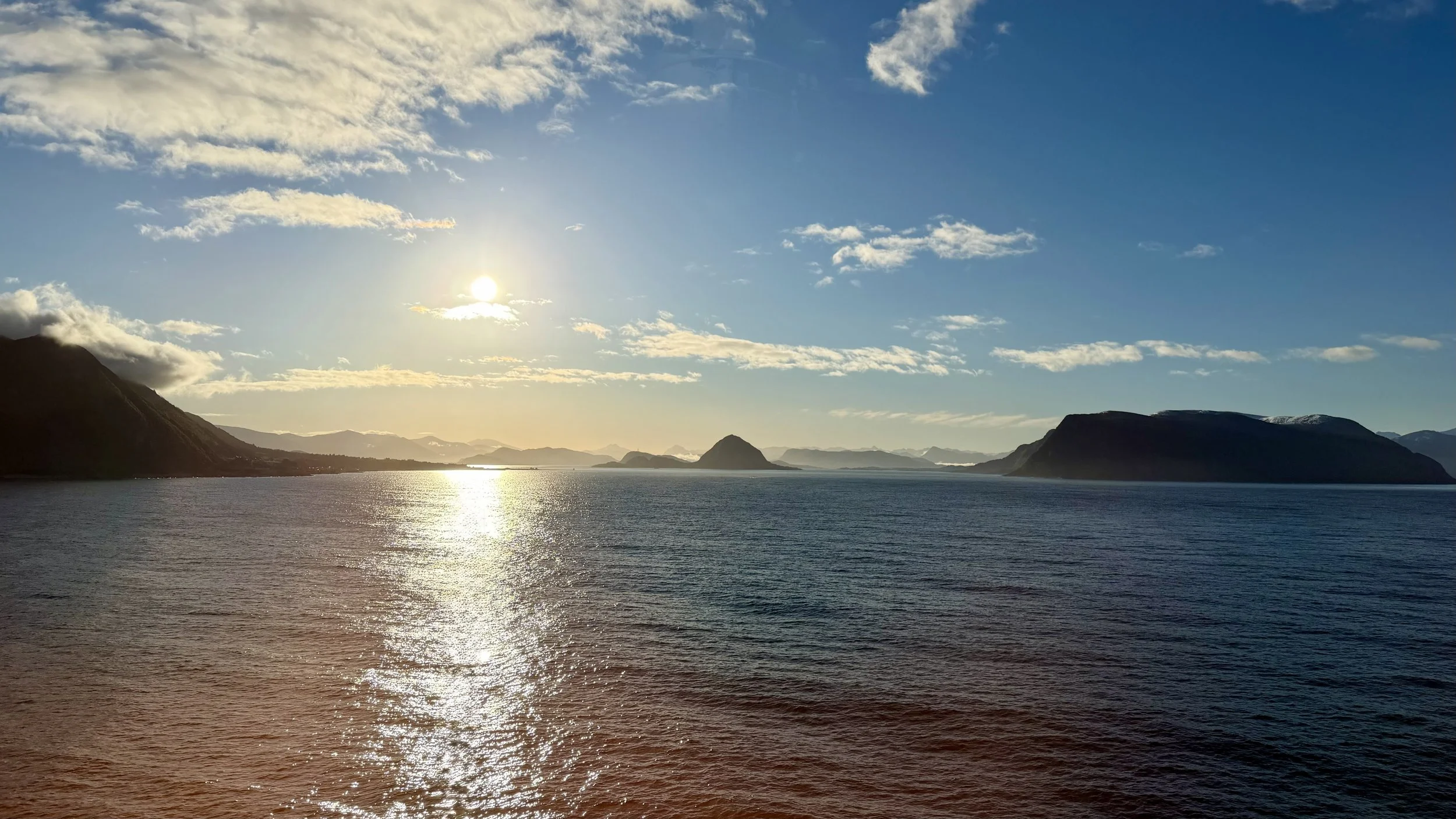
As the ship moved further out, dramatic island shapes began appearing ahead of us, rising unexpectedly from the sea. Some looked almost impossibly steep, huge dark silhouettes sitting alone in the water. With the sun sitting low behind them, the islands became little more than outlines while distant mountain ranges faded into layers of blue-grey haze.
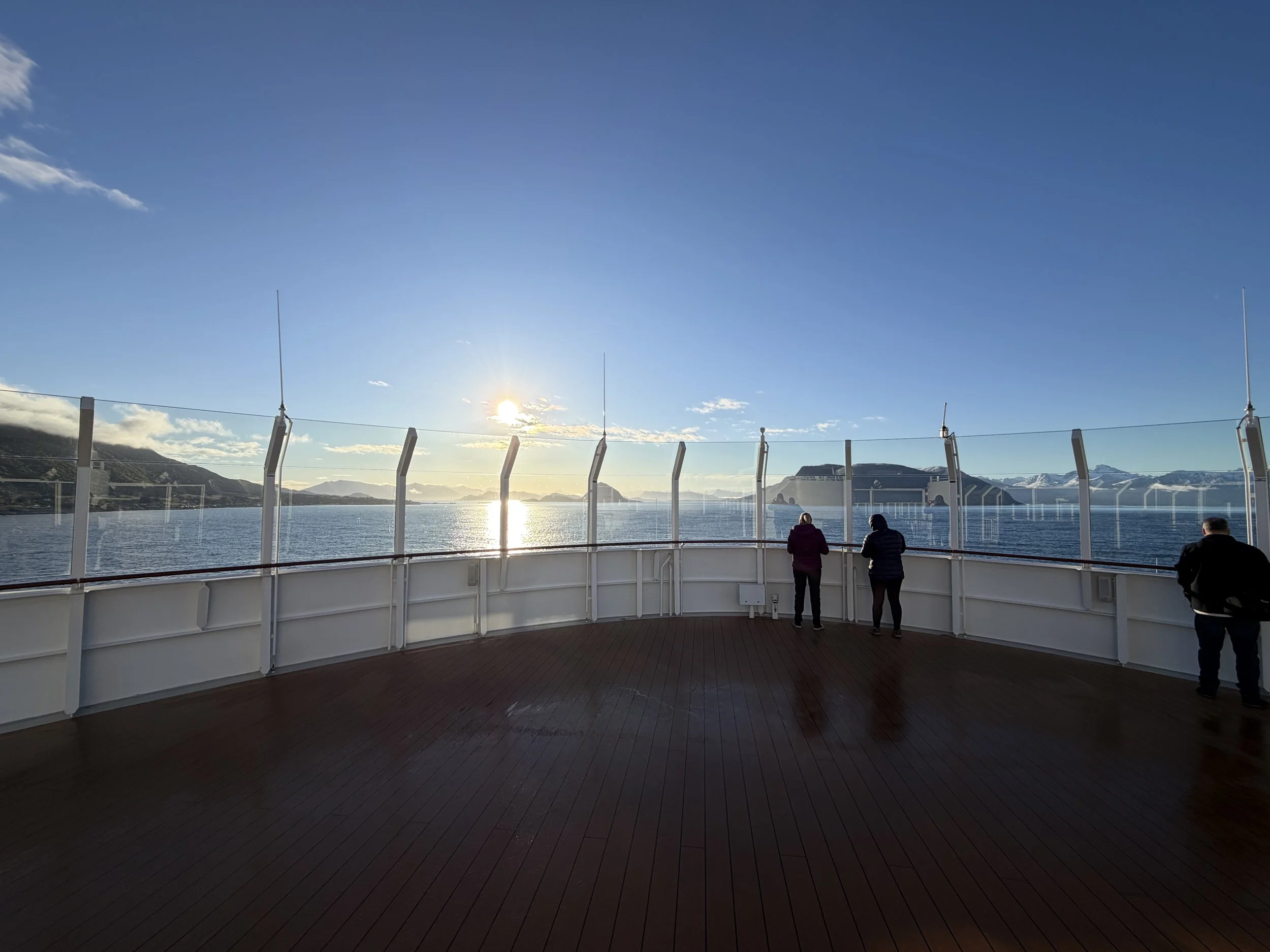
For a while several of us gathered again on the open decks at the front of the ship, quietly watching rather than talking. It had become one of those scenes photographs only partly explain. The water reflected a long shimmering path of light while enormous skies stretched overhead filled with textured cloud and patches of blue.
We opted for a relatively early night, although Norway had other ideas. There was also that strange Norwegian light again. Despite the hour, it never really felt like evening.
At ten o’clock it still felt far too light outside to sleep. So instead we made decaf tea and coffee and sat quietly watching the sky slowly darken over the wake behind the ship.
Not a sunset exactly. More a gradual negotiation between daylight and night.