Finding our rhythm in Rio
Rio was a journey of contrasts — colour and noise alongside stillness and routine. A city often imagined at full volume, yet experienced here through smaller rhythms: neighbourhood streets, familiar cafés, long walks, and moments of pause between the bigger occasions.
Rather than trying to see everything, the days unfolded gradually. Some were shaped by celebration and spectacle, others by ordinary routines that slowly began to feel familiar. Over time, the city revealed itself not just through landmarks, but through repetition — returning to the same places, recognising faces, and finding a rhythm of our own.
What follows reflects that process: not a checklist of sights, but a journey of settling in, observing, and allowing a vast city to become briefly personal.
First Days in Rio
Arrival into the city
Arriving in Rio early on Monday morning, we took a taxi to our Airbnb, tucked between Copacabana and Ipanema. The traffic was heavy and unyielding, stretching the journey to over an hour, but it offered our first slow introduction to the city. Outside the windows, Rio was already fully awake, horns sounding, vendors setting up, people moving with purpose, all framed by flashes of sea, concrete, and distant hills catching the morning light.
The apartment was a welcome retreat. A two-bedroom penthouse on the 10th floor, it sat neatly between the two beaches, close enough to both to feel their pull but just removed enough to offer some calm. The open veranda and courtyard became an immediate favourite, an unexpected pocket of outdoor space above the street, where the city noise softened and the pace felt more manageable. It was easy to imagine lingering there in the evenings, as the heat eased and Rio’s rhythm shifted.
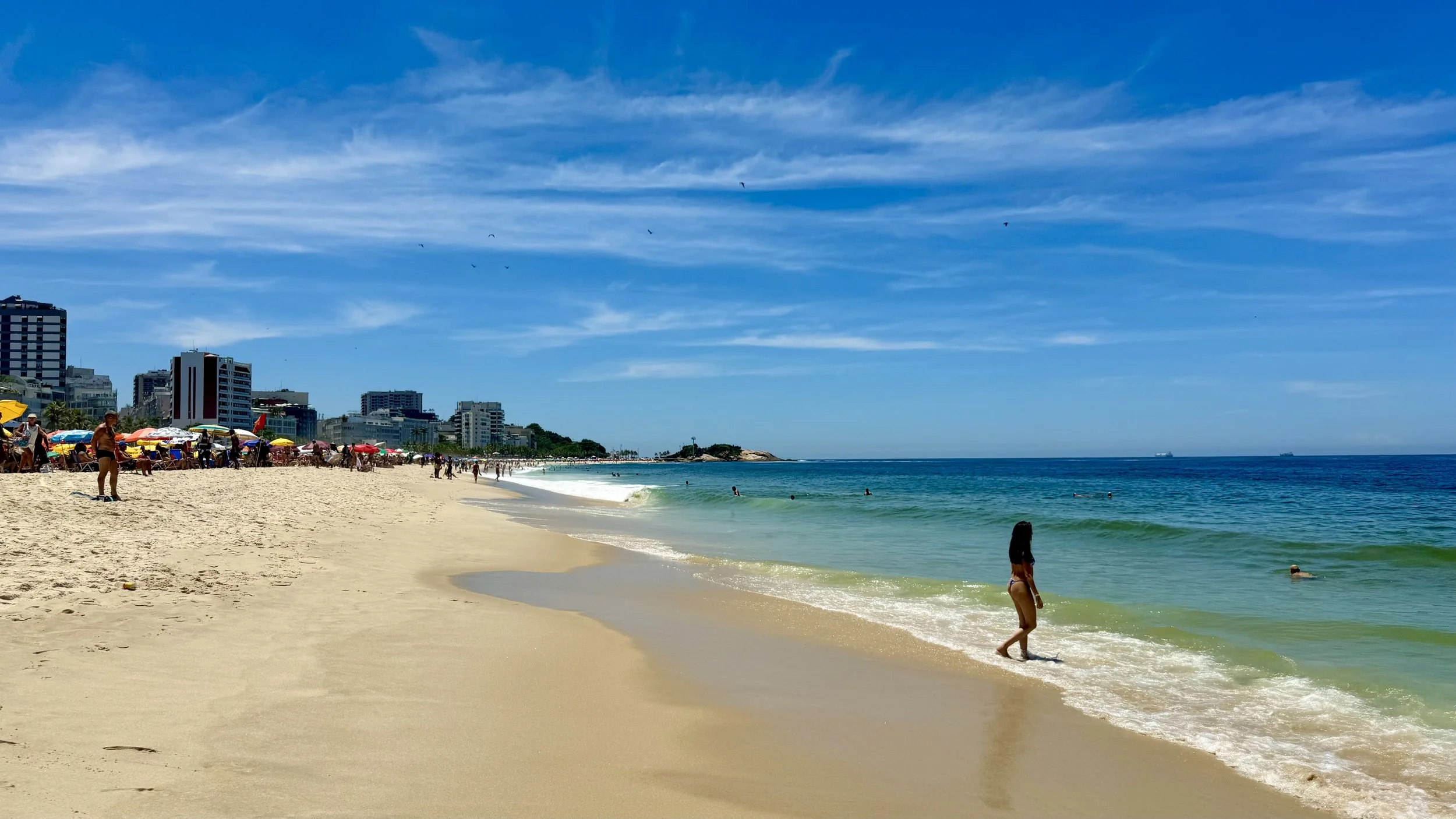
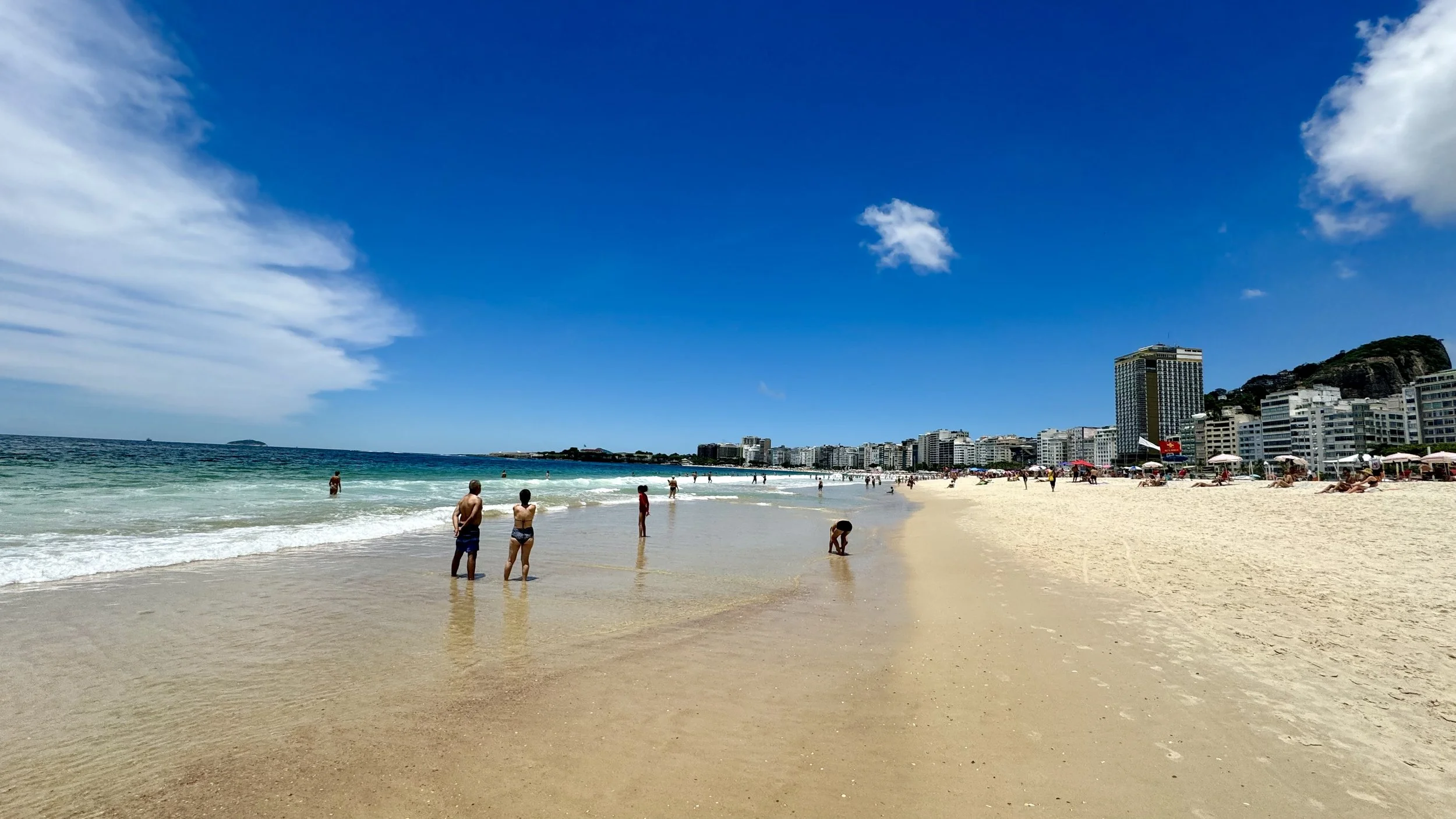
Once settled, we stepped back out into the warmth for breakfast at Padero. Still carrying the haze of travel and unfamiliar surroundings, we ordered açaí with granola without quite knowing what to expect. Cool, fresh, and quietly energising, it felt like a small rite of arrival. After a quick stop at Zona Sol for groceries, we took a gentle walk along Copacabana beach — our first proper contact with Rio’s famous shoreline — stopping for a quick drink by the water as the day continued to build around us.
Jet lag eventually won. We headed back to the apartment for a rest, well I did, surrendering to a nap that felt entirely justified.
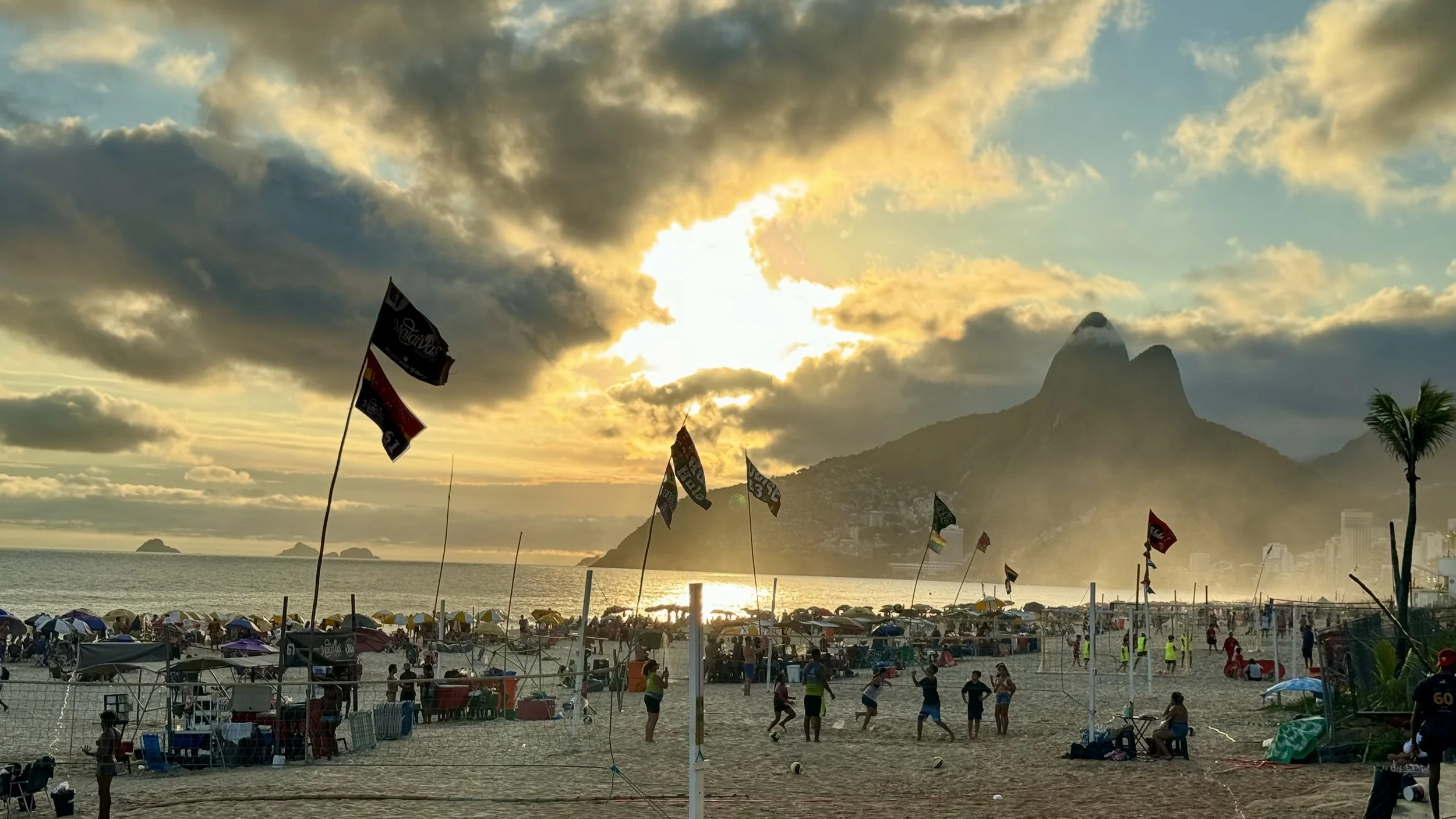
By early evening, refreshed and ready to move again, we walked down towards Ipanema beach. The light softened as the sun dropped, and we joined others gathering to watch it set behind the Dois Irmãos — the Two Brothers — silhouetted against the glowing sky. It was one of those moments where everything briefly slowed and felt shared, even among strangers.
We ended the day at Teva, a vegan deli in Ipanema, easing into the city with good food rather than a late night. A vegan burger with truffle fries and a jackfruit salad rounded things off perfectly — familiar enough to be comforting, but with just enough difference to remind us we were very far from home.
Into the jungle
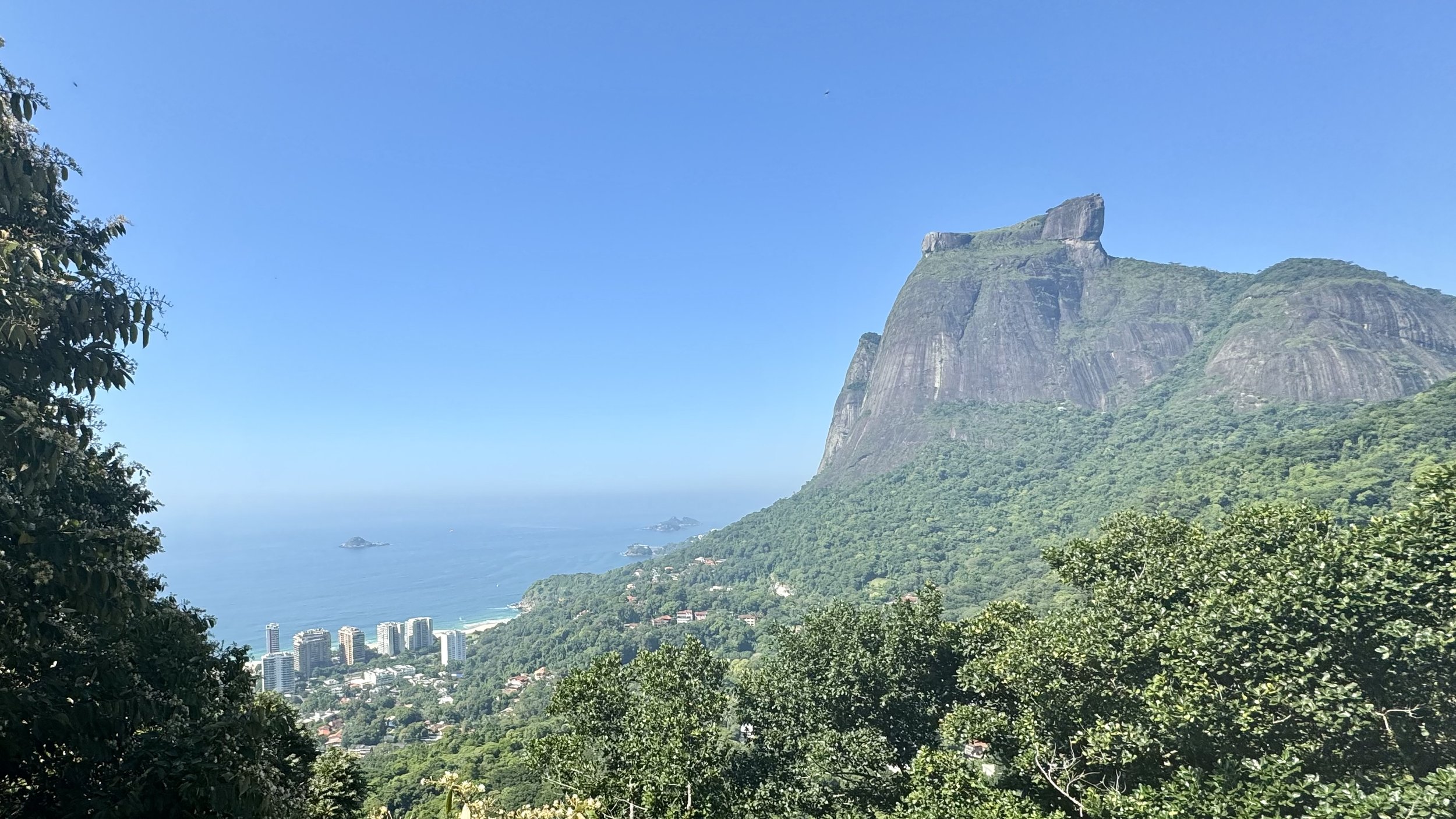
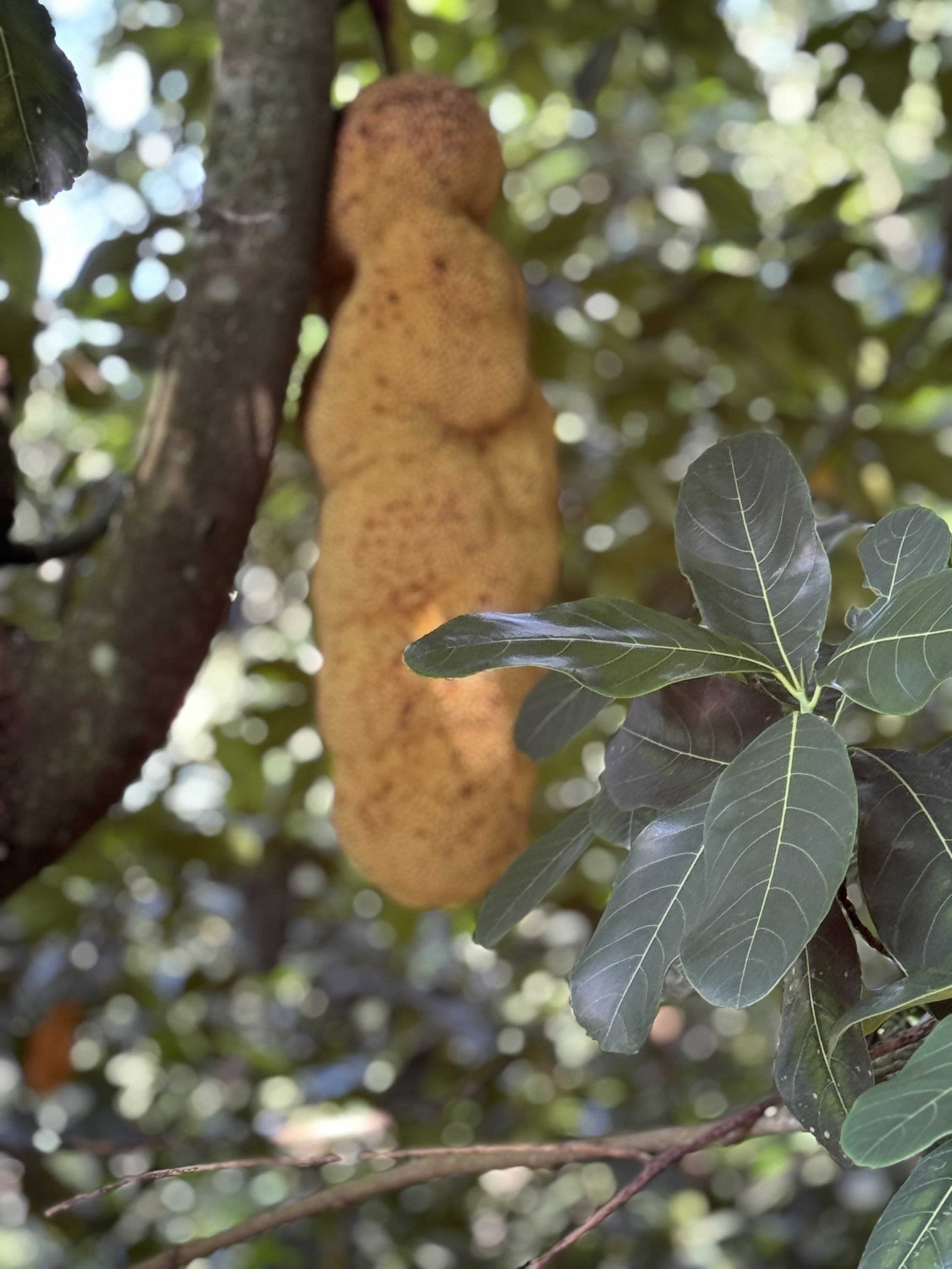
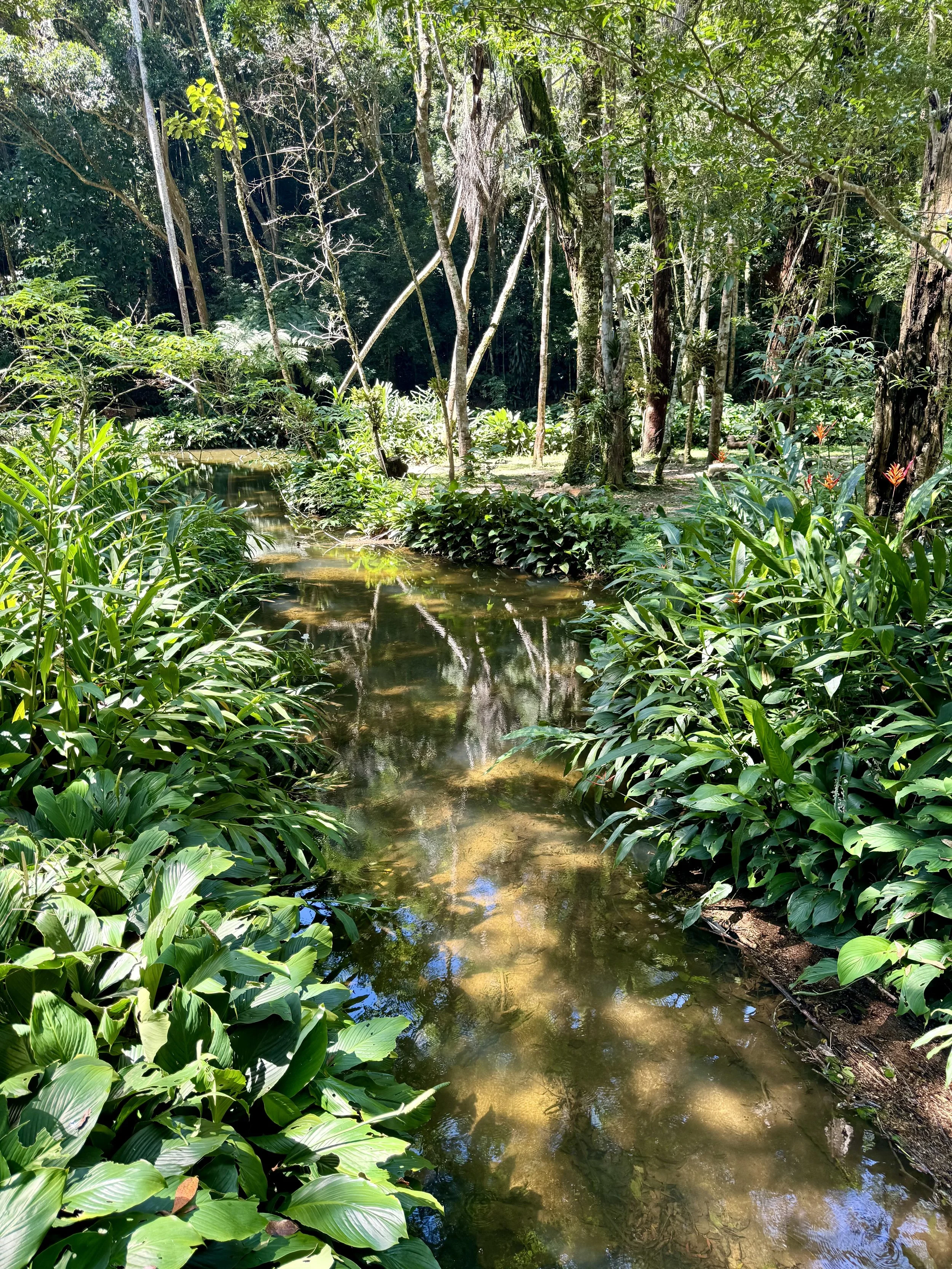
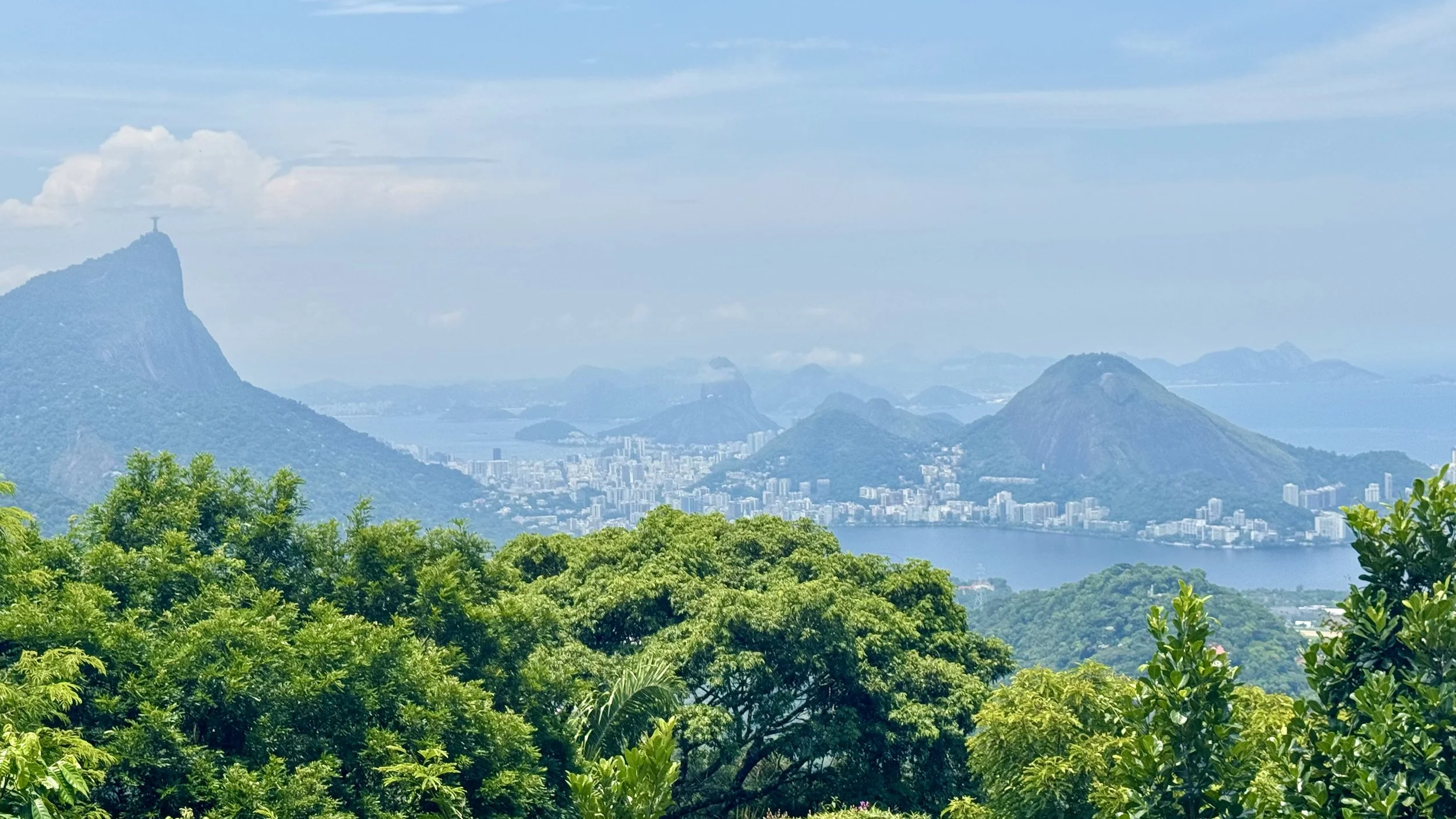
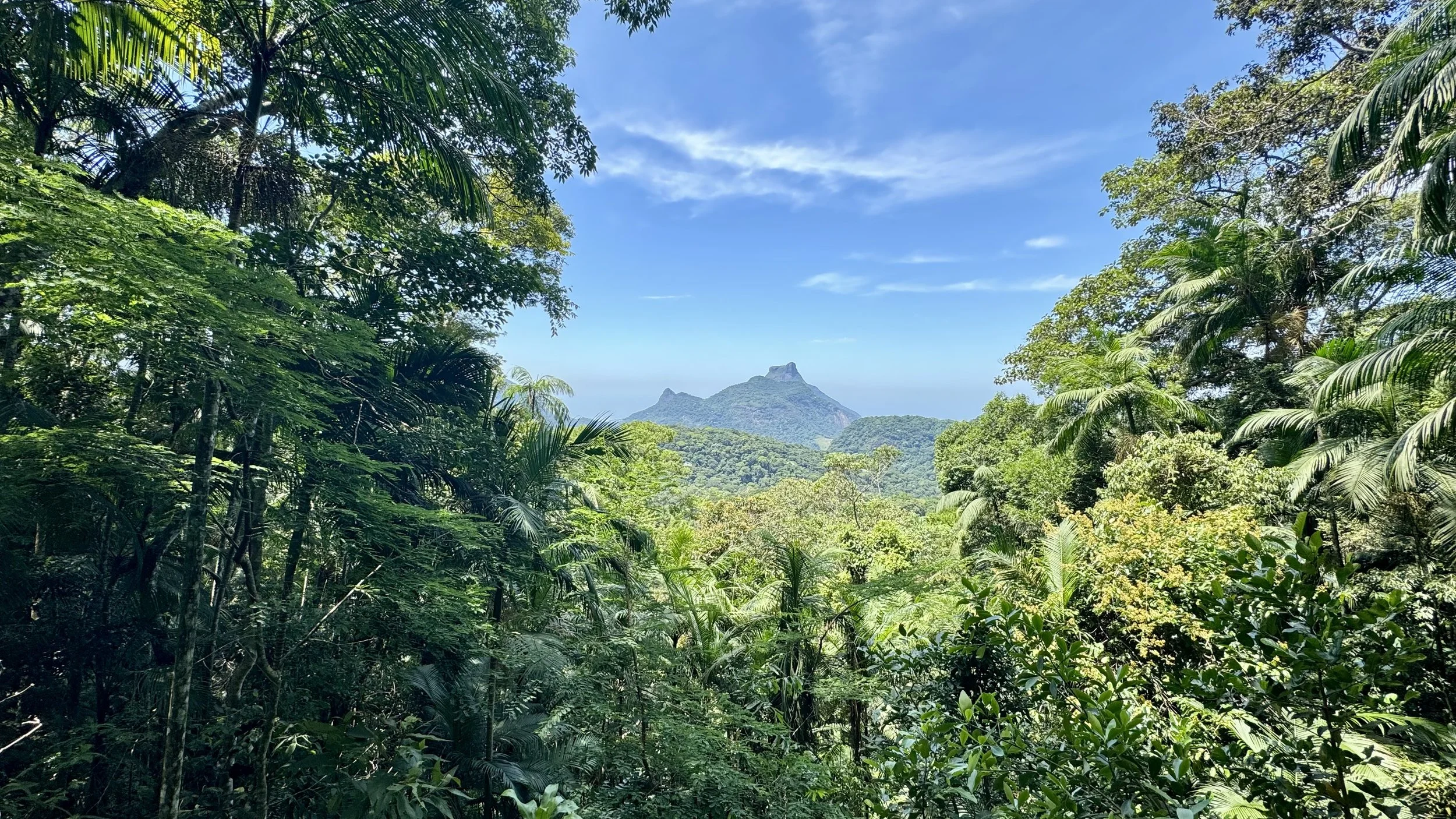
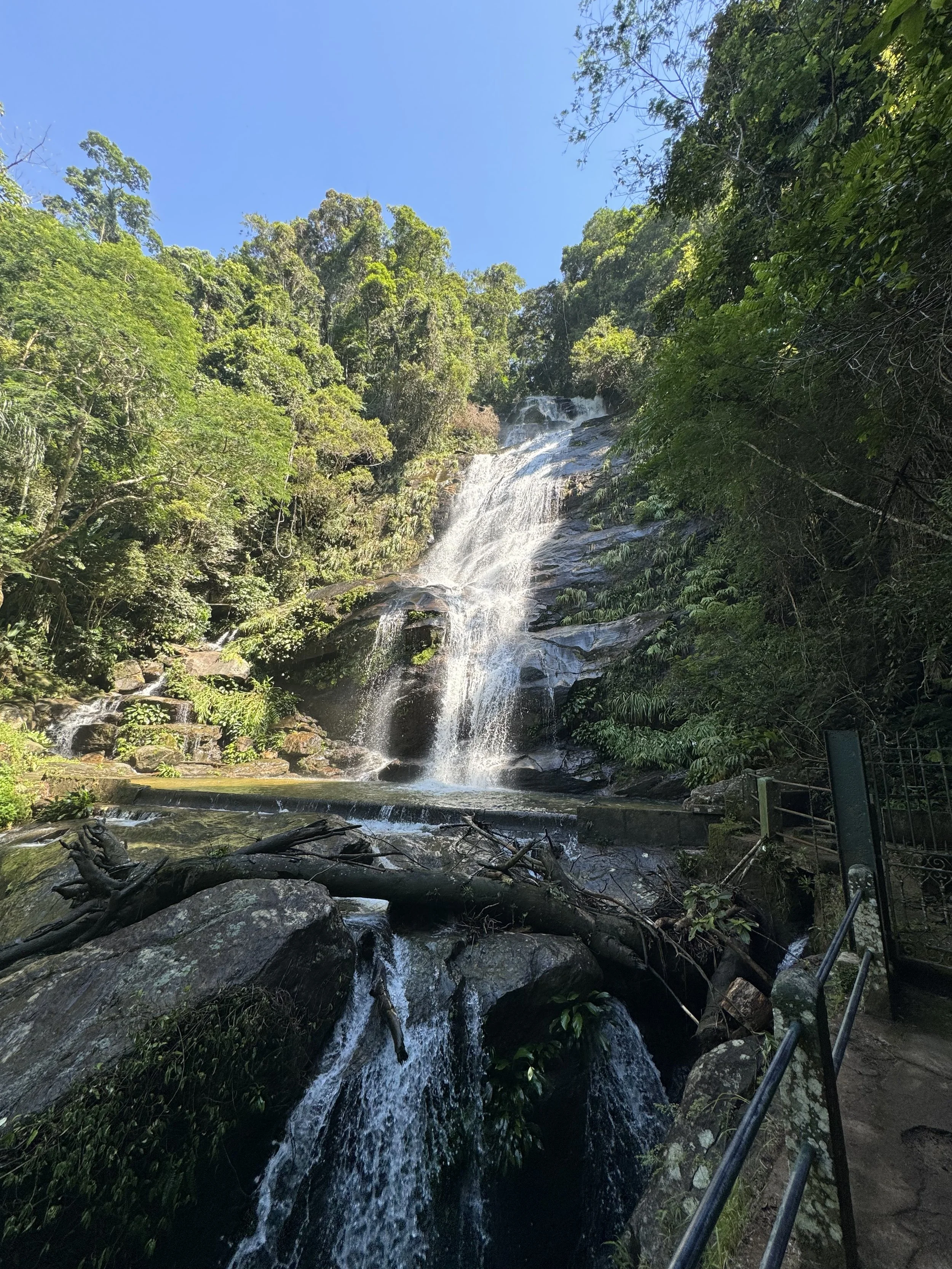
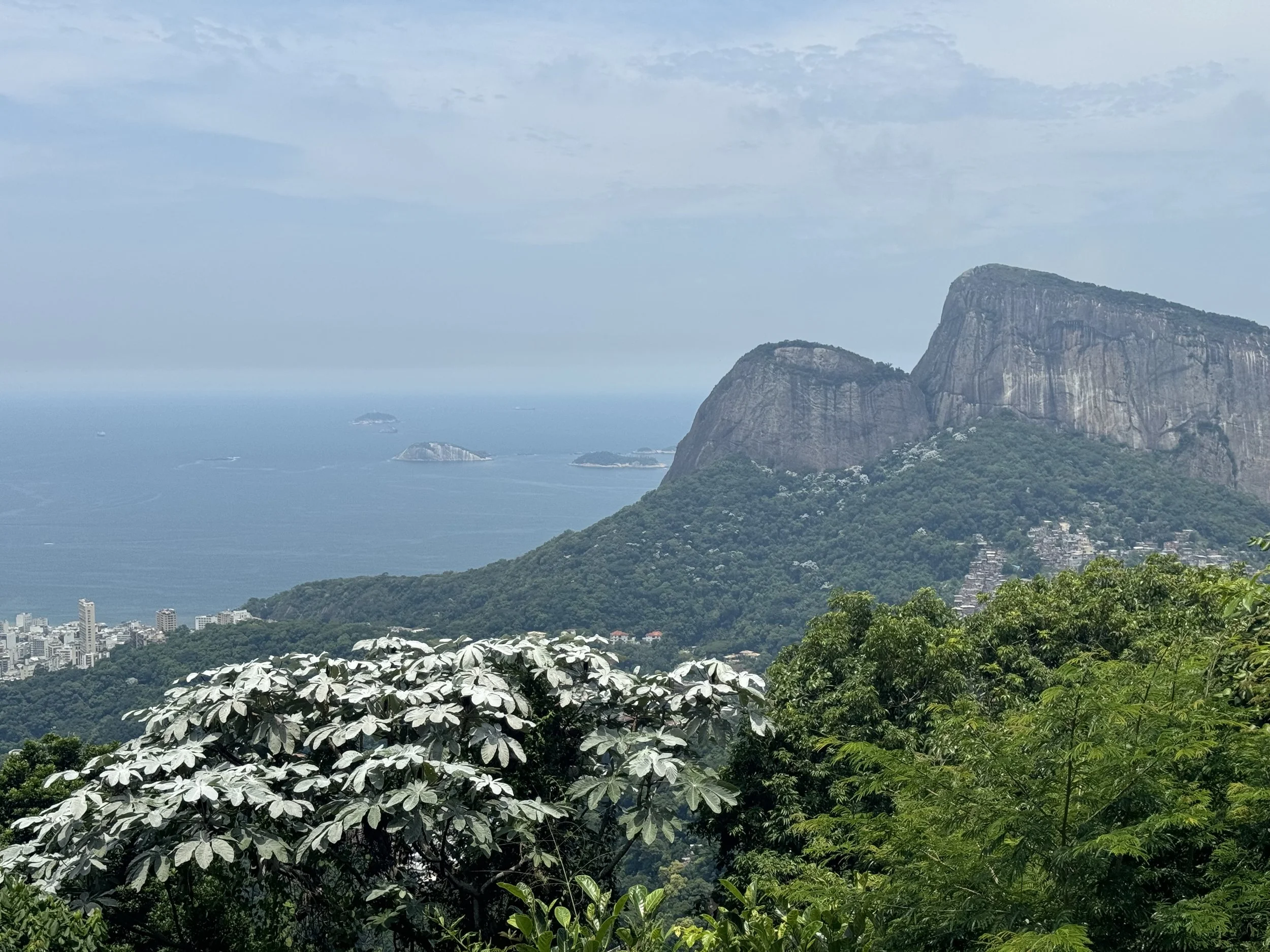
On Tuesday, we properly began the holiday with an early start and a five-to-six hour tour of Tijuca Forest with Itaway Ecotours. Leaving the city behind so quickly felt slightly surreal, within minutes, the noise and density of Rio gave way to cooler air, dense greenery, and the constant background sound of birds and insects.
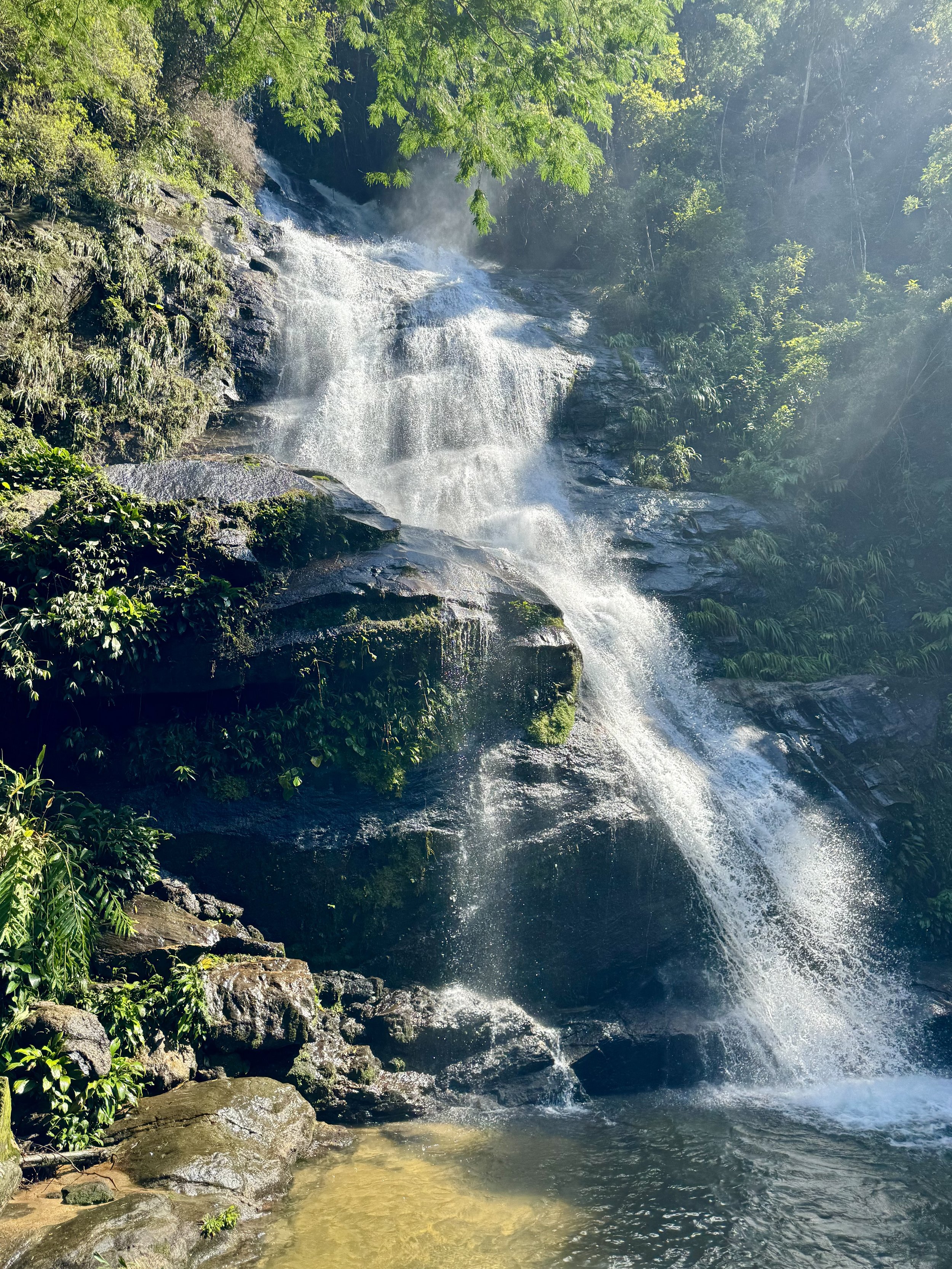
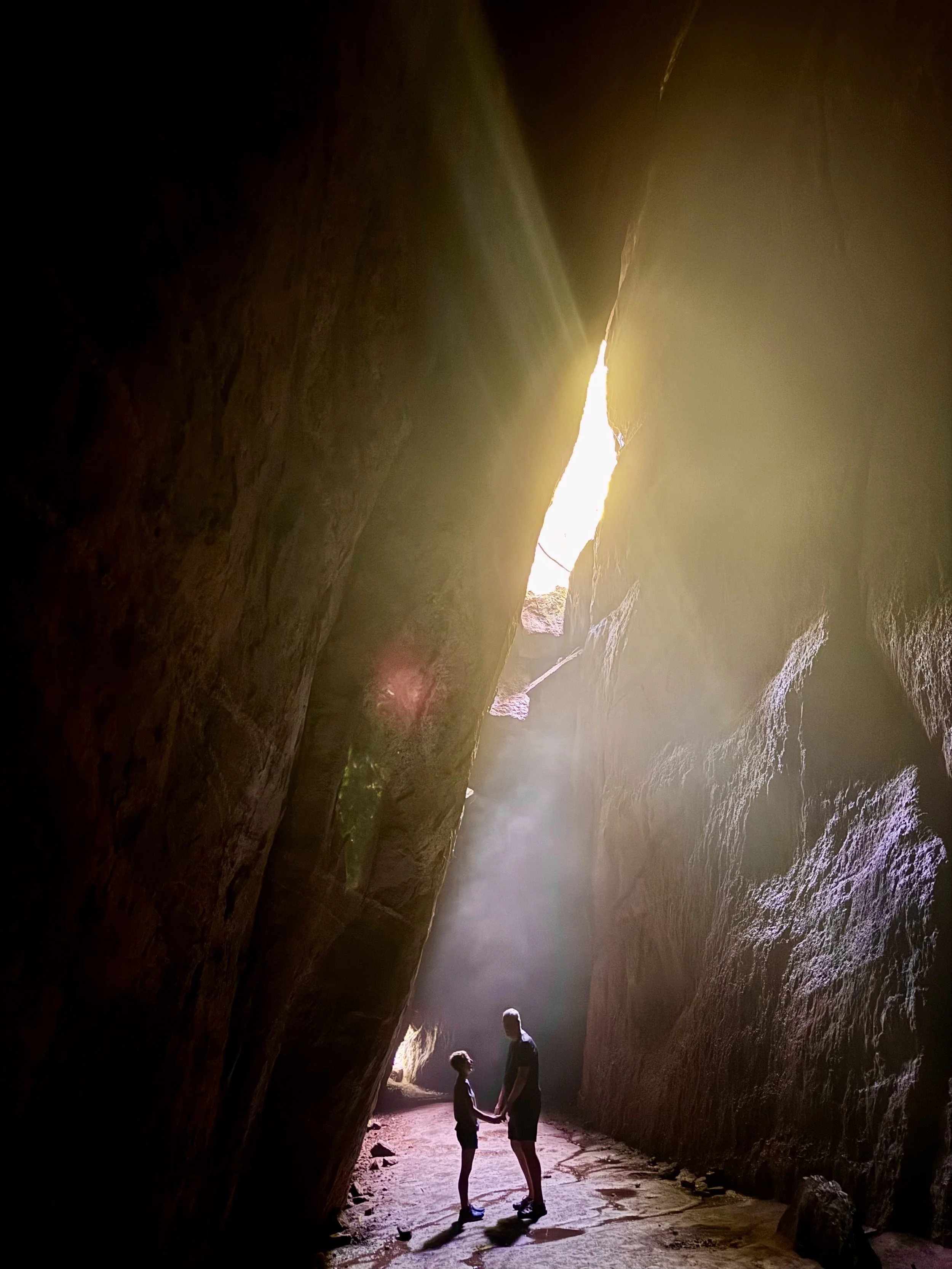
We were the only people on the tour, which gave the whole morning an unexpectedly personal, almost privileged feel. There was no need to hurry or follow a set pace; we moved slowly through the forest, stopping often for walks along shaded trails, pauses by waterfalls, and a visit to a small ‘bat cave’ — bat-free on the day, but atmospheric all the same.
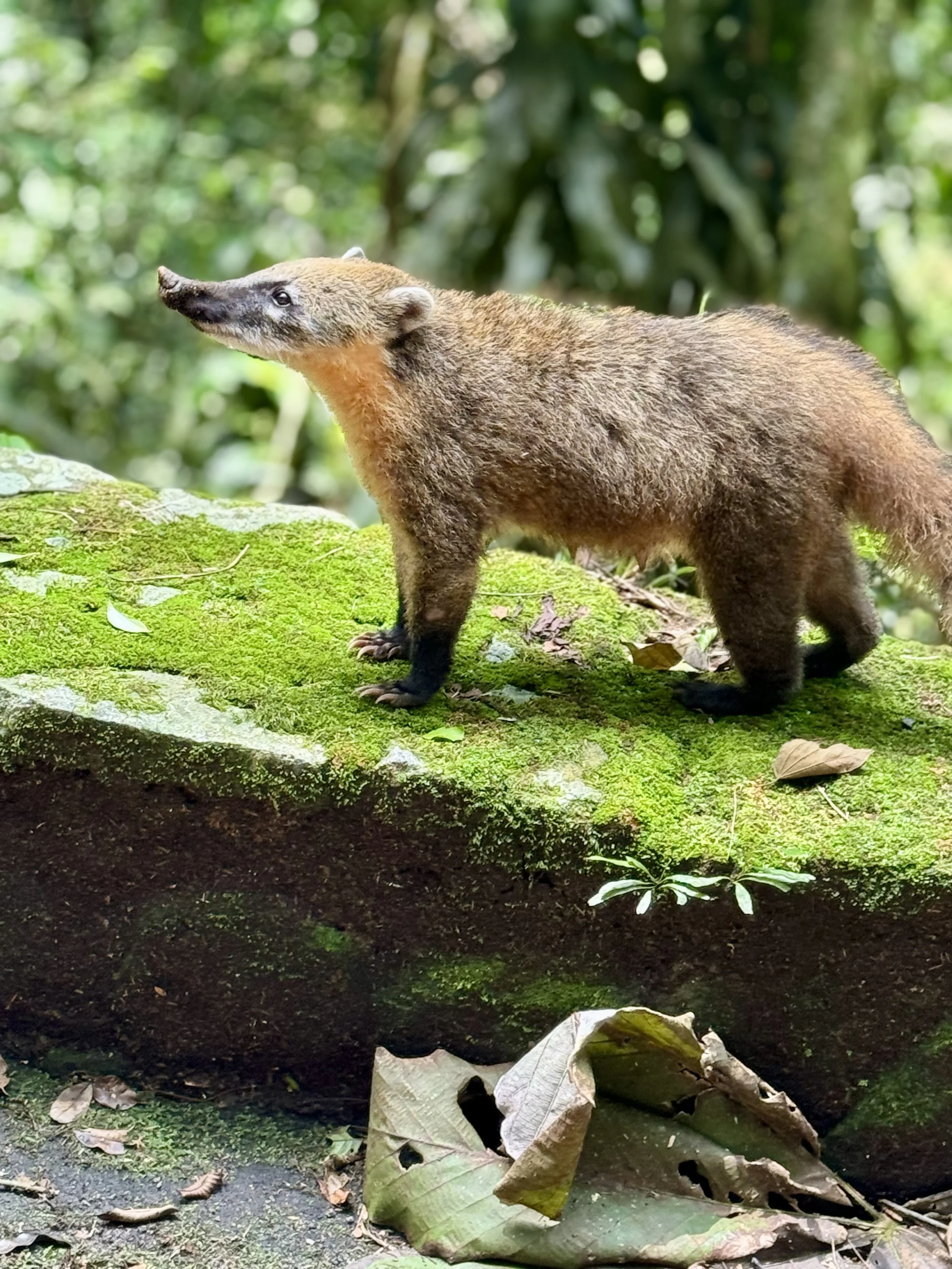
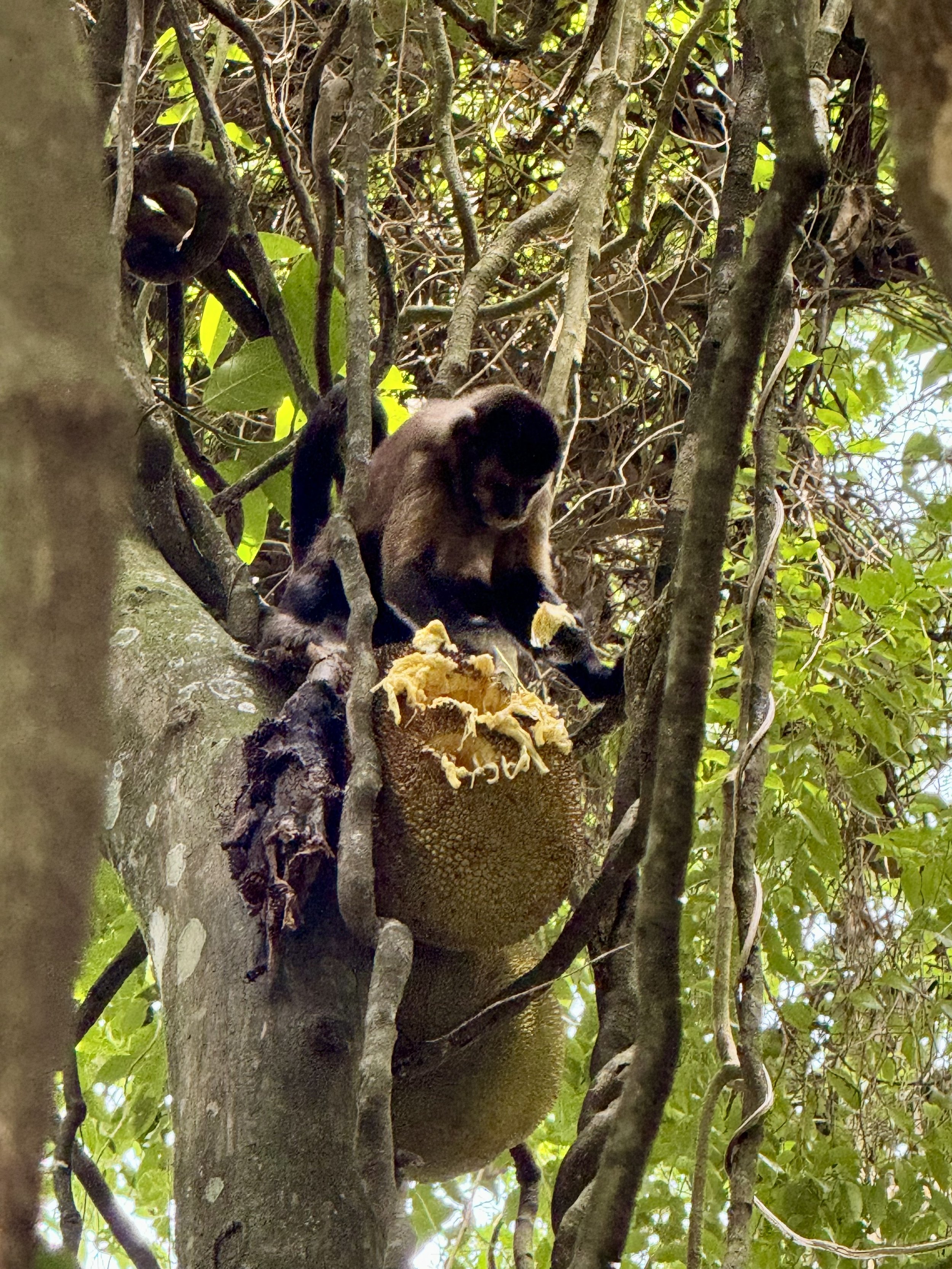
What stood out most was the quiet abundance of wildlife. Butterflies drifted through shafts of light, a hummingbird hovered briefly before disappearing into the canopy, and a family of coatis crossed our path with casual confidence. We also spotted marmosets, quick and curious, moving effortlessly through the trees. It was a reminder of how close this vast stretch of rainforest sits to the city, and how easily Rio can shift from urban intensity to something calmer and more ancient.
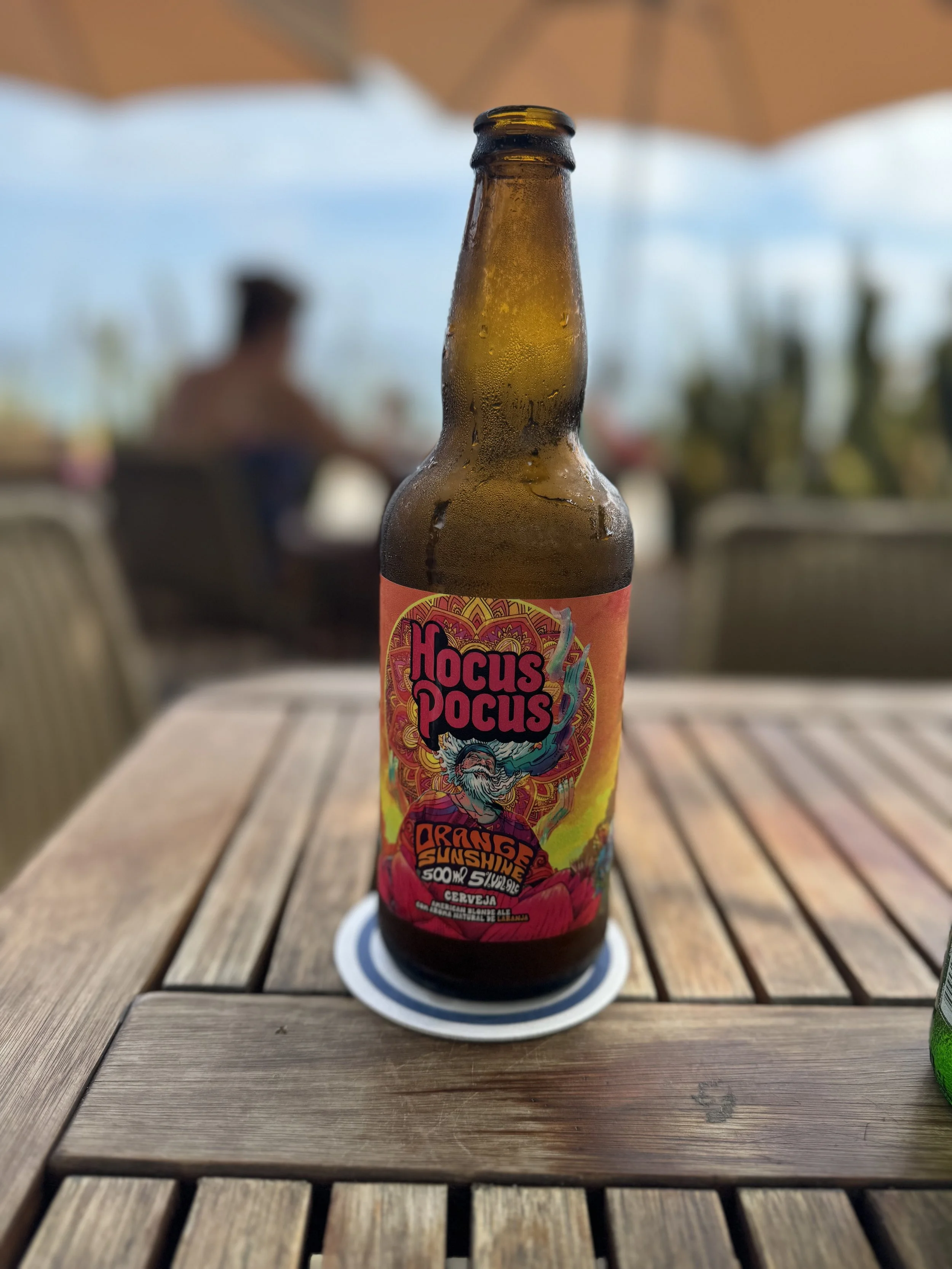
After being dropped back in the city, we stopped for drinks and a late lunch at ARP, with a great view across the beach towards Pedra do Arpoador. Sitting there, watching the waves and the steady movement along the shoreline, felt like a gentle re-entry into Rio after the forest’s quiet intensity. Still tired from travel and the early start, we headed back to the apartment and spent the rest of the afternoon simply relaxing on the terrace, content to slow the pace again and let the day fade out naturally.
Reflection
What struck me most about the day was how easily Rio shifts between extremes. In the space of a few hours we moved from dense city streets to deep rainforest, from traffic noise to birdsong, and then back again to the coast and the rhythm of the waves. Tijuca felt timeless and quietly alive, a reminder that nature here isn’t something separate from the city but woven directly into it. By the afternoon, sitting above the beach and later on the terrace, tired but content, it felt like the trip was finally settling into its own rhythm — less about ticking off sights and more about noticing where we were and how it felt to be there.
A Big Day
It was a big day, my 60th birthday, and we started early. By 7am we were in a taxi heading to the station for the Trem do Corcovado. Even though our ticket was for 8am, we joined the end of the queue and, surprisingly, were already on our way up by 7.30. The early start paid off immediately.
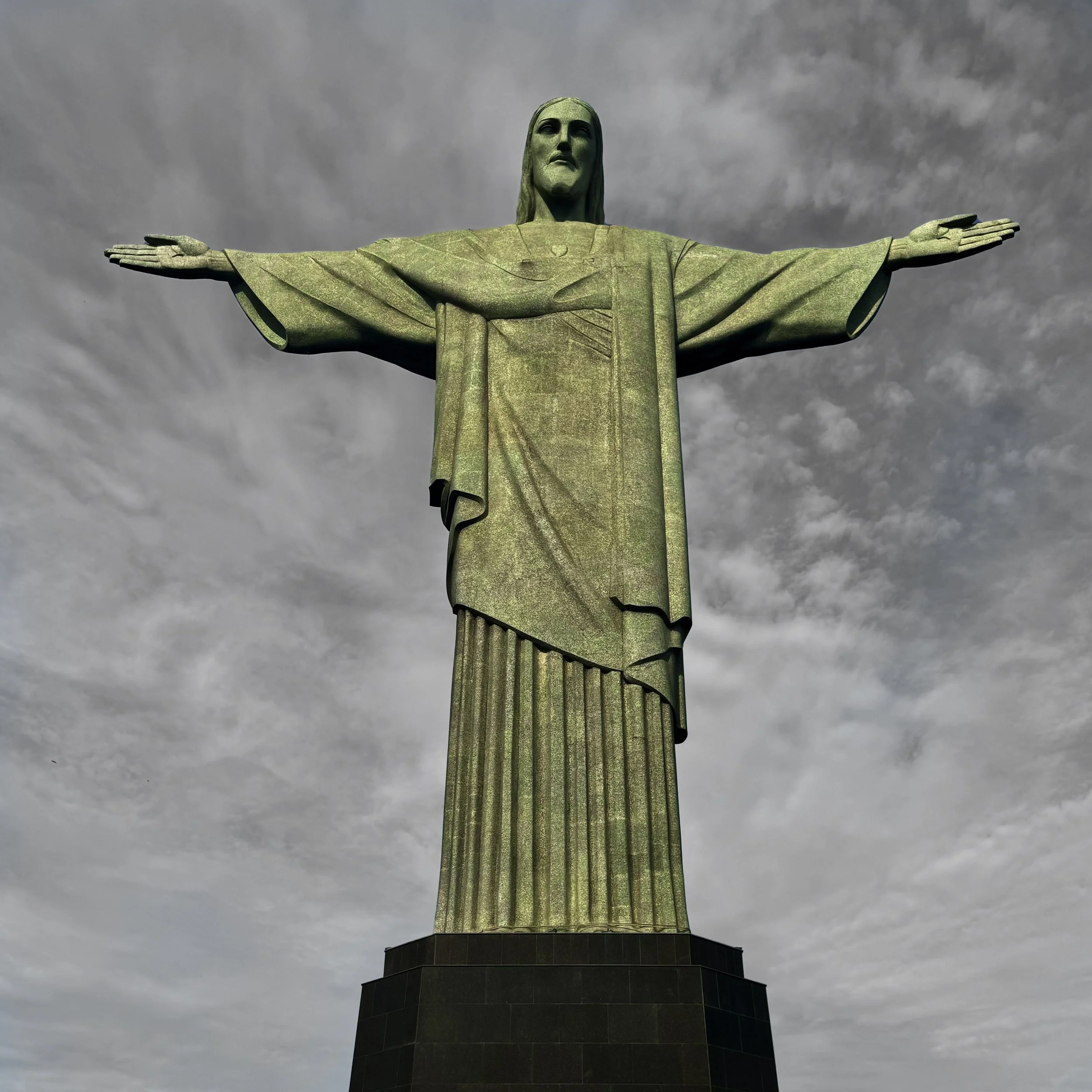
Christ the Redeemer was extraordinary. At that hour it was still relatively quiet, which meant space — space to take photographs, to move around without being rushed, and, most importantly, to take in the views properly. The city stretched out below us, framed by mountains and coastline, and the whole experience felt calm and expansive. It was one of those rare moments at a major landmark where the setting really lived up to expectations.
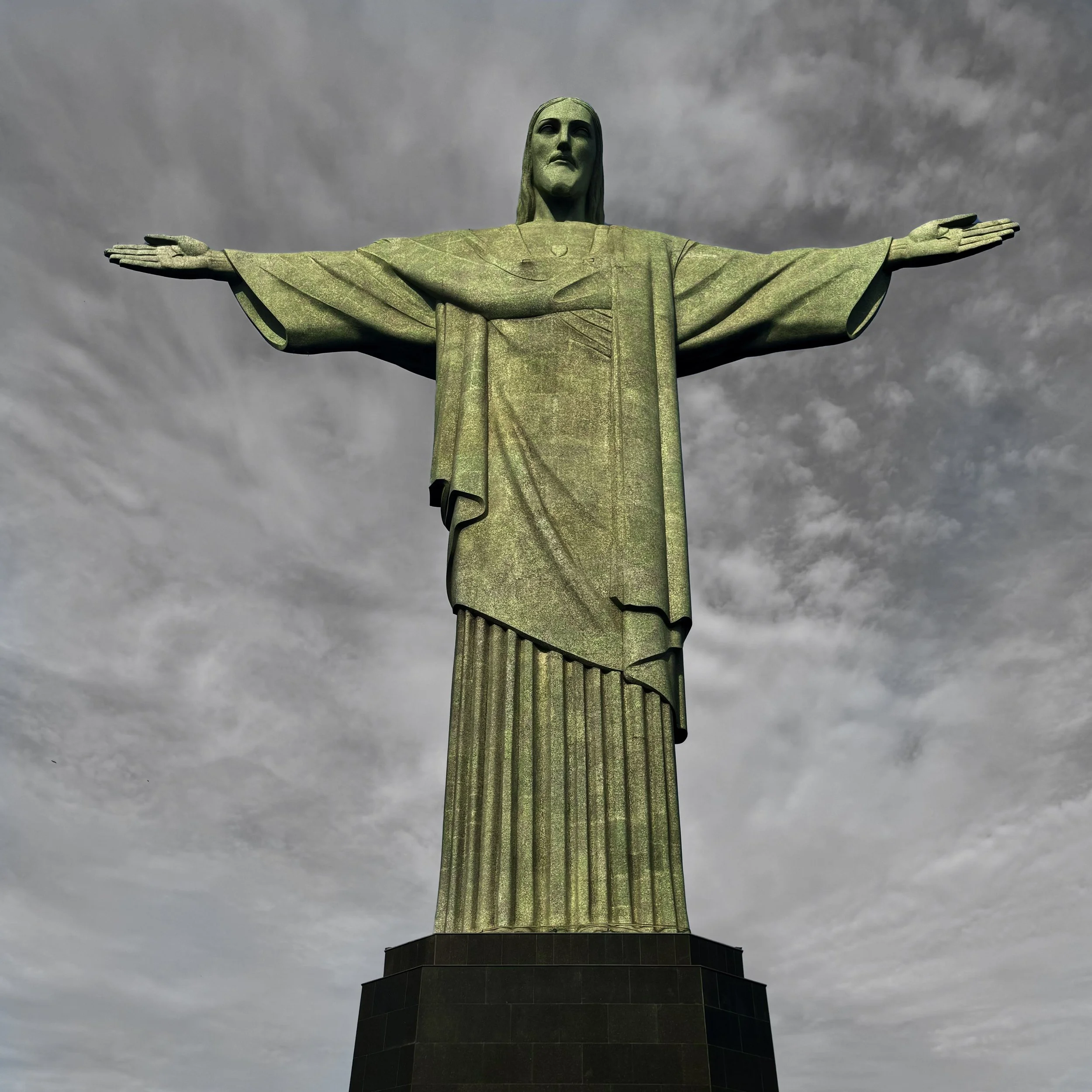
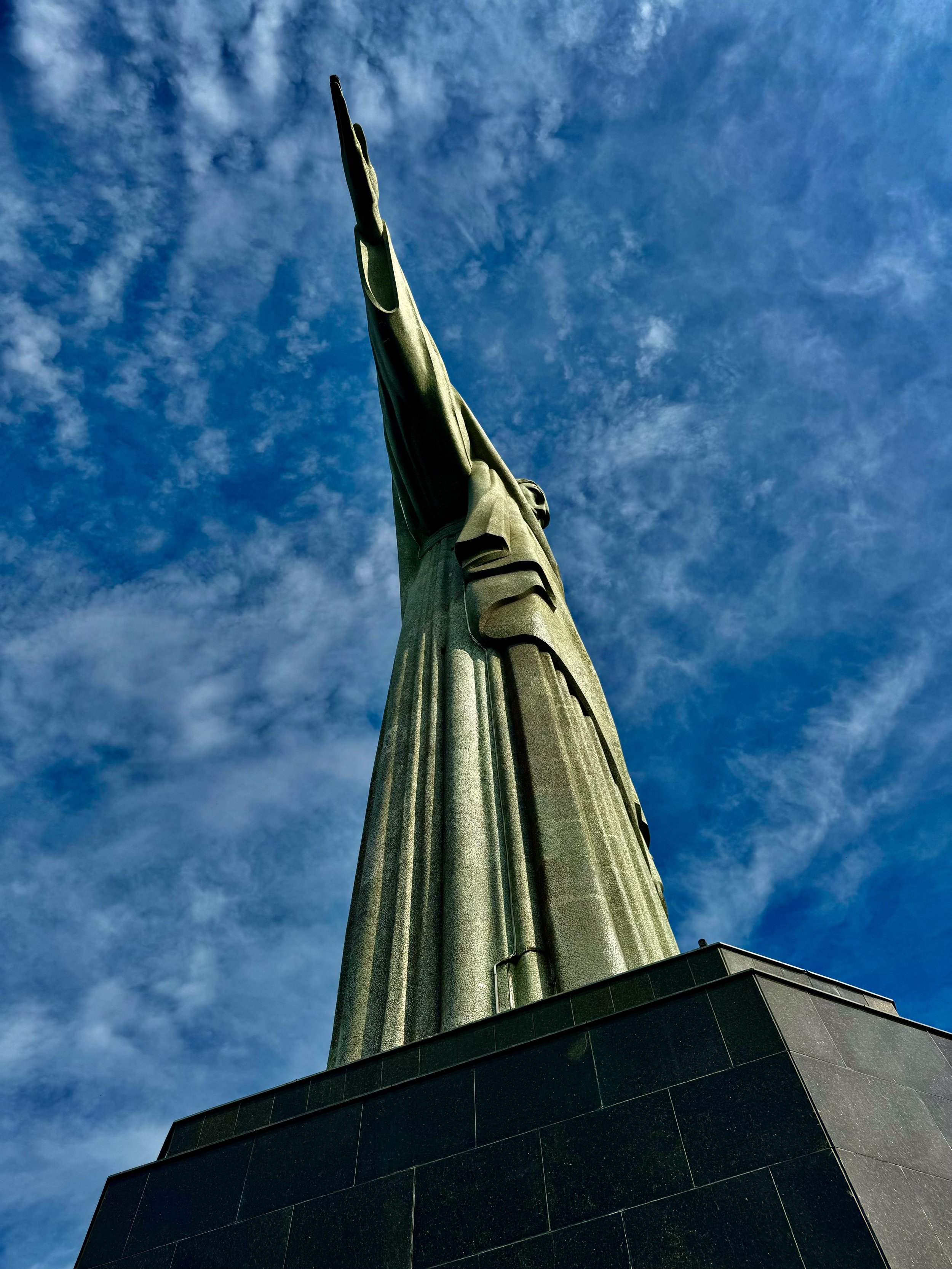
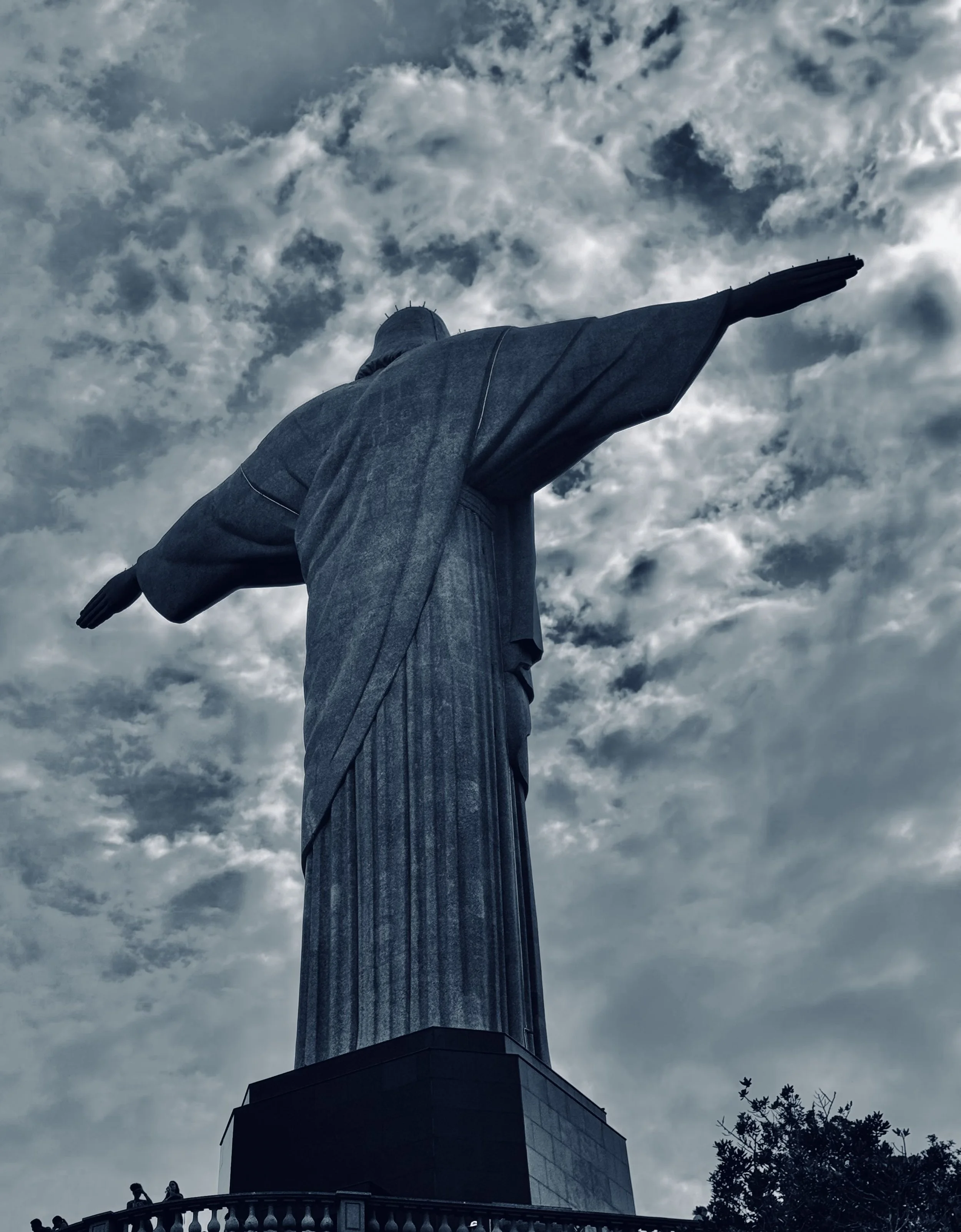
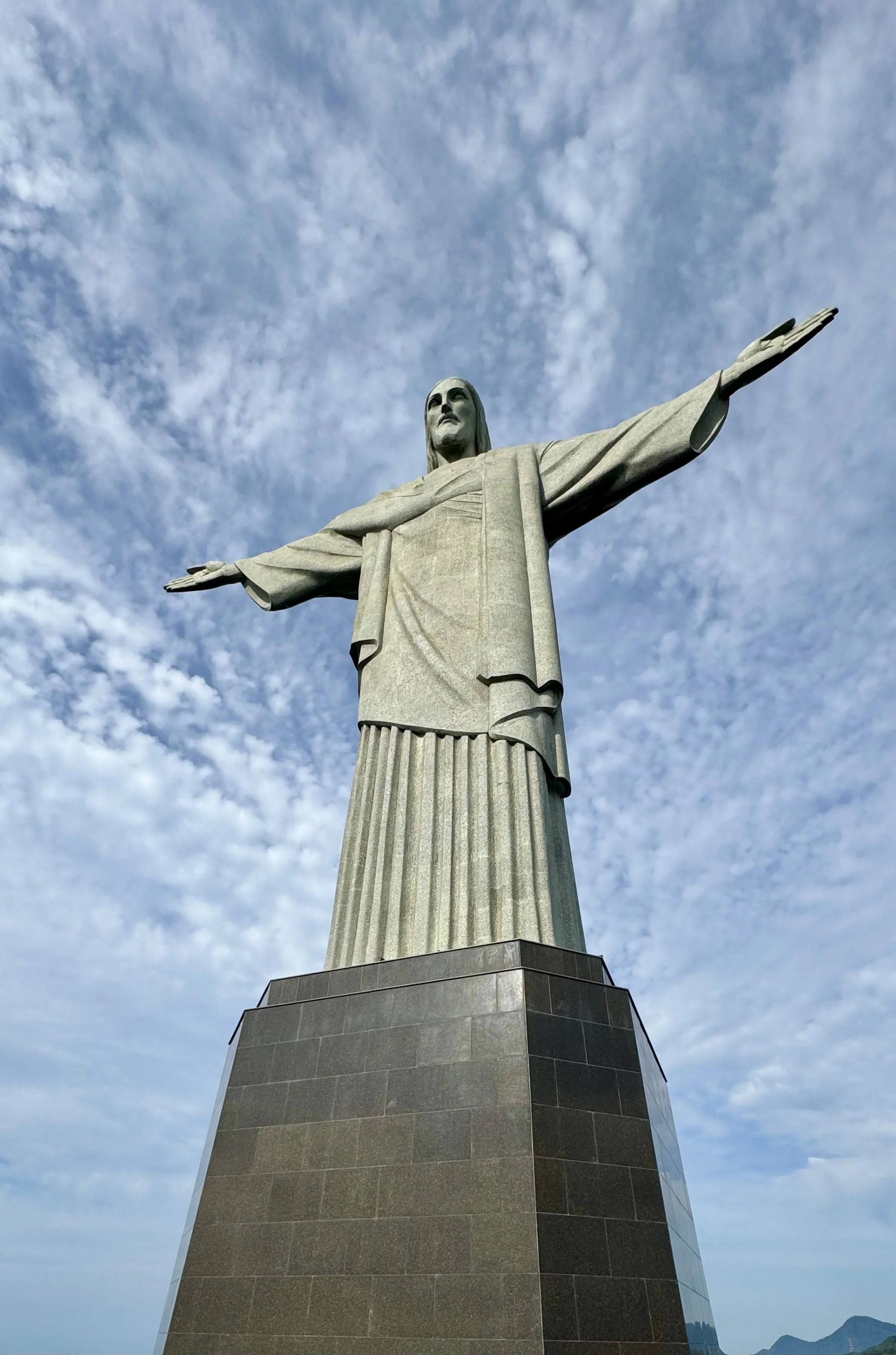
We lingered longer than planned, eventually stopping for what turned out to be a very good coffee at the café just below the statue. Sitting there, watching people arrive and depart, felt unexpectedly absorbing. For over an hour we simply chatted, people-watched, and let the morning unfold. When we went back up to the top around 9.15, the contrast was striking. The bus tours had arrived, and with them came crowds and noise — along with people carefully dressed and posed for Instagram shots, outfits and angles clearly planned in advance. The atmosphere had completely changed, making us especially glad we’d arrived early.
After coming back down on the tram, we took a short walk up to Largo do Boticário, a small, picturesque square with beautiful old buildings and the feel of a place slightly removed from the city’s main flow. It looked like somewhere worth returning to, perhaps with more time and less of an agenda.
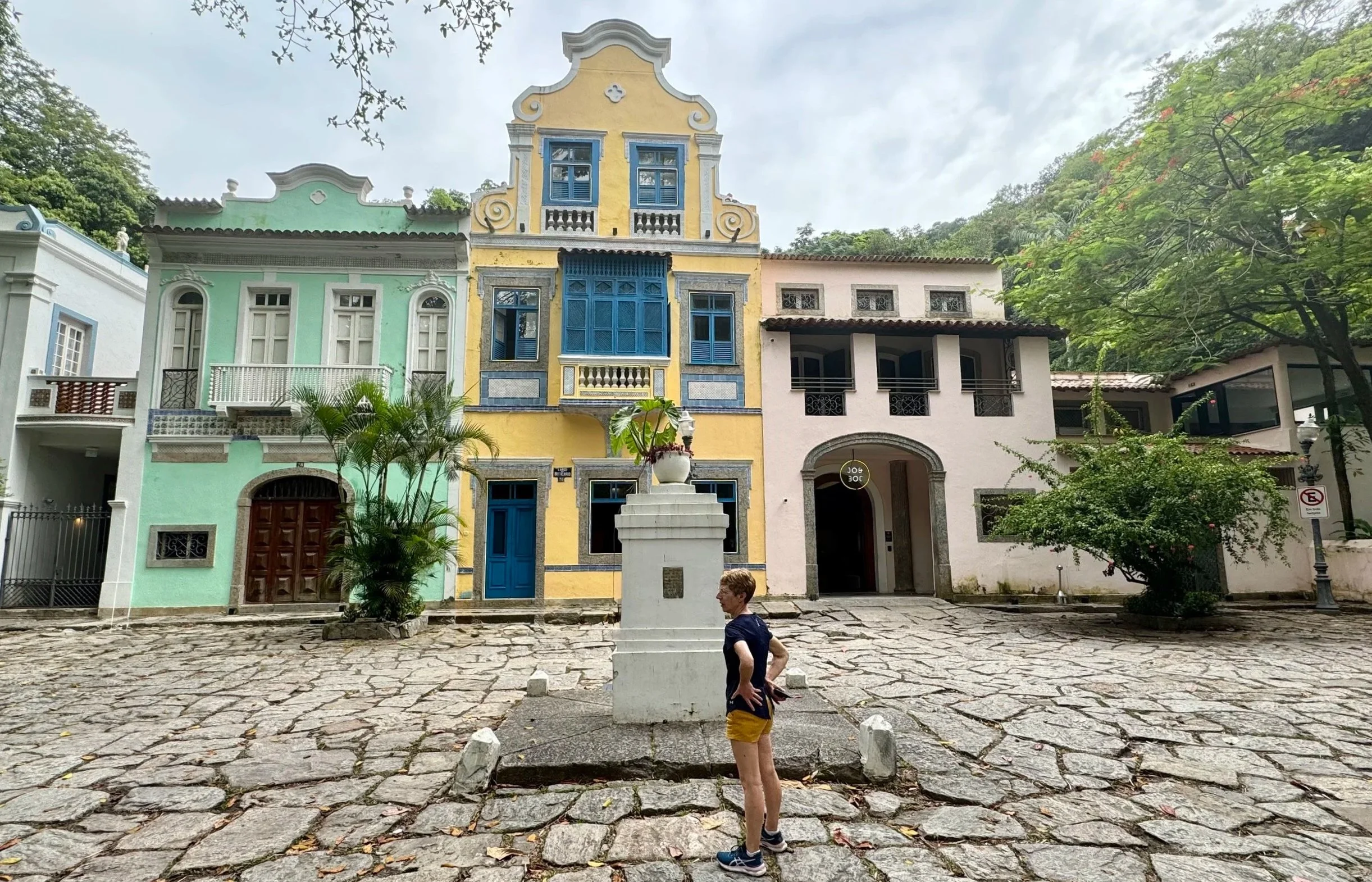
Largo do Boticário
A quick taxi took us back to Ipanema, and on a spur-of-the-moment decision we set off to walk around Lagoa Rodrigo de Freitas. The five-mile loop around the lagoon turned out to be one of the most enjoyable parts of the day. Flat, easy walking, wide views across the water, and a couple of relaxed stops for drinks made it feel refreshingly unplanned.
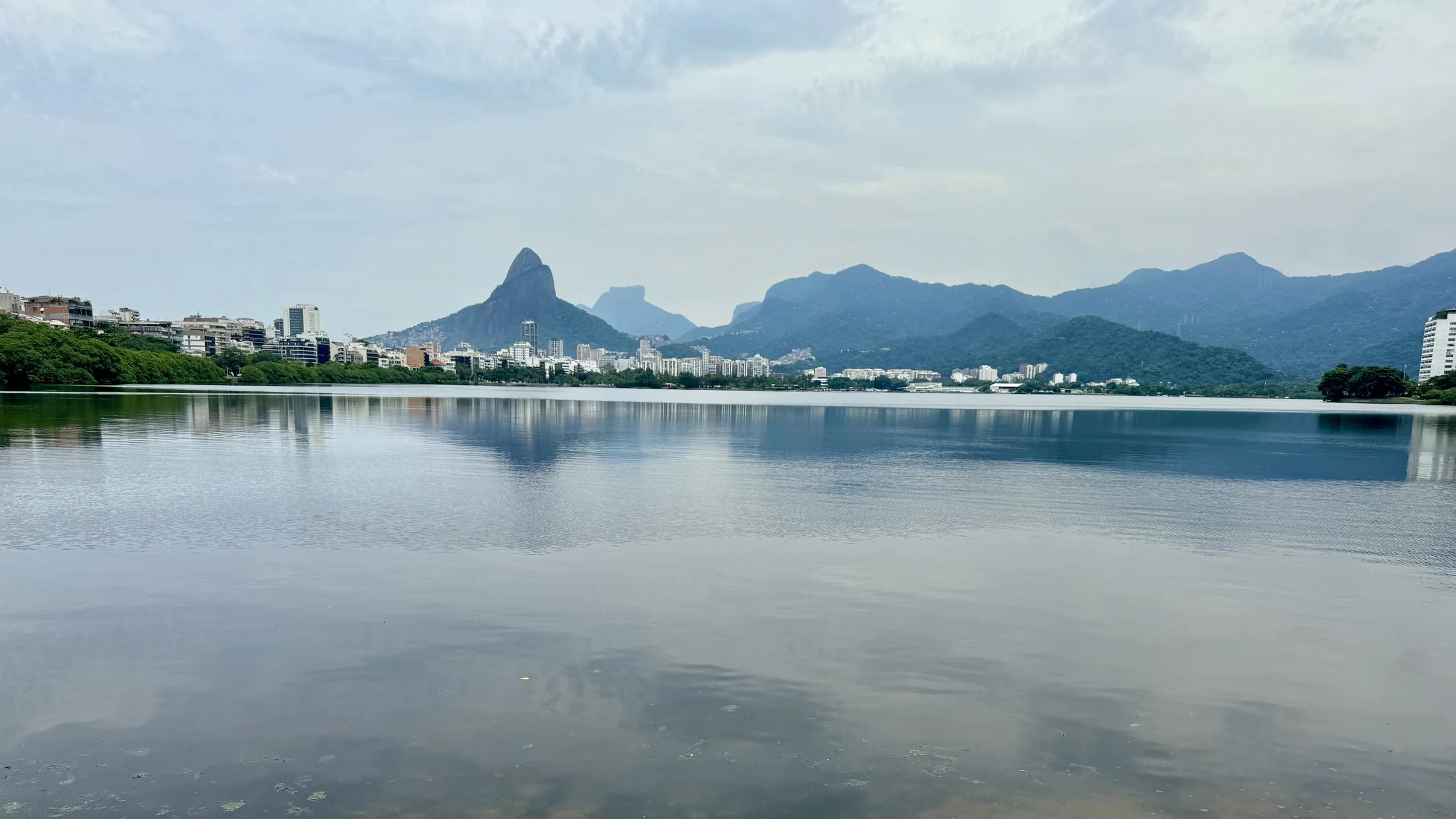
Lagoa Rodrigo de Freitas
Later, after a very heavy thunderstorm had passed through, we took a taxi to Teva Vegan Restaurant at the Leblon end of Ipanema for my birthday dinner. The food was excellent, although the service felt a little too quick and slightly oppressive, as if the evening was being hurried along. Still, it rounded off a long and varied day well.
Reflection
What stayed with me most was how the day unfolded without any pressure to make it feel like a “big occasion.” The early start at Christ the Redeemer, the long pause for coffee, and the spontaneous decision to walk the lagoon all helped set a relaxed pace. There were moments of spectacle, but also plenty of ordinary ones, walking, sitting, and watching, which felt just as important. For a milestone birthday, it was something about marking the number, but more importantly it was about being fully present, taking things as they came, and appreciating the city from several different angles in the course of a single day.
If you’d like to follow future journeys, reflections, and moments noticed along the way, you can join the mailing list here.
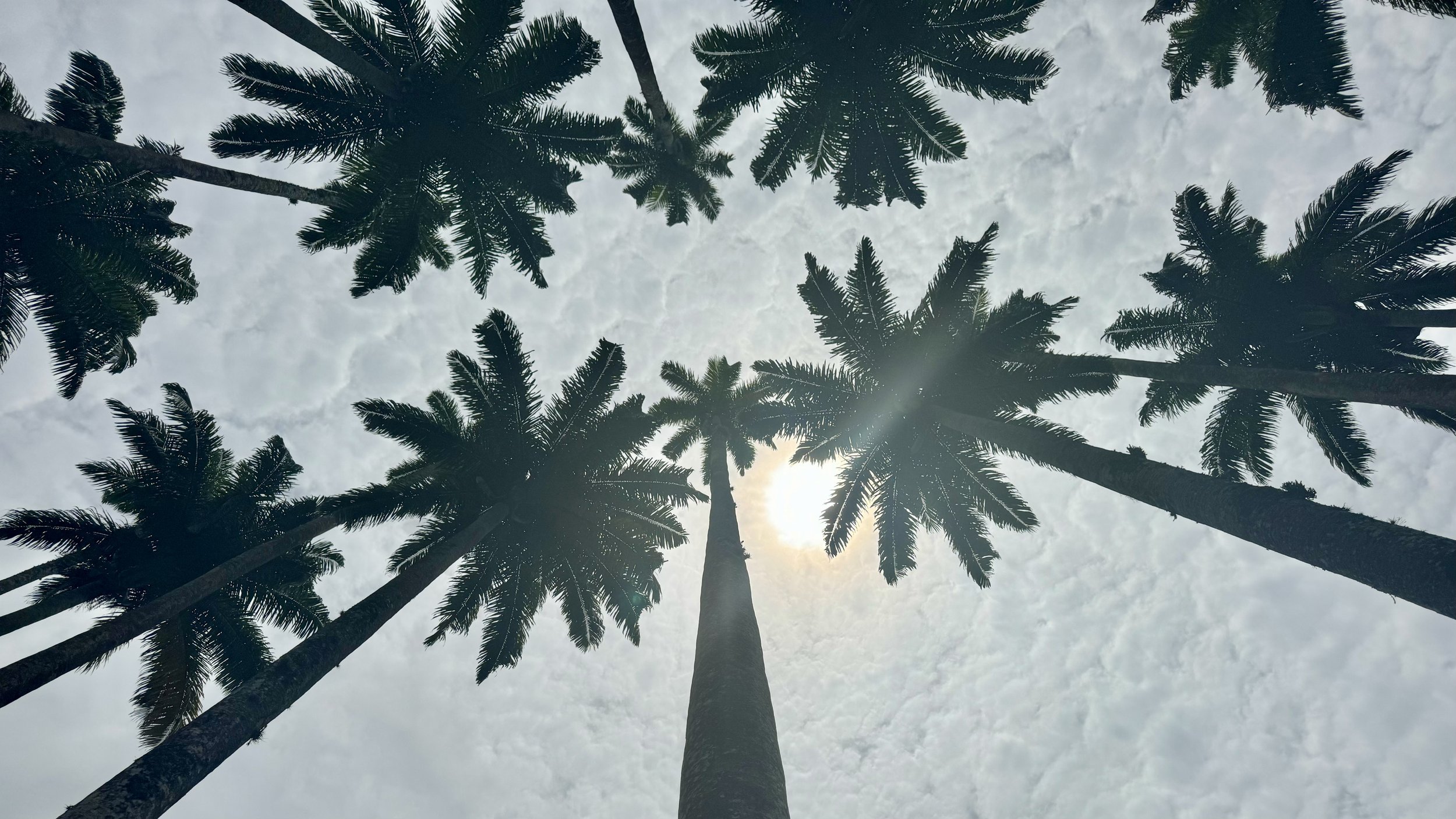
Around the city
Centro, Culture and Coffee
Thursday was our first proper outing on the Metro, and it turned out to be a very pleasant surprise. Easy to use, simple to pay, just tap and go with a card or phone, much like the London Underground, and clearly signposted throughout. It was efficient, calm, and got us into Centro quickly and without fuss.
Centro felt immediately different from the beach areas. The streets were busier with office workers and business people, giving the area a more purposeful, weekday rhythm. Our first stop was the Church of Our Lady of the Candelária, where we arrived just as preparations were underway for a confirmation ceremony. We stood discreetly at the back as lines of teenage boys and girls, dressed in cream, waited excitedly while families looked on proudly. It felt like a small, quietly human moment, and we slipped out before the ceremony began.
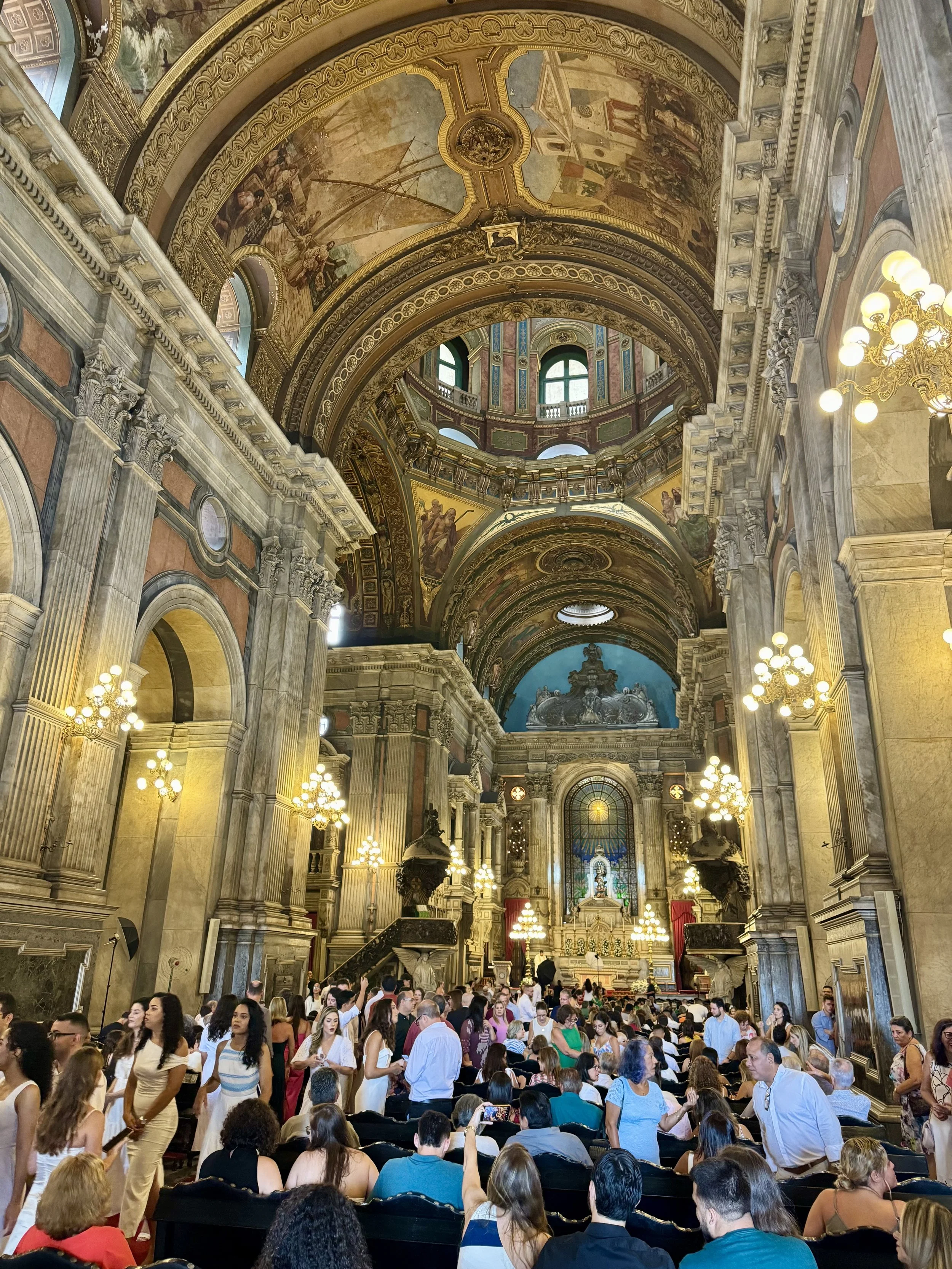
Church of Our Lady of the Candelária
From there we walked to the Museum of Tomorrow. The building itself is striking, a photographer’s dream, its bright white structure blazing against the blue of the sea. Adding to the scene, nearby naval officers were standing in formation, creating an almost surreal contrast between architecture, water, and ceremony.
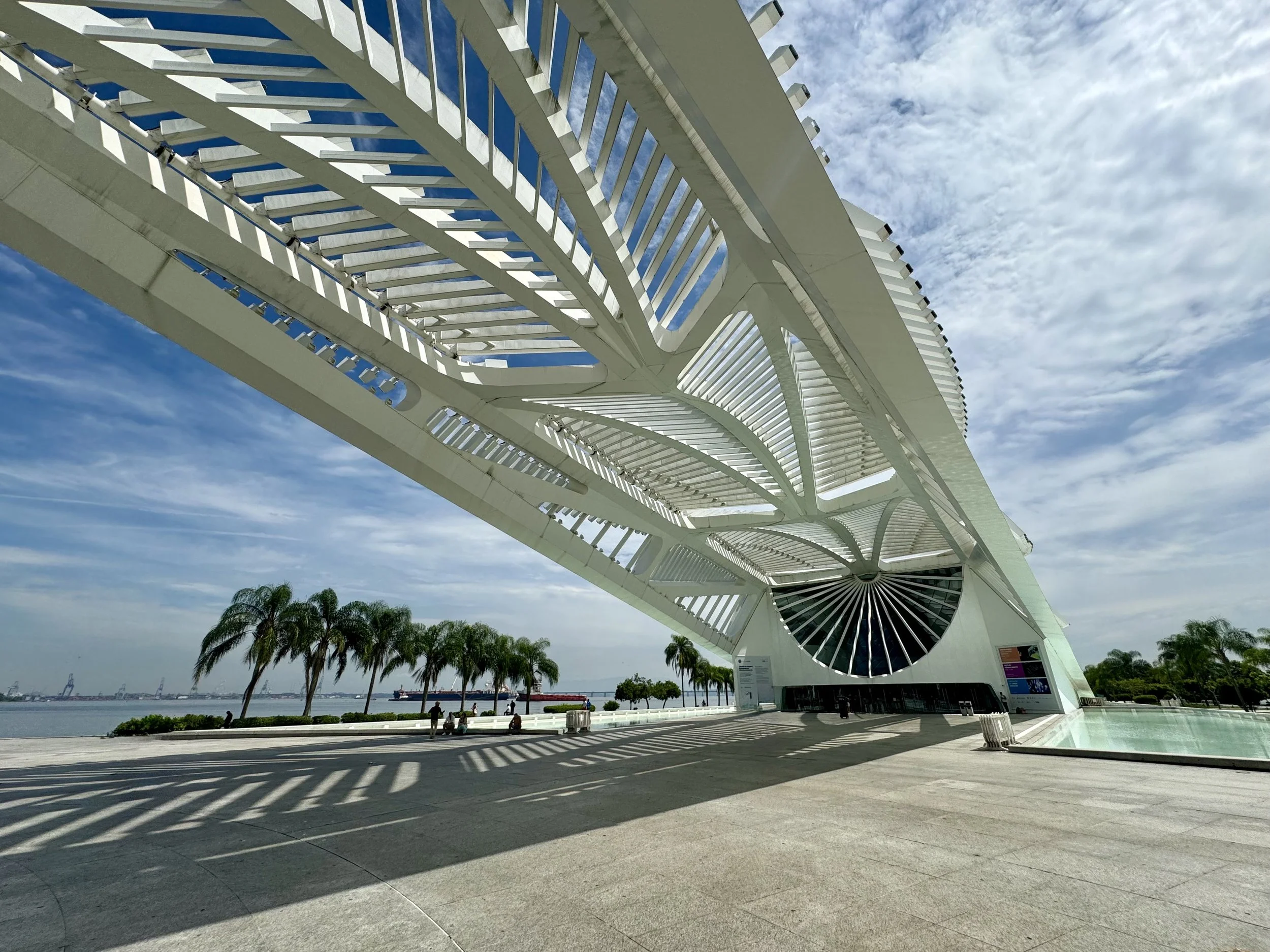
Entrance to Museum of Tomorrow
Inside the museum, we paused to ask whether we qualified as seniors. On confirmation, we were waved through with free entry — a small victory for me, though my wife was less impressed at how easily this status was awarded. In true senior fashion, we then made a beeline for the café and the toilets before tackling the exhibits. Some displays felt closer to modern art than anything especially informative, but the highlight was the 360-degree cosmos dome, where you lie back on cushions and look up as images and sound surround you — immersive and unexpectedly calming.
We continued on towards the docks to see the Mural das Etnias, an enormous and impressive piece of public art created for the Olympic Games and covering some 3,000 square metres. The wider waterfront area felt full of potential — already attractive, but with the sense that it could be developed much further with more cafés, bars, and places to linger.
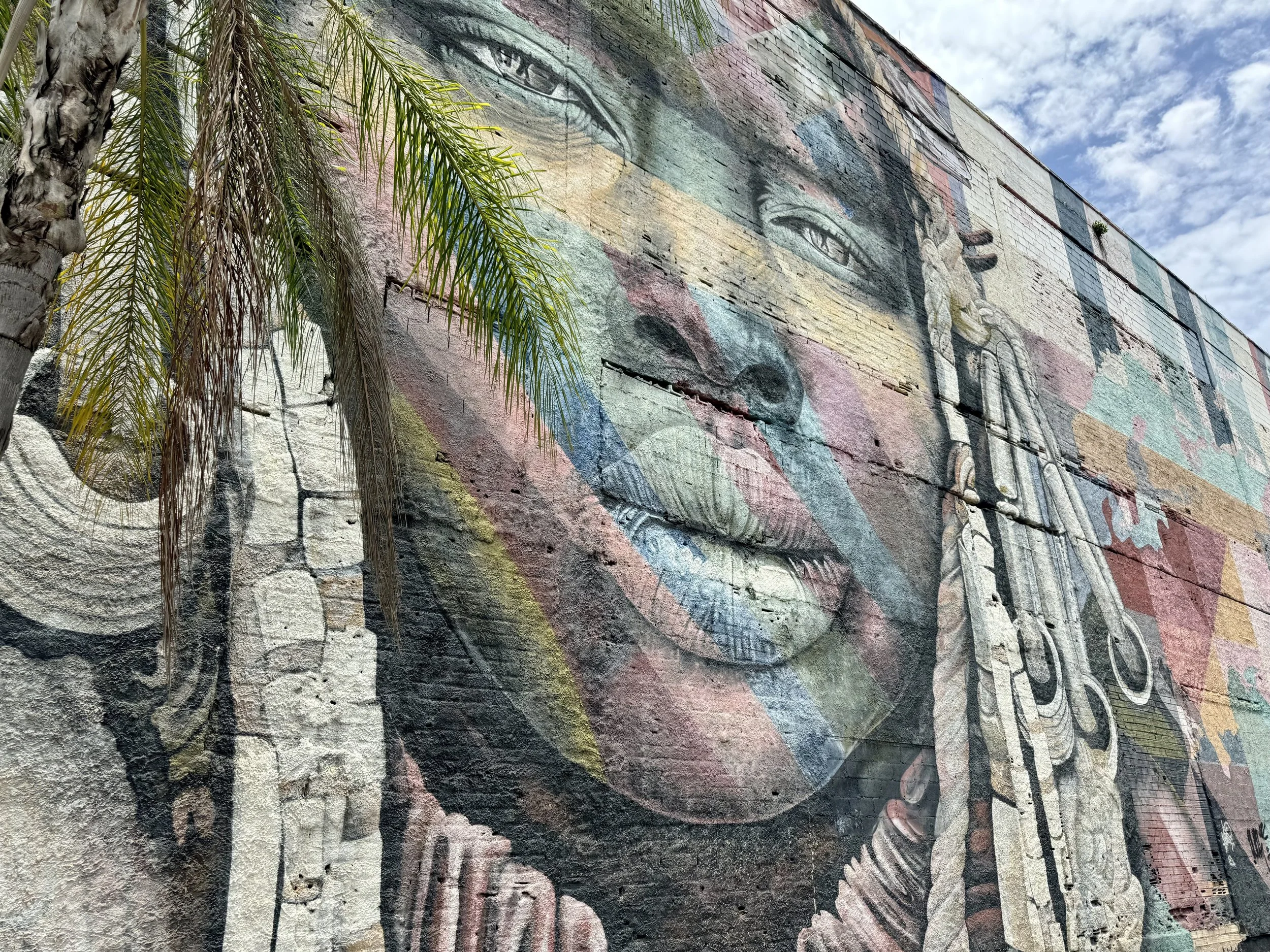
Mural das Etnias
Passing the aquarium — which we deliberately skipped, preferring not to visit attractions involving animals — we headed instead for the ferris wheel, a familiar favourite. It was on the pricey side for a 15-minute ride, but the views across the docks and the vast container ships being loaded made it worthwhile.
Hunger eventually won, and we took a chance on Deguster Café, which was buzzing with office workers from nearby L’Oréal and Subsea7 offices. Packed with young professionals, the noise and energy made it clear this was a popular spot — and with good reason. We loved it.
Retracing our steps, we headed to São Bento Monastery. Even as fairly seasoned visitors to monasteries, this one was a little unusual to access — entering via an office and taking a lift felt oddly functional. Once inside, though, the church was magnificent and well worth the effort.
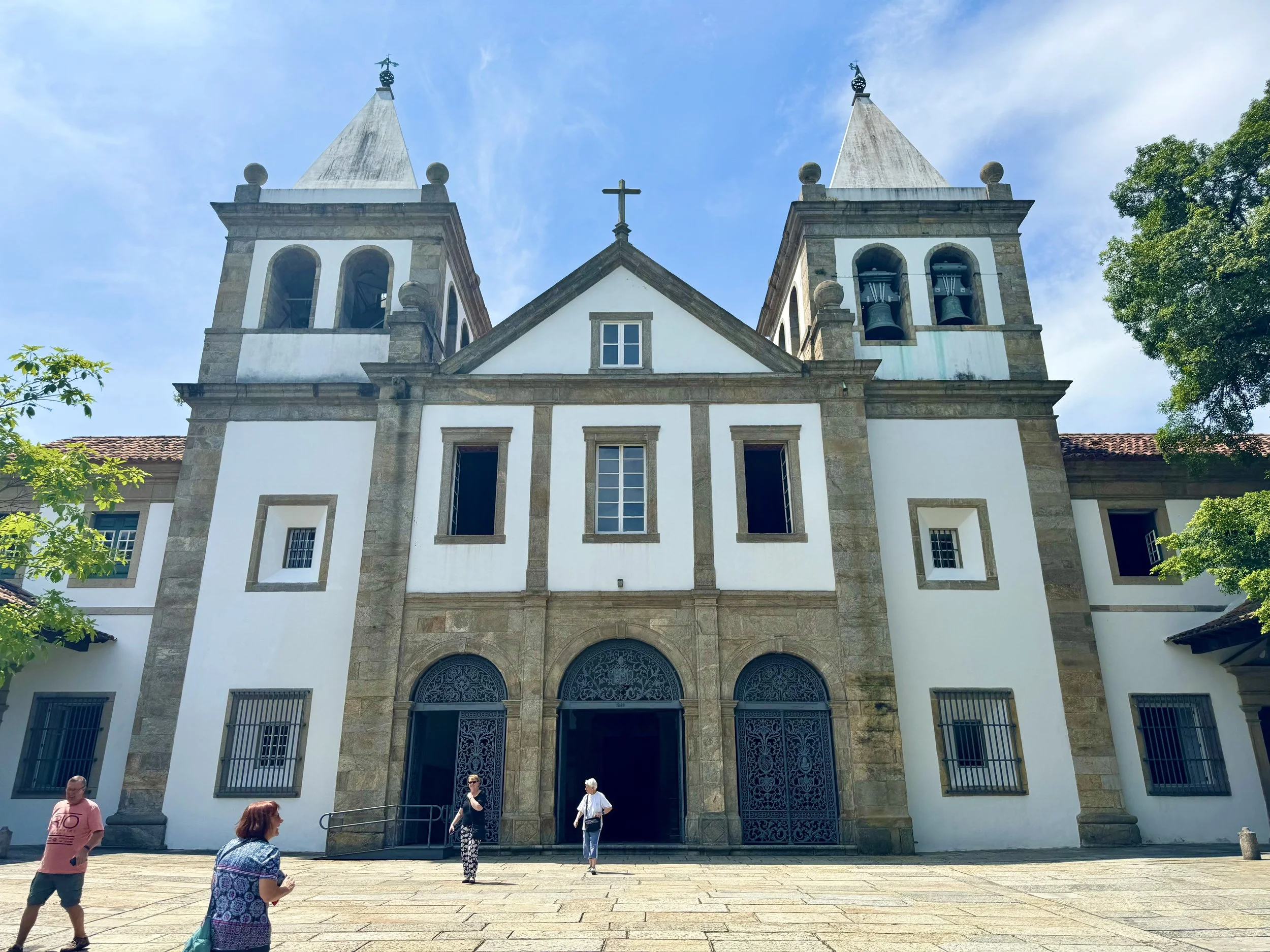
São Bento Monastery
Still going, we made our way to the Portuguese Library. Some had described the surrounding area as sketchy, but we didn’t feel that ourselves, though we also didn’t linger outside. The library itself is beautiful and highly photogenic, though realistically a short visit of around ten minutes.
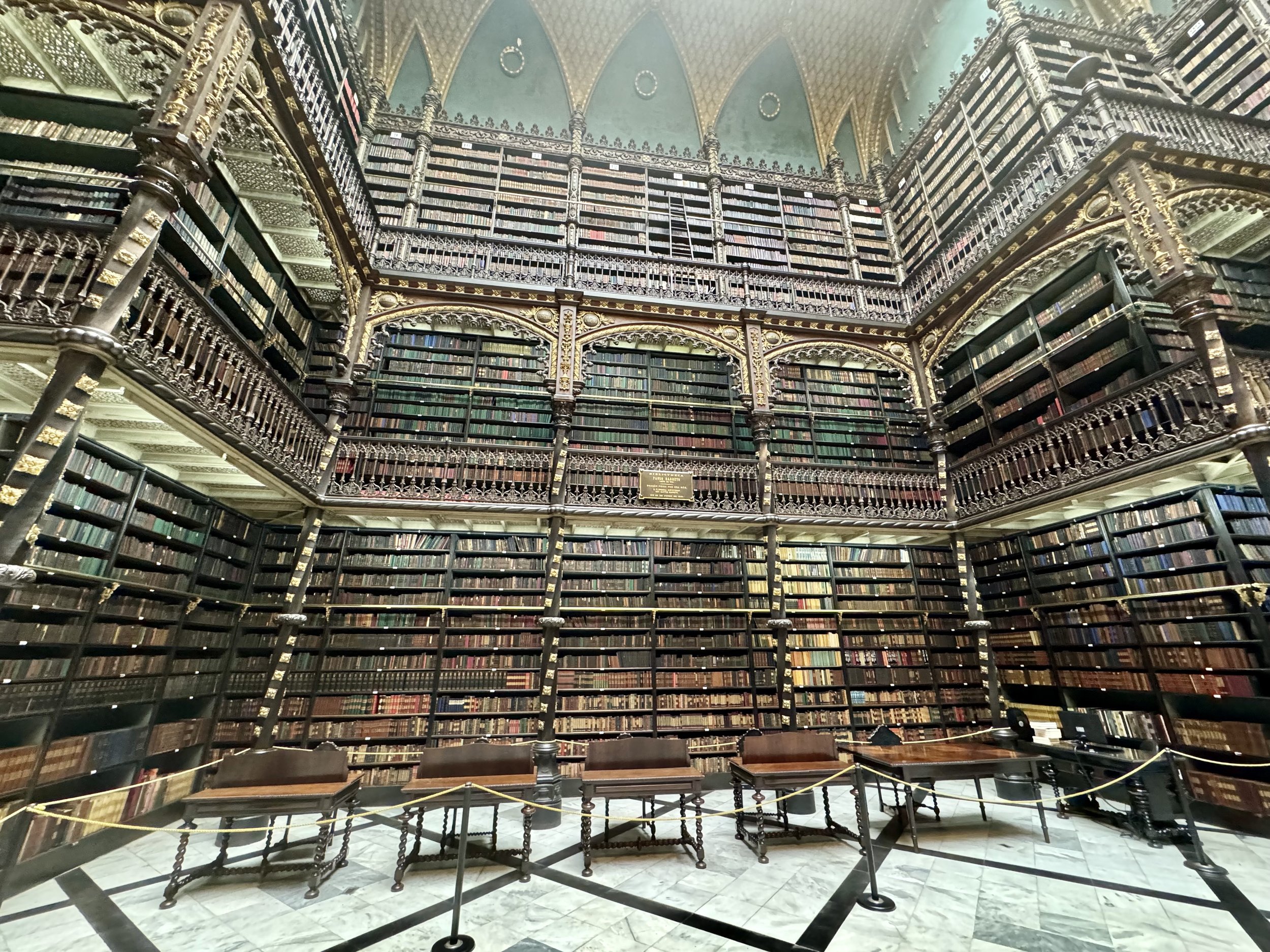
Portuguese Library
By then, coffee was essential. A short walk brought us to Confeitaria Colombo, where we happily embraced its tourist-trap status. Sitting beneath the mirrors and chandeliers, eating cake and drinking excellent coffee, it was easy to see why this place has served royalty and Rio’s elite for generations. My standout choice was the brigadeiro.
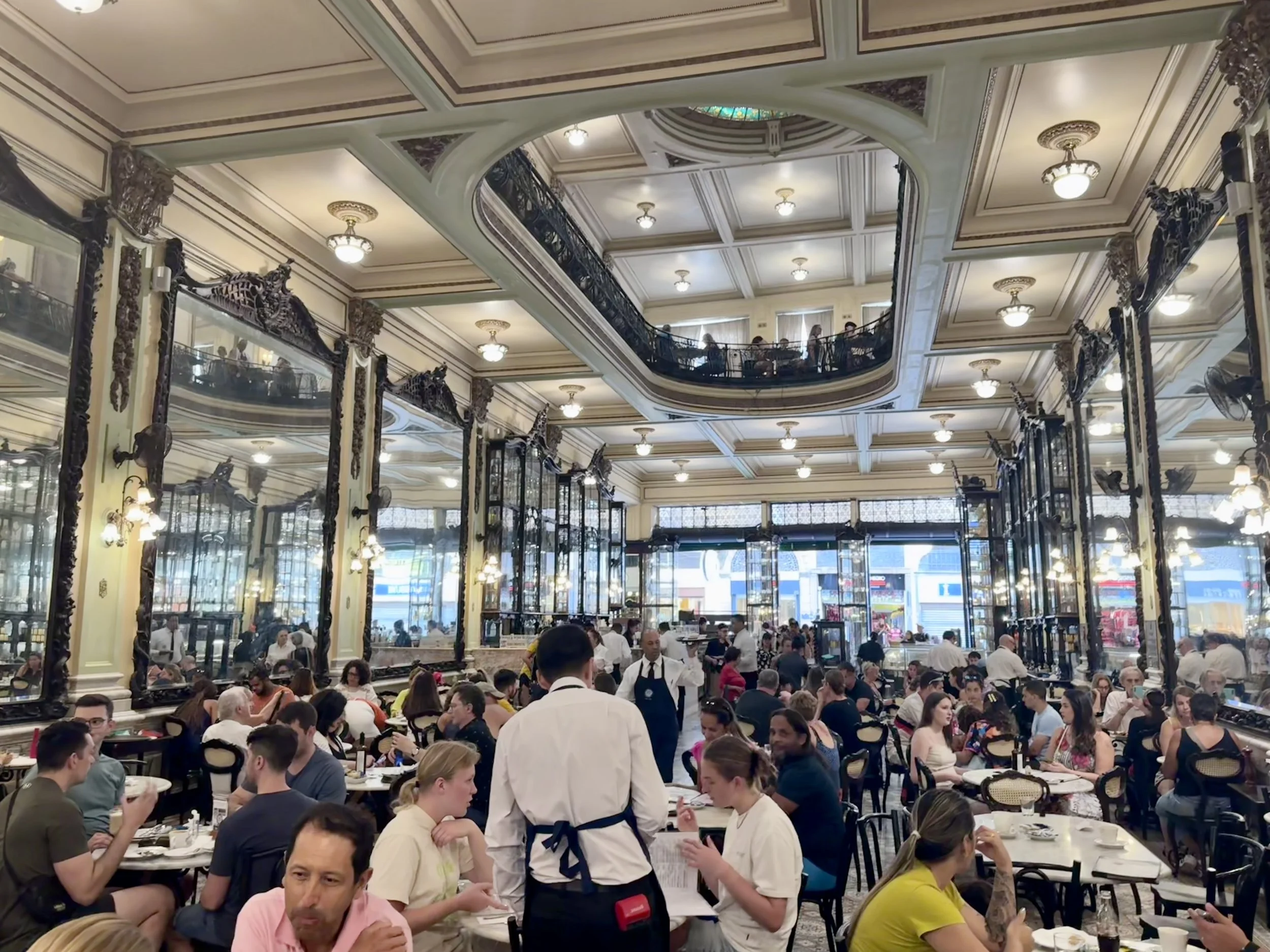
Confeitaria Colombo
Finally, thoroughly walked out, we hopped back on the Metro for a quick ride back to the apartment and a very well-earned rest.
Reflection
In some ways the day felt like a classic list of tourist stops, churches, museums, murals, landmarks, the sort of itinerary that can sometimes blur into one long walk between highlights. But in this case, it really worked. Each place offered something different, whether it was a quiet human moment in the church, the scale of the waterfront, or simply sitting with coffee and cake in an old institution like Colombo. Moving through Centro at a weekday pace, using the Metro, and sharing space with people going about ordinary working lives gave the day more texture than a typical sightseeing loop. It may have been a box-ticking day on paper, but in practice it felt varied, interesting, and very much worth the effort.
Walking the Length of Copacabana
Friday was meant to be a quieter day, a chance to ease off after a full-on week of travelling to get here and working our way through Rio’s main sights. The plan was a relaxed morning on the beach, but rain followed by heavy, dark clouds quickly put an end to that idea.
Instead, we headed out for a walk along Copacabana, and as these things often go, what started casually turned into something more substantial. We ended up walking the full length of the beach, from Copacabana Fort all the way to Leme. It turned out to be a surprisingly satisfying stretch, the sea on one side and the steady rhythm of the promenade underfoot. We stopped briefly at Mureta do Leme for a drink and some fries, taking in the view across Leme and back towards the Fort, before setting off again. By the time we reached the end, we’d clocked around six miles and felt every step of it.
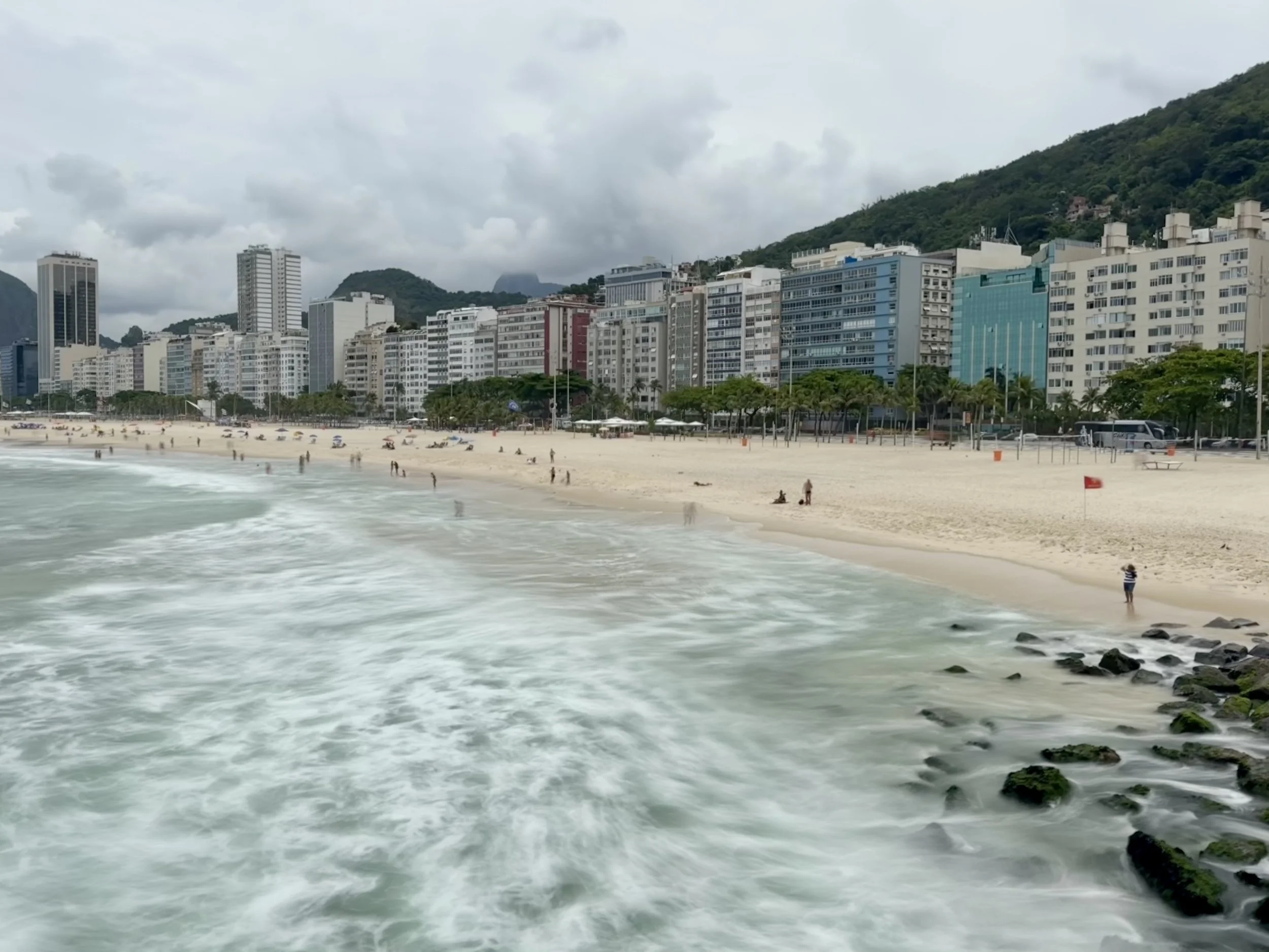
The view from Leme
After some grocery shopping, the afternoon slowed properly. We spent time relaxing on the sun terrace, and I may have had a short sleep before the evening. Dinner, unfortunately, was the low point of the day. At Açougue Vegano, the food was easily the weakest of the trip so far, with dishes that felt more like reheated microwave meals, which as it turned out, were also being sold directly in the dining area.
The walk back offered our only slightly uneasy moment of the day, when we passed a small group of men arguing in the street. We kept our distance and moved on without issue, but it stood out simply because it was the only time all week that we felt the need to be more alert.
Despite the false start to the day, the long walk along Copacabana ended up being its own reward, unplanned, tiring, but quietly satisfying.
Gardening Day
Saturday became our “gardening day,” starting with a visit to Parque Lage, followed by the Botanical Gardens. We timed it well, arriving at Parque Lage right at 9am. The queue for the café was still relatively small, although we hadn’t initially realised that much of it was for people wanting their Instagram-style photos of the pool, the house, and Christ the Redeemer framed perfectly behind.
Once the photos were done, we managed to get a table and quickly ordered coffee and breakfast. The service was excellent and impressively attentive, the waiter noticed we were sitting in direct sunlight and, after watching us squirm for a few minutes, suggested moving to a shaded table. The food was first rate, some of the best we had all holiday. The French toast was outstanding and very much recommended.
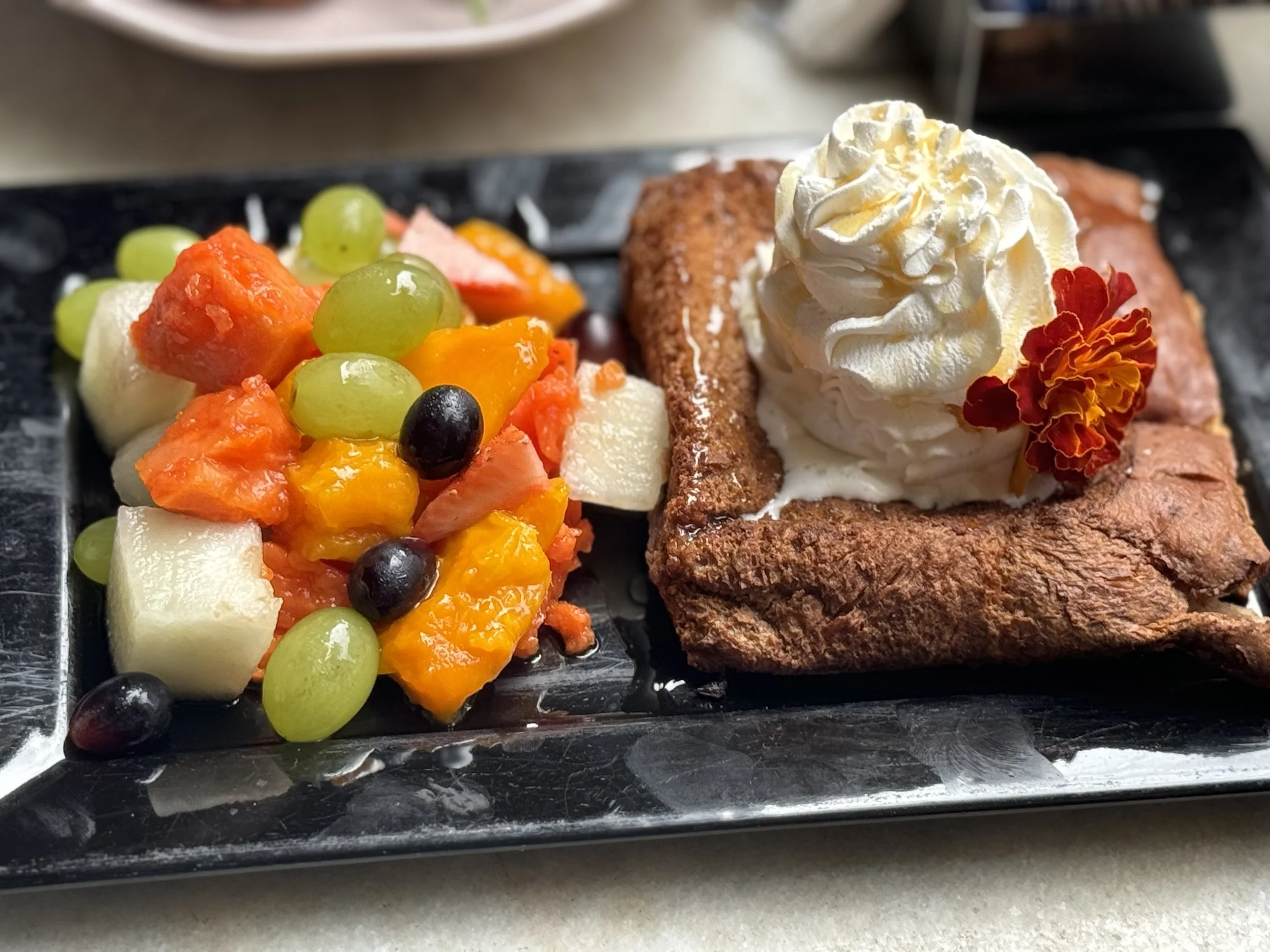
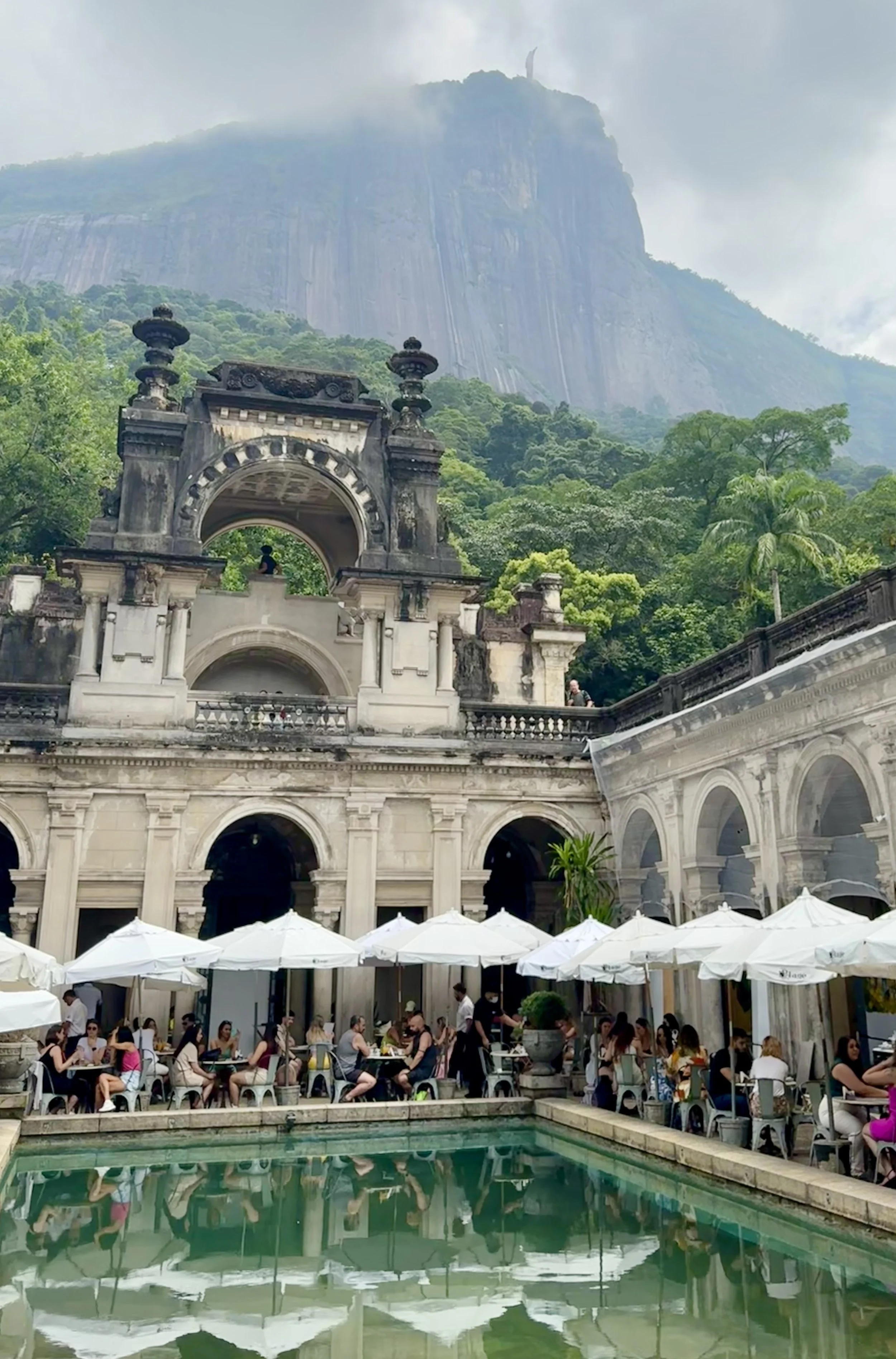
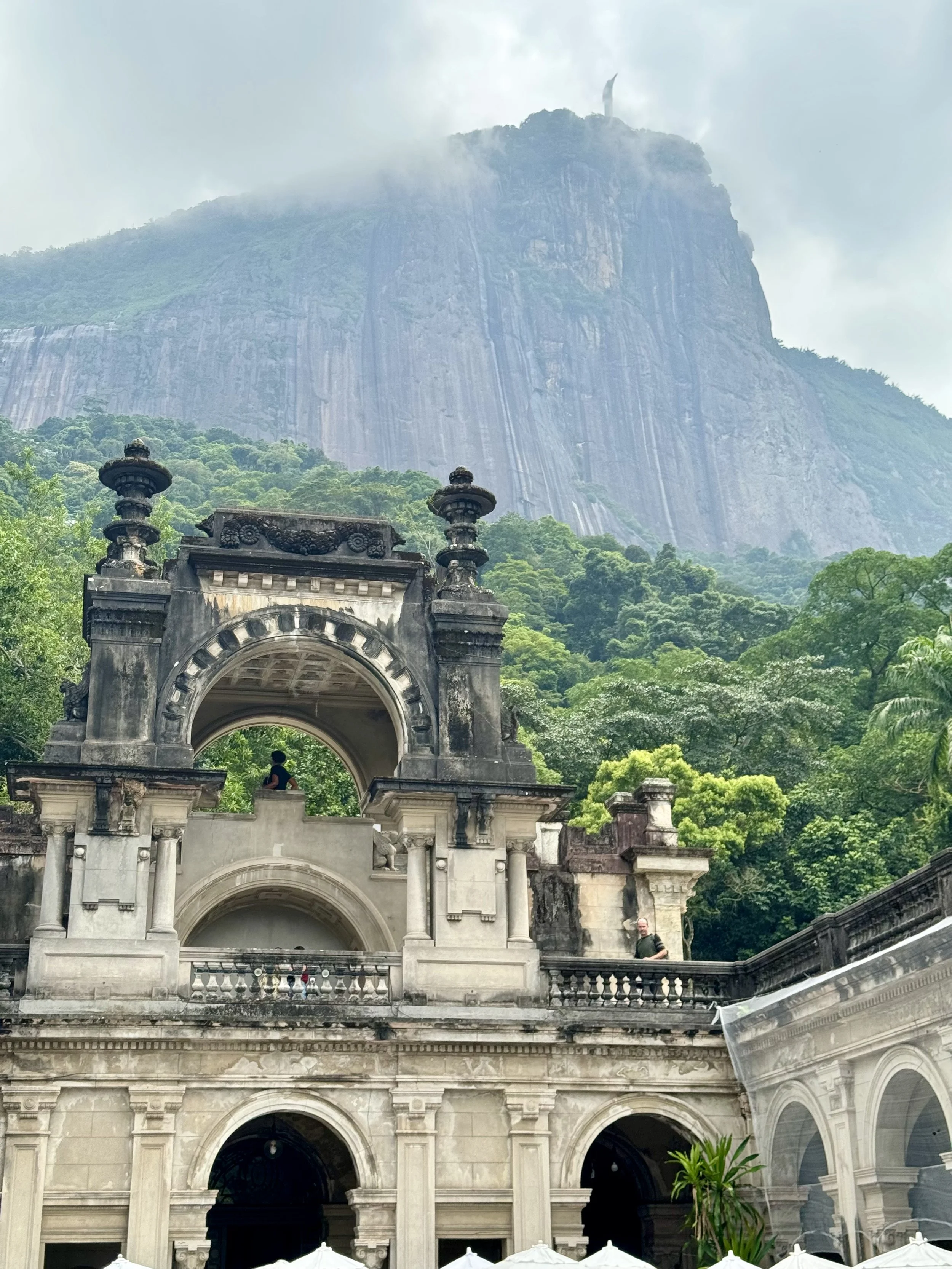
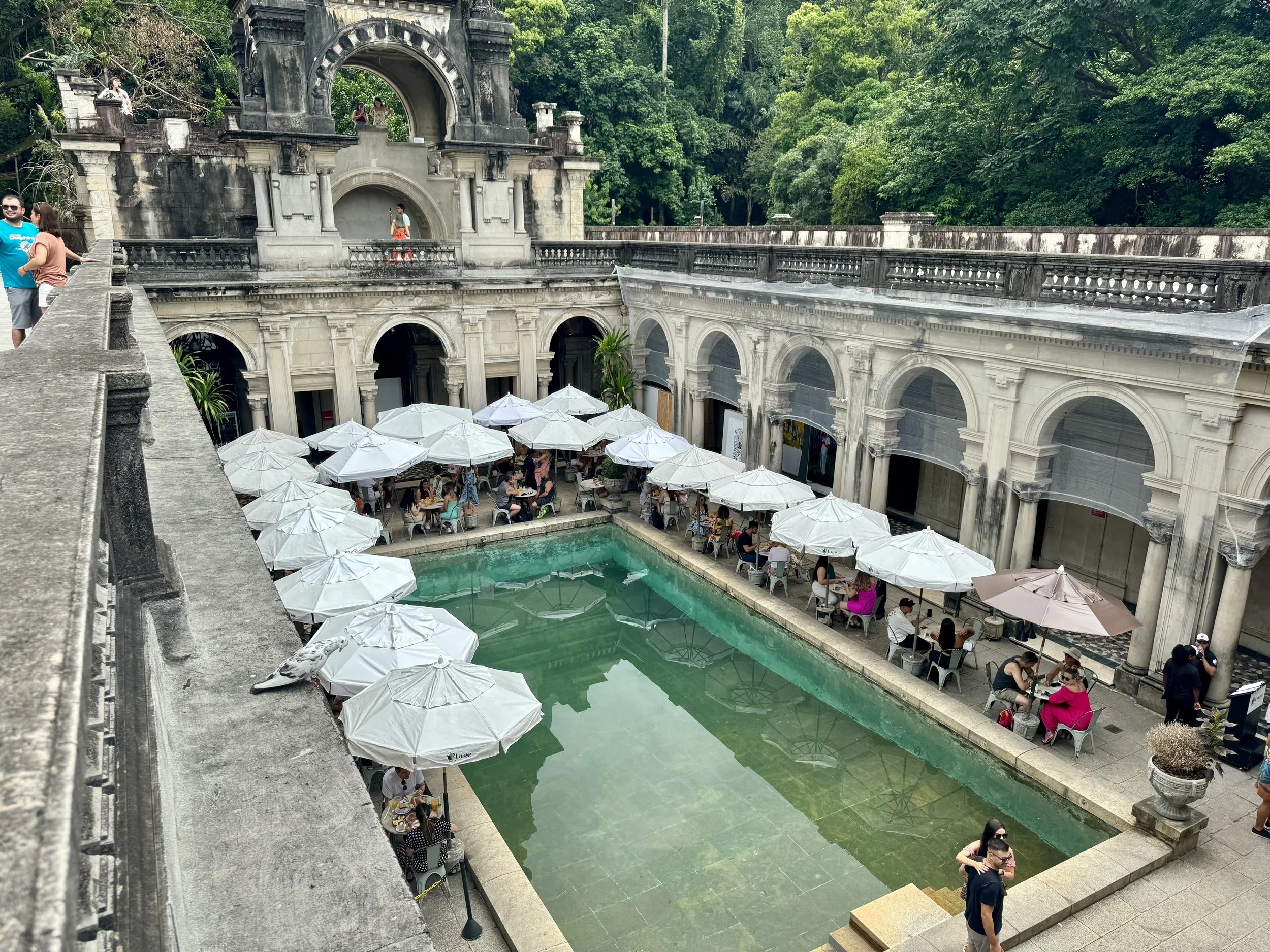
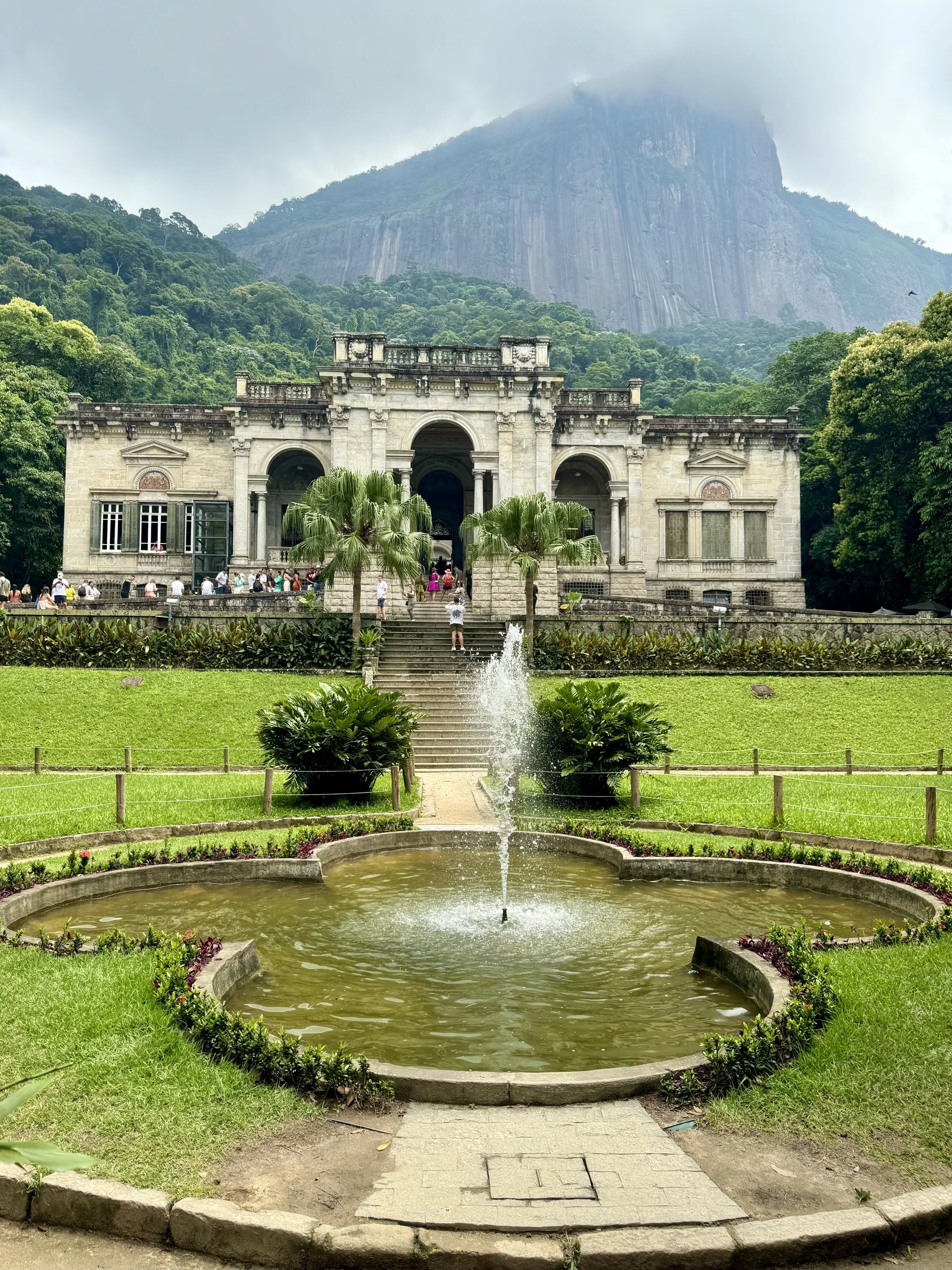
There is a small charge to access the rooftop area, although as seniors we were waved through free of charge. From above, there were even more carefully framed photo opportunities, the pool, café, and surrounding mountains laid out beautifully below. The gardens themselves were surprisingly interesting, with man-made grottos and even small tropical fish tanks tucked away inside some of them.
From there, we walked just under a mile to the Botanical Gardens. The grounds are expansive and immediately impressive, especially the long avenues of towering palm trees, yes more opportunities for Instagram moments, though undeniably striking. We spent a very enjoyable couple of hours wandering through the gardens, including the orchid houses, before beginning the walk back towards Ipanema.
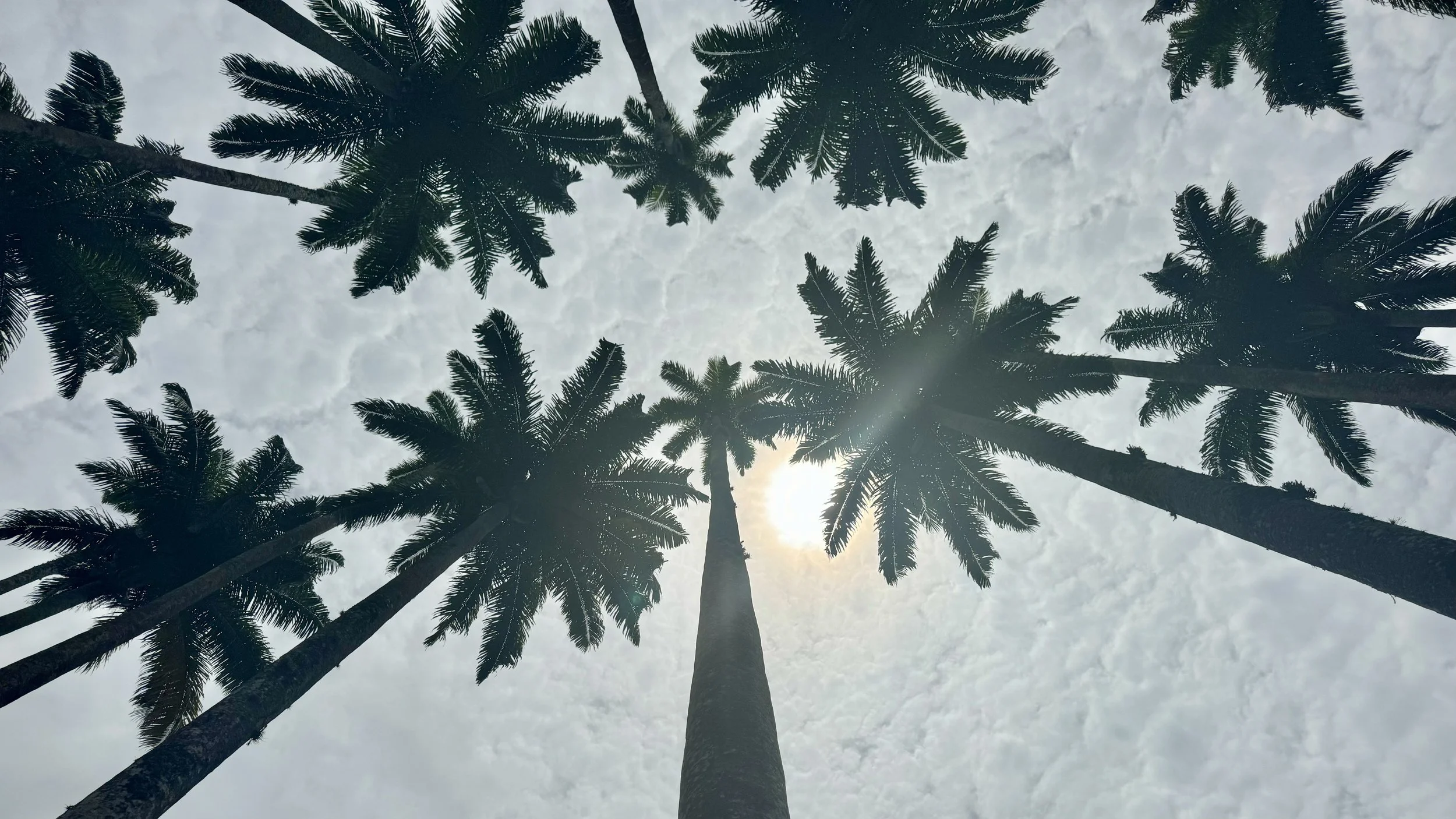
Botanical Gardens
Our return route took us past the jockey club and the horse racing track before joining the lagoon path. By the time we reached the apartment, a short rest was definitely needed before heading out again, this time for a Bloco party, Simpatia é Quase Amor.
In truth, we arrived a little too early. The street vendors were still setting up, and there were hundreds of them, lining the roads with carts, coolers, and speakers. Then the crowds began to arrive. I don’t think I’ve felt more out of place in quite some time. Barely clothed young people, drinking enthusiastically, dancing freely, and fully committed to the moment filled the streets. A handful of other older tourists hovered near the edges with us, looking slightly awkward and faintly alarmed.
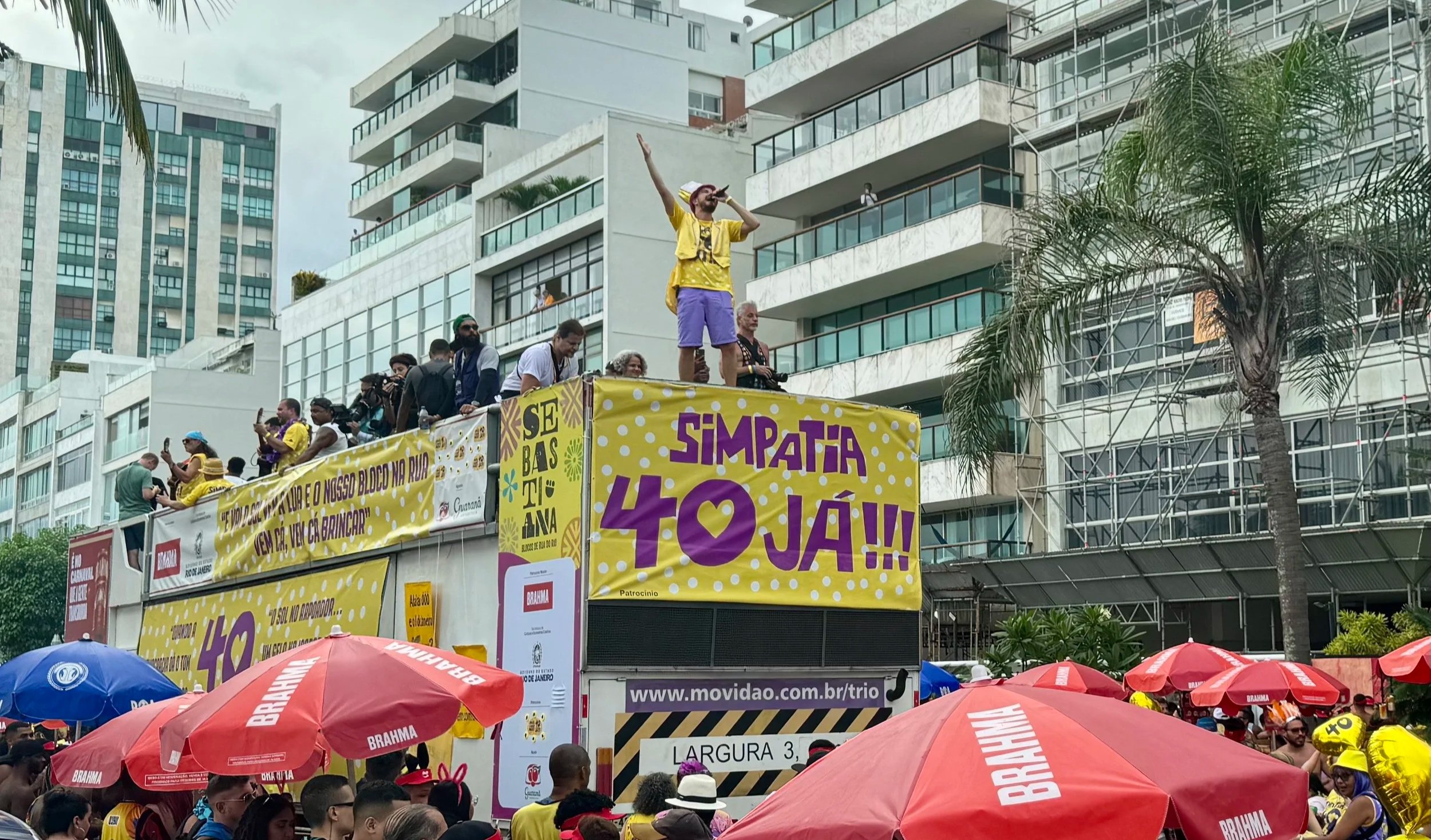
Simpatia é Quase Amor “Block Party”
Eventually the parade arrived, music blasting from a double-decker bus, with dancers and tambourines following behind. “Is that it?” my wife asked once the very short procession had passed. For us, it was. We decided to cut our losses and retreat in search of something more our speed, ending the evening instead with food and margaritas at Espaço Zagut, a far more suitable and comfortable finale to the day.
Reflection
The day felt like two completely different experiences stitched together. The morning was calm, green and unhurried, gardens, shade, long walks, and moments that invited lingering rather than rushing. By contrast, the Bloco party was loud, crowded and unapologetically energetic, a reminder that Rio celebrates life very differently depending on where you stand within it. While we admired the joy and colour from a safe distance, it was also reassuring to recognise our limits and choose something that suited us better. In the end, the day worked not because everything went to plan, but because it showed us, quite clearly, what kind of experiences we enjoy most, and when it’s perfectly fine to step aside and watch rather than join in.
If you’d like to follow future journeys, reflections, and moments noticed along the way, you can join the mailing list here.
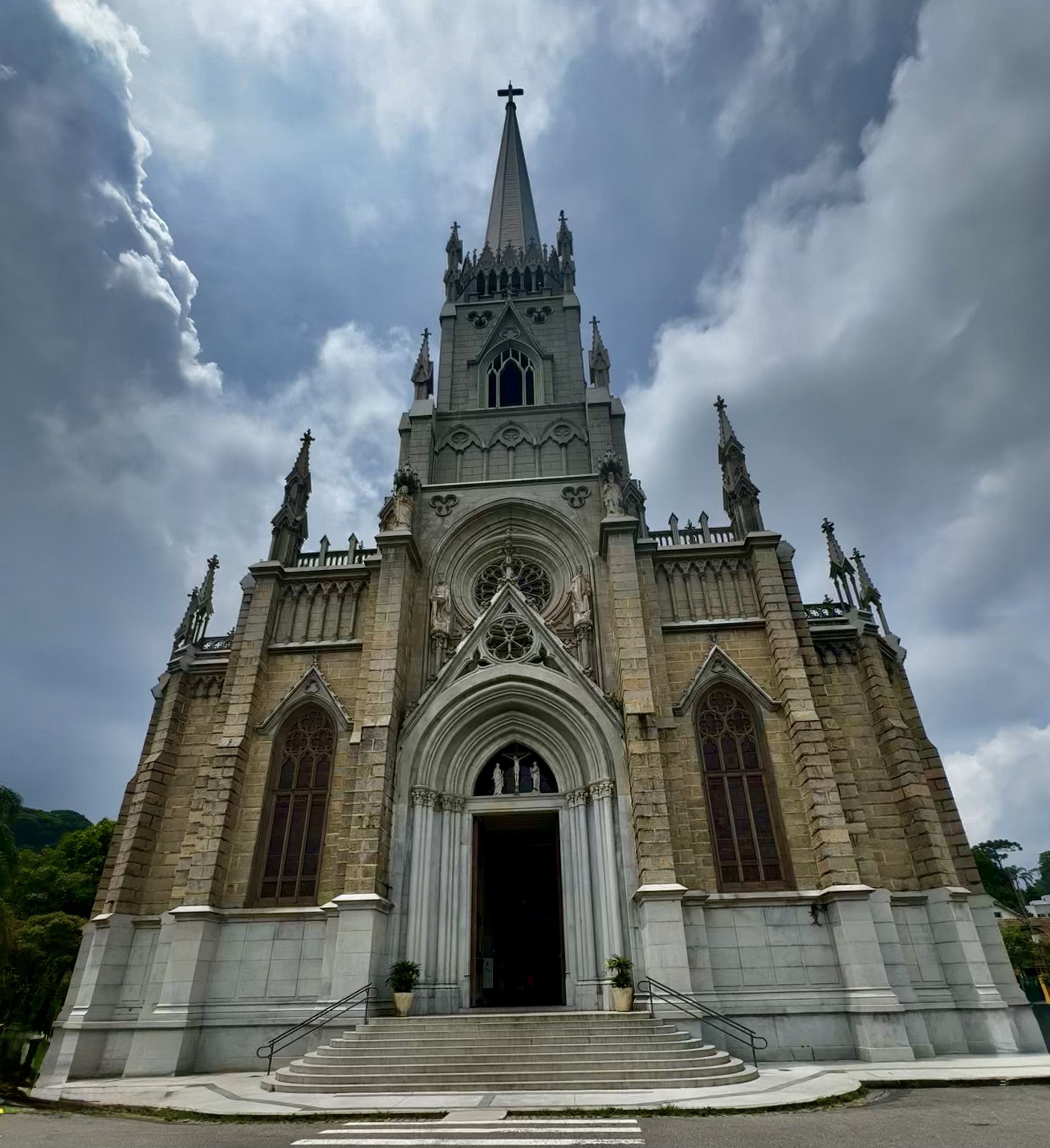
Exploring Beyond the Beaches
A Pause Between Weeks
Sunday began with an early walk down to Copacabana beach for a sit in the morning sun and a swim in the sea. The atmosphere was an odd mix. Early risers and swimmers like us shared the beach with revellers still lingering from the night before, some clearly still fuelled by hard liquor, others incapable of anything more ambitious than sleeping where they lay. It felt like two different Sundays overlapping briefly in the same space.
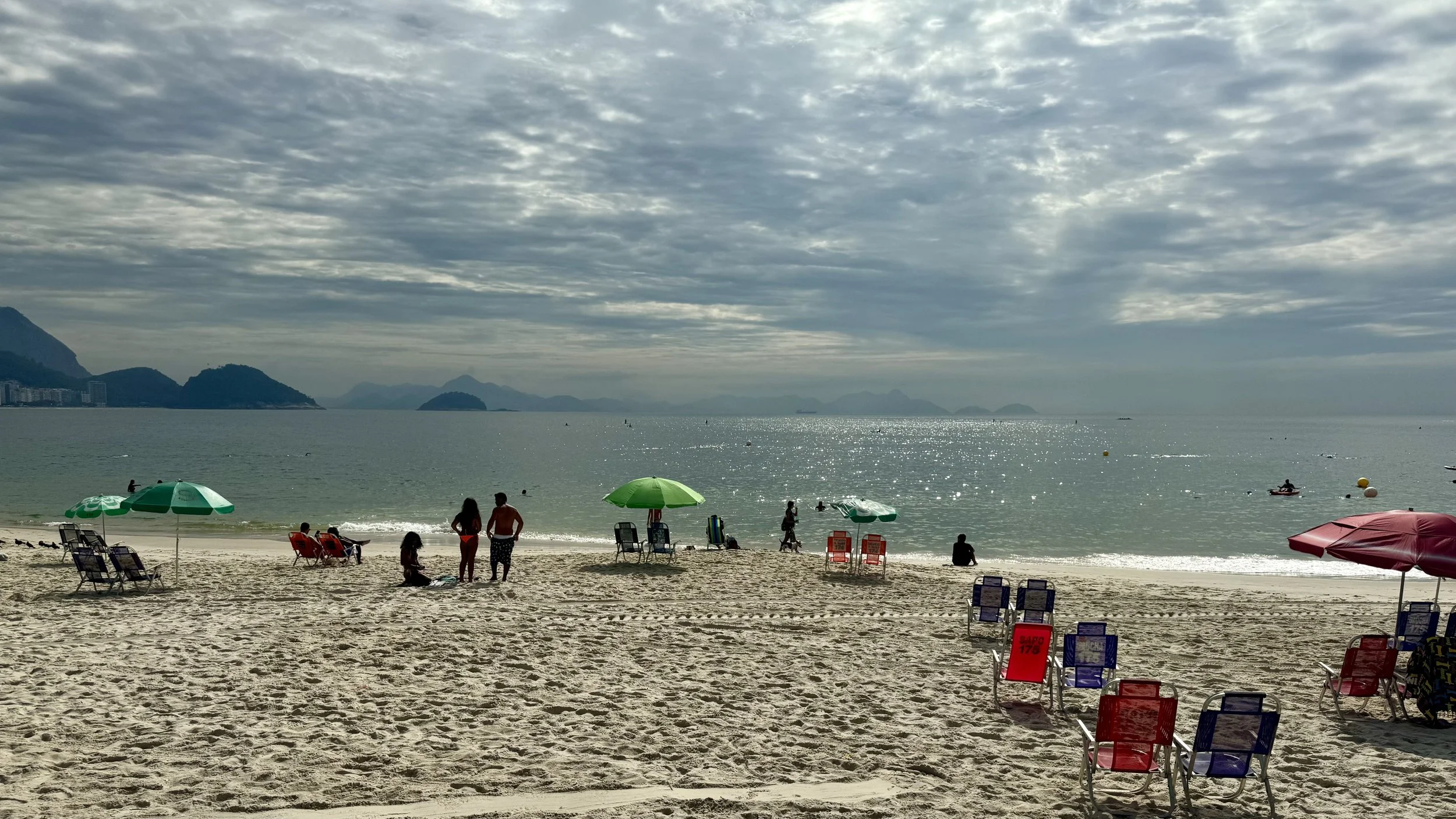
Early Sunday morning on Copacabana
We also stumbled across one of the strangest — or perhaps cutest blocos of the trip, depending on your viewpoint. This one was essentially a dog walk set to carnival music, with dogs dressed in tutus and Minnie Mouse outfits trotting proudly alongside their owners. It was entirely unexpected and oddly joyful.
Mid-morning, on the walk back to the apartment, we passed a small farmers’ market filled with fruit, vegetables and cheese. We stopped at the final stall for a cheese pastry and a glass of green sugar cane juice — both surprisingly refreshing and exactly right after the swim.
After changing, we headed out again to the Hippie Fair, doing two slow laps of Praça General Osório. Paintings, bags and jewellery filled the square, and had we been at home, we would almost certainly have come away with a painting or two. From there we walked on towards Ipanema beach, which was packed with Sunday sun worshippers. Our aim was to reach the Forte de Copacabana, not realising you can’t walk the entire way along the seafront itself.
After cutting inland, we eventually reached the fort and paid a small fee to enter. Although it was already around 1pm, we had brunch in mind at Confeitaria Colombo. The hosts asked us to return in half an hour, as a queuing system was in place, which gave us the perfect opportunity to explore the fort properly.
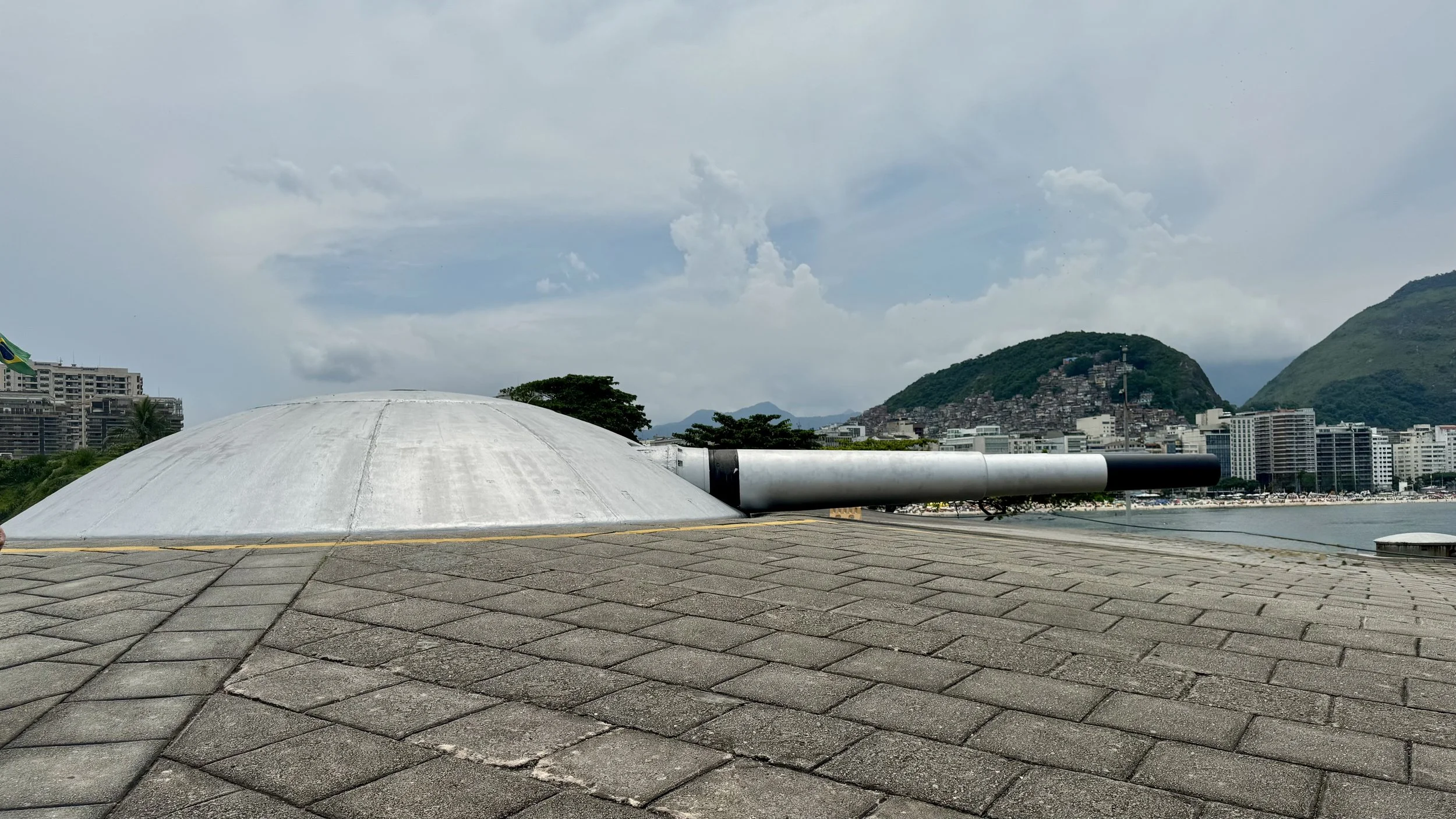
Forte de Copacabana
Brunch was good, if a little heavy on the carbohydrates — plenty of bread rolls — but the food was enjoyable and the view across Copacabana beach was spectacular. We waited a while for our food to arrive, but with that view, it hardly mattered at all.
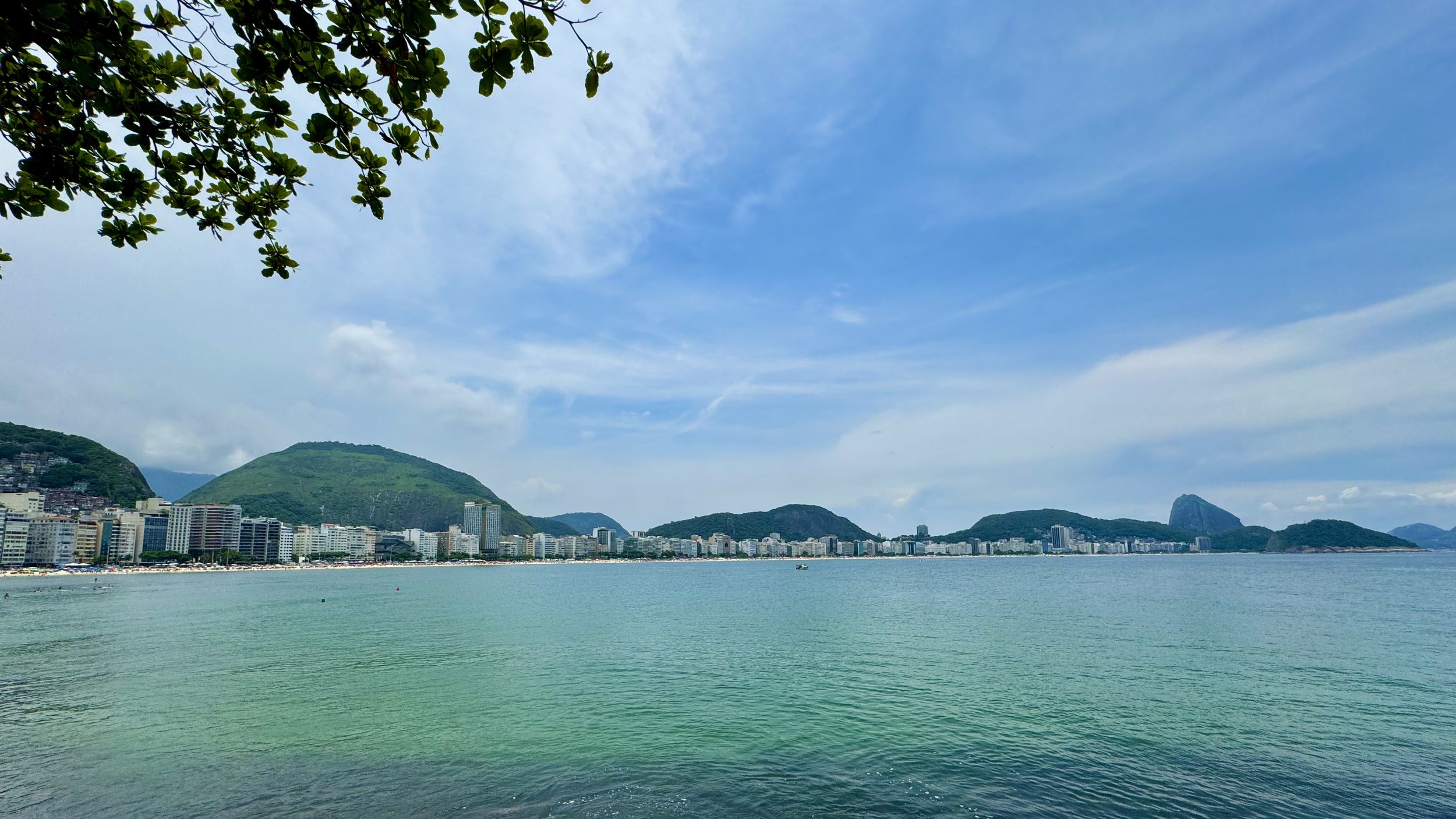
The view from Confeitaria Colombia
The afternoon was deliberately quiet, followed by an equally gentle evening watching TV, as the second impressive thunderstorm of the holiday rolled in — dramatic skies, heavy rain, and the perfect excuse to slow everything down.
Reflection
Sunday felt like a day of overlap, night meeting morning, celebration giving way to routine, energy slowly easing into rest. From early swims shared with the remnants of the previous night, to quiet markets, crowded beaches and finally thunderstorms rolling in, the day carried a sense of Rio catching its breath. There was no urgency to do more or see more; instead it felt right to observe, wander, and let the city pass by at its own pace. By evening, with rain on the windows and nowhere we needed to be, it became a natural pause — a moment to slow down, reset, and draw breath before the second week of the trip began.
Trams, Streets and Sunset
We started our second Monday by heading to the Atlantic Hotel to collect our Carnival tickets. There was a fairly long queue outside, but it moved quickly. It was clear the organisers were keen to make life difficult for scalpers — security checks were thorough, and they even took photos of me alongside my identification. Once that was done, the tickets were handed over without any issues.
From there, we headed back into Centro on the Metro, getting off at Carioca station. Finding the Bonde tram station was fairly straightforward, despite a brief moment of panic when Google insisted it was closed. Tickets bought, we waited around 30 minutes before boarding. The platform was full of people positioning themselves carefully for photos — enough to delay departure slightly — although a few locals still use the tram as part of their daily routine.
Once moving, the tram rattled along at a decent pace, climbing steadily uphill and offering glimpses into the surrounding neighbourhoods. Crossing the viaduct gave us a particularly good view of the cathedral below. At times it felt slightly uncomfortable seeing so many tourists photographing everyday residential areas, which reinforced our earlier decision not to do a favela tour.
At the top, everyone stayed seated while the tram’s seats flipped over, allowing it to head back down without turning around. Around half the passengers got off — some for lunch, others for a wander or simply more photos. We were starving, so we headed straight to Portella Bar. With live music playing and a lively atmosphere, it felt authentic — at least to us as visitors. Like many tourists before us, we ordered far too much food, but the plantain was excellent and it was a real treat to enjoy vegan Brazilian dishes.
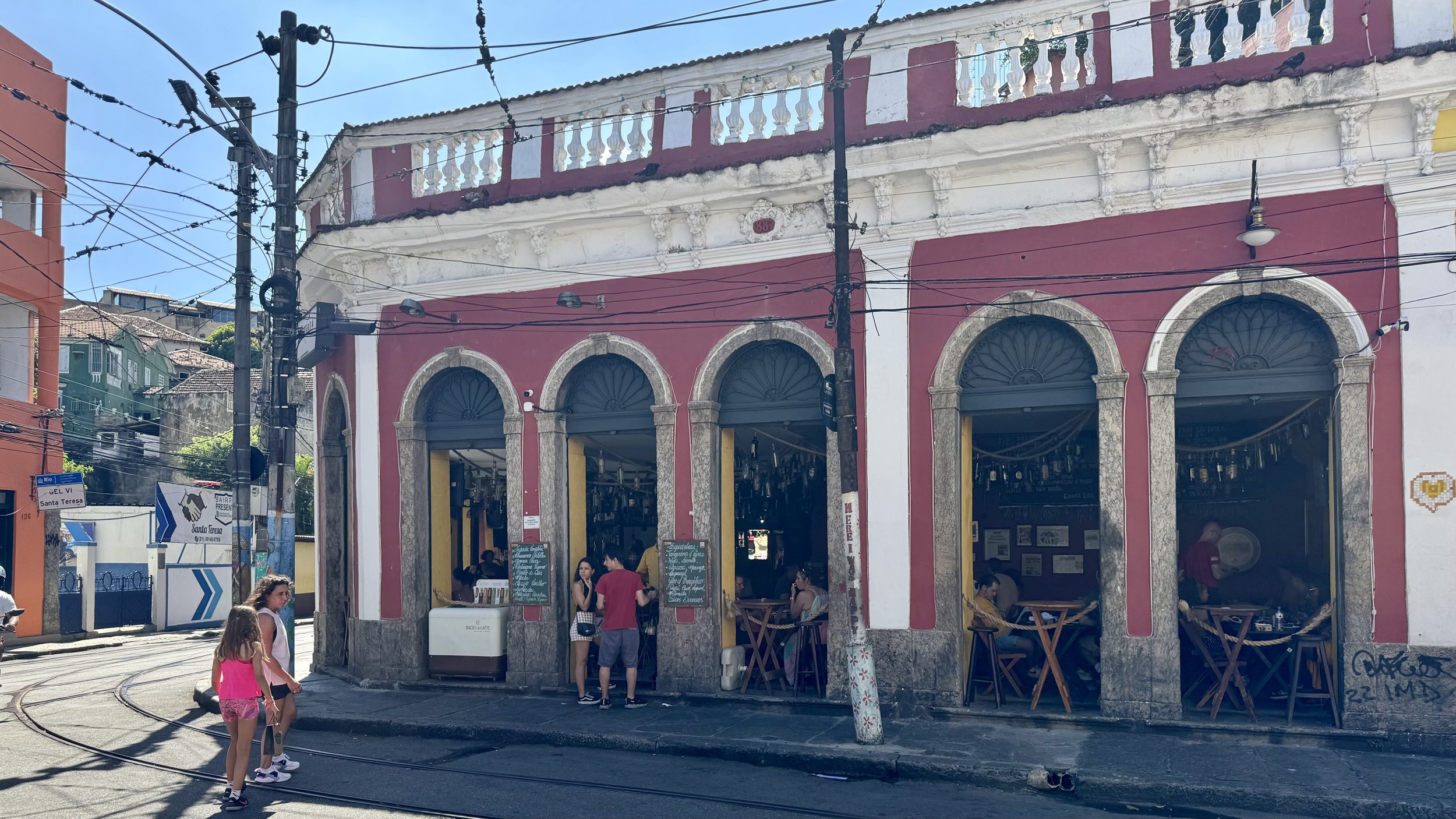
Portella Bar
After lunch, we rejoined the tram for the journey back down. Our next stop was the Catedral Metropolitana de São Sebastião, just around the corner from the station. The building is undeniably striking — and at the same time rather ugly. Inside it was dark, with light filtering down through stained glass, but neither of us warmed to it and we didn’t stay long.
We then walked towards the aqueduct area, where there was a heavy police presence yet it still felt like the sketchiest part of the city we’d visited. A navigational mishap sent us the wrong way and we ended up at the top of the Selarón Steps, not a route I’d recommend. The steps themselves were fine, though very much a tourist trap. We walked down them and made our way back towards the Metro.
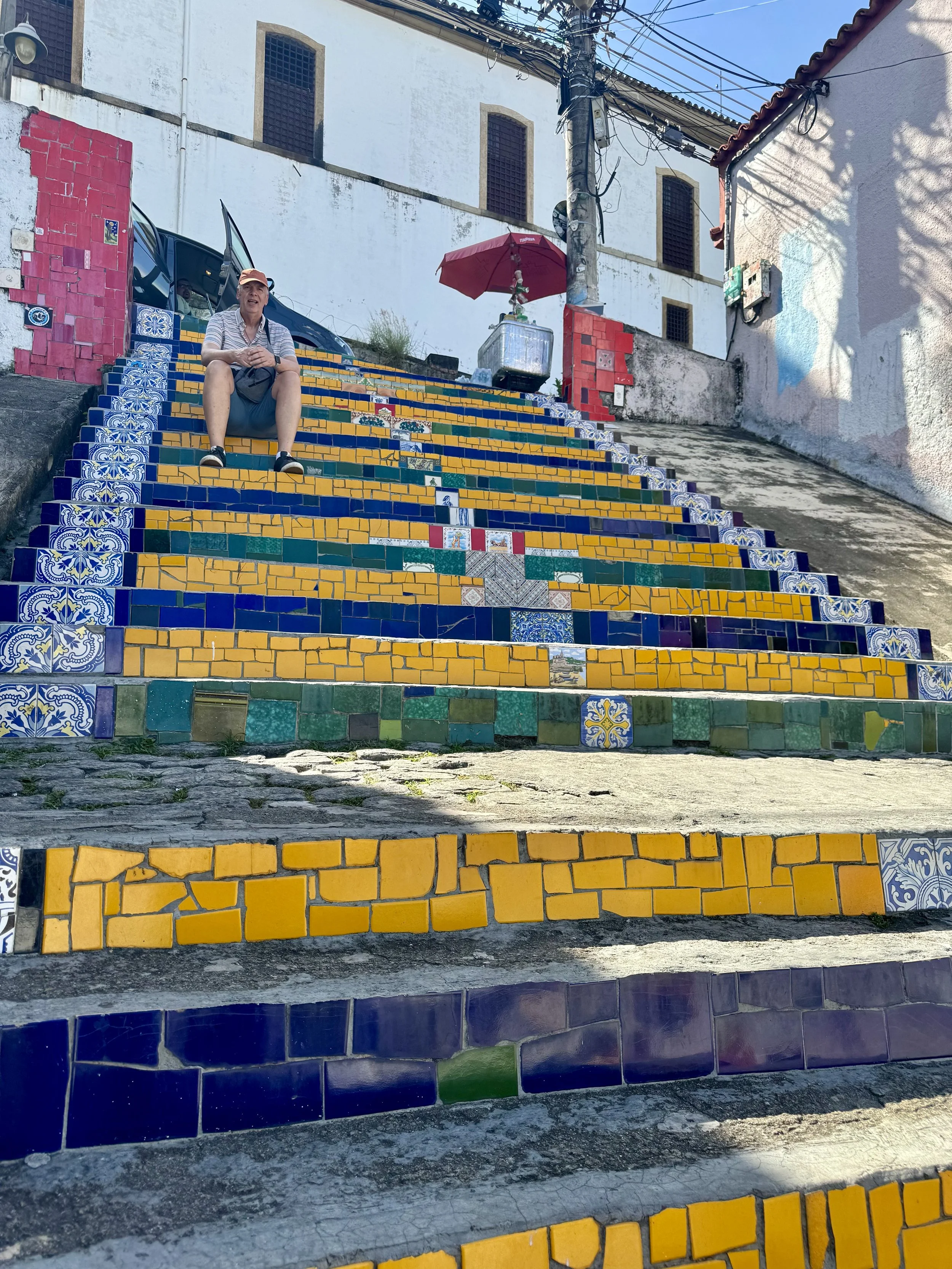
Avoid the crowds at the top of the Selarón Steps
Right by the entrance we spotted the first Starbucks of the trip, and without hesitation went in. It turned out to be the best cappuccino we’d had all holiday.
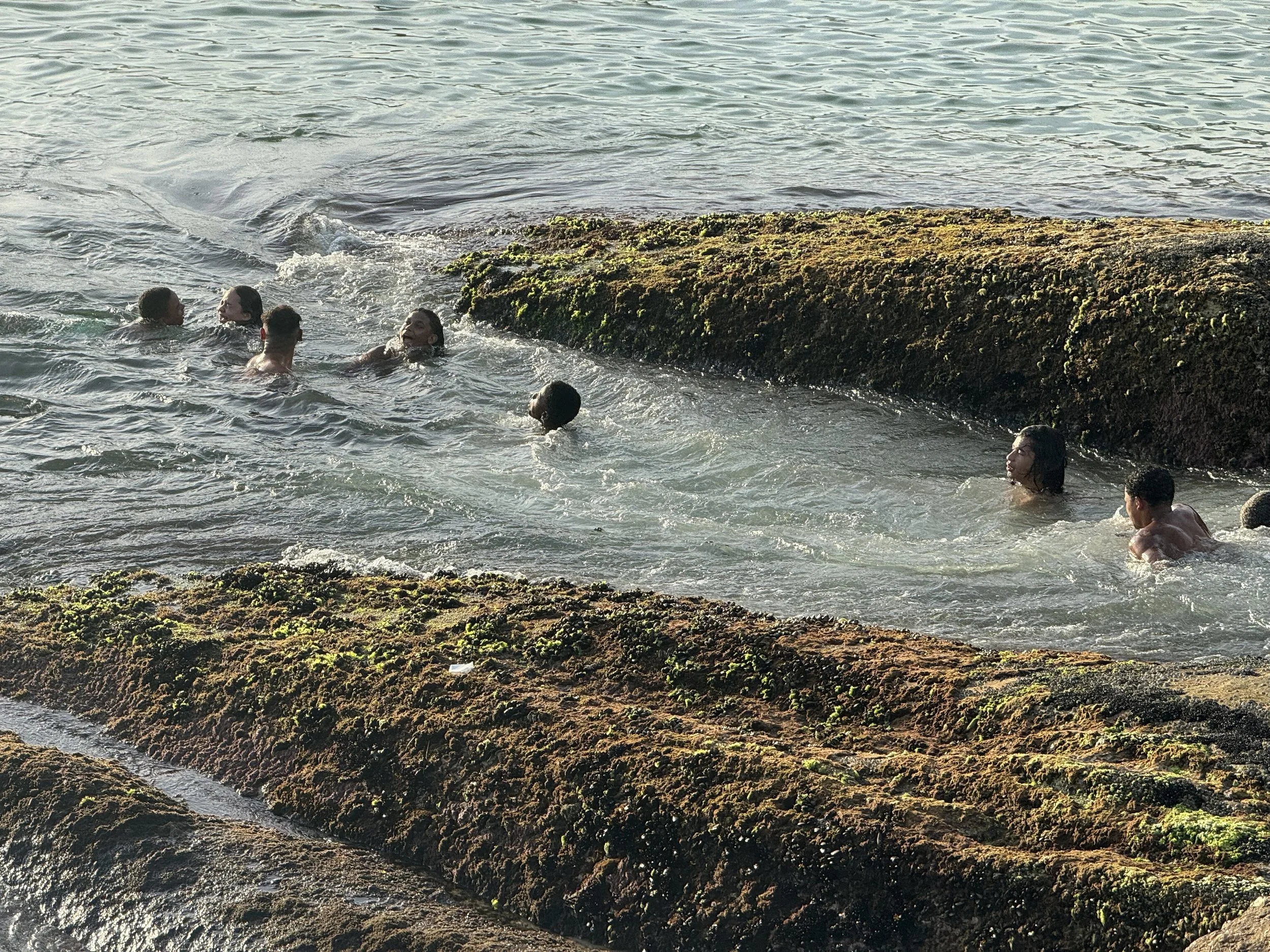
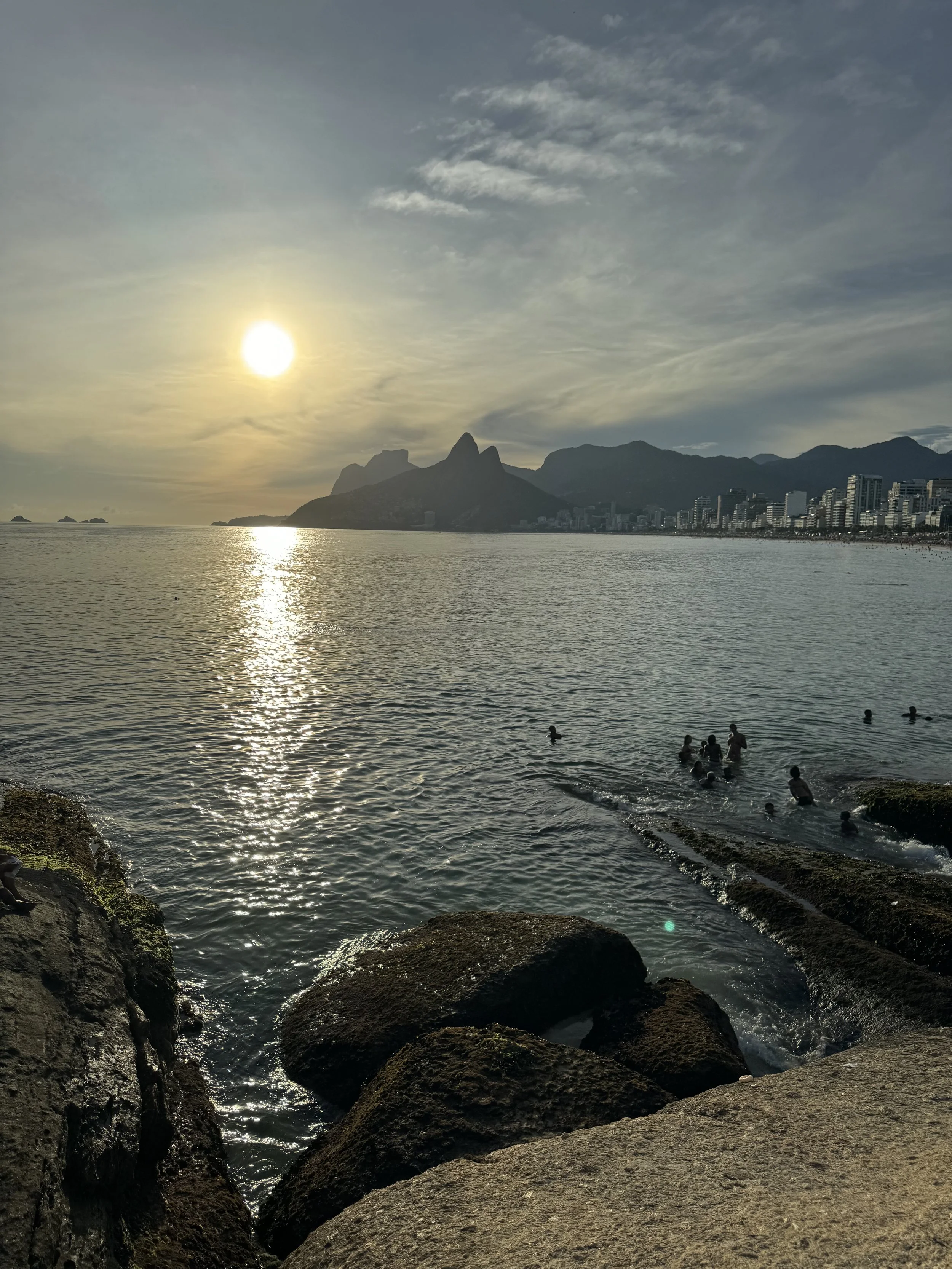
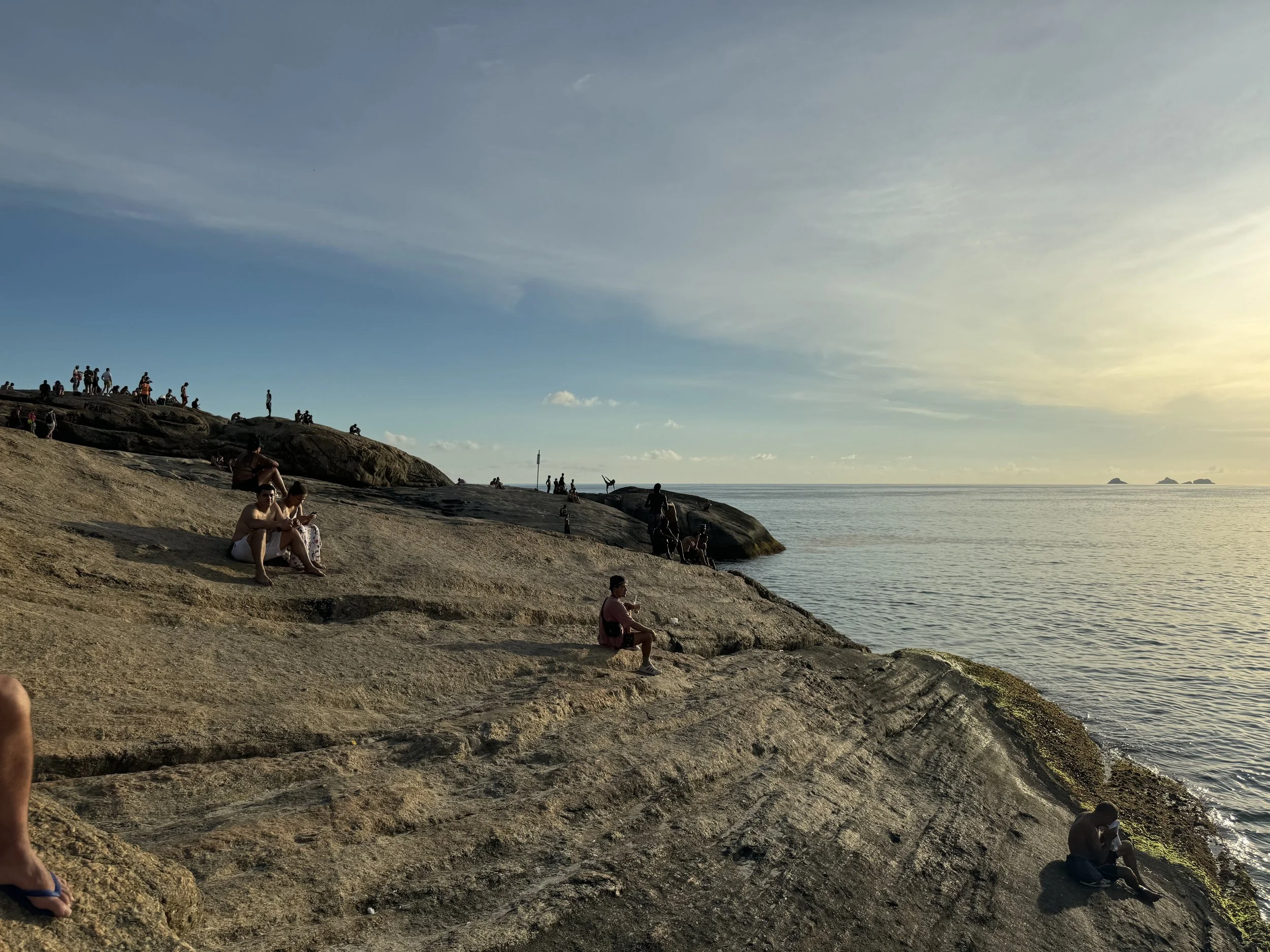
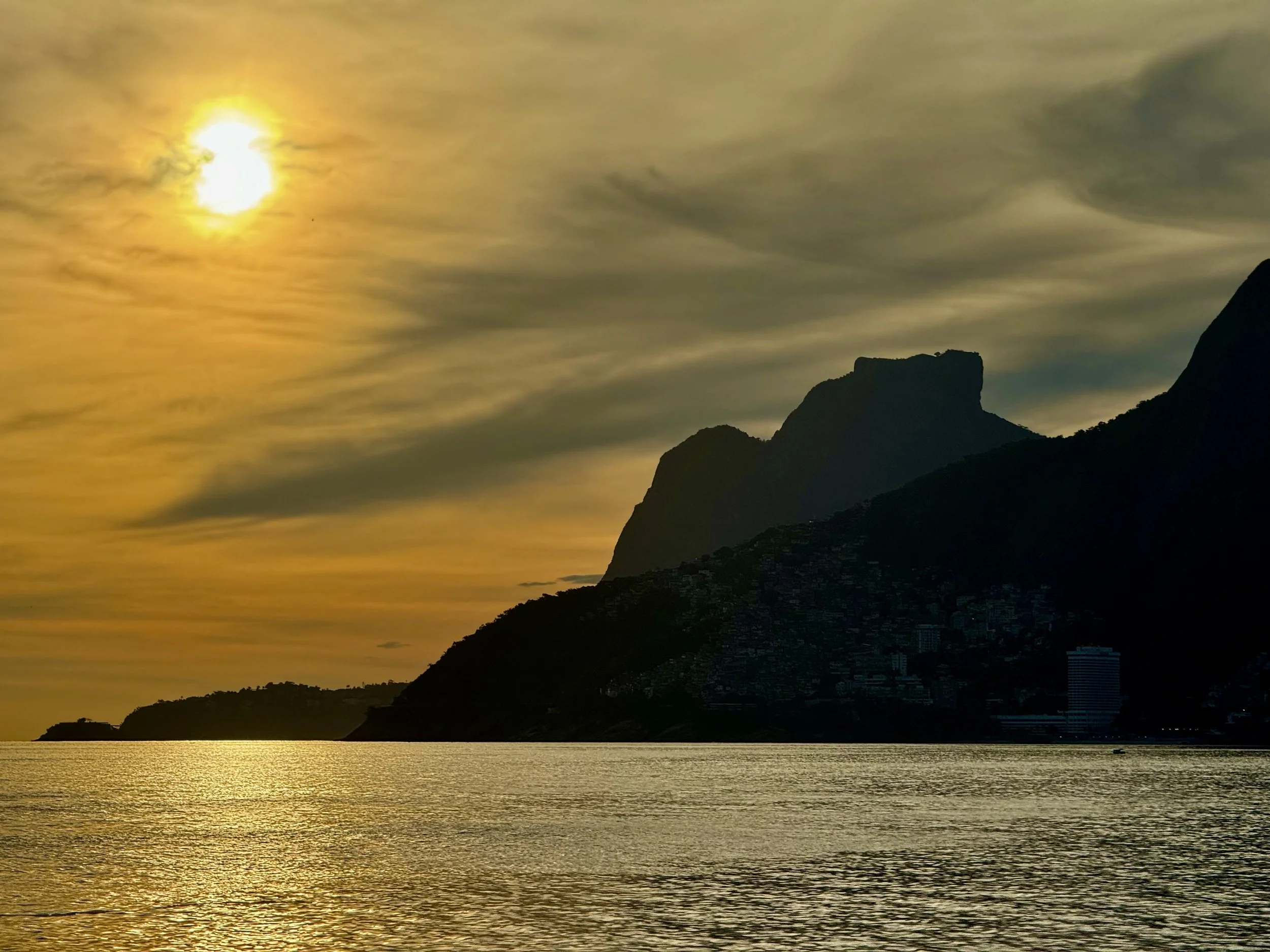
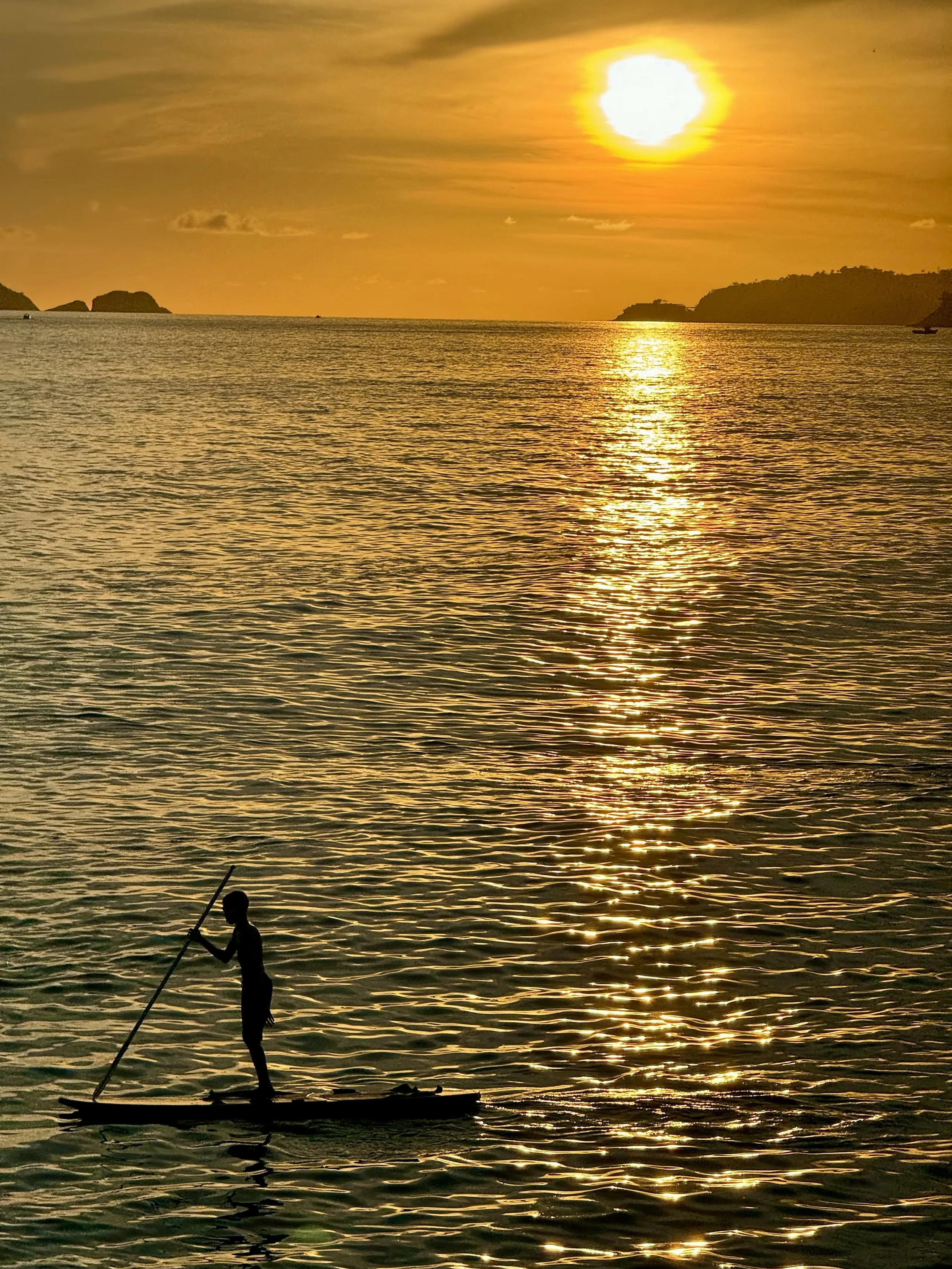
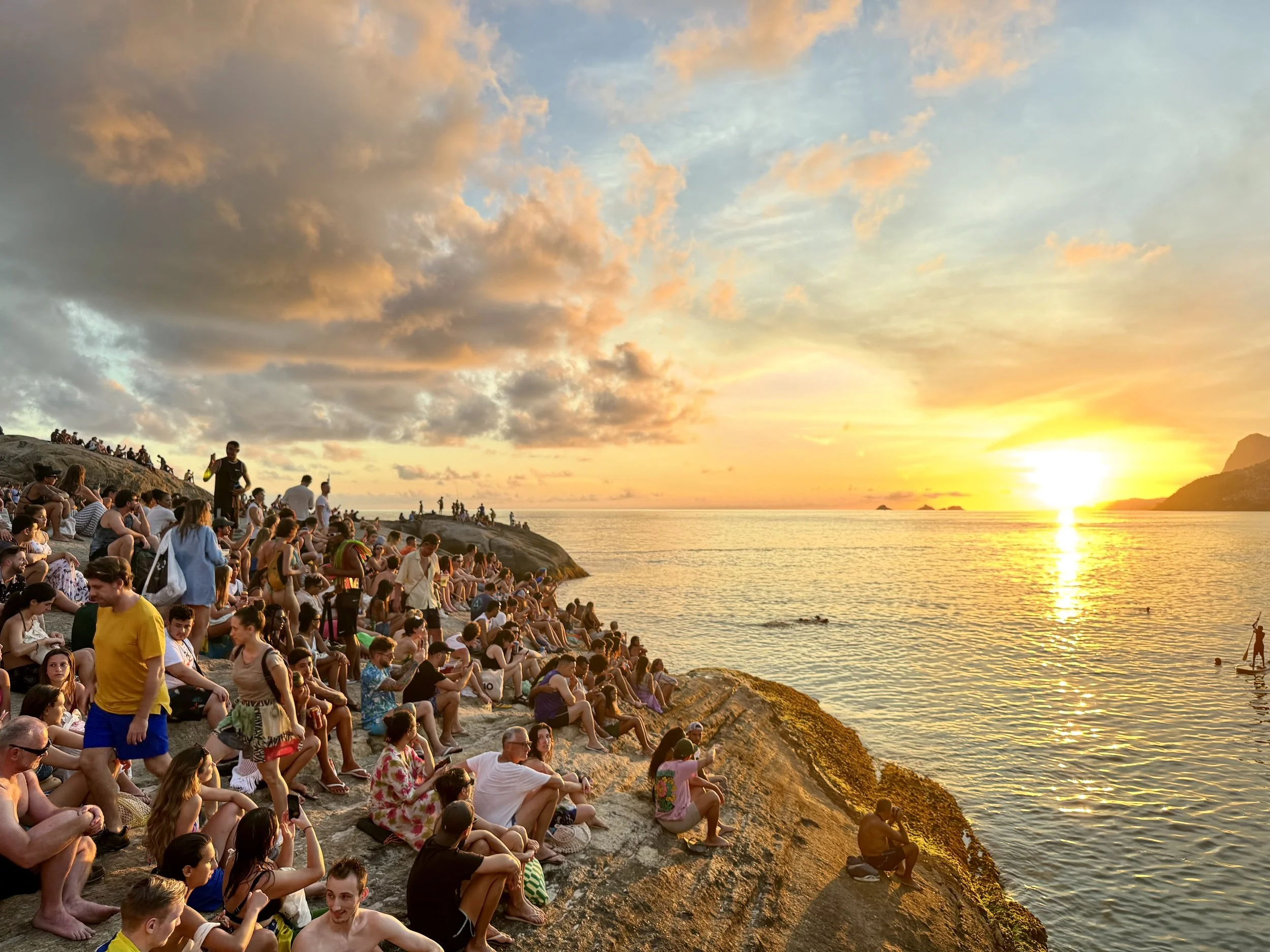
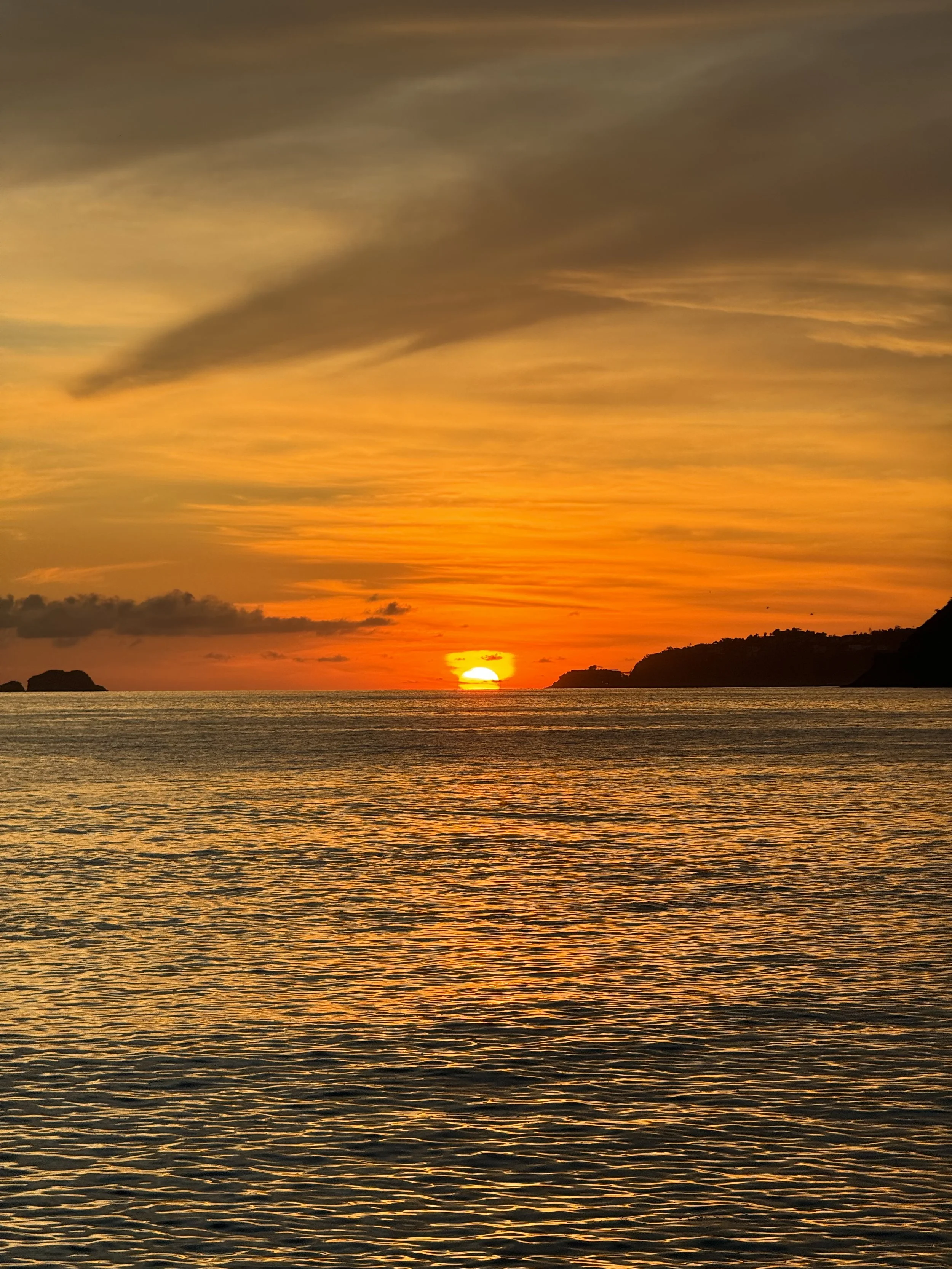
After returning to the apartment and freshening up, we headed out again — this time to Pedra do Arpoador for sunset. Arriving early proved wise; we managed to find a safe seat before hundreds more people arrived, all hoping to catch a glimpse of the famous view. The crowds may have been larger because of the bad weather the night before, but whatever the reason, the sunset was spectacular. Threads of orange stretched across the sea directly towards us, and when the sun finally dipped below the horizon, spontaneous applause broke out. A brief scramble followed as everyone headed back.
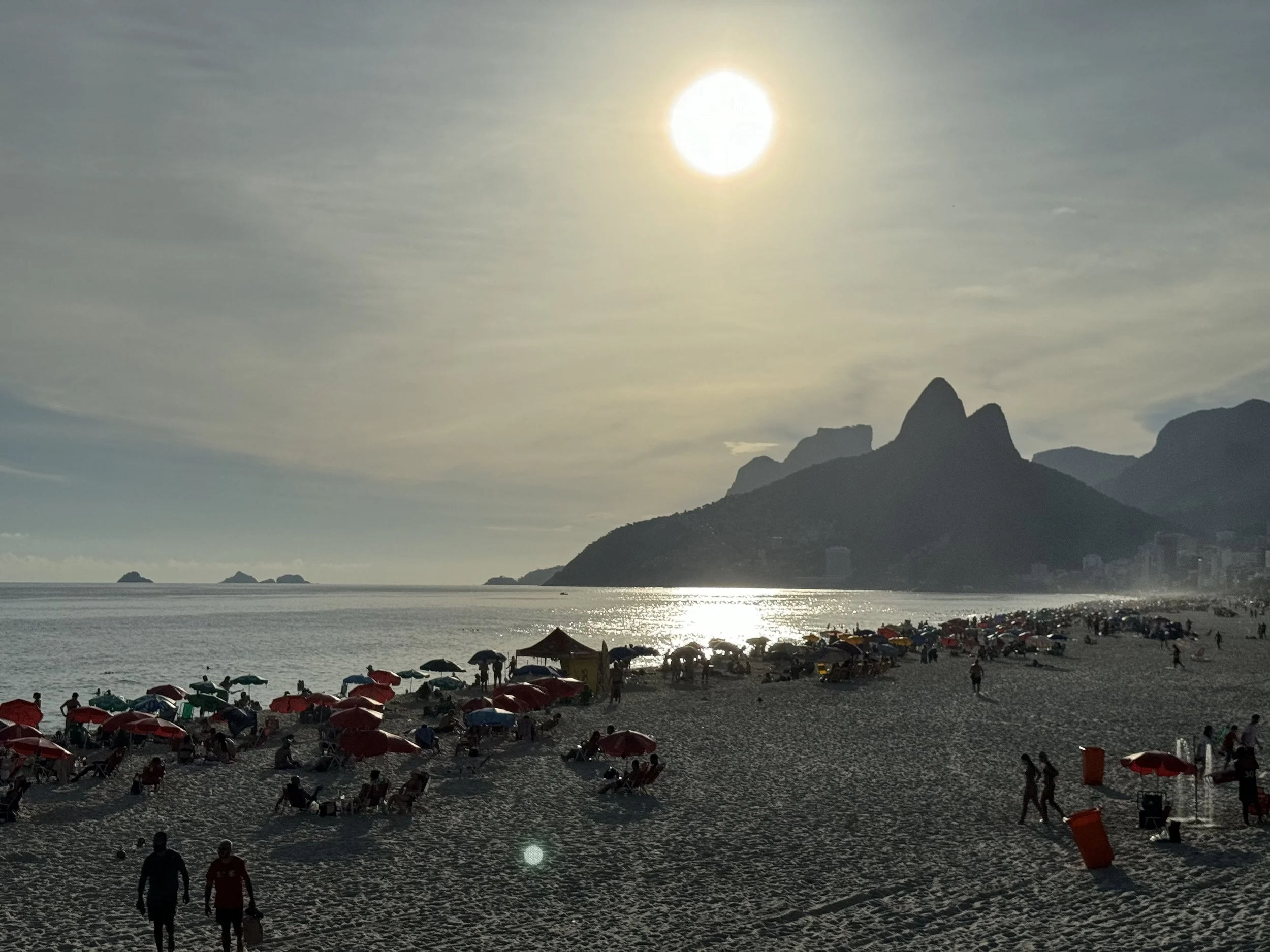
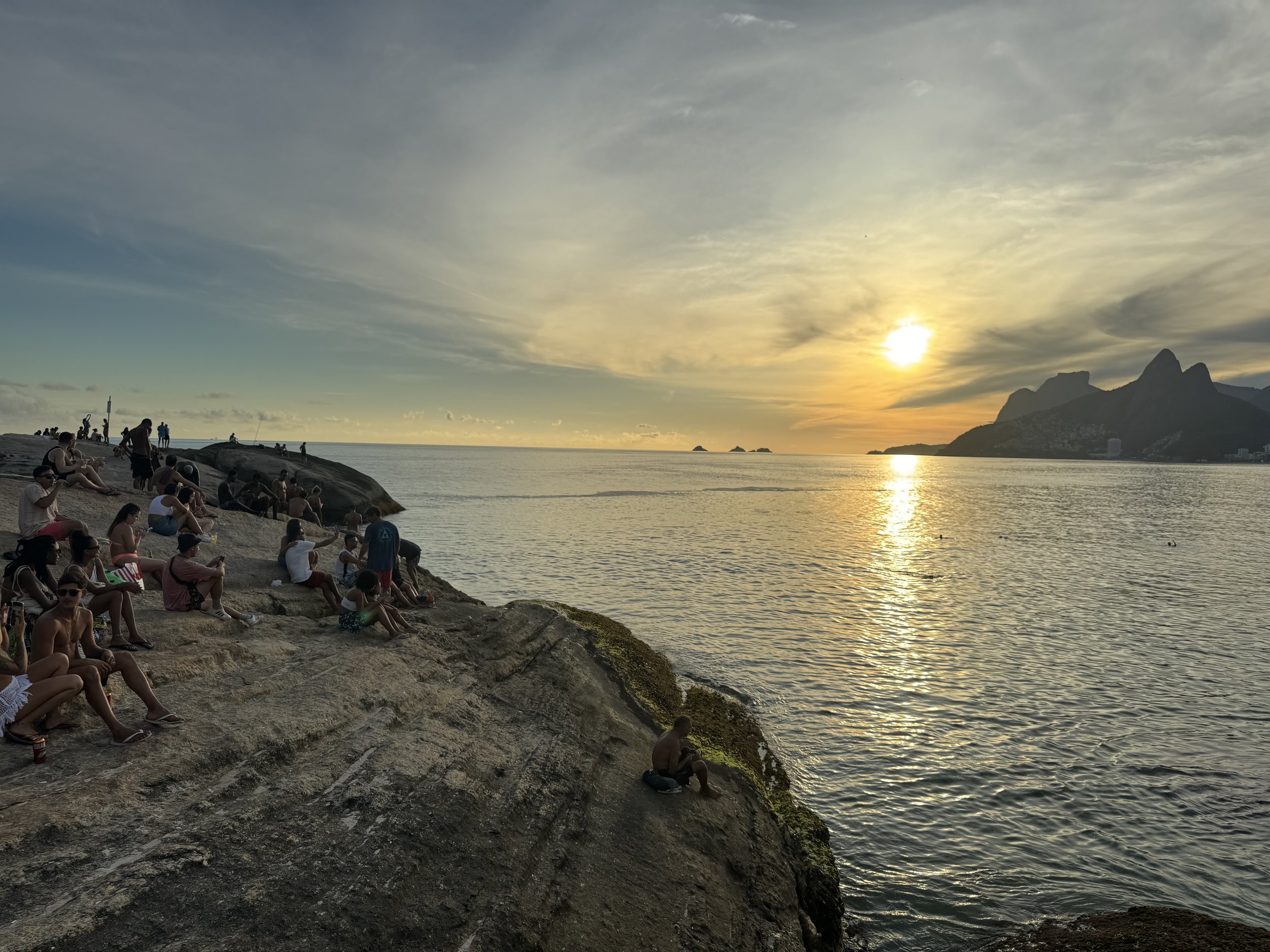
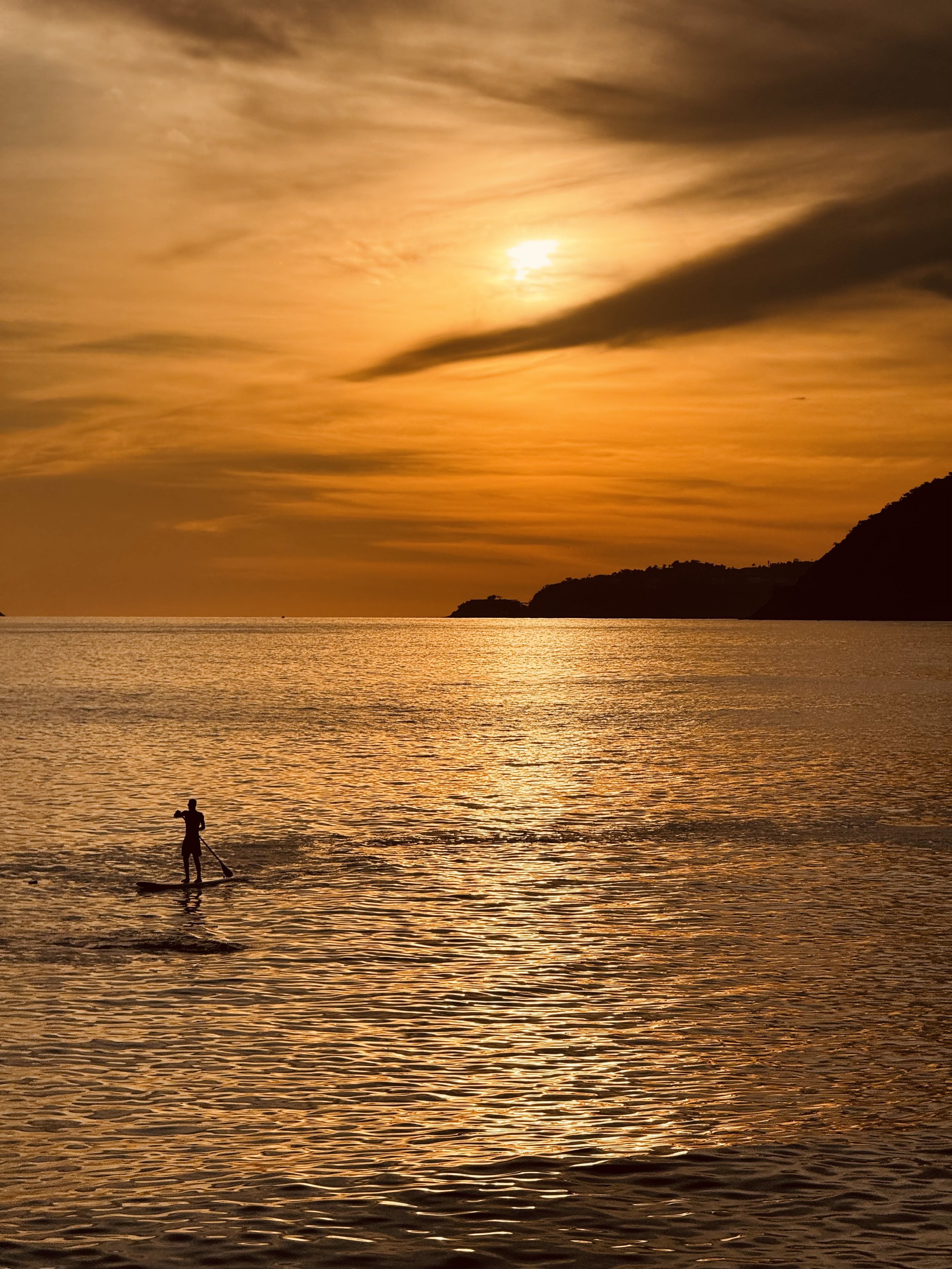
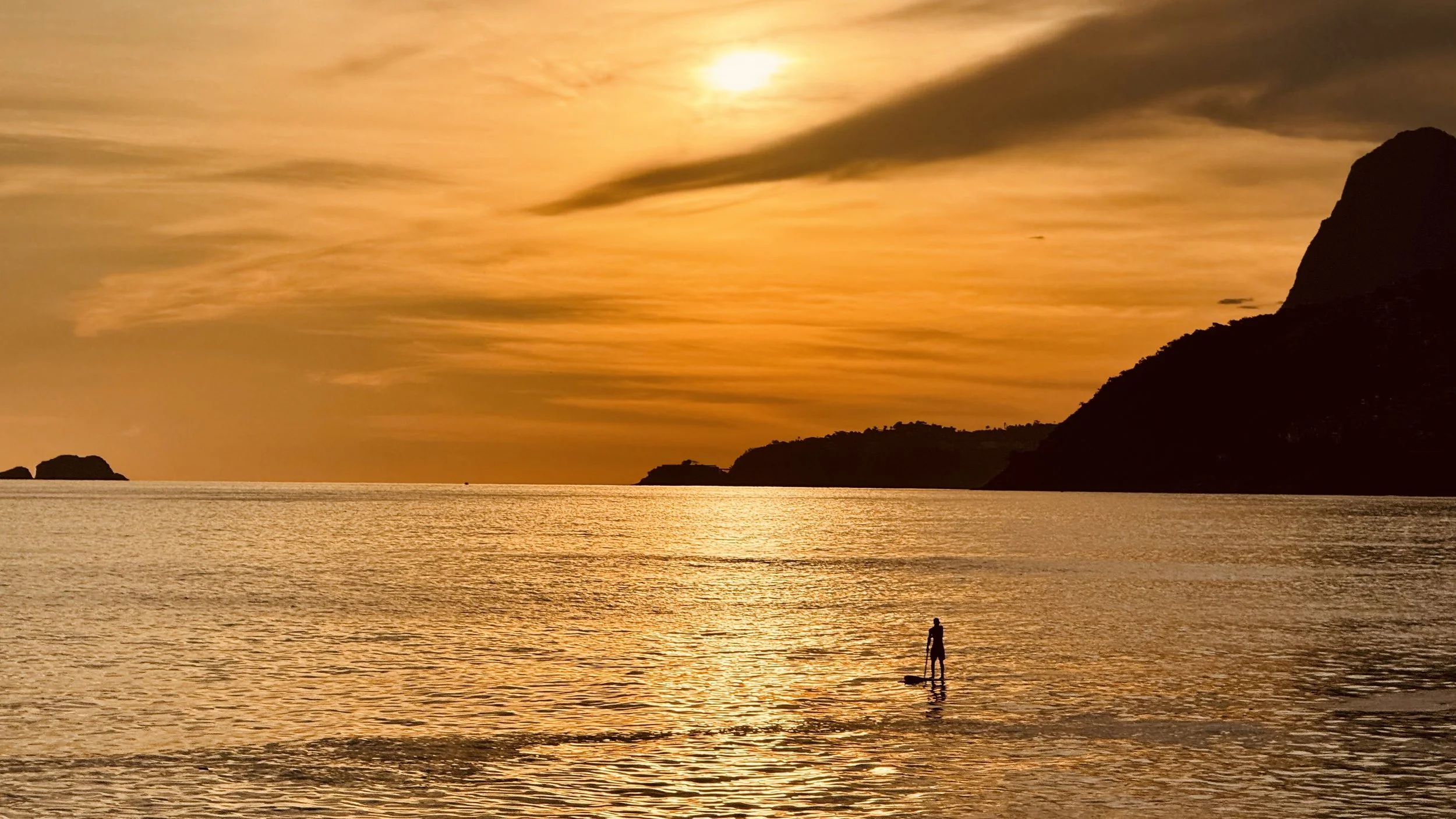
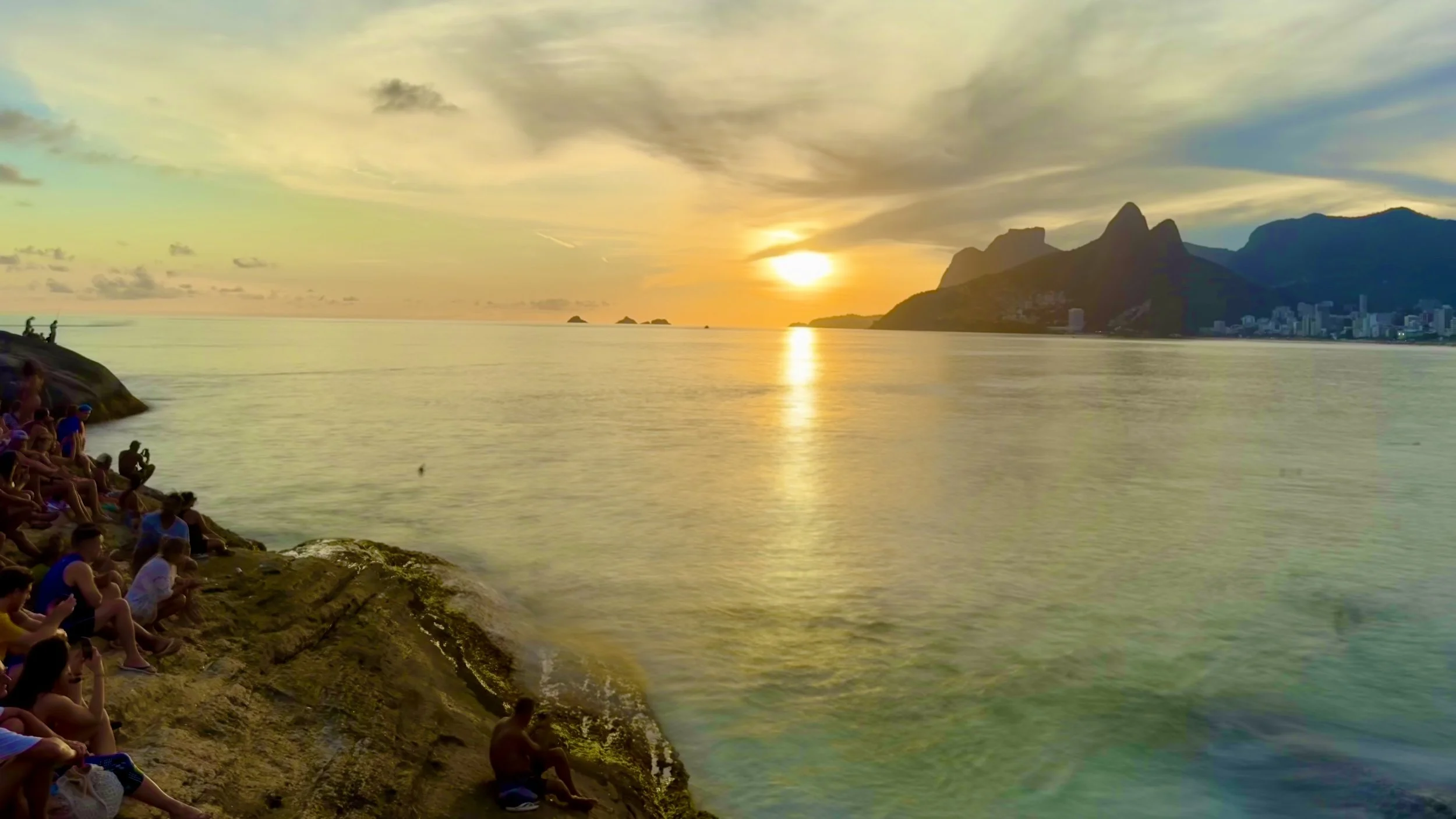
On the walk home, we stopped for margaritas at our new favourite bar, Espaço Zagut, at the bottom of our street in Copacabana — a perfect, relaxed way to end the day.
Reflection
The day felt like constant motion — queues, trains, trams, walking, climbing, descending — always moving from one part of the city to another. At times it was tiring, and occasionally uncomfortable, especially when passing through areas that felt less familiar or welcoming. But those moments made the quieter ones stand out more: lunch with music drifting through an open bar, the simple relief of a good coffee, and finally sitting still at Arpoador as the sun slipped into the sea. It was a day that reminded me travel isn’t always smooth or perfectly curated, but when it ends with shared applause, warm light, and margaritas close to home, it feels exactly as it should.
Petrópolis and the Imperial Past
Tuesday was an organised coach excursion to Petrópolis, and it didn’t start particularly well. The coach failed to pick us up from our location at 8am, which was frustrating at the time. After some back-and-forth on WhatsApp, the organisers asked us to take a taxi to the Hilton instead. Thankfully, we managed to join the tour there around 9am and finally got underway.
The group itself was fairly large and made up mainly of Portuguese and Spanish speakers. Credit to the guide, though, she worked hard to explain everything in all three languages and regularly checked that we were nearby and able to hear her. She was very much a character and had the whole coach laughing, which helped smooth over the slightly chaotic start.
We stopped first at Casa do Alemão for a short comfort break before continuing on to Petrópolis, arriving in under two hours. Our first stop was brief, really just a photo opportunity at an impressive former casino built in a German architectural style.
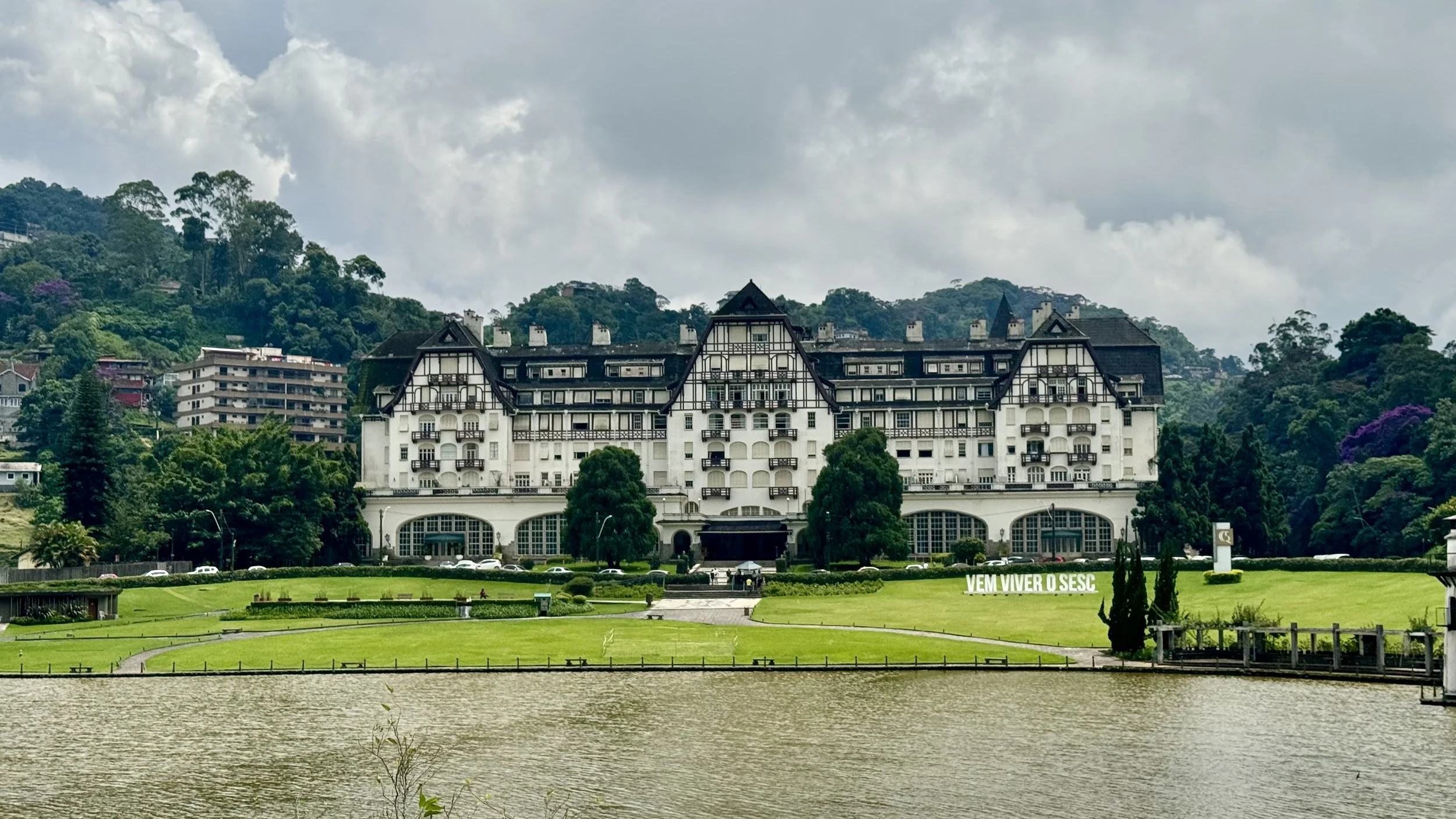
Palácio Quitandinha, Petrópolis
From there we headed into town to visit Alberto Santos-Dumont's summer house, known as "A Encantada". Those less interested went straight to Katz, the well-known chocolate shop, for coffee and sweets. After a quick look around the house — it’s small but interesting — we followed them and bought a few chocolates ourselves.
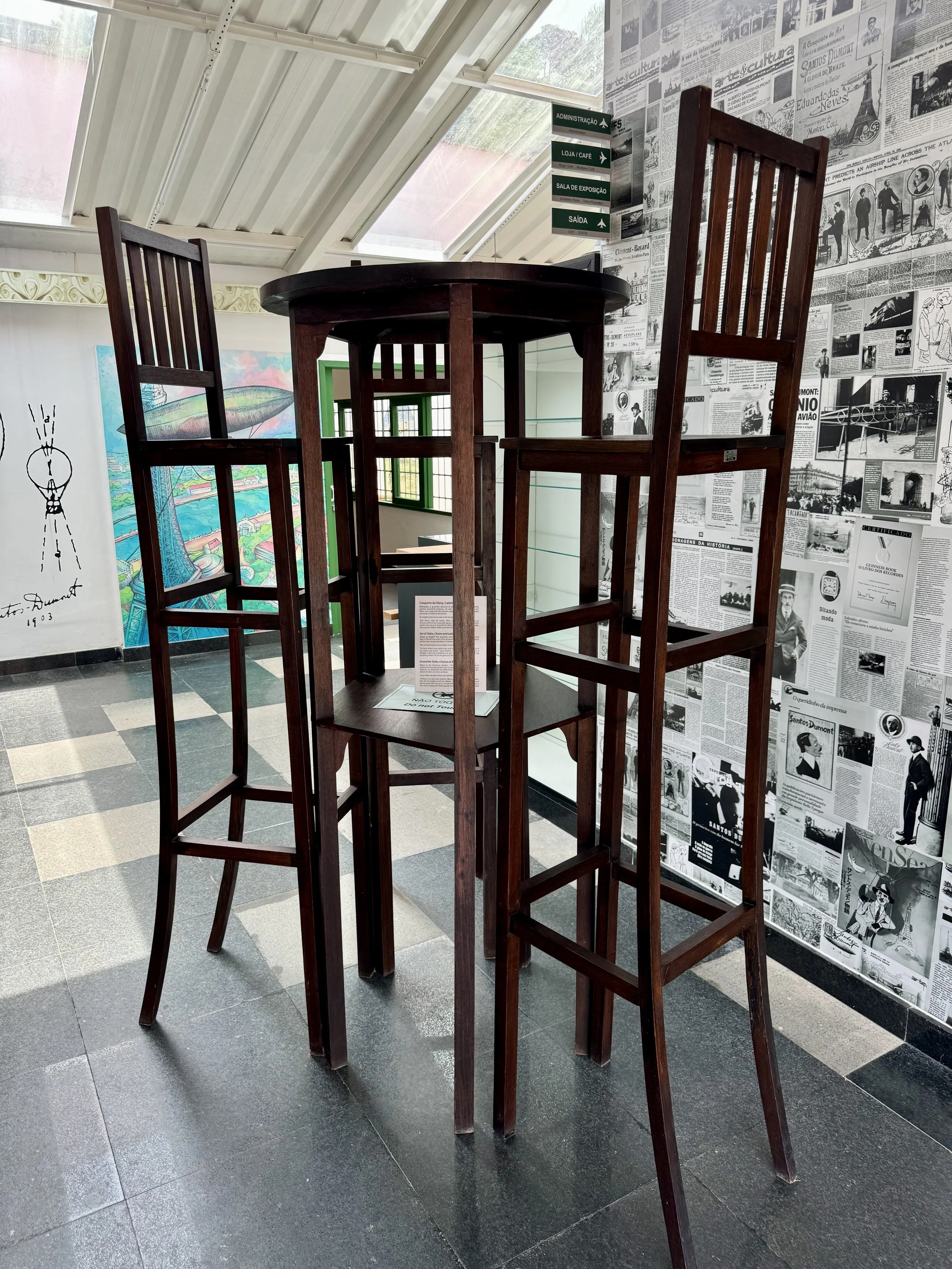
Exibition at Alberto Santos-Dumont's summer house, known as "A Encantada"
Next was the Catedral São Pedro de Alcântara, which immediately appealed more to us than Rio’s modern cathedral. Built in a traditional style, it houses the tombs of the former imperial family. Although the tower itself was only completed around 50 years ago, the cathedral felt far more in keeping with its surroundings and history.
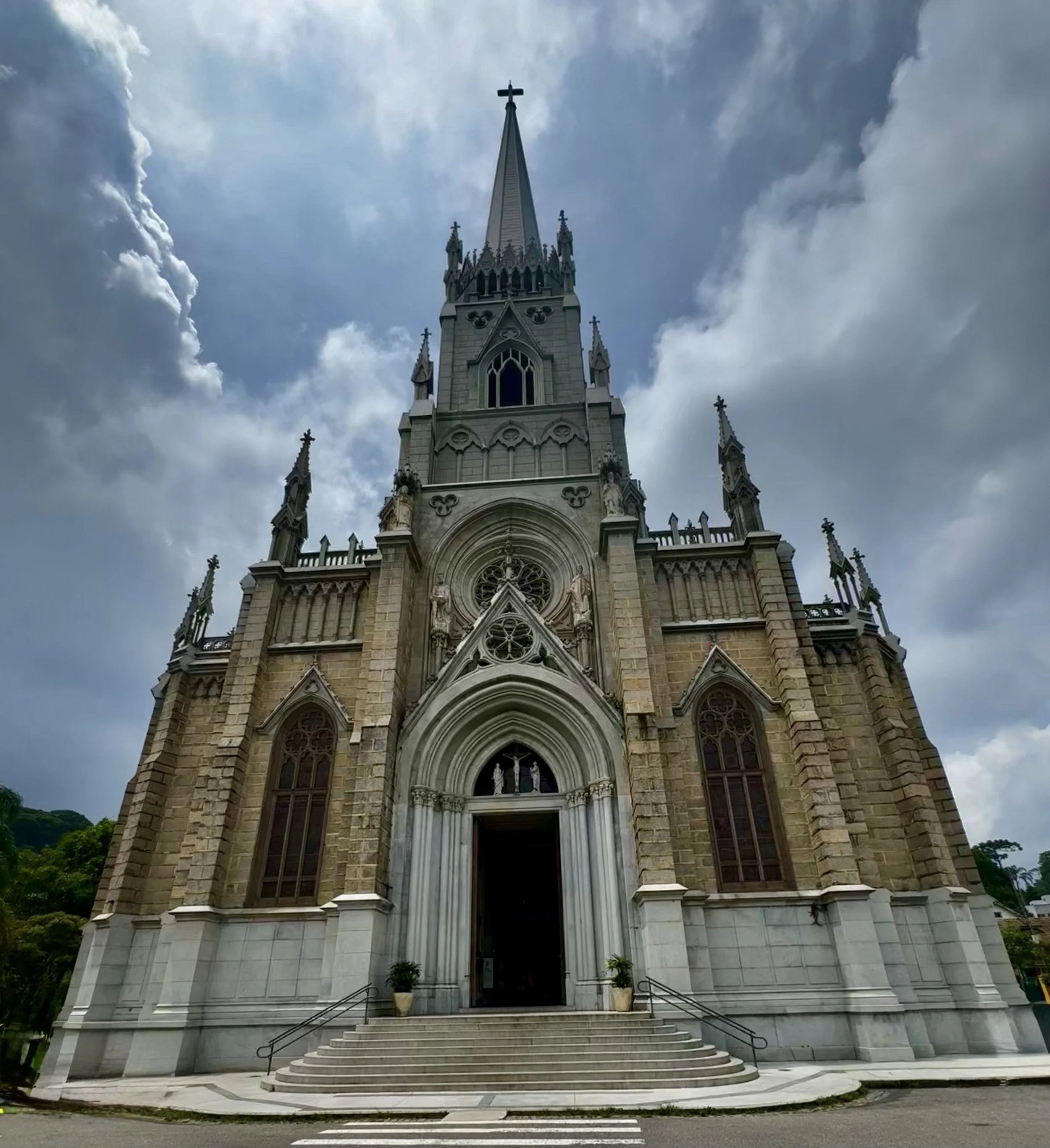
Catedral São Pedro de Alcântara
Lunch was at the Copacabana Grill, a “weigh your food” buffet, although as part of the tour we could eat as much as we liked. The food was good and varied, with an especially strong salad bar, and it proved to be an excellent choice for a large group.
Re-energised, we then walked together to the Imperial Palace, once home to Emperor Pedro II and his family before their removal by the military in the late 19th century. We began in the carriage museum next door, which displayed an interesting mix of vehicles — including a steam-powered carriage and even a Western-style stagecoach.
Inside the palace, we were given protective coverings for our shoes to preserve the original 19th-century floors — though it felt slightly as if we were polishing them as we went. The building itself was impressive, with high ceilings and skylights running through the corridors to draw in natural light. The standout feature, however, was the Brazilian Crown Jewels: two gold-and-diamond crowns and a long gold sceptre, dramatically displayed in a darkened room.
As we left the palace, we spotted marmosets playing together in the gardens — a small, joyful moment at the end of a very structured visit.
The group then split. While some opted for a brewery tour, we chose a gentler finish, spending time shopping and having coffee along Teresa Street, known locally for its clothing stores.
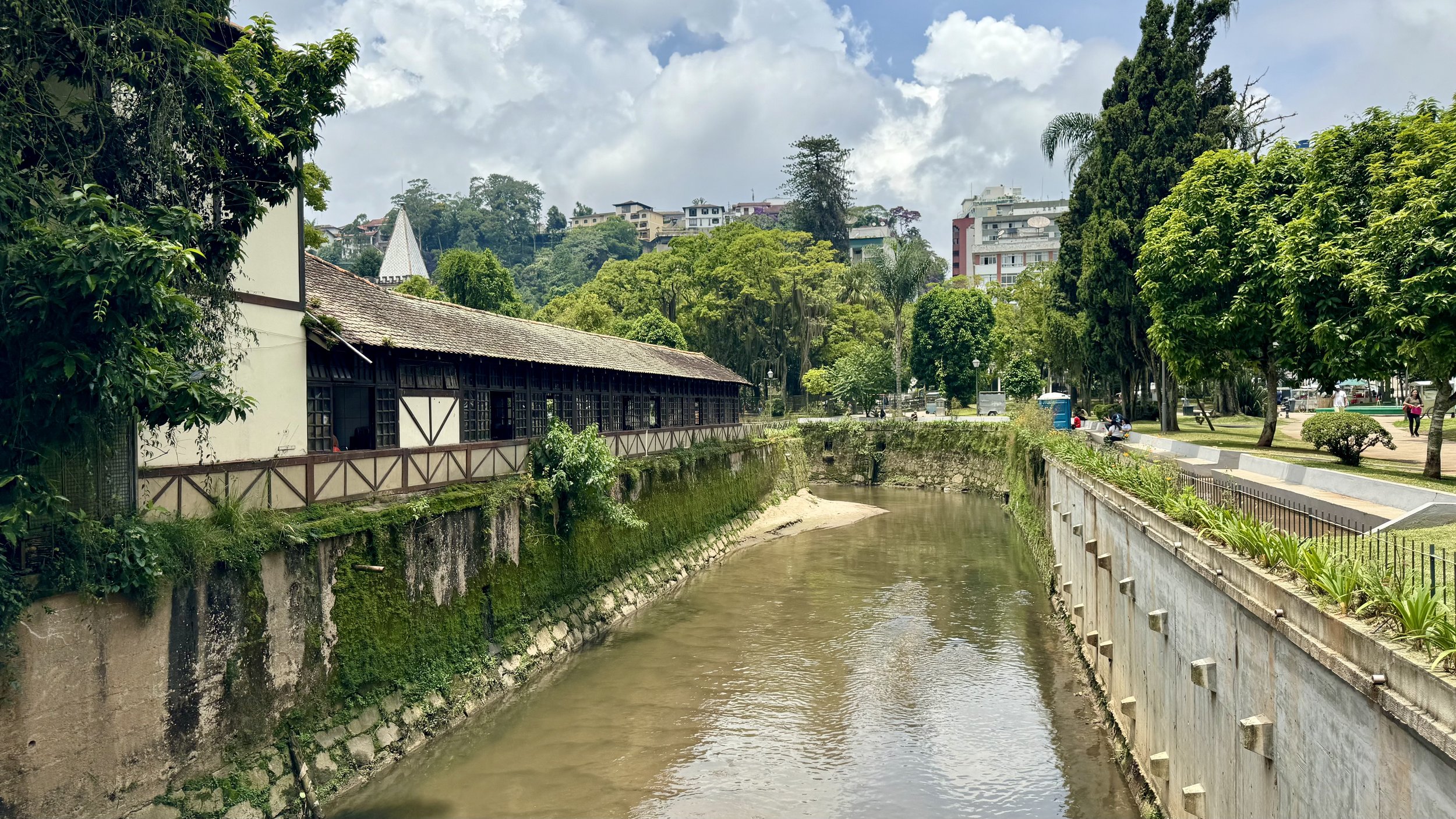
Rio Quitandinha canal, Petrópolis
By mid-afternoon we were back on the coach. A magnificent sunset accompanied us on the way back and around two hours later we were home at the apartment — tired, but glad we’d made the trip.
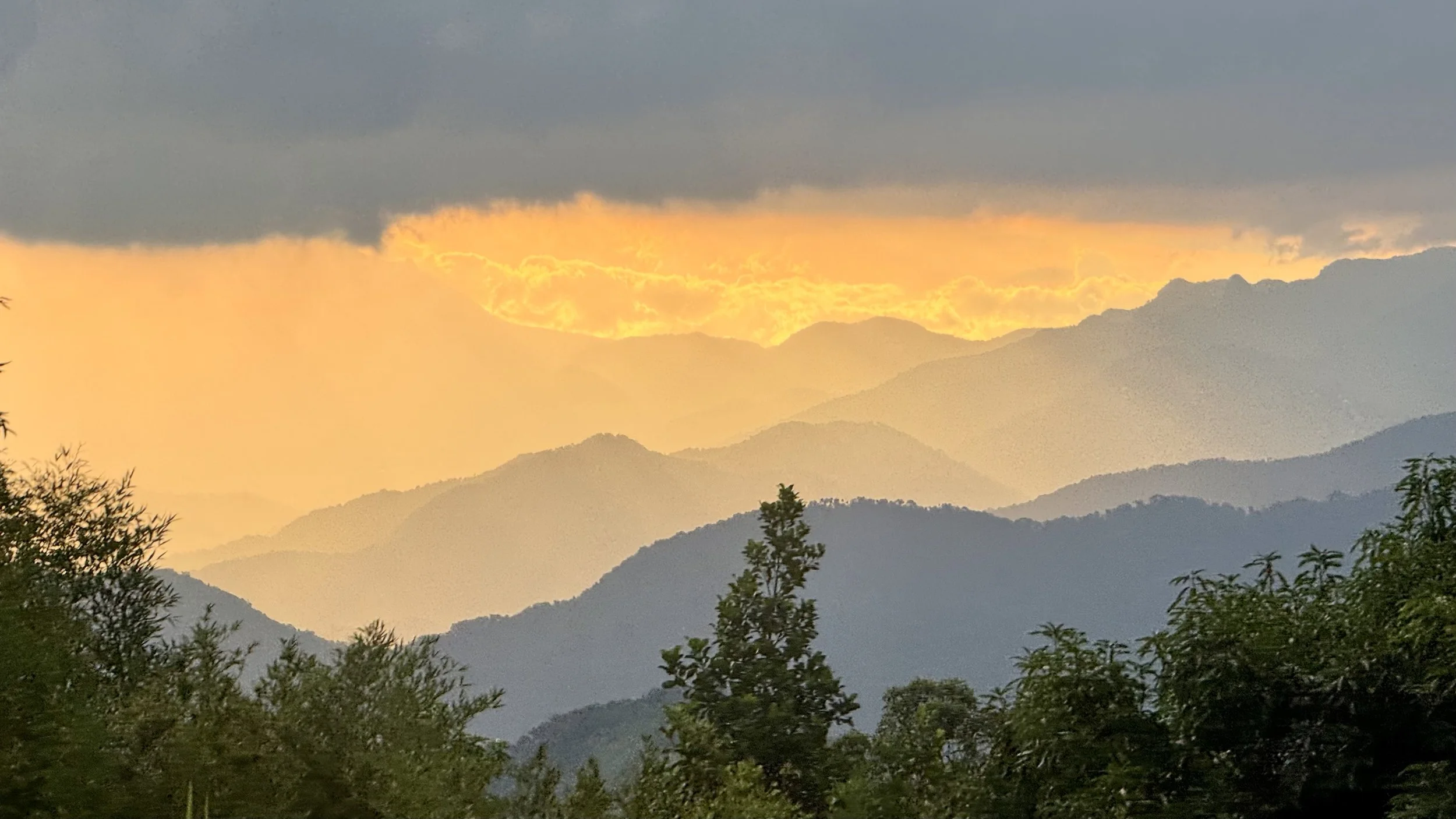
Sunset outside Petrópolis
Reflection
The day felt very different from our time in Rio — more structured, more scheduled, and shaped by the rhythm of a group rather than our own wandering. While the uncertain start was frustrating, it quickly faded once the tour settled into its flow. Petrópolis offered a calmer, cooler contrast to the city, with layers of history that felt tangible rather than abstract. The palace, the cathedral, and even the small moments — like marmosets playing in the gardens — gave the day warmth and personality. It wasn’t a day of discovery in the usual sense, but it was an enjoyable step back into Brazil’s past, and a reminder that sometimes letting someone else lead the way can still reveal something worth seeing.
If you’d like to follow future journeys, reflections, and moments noticed along the way, you can join the mailing list here.
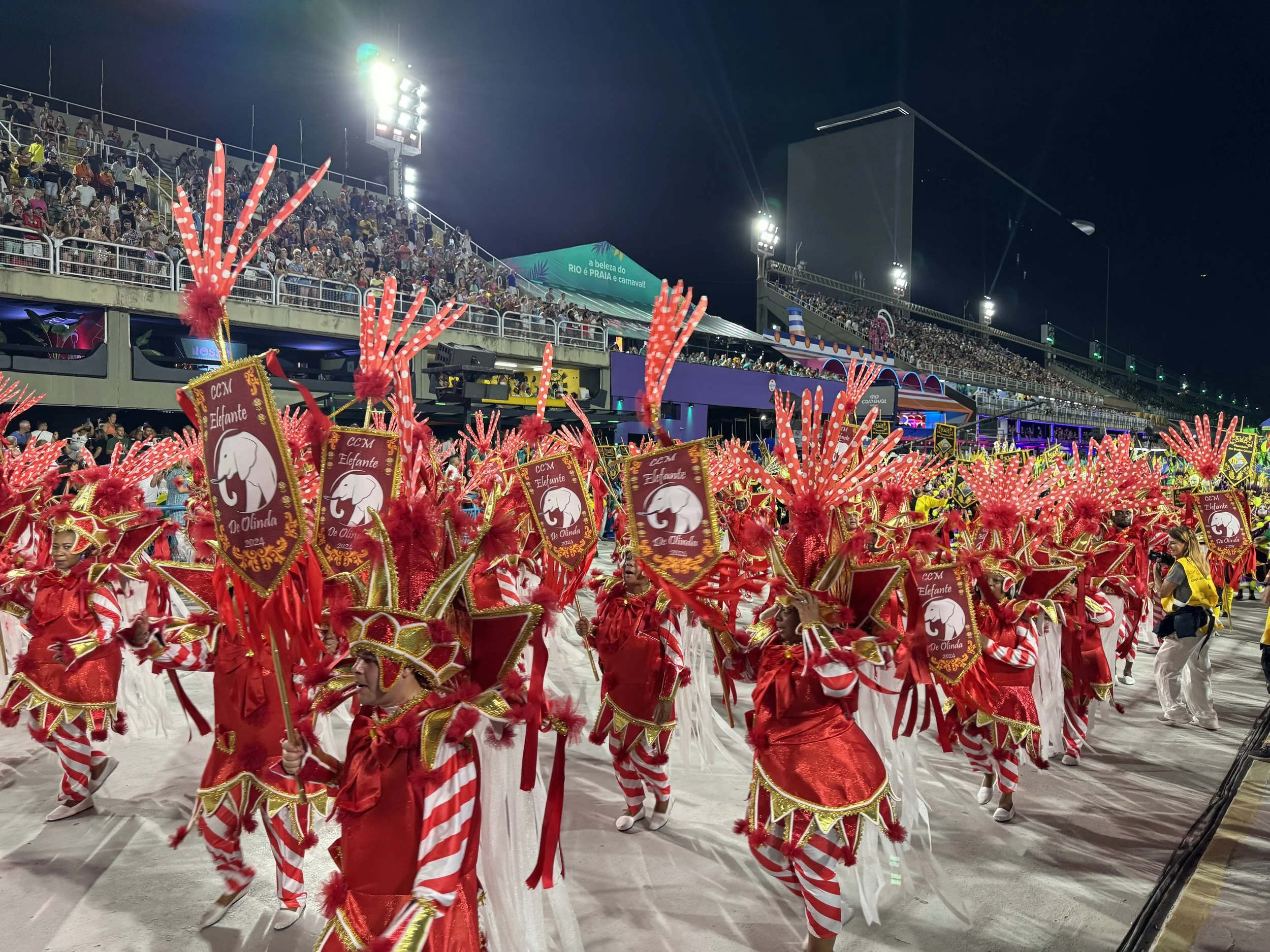
Rio at Full Volume
A Day of Rio Icons
We started the day with a couple of relaxed hours on the beach, including a swim in the sea. Hiring chairs and an umbrella made it feel properly indulgent, and it was good to slow things down for a while. After changing, we headed to Teva Deli for brunch. The coffee was excellencent, easily among the best of the trip, and the vegan grilled cheese sandwich was one of the best I’ve had in a long time.
From there we took the Metro up to Maracanã Stadium for the tour. Opened in 1950 and once the largest football stadium in the world, Maracanã is steeped in sporting history. It has hosted two World Cup finals and countless iconic moments in Brazilian football. Walking through the stands and pitch-side areas gave a sense of just how important the stadium is to the country, even if the tour itself was fairly short.
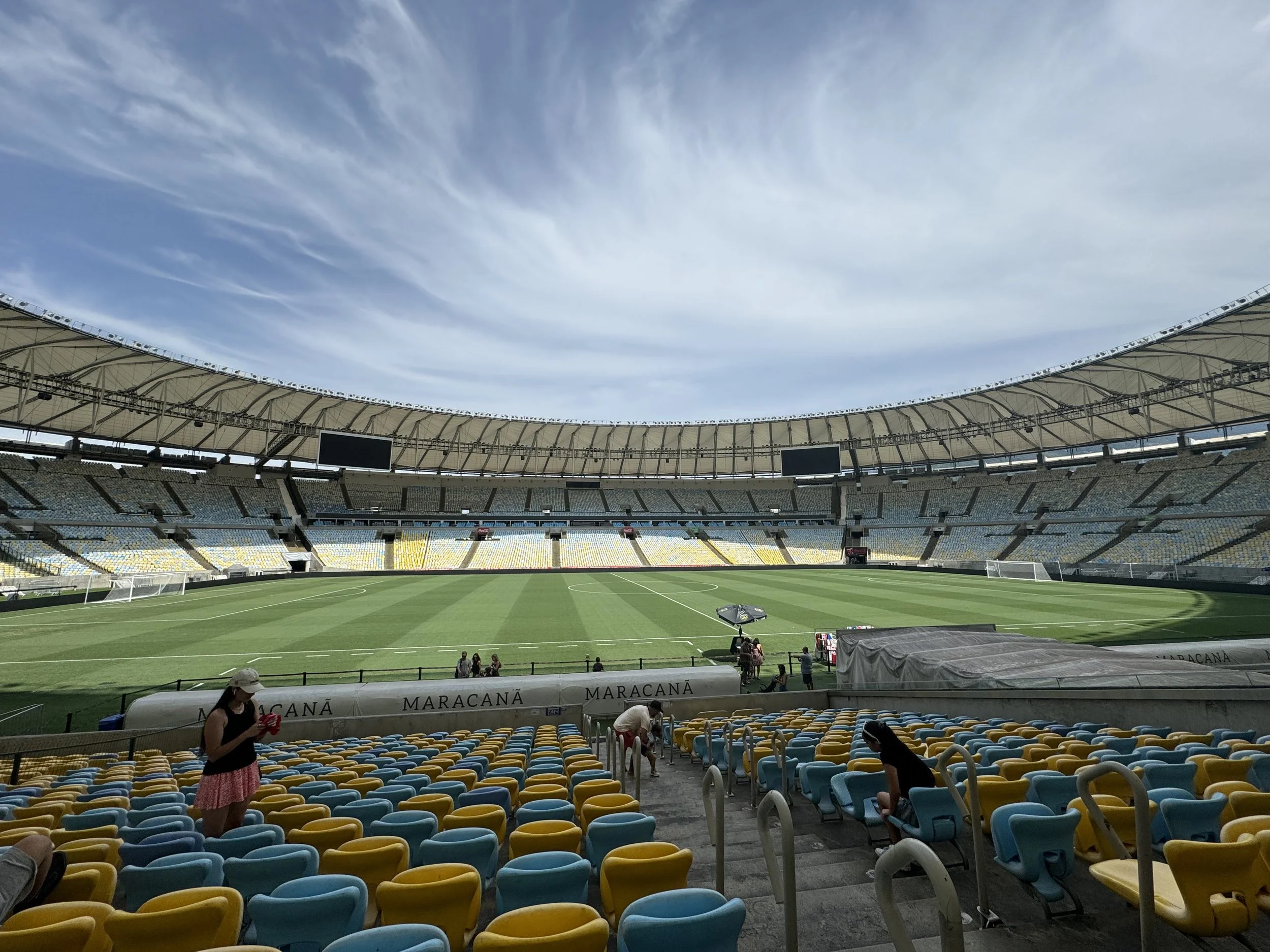
Maracana Stadium
On the return journey we got off at Botafogo and took a taxi to the entrance of Sugarloaf Mountain. Before heading up, we spent some time at Praia Vermelha. With Sugarloaf rising dramatically behind the beach, it must be one of the most striking backdrops anywhere in the world. The beach felt calmer and more contained than Copacabana or Ipanema, almost tucked away beneath the mountain.
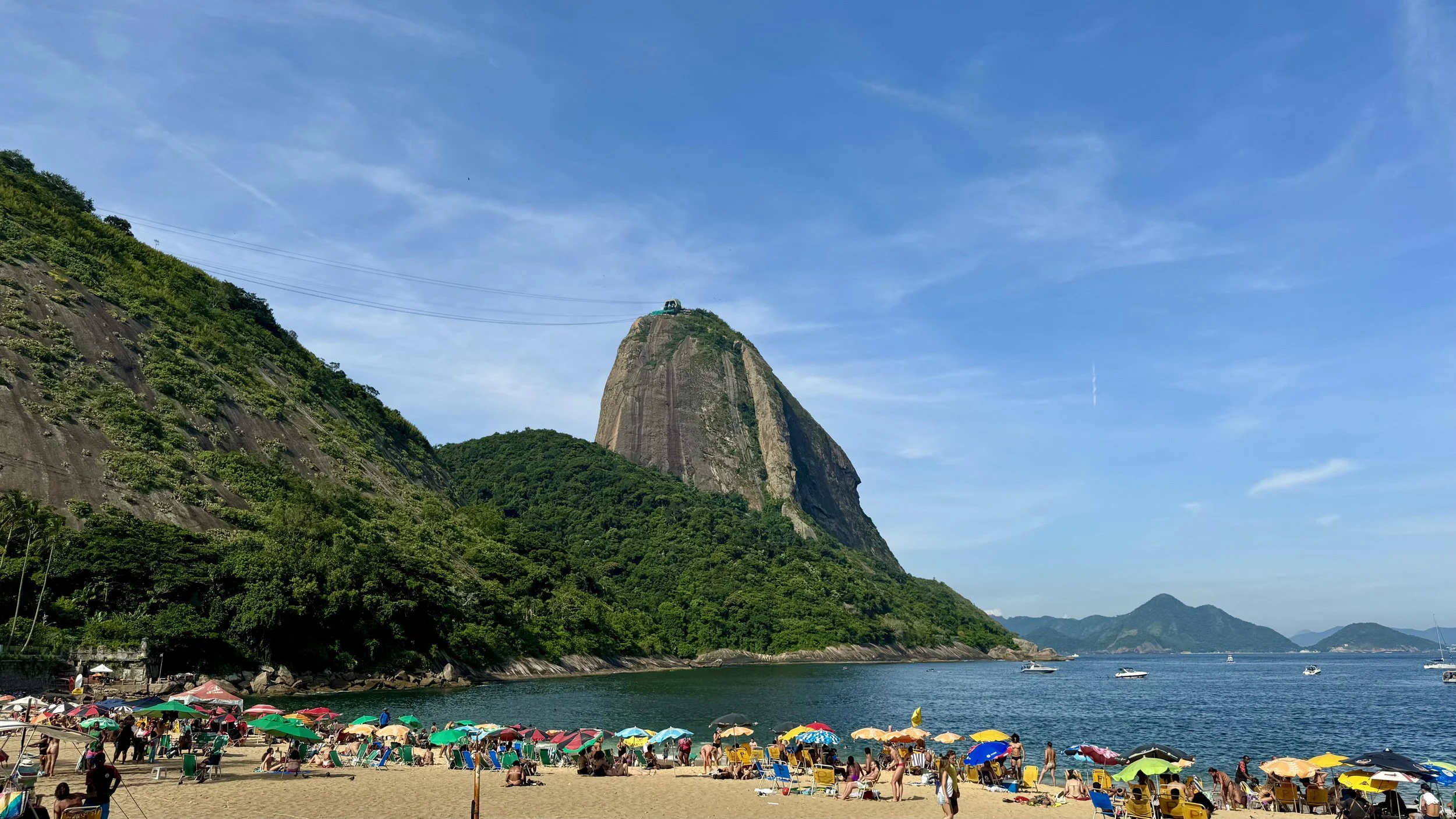
Praia Vermelha and Sugarloaf Mountain
We stopped for a quick coffee at Terra Brasilis, slightly distracted by an enthusiastic Instagram family determined to capture the perfect shot with Sugarloaf behind them.
There was no queue at all for the Sugarloaf cable car when we arrived, and we were pleasantly surprised to receive 50% off the ticket price as seniors. The cable car, first opened in 1912, was one of the earliest of its kind in the world. The journey up was smooth and impressively quiet, offering ever-expanding views across Guanabara Bay, the beaches, and the city spreading out below. Even without sunset, the panorama was remarkable — one of those views that explains immediately why Sugarloaf is one of Rio’s defining landmarks.
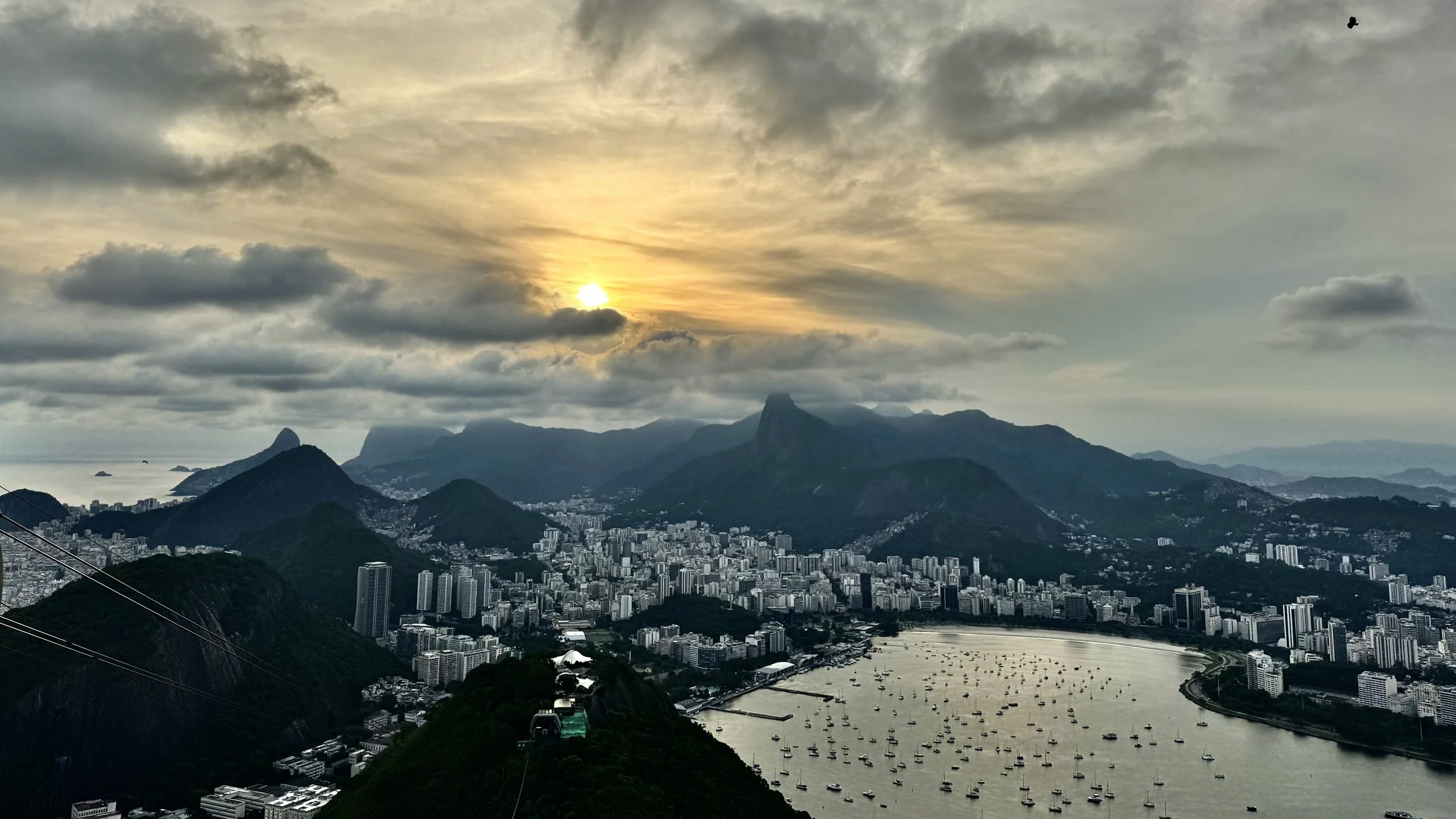
The view from Sugarloaf Mountain
As we came back down the mountain, the sunset unfolded, washing the water and surrounding mountains in warm colour.
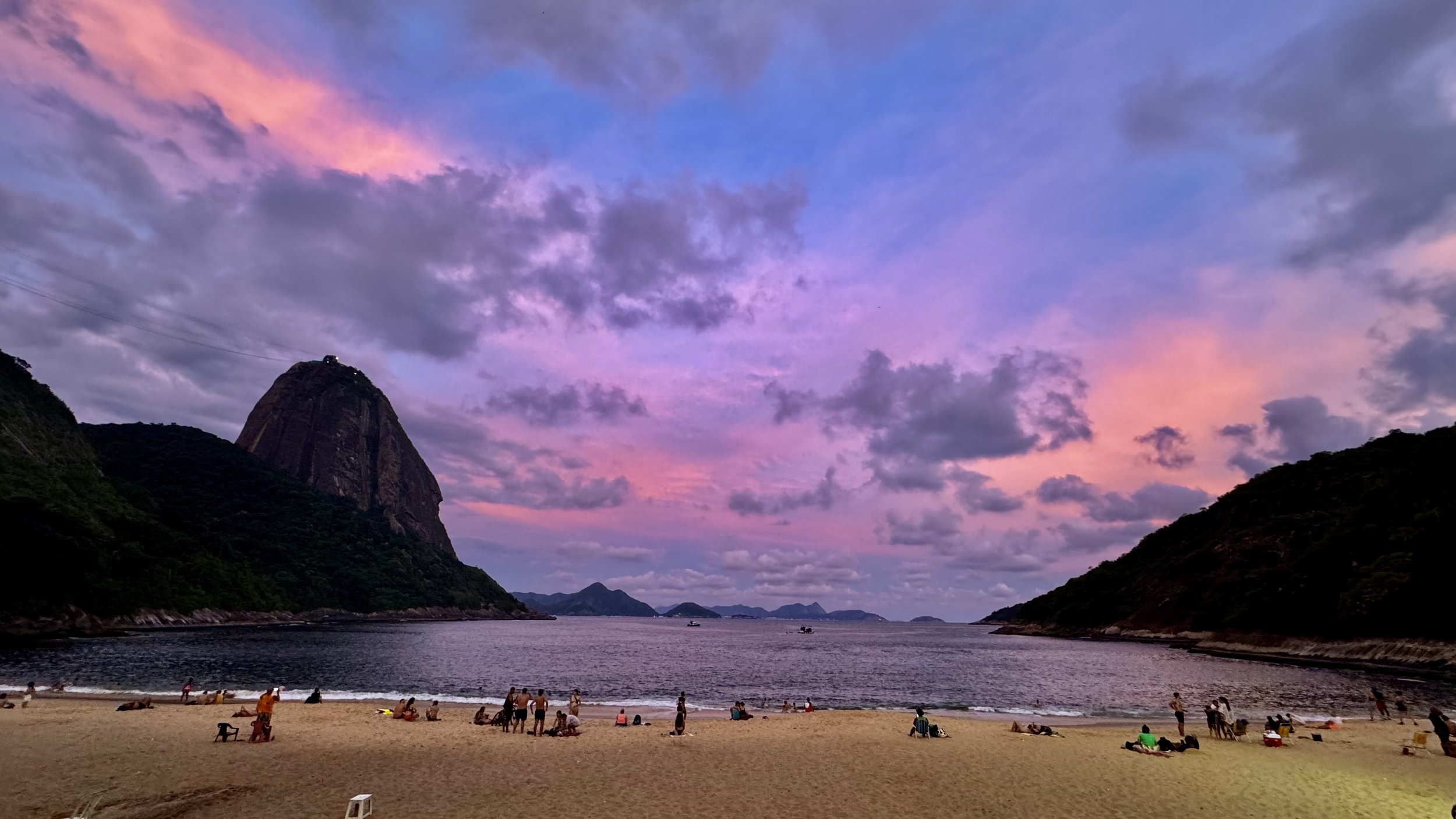
Sunset at Praia Vermelha
We ended the day back at the apartment with a beer and some simple sandwiches, tired but content after a day that neatly combined beach time, sporting history, and some of Rio’s most memorable scenery.
Beach, Breeze and the Bay
The next few days marked a more relaxed stage of the holiday, now that we were properly acclimatised to the heat and sun. We began with a few easy hours on the beach, hiring chairs and an umbrella for R25. It was a beautiful day and the ocean was unusually calm. We swam, watched the steady flow of life along the promenade, and simply enjoyed being there without any need to rush.
Leaving the beach, we headed once again to our new favourite vegan restaurant, Teva Deli. I returned to the best grilled “cheese” sandwich with coffee, a combination that was fast becoming a habit.
In the afternoon we took the Metro to Glória station, where we had booked a small-group sunset sailing cruise across the bay. Arriving a little early gave us time to wander around the marina, spotting turtles gliding through the water and watching Triumph motorcycles being delivered to a nearby showroom.
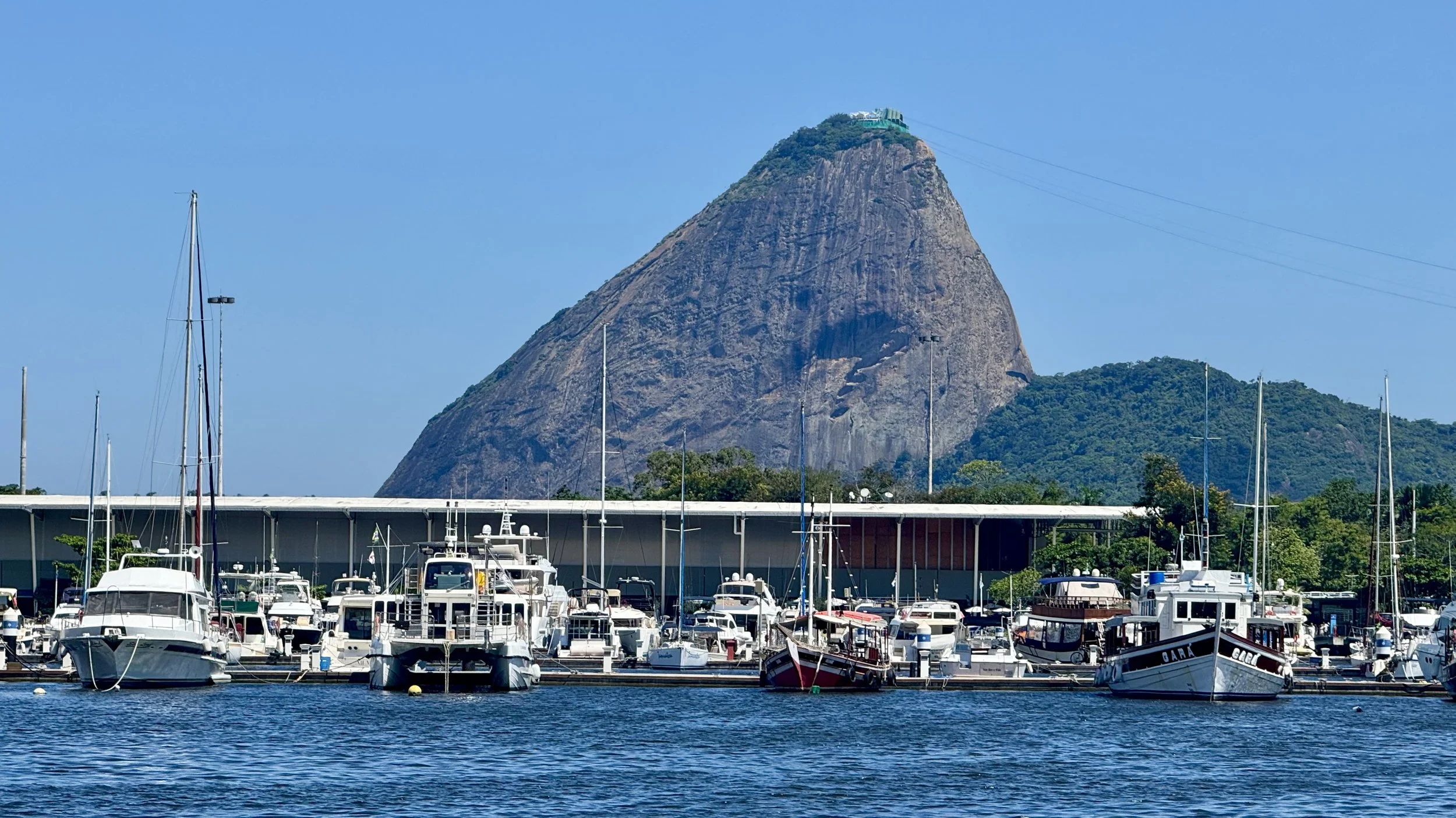
Marina below Sugarloaf Mountain
We were met at the jetty by Katerina, along with eight other, much younger, participants. Once underway, drinks were handed around: caipirinhas, sparkling wine, and Coke for me. The first leg took us towards Sugarloaf, although our view from the back of the boat was occasionally blocked by the younger members of the group, keen to secure the perfect bow shot with fizz in hand and Sugarloaf behind them. We paused to allow everyone a chance to take photos, and Katerina shared stories with us about the surrounding area, pointing out Urca, the military college, and the beach below.
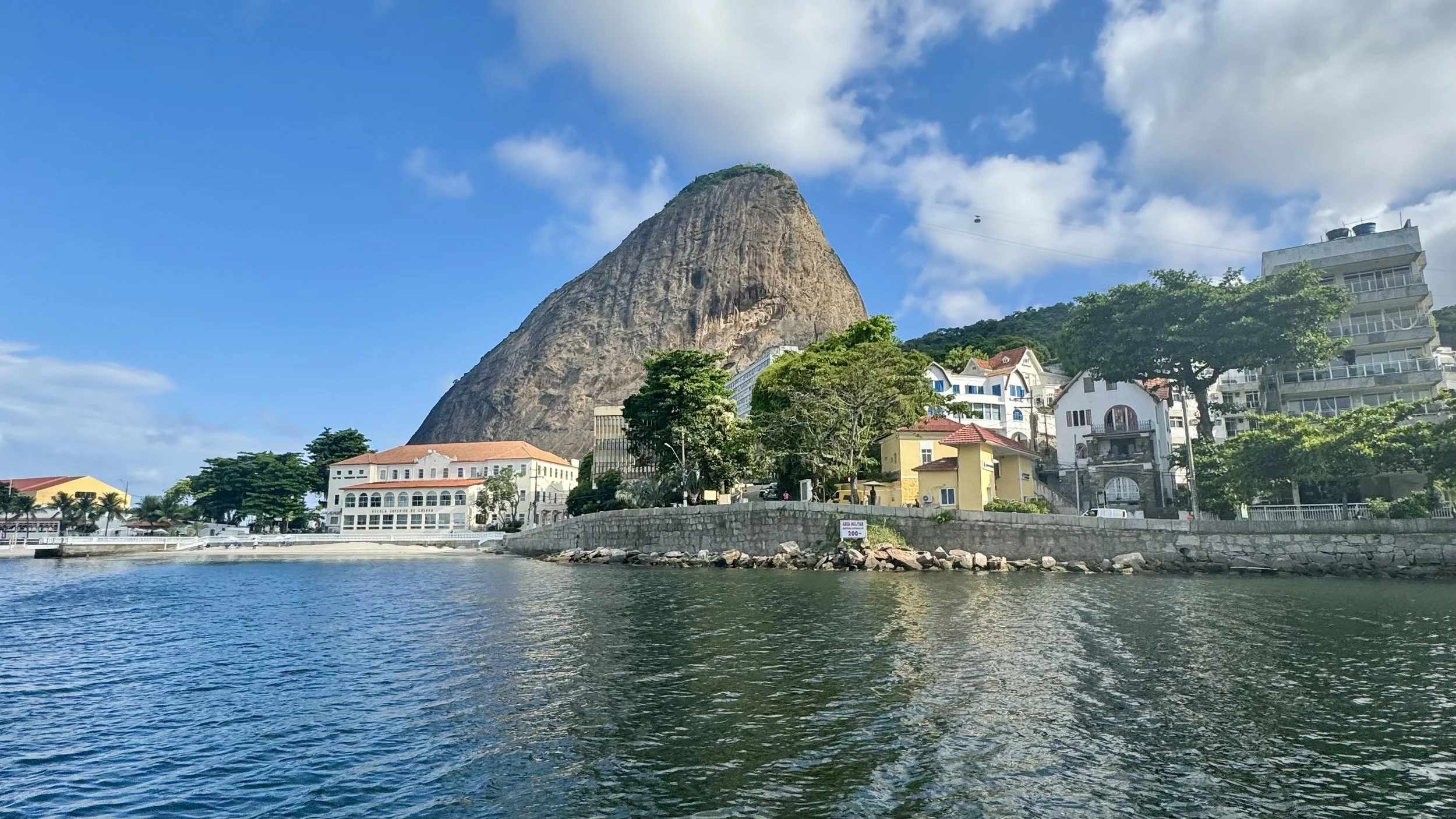
Urca and Sugarloaf
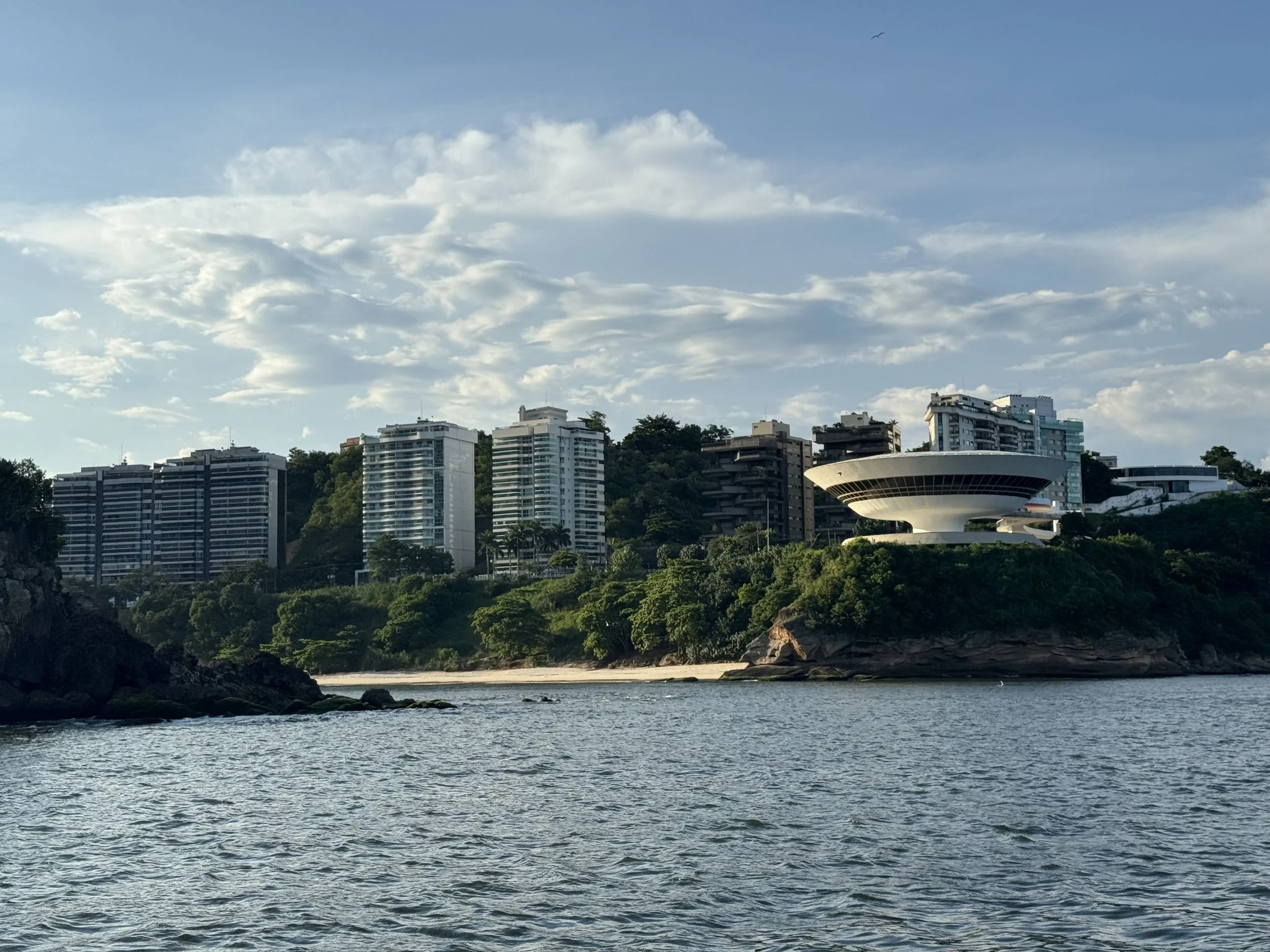
From there we sailed across to Niterói, where some of the group went for a swim. By this point things were becoming a little lively, helped along by multiple refills. We continued along Niterói beach towards the futuristic Museum of Contemporary Art, sitting like a spaceship at the edge of the sea.
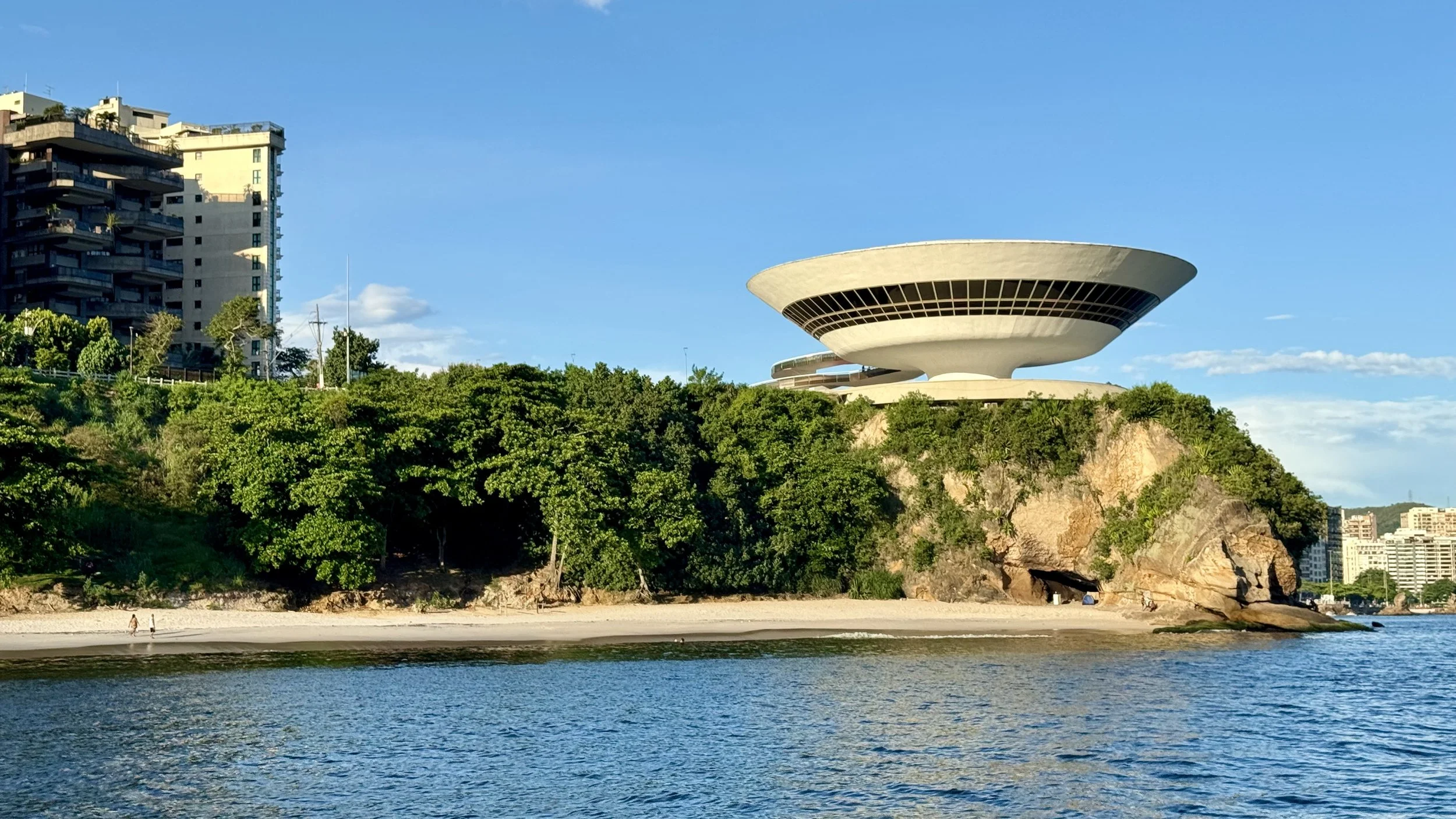
Museum of Contemporary Art
During this stretch we managed to take some wonderfully moody photographs of the mountains and Christ the Redeemer, softened by the changing light.
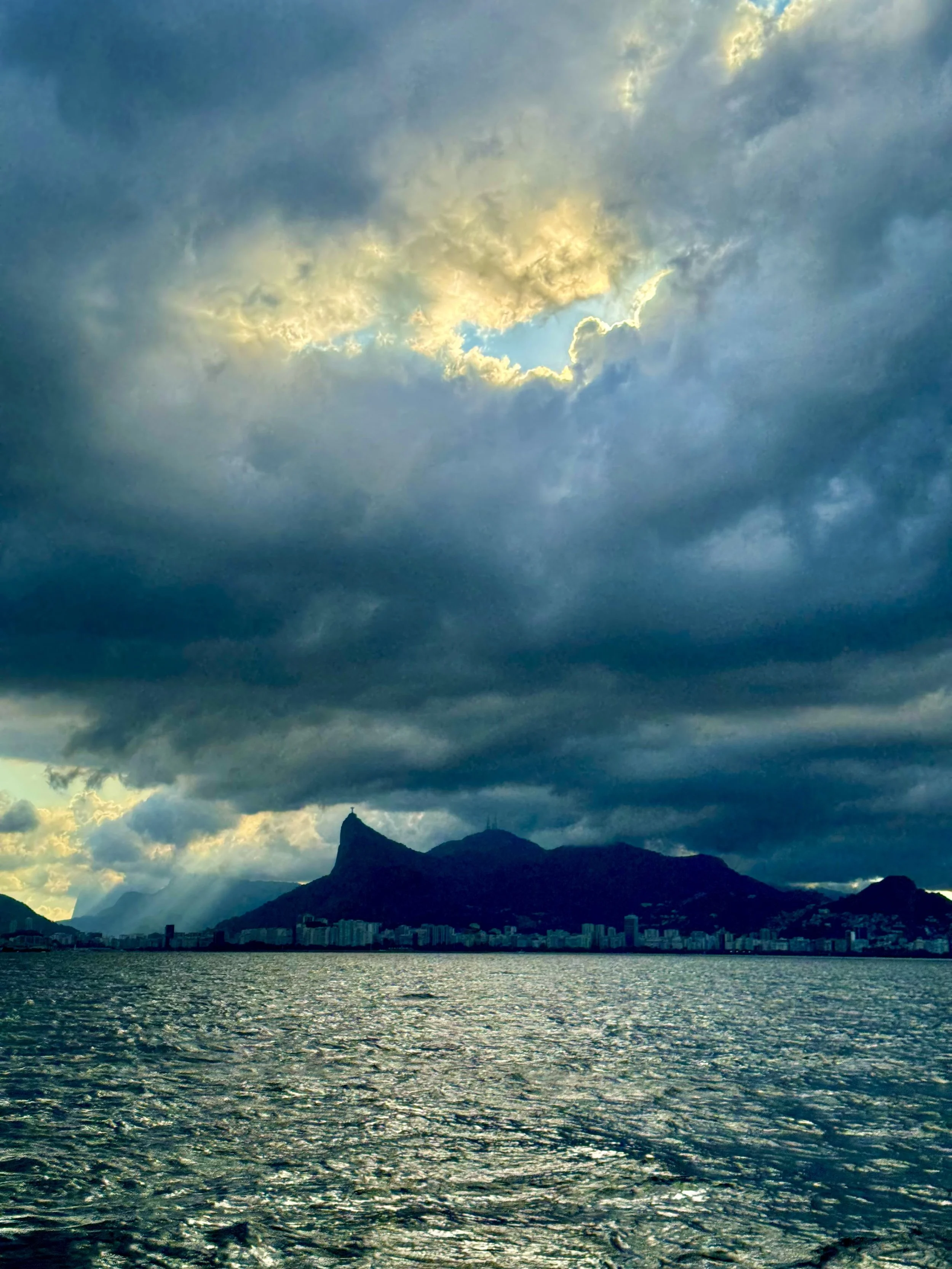
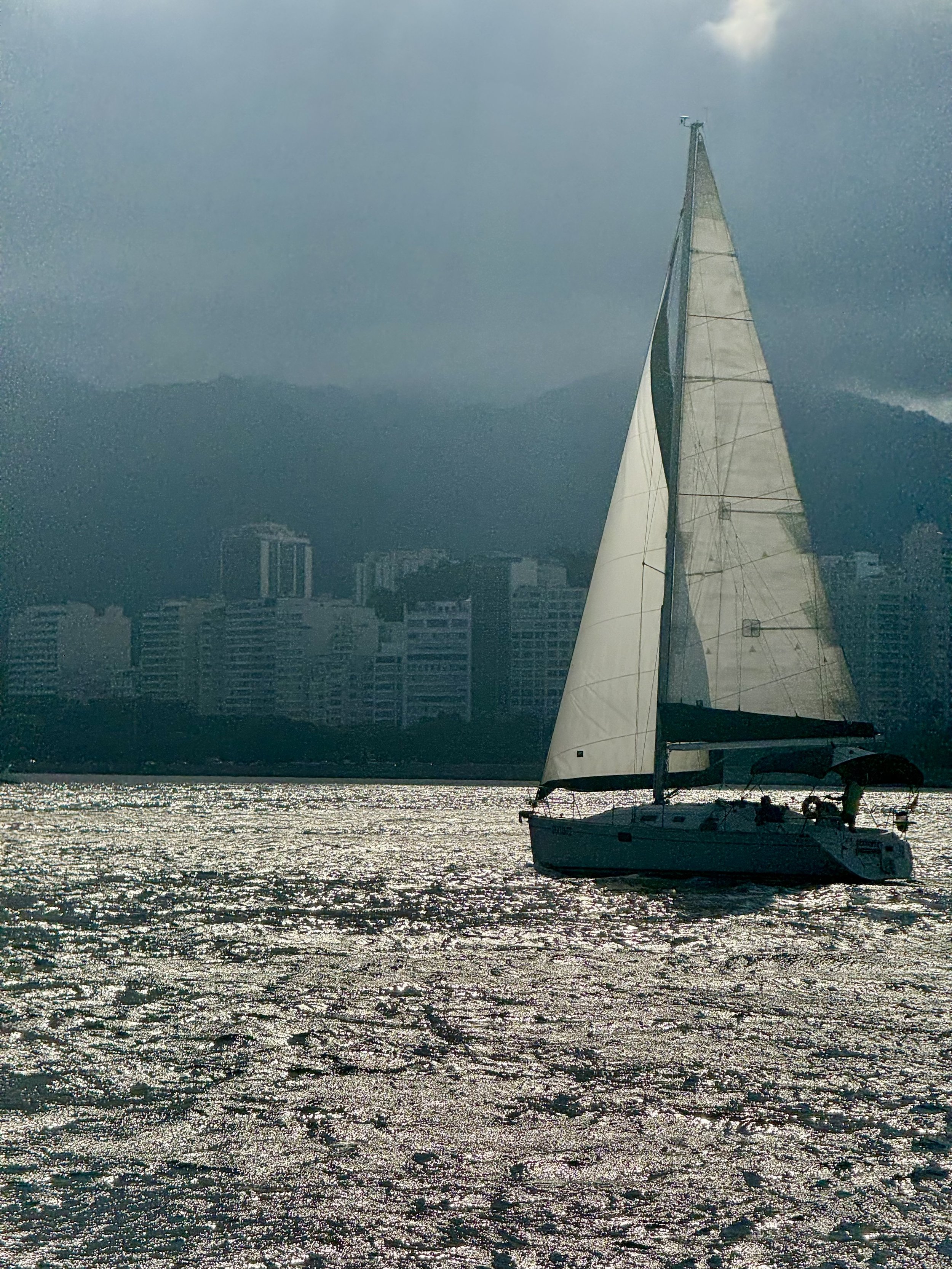
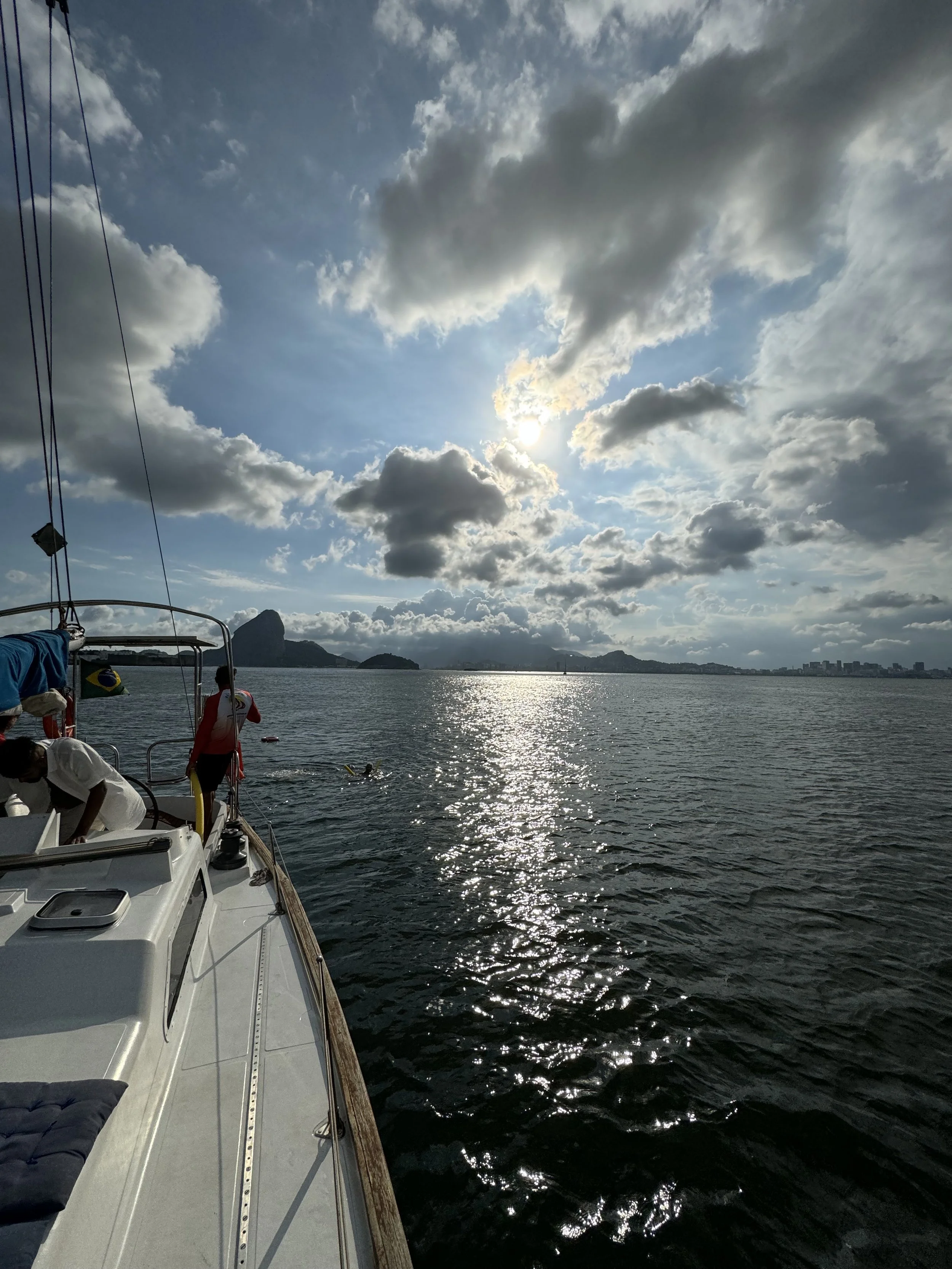
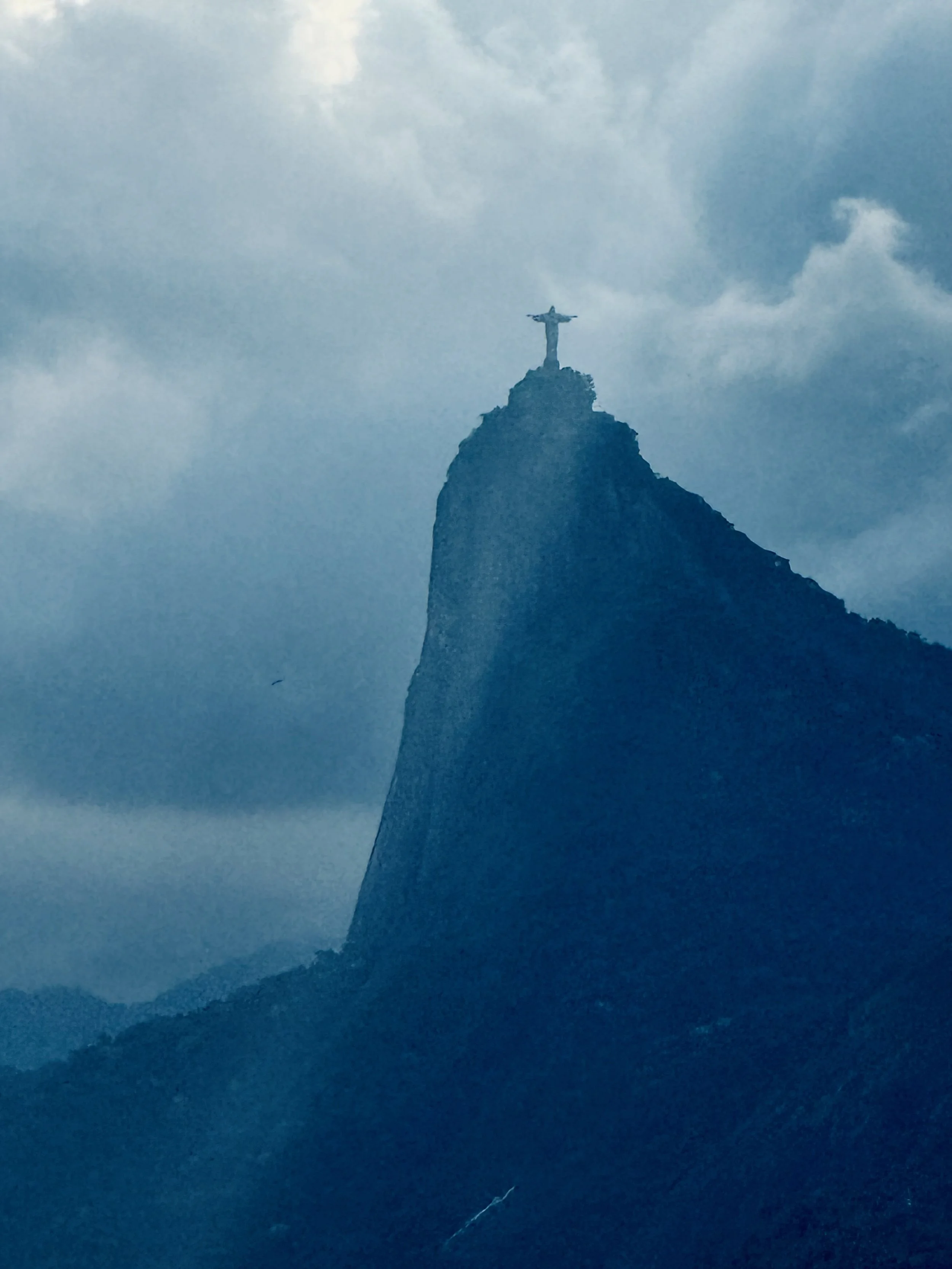
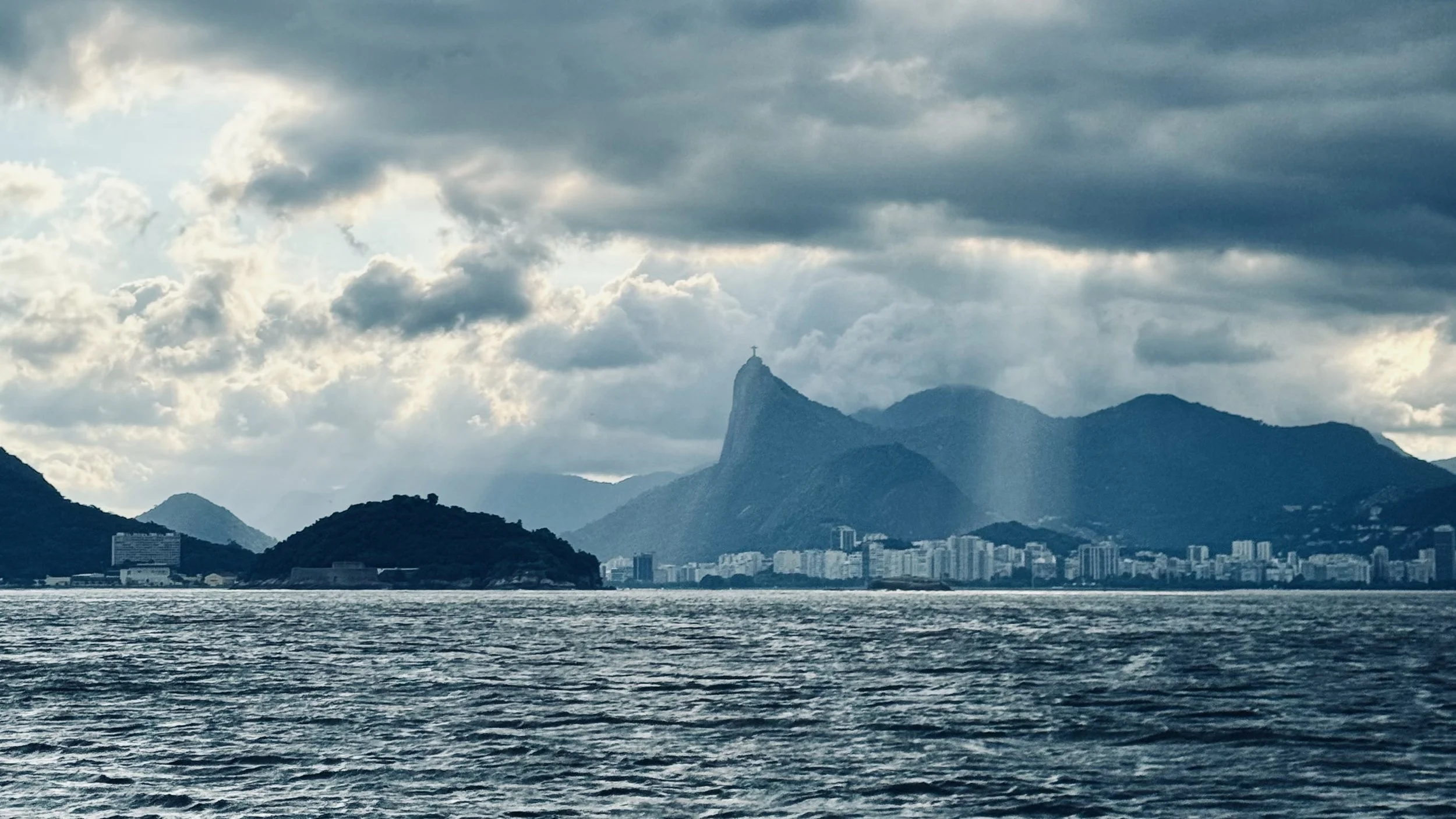
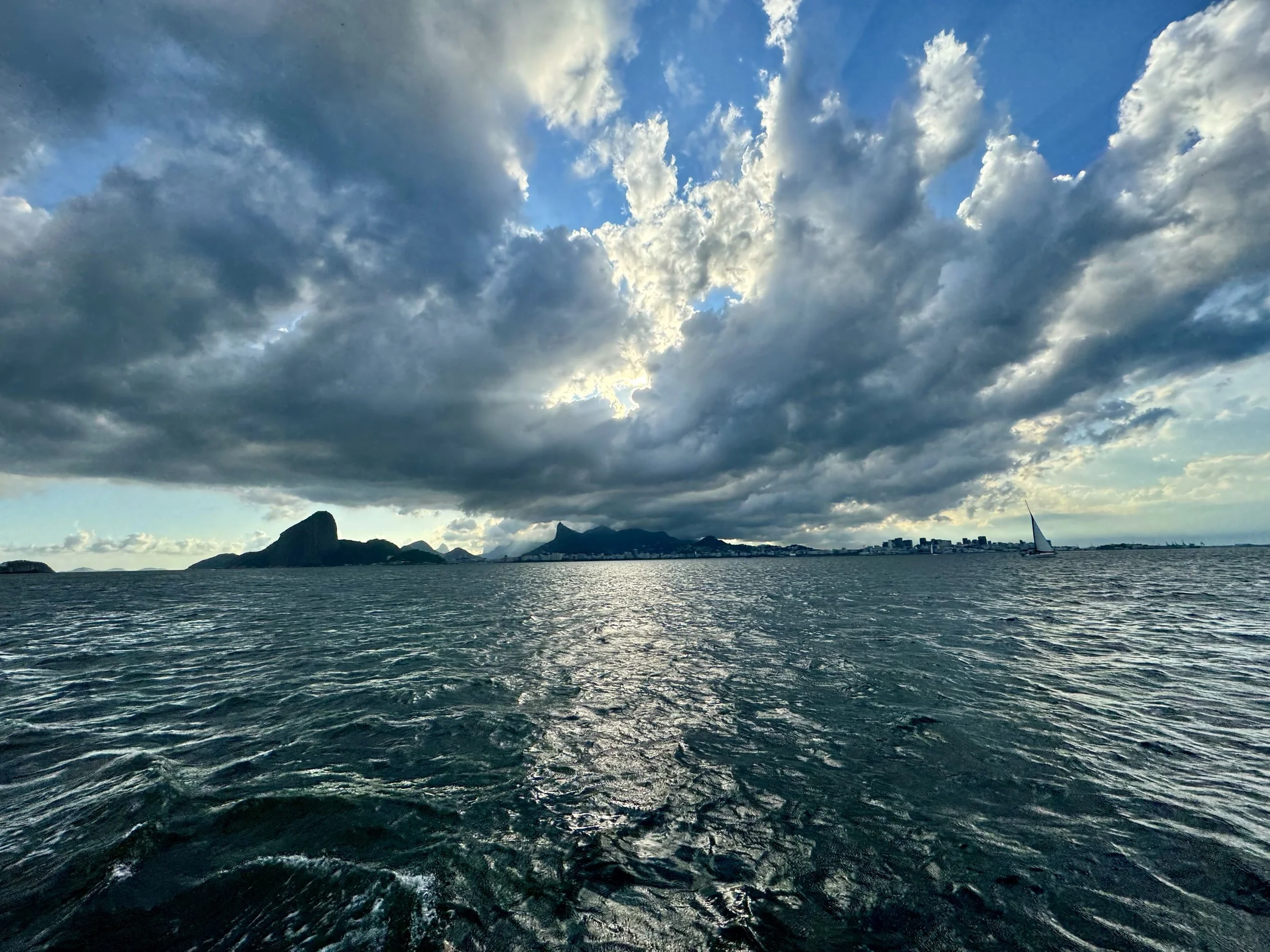
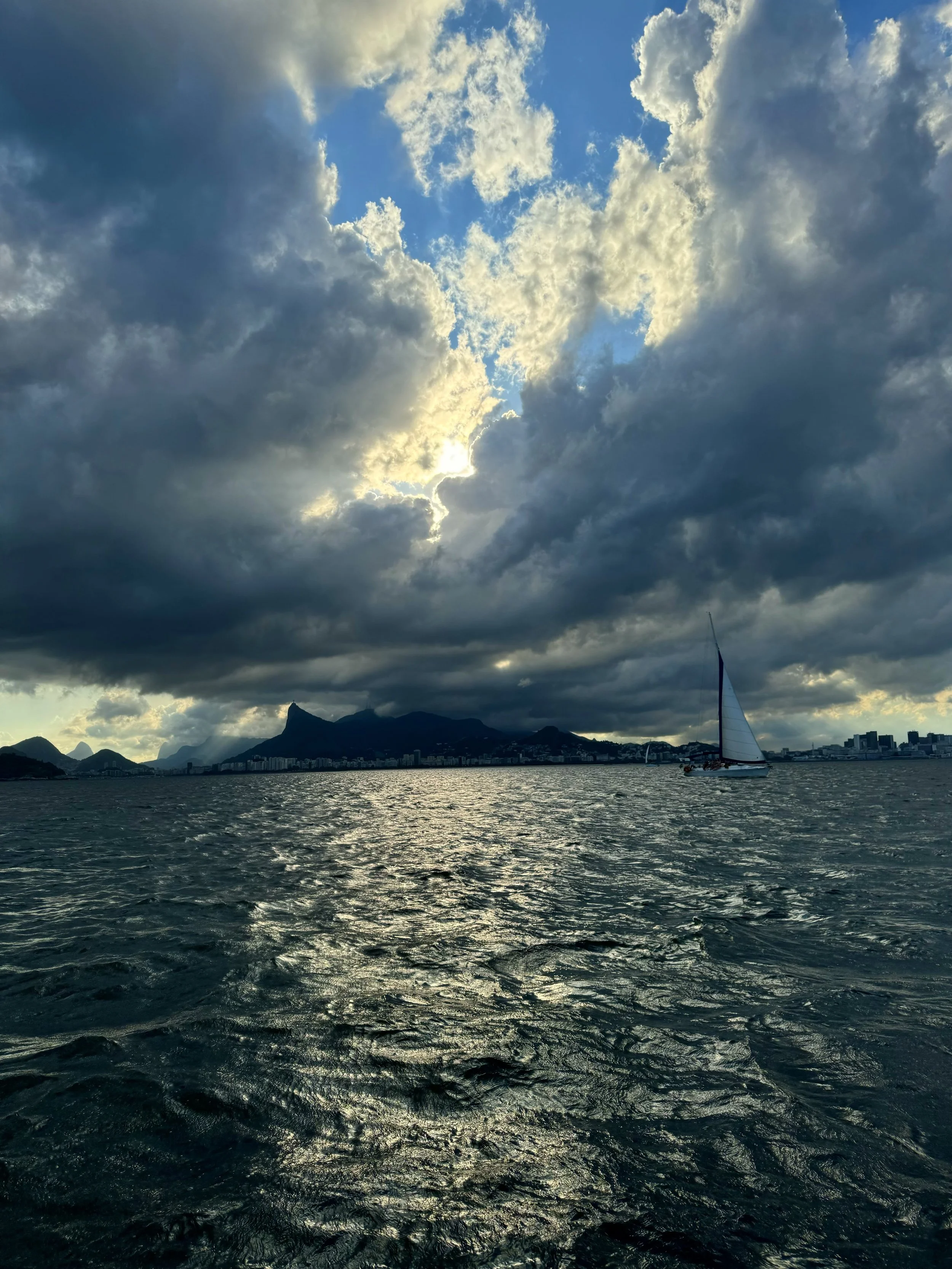
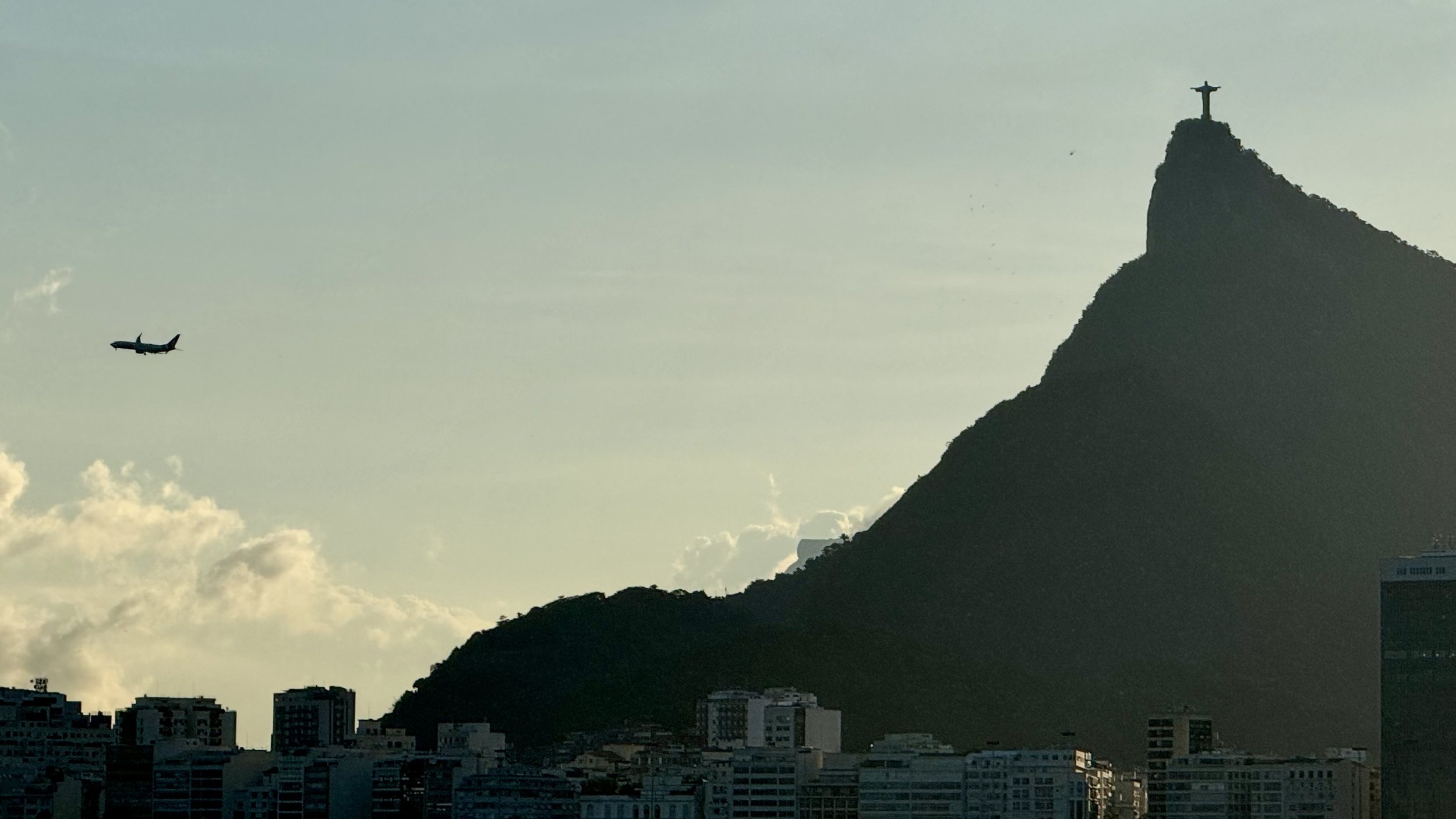
For the final leg, we turned back towards the marina, sailing directly into the setting sun. It was a magical evening — calm water, warm air, and shifting colours across the sky and city. We returned to the apartment easily by Metro and finished the day with a quiet dinner on the terrace, content and pleasantly tired.
Refection
The day felt like a turning point in the trip, not in terms of where we were, but in how we were experiencing it. With the heat no longer quite so draining, it became easier to slow down and enjoy long stretches of doing very little. The beach, familiar lunches, and an evening on the water all blended into something unhurried and easy. The sailing trip added a different perspective on Rio, showing the city softened by distance and light, and by the time we were eating quietly on the terrace that evening, it felt as though we’d found a comfortable rhythm.
Sun, Sea and Sambadrome
In the morning, we went for a walk along Ipanema beach towards Leblon, having a look around some of the shops along the way. We then walked back along the shoreline towards Arpoador. It was a glorious sunny day and exceptionally clear, with the light making everything feel sharper and brighter.
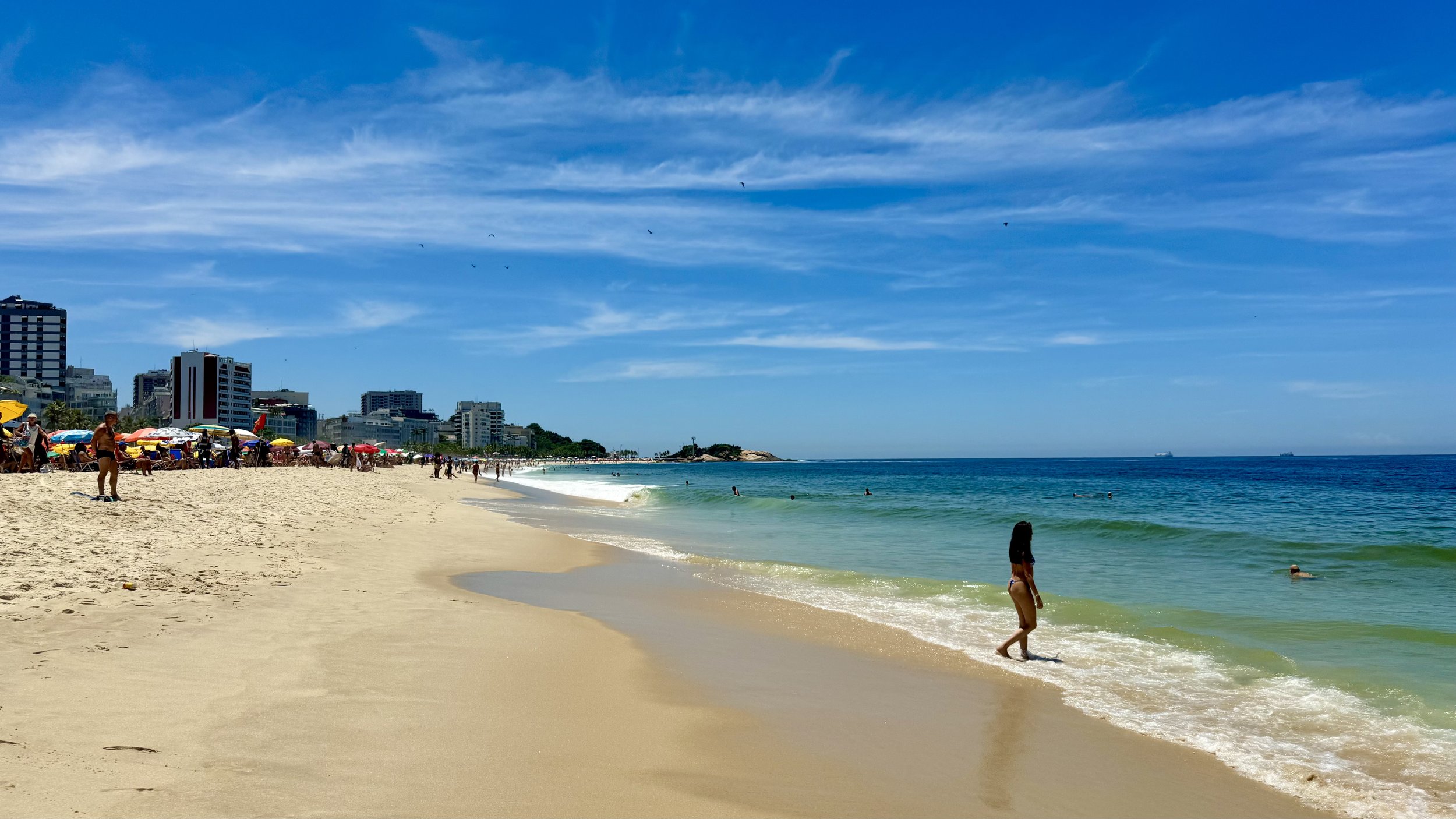
Ipanema Beach
We climbed up onto the rocks at Arpoador and looked back across Ipanema and the long sweep of the beach, taking in the views and stopping for a few photographs. From that vantage point, the curve of the bay and the city beyond felt particularly striking.
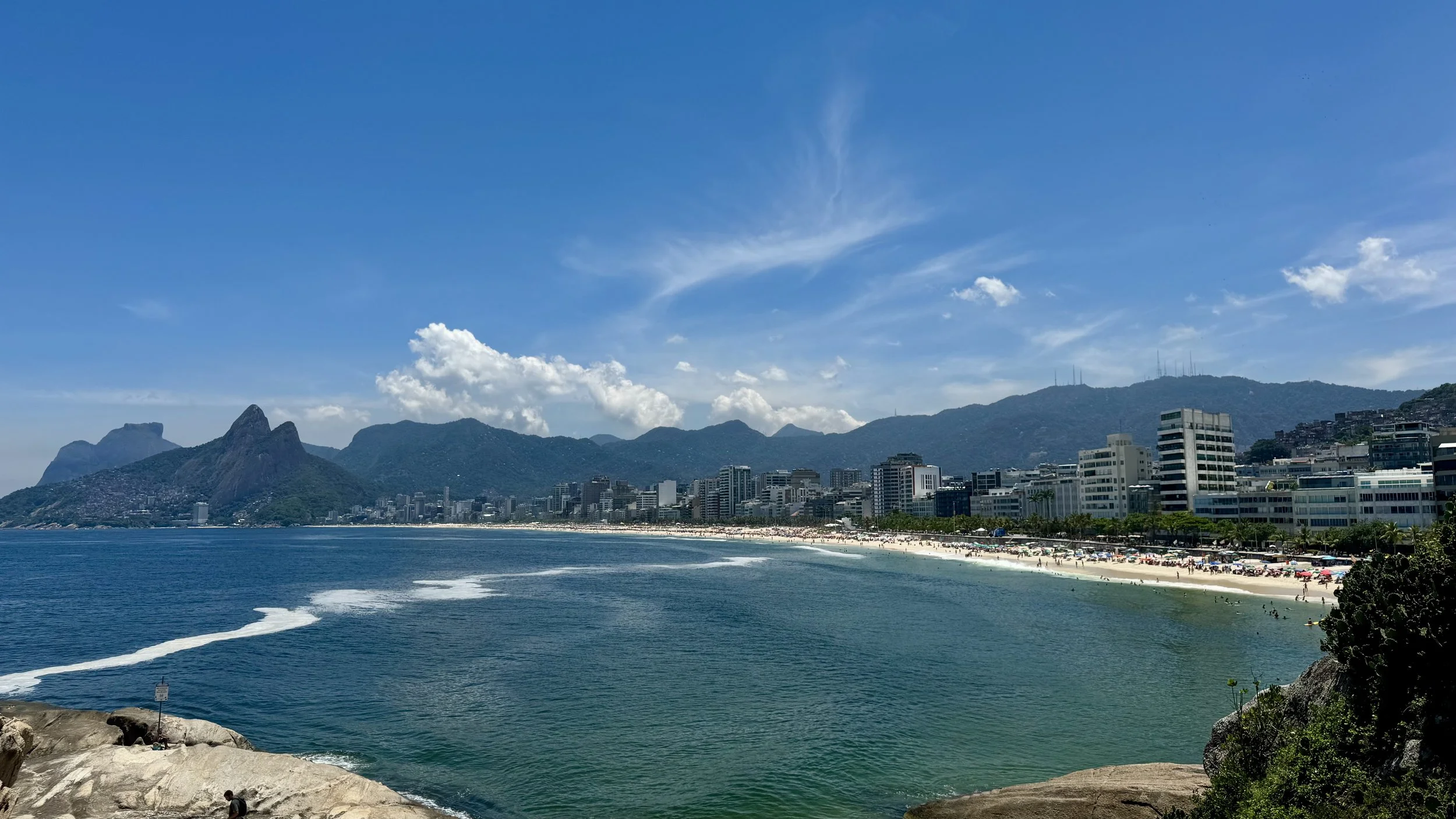
The view from Arpoador
Afterwards, we went to ARP for lunch and a drink, where a musician was playing nearby for tips, providing a relaxed soundtrack to the afternoon and rounding off an easy, unhurried start to the day.
Knowing we were likely to be up most of the night, with the Carnival parades often continuing until 6am, we made a sensible decision to return to the apartment for an afternoon nap. In truth, we were both far more tired than we realised and ended up sleeping for a couple of hours.
Before heading out again, we went back to Teva Deli for an early dinner. By now they were beginning to recognise us as regulars. This time I opted for the vegan burger, which once again was very tasty, and reassuringly filling.
We were excited to see the parades, but also a little apprehensive, unsure what to expect, particularly in the areas around the Sambadrome. In the end, the Metro journey was absolutely fine, although finding Section 11 proved more difficult than expected and involved a fair amount of walking. Once inside, we had a drink and waited. At 8pm it was still surprisingly quiet, and for a while we weren’t entirely sure what was going on. Gradually we realised that people arrived throughout the evening, even while some parades were already underway.
Our seats turned out to be excellent, right at the front, and in a box to ourselves. The rhythm of the evening soon became clear. Music would begin as a samba school started at the far end of the Sambadrome, and it would take around twenty minutes for the head of the parade to reach us.
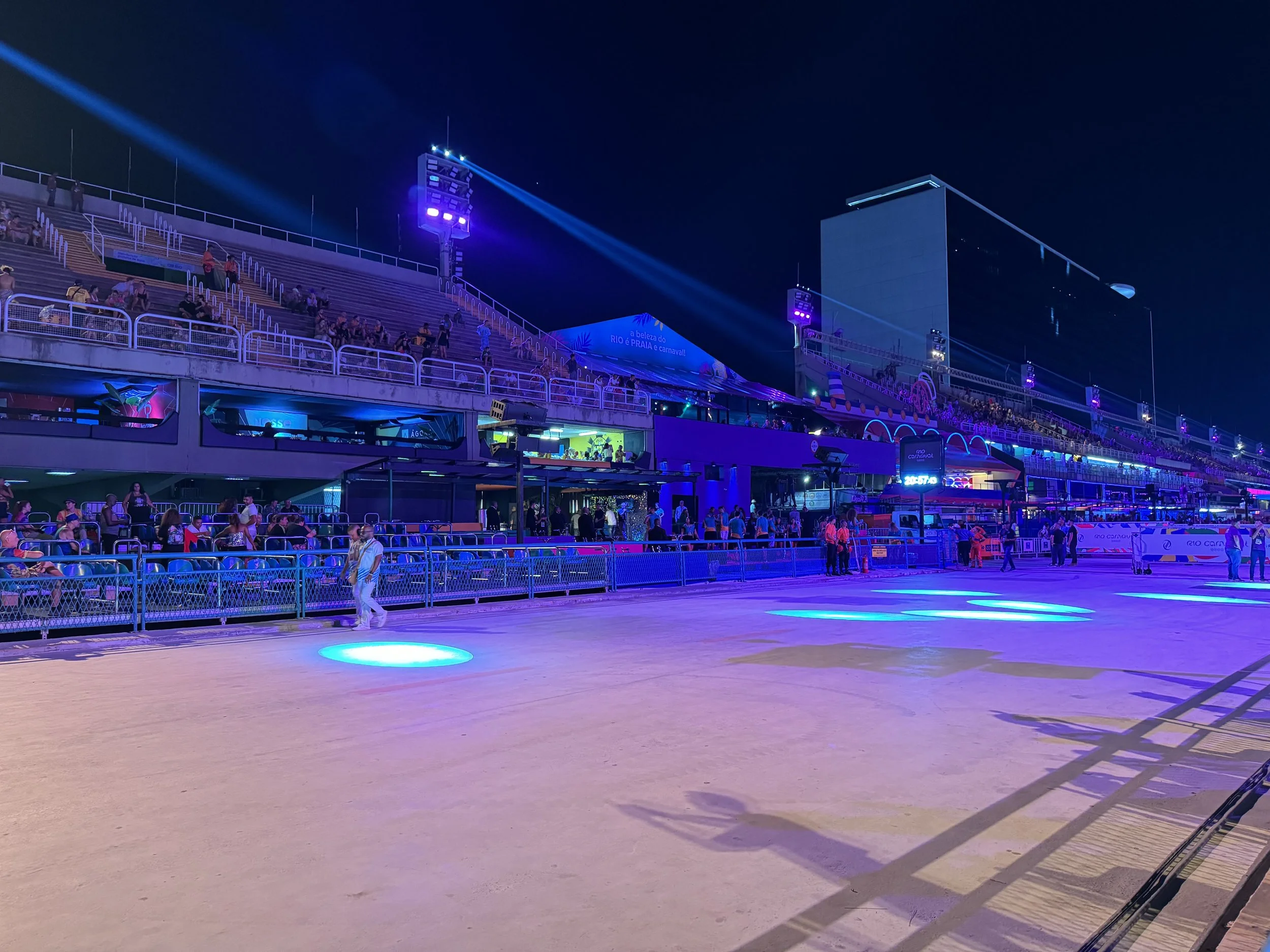
Our view
Each procession began with a dance troupe performing a special routine for the judges, positioned slightly further along from where we were sitting. This was followed by the King and Queen of the school, proudly carrying and presenting the school’s flag. Behind them came the full spectacle, elaborate floats, dancers in extraordinary costumes, and finally the drum squads, accompanied by the school’s musicians and singers. Each parade lasted around forty-five minutes.
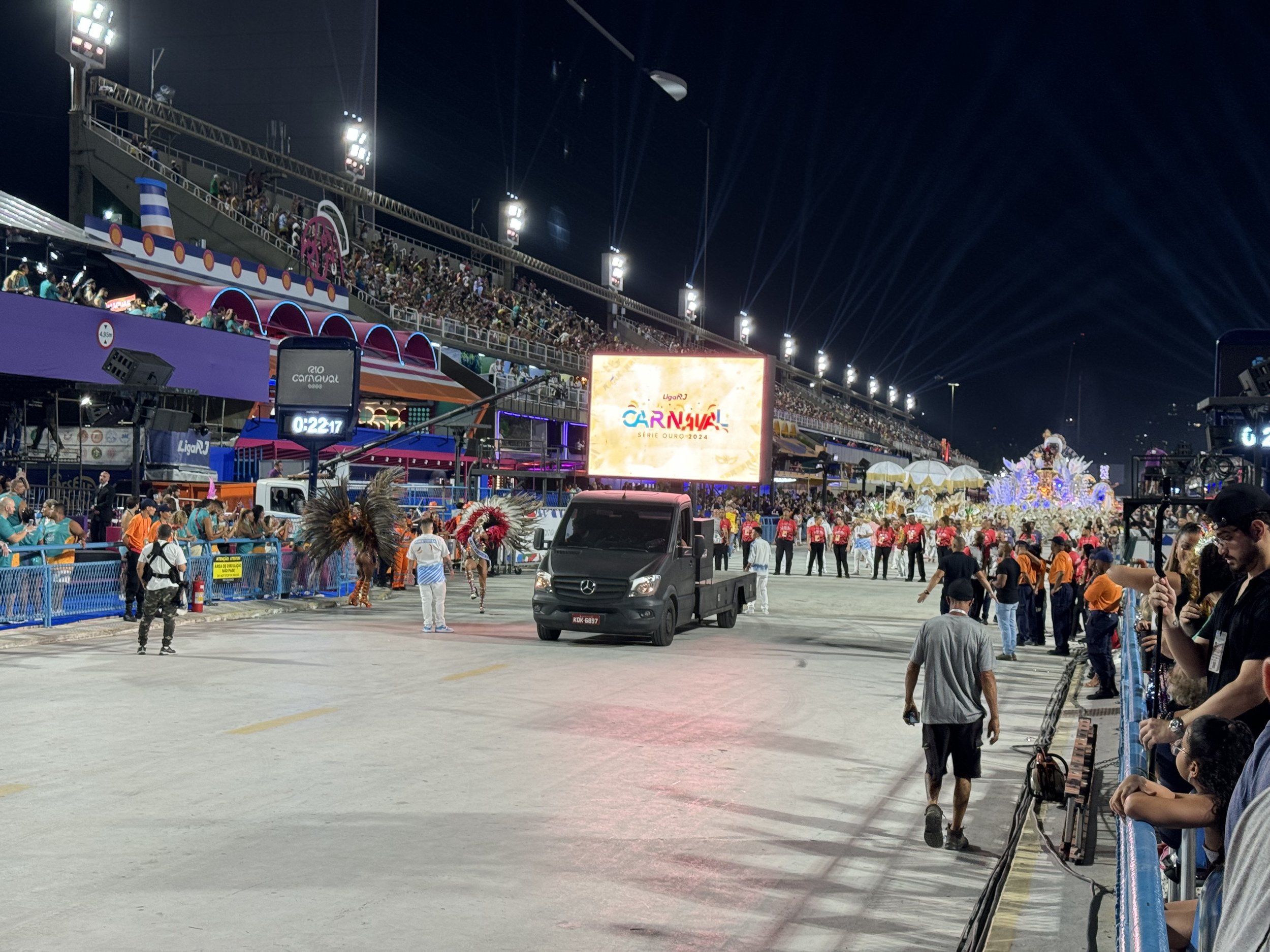


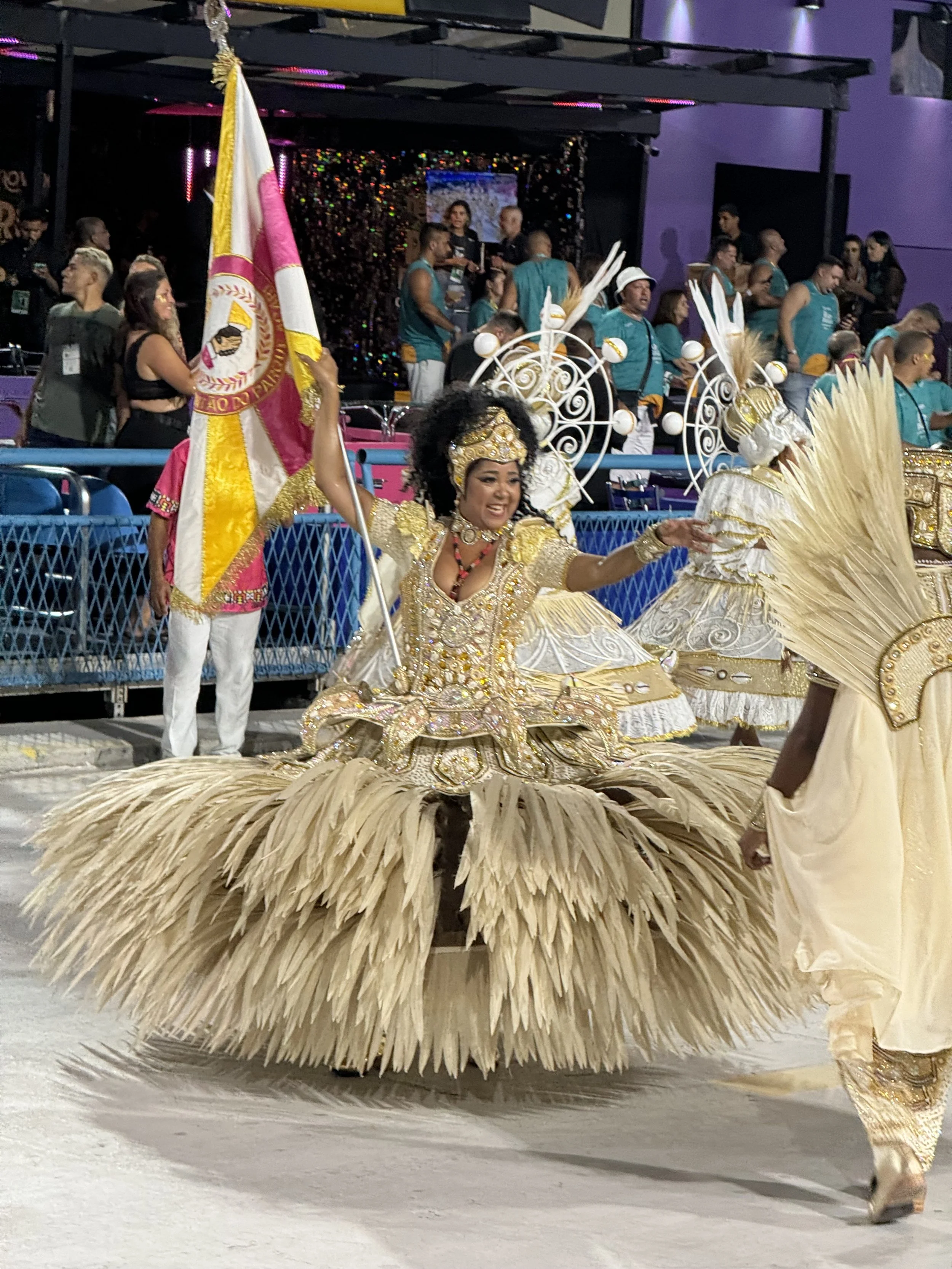
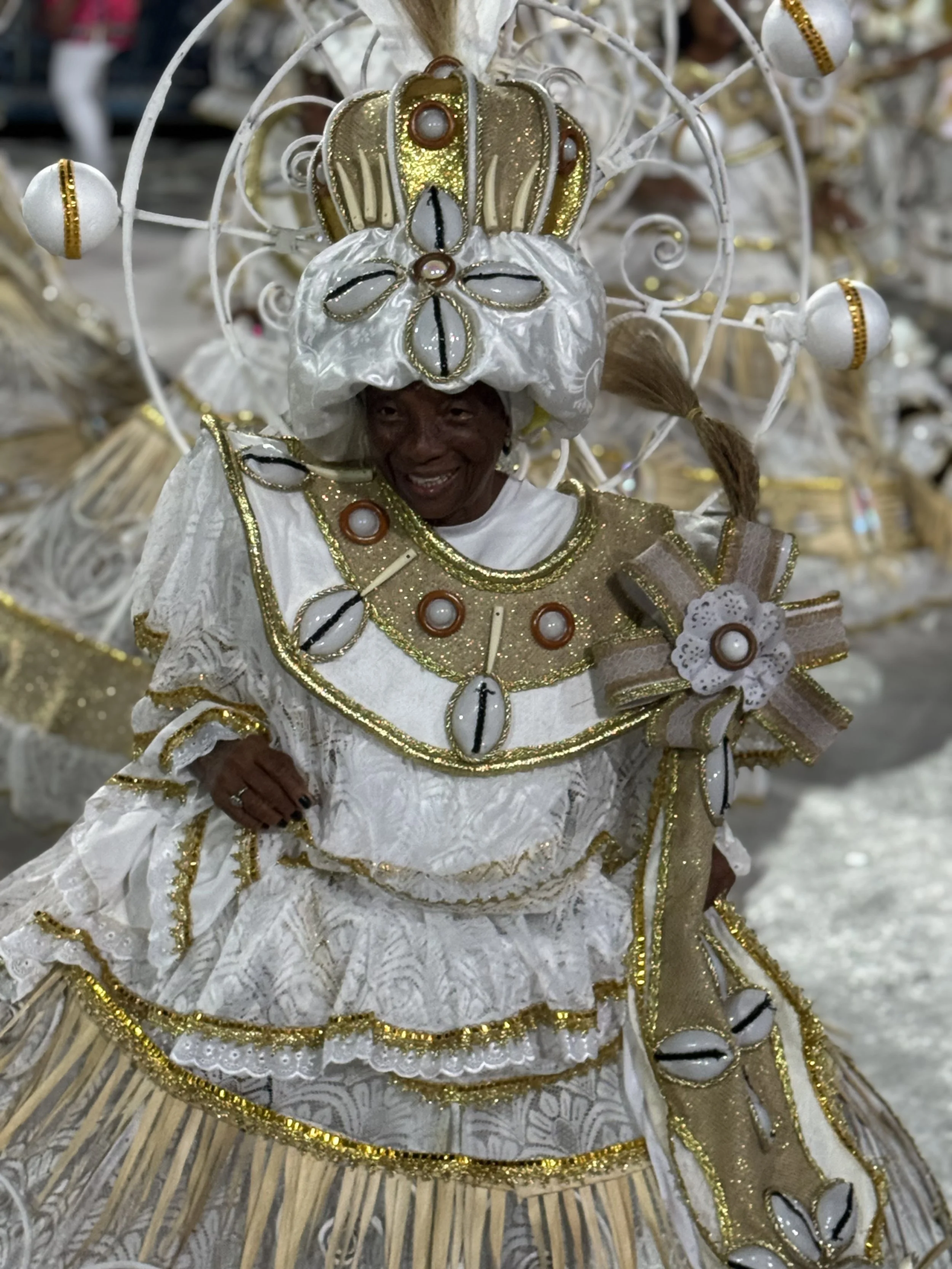
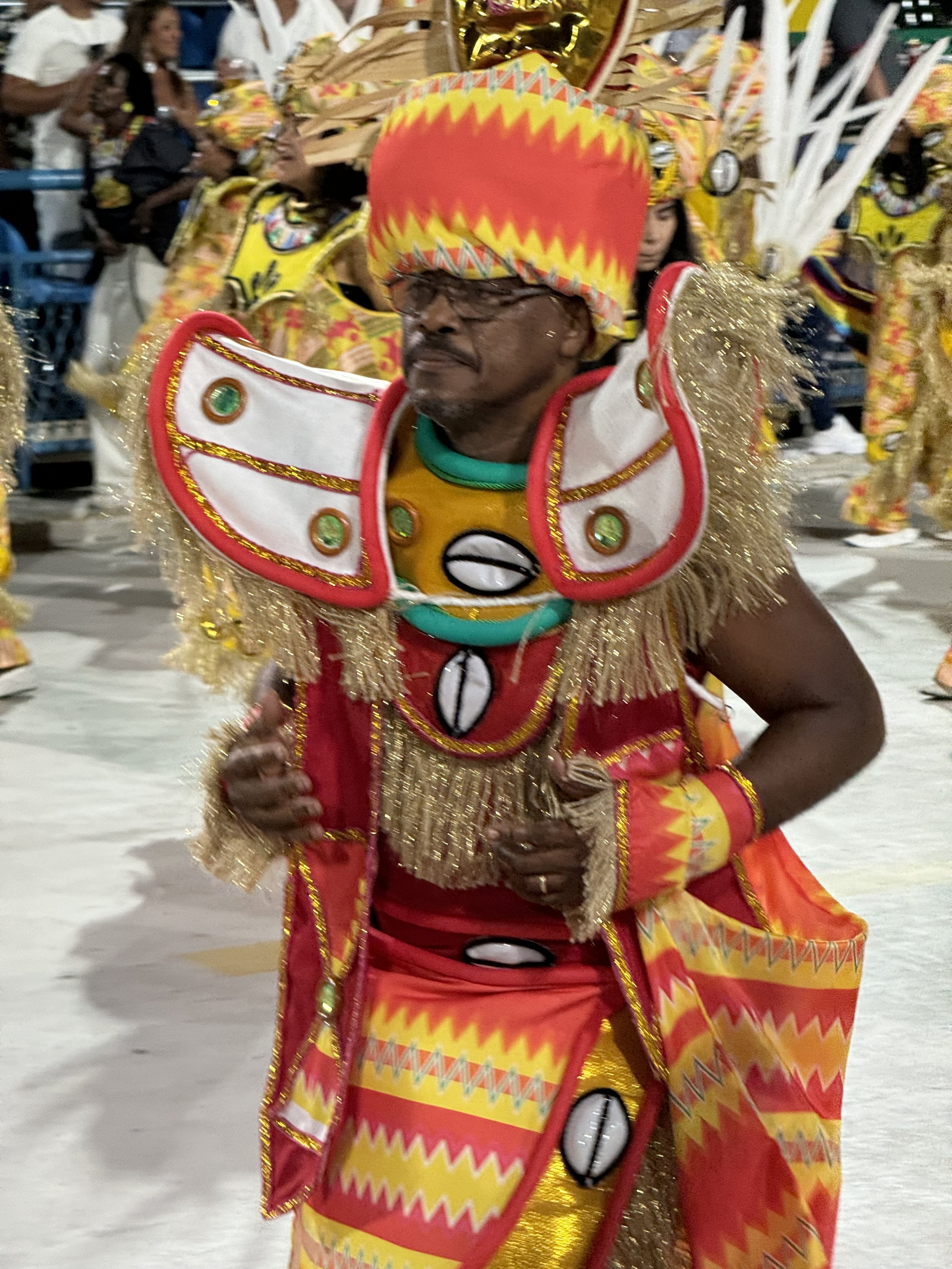
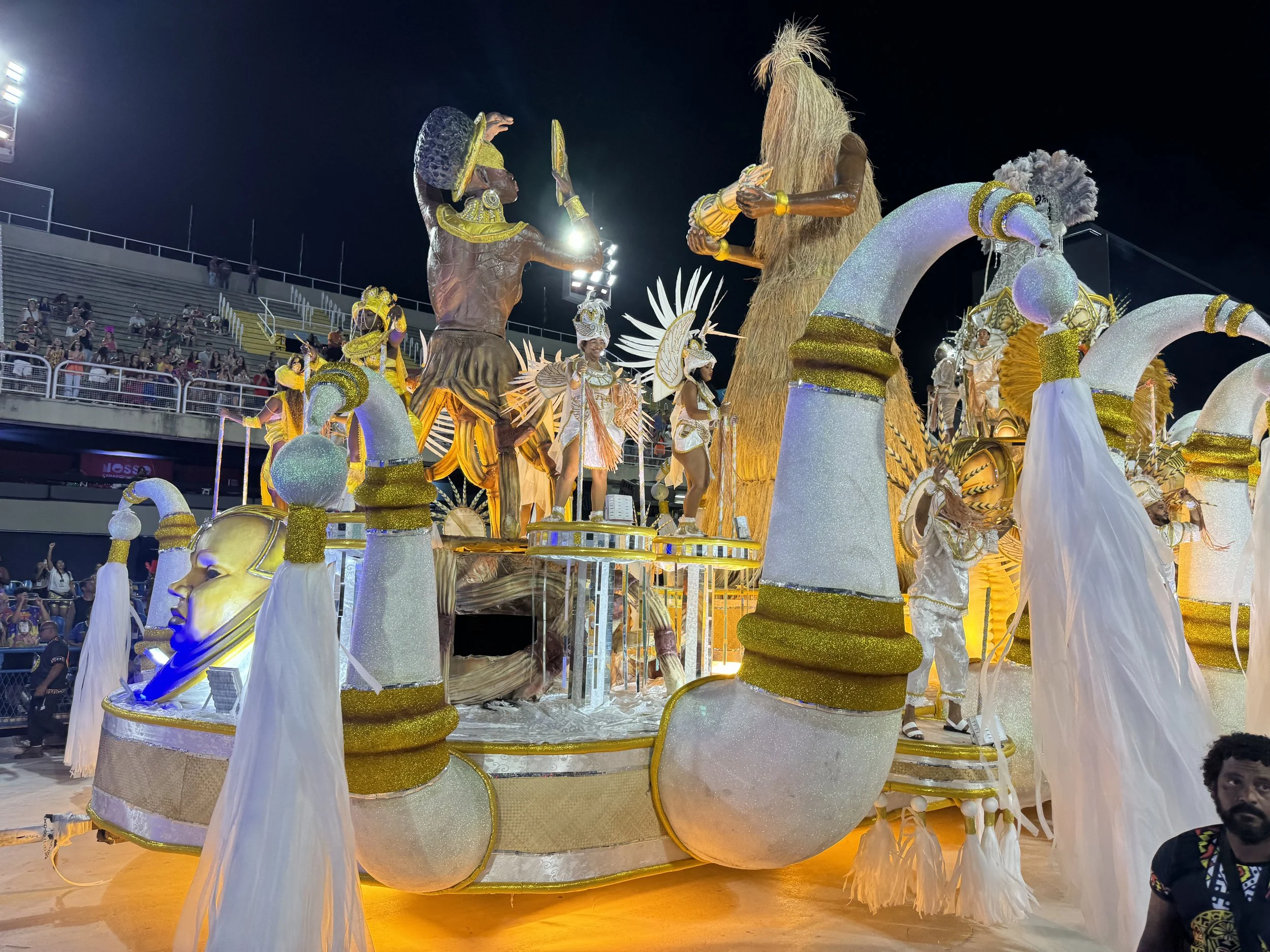
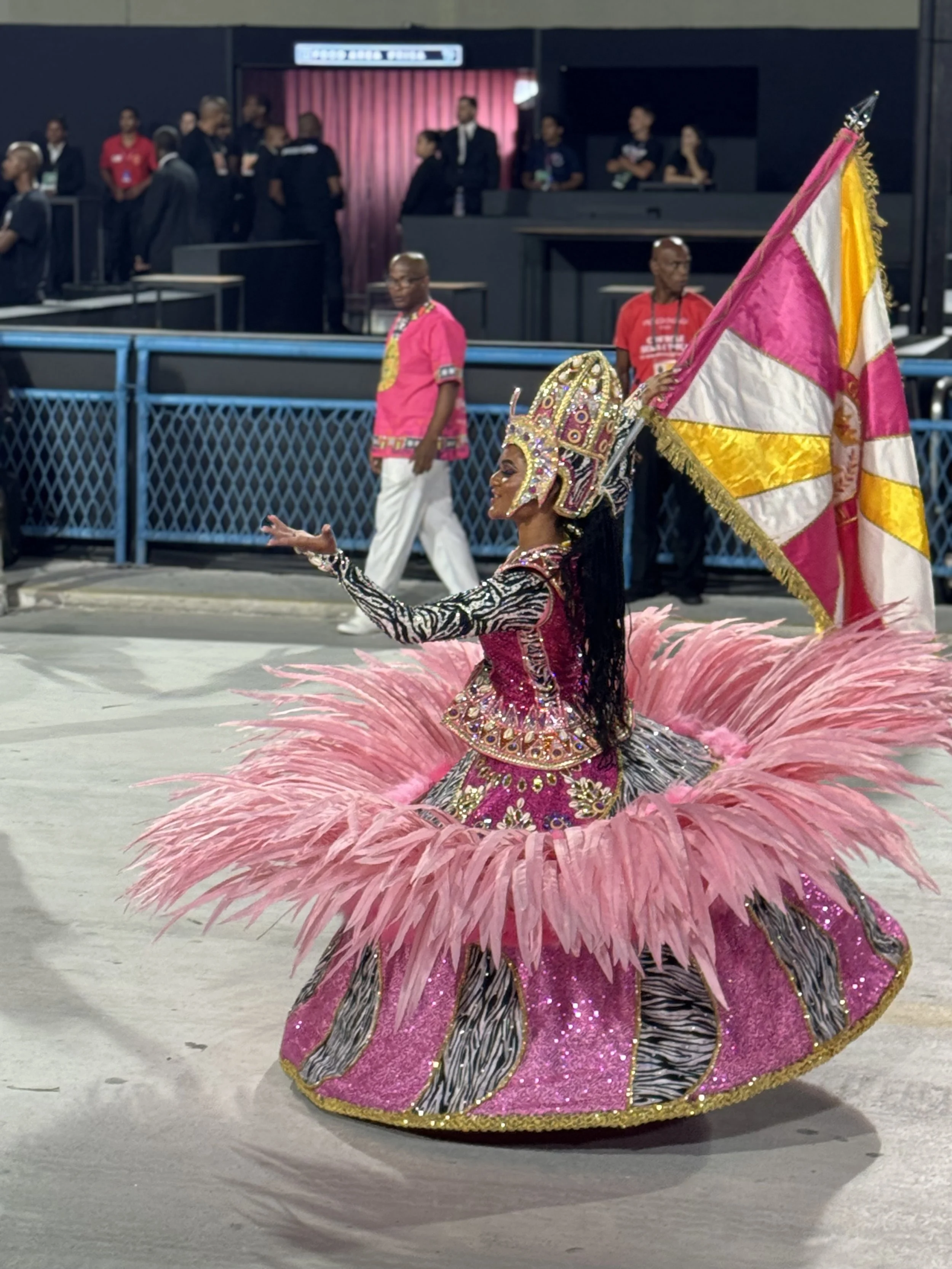
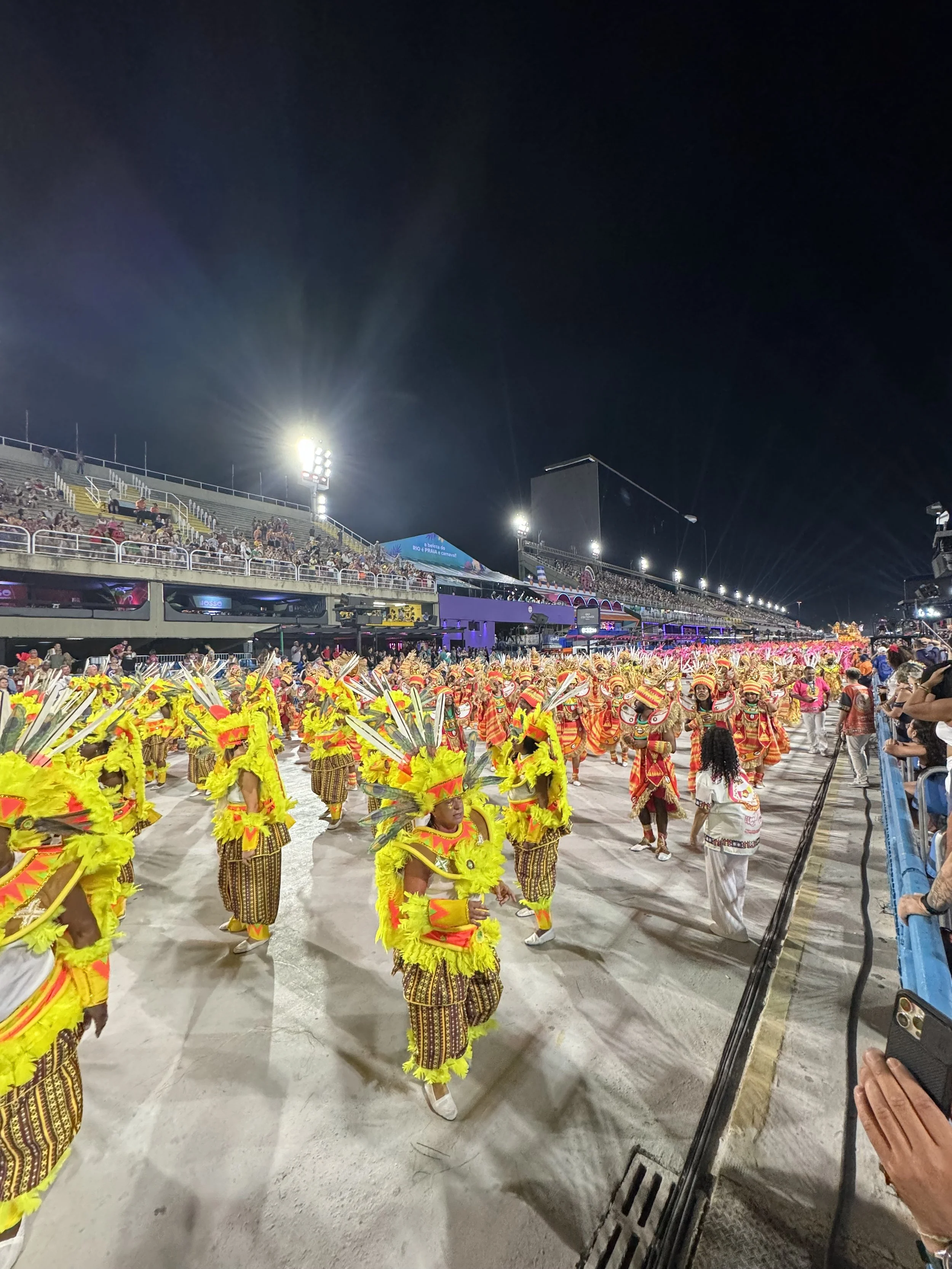
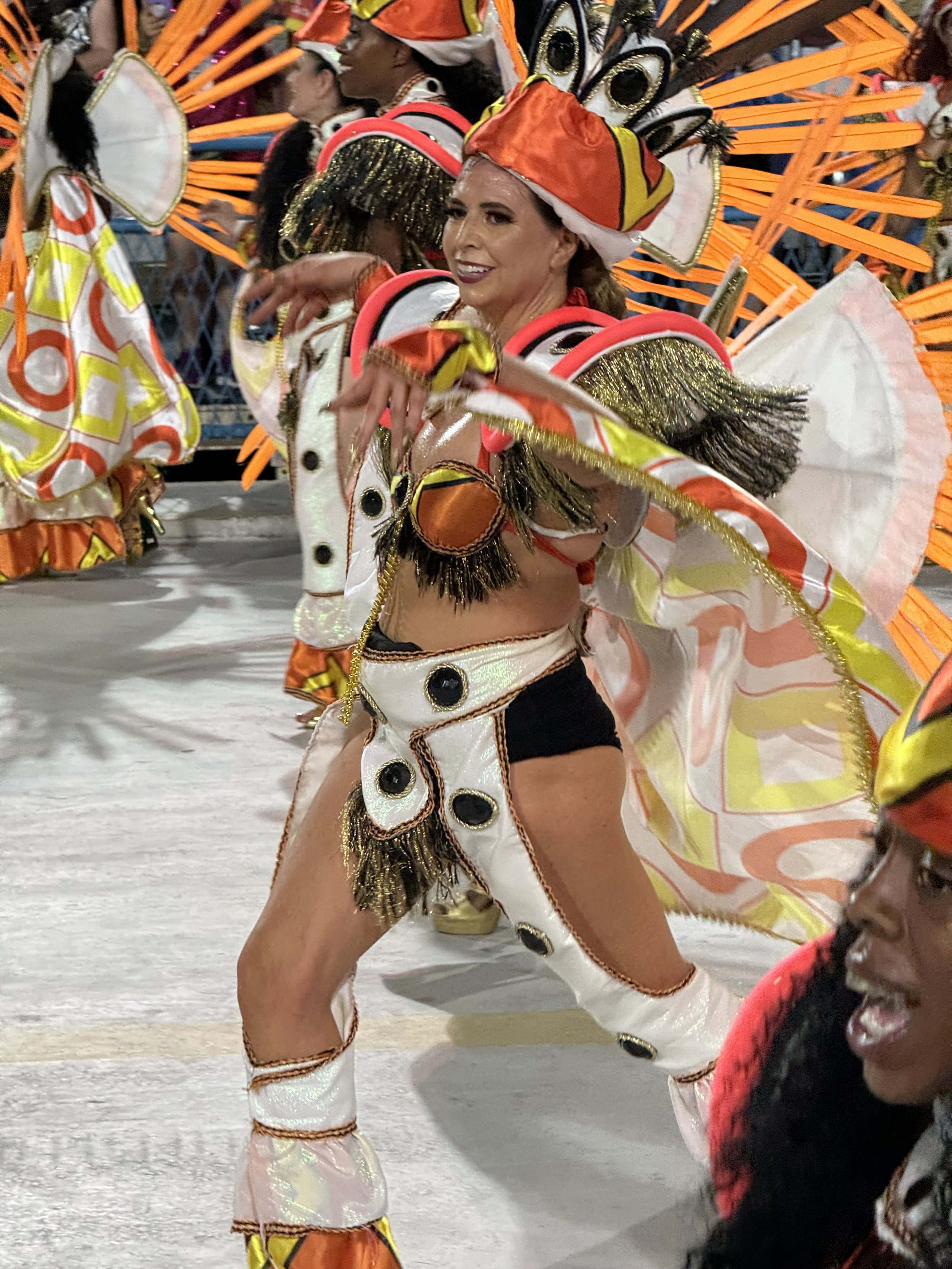
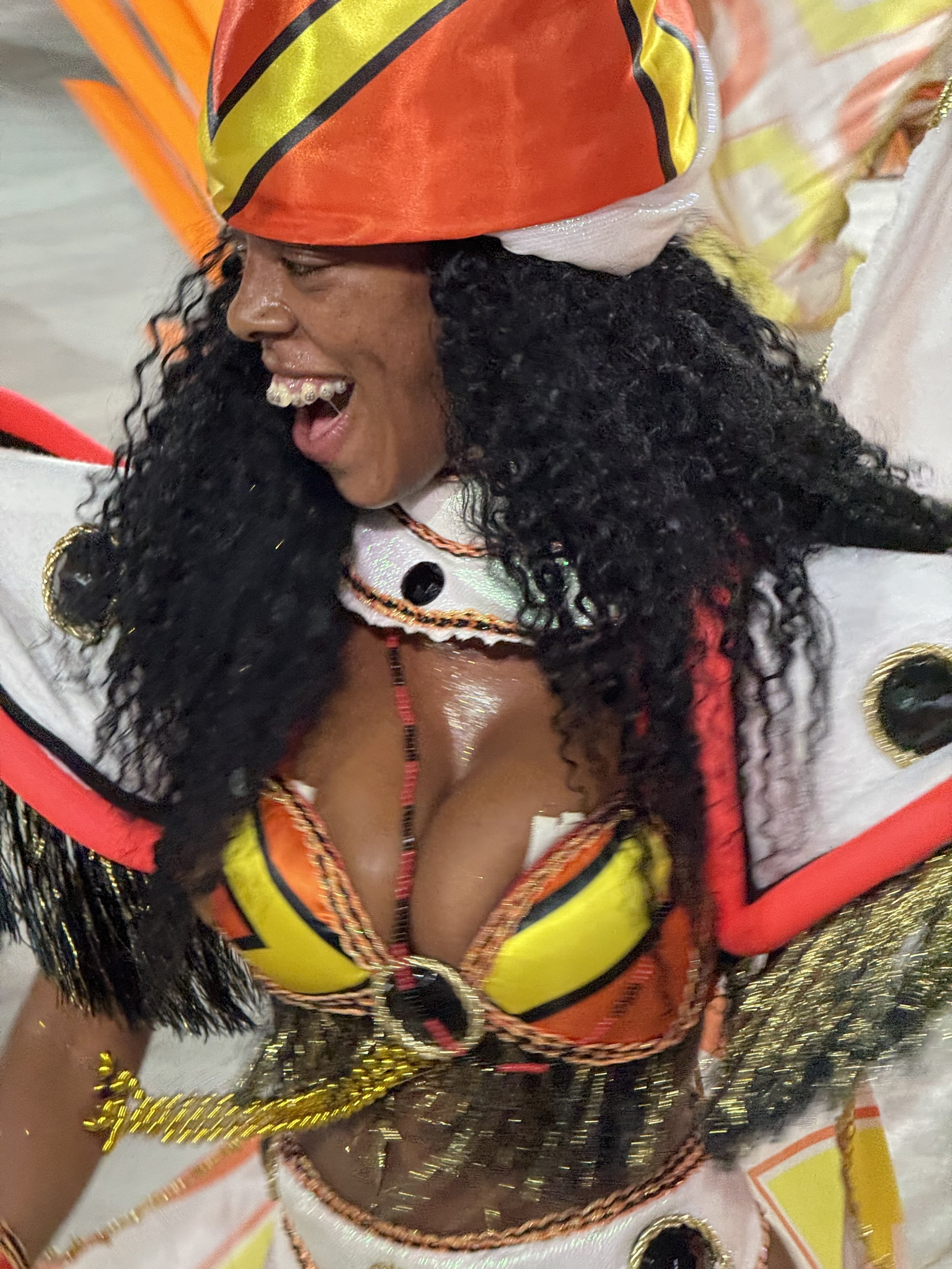

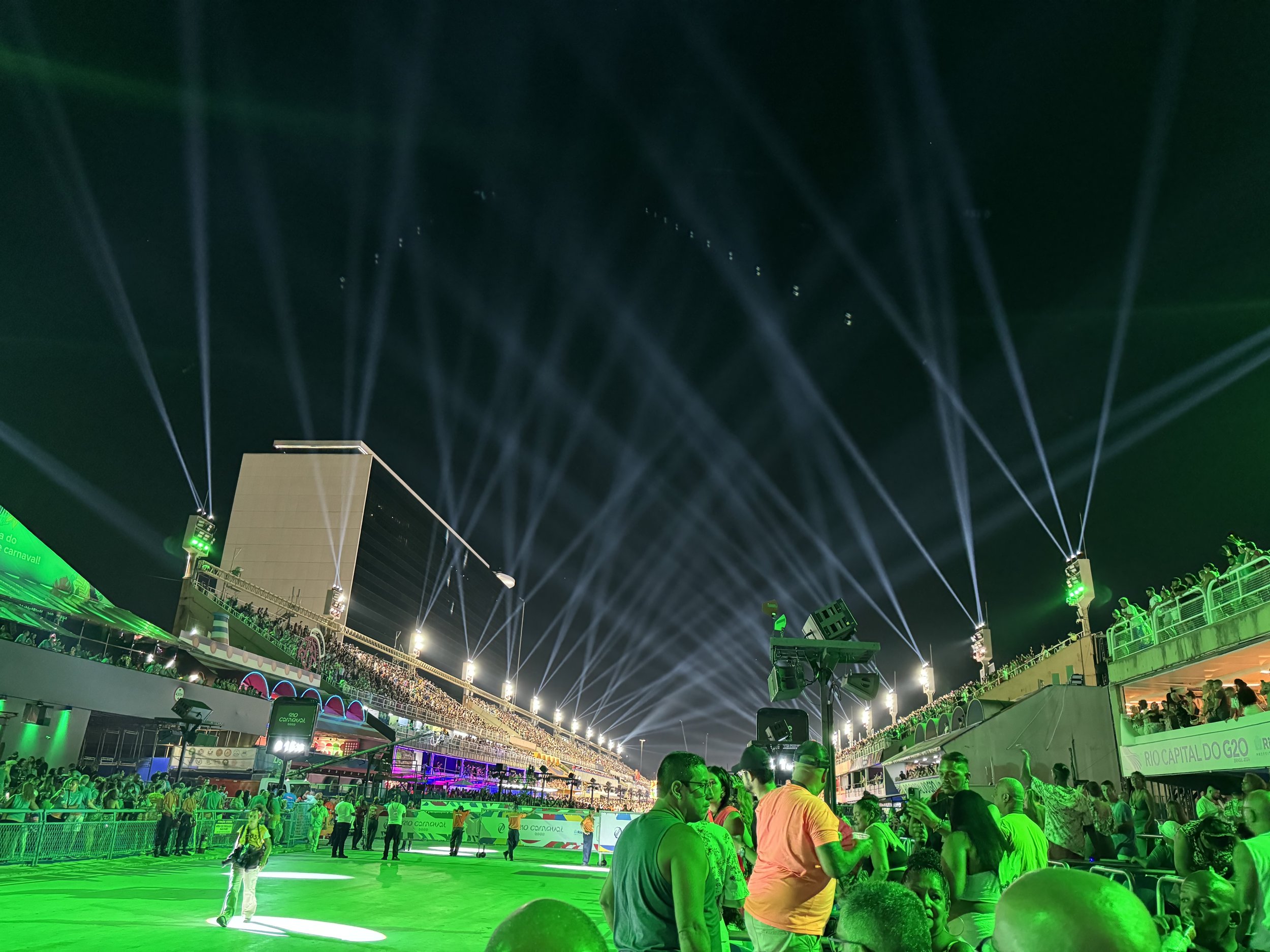
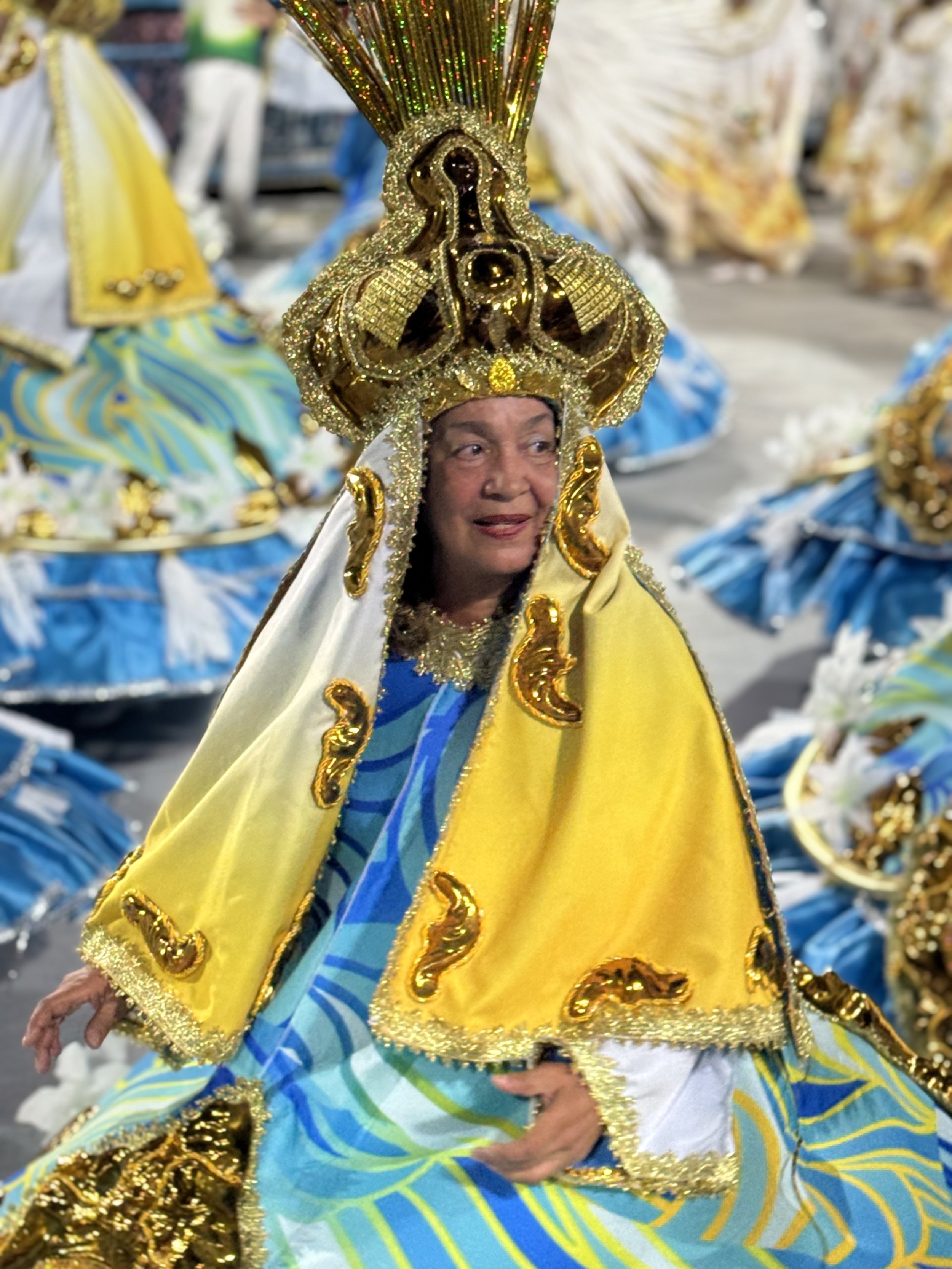
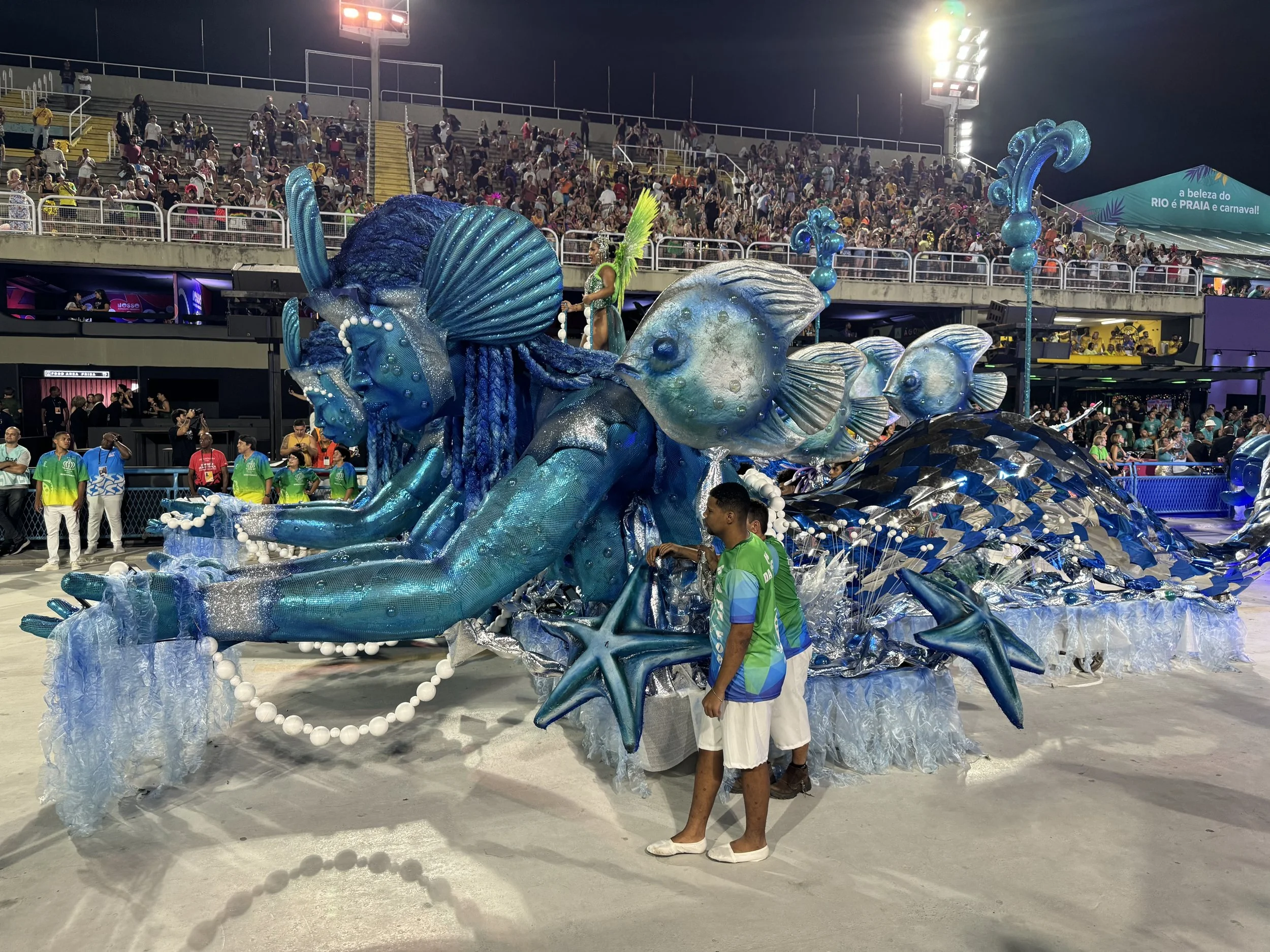
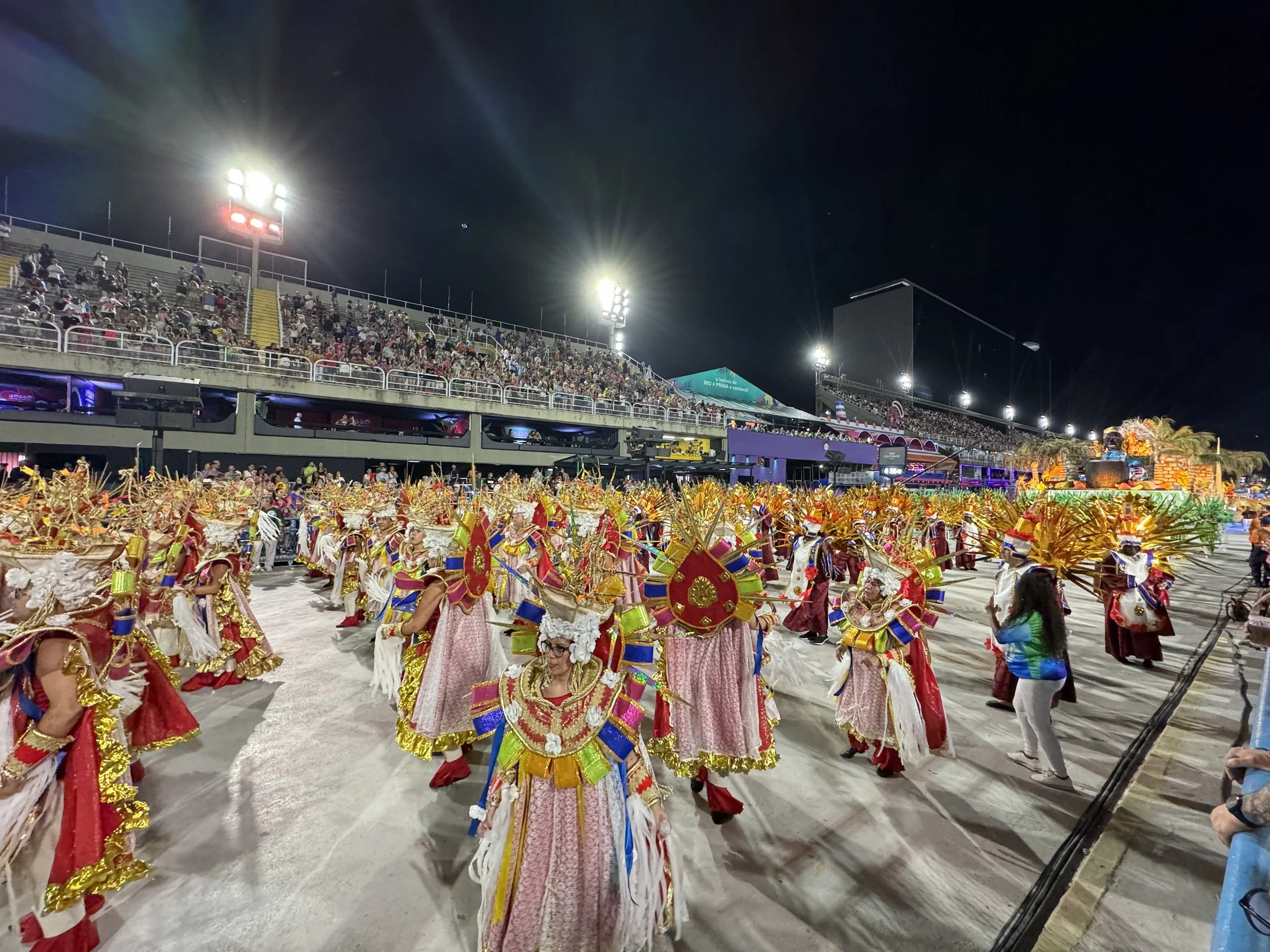
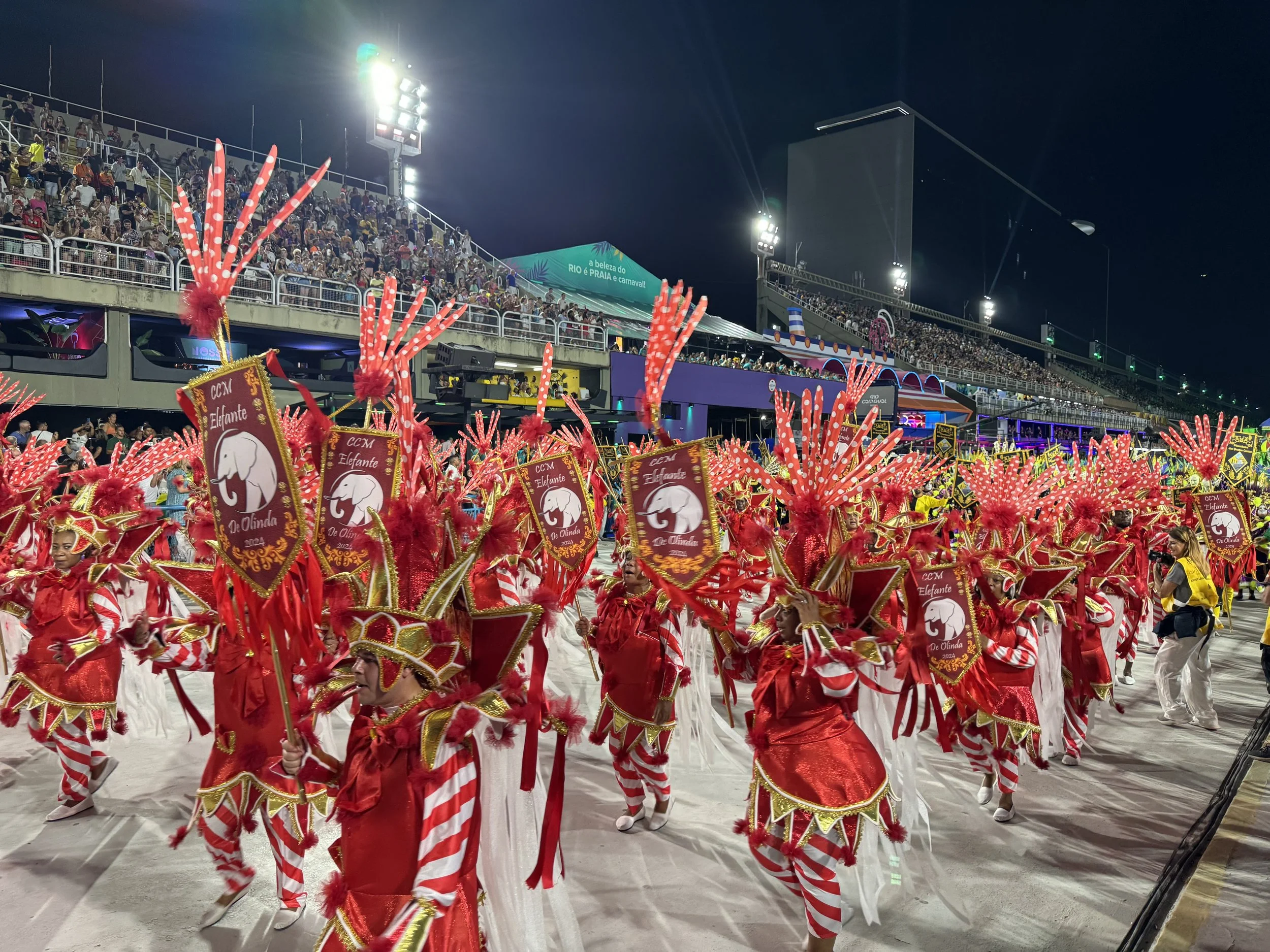
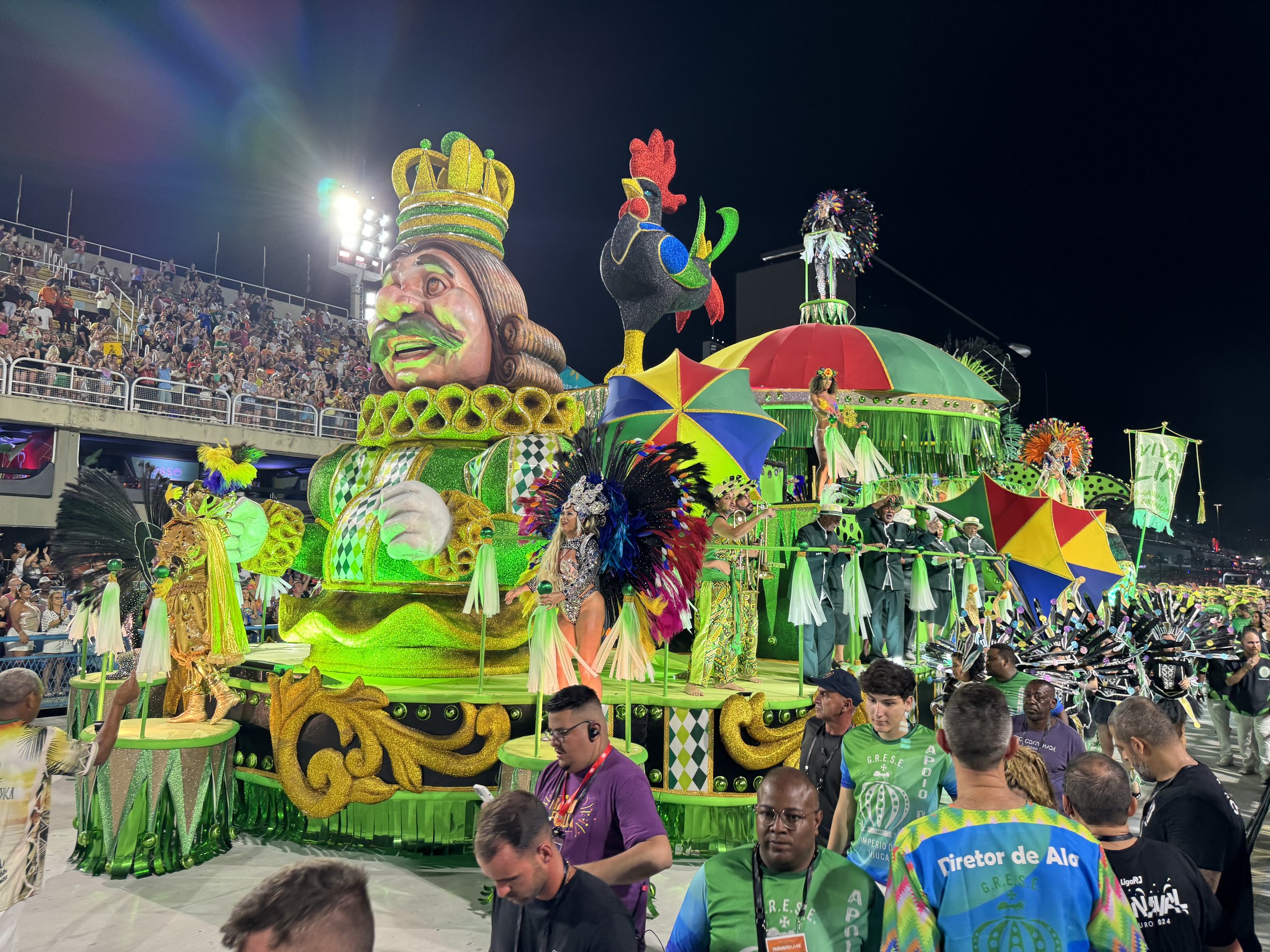
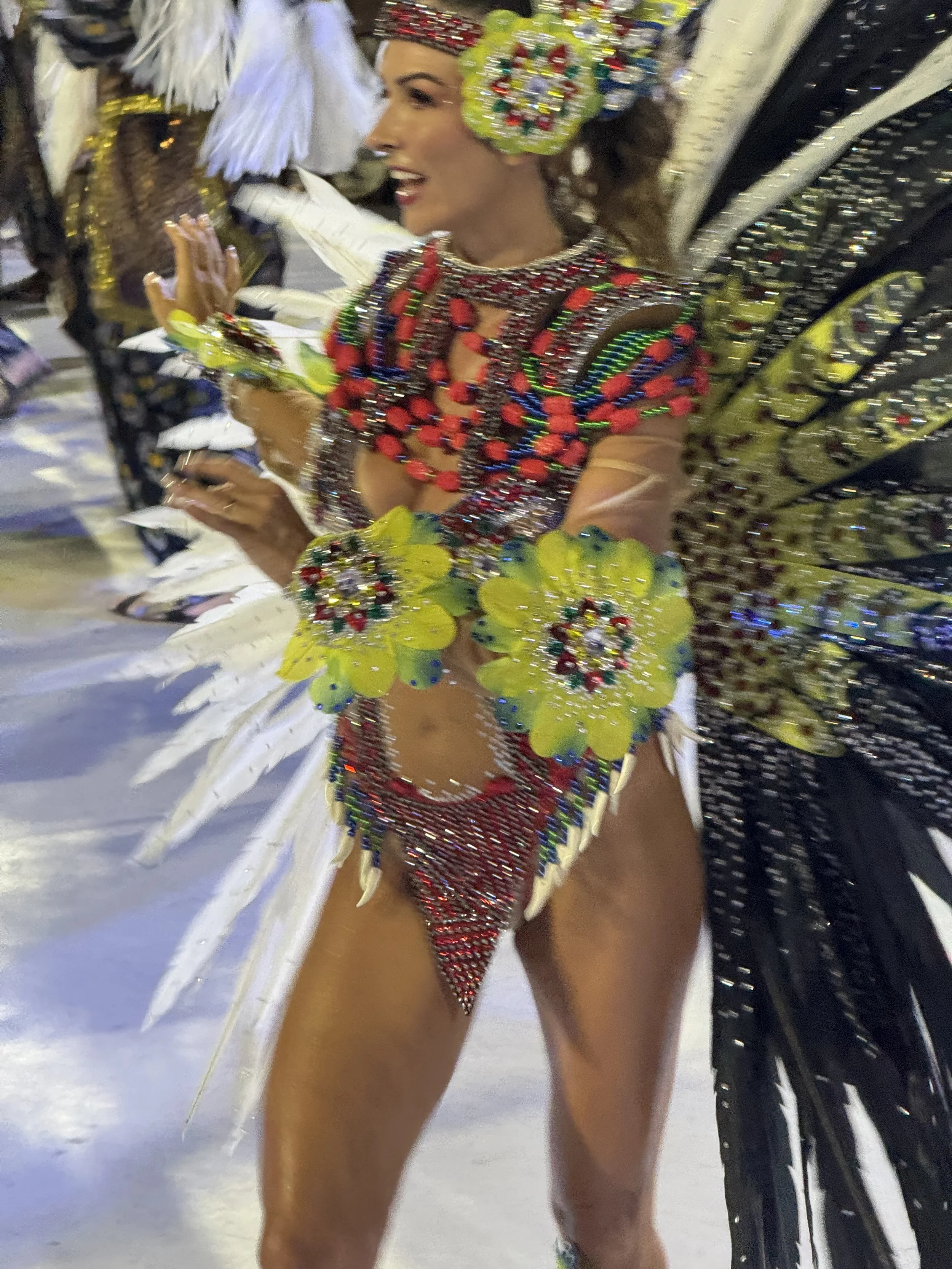

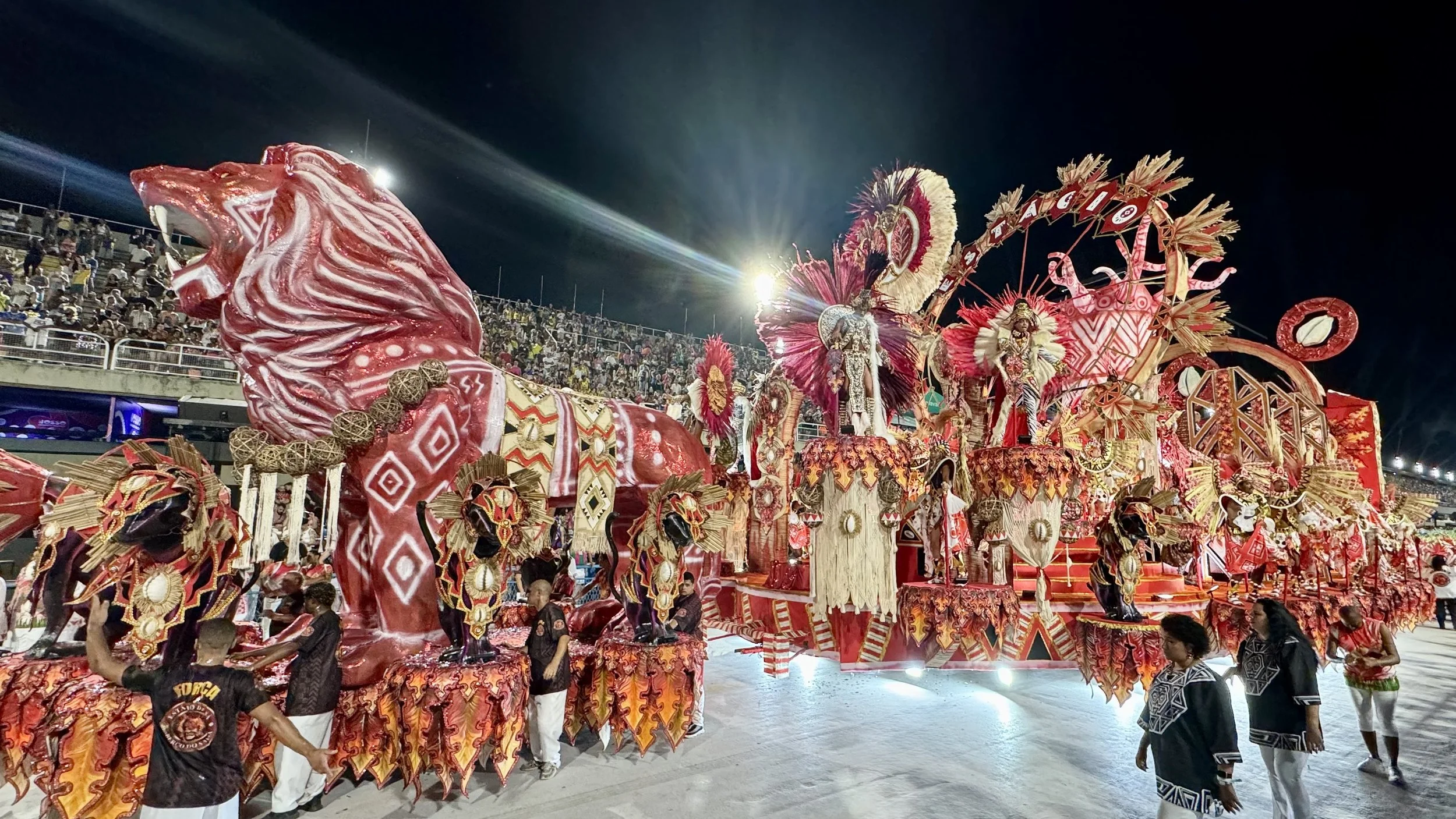
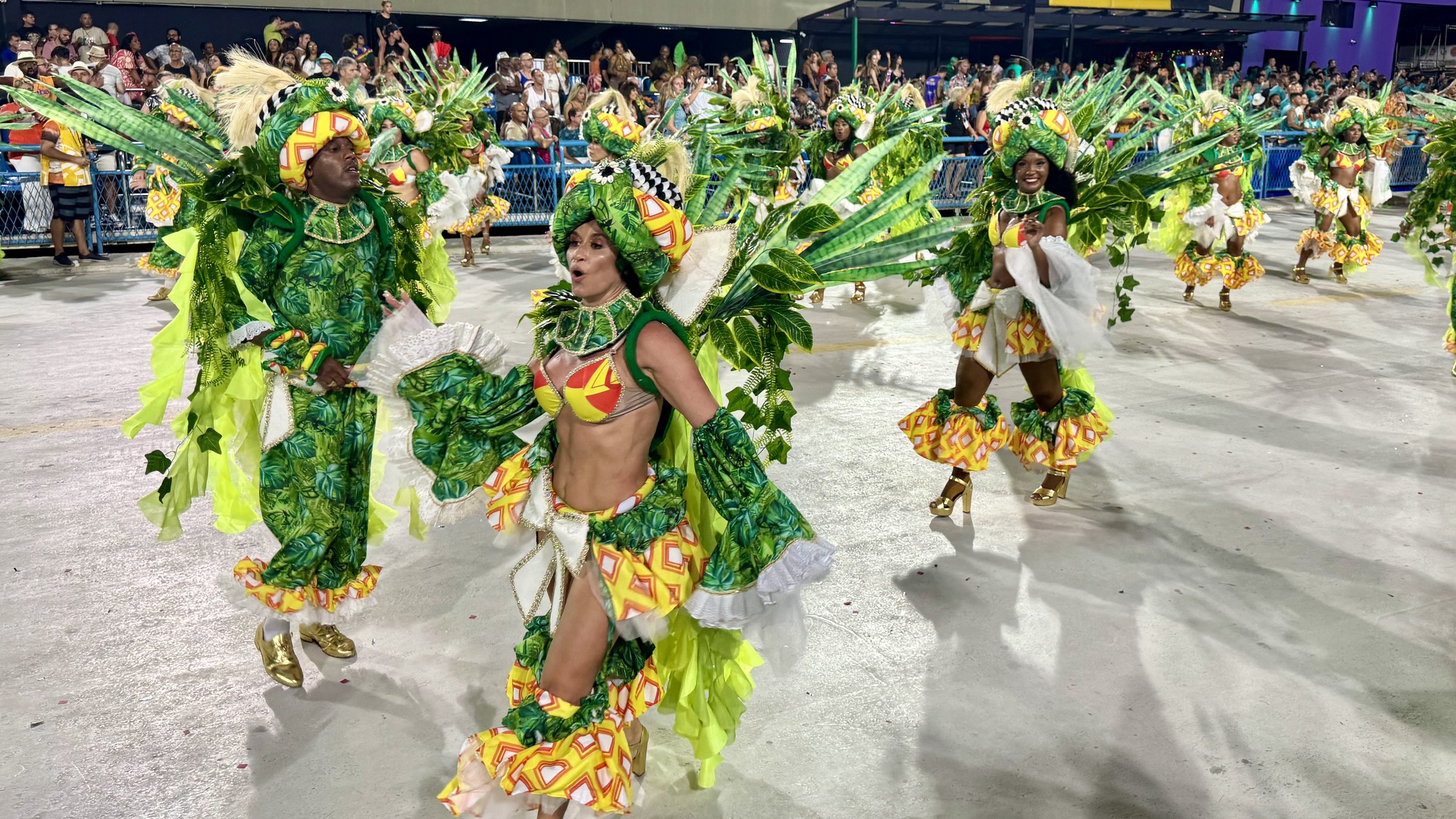
The performances were astonishing. Every school was competing for a place in the following year’s finals, where greater funding and sponsorship are available, and the energy on display reflected that. The commitment, stamina and sheer joy of those taking part was remarkable, they looked as though they were giving absolutely everything, and loving every moment of it.
We managed five of the eight scheduled parades, but by around 3am fatigue finally caught up with us. Deciding we’d reached our limit, we headed for the exit. Taxis were waiting outside and within twenty minutes we were safely back at the apartment — albeit after a rather lively ride that included our driver treating several red lights as optional.
Reflection
The day felt like two entirely different experiences stitched together. The calm of the morning — clear skies, long walks, familiar cafés — could not have been further from the intensity of the night that followed. Sitting quietly on the rocks at Arpoador and later watching thousands of performers surge past in colour and rhythm highlighted just how wide Rio’s range really is. The parade itself was overwhelming in the best possible way — not something to analyse or compare, but something to absorb. By the time we finally left in the early hours, tired and slightly dazed, it felt less like we’d simply watched Carnival and more like we’d briefly stepped inside it.
If you’d like to follow future journeys, reflections, and moments noticed along the way, you can join the mailing list here.