Kerala Backwaters - Drifting Through Another World
By late morning we left the traffic and noise of Kochi behind and drove south towards the backwaters. The change in scenery was gradual at first, the city thinning into suburbs, then villages, then long stretches of coconut palms and narrow roads running alongside canals. The air seemed softer here, the pace slower, as if we were already beginning to leave the rush of the city behind.
When we reached the jetty, our houseboat was already waiting. We were told which of the two boats we had been allocated to, one a smaller three-cabin boat, the other a much larger vessel with ten cabins and a spacious dining area. We found ourselves on the larger one, which at first felt less traditional, but stepping aboard quickly changed that impression.
These kettuvallam boats were once used to carry rice, coconuts and spices through the waterways of Kerala, and although many have now been converted into floating hotels, the long, low wooden shape still hints at their working past. Ours had polished wood throughout, woven cane panels and a shaded deck at the front where we would spend much of the afternoon watching the world drift by. Even the cabins felt unexpectedly comfortable, with wide beds, carved wooden panels and large windows looking straight out onto the water.
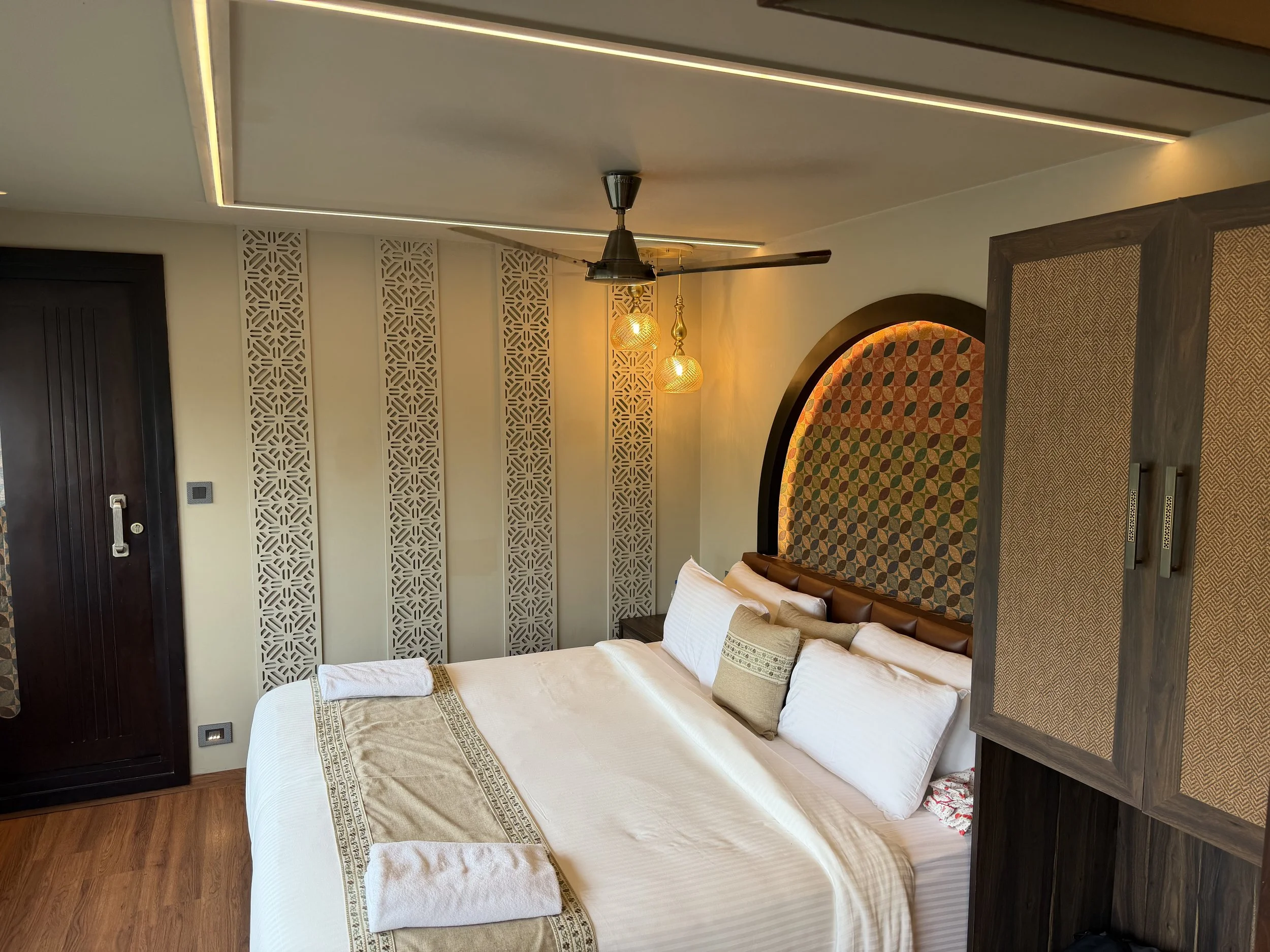
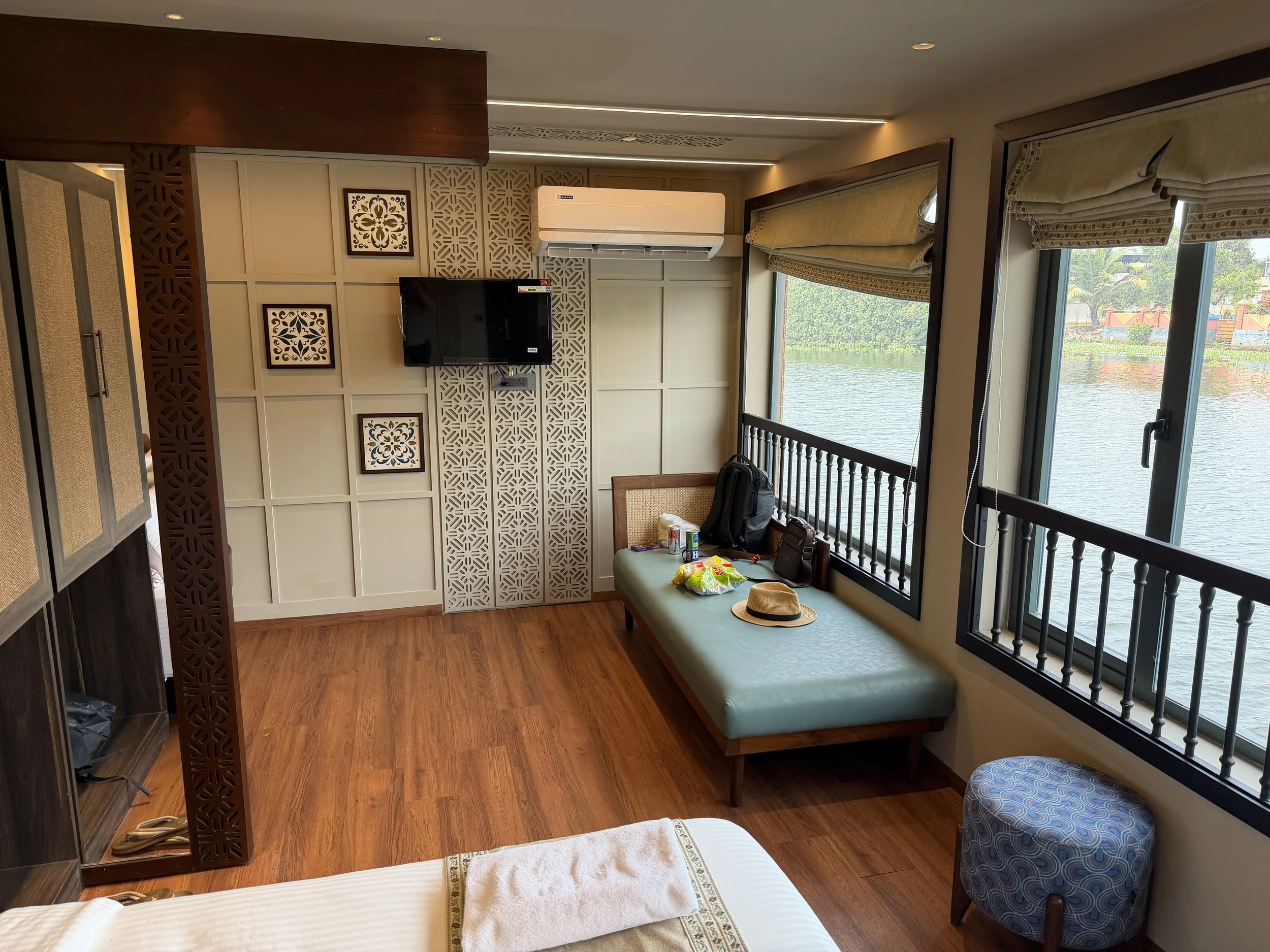
As soon as everyone was aboard, the engines started with a soft thump and we eased away from the shore. Within minutes the sound of the road disappeared, replaced by the gentle wash of water against the hull and the occasional call of birds overhead.
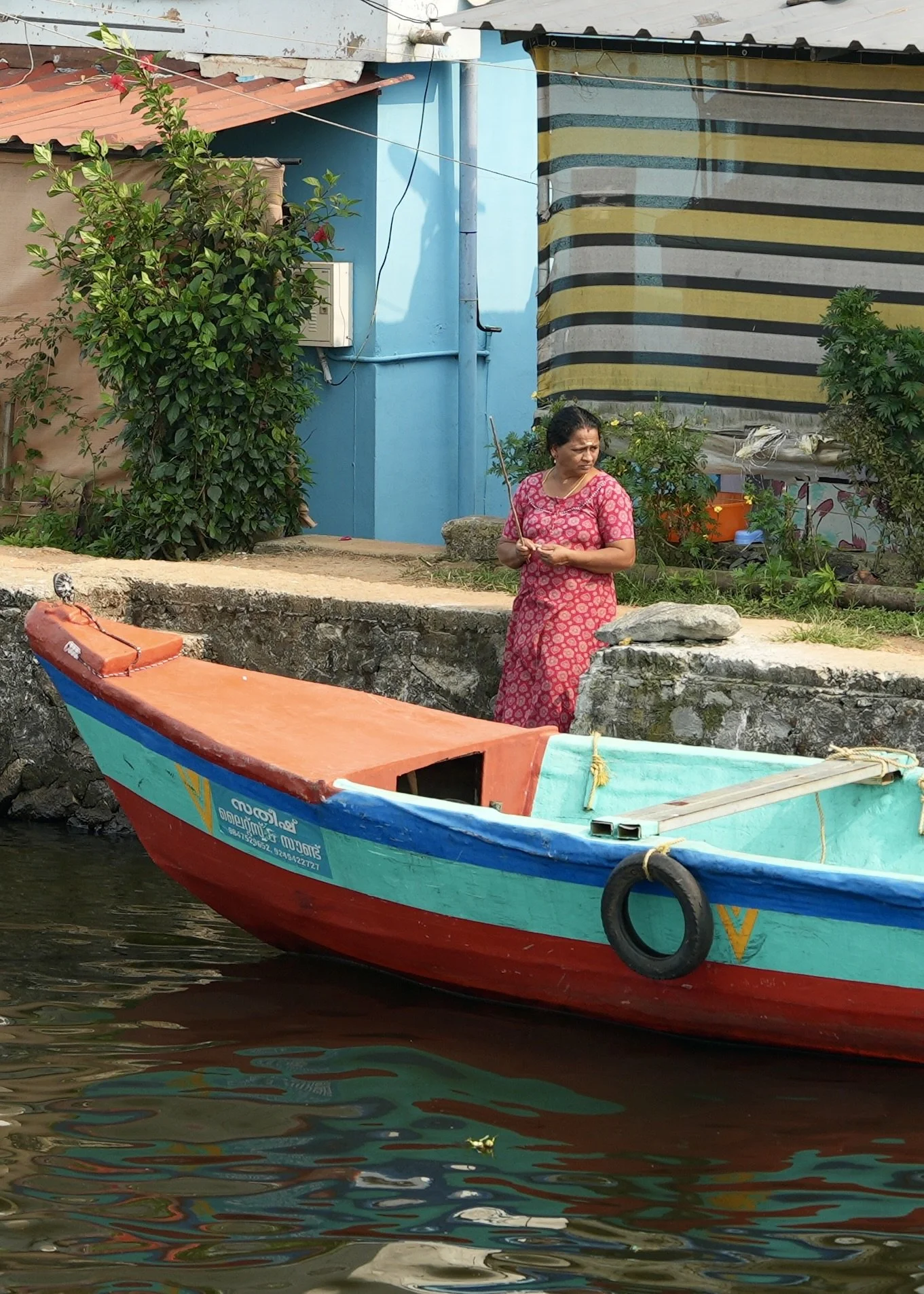
The backwaters felt calm in a way that is hard to describe. Narrow canals opened into wide stretches of water, then closed again into shaded passages beneath leaning palms. Along the banks everyday life unfolded at its own steady rhythm. We passed small houses painted in bright colours, steps leading straight down into the water, and tiny jetties where narrow wooden boats were tied up as if they were cars outside a front door.
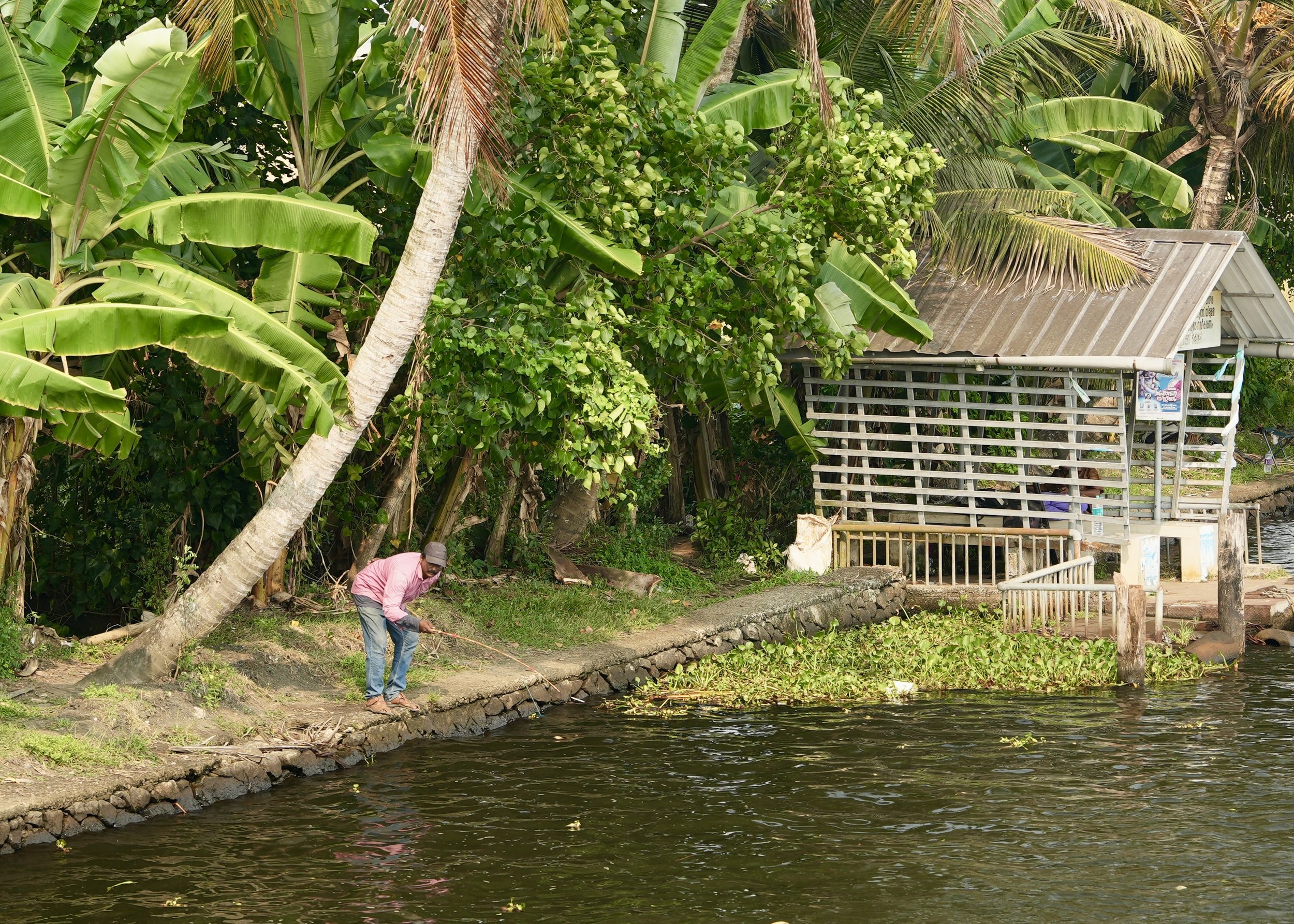
People seemed to use the water as naturally as a road. A man stood fishing beside a line of palms, barely looking up as we drifted past. Women waited beside small boats loaded with supplies, and once we passed a long, narrow canoe piled high with coconuts, the two men aboard guiding it slowly along the channel with long poles. At one stop a group of workers were unloading sacks beneath the shade of a tree, the sort of everyday scene that felt completely unchanged by the passing of tourists.
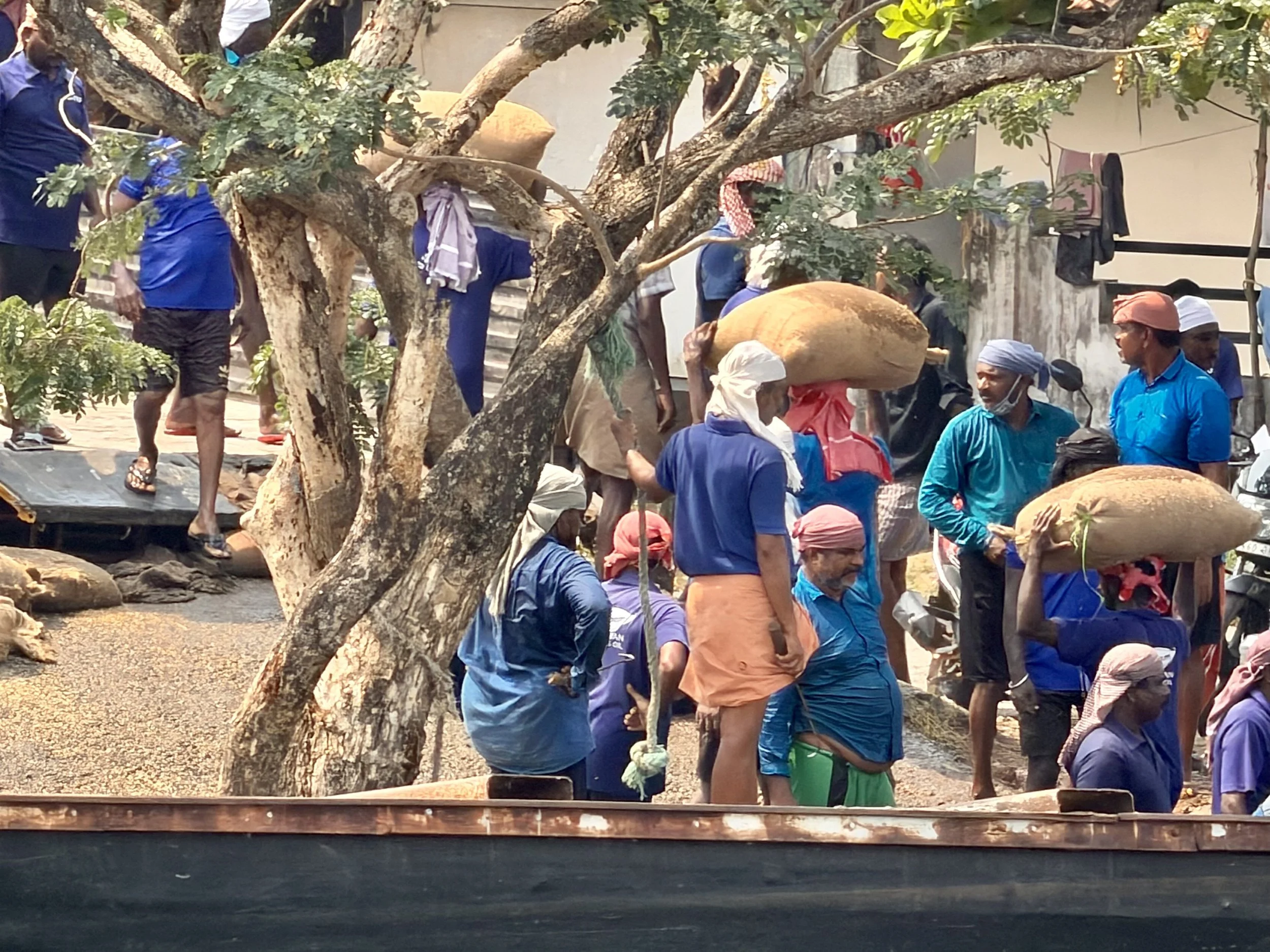
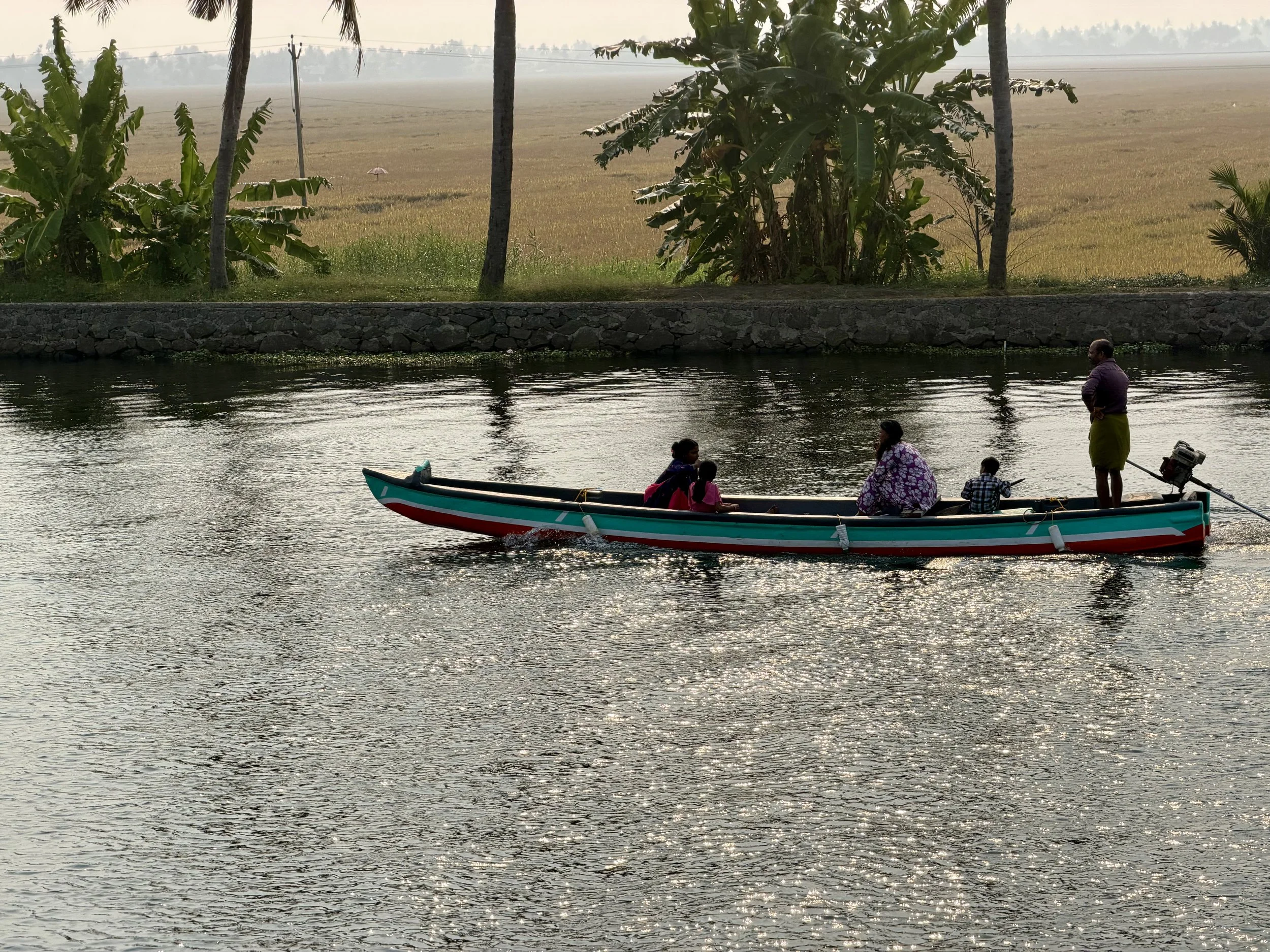
Other houseboats appeared now and then, some small and traditional, others large like ours, moving slowly along the waterways in a quiet procession. Occasionally one would pass close by, the passengers waving lazily from the upper deck before the boats drifted apart again.
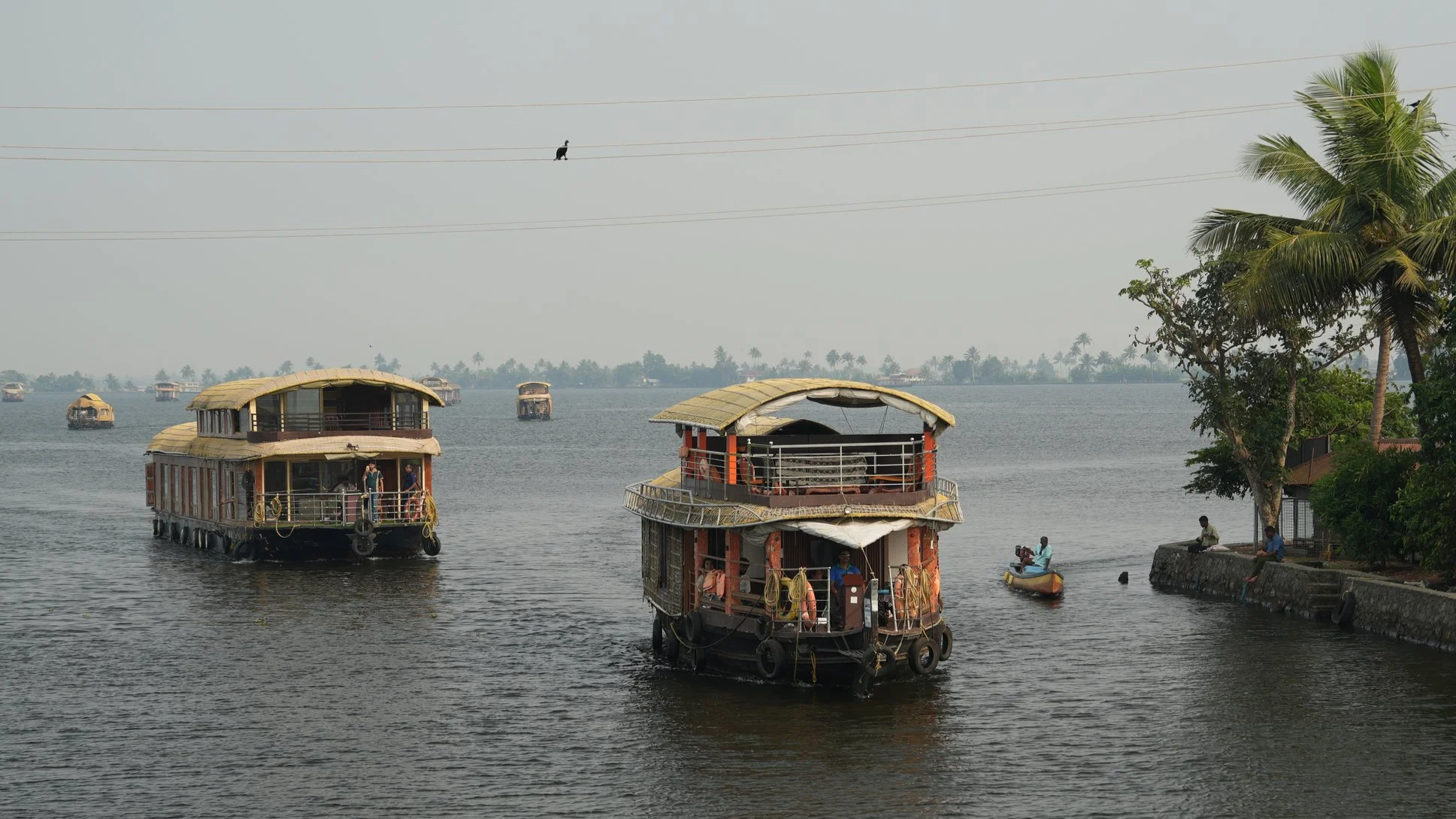
Houseboats
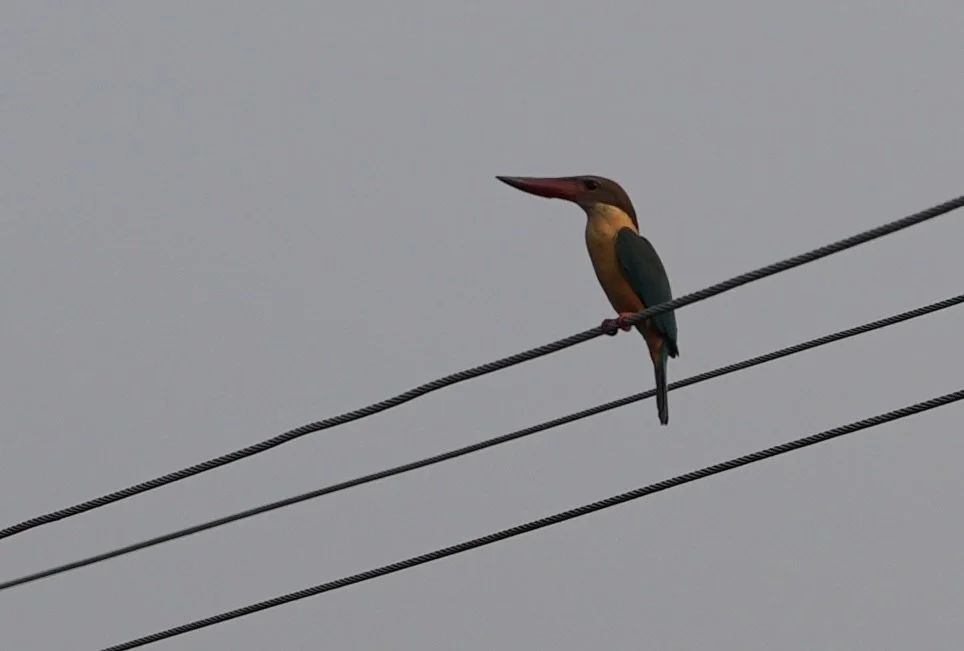
Above us, Brahminy kites circled on the warm air, their white heads bright against the hazy sky, and once one swooped low across the canal, wings spread wide, before lifting again over the palms. Kingfishers flashed across the water in sudden streaks of blue, gone almost before you realised you had seen them.
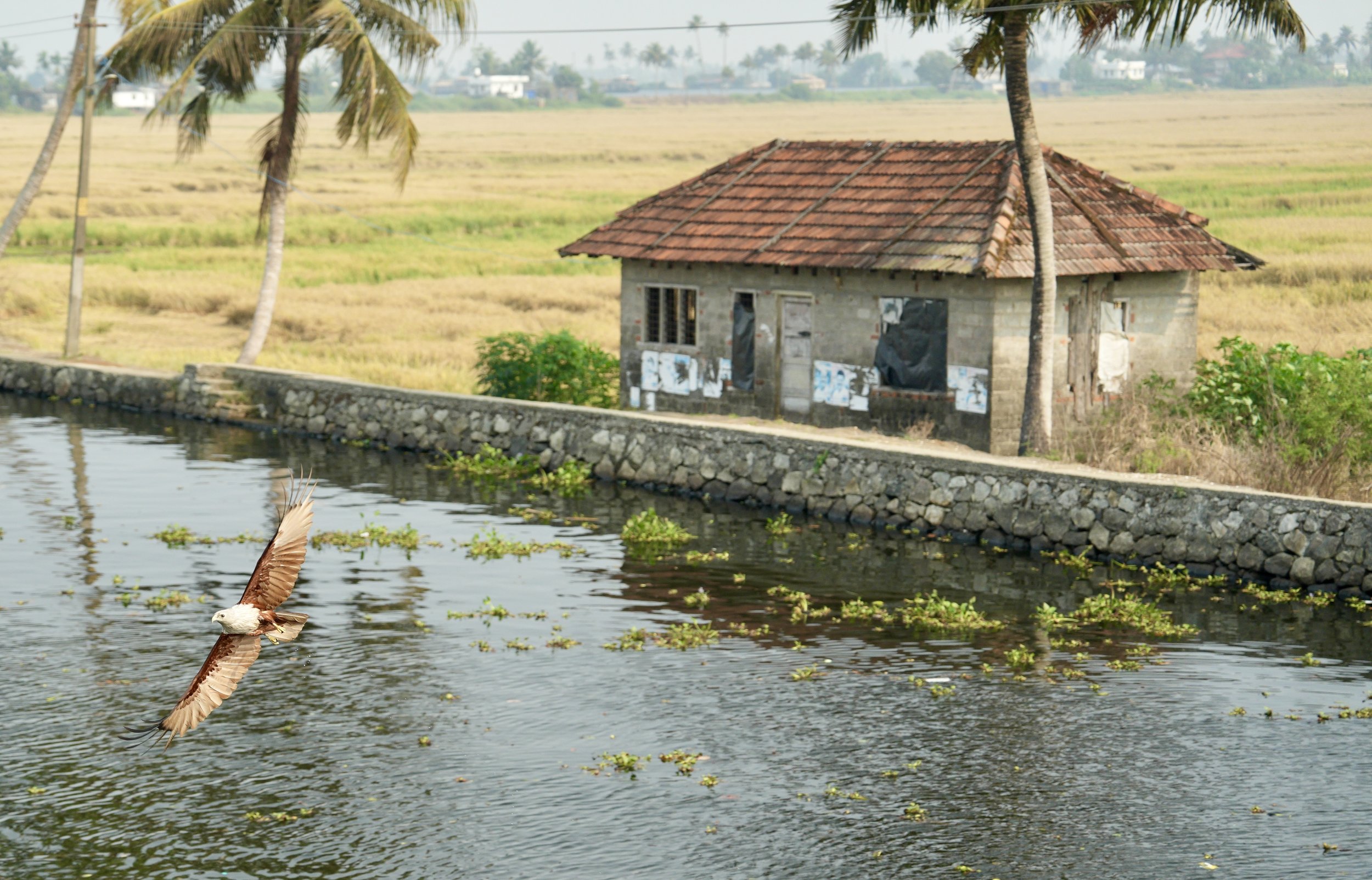
Brahminy kite low over the canal
Lunch was served not long after we had settled into the rhythm of the cruise, simple Kerala food prepared in the tiny kitchen at the back of the boat. Rice, vegetable dishes, curry and fresh chapatis, nothing elaborate, but it felt right for the setting. We ate at the table on the open deck while the scenery drifted past, the boat moving so smoothly that it almost felt as if we were sitting still and the world was sliding by instead.
The further we travelled, the quieter everything seemed to become. The only sounds were the engine, the splash of water at the bow, and the distant voices from the banks. There was nowhere to hurry to, nothing to tick off a list, just the slow movement of the boat and the steady rhythm of the afternoon.
During the afternoon the heat built steadily, and the pace of everything slowed even more. Some people retreated to their cabins for a rest, others sat quietly at the front of the boat watching the water. I spent most of the time on deck with my camera close at hand, although this was one of those places where photographs never quite capture the feeling of being there. The backwaters are not dramatic in the way that forts, palaces or temples are dramatic. Their beauty is softer, made up of reflections, small movements, and moments that appear and disappear before you have time to think about them.
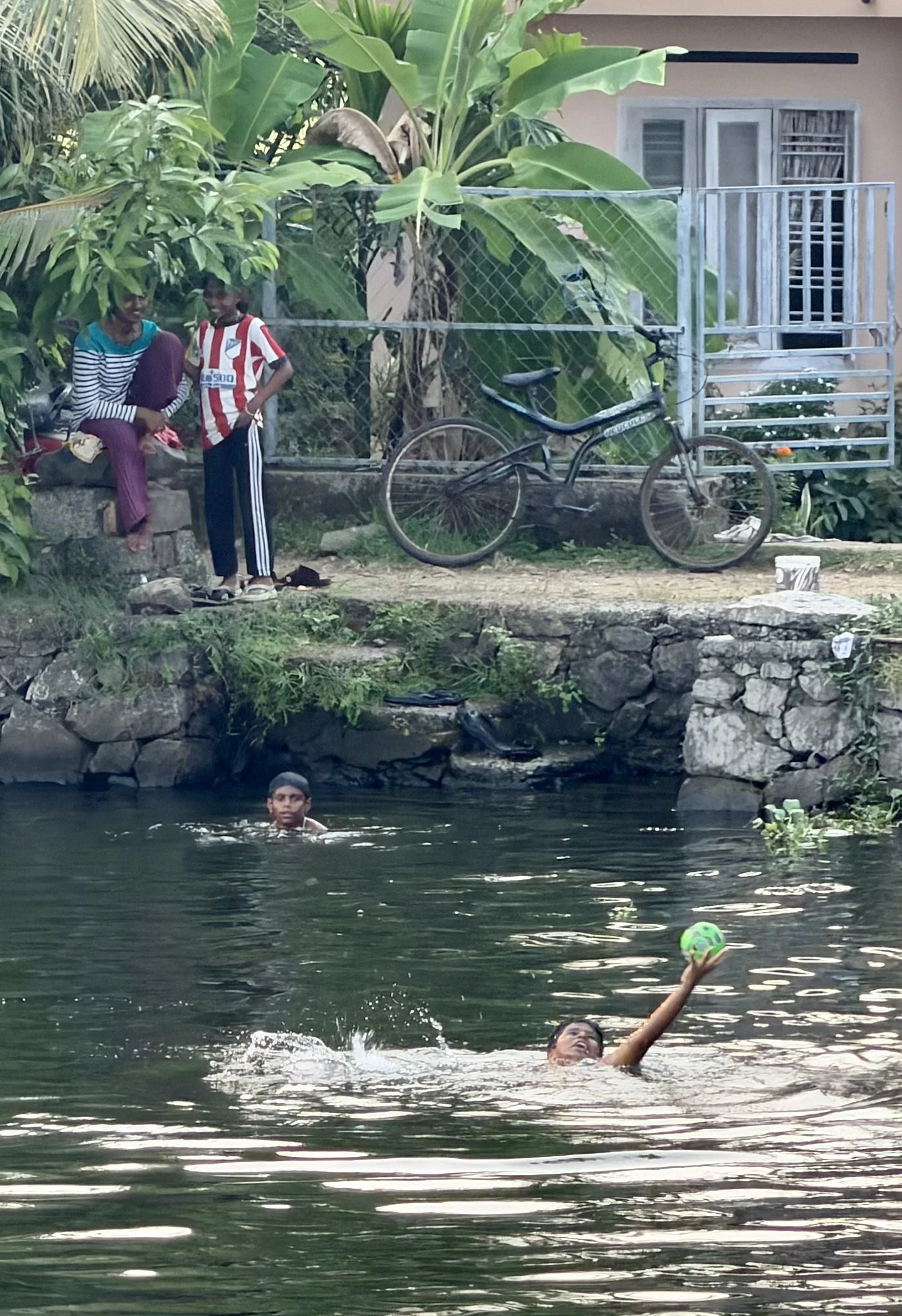
Along the banks, life continued in a way that felt completely unselfconscious. People washing, cooking, talking, repairing nets, children calling out to the boat as we passed. It did not feel staged for visitors, just everyday life carried on as it always has, with the water at the centre of everything.
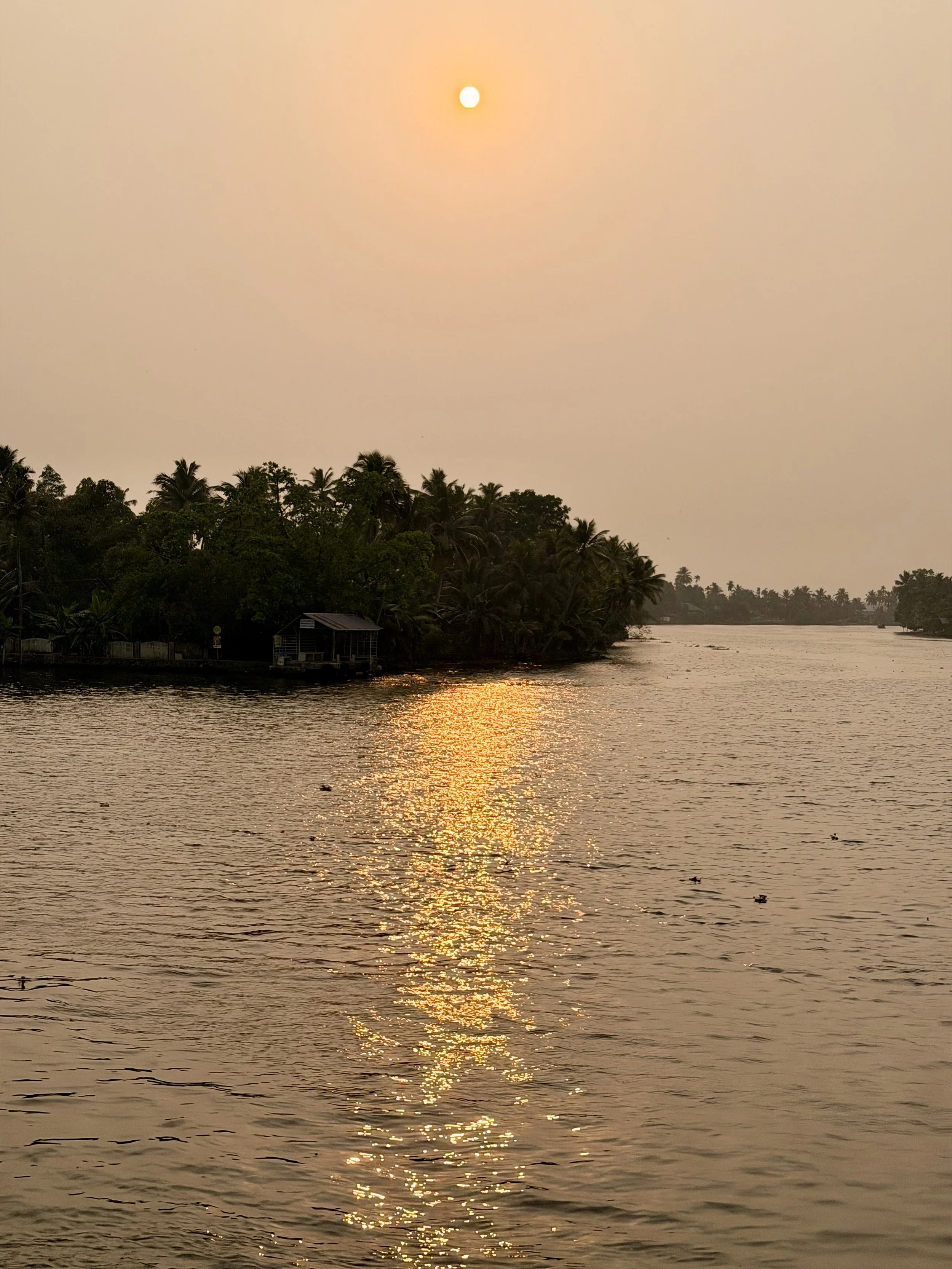
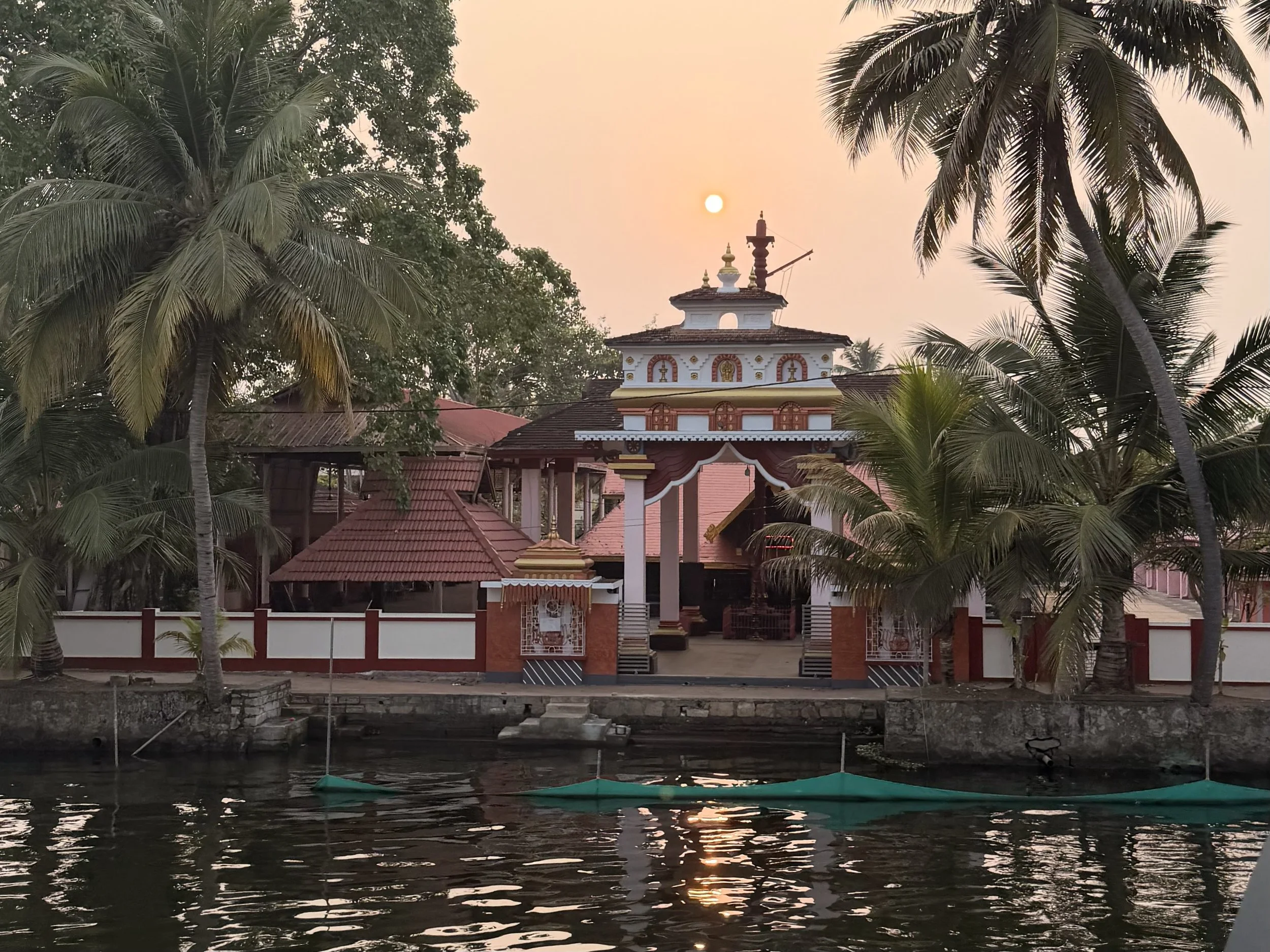
As the afternoon faded the light softened and the colours warmed, the greens deeper, the water turning dull gold where the sun caught the surface. No one said very much. After so many busy days of travelling from place to place, this was something different, a chance to sit still and simply watch.
Our docking point for the evening turned out to be surprisingly well equipped, with a small swimming pool and even a games room beside the jetty. A few of the group went straight for a swim while the rest of us cooled off and got ready for dinner after the heat of the afternoon.
Another excellent meal was served, and afterwards the passengers from the smaller boat joined us. With the supplies of wine and beer we had bought earlier from a local off-licence, the evening quickly became one of the livelier nights of the trip. After such a peaceful day drifting through the backwaters, the contrast could not have been greater, but the laughter and shared stories were all part of travelling together, and nobody seemed in any hurry for the night to end.