Into the Hills - Alleppey to Thekkady
After breakfast we said goodbye to the houseboat and stepped back onto dry land at the jetty. The air still felt heavy with humidity from the backwaters, and for a while the road followed the same flat landscape we had been drifting through the day before — canals beside the road, narrow bridges, small houses painted in bright colours, and coconut palms everywhere you looked.
People cycled along the roadside, children in school uniforms walked in small groups, and every few minutes we passed a tiny shop selling fruit, snacks or tea. It felt as though we were still in the same world as the river, just seeing it from land instead of water.
Gradually the scenery began to change. The flat backwaters gave way to gentle hills, then steeper slopes, and before long the road started to climb steadily inland. The air became cooler as we gained height, and the vegetation changed too. The thick palms were replaced by dense forest, rubber trees, and then the first tea plantations, their neat green rows covering the hillsides in patterns that looked almost too perfect to be natural.
The road twisted and turned as we climbed higher, sometimes narrow enough that our driver had to slow almost to a crawl to pass oncoming lorries and buses. Every now and then we passed the remains of wrecked cars or buses by the side of the road, a slightly worrying reminder of how unforgiving these mountain roads could be, although our driver seemed in no hurry and took the bends with steady patience. At times the view opened out across the valleys, layers of green fading into the distance in the hazy afternoon light.
As we got closer to Thekkady, the guide pointed out that we were entering spice-growing country. Small roadside stalls appeared selling packets of pepper, cardamom, cinnamon and cloves.
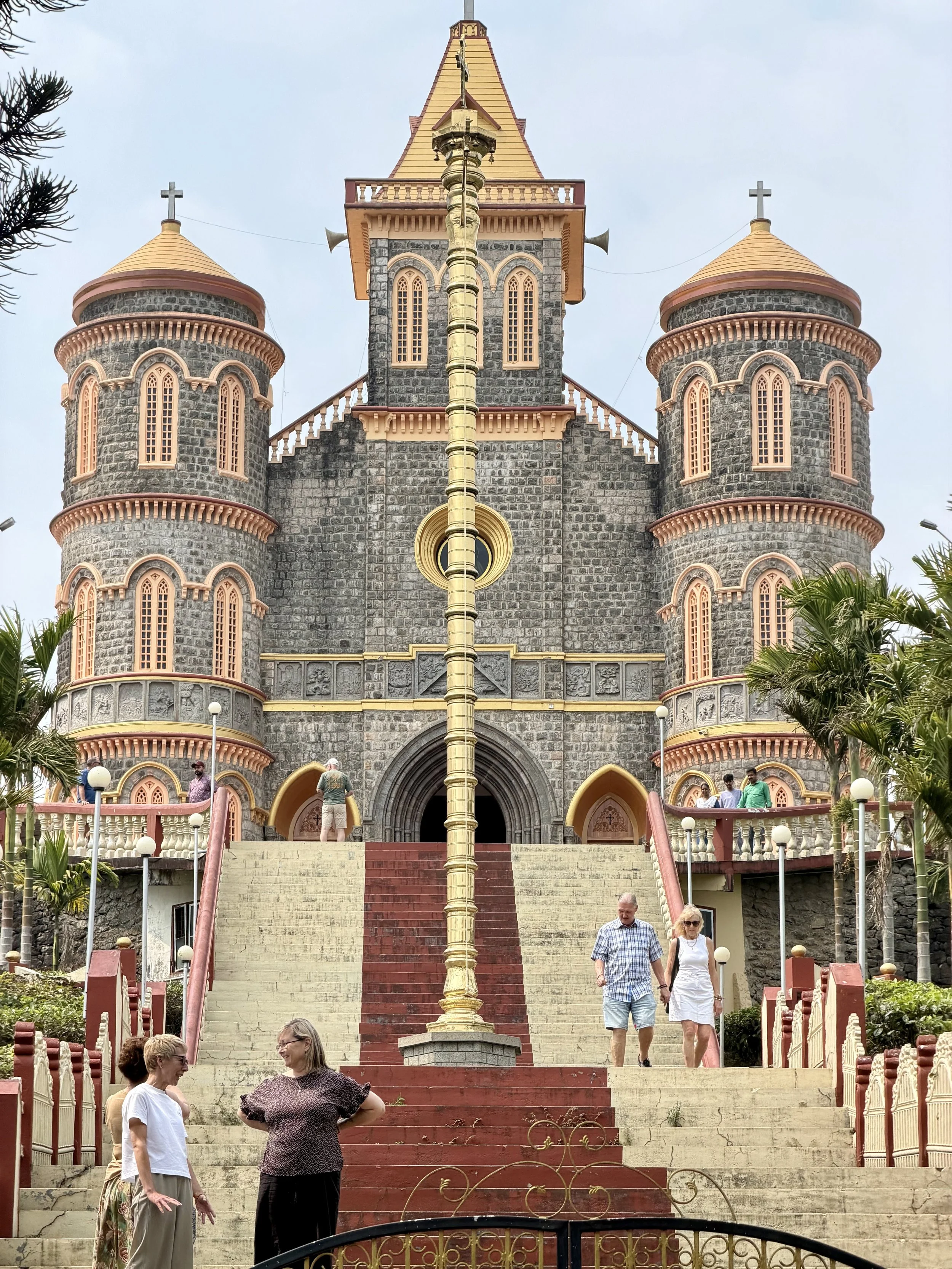
The journey inland was broken by a short stop at a hilltop church. Officially it was simply a comfort break, a chance to stretch our legs and make use of the restrooms, but the building itself quickly became the real attraction. Set above the road and reached by a wide flight of steps, the church seemed far grander than anything we had seen in the surrounding villages. Built from dark stone with pale orange detailing, it had twin towers, arched windows and a tall central spire, more like something you might expect to find in a European town than in the middle of the Kerala hills.
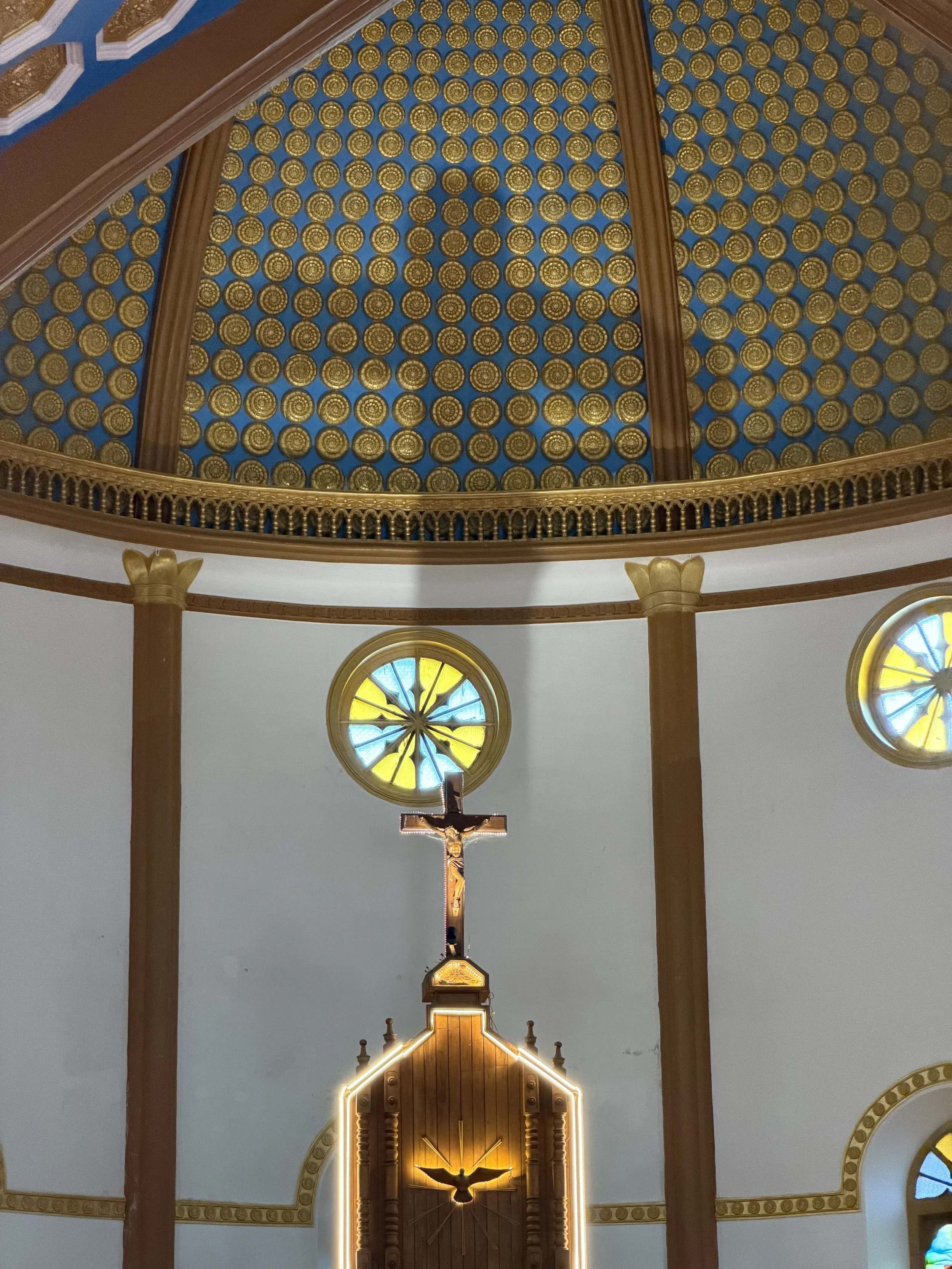
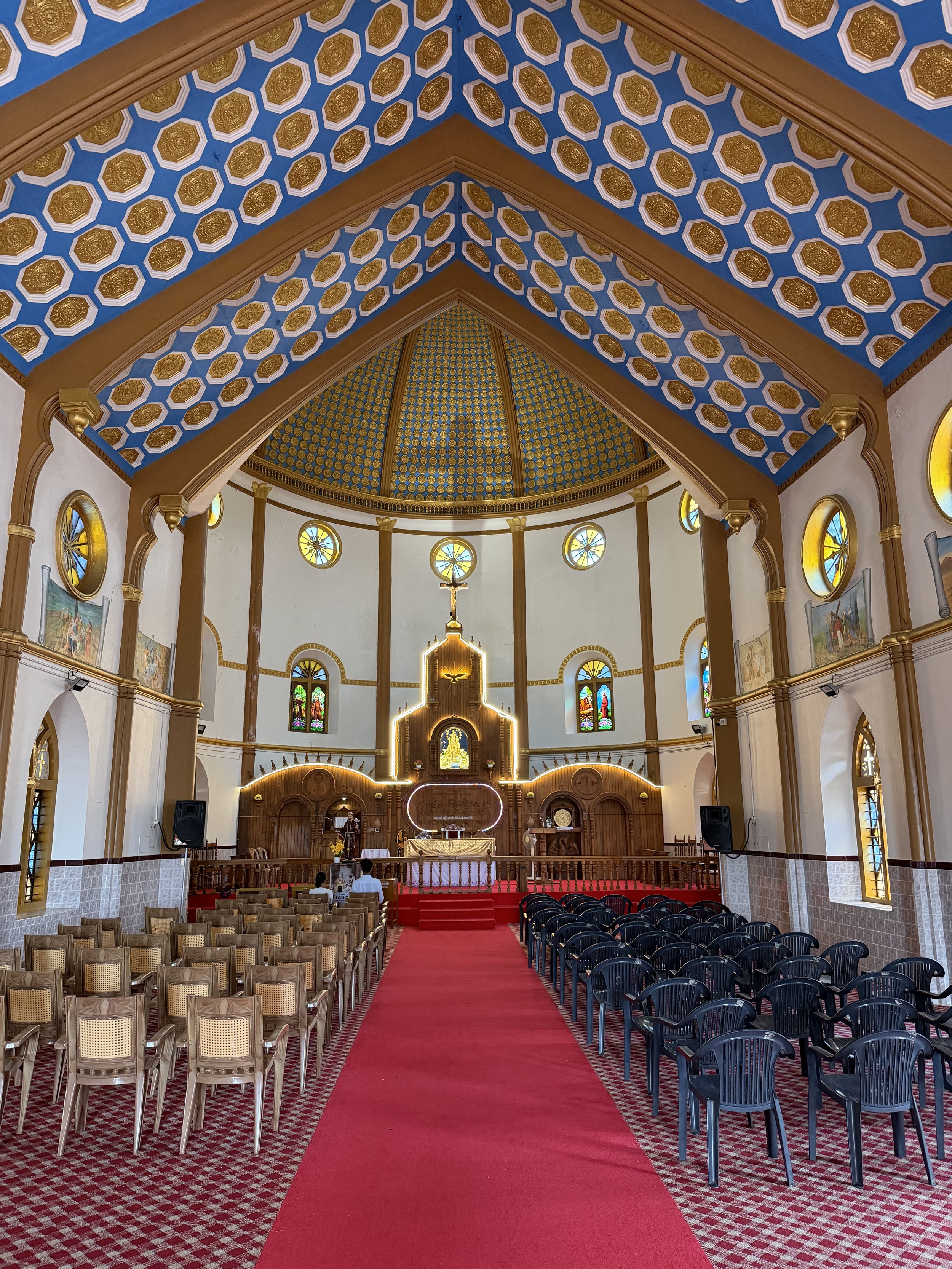
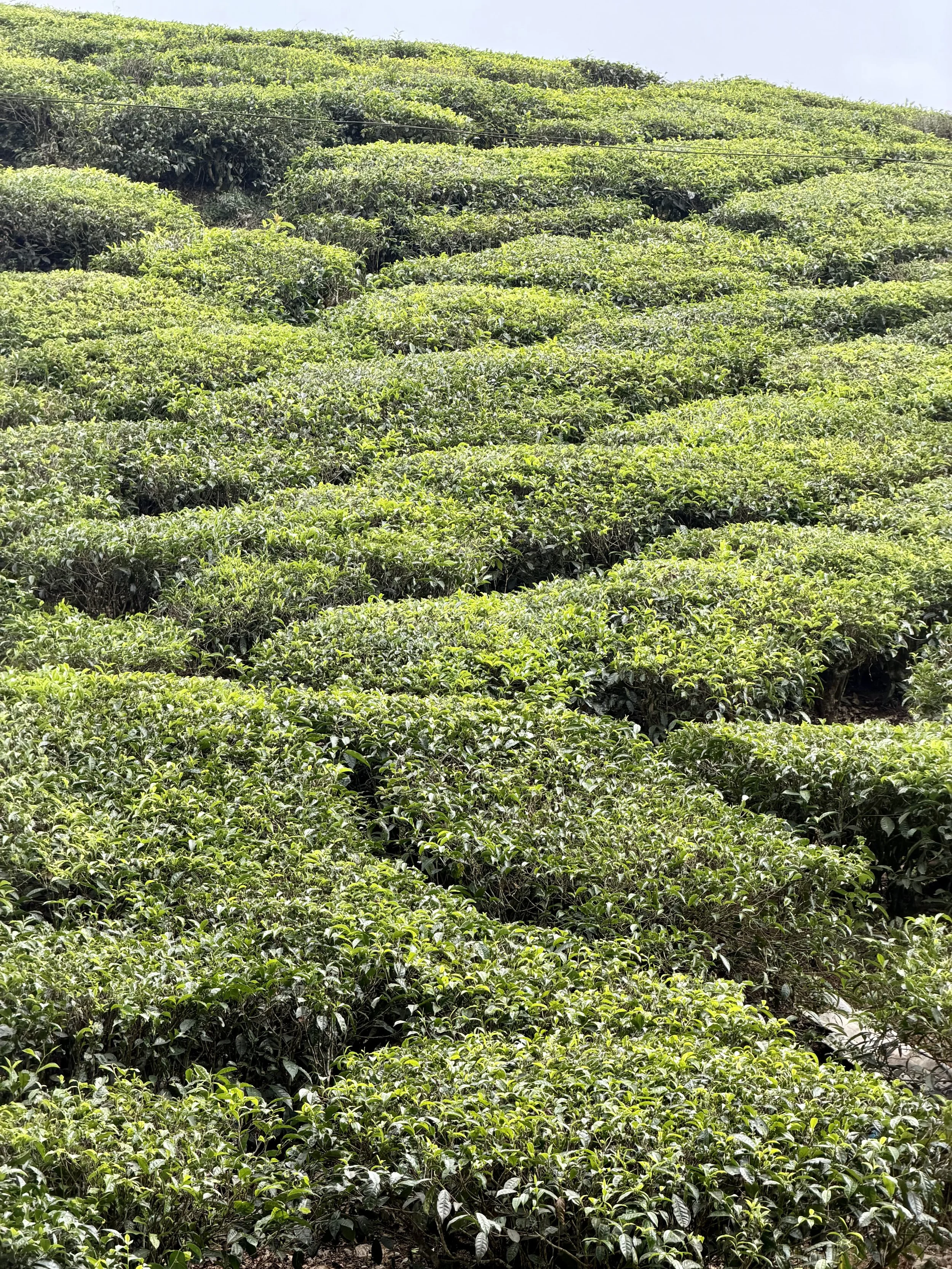
Inside, the surprise continued. The ceiling was covered in intricate blue and gold patterns, the dome lined with repeating circular designs that caught the light in a way that felt almost theatrical. Stained-glass windows glowed softly above the altar, and the polished wood and red carpet gave the whole place a sense of careful pride. Outside, the view looked across tea plantations stretching over the hillsides, neat green rows curving with the shape of the land, a reminder that we were already climbing into a very different landscape from the flat backwaters we had left that morning.
It was an odd but memorable stop, half comfort break, half unexpected architectural detour, and one that seemed slightly out of scale with the quiet villages around it, yet somehow perfectly in keeping with the feeling that this journey inland was taking us into a different world altogether.
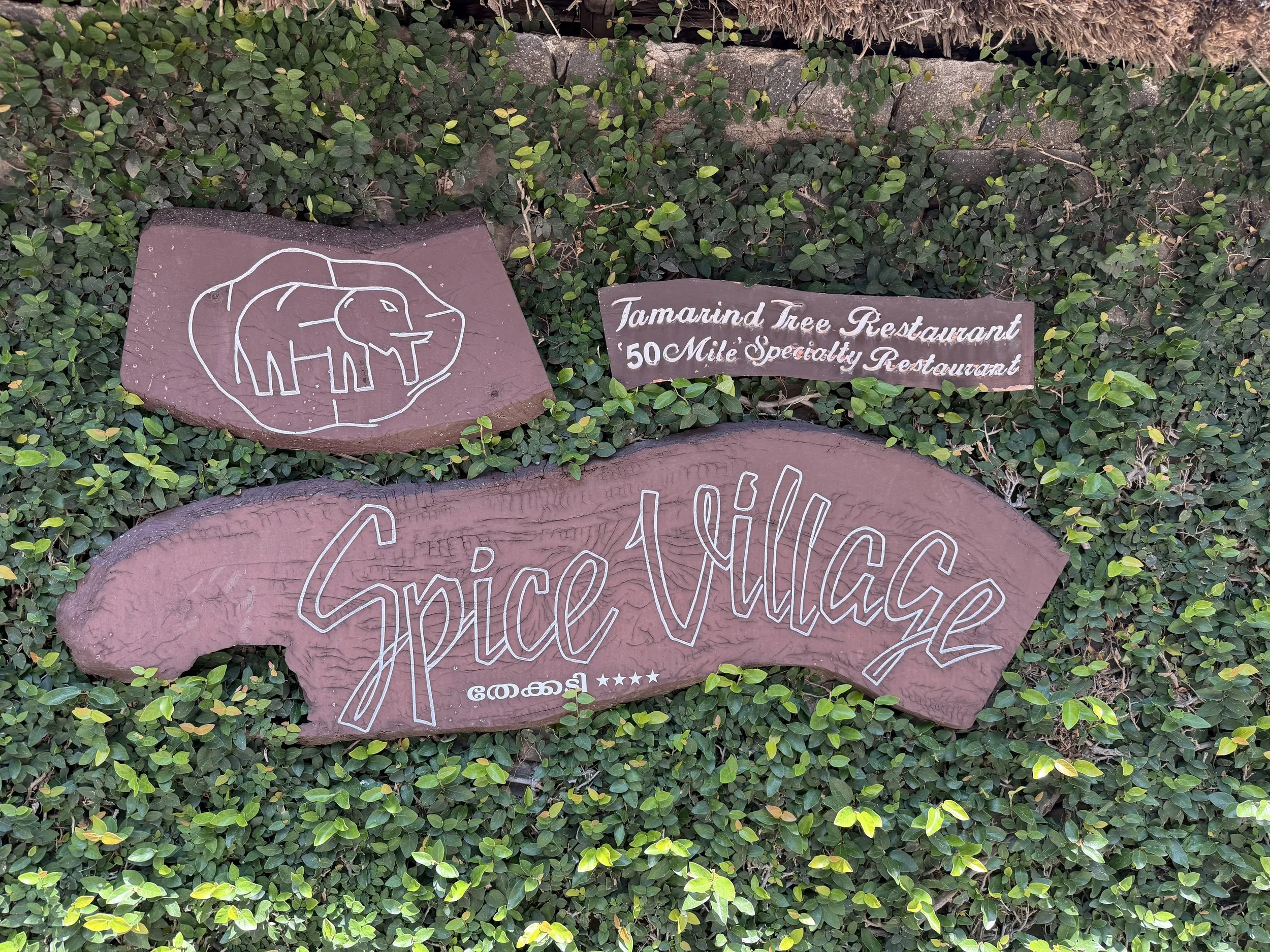
Spice Village itself sat tucked among trees, more like a forest lodge than a hotel, and after the long, winding drive the peaceful setting made it feel as though we had travelled much further than the map would suggest.
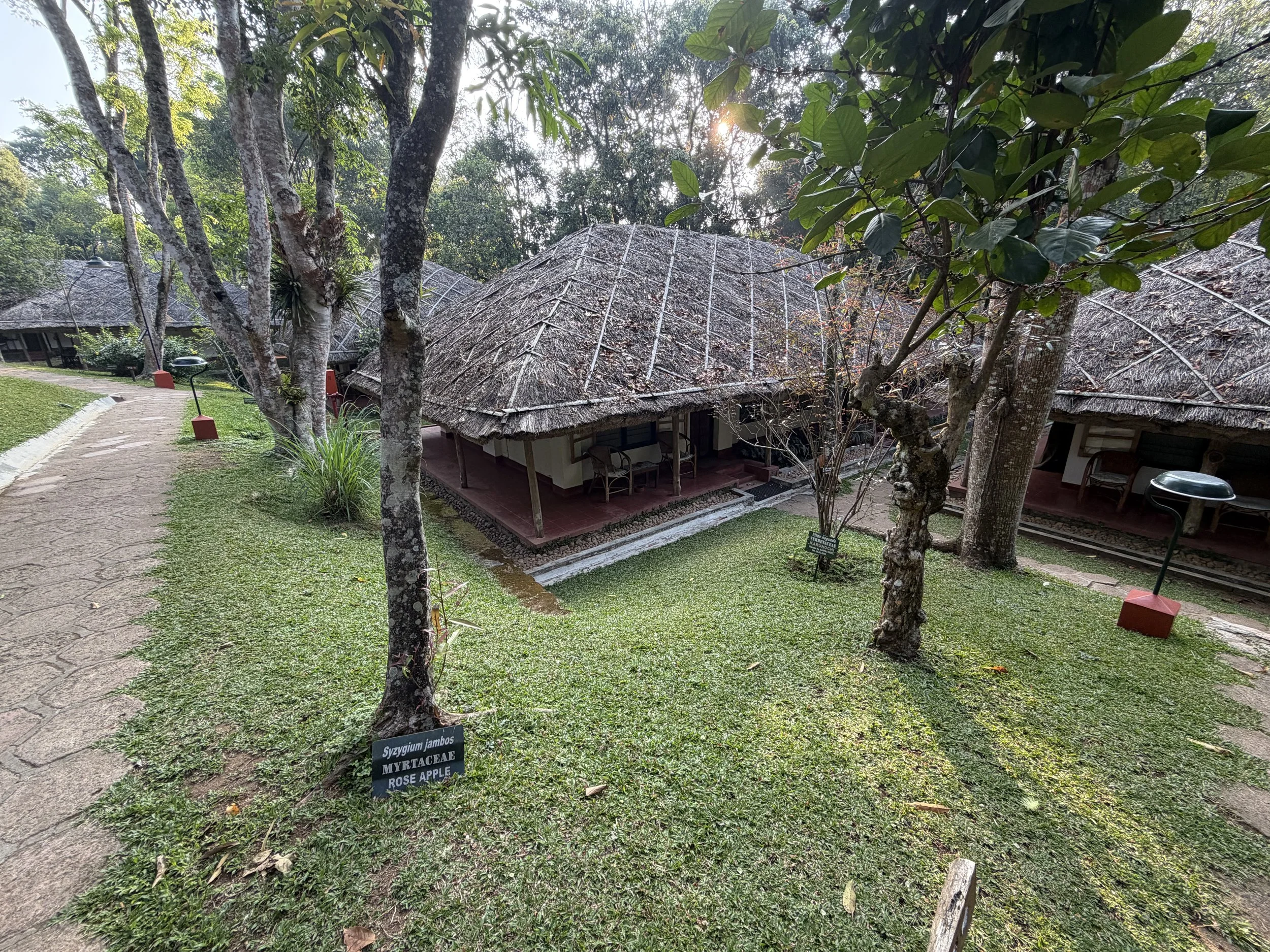
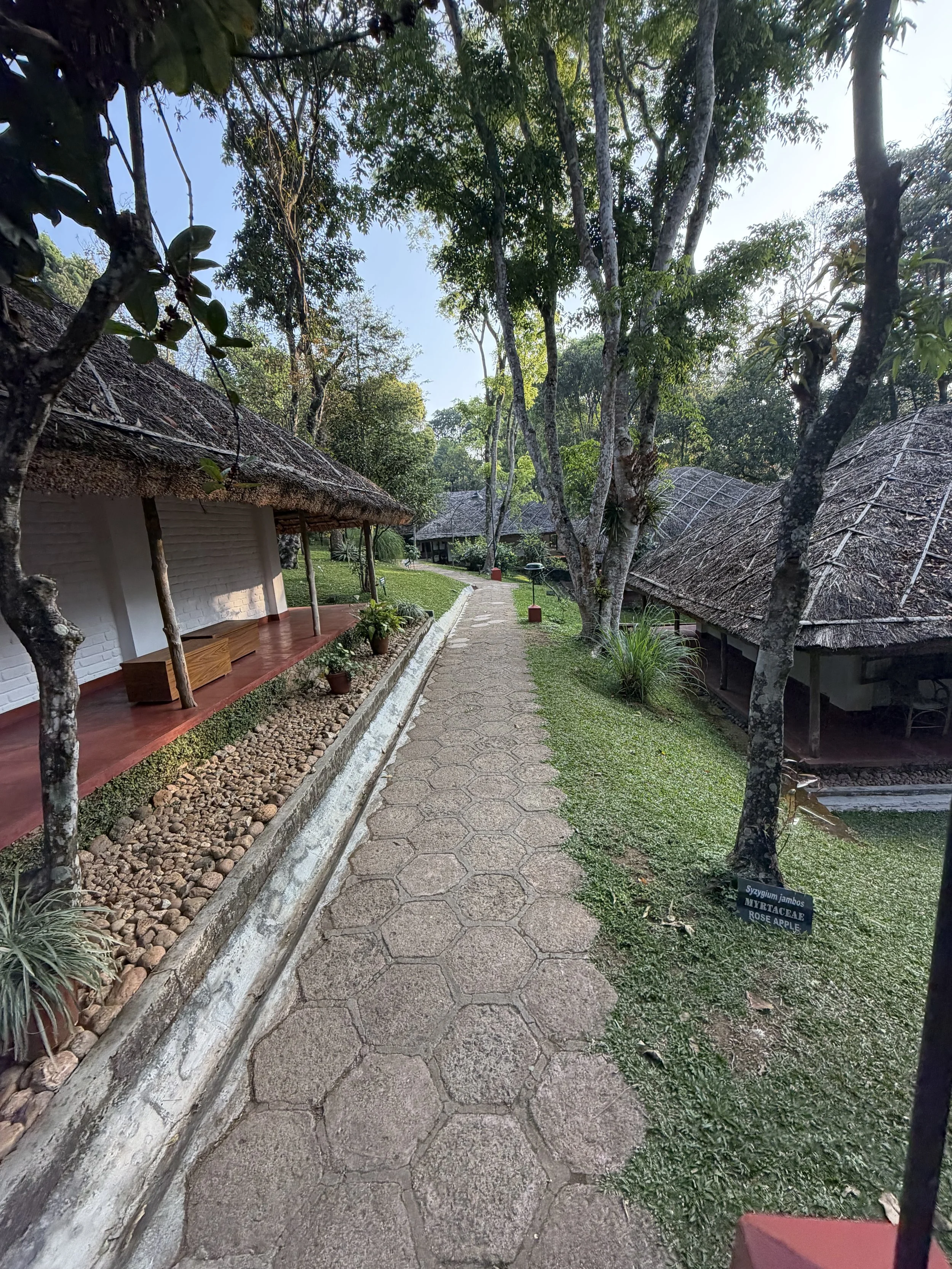
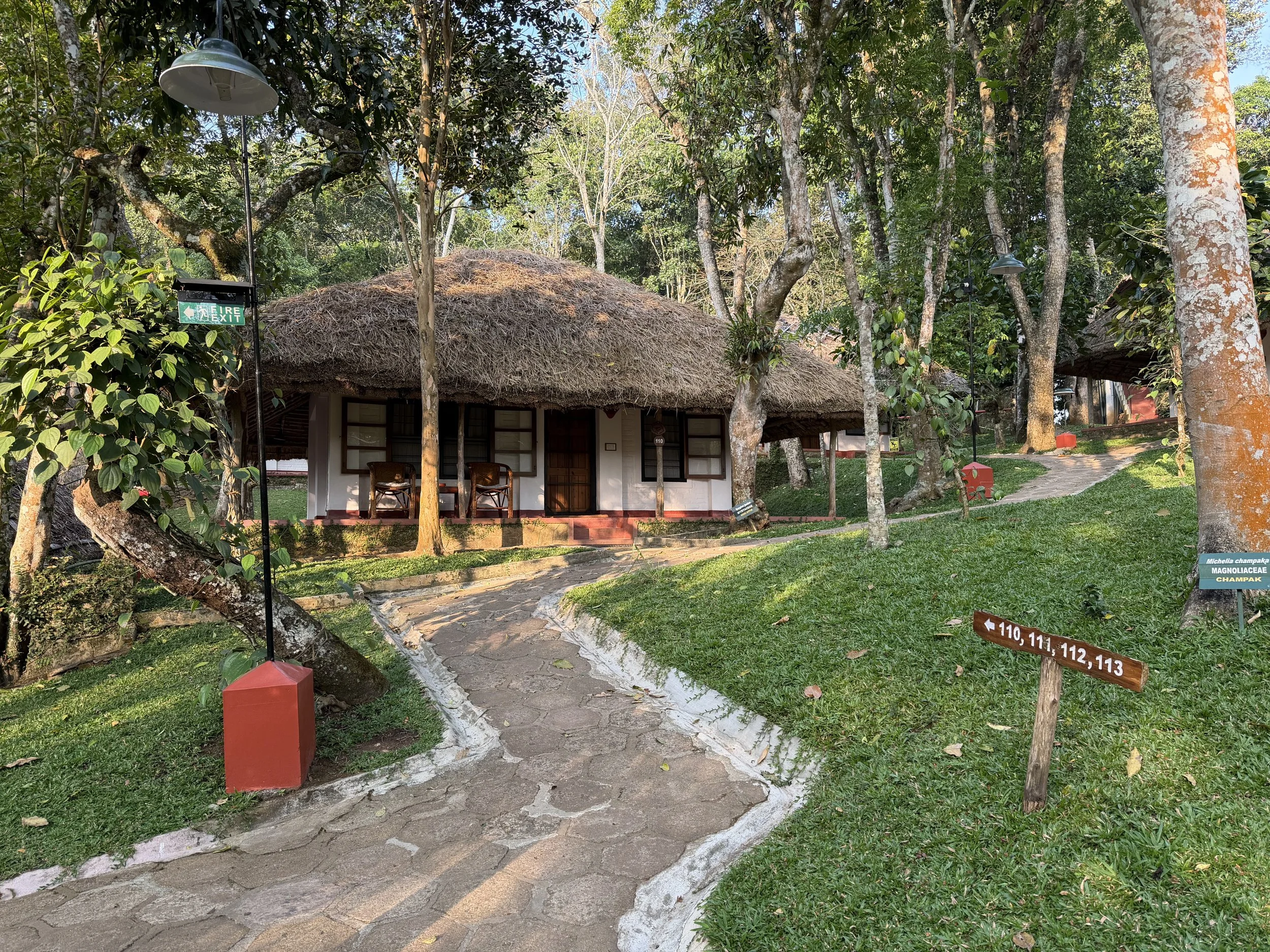
Instead of a large modern building, the rooms were scattered among the trees in small cottages with sloping tiled roofs, designed to blend into the surrounding forest rather than stand apart from it. Paths wound between the buildings through gardens filled with palms, flowering plants and the smell of damp earth, and the air here felt noticeably cooler than it had down by the backwaters.
After the hours on the coach, the chance to walk slowly again was welcome. Most of us headed straight to our rooms to freshen up before dinner in the restaurant, while a few made the most of the pool with a quick swim and even a short spell of sunbathing before the light began to fade.
Later we wandered down to the café, where complimentary tea, coffee and snacks were being served, a welcome pause after the long drive. Never one to ignore the chance of a photograph, I noticed a couple of German tourists pointing up into one of the trees nearby. Sure enough, sitting quite comfortably on a branch above us was a Malabar Giant Squirrel, completely unbothered by the attention.
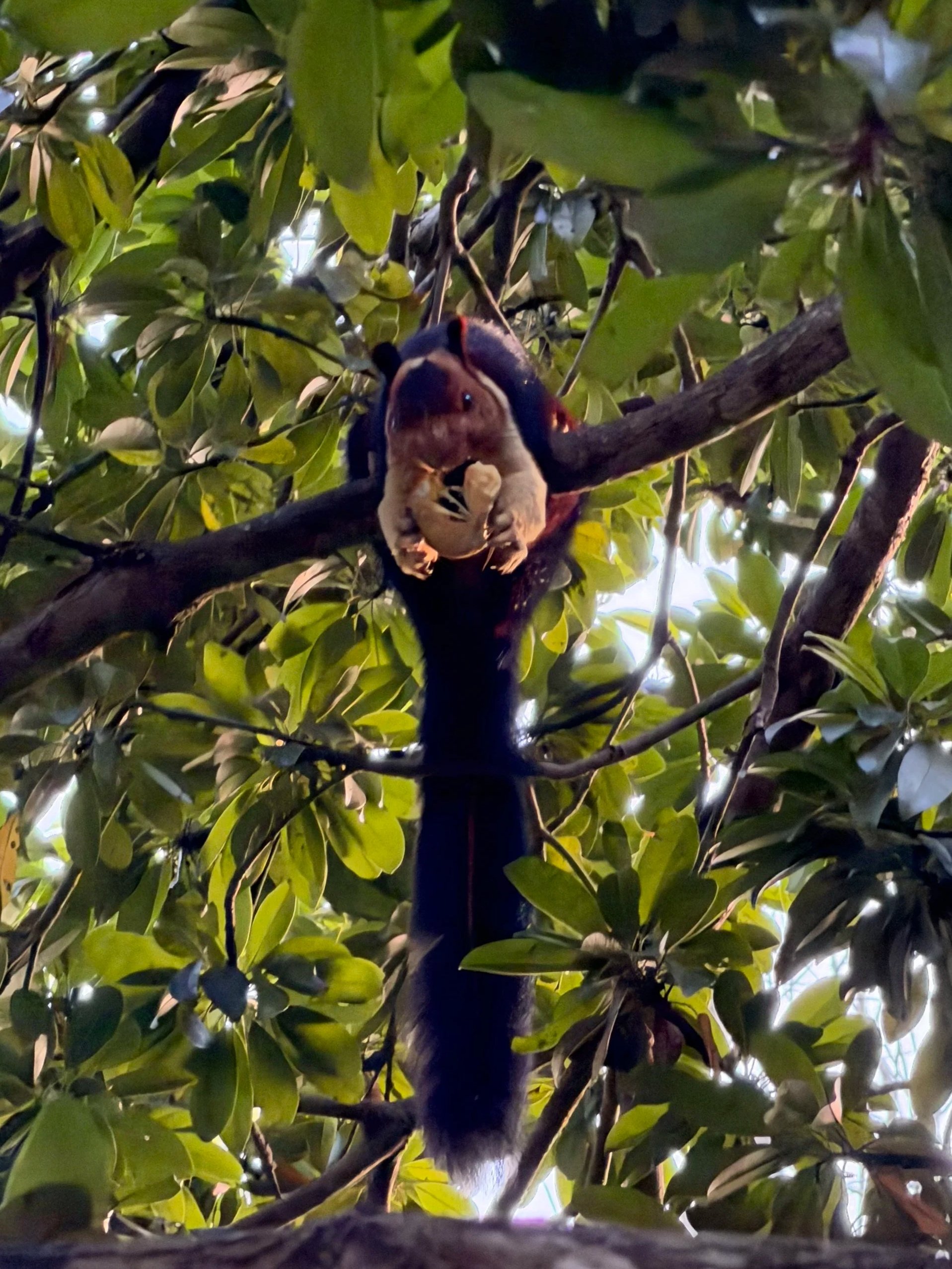
Malabar Giant Squirrel
It stayed there for several minutes, calmly holding a piece of fruit in its paws and eating while we all stood below looking up. With its long tail hanging down through the branches and its reddish-brown and black colouring, it looked far larger than any squirrel we would see at home, and for a moment the camera phones came out faster than the teacups. It was a small, unexpected wildlife encounter, but one that seemed to fit perfectly with the quieter, more natural feel of Spice Village.
Later the group went out for a short walk into the village to watch a demonstration of traditional Keralan martial arts. The small arena was already busy when we arrived, with spectators sitting around the edge of the ring and the performers warming up in the centre. What followed was far more dramatic than any of us expected. The display began with fast, precise movements using sticks and swords, the fighters moving with a speed and control that made it clear this was something practised from a young age rather than a performance learned for tourists.
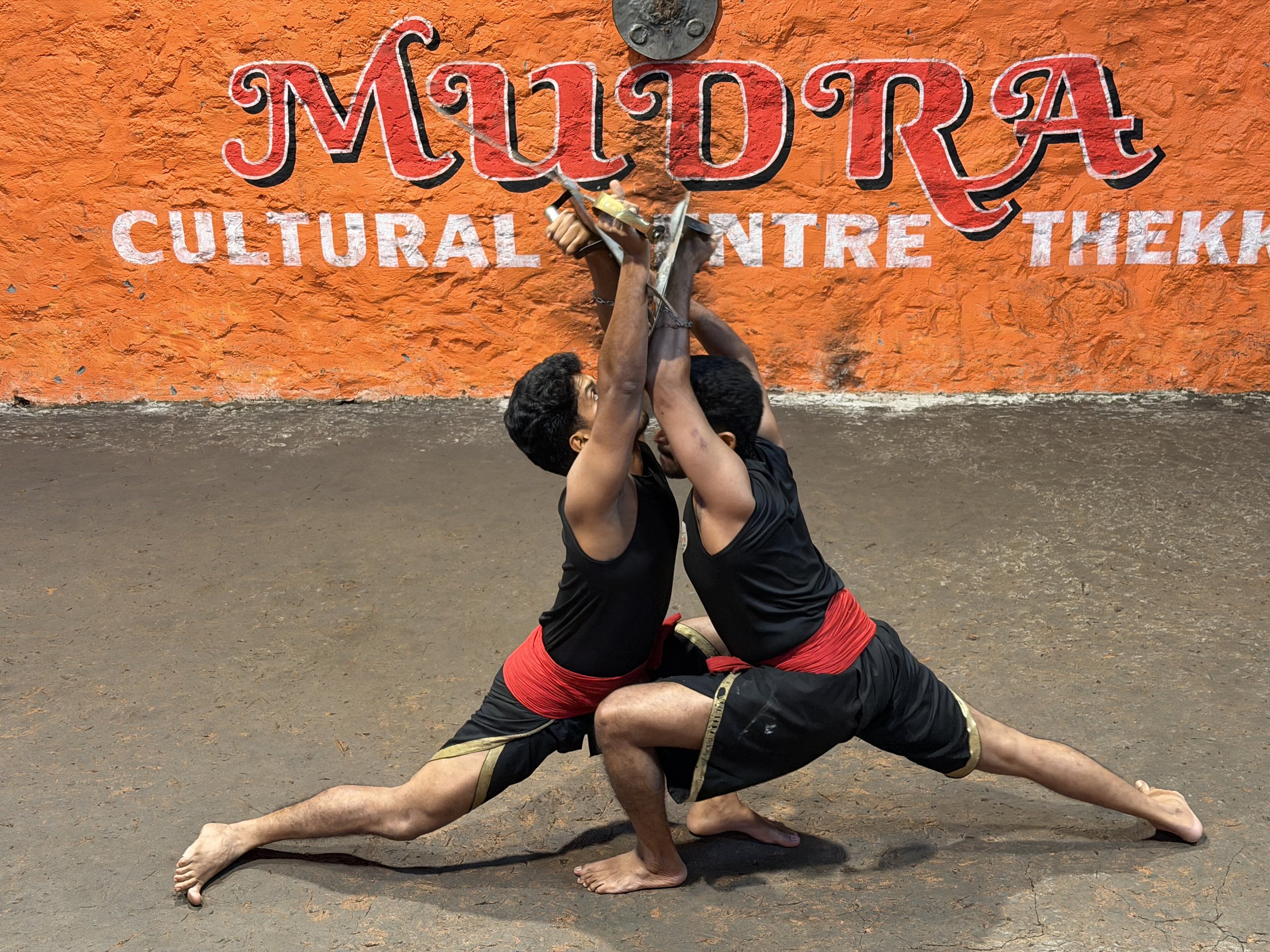
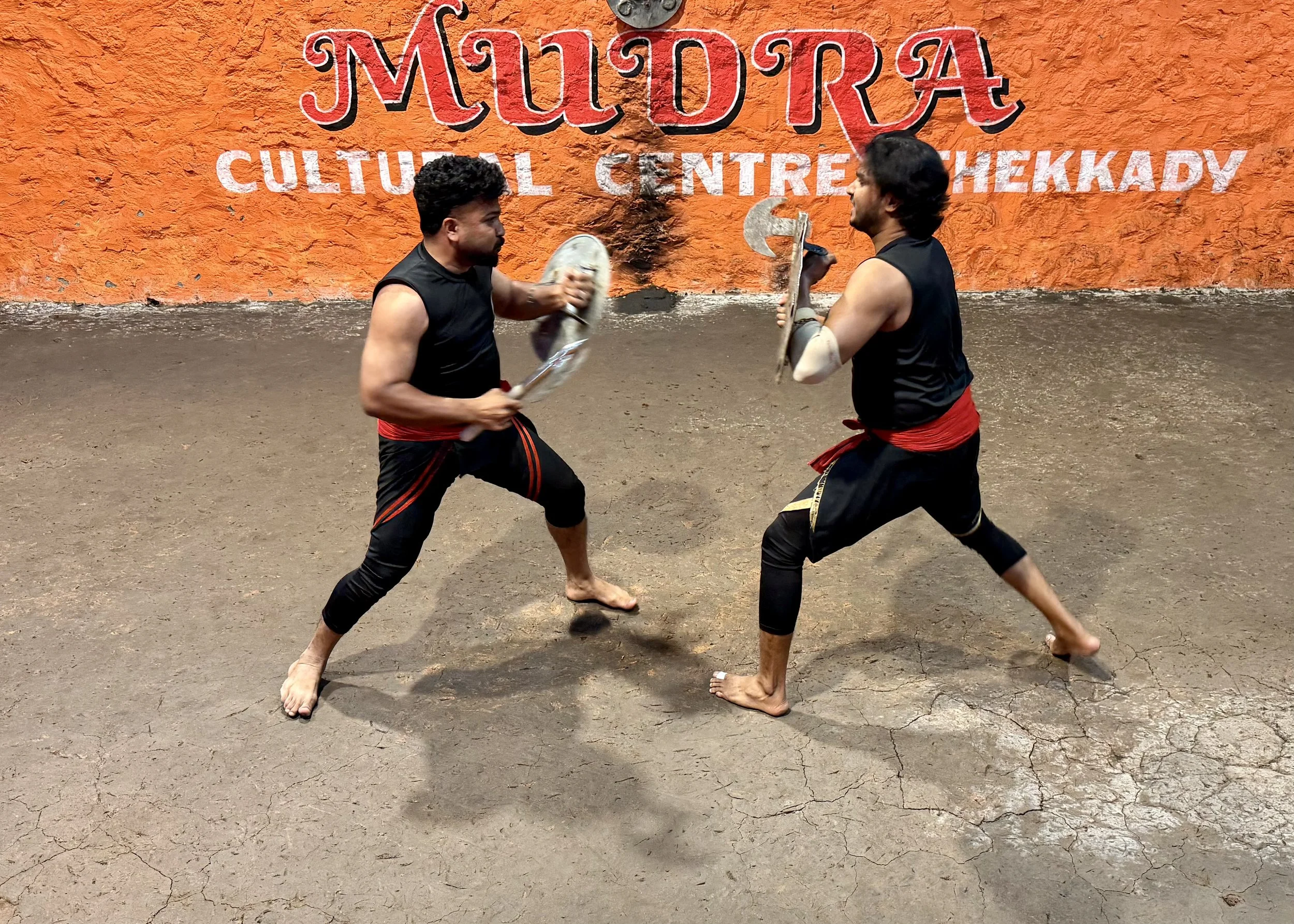
As the show went on it became more intense. There were leaps, spins and mock fights carried out at full speed, blades stopping inches from each other, and at one point volunteers from the audience were invited down into the ring to take part, which caused plenty of laughter as well as a few nervous looks.
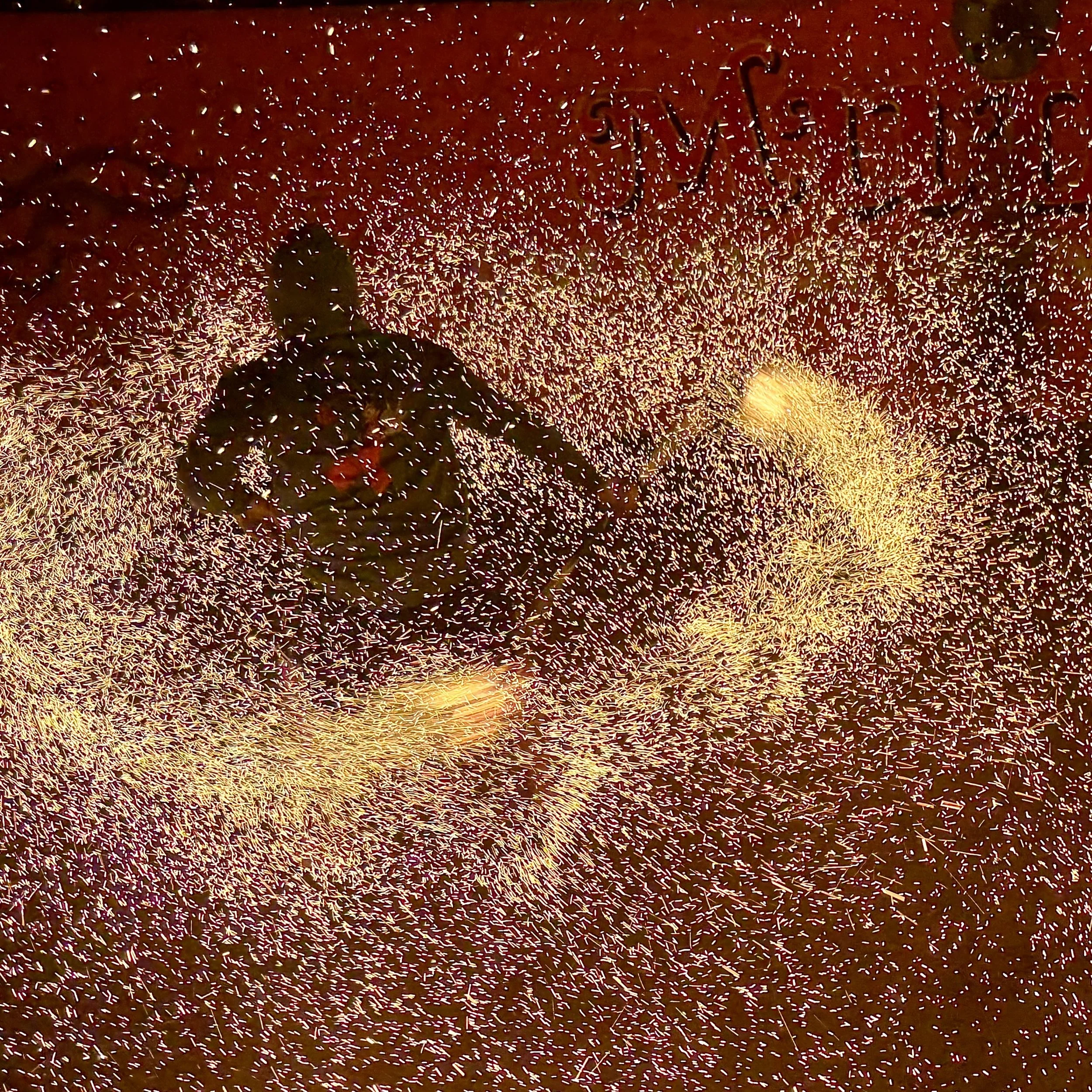
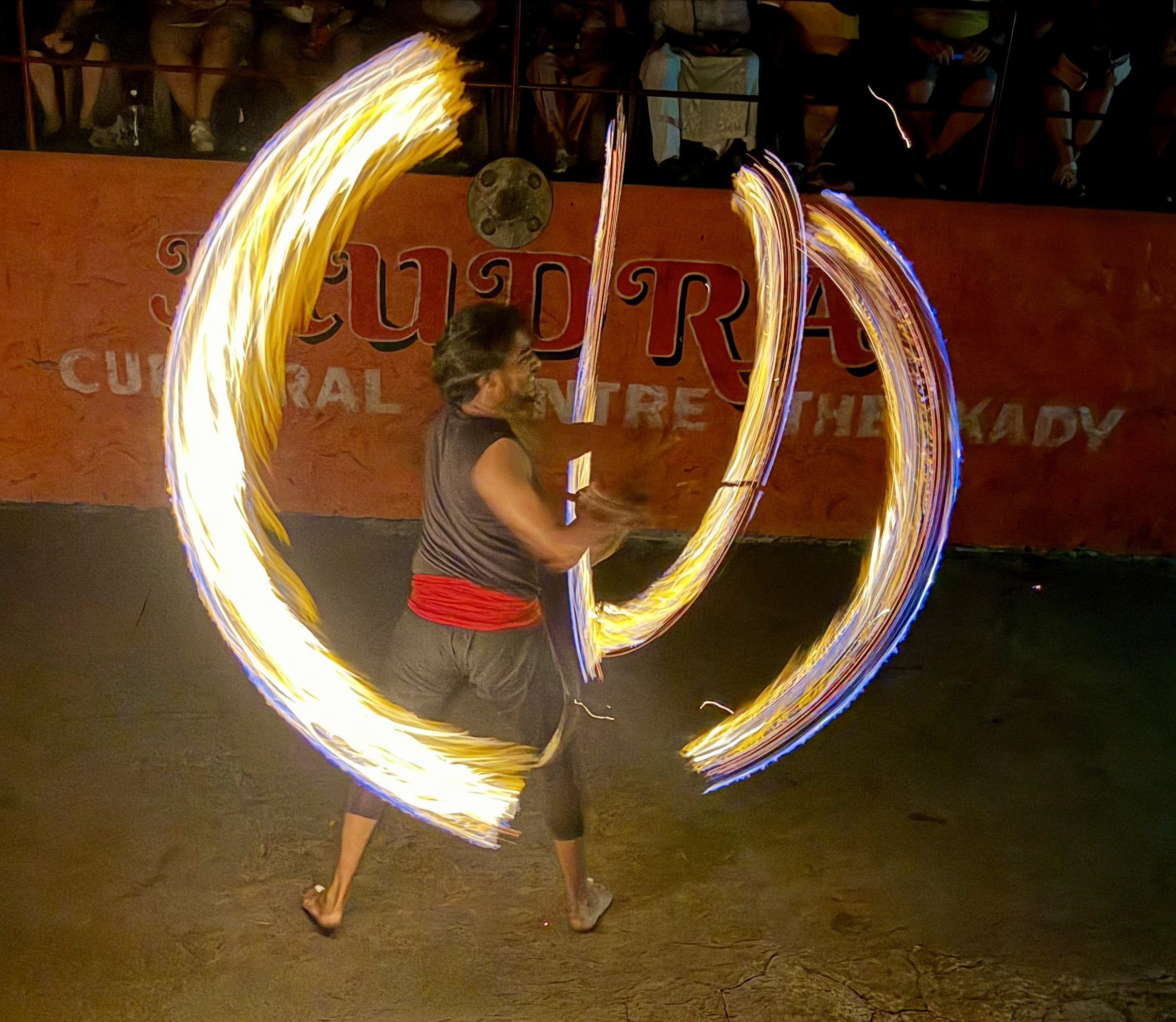
The finale was the most memorable part. In the darkened arena one of the performers swung flaming ropes in wide circles, sending showers of sparks spinning through the air. The light reflected off the walls and the crowd fell quiet for a moment, everyone watching the patterns of fire as they whirled around him. It was noisy, hot and slightly chaotic, but it felt completely genuine, the sort of local entertainment that hasn’t been polished too much for visitors.
By the time we walked back up the hill the temperature had dropped a little more, and for the first time since Simla it almost felt cool enough for a long-sleeved shirt. Dinner that night had a slightly different feel from the previous hotels. The place itself was quiet, and it was lovely to be able to sit outside on the veranda in the night air, listening to the sounds from the trees around us instead of the noise of traffic or the river.
As the evening went on our dinner group seemed to grow larger again, chairs being pulled up as people drifted over, and before long we were once more enjoying the easy company that had become such a part of the trip. After the long drive it felt good to be somewhere peaceful, with nowhere else to go and nothing much to do except talk, eat, and enjoy the cooler air of the hills.