Jew Town - A Small Corner of Old Kochi
Today would turn out to be another highlight of the journey, one of those quieter days that somehow stays with you just as much as the grand sights. By the afternoon we would be cruising gently through the backwaters of Kerala, watching kites and kingfishers circle overhead while everyday life unfolded slowly along the riverbanks. But before leaving Kochi, we had one more stop to make.
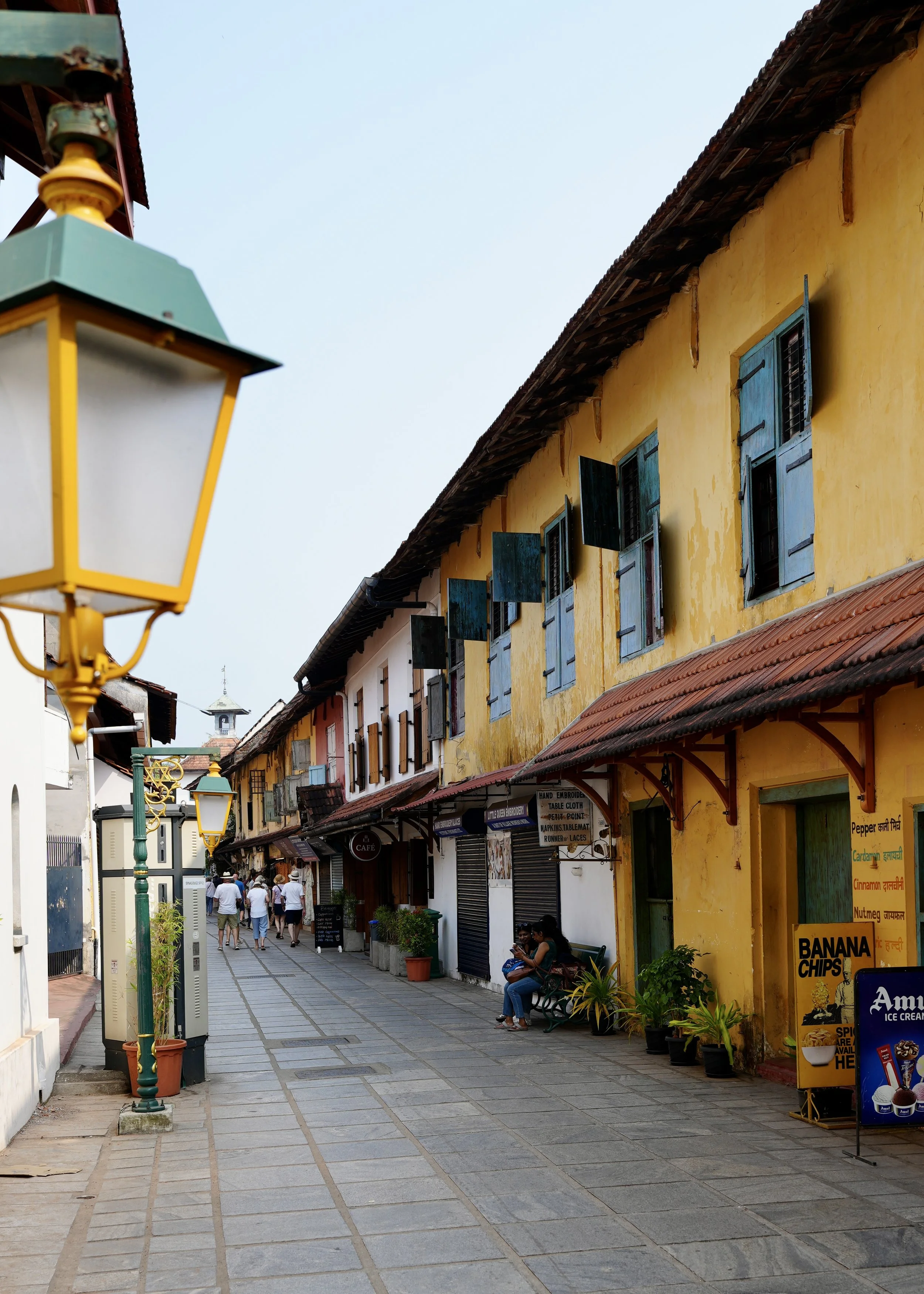
Jew Street, Kochi
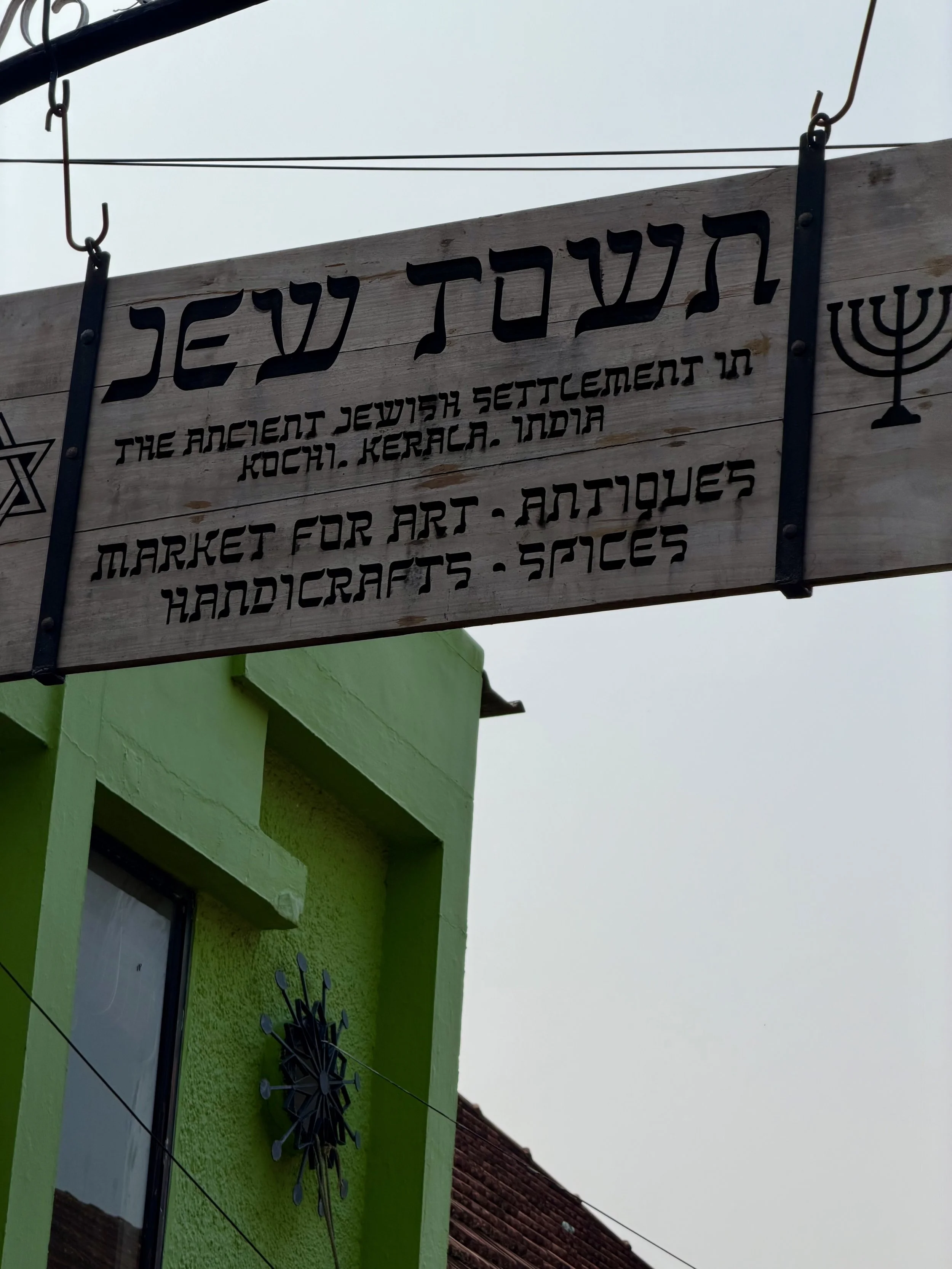
Sign on entering Jew Town
We finished our tour of Fort Kochi with a visit to what our guide called Jew Town, part of the ancient Jewish settlement here in Kerala, and home to the historic Paradesi Synagogue. A wooden sign at the entrance to the street quietly announced “The Ancient Jewish Settlement in Kochi, Kerala, India,” a simple reminder that this small corner of the city holds a history far older than the shops now lining the road.
The street itself was unexpectedly charming. Narrow and paved with worn stone, it was lined with low, tiled-roof buildings painted in fading yellows, whites and soft blues. Wooden shutters hung open in the heat, and old balconies leaned slightly over the walkway as if they had been watching visitors pass for centuries. Decorative street lamps and carefully restored shop fronts gave the place a slightly polished feel, but not enough to hide its age.
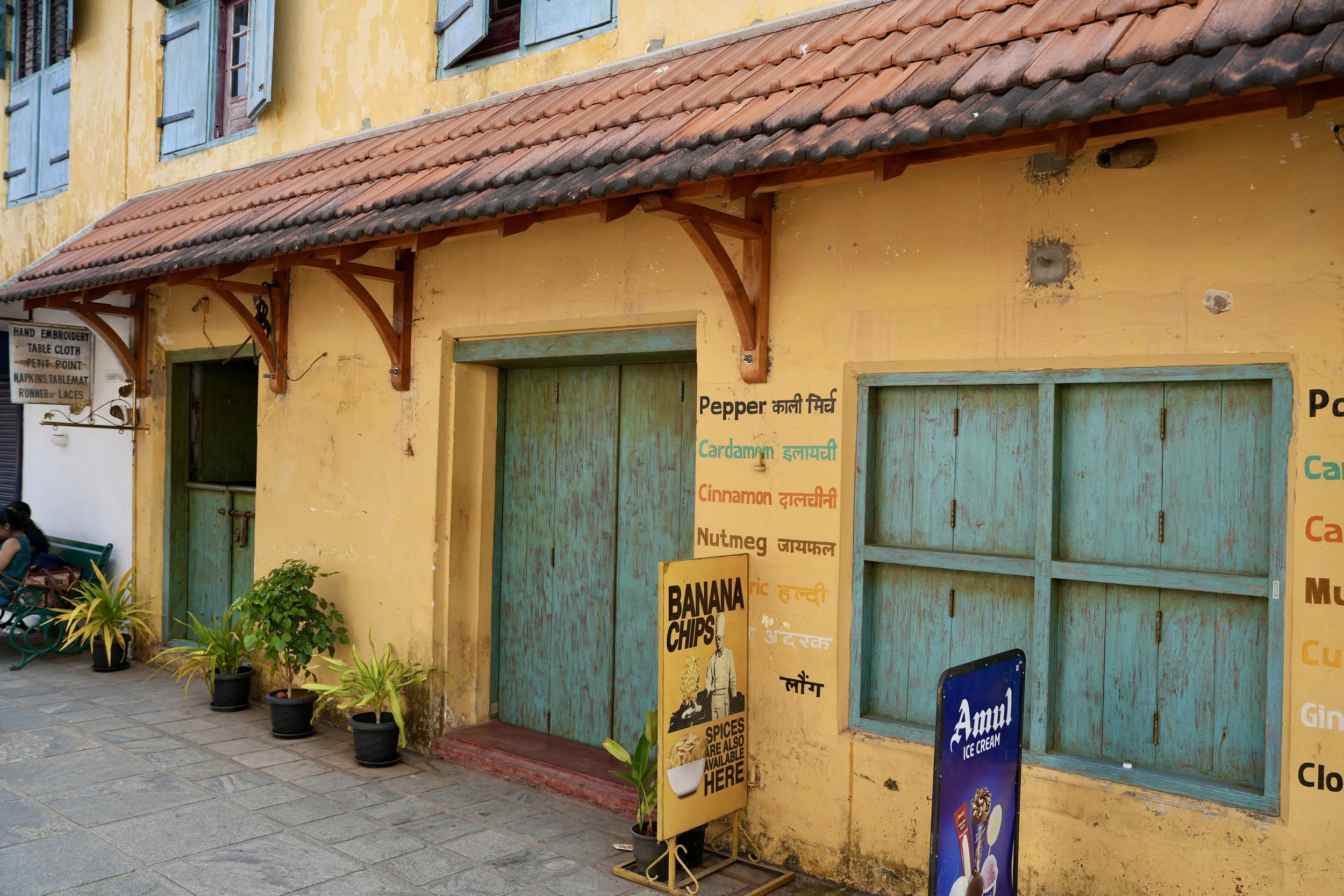

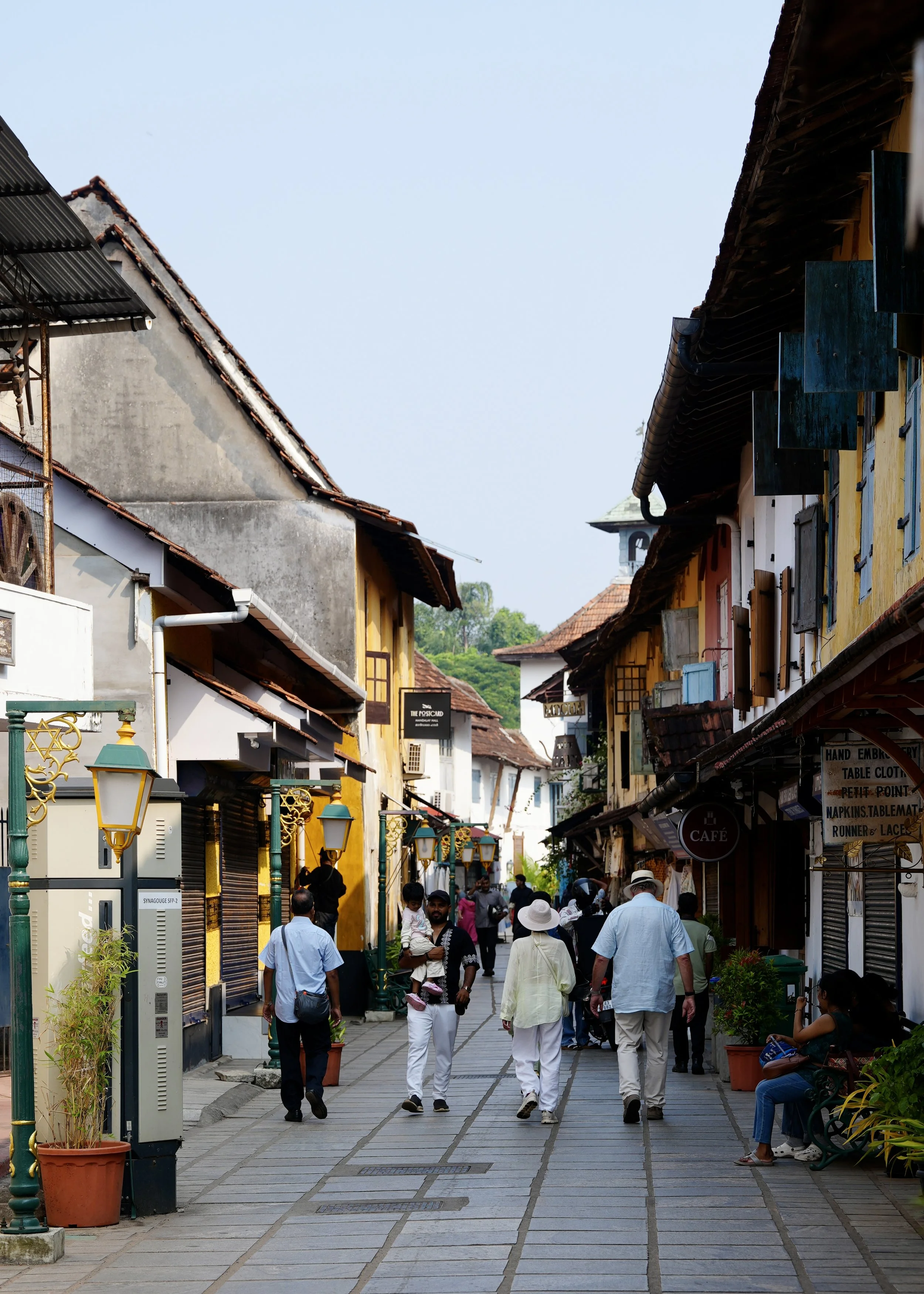
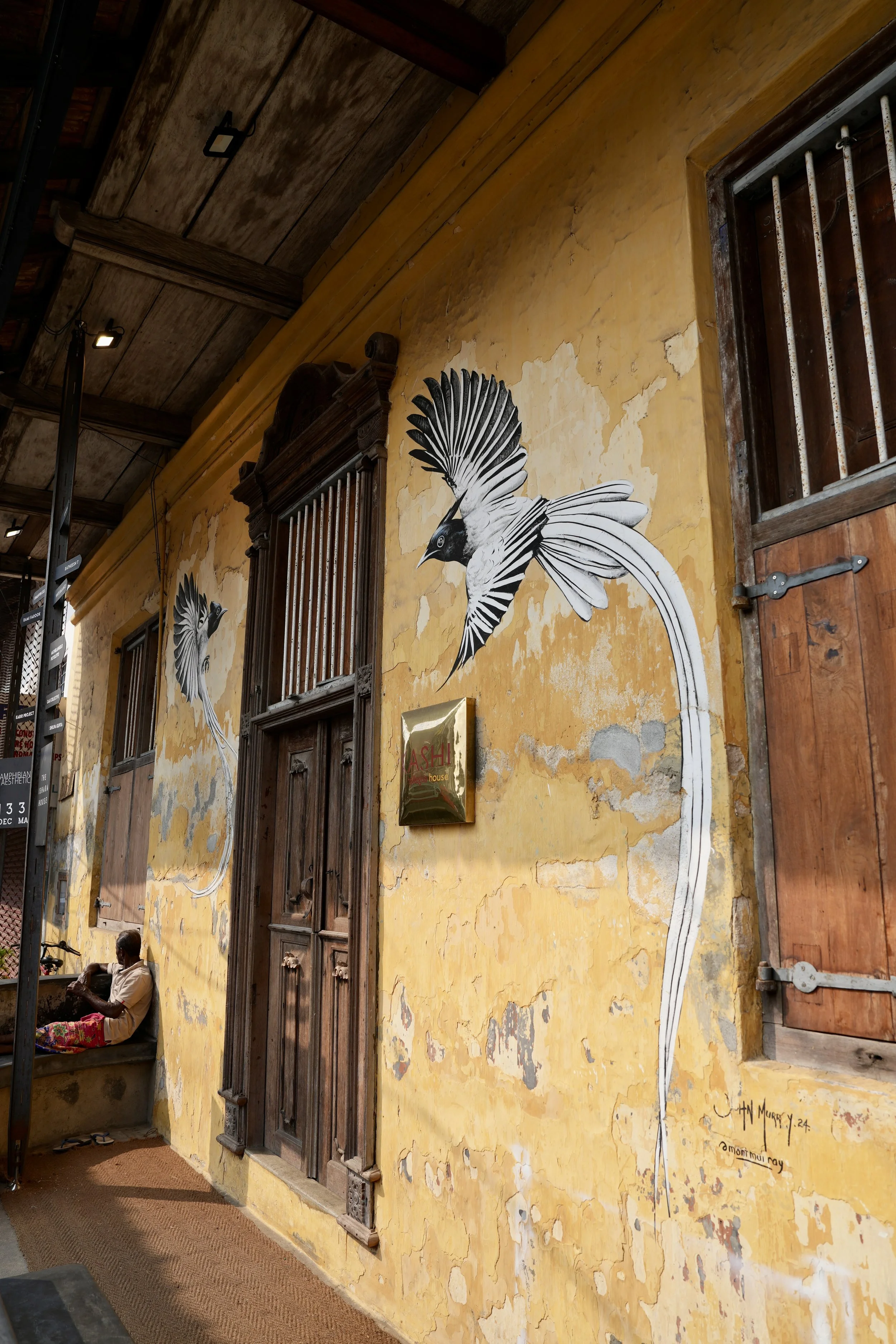
Most of the buildings now house antique stores, small galleries, cafés and handicraft shops. Bright fabrics hung outside doorways, patterned with elephants, flowers and geometric prints, and signs advertised spices, banana chips and embroidered cloth. It is, without doubt, a tourist street, but a gentle one. Nobody hurried you along, and the whole place had a relaxed, almost sleepy atmosphere that made wandering feel like part of the visit rather than a distraction from it.
Even those in our group who normally avoid shopping found themselves pausing to look in windows or running a hand over the soft cotton shirts hanging in the shade. A few of us, myself included, ended up buying small things we hadn’t planned to, not out of need, but because the setting somehow encouraged it.
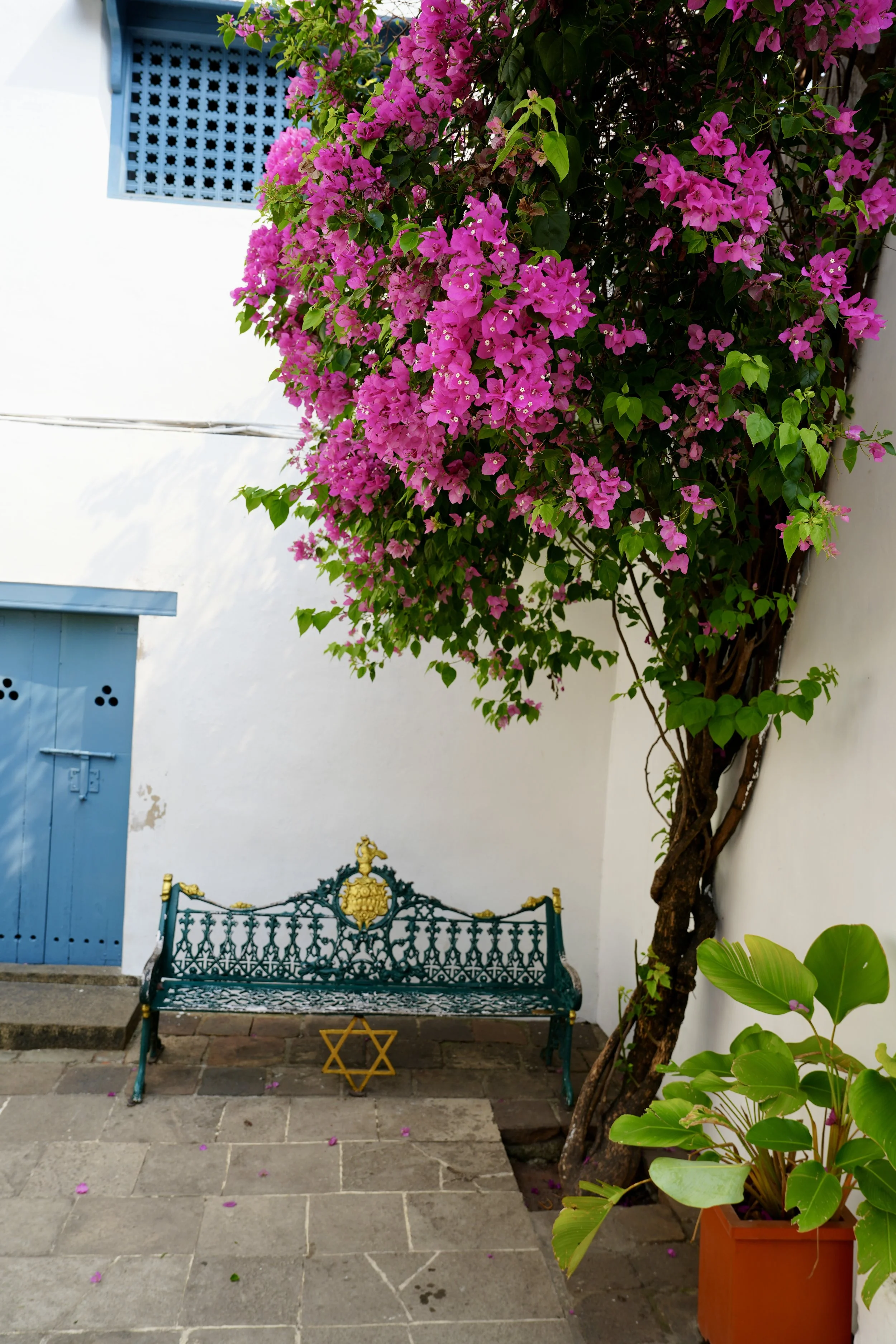
Outside the entrance to the synagogue
The synagogue had only just opened when we arrived at 10am, yet there was already a small queue forming outside the entrance. From the street it looks modest, tucked between the shops, but stepping inside feels like entering a different world.
There is a small museum first, telling the story of the Jewish community that once lived here, traders who arrived centuries ago and built a life far from their original home. But the real attraction is the synagogue itself.
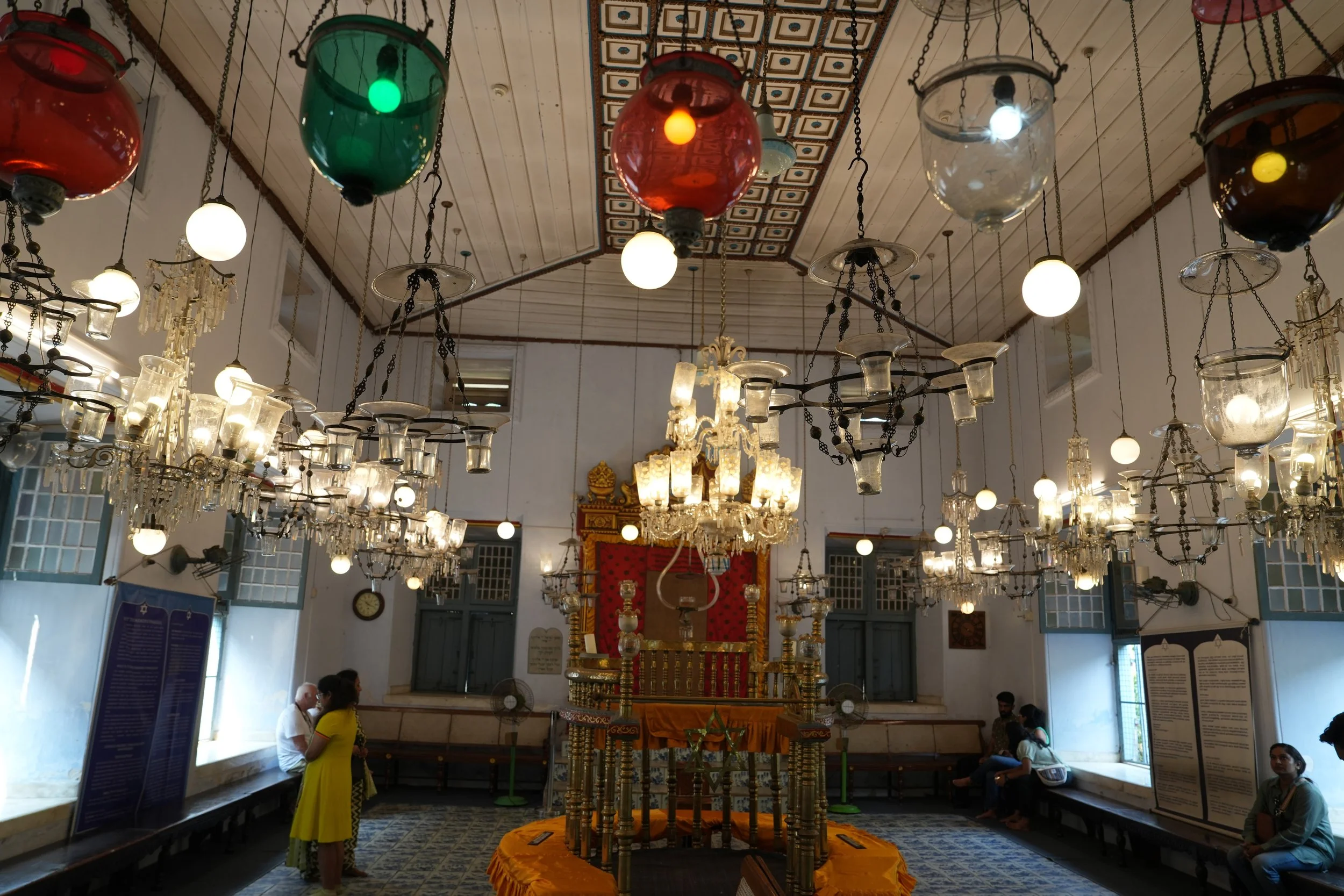
Kochifort Synagogue
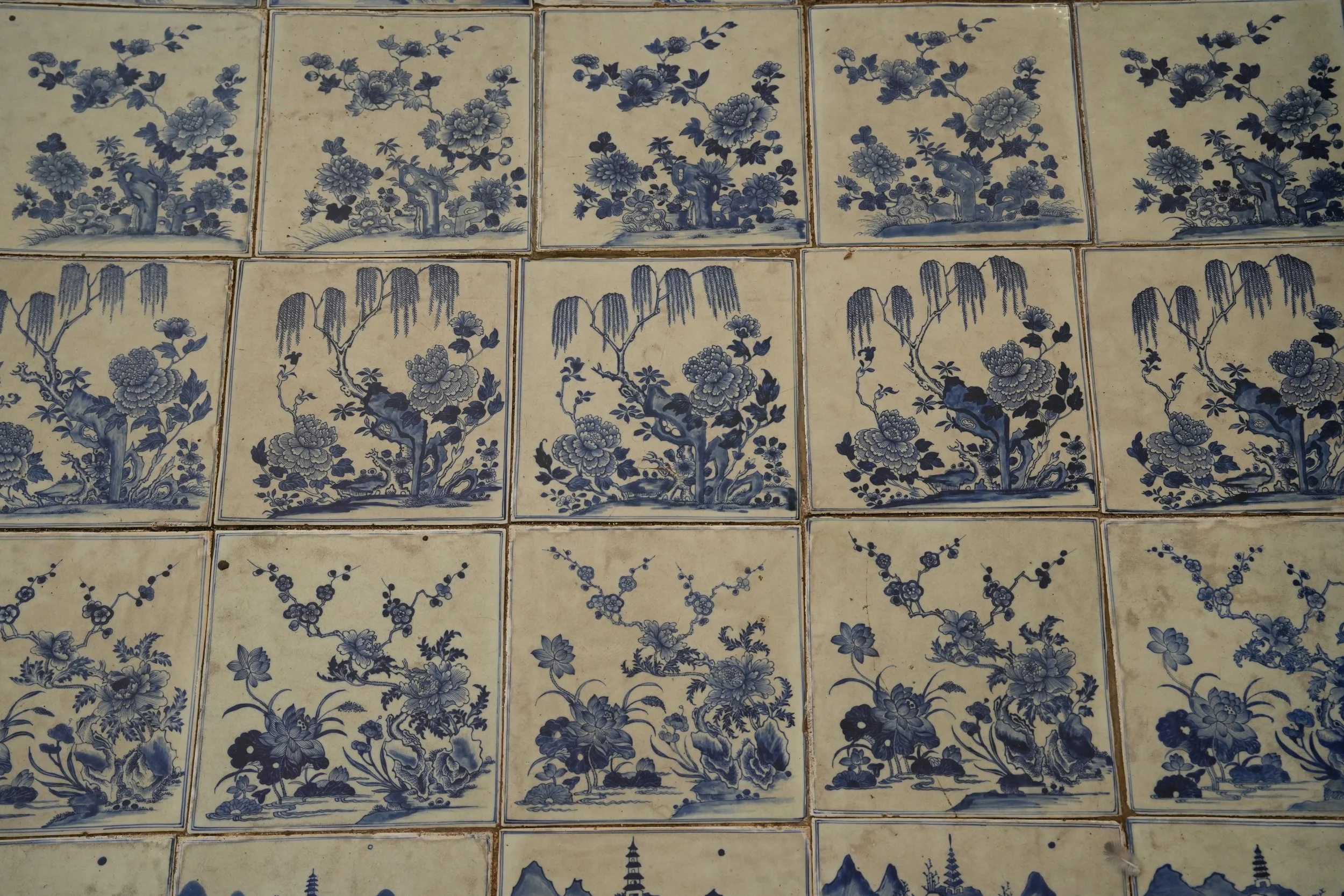
Original Synagogue floor tiles
The floor is covered with delicate blue-and-white hand-painted tiles, each one slightly different from the next, their patterns worn smooth by generations of footsteps. Above, large glass chandeliers hang from the high wooden ceiling, some clear, some coloured, catching the light from the tall windows and scattering it across the room. Brass lamps, polished railings and carved woodwork surround the raised central platform, and everything has the feeling of being carefully preserved rather than restored.
It is not a grand building in the usual sense, not large, not imposing, but it has a quiet dignity and people spoke more softly inside, even those who had been chatting loudly in the street only minutes before.
It was only a short visit, but one that stayed with me. A small street, a small building, and a community that once flourished here, now remembered in tiles, lamps and a name on a wooden sign.
Not long afterwards we left Kochi behind, driving south towards the backwaters, where the day would slow down even further.