Johari Bazaar: From Spectator to Participant
From the Coach
After our visits that morning, we retreated to the hotel and treated ourselves to a welcome, if expensive, coffee in the lobby. We had barely an hour before setting out again on what the tour company calls a “heritage trail”, though in reality it’s an evening walk through the market. Curiously, it’s listed as an optional extra. I can see why; some of the group preferred to rest. But for us, it felt like something you shouldn’t miss.
The coach dropped us part of the way and then our guide promptly commandeered a small fleet of tuk tuks to take us closer in. It wasn’t strictly necessary, more for the experience…. and what an experience. One moment we were stepping down from the relative calm and height of the coach, the next we were on street level, absorbed into a moving tide of people, bicycles and rattling tuk tuks.
From up in the coach you observe India through glass, slightly removed. Down on the road, you feel it. The noise hits you. The smells thicken, spices, exhaust fumes, street food, dust. Movement becomes physical; you don’t just watch the traffic, you negotiate it. For those who live and work here, this is simply the rhythm of the day. For us, it required constant calculation: when to step forward, when to pause, which direction to edge towards without colliding with a bike or brushing past a stall.
Into the Bazaar
Sensing perhaps that we could easily dissolve into the crowd, our guide stopped at a flower seller and bought each of us a garland of vivid orange marigolds. We slipped them over our heads, suddenly a small procession of bright blooms threading through the dusk. Whether it was to help him keep track of us or simply to add a sense of occasion, I’m not sure. But it worked. Together, lightly scented and unmistakably visible, we set off down the long market street.
Walking along Johari Bazaar in the late afternoon feels like stepping into a carefully designed stage set that has long since been handed over to real life. The pink façades run in disciplined lines, shop after shop numbered and framed by repeating arches, yet the order of the architecture does nothing to contain the movement below. Traffic presses forward in every direction, scooters nudging past cars, auto-rickshaws inching through gaps that don’t quite exist, pedestrians flowing around everything like water finding its own path.

Johari Bazaar, Jaipur

Street seller in Johari Bazaar
As the sun drops behind the great Ajmeri gate, the light turns soft and golden, catching the crenellations and white painted detailing. For a moment the geometry of 18th-century planning grabs your attention. Then a horn sounds, a motorbike squeezes through, and you’re back in the present.
The Street at Work
At ground level the street becomes more intimate. Women sit cross-legged beside neat piles of tomatoes, aubergines and green beans, weighing produce with metal scales as customers crouch to inspect freshness. Behind them, scooters idle, riders balanced and patient in their helmets, cardboard boxes strapped precariously to the back. There is no clear divide between pavement and road; commerce simply spills outward.
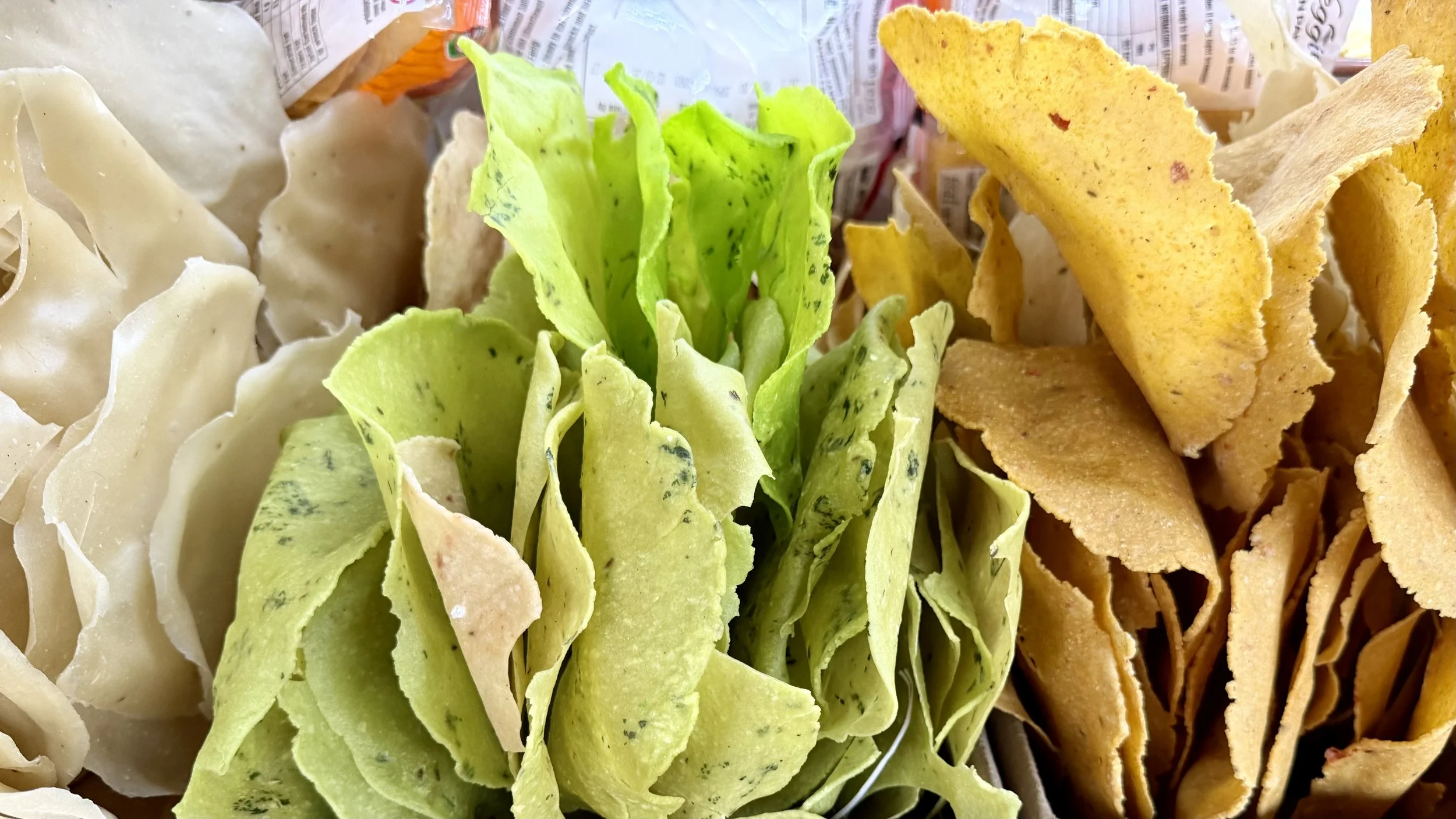
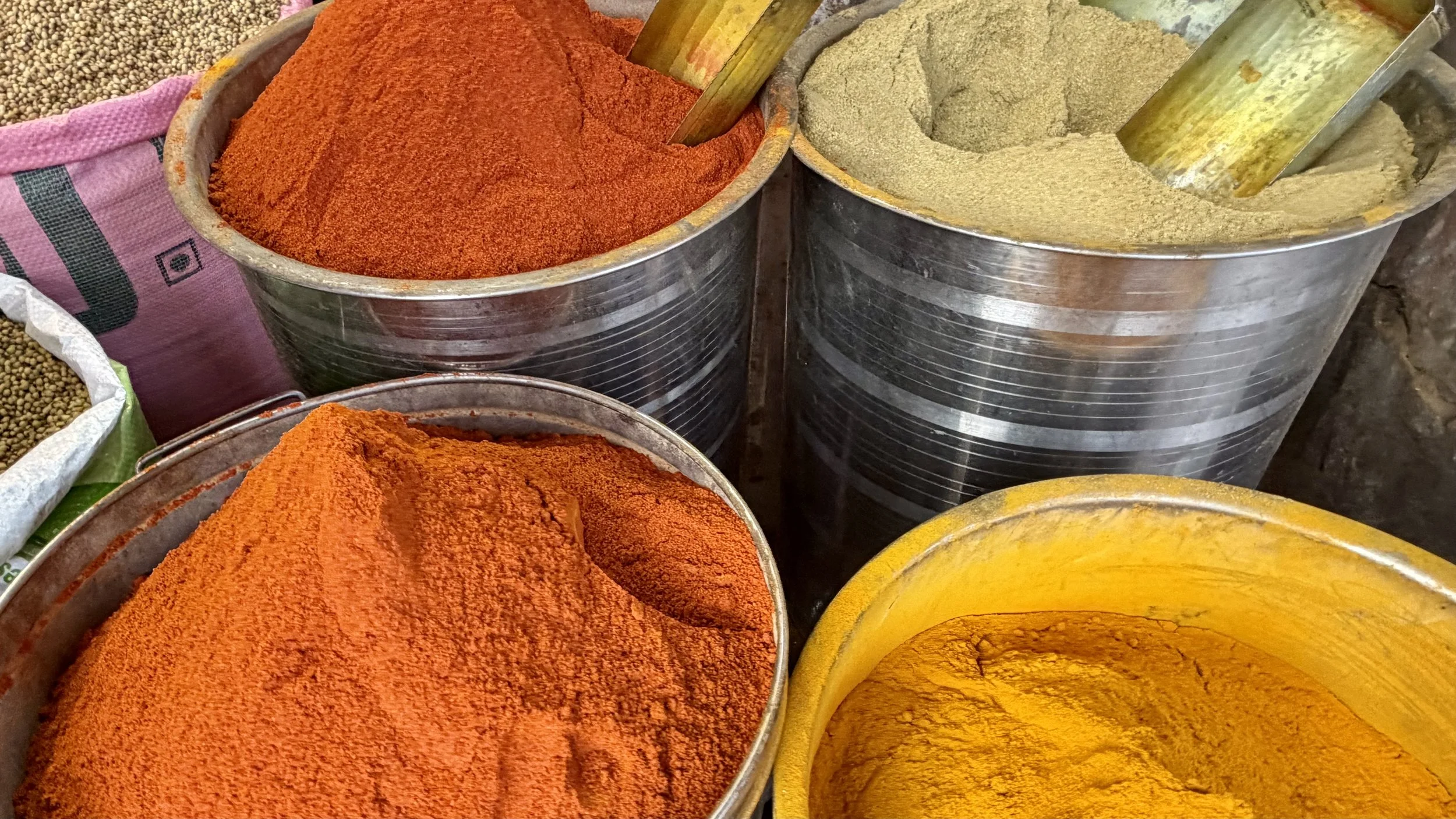
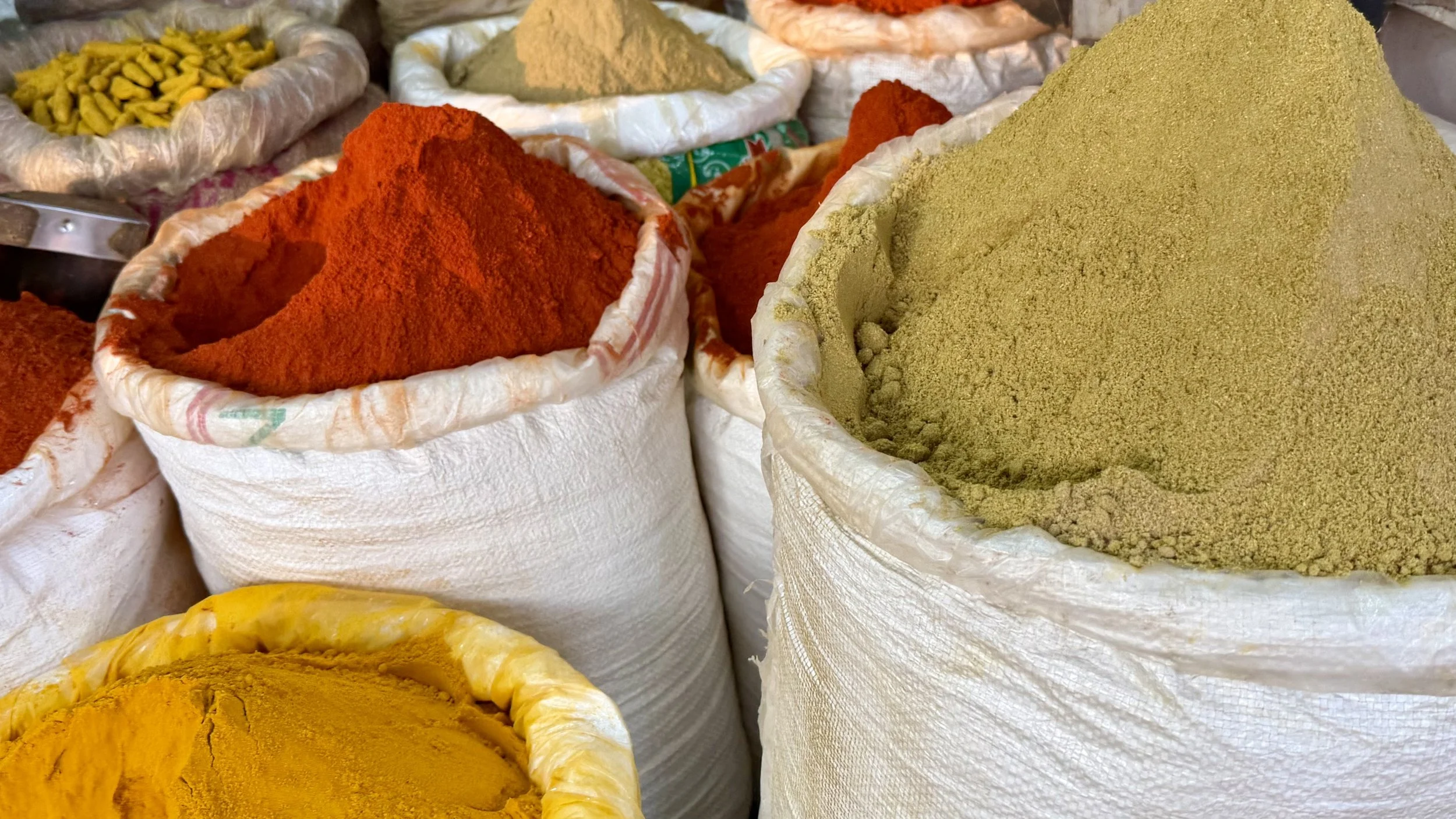
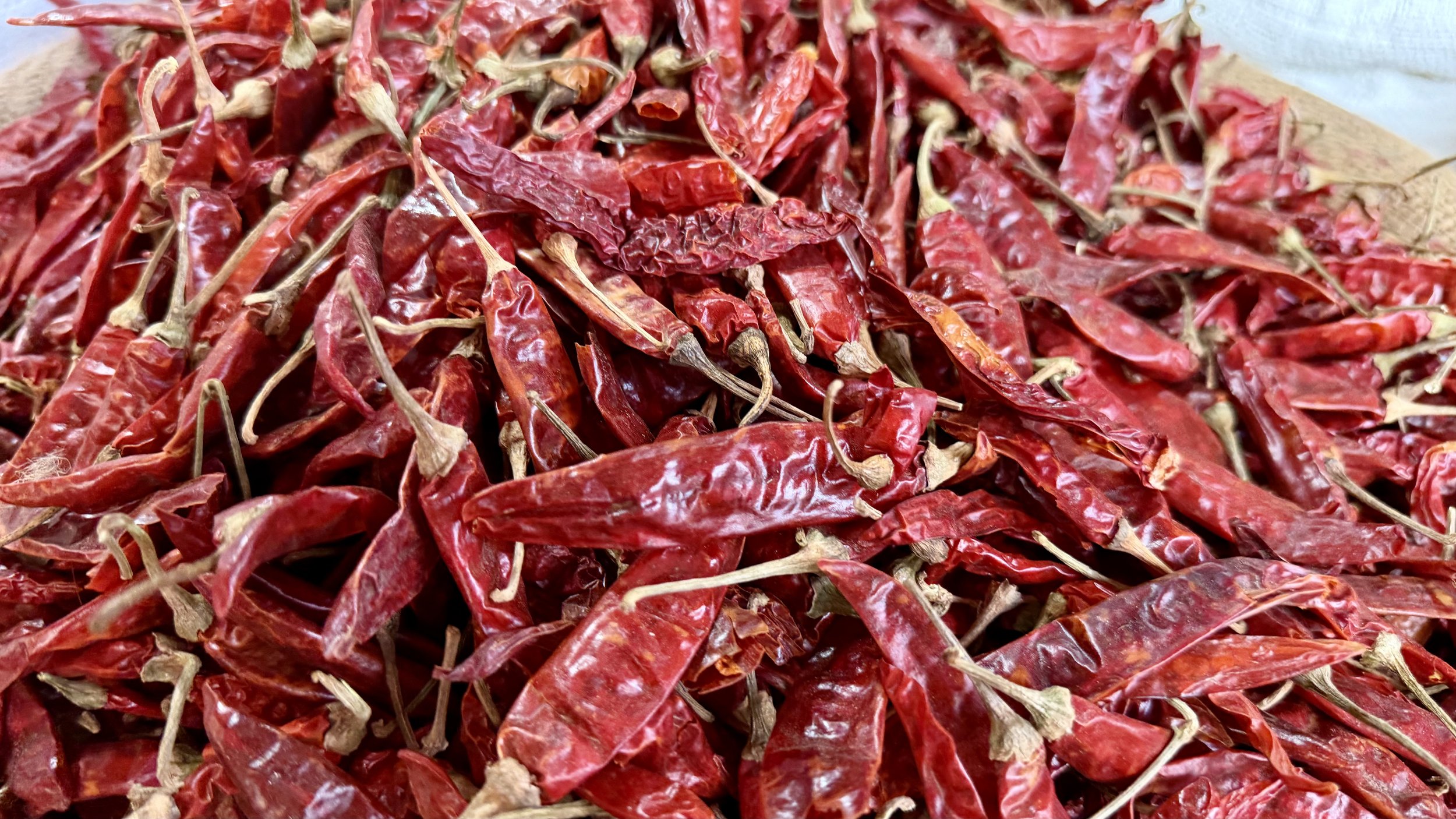
Further along, the sensory shift is immediate. Open sacks brim with dried chillies, their wrinkled red skins intense and slightly dusty. Stainless steel tubs hold mounds of turmeric, chilli powder and ground coriander, ochre, rust and gold, each with a scoop plunged into the surface like a small flag claiming territory. Next door, sacks of brightly coloured snacks, yellow tubes, latticed crisps, multicoloured fried shapes, sit in generous white bags.
Colour and Texture
Then the colours become almost electric. Piles of powdered pigment in neon pink, saffron orange, deep violet and sunflower yellow destined for the forthcoming Holi celebrations form small mountains under clear plastic. The powders are so vivid they seem unreal, as though someone has turned the saturation up too high.
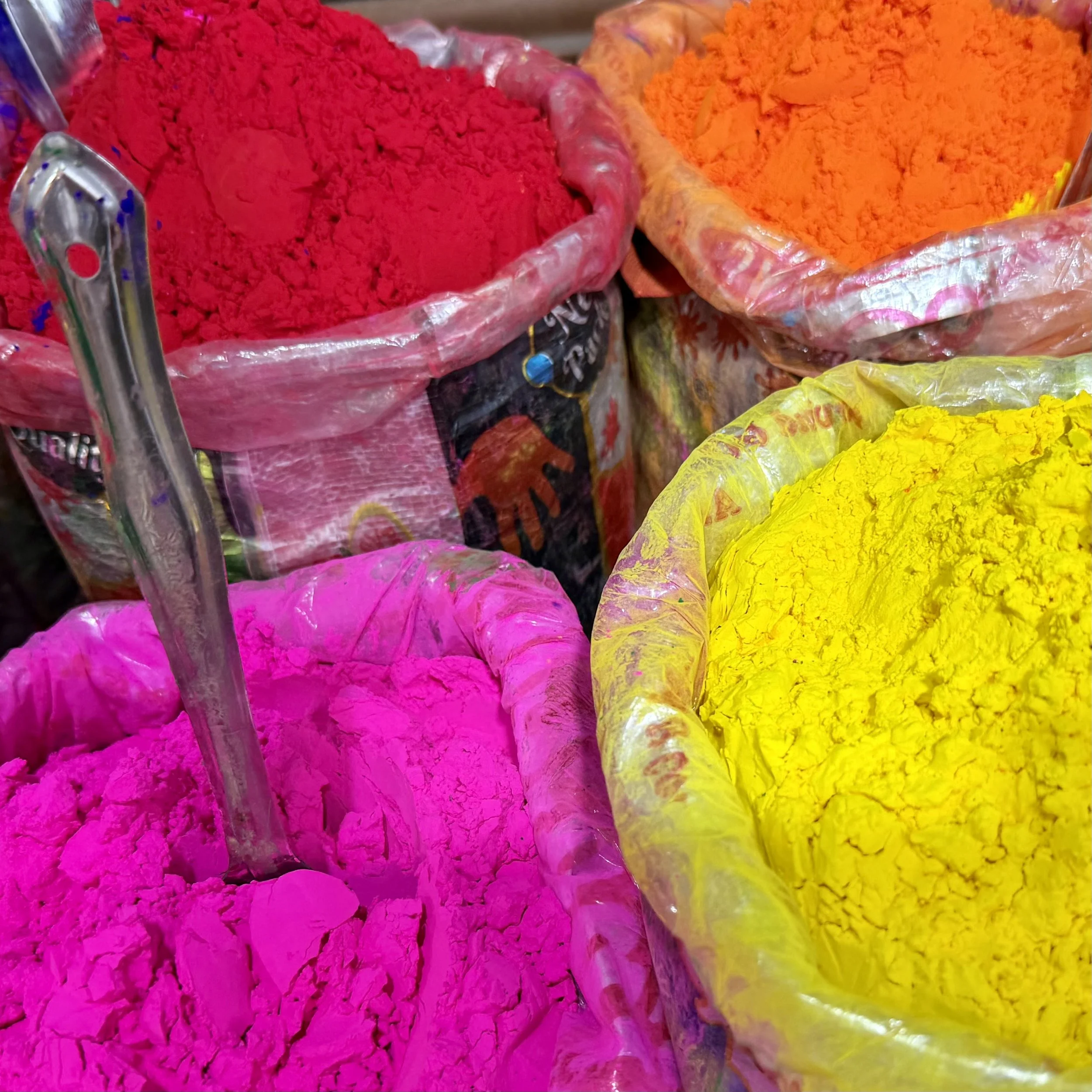
Piles of powdered pigment
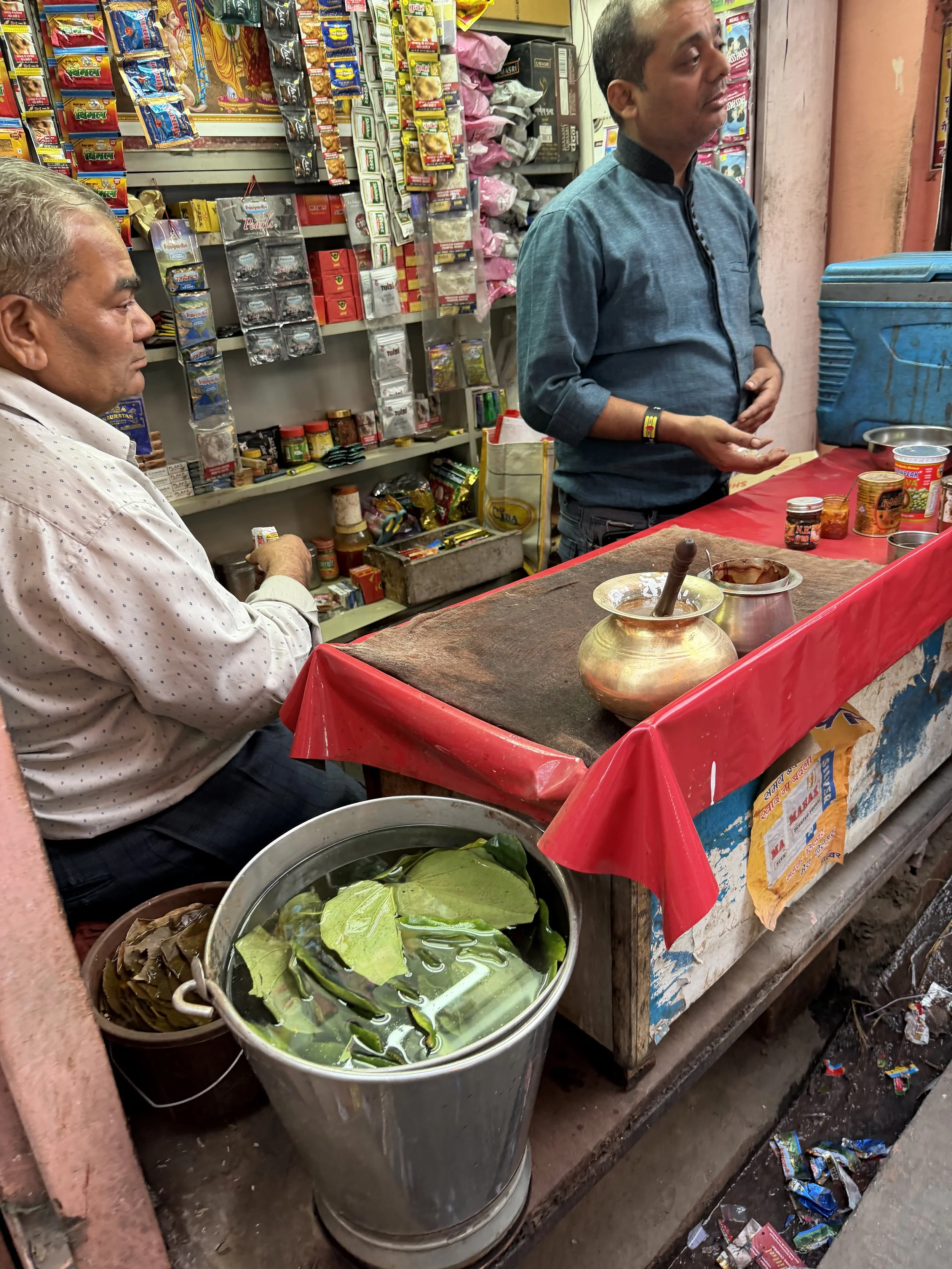
We pass a tiny counter where our guide shows us paan leaves sit soaking in water, glossy and green, ready to be folded with areca nut and spices. The vendor works calmly amid the noise, brass pot on the counter, packets hanging behind him like a collage of small promises. Around you, life continues at full volume: bargaining, laughter, engines revving, the call of a shopkeeper trying to catch your eye.
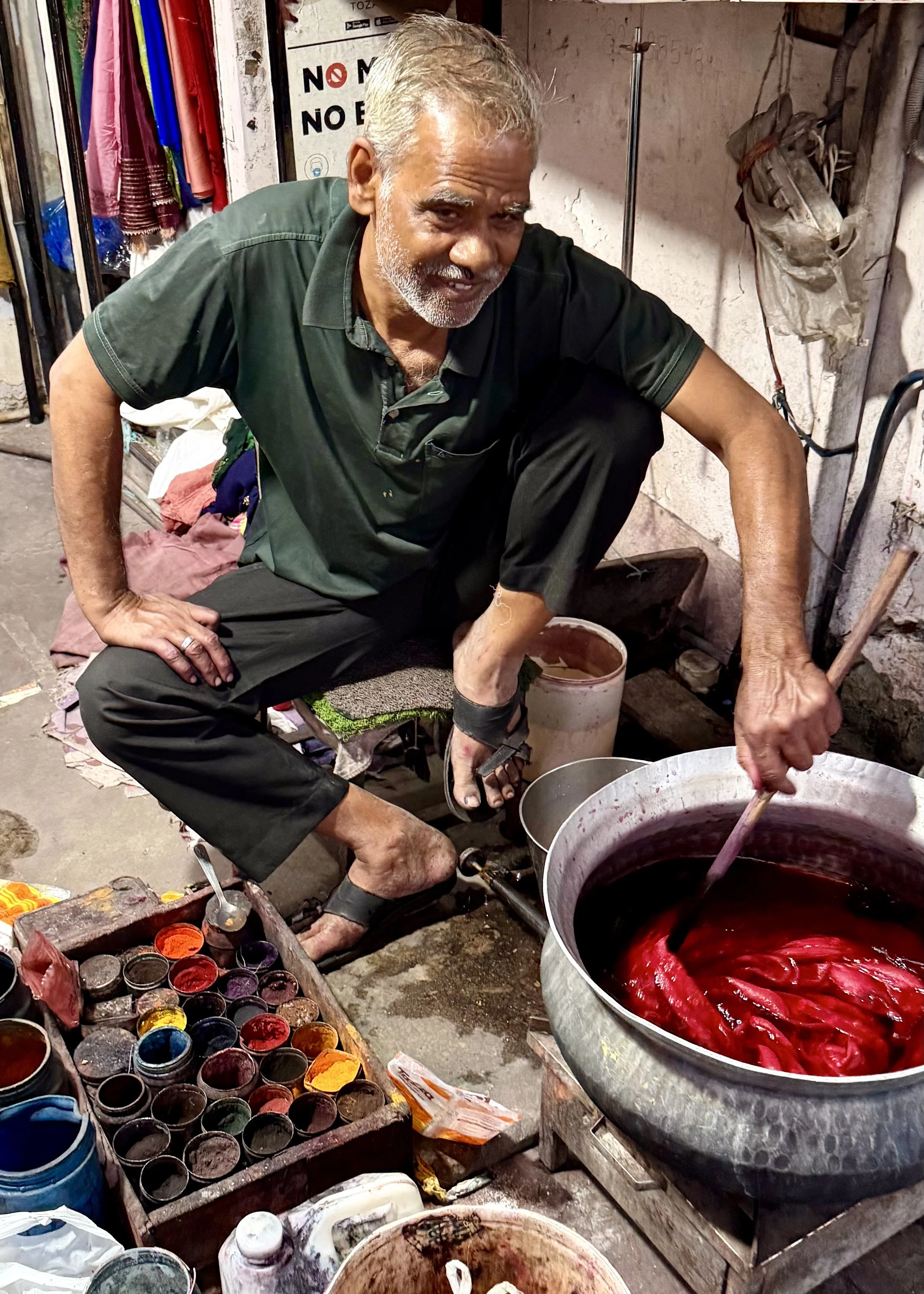
Walking deeper into Johari Bazaar, a man crouches beside a wide metal pot of crimson dye, stirring lengths of fabric that move like liquid silk beneath the surface. Around him sit small tins of pigment, saffron, indigo, marigold, their rims stained by years of use. The pavement is splashed with colour, water trickling away in thin rivulets. It feels less like a shop and more like a workshop that has simply opened itself to the street, craft happening inches from passing feet.

A cow walking along the shops in Jaipur
Small Exchanges
Down an allyway, our guide buys some ice cream for us to try, some of us are eager, some less so. Opposite,, shelves are lined with glass jars of pickles, lemon, mango, chilli, mixed vegetables, suspended in oil the colour of sunset. The air here is thick with spice and vinegar, sharp and warm at the same time.
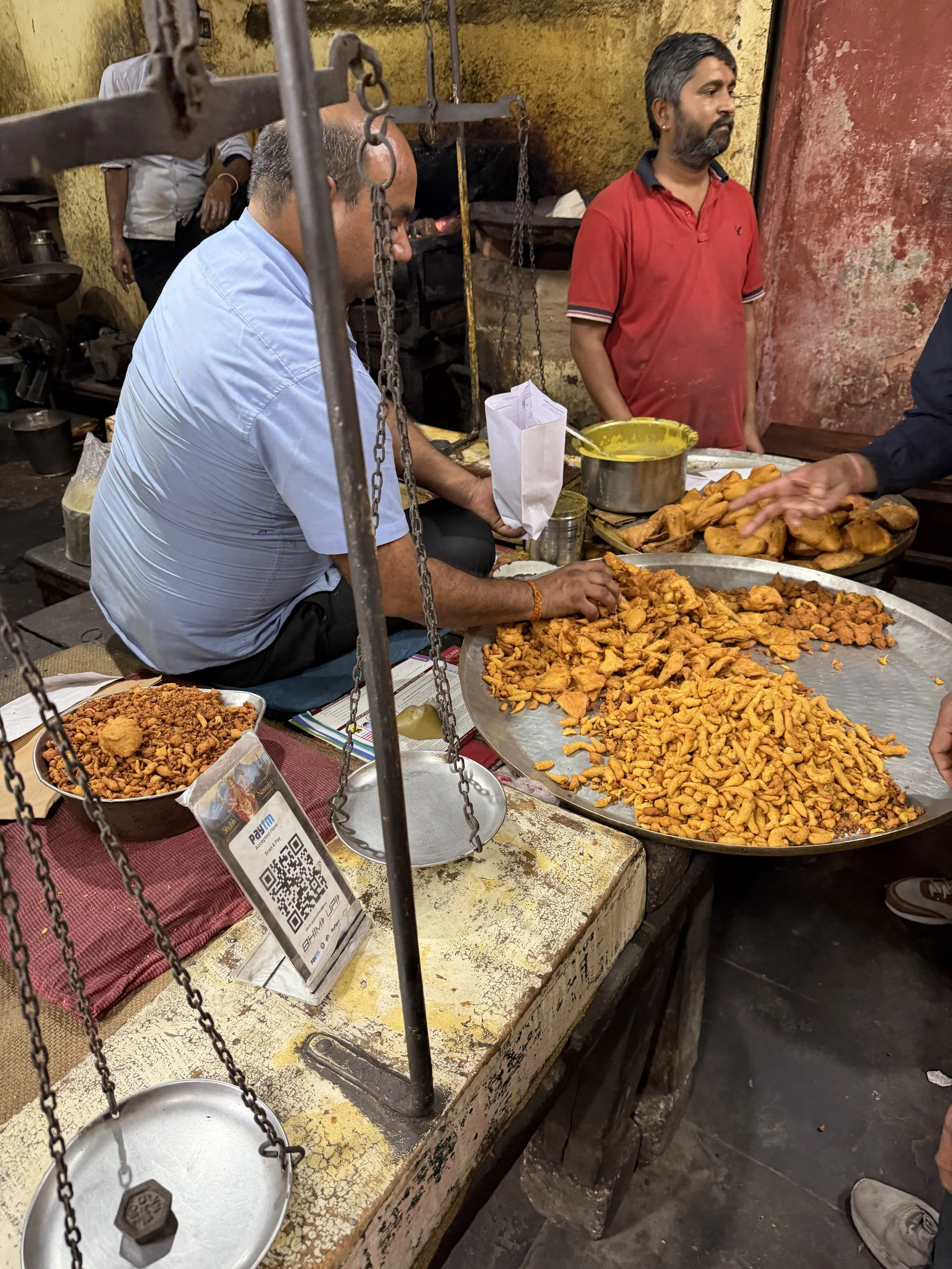
Further in, the scene shifts again. A sweet and savoury stall balances a hanging scale over a battered wooden counter. Freshly fried snacks, golden fritters, spiced sev, crisp samosas, are piled high on metal trays. A man measures portions with practised hands while another watches the oil, and a QR code sits neatly propped beside the scale, modern payment alongside age-old methods. Again some venture to try, others decline.
And then, just when you think you’ve adjusted to the rhythm, the pavement narrows beneath the covered arcade and you find yourself face to face with a black cow calmly walking towards and then past us between the pink columns. Traffic roars only a few feet away, an auto-rickshaw idling at the kerb, but the cow seems entirely untroubled, as do most of the pedestrians who simply angle their bodies and continue past. It’s a moment that would feel surreal anywhere else, yet here it barely interrupts the flow.
Johari Bazaar may have been laid out with symmetry and intention in the 18th century, but walking it today is about texture, dye-stained hands, jars of pickle catching the light, spice dust clinging to the air, hot oil crackling, and the quiet presence of a cow wandering in the shade of painted arches.
It all works for the people it serves. And somehow, in that layered chaos, it holds together.