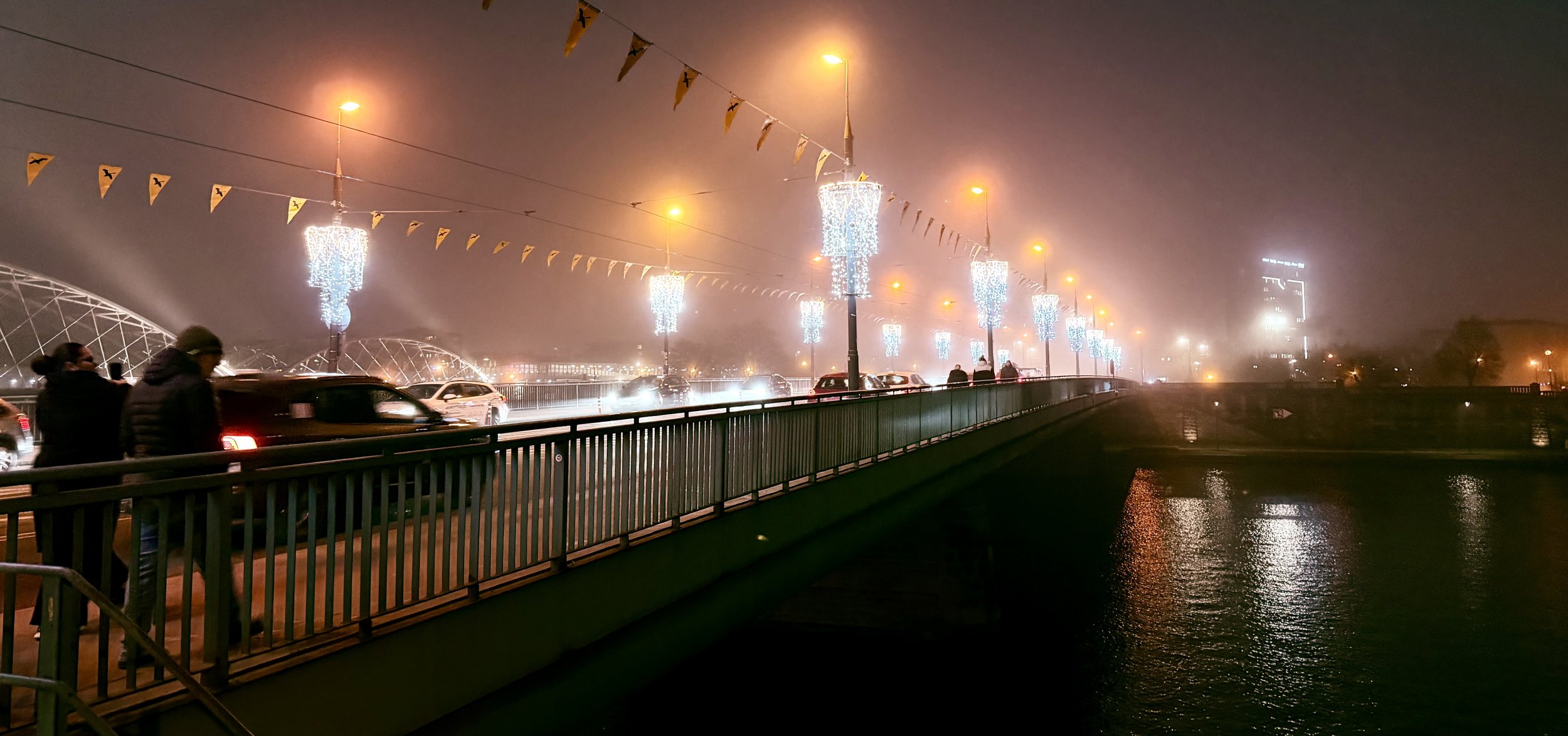
Kraków was a city we’d wanted to visit for some time, and four days gave us the chance to see both its beauty and its complexity. From the energy of the Old Town and the scale of Wawel Castle to the quieter streets of Kazimierz and the deeply moving visit to Auschwitz-Birkenau, each day offered something very different.
It’s a city where everyday life sits alongside centuries of history, and where some places invite enjoyment while others require reflection. Our time in Kraków was varied, sometimes sobering, but always interesting.
Beauty, history, and difficult memories.
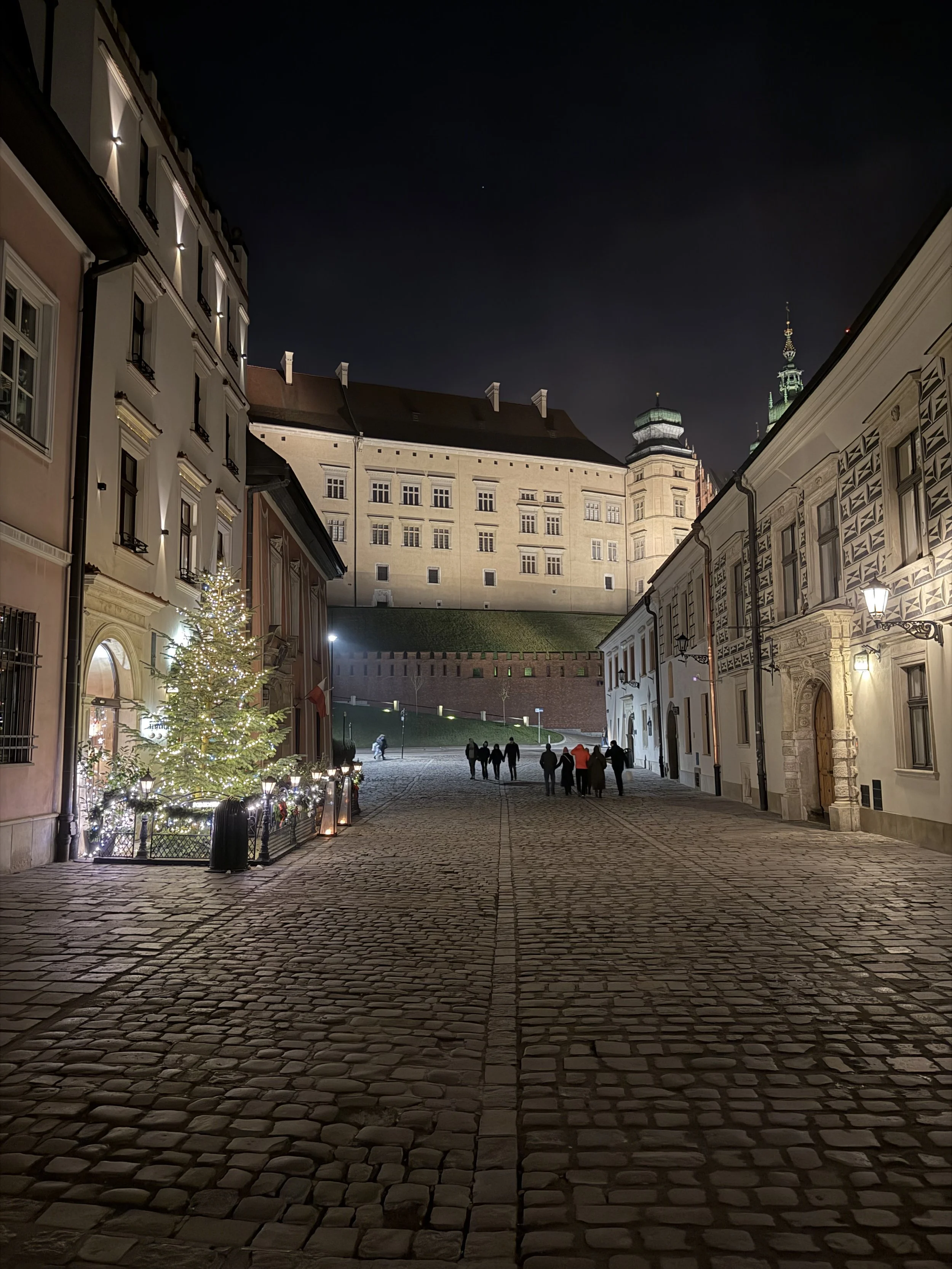
Arrival into Krakow
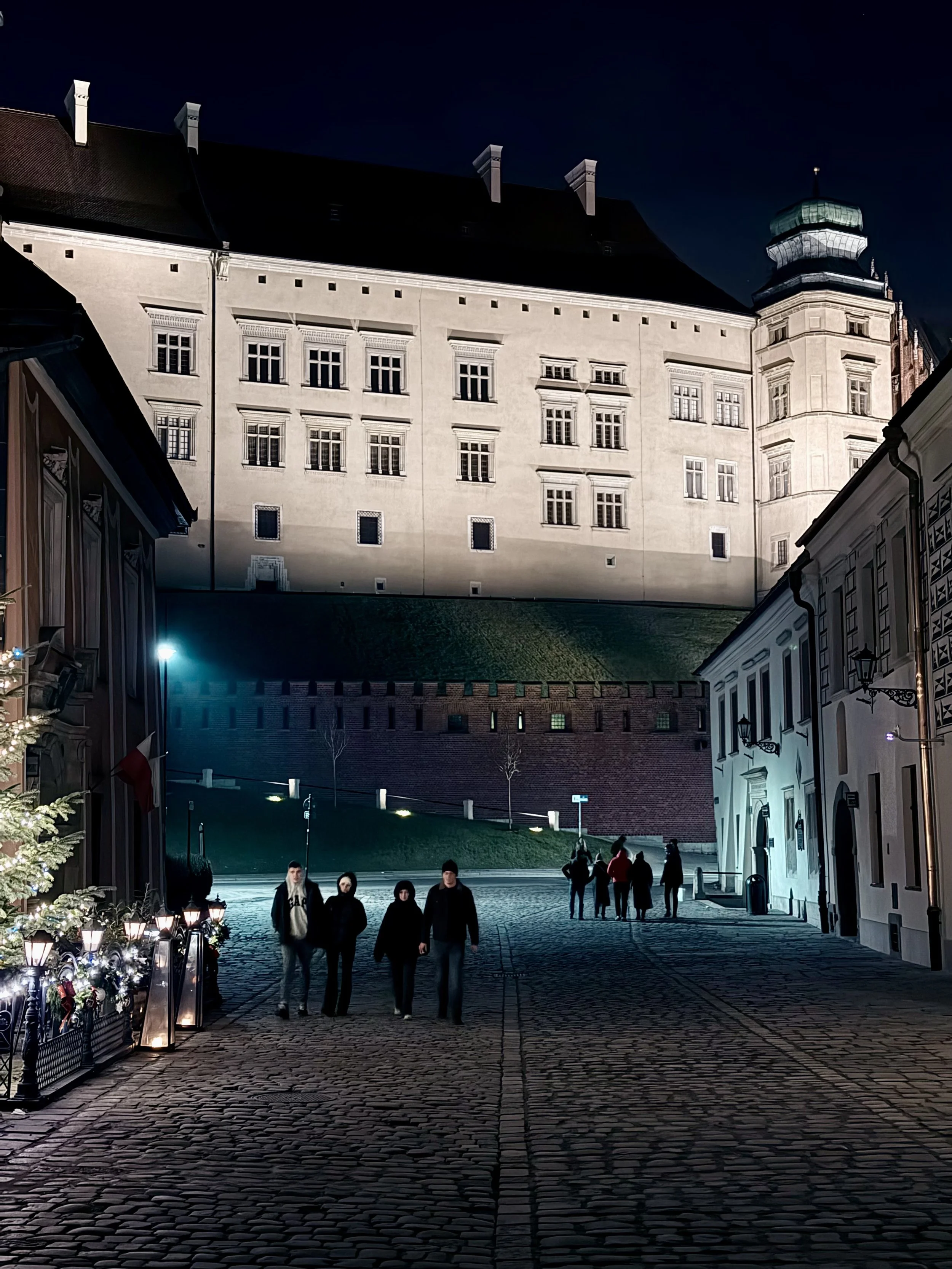
Kanonicza Street and Wawel Castle
Very smooth journey from home to Kraków today. East Midlands Airport was quiet and we were through security in minutes, which always feels like a good start. Headed straight to the Escape Lounge and ended up with longer than expected there, so had time to relax properly, enjoy a couple of drinks and some lunch before boarding.
We were sat right at the front of the plane, which meant plenty of legroom, but we made the classic mistake of boarding late so our cases were stowed well back. That led to a bit of a rugby scrum when we landed as everyone tried to grab their bags. Still, we were off the plane first and into the customs hall ahead of most passengers, which turned out to be useful with the new EU entry procedures having only recently been introduced.
After a short drive we arrived at our apartment, which is large and very comfortable — a nice relief after travelling. We headed out for a gentle first walk, around Wawel Castle and along the Vistula, stopping to watch the fire-breathing dragon statue on the riverbank.
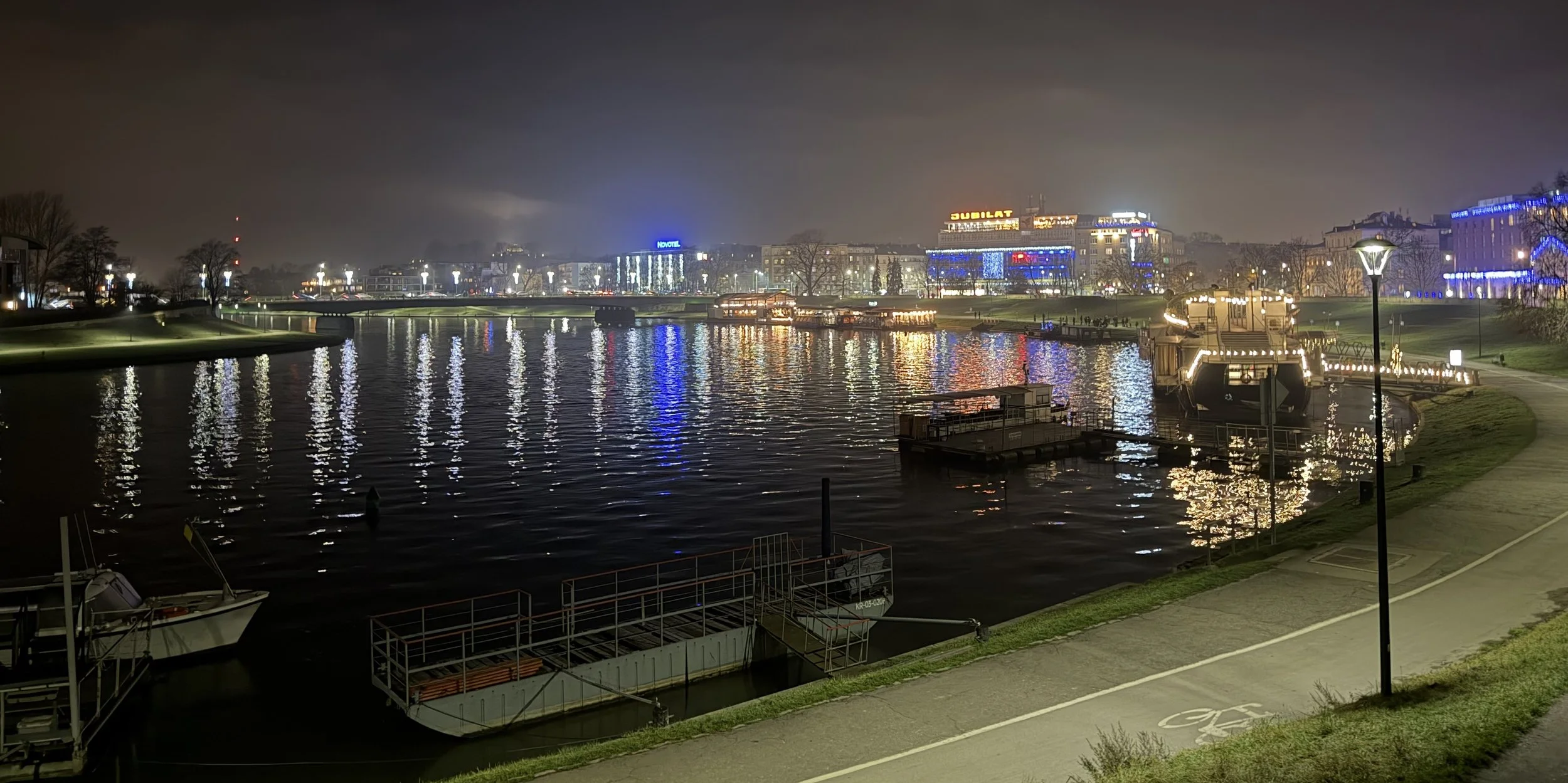
View across the Vistula river
From there we walked along Kanonicza Street, taking photos as we went, and made our way up towards the Christmas Market.
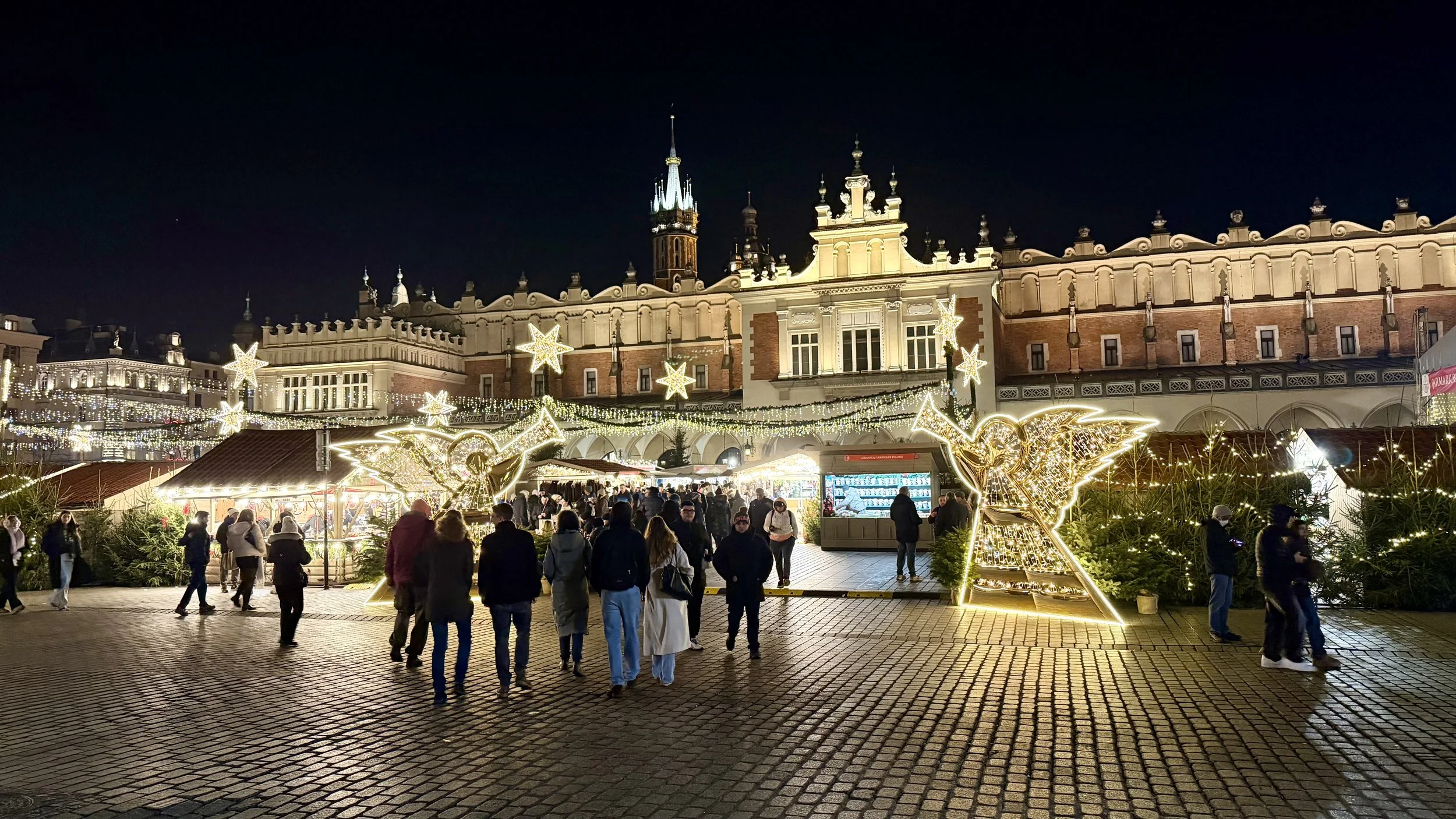
Kraków felt very festive. There were Christmas lights everywhere and the restaurants were beautifully decorated. Rynek Główny was busy but good-natured, with everyone seeming to enjoy themselves. We warmed up with some mulled wine and tried the hot cheese with cranberry that had been recommended — well worth it. I also tried Polish smalec, pork lard on toasted bread with onions and bacon, which felt very traditional and very filling.
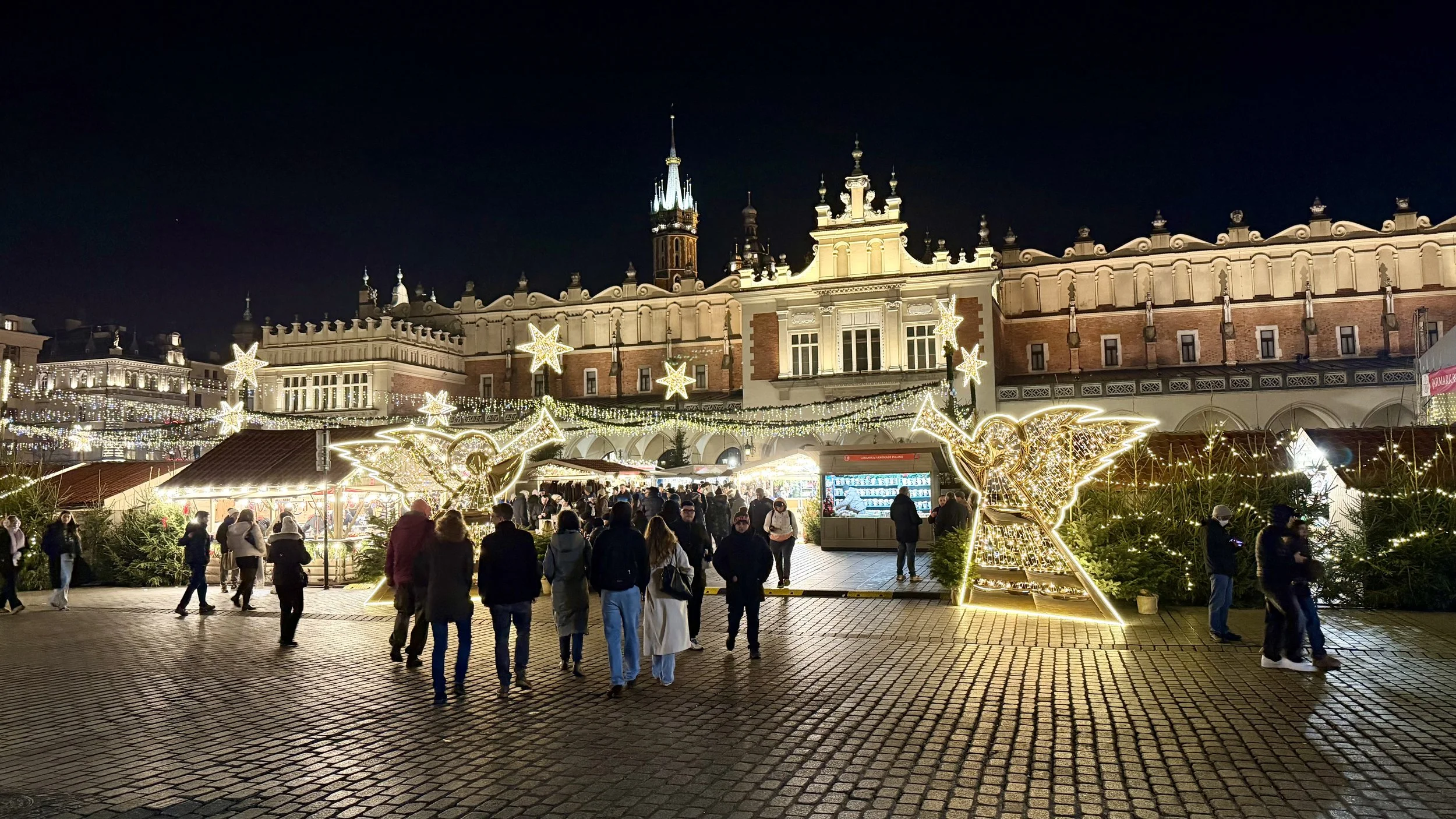
Festive Rynek Główny
After walking through the market we headed back towards the apartment, stopping briefly for a coffee at McDonald’s and a small bite to eat for Linda, before calling it a night.
Reflection
A really easy first day, with none of the stress that sometimes comes with travel. Kraków immediately feels welcoming and atmospheric, especially in the run-up to Christmas. It was good to keep the first afternoon gentle — just walking, soaking it all in, and knowing there’s plenty more to explore over the next few days.
If you’d like to follow future journeys, reflections, and moments noticed along the way, you can join the mailing list here.
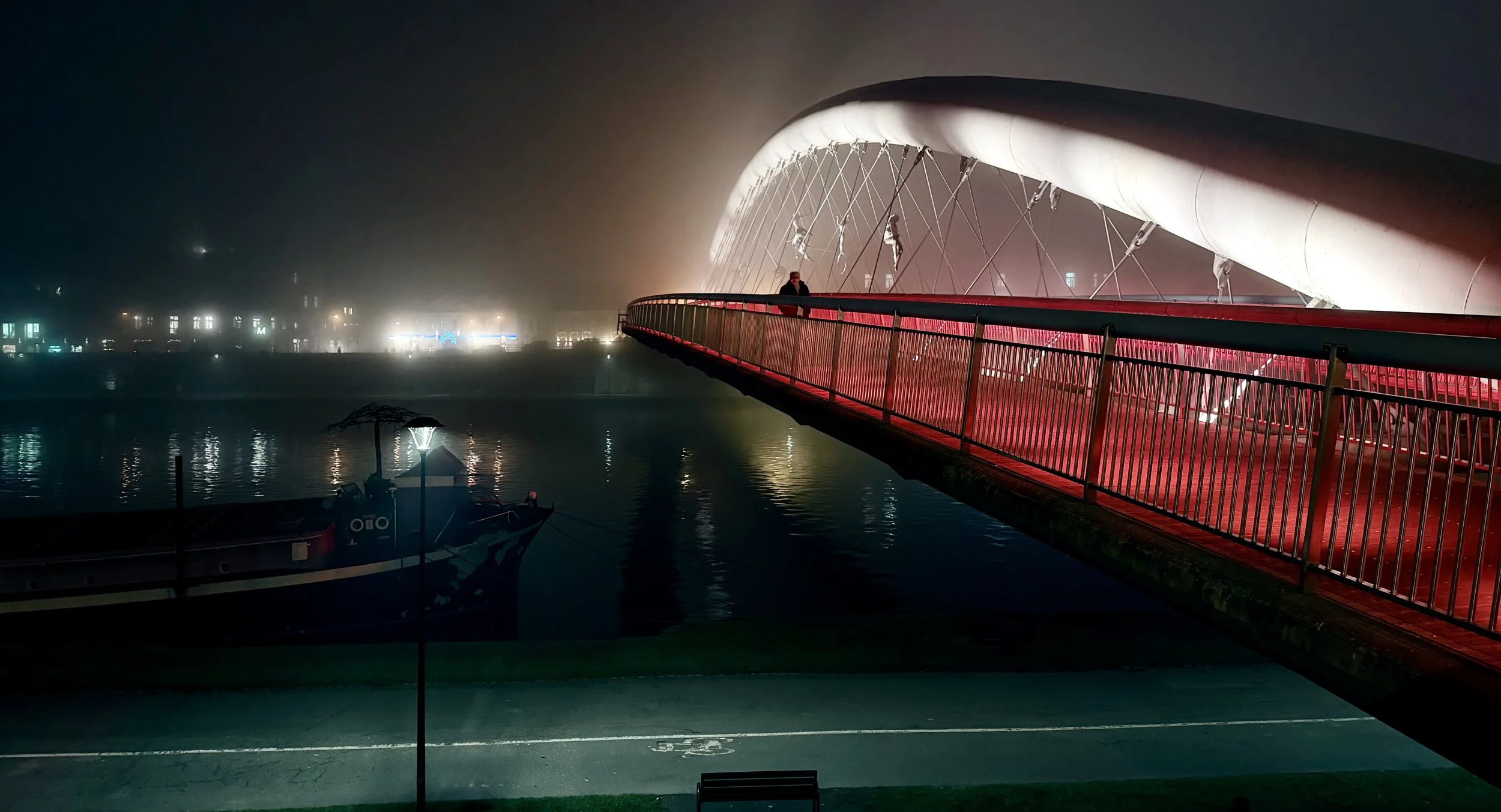
Krakow’s Old Town
Today was about getting to know Kraków properly on foot, starting at our own pace before joining a guided tour of the Jewish Quarter later in the day.
We walked from the apartment to Kazimir Restaurant for breakfast. It was a straightforward buffet, very hotel-like, but comfortable and easy. An omelette and coffee set us up well for a long day of walking.
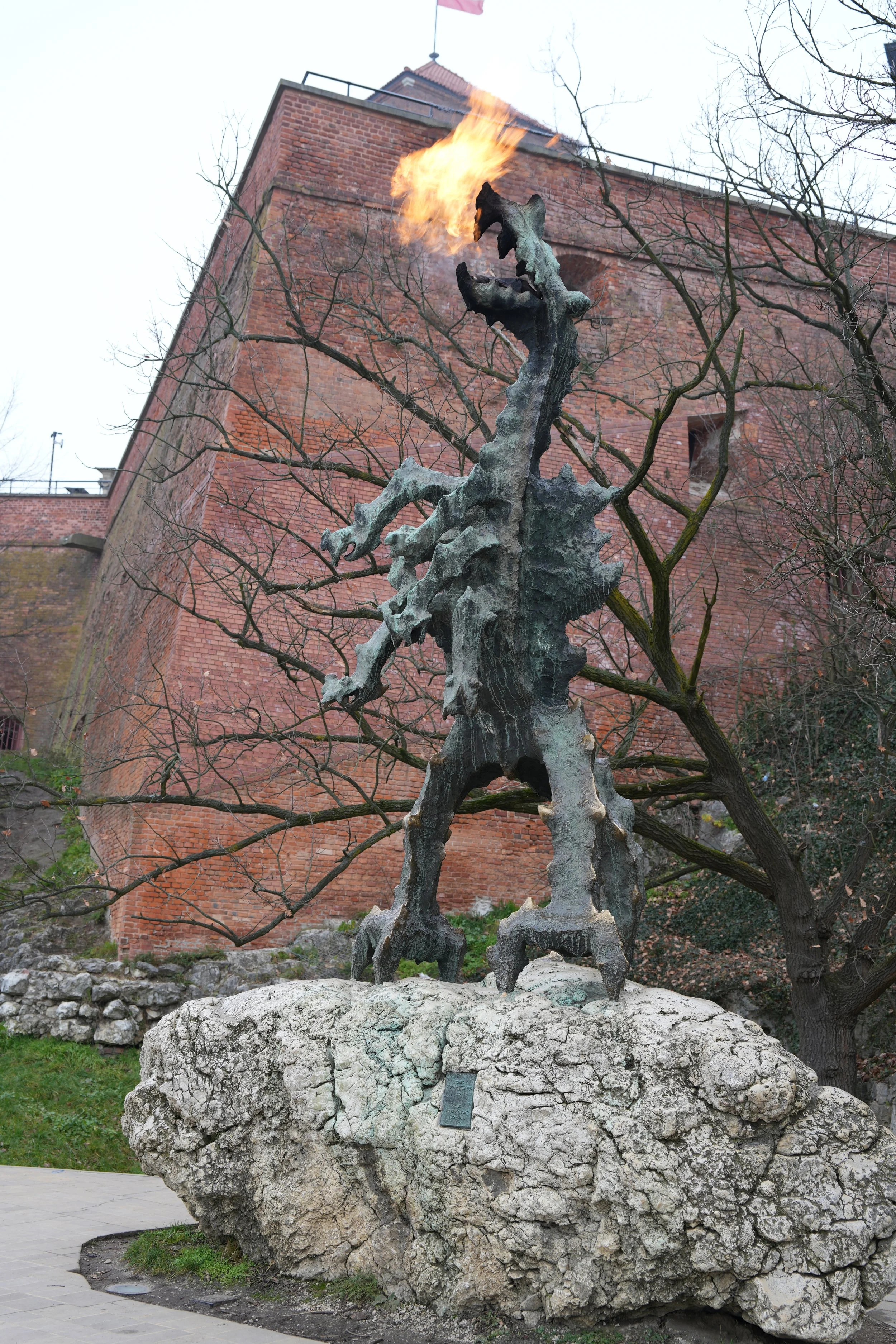
Fire breathing dragon
From there we headed down to the river, stopping first at the Dżok the Dog monument and then at the fire-breathing dragon, where a small crowd waited patiently for the next burst of flame. The morning was cold and sharp as we walked back around Wawel Castle, taking photos of the river and surrounding area before heading up towards the entrance.
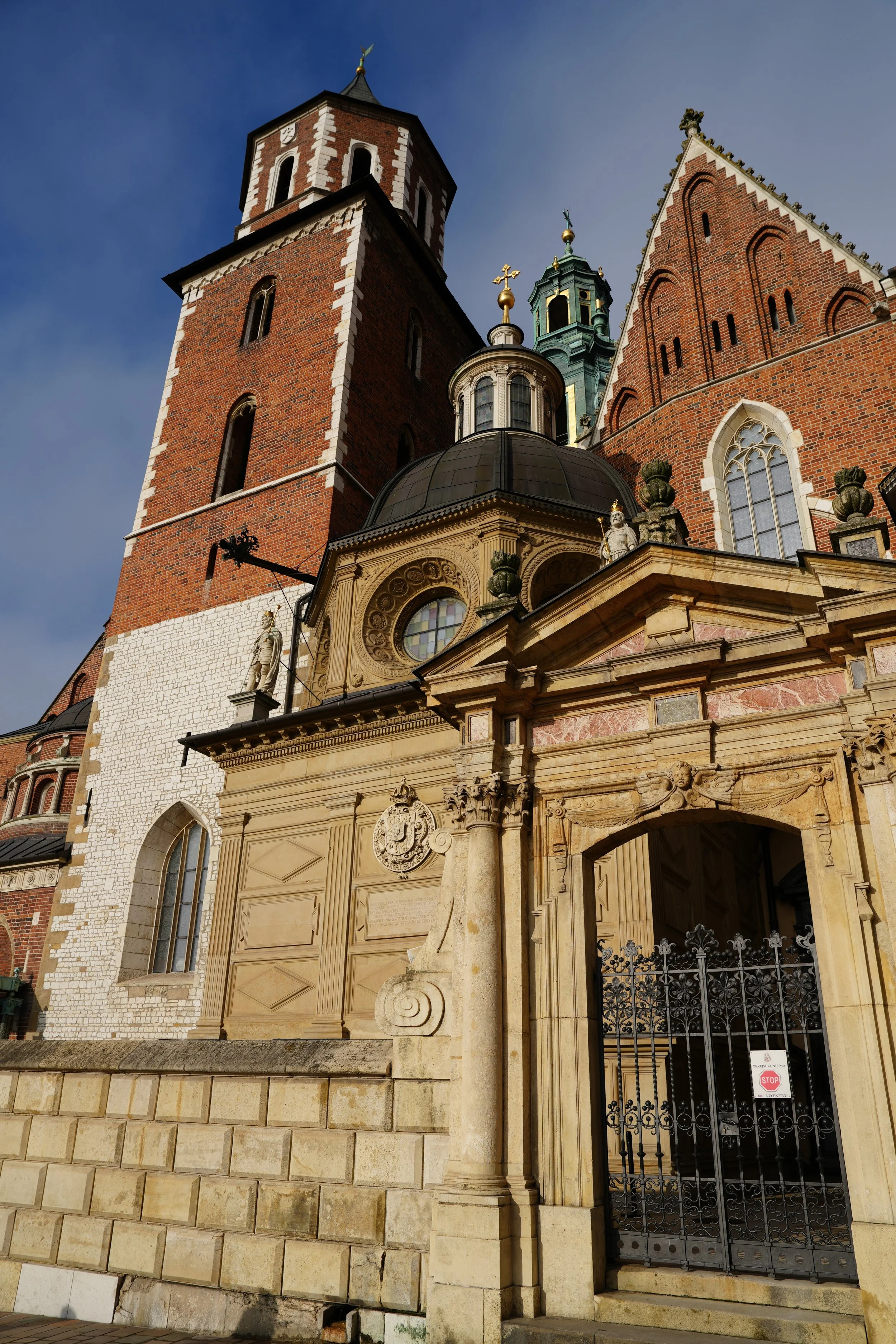
Wawel Cathedral
We spent around an hour inside the cathedral, admiring the scale of the architecture and the richly ornate tombs. Climbing the 237 steps to the bell was a bit of a workout but worth it. After a brief look around the castle courtyard, we made our way into the town centre.
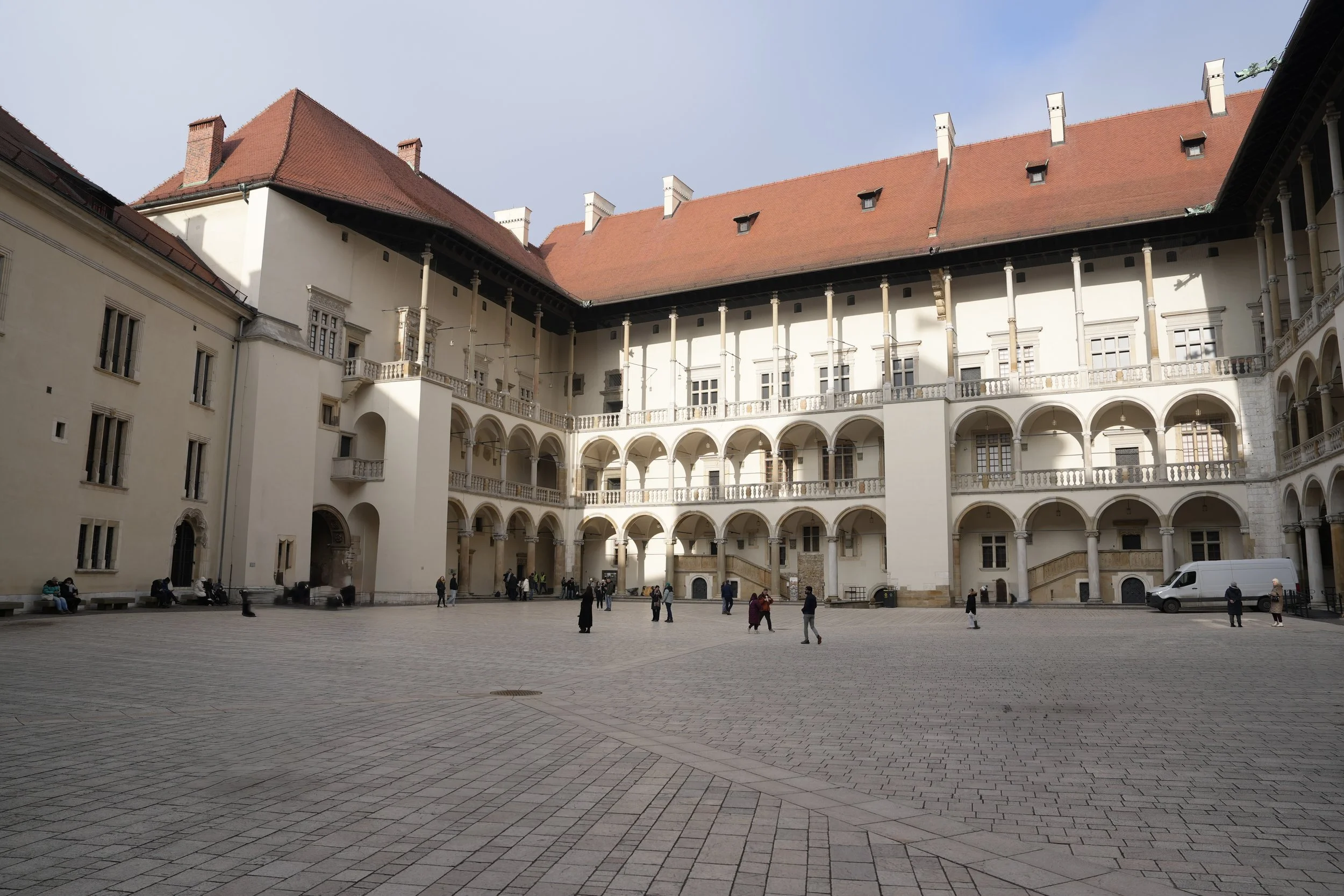
Wawel Castle courtyard
We had booked tickets for the underground museum beneath the main square, although finding the entrance took some effort. After circling the Cloth Hall, we eventually found the descent. The museum was well presented and informative, focusing on medieval life, and it reminded me of the Jorvik Viking Centre in York. Despite this, it didn’t quite hold our attention and we moved through it fairly quickly.
Back above ground, we passed St Mary’s Basilica and walked up Floriańska Street, towards the gate, taking in the shops and the steady flow of people. By then we needed a sit down, so we stopped for coffee at an unexpectedly grand McDonald’s, complete with underground vaulted ceilings.
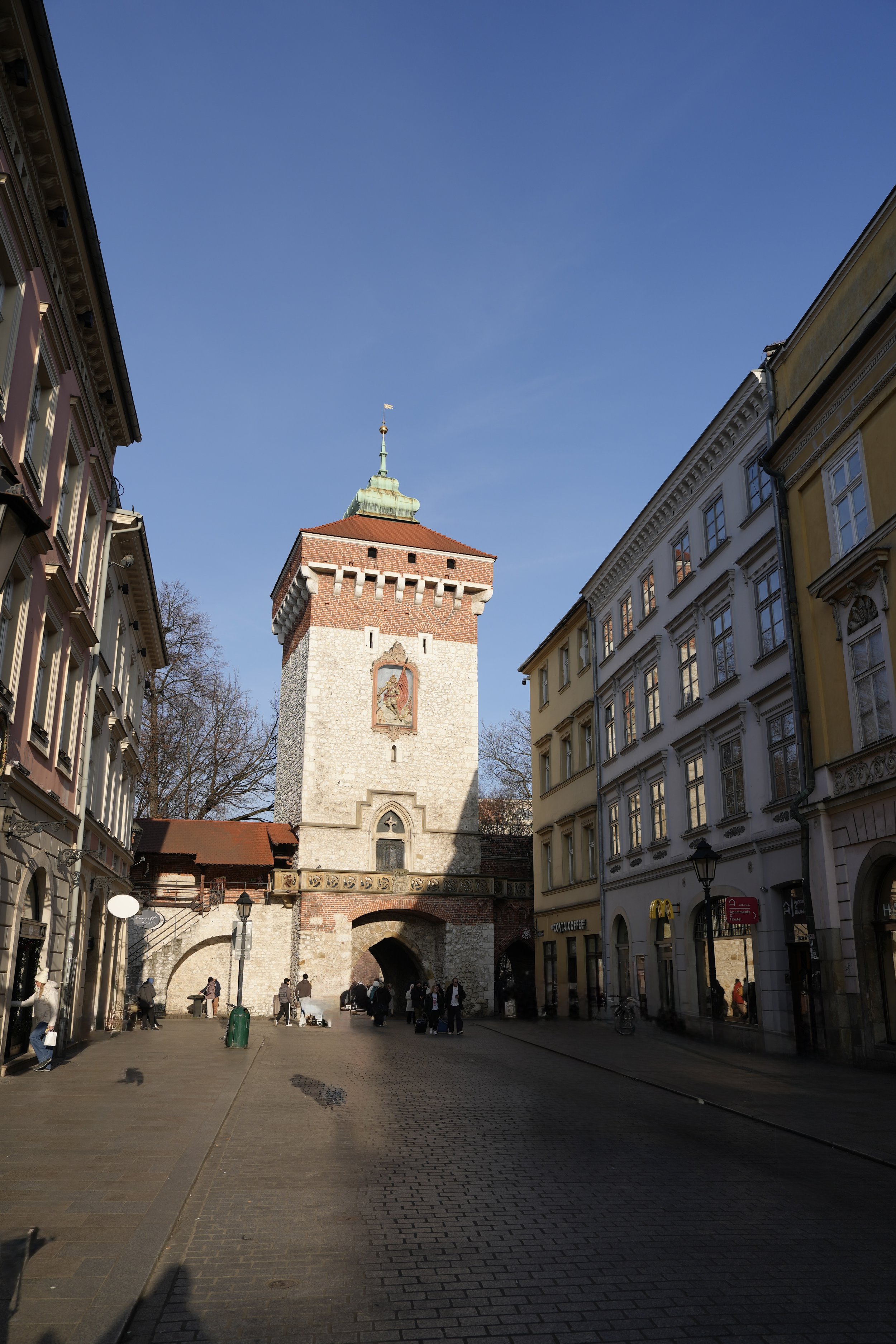
St. Florian's Gate
As we stepped back outside, the light was beginning to soften. The setting sun cast a warm glow over the buildings as we walked along the outside of the city walls, eventually finding a smaller, quieter Christmas market tucked behind the cathedral.
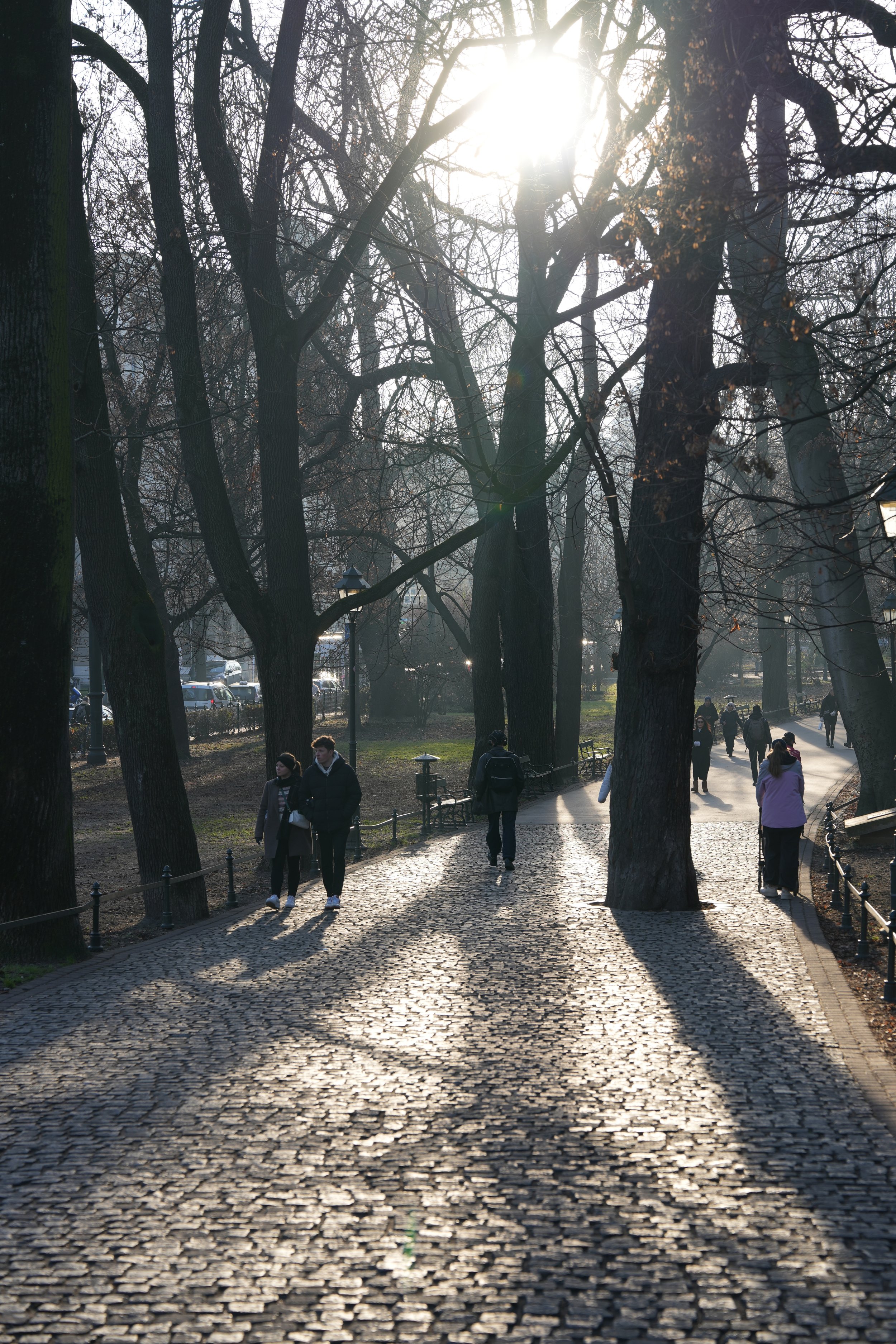
4km chain of gardens with walkways, trees & lawns encircling the historic centre of Kraków.
After returning to the apartment to freshen up, we met our tour group and set off at a brisk pace towards the Jewish Quarter. The group quickly stretched out as some struggled to keep up. The tour was fascinating, and it was surprising to learn how few Jewish people now live in the area. Although it was dark, the atmosphere added to the experience, particularly at the Ghetto Heroes Monument and the symbolic chairs. The tour lasted around two hours and finished at Plac Nowy.
We ended the day with a well-earned sit down and a drink at Alchemia, a relaxed local bar and a fitting place to stop.
Reflection
A full but well-balanced day that helped everything fall into place. Walking the city connected the castle, the old town and the Jewish Quarter into a single story, while the evening tour added depth and context. By the time we finally sat down with a drink, Kraków felt less like somewhere we were visiting and more like a city we were beginning to understand.
If you’d like to follow future journeys, reflections, and moments noticed along the way, you can join the mailing list here.
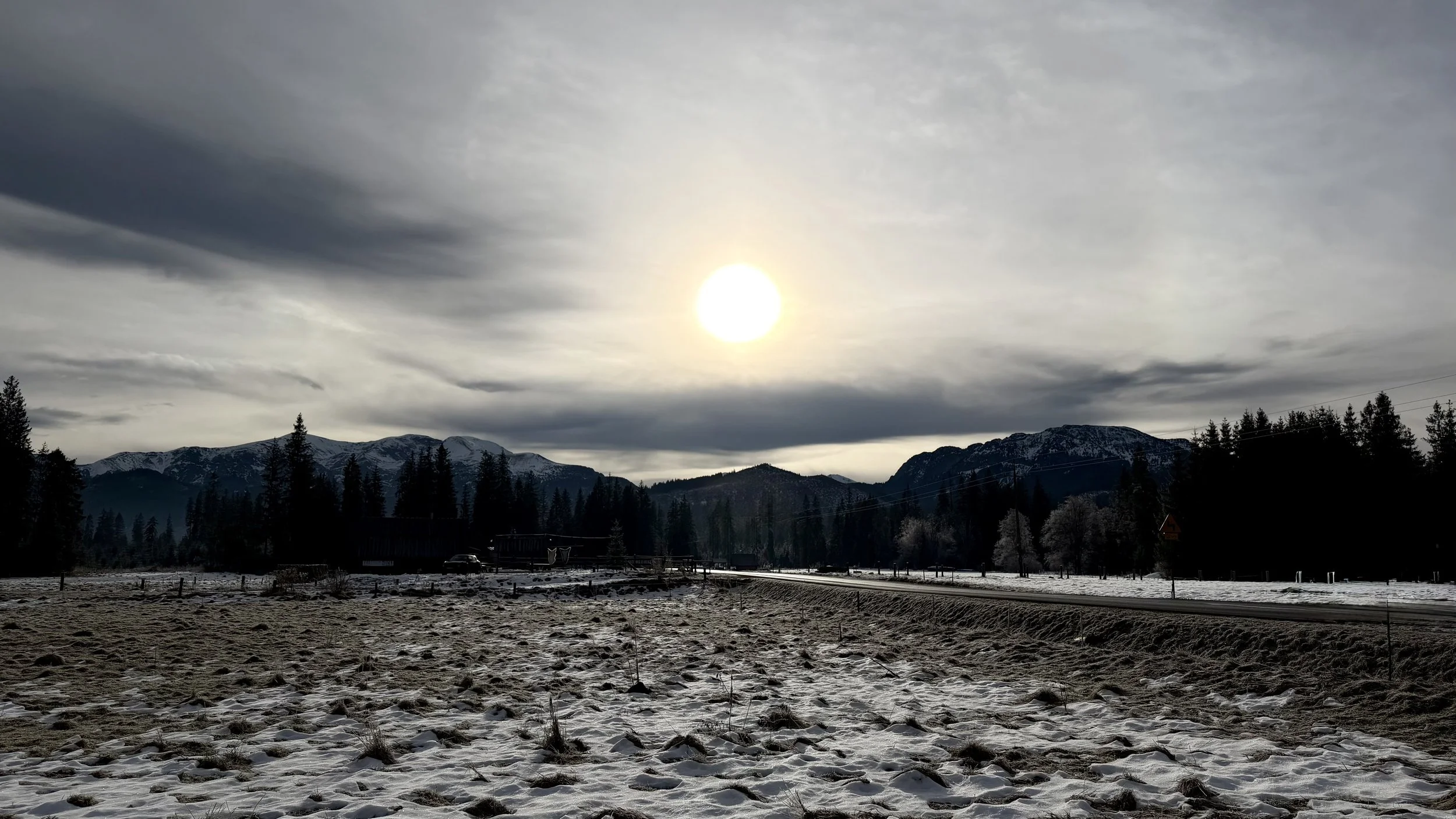
Zakopane and the Tetra Mountains
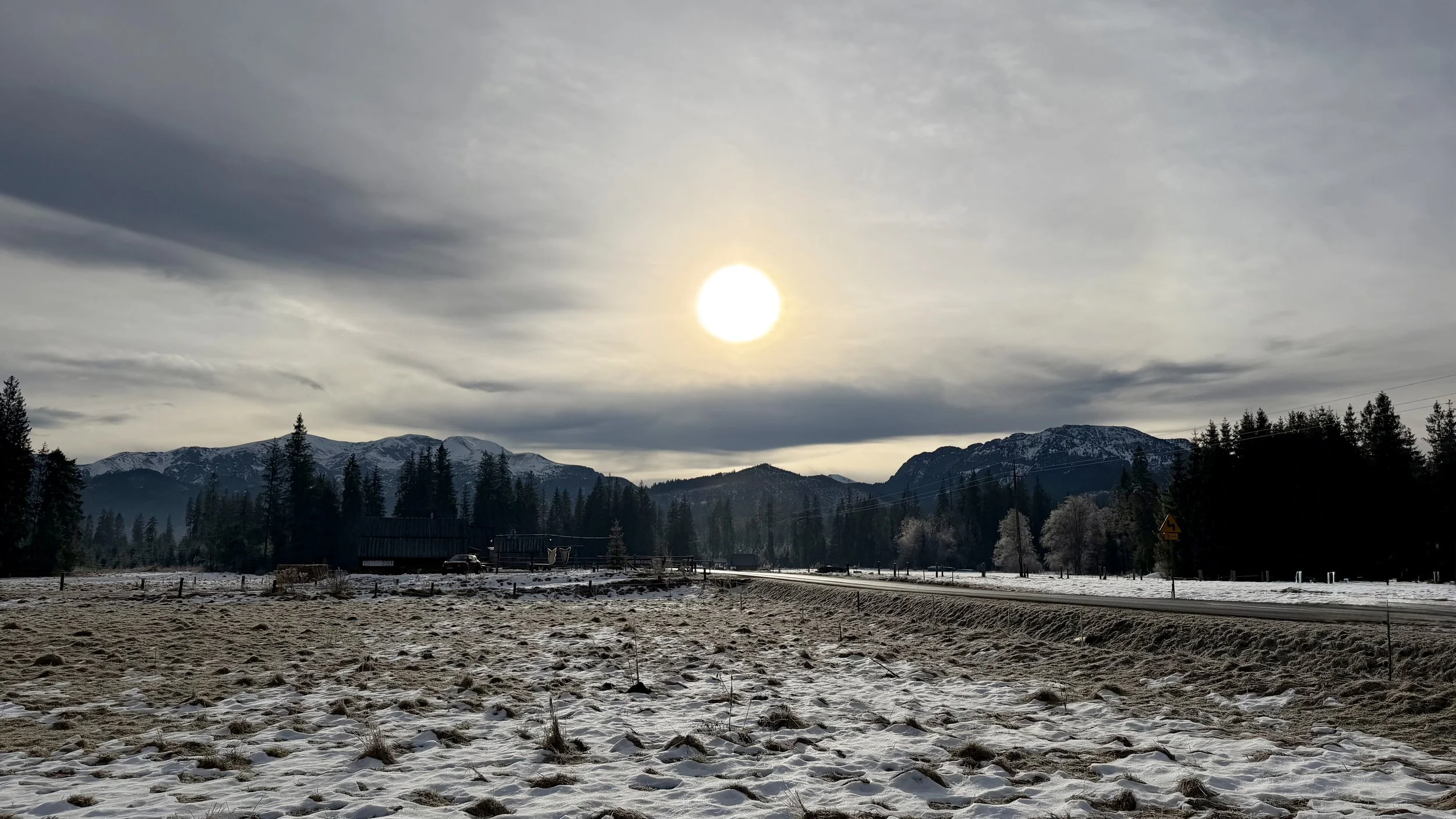
Outskirts of Chochołów
It was an early start today for our trip to Zakopane — early enough that the coffee shop we tried hadn’t even switched on their machines yet, so we left empty-handed. From there we walked to the pick-up point and were slightly surprised to board a full-size coach rather than the minibus we’d been expecting.
The drive to our first stop was a long one, taking us through the countryside to Chochołów, a small village known for its 16th-century wooden houses. We parked near the church and had a brief walk around, taking a few photos, although fifteen minutes felt rushed and barely enough time to settle into the place.
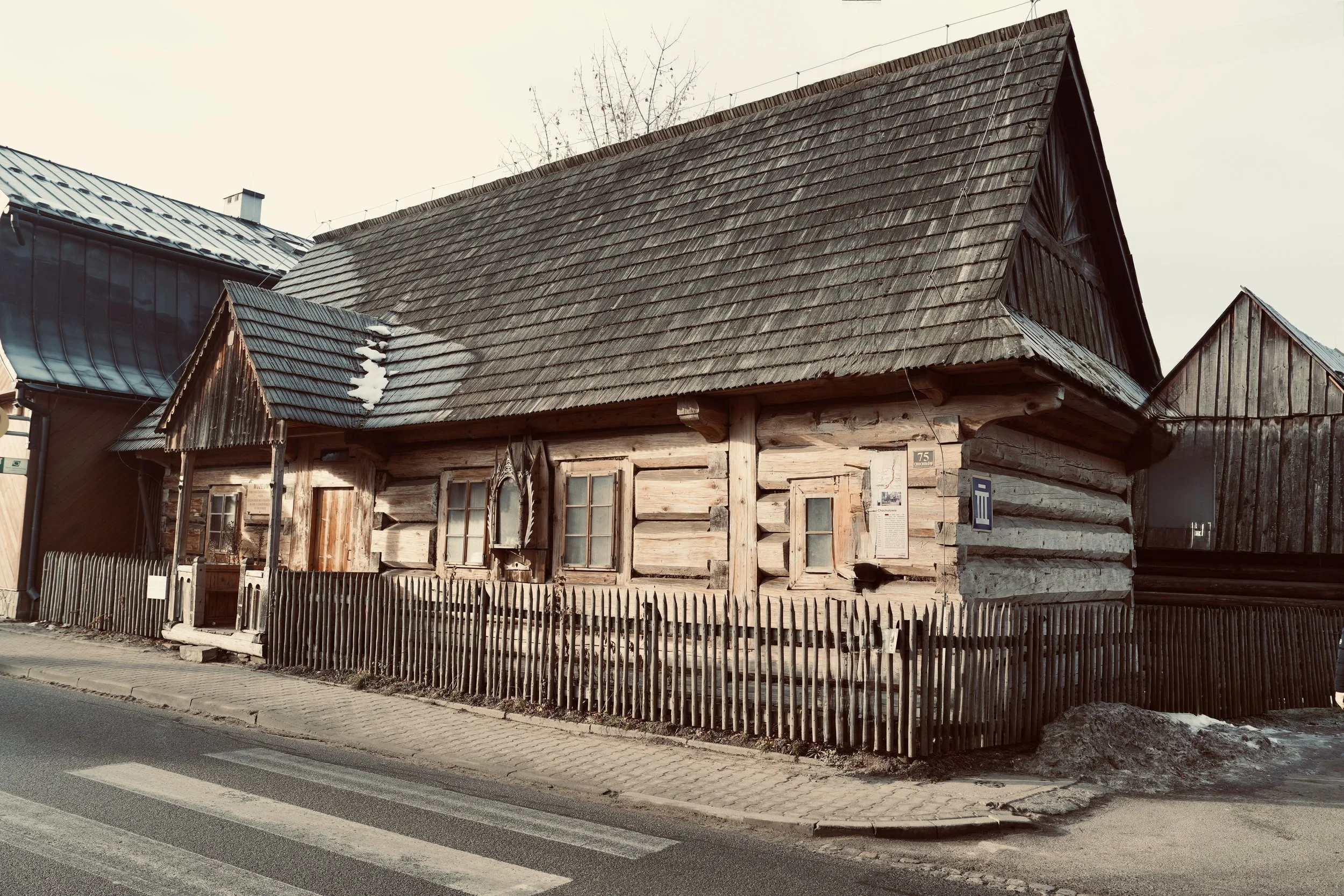
One of the oldest houses in Chochołów
We continued on towards a much-anticipated cheese and vodka tasting stop. As we approached the Tatra Mountains, the temperature dropped noticeably, with snow on the ground and frost clinging to the trees. This stop was very clearly designed for tourists, with small wooden huts lining the roadside and local cheese being cooked over open fires. The cheese, served warm with cranberry sauce, was excellent. The vodka less so. Faced with the prospect of a hefty fine for bringing the cheese back to the UK, we admired it, enjoyed the moment, and moved on.
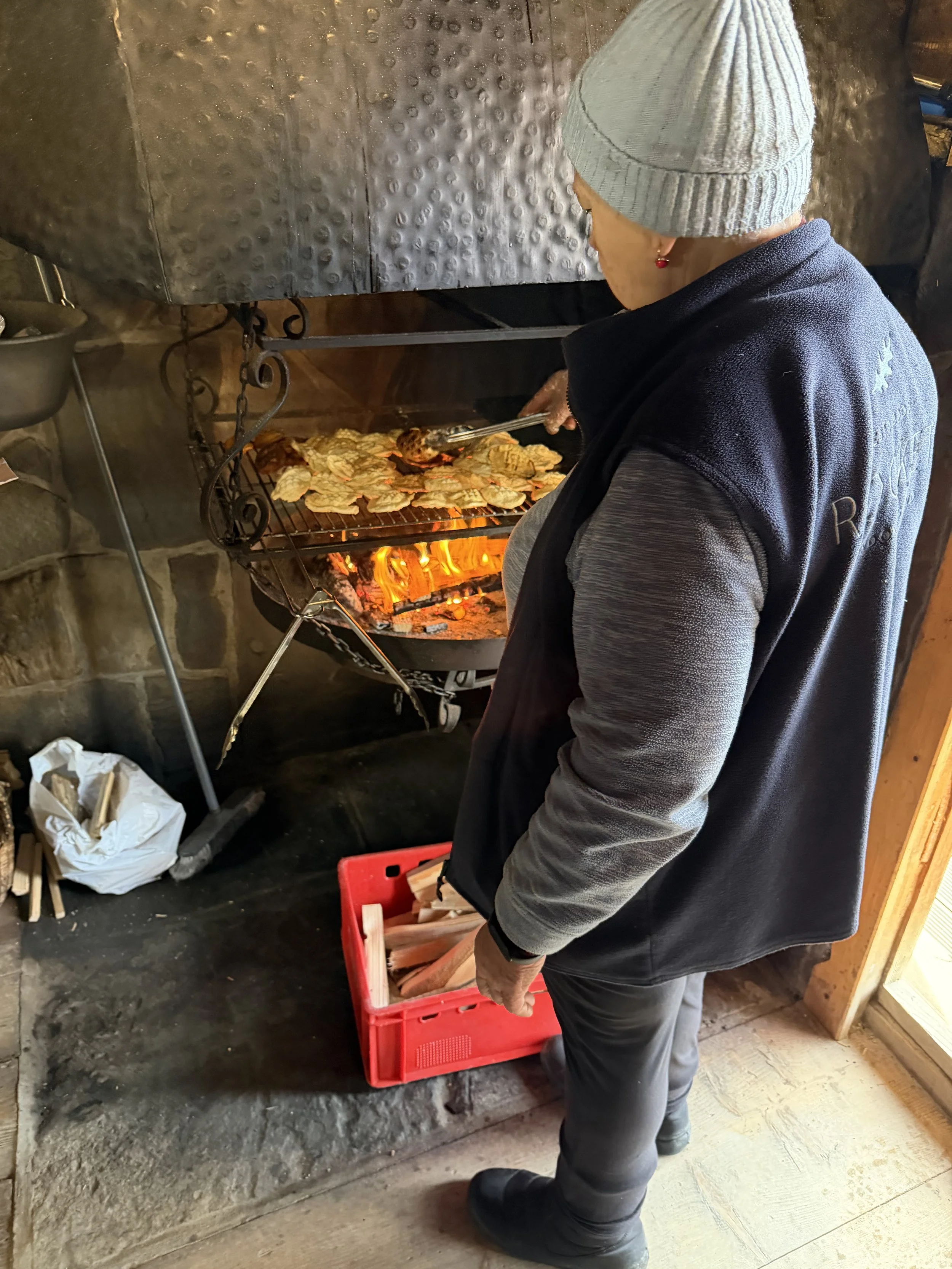
Local cheese over a grill
We reached Zakopane at around 11am and headed straight for the funicular up Gubałówka Mountain. With few other passengers besides our group, boarding was easy and we were soon climbing quickly towards the top.
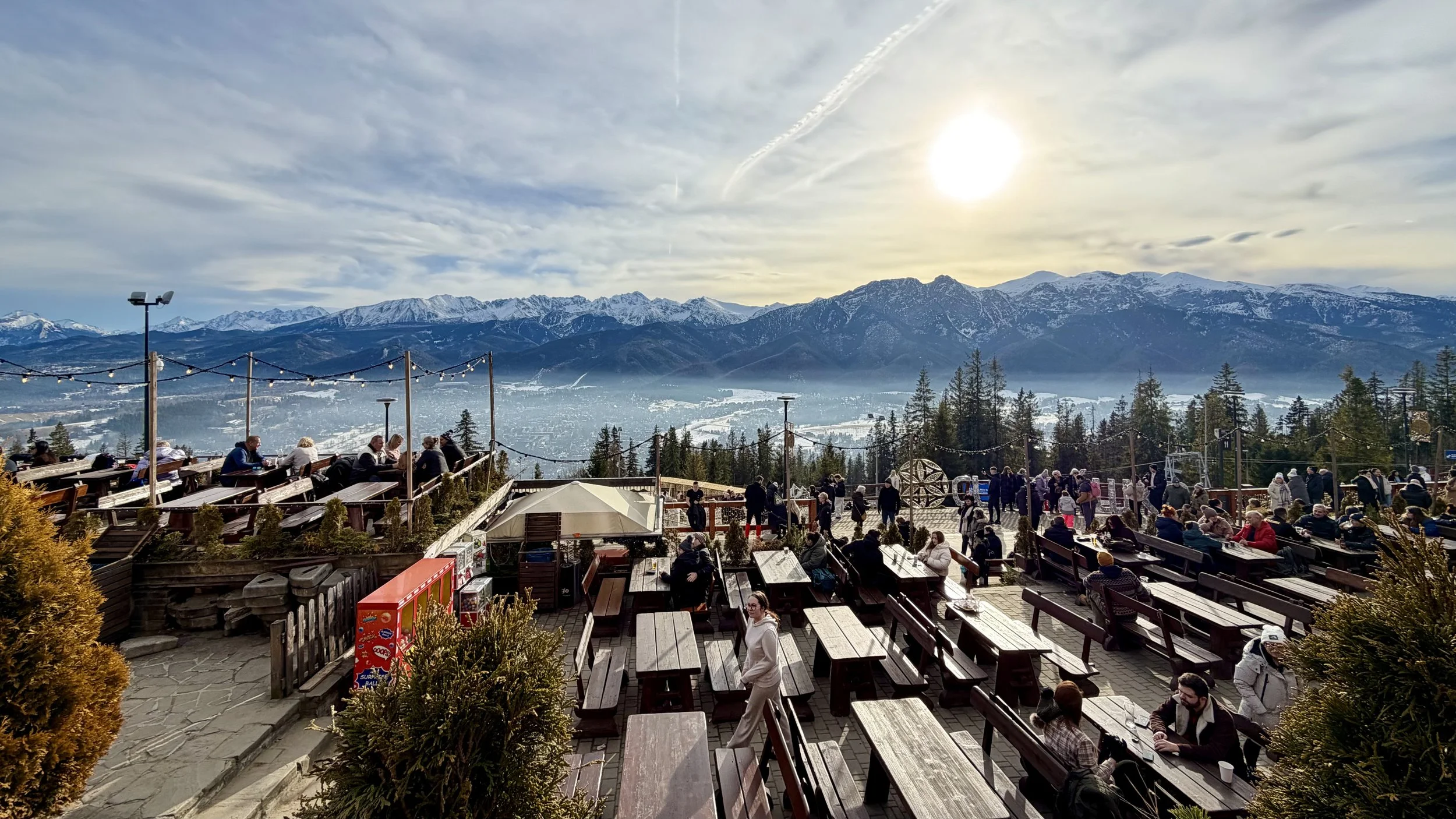
Summit of Gubałówka
The views from the summit were spectacular — snow-dusted mountains stretching out under clear skies. We sat in the warm sunshine with a coffee and hot chocolate, taking our time and enjoying the contrast between the cold air and the heat of the sun. Beyond the viewpoint, however, much of the area felt disappointingly commercial, with fast food outlets, amusements and souvenir stalls dominating the space.
After descending, we walked along Krupówki Street. It began with more tourist stalls before gradually giving way to familiar multinational brands. We continued uphill to Bar Górski, a restaurant we’d researched in advance. It wasn’t much to look at, but the food — tomato soup, lentil dumplings and more cheese with cranberry — was tasty, filling and inexpensive.
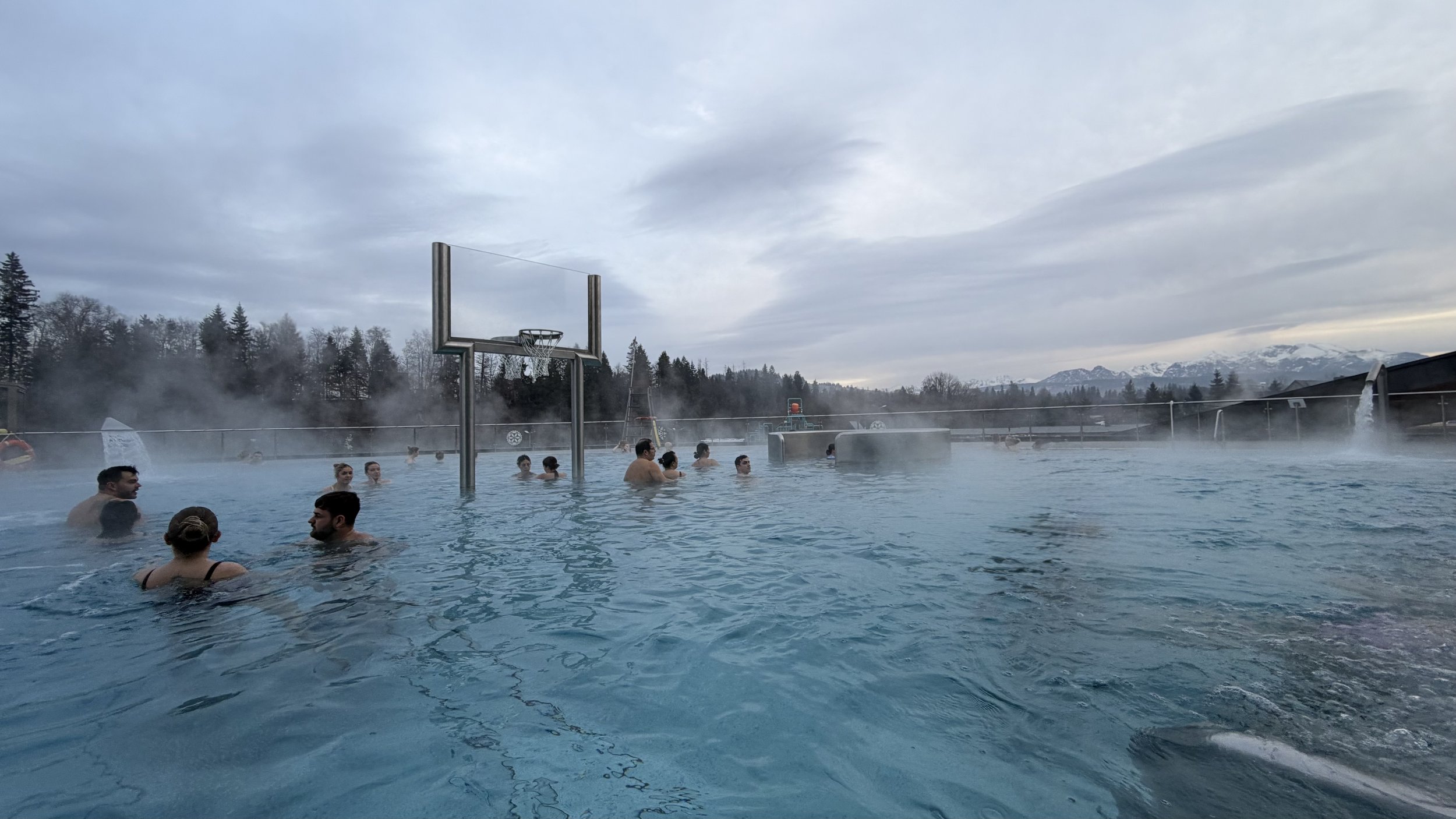
The outside thermal pool at Chochołowskie Termy
There was just enough time for a relaxed walk back down to the coach before our final stop of the day at Chochołowskie Termy. This large thermal spa complex is often described as a water park, and we were warned it could be very busy. In reality it was noisy but manageable. The outdoor pool was the highlight — swimming in warm water while looking out at snow-covered mountains was genuinely memorable. Inside, there were numerous pools, saunas and jacuzzis, although these weren’t recommended for me due to previous heart issues. With no lazy river to tempt us, we opted for an early exit and went in search of coffee and cake instead.
Back in Kraków, we headed straight out for dinner at Hevre, which had been recommended during our Jewish Quarter tour. Set inside a former synagogue, with much of its character preserved, it was atmospheric and easily one of the food highlights of the trip. A calm, unhurried meal felt like exactly what we needed after such a long day.
Reflection
A day of strong contrasts. The mountain scenery and outdoor thermal pool were genuinely special, while Zakopane itself felt more commercial than we’d expected. It reinforced how much we appreciate quieter moments — sitting in sunshine with a view, or ending the day somewhere atmospheric and unpretentious. Ending the day back in Kraków, with a relaxed and memorable meal, reminded us why the city itself continues to be the real draw of the trip.
If you’d like to follow future journeys, reflections, and moments noticed along the way, you can join the mailing list here.
Auschwitz-Berkenau / Wieliczka Salt Mine
Today was always going to be a long and emotionally demanding day, and that was before the 6am pickup.
We left Kraków early and headed west towards Auschwitz-Birkenau, the city gradually giving way to quieter roads and a flat winter landscape. The light was low and grey, and the further we travelled the more subdued the atmosphere in the minibus became. There wasn’t much conversation. Most of us were quietly wondering what we would see, how we would feel, and how we might react.
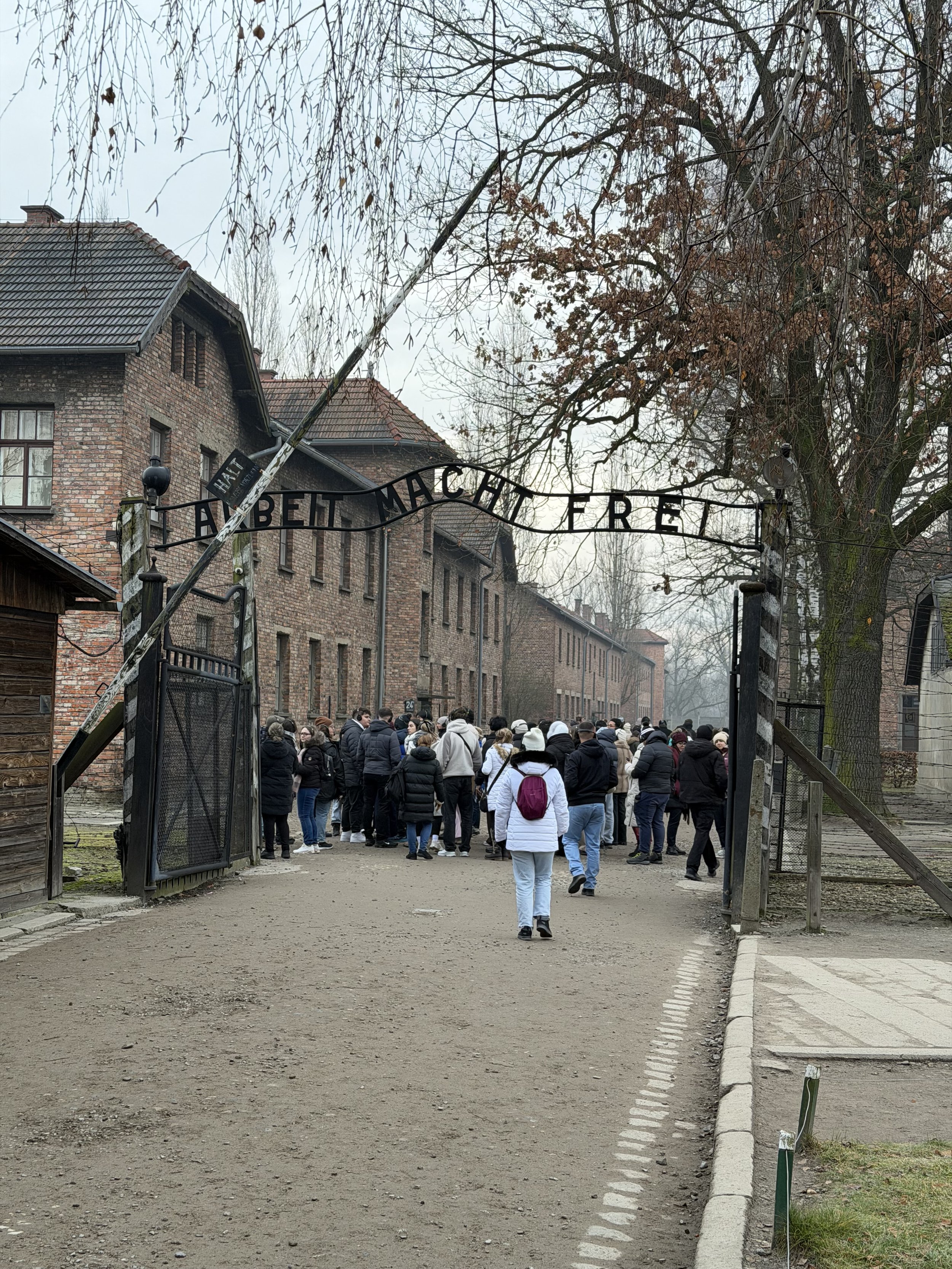
The main gate at Auschwitz
Walking through Auschwitz I, the brick buildings felt orderly and almost administrative, which somehow made the history harder to process. The site feels structured and controlled, and that sense of order sits uncomfortably alongside what you know took place there. Moving from block to block, the exhibits shifted from explanation to stark evidence, and the atmosphere grew heavier with each room. It wasn’t shocking in a dramatic sense, more a slow, accumulating sadness that stayed with you.
Everyone seems to have something that brings home the horror of the place. For my wife it was the room filled with hair, confronting in its sheer scale and intimacy. For me, it was the standing cells in the basement. They struck a nerve, perhaps because, in a strange way, they felt more relatable — confined spaces where suffering was imagined more easily than in the vast numbers often quoted.
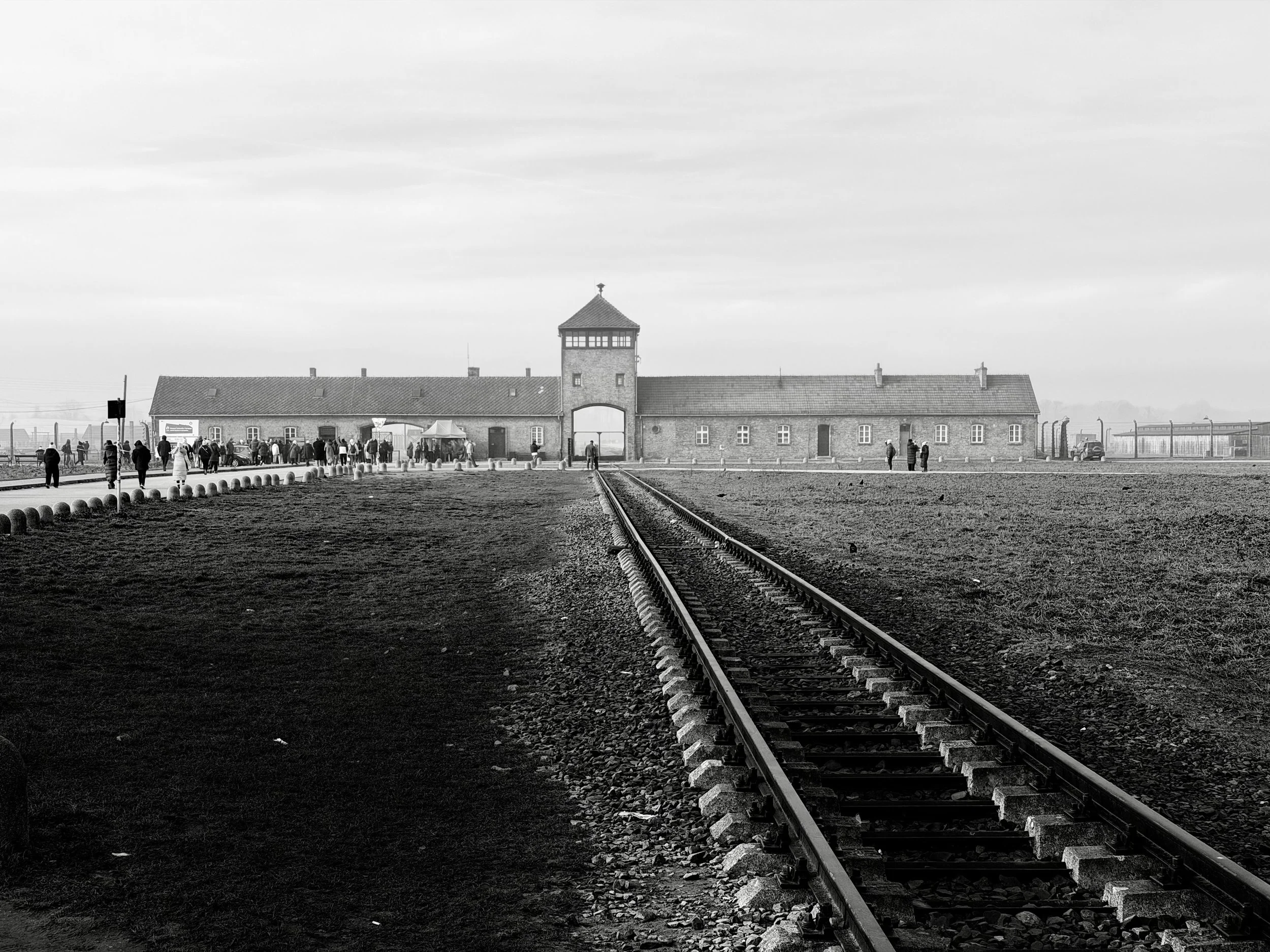
The entrance to Birkenau
Birkenau was different again. Vast, open and bleak, with the railway tracks stretching into the distance and the remains of barracks scattered across the site. Standing on the spot where arrivals were sorted, exposed to the cold and the wind, the scale of it all became overwhelming. The openness of the place made it harder to take in, not easier. We didn’t say much. Some places don’t invite words, just stillness and respect.
Before travelling on to our next stop, the salt mines, we had the provided packed lunch. Simple cheese sandwiches, salad and water felt entirely appropriate for the day. It was eaten quietly, without much conversation, as if anything more elaborate would have felt out of place.
In the afternoon we travelled out to Wieliczka Salt Mine, descending underground and away from daylight. Almost immediately the mood shifted. The air was cooler, the sounds more muted, and the world above felt distant. Step by step, we moved deeper, leaving the morning behind us without forgetting it.
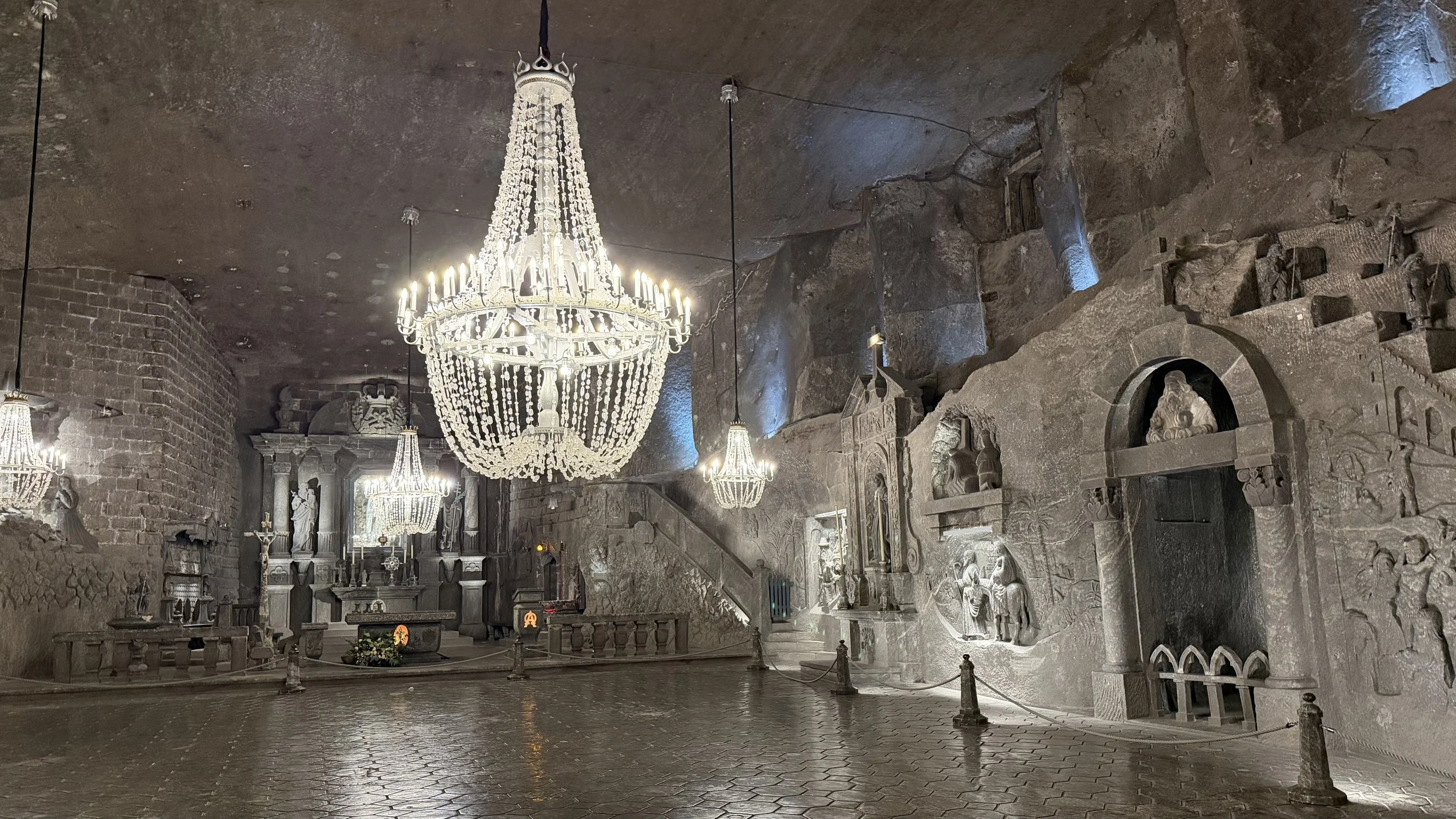
St. Kinga's Chapel (Kaplica Świętej Kingi) in the Wieliczka Salt Mine
The mine itself was remarkable. Long tunnels stretching into darkness, vast chambers opening unexpectedly, and chapels carved entirely from salt. The detail and scale of the work was impressive, but what stood out most was the patience involved. This was craftsmanship built up slowly over centuries, shaped by repetition rather than spectacle.
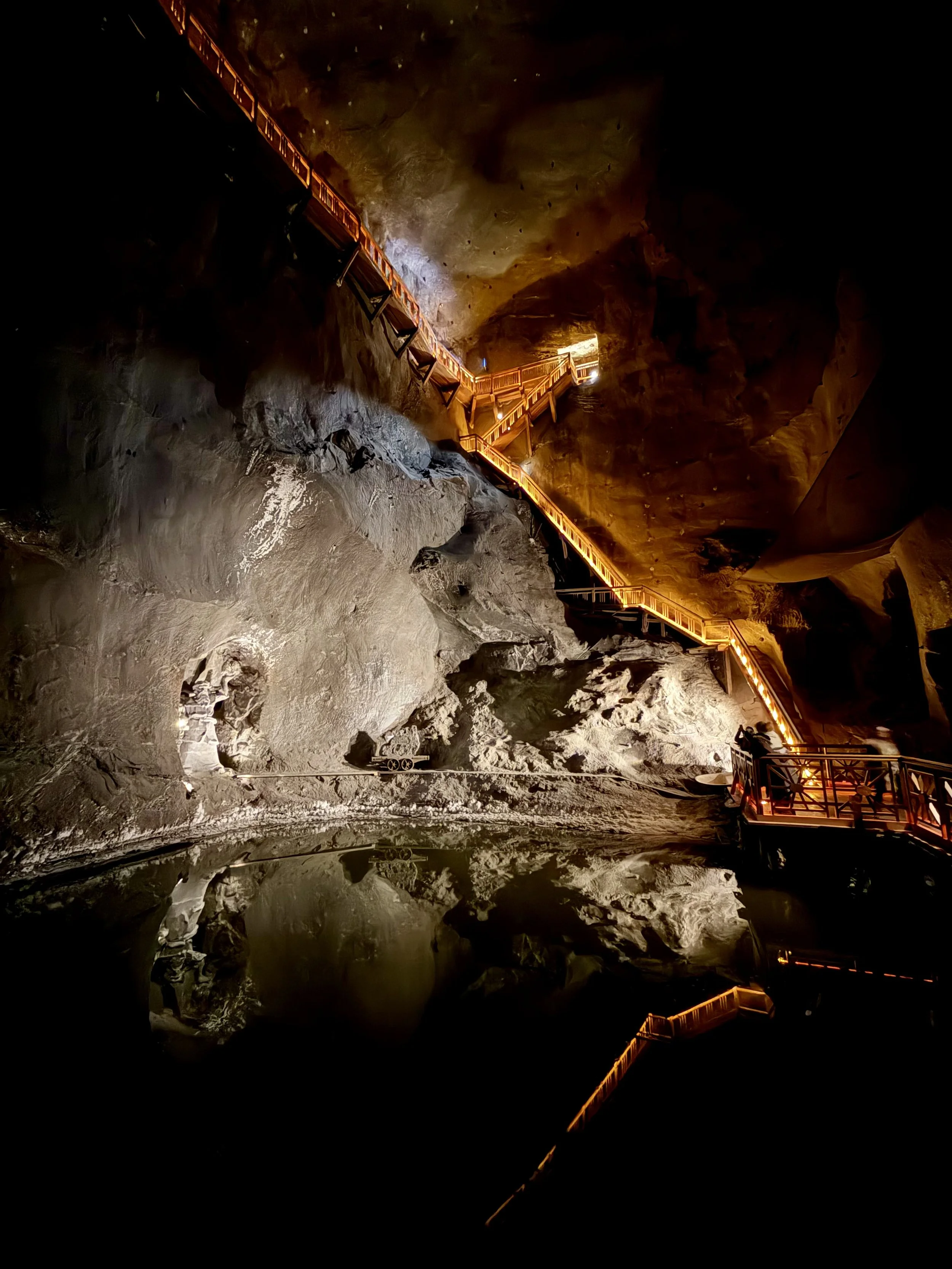
Pool in Wieliczka Salt Mine
What struck me most was how immersive it felt. This wasn’t history behind glass, but something you walked through, breathed in, and experienced physically. The contrast with the morning was stark but not jarring, more a reminder that human creativity and resilience exist alongside humanity’s darkest moments.
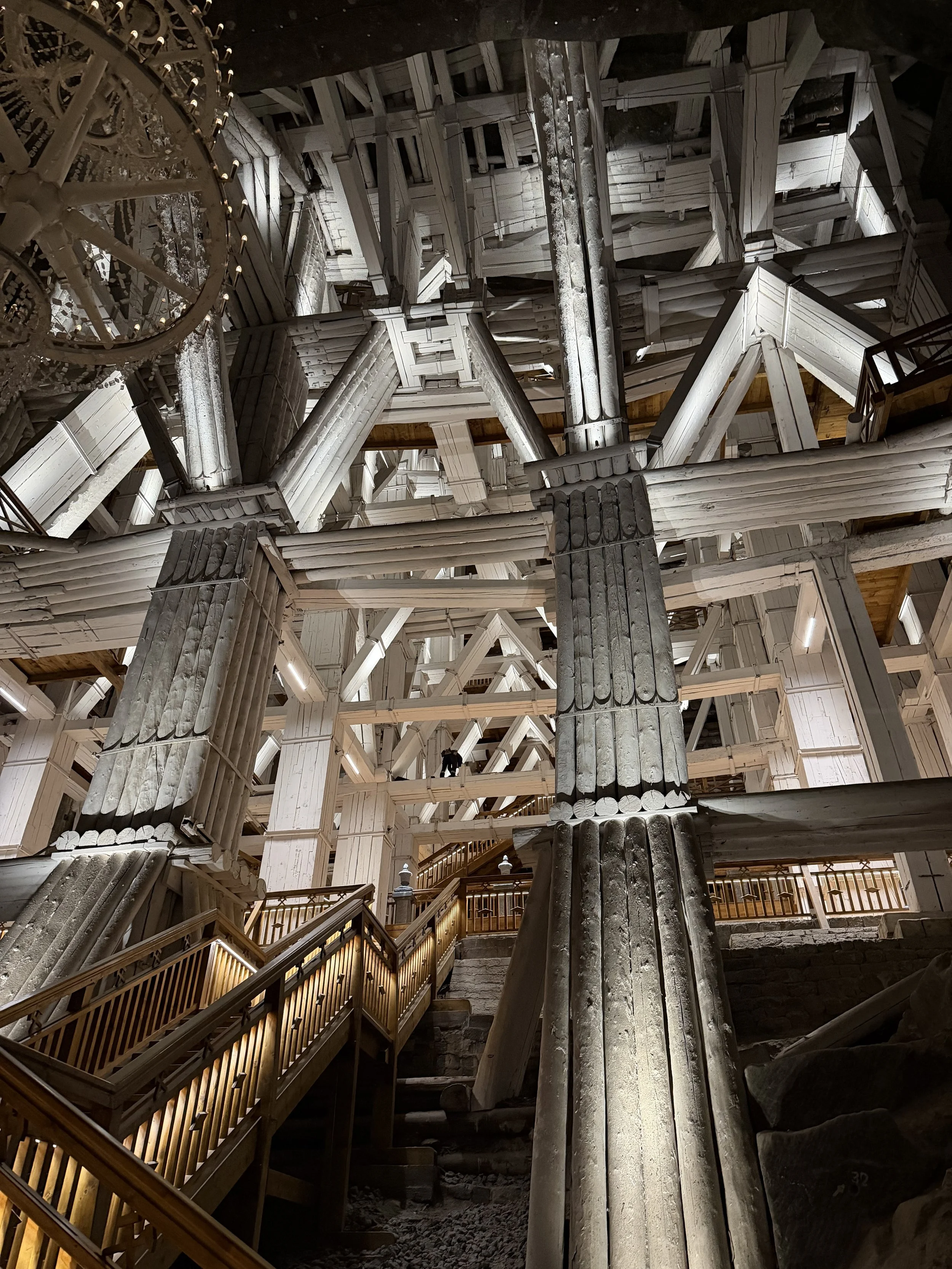
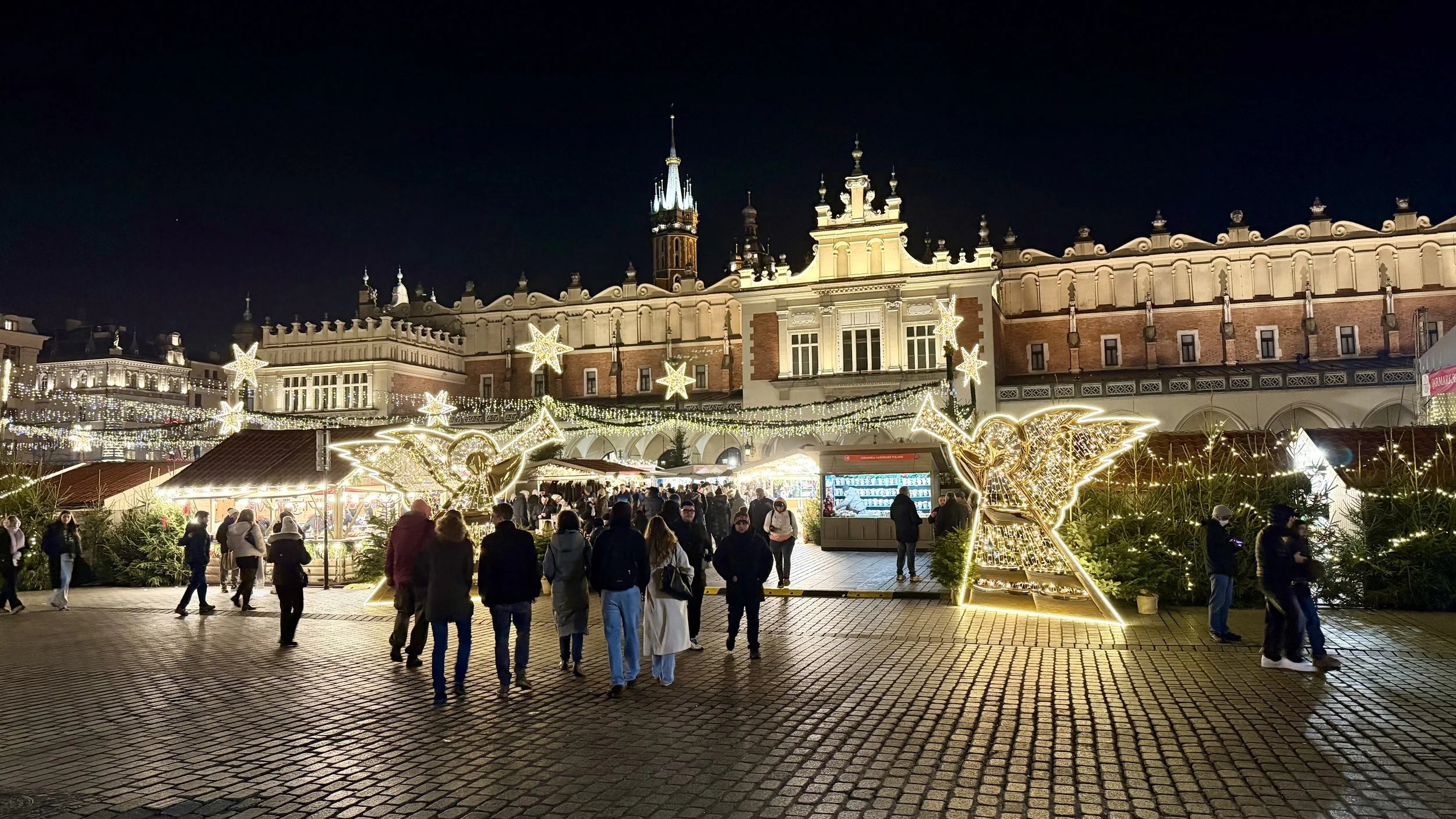
Climbing back up to the surface felt refreshing, both physically and mentally. By the time we returned to Kraków, the city felt familiar and comforting again. We kept the evening simple, wandering around the Christmas Market, mulled beer and hot chocolate keeping us warm.
Reflection
Today was about contrast, between silence and scale, darkness and craftsmanship, loss and endurance. Visiting Auschwitz-Birkenau was confronting in a quiet, cumulative way. There were no moments of shock, just a steady realisation of what happened there, reinforced by ordinary objects and ordinary spaces that once held extraordinary suffering. It stayed with us not as an image, but as a feeling that was hard to shake.
The afternoon offered a different kind of perspective. The salt mine was not an escape from the morning, but it was a reminder of what human hands can create when time, skill and patience are applied over generations. Walking through those underground chambers highlighted the breadth of human capability, for cruelty, but also for resilience, creativity and belief.
Experiencing both in the same day felt emotionally demanding but strangely appropriate. History is rarely neat or compartmentalised. Darkness and beauty often sit side by side, and understanding one doesn’t diminish the other. It felt right to end it back among lights, warmth and people, carrying the memory of the past while being reminded of the value of the present.
If you’d like to follow future journeys, reflections, and moments noticed along the way, you can join the mailing list here.